Bullies, Schools, Homosexuality, and the Confederate Flag

Who is a school bully?  Can it be a teacher who disciplines students for wearing Confederate flags or for denouncing homosexuality?

That is the question conservative commentator Anthony Esolen asks today on The Public Discourse.

Esolen, Professor of English at Providence College, considers a recent case from Michigan.

In this compellingly tangled case of homosexuality, history, religion, and education, a teacher hoped to fight anti-homosexual attitudes among his students.  This teacher participated in a school event in which teachers and students wore t-shirts opposing anti-gay bullying.  The teacher showed his class a video about anti-gay bullying, then engaged in a discussion about it.  During the discussion, the teacher noticed that one student wore a Confederate-flag belt buckle.  The teacher ordered the student to remove the buckle.  When another student asked about the obvious contradiction between the student’s right to wear the buckle and the teacher’s right to wear the t-shirt, the discussion exploded.  The teacher eventually disciplined both students, one for the buckle, and one for insisting that his Catholic faith forced him to disapprove of homosexuality.

Esolen brings up these snarled issues in all their complexity.  Does a Catholic student have a right to disapprove of homosexuality?  Does a teacher have a duty to discipline dissenting students?  Can a student wear offensive belt buckles or t-shirts?  What ideas are too offensive to be protected in schools?

Also, importantly, Esolen considers whether an economics teacher should be engaged in these sorts of pedagogical discussions.  If teachers are, as Esolen argues, “a group of tutors hired by a group of parents,” shouldn’t those teachers respect parents’ beliefs more rigorously?

Being Gay at a Catholic College

Is gay okay the Catholic way?

Religion writer Michael O’Loughlin recently surveyed the experiences of gay students at a variety of Catholic colleges.  The answer, maybe not surprisingly, is that different schools do things differently.

At Chicago’s DePaul University, O’Loughlin found, students can minor in LGBTQ Studies. Students and faculty are out and supportive.

Other schools, such as Washington DC’s Catholic University, have a more mixed record.  Students are gay, O’Loughlin reported, and that’s only sort of okay.

One constant, at Catholic universities as across American culture, is rapid change.

O’Loughlin returned after just a handful of years to his alma mater, St. Anselm College in Manchester, New Hampshire.  When he attended, gay students kept their sexual identity private. Now, the school itself has initiated programs to make all students, explicitly including homosexual students, feel welcomed, loved, and guided.

As some of the comments on O’Loughlin’s essay proved, not all Catholics are okay with this trend.  As “JP” noted,

Can one imagine a group of Catholic adulterers or thieves organizing at a Catholic college in order for their “voice to be heard”? Homosexual acts as well as larceny or adultery are still considered Mortal Sins by the RCC.

Catholic schools are not alone in their struggles with this issue.  As we noted a while back, Brandon Ambrosino shared his experiences with faith and sexuality at the conservative evangelical flagship school, Liberty University.  Just as Catholic colleges have had a range of responses to the issues of student homosexuality, so folks at conservative Protestant schools  have had surprisingly mixed reactions as well.


“All I write about is Jesus:” the Case for a Conservative Kerouac

This morning at the American Conservative Robert Dean Lurie makes the case for including Jack Kerouac in the canon of culturally conservative authors.

As Lurie acknowledges, Kerouac’s rambling, drug-, jazz-, sex-, and booze-fueled writing does not usually bring this to mind.  Yet Lurie insists Kerouac is “up for grabs ideologically.”  Kerouac, Lurie writes,

“did indeed go on to lead a wild existence filled with alcohol, drugs, and perpetual shiftlessness; he fled from monogamy as from leprosy. Yet one cannot grasp the soul of Kerouac unless one understands his fundamentally traditional core. He never wished to foment a revolution. He did not desire to change America; he intended to document, celebrate, and, in the end, eulogize it.”

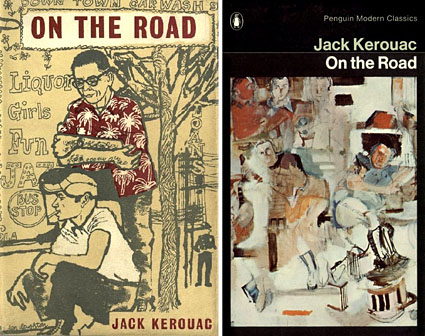
Image Source: Feuilleton, by John Coulthart

I admit I’ve never been a fan.  Years spent teaching English to bright and talented high-schoolers caused me to resent the influence of On the Road.  Too many young people seemed to lean on this book, among others, as proof that writing and thinking did not need to be disciplined or systematic.  More than that, the book always seemed to be too careful and planned in its spontaneity.  A tantrum, not a rebellion.

Lurie argues that we’ll never understand Kerouac if we stop at this surface impression.  The theme of Catholicism permeates Kerouac’s work, yet many readers miss it entirely.  As Lurie notes,

“The influence [of Catholicism] is so obvious and so pervasive, in fact, that Kerouac became justifiably incensed when Ted Berrigan of the Paris Review asked during a 1968 interview, ‘How come you never write about Jesus?’ Kerouac’s reply: ‘I’ve never written about Jesus? … You’re an insane phony … All I write about is Jesus.'”

In the end, Lurie concludes, Kerouac stood out among his Beat colleagues:

“Allen Ginsberg, the poet visionary, pined for utopia and spiritual revolution. William S. Burroughs, the outlaw libertarian, pined for anarchy and gay liberation. Neal Cassady, the exiled cowboy, pined for girls and cars. Jack Kerouac, the mystic, pined for God and home.”

In the News: Paul Ryan and a WASP-free White House

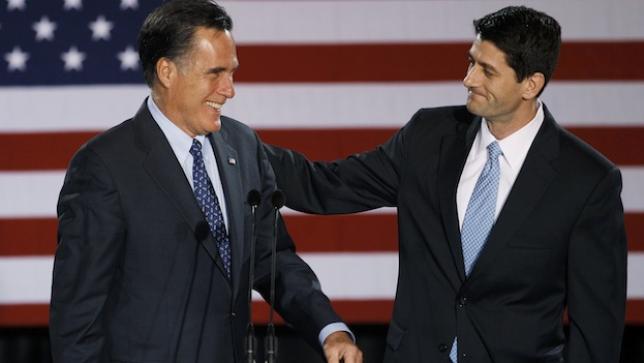
Governor Romney’s announcement of Paul Ryan as his Vice-Presidential running mate has been heralded by some conservatives as a triumph.  Ryan is known for his commitment to restricting abortion and defending traditional families.  He is also the GOP’s leading voice for budget-cutting, even to the point of earning some censure from Catholic leaders.   But the pick has been seen as a play to conservatives, or, as we say here at ILYBYGTH, to voters from Fundamentalist America.

One unusual aspect of Romney’s decision is that it guarantees a WASP-free White House for at least four more years.  Of course, there’s nothing new about a WASP-free White House.  Barack Obama is African American Protestant, while Joe Biden is Catholic.  But no matter who wins in November, with LDS (Morman) Romney and staunchly Catholic Ryan, there will be no White, Anglo-Saxon Protestant in this race.

This matters for a couple of reasons.  First, it shows the way Fundamentalist America is changing.  Sixty years ago, asking conservatives to line up behind a non-Protestant candidate was political suicide.  In 1928 and nearly in 1960, it was tricky even for the Democrats to run a Catholic candidate.  These days, many different types of conservatives celebrate the Romney-Ryan ticket.  Ryan is seen as the “conservative” choice, not the “Catholic” choice.  Just as with the Protestant-free US Supreme Court, the fact that conservatives don’t seem to care about the non-WASPiness of this election tells us something about the changing nature of American culture.

It would be easy to be cynical about this.  We could attack Fundamentalist America for being hypocritical.  Here is how this argument would go: conservatives demand respect for “traditional values,” but they don’t ever clarify what those values are.  Since such things change within even one lifetime, the defense of “traditional values” is meaningless.  What last year’s traditionalist defends as a necessary part of American life, next year’s traditionalist insists was never part of traditionalist thinking.  In this case, traditionalist conservatives could be taken to task for shifting their “traditional values” without ever admitting it.  Sixty years ago, Catholics and LDS members were seen by many as outsiders, owing loyalty to a foreign potentate, in the case of Catholics.

A more sympathetic interpretation, however, is that this change from WASP to a more big-tent conservatism shows the healthy ways Fundamentalist America can change.  Fundamentalist America, in this line of thinking, is not the dinosaur it is made out to be.  It is a dynamic, thoughtful, fully contemporary way to be American.  As American culture broadens to welcome former outsiders such as Catholics and African Americans, so too does Fundamentalist America.

Transubstantiation: Faith, Science, and the Public Square

“Catholics are crazy.”

Why don’t we hear people saying that?  Richard Dawkins accused anyone disbelieving evolution of being “ignorant, stupid or insane (or wicked, but I’d rather not consider that).” Does he accuse Catholics of the same thing?  Or why don’t we hear skeptics comparing the Catholic liturgy to a Flying Spaghetti Monster?

After all, one of the central features of Catholic liturgical tradition and theology is at least as radically anti-science as any kind of young-earth creationism.  But nobody seems to mind.

For purposes of full disclosure, I must note: I’m a big fan of Catholicism.  As the saying goes, ‘Some of my best friends . . .”  But even close friends must acknowledge the elephant at the altar, the rigid anti-science that lurks uncomfortably at the heart of the Catholic Eucharist.

We’re talking here about the Catholic doctrine of transubstantiation.  In Catholic doctrine, when a priest completes a special ceremony over bread and wine, the bread and wine are literally transformed into the body and blood of Christ.  Not symbolically, but substantially changed.  Of course, to all outward appearances, the bread and wine maintain their accidental attributes.  The senses, and even the most careful scientific detection, will see/hear/taste them only as bread or wine.  But in substance they have been transformed into the Real Presence, the living body and blood of the Christ.  I’m no theologian, and I invite correction on this subject, but as I understand the doctrine, the substance changes while the accidental outward properties do not.  Thus, for example, my body has two hands.  But the substance of my body does not change if I cut off one hand.  It is still my body, though the accidental properties change.  With the bread and wine, the substance transforms into the actual substance of blood and flesh.  But the accidental properties remain the same.  It will not taste like blood or flesh.  (If it did, I imagine this issue might be a little more controversial.)  It will continue to have all the outward appearances, down to the microscopic level, of bread and wine.  Yet it will not be.

This is a profoundly antiscientific notion at the heart of Catholic belief.  Instead of believing in the clear evidence of their senses, Catholics are supposed to believe that they are eating and drinking real flesh and real blood.  This notion is at least as antiscientific as more controversial doctrines such as young-earth creationism.  After all, creationists are not asked to disbelieve their own senses.  They are not required to contest the scientific measurements of things.  Instead, young-earth creationists are told that they have a superior science worked out, a true science that accords with the version of creation described in the Bible.  Catholics, on the other hand, officially believe that bread tastes like bread, smells like bread, looks like bread, has all the chemical properties of bread, and yet is not bread.  That must be difficult to swallow, pardon the pun.  Yet we don’t hear any complaints against it or attacks upon it from skeptics and anti-fundamentalists.  Why not?

There are two obvious reasons.  First, this doctrine doesn’t impinge on the public sphere the way creationism does.  After all, if it somehow mattered what public schools taught about the nature of bread, wine, and liturgical practice, then we could expect the notion of transubstantiation to become more controversial.  When the nature of the substance of the Eucharist was part of a public debate, as in the time of Martin Luther, then the doctrine of transubstantiation was indeed intensely controversial.  These days, in subjects such as contraception and abortion, where Catholic doctrine impacts public policy, we do hear a great deal about the nature of Catholic belief.  Since the doctrine of transubstantiation remains important only within the religion itself, skeptics may feel no need to challenge its inherent antiscientific nature.  After all, much religious belief is antiscientific.

Second, even many Catholics don’t embrace this doctrine enthusiastically or aggressively.  Catholics are not forced to defend the anti-science of transubstantiation the way creationists are forced to defend their Bible-based anti-science.  Catholics are assumed to agree with this foundational theological premise, but they are not put in a position to defend it publicly.  Allow me to give one example.  At the Catholic Church I attend, during harsh flu seasons parishioners are asked not to drink from the communal chalice if they have symptoms.  That makes great scientific sense, but little liturgical sense.  If the wine had actually been transformed into the substance of Christ’s blood, it doesn’t seem right that the H1N1 virus could attach itself.  Perhaps a Catholic apologist would reply that such things as viruses are only part of the “accidental” features of the wine.  The point here, though, is that to many Catholic parishioners, at least at my church, the transubstantiated blood is still regarded as very similar to wine.

So are Catholics crazy?  Do they cling to anti-scientific notions?  Does the core belief of Catholicism mean that ideas taken on nothing but faith must trump all evidence of the senses?  And if so, why don’t anti-fundamentalists seem to mind?


Missouri Loves Company: Catholics in Fundamentalist America

Missouri’s Catholic Bishops support Missouri’s proposed constitutional amendment.  In a recent statement, the Missouri Catholic Conference supported Amendment 2, which will go before voters on August 7.  The bishops’ statement argued that the amendment would ensure religious people’s rights in the public square.  As they put it:

“Increasingly, it seems, religious values are becoming marginalized in our society. People of faith need assurance that they remain free to exercise and express their religious beliefs in public, provided just order be observed, without threat of external pressure to conform to changing societal ‘norms’.”

For some, this defense of public religiosity by Catholic bishops seems unremarkable.  But from a historical perspective, this Catholic endorsement of religion in public schools signals a shocking turnaround in the history of religious life in America.

In the nineteenth century, after all, intense Catholic political pressure led to “Bible Wars” in public schools.  For many Protestants, the reading of the King James Version of the Bible in public schools seemed natural.  As Steven Green has argued in his new book, these nineteenth-century battles determined much of the role of public religion long into the twentieth century.

This history of Catholic protest against a Protestant-dominated public religiosity resulted in lingering anti-Catholic animus on the part of many conservative Protestants.  In the 1928 Presidential election, for example, self-described Protestant fundamentalists vehemently opposed Al Smith’s candidacy in the Democratic Party due to Smith’s Catholicism.

Yet even in the 1920s, we can see connections between conservative Catholics and conservative Protestants.  William Jennings Bryan tried hard to recruit Catholic anti-evolution writer Alfred  McCann to testify at the Scopes trial, for instance.  These connections received a boost in the 1950s with the strengthening of anti-communism on the Right.  And Catholics such as William F. Buckley and Phyllis Schlafly assumed new leadership roles in the postwar conservative revival.

By the 1970s, the issue of abortion fused even stronger connections between conservative Catholics and Protestants.  As Daniel K. Williams has argued, abortion politics brought pro-life Catholics into the fold of the “New Christian Right.”

The recent statement by Missouri’s Catholic bishops demonstrates how seamless these connections have become.  Early 1920s fundamentalism in America often included a virulent anti-Catholicism.  But by 2012, we need to include conservative Catholics in any sensible study of conservative religion in American public life.

Some readers have objected to ILYBYGTH’s broad definition of “Fundamentalist America.”  And they are right: “fundamentalism” in the American context usually refers to one subset of conservative evangelical Protestants.  But if we hope to understand the broad sweep of conservative religious activism in America, if we want to talk about the conservative side of America’s culture wars over the proper role of religion in the public square, we need to include a much broader coalition of religious groups.  Not only conservative Catholics, but also Pentecostals, Orthodox Jews, Mennonites, conservative Lutherans, and others who don’t fit within the smaller boundaries of small-f fundamentalism.

The recent statement by Missouri’s Catholic bishops is just further proof of how the times are a-changing.  When conservative Catholics can get behind an amendment protecting religion’s role in public schools, we know the old Catholic/Protestant split has become largely irrelevant.

Another Fundamentalist Mystery: Protestants and Rick Santorum

We asked recently why there seems to be so little anguish among conservative Protestants over the fact that there are no Protestants on today’s US Supreme Court.

The 2012 Republican Presidential primaries have raised a similar question: Why do today’s conservative Protestants seem to love the Catholic candidate Rick Santorum?

Political scientist Matthew Franck pondered this question this week.  Franck identifies as a conservative Catholic who has lived and taught for years in a region dominated by conservative evangelical Protestants.  Franck asks:

So what’s up with the victories of Rick Santorum, a western Pennsylvania Italian Catholic, in two states, Alabama and Mississippi, where upwards of four in five voters described themselves in exit polls as evangelical or “born-again” Christians?  Although the New York Times’ Bill Keller famously misidentified Santorum last year as an evangelical, these voters know better.  They knew going to the polls Tuesday that they could choose the LDS Mitt Romney, the Lutheran-turned-Baptist-turned-Catholic Newt Gingrich, or the lifelong Catholic Rick Santorum.

Franck notes the novelty of this situation:

The first observation to make about the role of religion in these two deep-south states, then, is that three non-evangelical candidates all did respectably well in a heavily evangelical (and conservative) electorate.  Each of the candidates topped 30 percent of the vote.  Just a half century ago, John F. Kennedy had to go to Houston to make a case to Baptist ministers that a Catholic deserved a shot at the presidency.  (Some Catholics, then and now, think JFK surrendered too much of his faith to mollify his critics.)  Only four years ago Mitt Romney felt similarly compelled to reassure voters that a member of the Church of Jesus Christ of Latter-day Saints deserved a fair chance as well.  Now in 2012, we seem past all that.

Just as many conservative Protestants care more about the politics of US Supreme Court justices, especially on social issues such as abortion, gay marriage, and the role of religion in the public square, Franck concludes that Protestant fundamentalists are judging the current crop of Republican Presidential contenders more on their positions than their faith backgrounds:

For better or worse, Santorum is widely known as the “social issues” conservative in this race, the consistent defender of life, of marriage and family, and (as he himself put it last night) of the “centrality of faith” in many Americans’ lives.  Look at how strongly he did among voters who think a candidate’s “moral character” matters most, and you get the picture.

If Franck is correct–and his conclusion makes intuitive sense to me–it tells us a lot about the changing nature of Fundamentalist America.  It seems to confirm James Davison Hunter’s 1992 thesis in Culture Wars.  In that book, Hunter argued that creed and denomination had come to mean less than the divide  between orthodoxy and progressivism.  That is, the old divisions between Catholic, Protestant, and Jew had eroded, replaced by a split between conservative and liberal factions within each faith.  Along with the deafening silence among conservative Protestants about the current makeup of the US Supreme Court, the non-issue of Santorum’s Catholic faith among conservative Protestants certainly seems to confirm Hunter’s argument.