Conservatives Win a Prize They No Longer Want

A new report about racial segregation in Connecticut’s schools raises a painful historical reminder for conservatives: Conservatives, both white and African American, often promoted school segregation as a central tenet of conservative ideology. These days, mainstream conservatives want to shed their historic legacy of racism. Ironically, that means that no conservative is claiming “credit” for the current resurgence of racial segregation in schools.

The report from Gary Orfield’s Civil Rights Project praises Connecticut’s schools. Unlike most states, Connecticut has made real progress in racial integration of schools. In other states, though, public schools are becoming more starkly segregated.

Sixty years ago, this would have been cause for conservative celebration. Though they don’t like to be reminded, conservatives embraced racial segregation back then as a central plank in the conservative platform. At National Review, for example, William F. Buckley Jr. took a stand in favor of continued white supremacy in the South.

As Neil McMillen made clear in his history of the White Citizens’ Councils, too, leading segregationists consistently tied their racist policies to the broader 1950s conservative movement. In his famous “Black Monday” speech, for example, Mississippi Circuit Court Judge Thomas Pickens Brady denounced the US Supreme Court’s Brown v. Board decision in both racist and anti-communist terms. Not only would school desegregation lead to “amalgamation” of the races, Brady charged, it was also part of a “socialistic” scheme to degrade southern traditions.
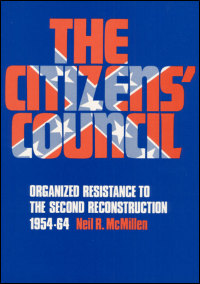
Back then, conservatism = segregationism

Back then, conservatism = segregationism

As McMillen tells us, southern segregationists often joined and led other leading conservative organizations. Georgia’s R. Carter Pittman, for example, not only led his local white supremacist Citizens’ Council, but also joined the John Birch Society, the Liberty Lobby, and Billy James Hargis’s Christian Crusade.

Many white segregation leaders in the 1950s embraced religious conservatism as well. The Citizens’ Councils denounced “pinkos in the pulpit” who had declared “private enterprise, rugged individualism, and conservatism in politics . . . equally un-Christian.”

The historical record is clear, if awkward. Though most mainstream conservative thinkers these days don’t like it, in the tumultuous 1950s and early 1960s “conservatism” was tightly bound up with white supremacy.

Even weirder from today’s perspective, many African-American conservatives in the 1950s also embraced continued school segregation. Obviously, they did so in different ways and in different organizations than did white conservatives. No African Americans joined the White Citizens’ Councils, for example. And no African-American conservatives embraced school segregation in the name of white supremacy. Rather, African-American leaders supported segregation in a cautious and strategic way and they abandoned segregation as soon as better options appeared possible.
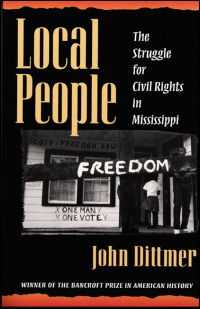
More complicated than we might think...

More complicated than we might think…

But as John Dittmer demonstrates in his careful history of the civil-rights saga in Mississippi, African-American leaders often preferred racially segregated schools, at least in the early 1950s. At that time, some leaders felt, segregated schools provided Mississippi’s African American population with a steady source of teaching jobs. Some African American leaders also believed that segregated schools offered a better option for African American students than hostile integrated ones.

These days, no one likes to be reminded of this history. African American conservatives largely got on board with anti-segregation campaigns. White conservatives, too, if a little later. But in the 1950s at least, conservatism meant racial segregationism.

And this leads us to our unusual current situation. If today’s public schools are reverting to racial segregation, as the Civil Rights Project documents, we might see this as a long-term victory for 1950s conservatism. Yet, since mainstream conservatives have since abjured their 1950s racist roots, there is no one around to celebrate this significant conservative “victory.”
Could It Work?

Conservatives love to threaten it. But could they pull it off? Business Insider looked recently at the nuts and bolts of what it would take for a conservative president to make good on his threat to eliminate the Education Department.

Rand Paul is the most recent candidate to threaten. As the sophisticated and good-looking regular readers of I Love You but You’re Going to Hell (SAGLRROILYBYGTH) are aware, my historical look at this question ran recently in the pages of Time Magazine. Conservative candidates since Reagan have pledged to eliminate Education. No president ever has.

What’s their beef? As Rand Paul explained in this 2010 speech, many conservatives assume that federal control increases the left’s culture-war power in schools.

The assumption—for electoral purposes at least—is that federal power means less local ability to say no. As Paul put it in 2010,

I would rather the local schools decide things. I don’t like the idea of somebody in Washington deciding that Susie has two mommies is an appropriate family situation and should be taught to my kindergartner at school. That’s what happens when we let things get to a federal level.

Business Insider asked law guru Laurence Tribe to explain the president’s power to make good on this threat. Obviously, Tribe explained, no president can simply eliminate a federal government department by fiat. But there are things presidents can do. They can encourage legislators to push legislation to that effect. And they can strangle government agencies by cutting funding.

In a 2012 budget proposal, Senator Paul suggested an 83% cut to the Education Department. Only the popular Pell Grant program would remain. Indeed, in that proposal to save $500 billion, Education took the biggest hit at $78 billion. The National Science Foundation would face big cuts, too, along with huge cuts (78%) to the Interior Department and the utter elimination of the Departments of Energy and Housing and Urban Development.

Paul’s bluster raises a new question, one I didn’t consider in my historical commentary. If so many conservatives threaten the Education Department, why don’t any of them actually get rid of it? As Catherine Lugg described in her history of Reagan’s early efforts, it is easier to malign the Education Department than it is to eliminate it.

Part of the reason might be seen in Senator Paul’s 2012 budget proposal. The Education Department hosts several extremely popular programs, including the Pell Grant program. Even conservatives like to win elections, and it is difficult to win when you take money away from voters. This is why we still have Social Security and Medicaid, in spite of conservative ideological disgust.

In any case, be ready for more. As the 2016 GOP contest gets rolling, the Education Department will be threatened, insulted, and demonized. The one thing it won’t be, it seems, is actually eliminated.

Schools of Social(ist) Work

America’s colleges and universities have become left-wing indoctrination factories. At least, that has long been a favorite conservative complaint. Today in the pages of the Weekly Standard we see another example of the “closing of the campus mind.” Why do so many conservatives seem to take such intense pleasure in the supposed leftist domination of American higher education?

Bearded weirdos...

Bearded weirdos…

In today’s Weekly Standard, Devorah Goldman shares her horror story from Hunter College’s School of Social Work. As a conservative, Ms. Goldman was asked politely not to participate in class discussions. She had to hold her tongue as she read anti-conservative textbooks. She had to hold her tongue as professors imposed racist, ideologically slanted ideas on her classes.

Goldman’s story of abysmally closed-minded universities seems to resonate among conservative intellectuals. As we’ve seen recently, some conservative academics have interpreted recent events as the death knell for conservative thinkers at mainstream universities. Elsewhere, critics have wondered if higher education as a whole has been irredeemably lost to true open-mindedness.

As a non-conservative who writes a lot about conservatism and education, these complaints raise two difficult questions for me.

  1. First, why do so many conservative thinkers seem to emphasize the leftism of colleges? That is, why do conservatives seem to take such bitter joy from an exaggerated assumption that they are no longer welcome in higher ed?
  2. Second, why don’t these conservative intellectuals recognize the long tradition of conservative laments about higher ed? In every case, it seems as if conservatives think higher ed has just recently switched over to the dark side.

Let’s take the second of these questions first. As Ms. Goldman’s story shows, every conservative complaint implies that the closing of the college mind is a recent phenomenon. But conservatives (and liberals, for that matter) have been protesting against the goings-on at mainstream colleges for almost a century.

In 1987, for example, Chicago’s Allan Bloom scored a surprise best-seller with his Closing of the American Mind. Bloom worried back then that universities had become nothing but indoctrination factories.

Even earlier, conservative godfather William F. Buckley Jr. began his long career with an indictment of the culture at his alma mater. In God and Man at Yale (1951), Buckley blasted the sneering secularism and lax morality of his school.

Some people think Buckley invented modern conservatism, but the same themes go way back. In the 1930s, for instance, Congressman Hamilton Fish excoriated leading schools as subversive breeding grounds for communists. Fish named names. Columbia, New York University, City College of New York, the University of Chicago, Wisconsin, Penn, and North Carolina, Fish charged in 1935, had become “honeycombed with Socialists, near Communists and Communists.” As I note in my new book, Fish and other anti-communist conservatives in the 1930s assumed that leading colleges had recently been hopelessly lost to left-wing collegiate cabals.

Back in the 1920s, too, religious conservatives warned each other that recent events had caused the loss of mainstream colleges. As I’m digging into in my current research, fundamentalists such as Bob Jones Sr. convinced themselves and anyone who would listen that 1920s trends had moved college into the enemy camp. Too many schools, Jones charged, attacked the faith of conservative students. As Jones put it,

I had just about as lief send a child to school in hell as to put him in one of those institutions. We are spending millions of dollars on education in this country, but if that is the kind of education we are going to have we would be better off without our universities and colleges.

In every case, each generation of conservative activist has implied that these lamentable changes were recent occurrences. In every case, conservatives suggest that higher ed “these days” has been taken over by left-wingers. If this is such a long and strong tradition among conservatives, why do they keep insisting it is a recent phenomenon?

And why do conservatives seem so eager to emphasize their own victimhood? I don’t doubt Goldman’s story. I can imagine that some teachers and some schools really do insist on an ideological conformity. But there are plenty of other schools that do not. Why don’t conservatives spend more mental energy trumpeting their own dominance of some forms of higher education?

Recently, for example, conservative academic extraordinaire Robert George praised his school’s new academic-freedom rule. Why don’t more conservative intellectuals join Professor George in proclaiming the continuing academic clout of conservative or conservative-friendly ideas?

Some might think that conservatism only dominates less-prestigious schools. Ms. Goldman, for example, would likely have had a very different experience at a less prominent school of social work. But as the case of Professor George makes clear, leading schools such as Chicago and Princeton have long served as congenial homes for conservative intellectuals.

Instead of tearing their hair and gnashing their teeth due to the supposed loss of higher education, why don’t conservative intellectuals celebrate their continuing influence at many leading colleges?

University Apocalypse

Are conservative religious academics forced these days to live “deeply closeted” lives? Have elite universities become so hostile to conservative religious thought that openly acknowledging their religion would be career suicide for academics? In the aftermath of the recent debate over gay rights and religious freedom in Indiana, one elite academic shares his worries in the pages of The American Conservative.

We have to ask: Are things really so dire for conservative academics?

Private?  or Closeted?

Private? or Closeted?

First, though, some context. Readers may remember Jonathan Zimmerman’s (liberal) plea to include more conservatives on campus. And leading schools such as Colorado University have adopted programs to bring conservative thinking to liberal colleges. Both conservatives and non-conservatives agree: Good universities need to recruit actively among a wide diversity of intellectual types.

New voices say it’s not happening.

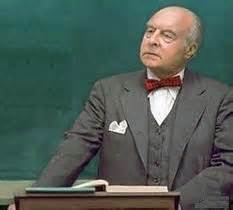
Crunchy conservative Rod Dreher recently shared his conversation on these issues with an anonymous professor at an elite law school. This professor worried that the “overculture” had reacted with frightening intellectual totalitarianism to the recent Indiana case. At leading colleges, “Prof. Kingsfield” warned, religious conservatives are no longer welcome.

“A college professor who is already tenured is probably safe,” Dreher tells us, summing up “Kingsfield’s” story.

Those who aren’t tenured, are in danger. Those who are believed to be religious, or at least religious in ways the legal overculture believes constitutes bigotry, will likely never be hired. For example, the professor said, he was privy to the debate within a faculty hiring meeting in which the candidacy of a liberal Christian was discussed. Though the candidate appeared in every sense to be quite liberal in her views, the fact that she was an open Christian prompted discussion as to whether or not the university would be hiring a “fundamentalist.”

“Kingsfield” also argues that conservative schools will likely face increasing pressure from accrediting bodies. He cites the recent experience of Gordon College. In that case, a re-articulation of a long-standing school policy against sexual activity among students—including homosexual students—created a firestorm of controversy.

Rod Dreher included as a follow-up several emails from academics claiming to have been discriminated against in higher ed.

Do you buy it?

There are a few caveats we need to keep in mind. First, Professor “Kingsfield” seems to be talking about trends at elite colleges. I’ve been told many times by the sophisticated and good-looking regular readers of I Love You but You’re Going to Hell (SAGLRROILYBYGTH) that their experiences in non-elite colleges have been very different. One correspondent, for instance, told me that his colleagues in a large second-tier state school explicitly taught their students to teach in a conservative religious way.

Also, we need to remember that we’re only talking about one conservative tradition here. Generally, non-religious conservatives have had a very easy time fitting into the culture at elite universities. Folks such as the late Milton Friedman, surely, have not faced any sort of career danger for their conservative ideas.

In my experience, my fellow progressive academic folks really do often combine a shocking ignorance of conservative religious culture with a casual contempt for conservative religious ideas. One of the reasons I started this blog, in fact, was due to the fact that so many of my fellow progressives seemed utterly hostile to and uninformed about American conservatism.

On the other hand, my beloved medium-sized public university seems fairly welcoming to religious conservatives. Perhaps because I talk too much about conservatism and fundamentalism, more than one of my faculty colleagues have shared their religious beliefs and background. They don’t trumpet their beliefs, but they don’t hide them either.

My colleagues keep their beliefs private. That’s not the same thing as keeping them “deeply closeted,” though. Are things really so bad for conservative religious academics?

Take TIME for ILYBYGTH

Didja hear that?  It is the sound of ILYBYGTH being enjoyed by the readers of Time Magazine!

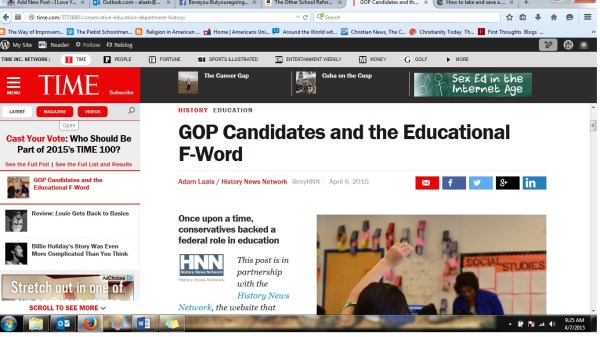
Thanks to the reach of History News Network, my recent HNN commentary has been picked up by TimeTime screenshot

More proof that Americans want to hear the F-Word more often!

Are Schools Conservative?

Binghamtonians!  Come on down to RiverRead Books on April 21 at 6:30 PM.  Five Court Street in scenic downtown Binghamton.  I’ll be sharing some thoughts from my new book about schooling and conservatism.  Free and open to all.  I’m planning to bring brownies, but we’ll see if I actually get it done.

The place to be...

The place to be…

The book works through several questions:

  • ARE most of America’s public schools conservative places?
  • What has it meant to be “conservative” about education in the USA?
  • How have ideas of “conservatism” and “progressivism” in schools changed over time?
  • What kind of brownies should I make?

As the sophisticated and good-looking regular readers of I Love You but You’re Going to Hell (SAGLRROILYBYGTH) are aware, in my new book I examine four of the most famous educational controversies of the twentieth century: the Scopes Trial of 1925; the Rugg textbook controversy of 1939/40; the Pasadena superintendent ouster of 1950; and the Kanawha County textbook battle of 1974/75.   In each case, conservative activists articulated their ideas about proper education.  In each case, conservative leaders and thinkers viewed education as the best way to improve society.  If schools could be reformed, the thinking has always gone, then society could be saved.

What did they fight for?  How did they envision good schools?  How successful were they?

I’ll try to make the case that these “other school reformers” have played a leading role in determining the course of schooling in this country.  Whether we like it or not (and generally, I don’t), conservative thinking and political clout have played decisive roles in shaping America’s educational system.

So come on down to RiverRead to take place in the conversation.

GOP Politics and the Educational F-Word

What are the education words conservatives can’t say without spitting and gnashing their teeth?

“FEDERAL CONTROL OF EDUCATION”

History News Network has been kind enough to include an essay of mine about the presidential politics of education among conservatives.

Won't say it...

Won’t say it…

Among the leading presidential candidates in the Republican Party, only Jeb Bush will admit that he likes the Common Core.  And even he denies ferociously that he supports more federal “overreach” in local schools.

Why do conservatives so loathe the federal government’s role in education?  It wasn’t always this way, as I argue in the HNN article.  And there are some signs that thoughtful conservatives are returning to their roots as the party of centralized power.

GOP Race Kicks Off…at Fundamentalist U

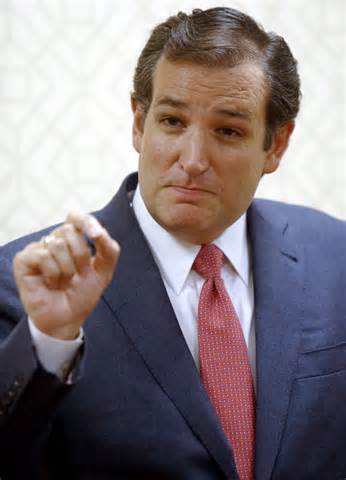
…and they’re off! Senator Ted Cruz of Texas plans to announce his formal candidacy for president today, according to the Houston Chronicle. And he’s making the announcement at Liberty University.

Why Liberty? As the Sophisticated and Good-Looking Regular Readers of ILYBYGTH (SAGLRROILYBYGTH) are well aware, I’m working on a history of fundamentalist higher education. These schools–places like Liberty, along with more liberal cousins such as Wheaton College and Biola University, and more conservative ones such as Bob Jones University—are central institutions of American conservatism.

Cruz at Fundamentalist U

Cruz at Fundamentalist U

Not only do they represent conservative evangelical belief, but also a vaguer (and politically powerful) sense of cultural traditionalism. The campuses of Wheaton, Liberty, and Bob Jones are not just in-your-face religious environments, but also places where you wouldn’t see until recently a man with long hair or a woman with a short skirt.

Not only that, but college campuses also represent cutting-edge learning. Fundamentalist and evangelical colleges are not only religious, not only conservative, but also forward-looking places. By hosting scholarship and teaching, evangelical schools represent the future.

For all these reasons, at least since Reagan, GOP candidates have made it a point to campaign at these campuses. As CNN noted this morning, everyone from Romney to McCain, Rick Perry to Michele Bachmann has put in an appearance.

It makes sense. And it leads us to an interesting question: If you planned to run for president, where would YOU make your announcement? I have an idea of what I’d do.

When Did Tests Become Conservative?

Something happened.

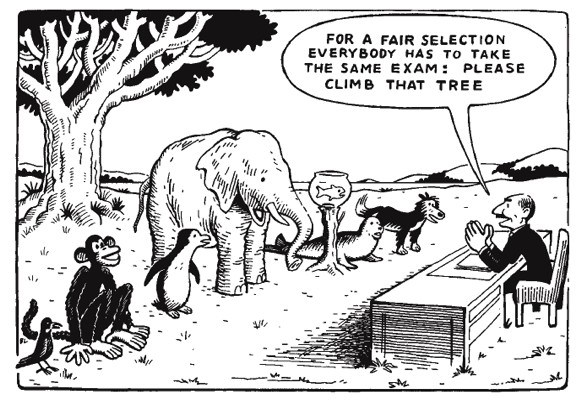
The idea of administering standardized tests to check the success of schooling has had a strange ideological career. Tests have been seen as a progressive panacea as well as a conservative coup. These days, a welter of standardized tests are used to evaluate teachers as well as students. In the eyes of some, these tests have become a hallmark of conservative educational policy. How did that happen? …and what does it mean?standardized-testing-comic3

Last night, historian and pundit Diane Ravitch talked to a crowd of teachers in my hometown, scenic Vestal, New York. Those familiar with Ravitch’s recent book and blog will have a good sense of her argument: Today’s testing regime is a scam by false-faced school “reformers” bent on installing corporate control over public education.

Testing was not always seen this way. As historian William J. Reese demonstrated in his latest terrific book, the first round of fights over standardized tests occurred way back in the nineteenth century. Early test mavens hoped to protect students from idiosyncratic and tyrannical schoolmasters who evaluated students by whim.

In the twentieth century, early testers hoped to use tests to help individualize instruction for children. They did not hope to replace the human touch. Rather, they hoped a set of tests could serve to move education in profoundly progressive directions.

These days, leading progressive pundits such as Ravitch and Mercedes Schneider denounce the testing regime as an attempt to corporatize education. They point to the suspicious support of billionaires such as the Koch Brothers and the Walton Family. Why do these corporate titans push for more tests? In order to strip teachers’ unions of power; in order to remake schooling in the image of corporate America.

Of course, the sophisticated and good-looking readers of ILYBYGTH (SAGLROILYBYGTH) know that the real situation is more complicated than these sorts of conspiracy theories allow. There are plenty of conservative pundits, too, who hate and fear the tests that accompany the Common Core standards. To these conservatives, a national testing regime gives progressives the opportunity to inject sneaky leftist ideas into classrooms across the country.

Plus, there are plenty of progressives who support more rigorous standardized testing as a way to ensure that lower-income students get their share of educational attention. Ravitch herself, in an earlier ideological incarnation, helped create today’s testing policy.  And Education Secretary Arne Duncan is no William J. Bennett. Duncan’s enthusiastic support of high-stakes tests does not come from the same sorts of cultural conservatism that animated President Reagan’s second Education secretary.

But there is something to Ravitch’s charges. There are plenty of conservatives who see testing as a way to find out what is really going on in public schools. Ravitch drew vigorous applause last night when she said she did not want to quantify kindergarteners’ college-and-career readiness. It was more important, Ravitch insisted, to be sure that children were happy, healthy, and improving every day.

And this, I think, is at the heart of today’s divide over standardized testing. Such tests have become “conservative,” I’m guessing, to the extent that they satisfy Americans’ traditional ideas about education. As I argue in my new book, across the twentieth century battles over education had a similar backstory: progressives wanted education to be mainly about the improvement of children; conservatives and traditionalists wanted education to be mainly about the delivery of information from teacher to student.

If the central goal of education is the transmission of information, then the success of that education can be measured by a simple paper-n-pencil test. This is an idea that resonates with lots of people. Not only self-identified “conservatives,” not only the scheming Walton family, not only Mayor Bloomberg, but lots of parents, teachers, and students buy into this fundamental notion of proper education.

To my mind, this situation is a good indicator of the tenuous hold of progressive education on the hearts and minds of Americans. Even self-identified progressive reformers such as Michelle Rhee embrace the notion that tests are a good measure of educational improvement.

The reason today’s test mania has been able to make such huge progress in public schooling is not due only to the funding of billionaires and the schemes of plutocrats, in spite of what smart people like Diane Ravitch may say. We Americans, with rare and beleaguered exceptions, never took to heart the central notions of progressive education. We tend to agree that real education means, in essence, the transfer of information from an authoritative adult teacher to a receptive child.

If that attitude is “conservative,” then it’s no wonder conservatism has come to dominate American public education.

Alert: Public Schools Teach Nihilism!

In the pages of the New York Times, philosopher Justin P. McBrayer repeated an age-old conservative fallacy: Our Public Schools Are Turning Our Children into Moral Monsters. Conservative intellectuals have seized upon McBrayer’s essay as more proof that they need their own conservative school refuges. But here’s the kicker: It’s just not true.

First, let’s clarify. Professor McBrayer is not writing as a conservative activist, it seems, but as a concerned citizen, parent, and philosopher. He notes that many of the college students he deals with seem to have little concept of moral facts. Why? Because, he concludes, “our public schools [are] teaching children that it is not true that it’s wrong to kill people for fun or cheat on tests.”

Scary! But not true. Let’s take a closer look at McBrayer’s argument. He admits that there is not any real evidence that college students these days are moral relativists. However, he asserts, “philosophy professors with whom I have spoken” have assured him it’s true. How does he know what’s going on in America’s public school classrooms? He took one (1) trip to his second-grade son’s classroom. He also looked at the Common Core standards.

From this scanty evidence, McBrayer makes sweeping claims about what’s going on in classrooms nationwide. He also uses this dog’s breakfast to insist that the moral attitudes of college students can be traced directly to this K-12 curricular problem. Why aren’t Americans more moral? Because The Public Schools Have Abandoned Moral Education.

Clearly, Professor McBrayer isn’t the first to make this sort of strained claim. As I argue in my new book, conservative educational activists have said similar things for nearly a century. The pattern is always the same. Texas textbook gadflies Mel and Norma Gabler, for example, claimed to have been minding their own business in 1961, when their son asked them to look at his textbooks. What they read, the Gablers later recalled, “set Mel on fire.” The textbooks, the Gablers concluded, were proof of “progressive education’s grand scheme to change America.”

In Pasadena in 1951, conservative activists became alarmed when one parent found a pamphlet under her daughter’s pillow: “How to Re-Educate your Parents.” Where did she get it? At school!

In 1938, American Legion activist Augustin Rudd found “to his utter astonishment” that his daughters’ textbooks mocked American values.

The problem with each of these claims, as with McBrayer’s, is that the goings-on in any school are not limited to readings and standards. What actually goes on in most classrooms is far more humdrum and traditional. Instead of making alarmist claims based on scanty evidence, it is important to dig deeper into the real practices of schooling.

That’s not easy to do, but scholars have been doing a lot of it for a long time. Perhaps the most relevant recent study might be Michael Berkman’s and Eric Plutzer’s look at teacher education in Pennsylvania. Berkman and Plutzer are well-known political scientists who have devoted a lot of attention to the ways evolution and creationism are taught in real schools. In their recent study, they found that most teachers-in-training are not activists; they are not classroom scientists. Rather, they are job-seekers who hope mostly to avoid controversy and prove their classroom competence.

In short, most public schools tend to reflect local values. They tend not to embrace bold challenges to the status quo. If people in any given school district seem to like evangelical Christianity, as we’ve seen recently, public schools will teach it, regardless of the Supreme Court or the opinions of academics.

Regardless of what standards say, teachers will tend to engage in what they see as common sense. Is it wrong to cheat on a test? Yes! Are there such things as right and wrong? Definitely.

Nevertheless, smart people like Professor McBrayer will likely continue to attribute America’s moral mayhem to K-12 classrooms, based on slim evidence. And conservatives will embrace those charges. In this case, conservative intellectual Rod Dreher has seized upon McBrayer’s charges. McBrayer’s indictment of public education, Dreher insists, proves the necessity of private schools. Only at conservative schools can real education take place.

Of course, I think there are plenty of problems with much of today’s public education, moral and otherwise. And I’m also mad because the New York Times won’t return my calls, even as it publishes flawed commentaries like this one. But in spite of all that, it is important to remember that schools are complicated places. It is not fair to blame our society’s moral morass on today’s curricular choices. Schools reflect our society’s values, they do not simply impose them on hapless children.