Does Anyone Actually Read the Index?

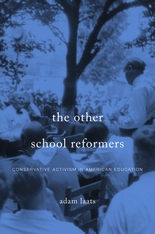
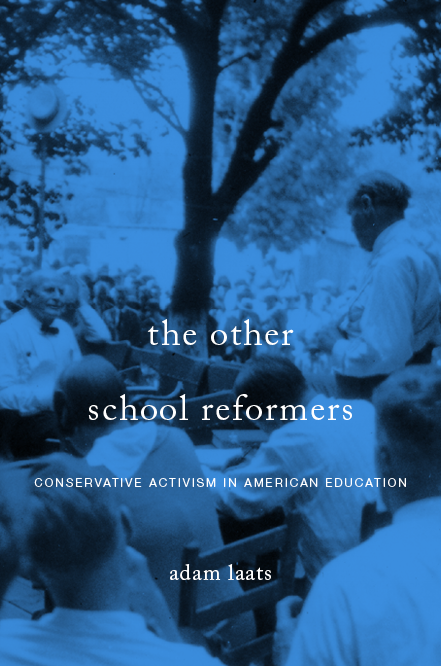
My eyeballs are beginning to chafe.  This week, I’m finishing up the index for my new book.  It’s a lot of work, even though I had a gifted grad student do most of the intellectual heavy lifting.

How the sausage gets made...

How the sausage gets made…

So now I’m wondering: Does anyone actually read the index?  I know professional academic historians do.  In fact, that’s one of the first cheap tricks we learn in our PhD programs.  We flip quickly to the back to see what we can glean from the index.  What are the book’s themes?  What are its main ideas?  Its blind spots?

But do any normal people read a book’s index?  Make no mistake, I’m compiling a kick-ass index, whether anyone ever reads it or not.  But I can’t help but wonder if readers will find useful my painstaking distinctions between “authoritarian teaching” and “traditional education.”

Coming soon...

Coming soon…

Will anyone care that I spent so many long hours in a stuffy library teasing out the nuances of “educational conservatism” as opposed to the broader category of “conservatism” in general?


The Movie that Will Save Our Children

A Florida lawmaker has offered a new definition of a summer must-see movie.  According to the Hollywood Reporter, State Senator Alan Hays has promised a bill that would force all public high-schools and middle-schools to screen Dinesh D’Souza’s America: Imagine the World without Her.

As I’ve argued elsewhere, D’Souza’s film seems to be another conservative exercise in shadow-boxing.  The film assumes that American history teachers are pushing an ideologically inspired hatred against the United States.  Historically, that just hasn’t been the case.  As I argue in my upcoming book, conservatives have exerted outsized influence over the kinds of history their kids learn in public school for decades.  The notion that schools have been taken over by a scheming cabal of sneaky progressive educators and historians just doesn’t match the historical record.

Nevertheless, it is a notion that resonates strongly with conservatives.  As Senator Hays put it,

I’ve looked at history books and talked to history teachers and the message the students are getting is very different from what is in the movie.  It’s dishonest and insulting. The students need to see the truth without political favoritism.

Ironically, Senator Hays’ plans might just prove the case.  As the Hollywood Reporter points out, Hays’ bill might actually pass, given the political landscape in Florida.  If it did, or even if it made a strong showing, it would demonstrate the continuing influence of conservative activism on public education.


Sneaky Subversion in Teaching US History

If standards and curricula seem balanced and fair, does that mean that subversives have done a good job of disguising their sneaky ideological poison? That has long been the accusation of conservative intellectuals. Leftist academics, conservatives have charged for decades, make their work seem neutral, while really injecting a biased and enervating leftism.

We see this tradition alive and well in conservatives’ recent attack on the teaching of US History. As I noted in an essay in History News Network, Dinesh D’Souza’s new film warns that leftist teachers have taught America’s kids to hate America.

Other conservative intellectuals take a similarly skeptical view of the new curriculum for Advanced Placement US History. Peter Wood of the conservative National Association of Scholars accused the new APUSH curriculum of insisting on a “worldview that emphasizes America as a place of European conquest, economic exploitation, and the struggle for basic rights against the power of the privileged.” Similarly, conservative activists Jane Robbins and Larry Krieger have warned that the new APUSH curriculum peddles a “consistently negative view of the nation’s past.”

Wood, especially, has offered examples of the sorts of negative attitude he critiques. One of the subtopics for the early period, Wood points out, depicts European settlers as devilish racists:

Reinforced by a strong belief in British racial and cultural superiority, the British system enslaved black people in perpetuity, altered African gender and kinship relationships in the colonies, and was one factor that led the British colonists into violent confrontation with native peoples.

But more important than the specific examples of egregious anti-American sentiments, Wood charges, is a more subtle attitude embedded within the curriculum. As he puts it, “Sometimes these concerns break out into overt emphasis but they are present throughout.”

Apparently unconsciously, these conservative critics are echoing a long tradition of conservative educational thinking. As I argue in my upcoming book, throughout the twentieth century conservatives warned that schools were being led in leftist directions, often by this same sort of sneaky subversion. The leftists were so sneaky, conservatives warned, that readers might not even notice their subversion.

In the 1939-1941 conservative campaign against Harold Rugg’s social-studies textbooks, for example, critics warned that unwary readers could be duped into thinking the books were balanced and fair. One coalition of conservative activists called the books’ leftism “extremely clever.” Instead of openly proclaiming their leftist bias, Rugg’s books led children “with gentle language and a pedagogic smile . . . through the successive stages of indoctrination.” These conservatives conceded that many readers might find nothing wrong with Rugg’s books. But that only meant, they warned, that the danger was that much greater.

This sort of obvious-only-to-the-initiated analysis of leftist bias seems a double-edged sword. On the one hand, it presents conservative intellectuals with a difficult task. They must convince readers that even seemingly balanced curricular material is secretly anti-American, secretly leftist. That’s a tall order. But when school subversion is embedded cunningly within seemingly neutral material, conservative intellectuals are able to explain why so many popular textbooks and curricula have prospered in spite of their leftist implications.

Are the new APUSH materials really biased? Try it. Read the new curriculum guide. Does it seem like a biased leftist document to you? Its makers didn’t think so. But does that prove that conservative intellectuals are paranoid? Or does it show, rather, that the educational establishment is so dominated by left-leaning academics that they don’t even notice their own bias?


America: Schools Taken over by Scheming Progressives

What sorts of history did you learn in school?  As I argue in a recent commentary published on History News Network, conservative thinkers and activists have often insisted that school history has been taken over by a scheming, America-hating, progressive history cabal.

It looks as if Dinesh D’Souza’s new film dives headfirst into that tradition.  In America: Imagine the World without Her, D’Souza denounces American education as woefully slanted.

In a recent interview about the film, D’Souza accuses even the best schools of teaching a “doctored account” of history.  Young people, D’Souza believes, have all been taught a skewed leftist history.  In his film, D’Souza hopes to counter this horrible history with a heroic counter-argument.

But as I found when I researched the twentieth-century history of conservative activism in the United States, I found that conservatives have exerted just as much influence over the nature of American education as have progressives.

So why do conservatives like D’Souza continue to insist that schools have been taken over by dunderheaded progressives?  If you want to read my humble opinion, you’ll have to check out the HNN essay.

The Kids Are Alright

Want to see a progressive society? Just wait. Each new generation gets less uptight about gay marriage, evolution, abortion rights, and gender equality. Right? Maybe not. Controversy-loving sociologist Mark Regnerus has produced another study sure to provoke more outrage. In this case, Regnerus claims to find that young conservative evangelicals are not swinging toward a glowing progressive future.

Regnerus first came to culture-war attention with his 2012 study of gay-marriage parenting. Unlike most other sociological studies, Regnerus found that children raised by same-sex parents did not fare as well as children raised by their biological parents.

In his new study of attitudes towards sex in America, Regnerus concluded that young conservative evangelicals are bucking the trend toward youthful progressivism. While young Americans in general might be more welcoming toward gay marriage, abortion rights, and gender equality, young conservatives are not, Regnerus claims.

Conservative Baptists Russell Moore and Andrew Walker take great solace from Regnerus’ findings. Moore and Walker, leaders of the Southern Baptist Convention’s Ethics & Religious Liberty Commission, celebrate the “sexual counter-revolution” heralded by Regnerus’ study. Conservative Christians, Moore and Walker noted recently in the pages of National Review Online, can trust that the new generation will cling to tradition. As they put it,

Regnerus’s research suggests that younger Evangelicals aren’t hewing to the culture’s expectation that they conform to its values. That’s a welcome reality, especially given the significant cultural pressures that young Christians face in today’s culture. This lines up with what we, as conservative Evangelicals, see happening in our own congregations across America.

As American culture secularizes, the most basic Christian tenets seem ever more detached from mainstream American culture. Those who identify with Christianity, and who gather with the people of God, have already decided to walk out of step with the culture. Beliefs aren’t assumed but are articulated over and against a culture that finds them implausible. Evangelical views on sexuality seem strange, but young Evangelicals in post-Christianizing America have already embraced strangeness by spending Sunday morning at church rather than at brunch.

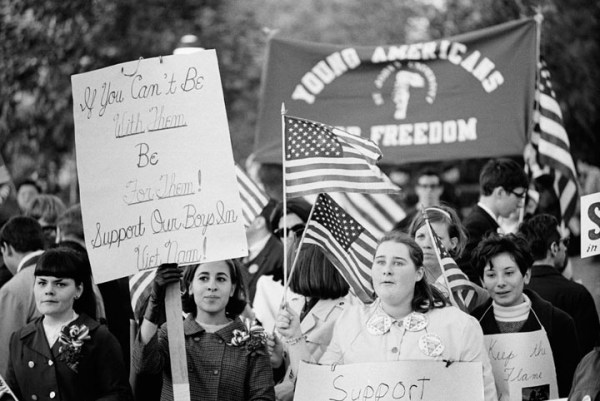
Certainly, ever since the birth of conservative evangelicalism as a dissenting identity in the 1920s, young evangelicals have stayed true to conservative ideas. In the 1920s, as I argue in my 1920s book, young members of the new “fundamentalist” coalition defied new stereotypes of “flaming youth” to assert a proudly traditional, religiously orthodox youthful conservatism. And as I’m exploring in my current research, in the 1960s conservative evangelical college campuses were hotbeds of a different sort of student activism, the “sexual counter-revolution” noted by Moore and Walker.

An Earlier Generation of Youthful Counter-Revolutionaries: YAF, 1967

An Earlier Generation of Youthful Counter-Revolutionaries: YAF, 1967

But just as Regnerus’ gay-marriage research seemed too pat, too comforting to conservative activists, so this finding does not seem to deserve the celebration lavished upon by Moore and Walker. Young conservatives may be more traditional than their young contemporaries. But those young conservatives might also be more progressive than their elder evangelicals. The times might not be a-changin’ as fast as some progressives have often assumed, but it seems a little weird for conservative evangelical leaders to conclude that young evangelicals are not moving toward the new mainstream on sexual issues.


Conservatives and Campus Rape

No one defends rape.  But these days conservative intellectuals often defend students accused of rape.  Why?  What is “conservative” about defending accused rapists?  And what does it have to with higher education?

This is a different question than a similar one we’ve asked lately.  At some conservative religious colleges, we’ve seen a debate over the relationship between theology and sexual assault.  I’ve asked if religion might deter some students from booze-fueled assault.  I’ve also wondered if the top-down authoritarian culture of many fundamentalist schools might encourage assault.

In this discussion, however, we see secular conservatives complaining about the process by which colleges handle accusations of assault.

For instance, columnist George Will attracted a firestorm of controversy when he suggested that assault victims win extra privileges on college campuses.  Liberal-dominated campuses, Will accused, were learning that “when they make victimhood a coveted status that confers privileges, victims proliferate.”

Other commentators also take the system to task.  Legal scholar David Bernstein worried that the bar for proving guilt had been lowered to dangerous levels.  At some universities, Bernstein commented, any touching that did not have explicit approval could count as rape or assault.  By that measure, Bernstein argued provocatively, only prostitutes and their clients were safe from accusations of rape.

Peter Berkowitz, too, demanded a revision of campus assault rules.  In a case from Swarthmore College that attracted a great deal of attention, Berkowitz insisted that the accused rapist did not get a fair hearing.  Too many “elite” schools, Berkowitz argued,

convene kangaroo courts to adjudicate accusations of grave crimes that should properly be left to the police and government prosecutors. Although they cannot sentence students to jail time — the cavalier manner in which these proceedings treat evidence would never pass muster in the criminal justice system — the campus bureaucracies nevertheless impose penalties capable of upending students’ lives.

None of these writers condones sexual assault. Their gripe is with the process by which those assaults are handled. Too often, being accused equals being condemned. Too often, campus committees do not respect the American traditions of being innocent until proven guilty. Each of these writers warns that a rush to convict—even with the best intentions of protecting the innocent—risks trampling the rights of the accused.

But there’s also a deeper rumbling in these essays that points to an important element of conservative thinking. In each case, by attacking campus procedures, these conservative writers condemn the leftist-dominated culture of higher education as a whole.

Peter Berkowitz, for example, located this discussion within a broader problem. Elite schools, Berkowitz wrote, have struggled with

the hollowing out of the curriculum, the aggressive transmission of a uniformly progressive ideology, the promulgation of speech codes, and the violation of due process in campus disciplinary procedures.

And George Will blamed “academia’s progressivism” for its current sorry state. “Academia,” Will concluded, “is making itself ludicrous.” But left-leaning professors and administrators brought it on themselves, Will believes. Colleges have asked for ridiculous rules and short-sighted policies, Will said, “by asking for progressivism.”

There is something more going on here than just procedural complaints. Conservatives are not only complaining about the rights of accused students. Rather, these arguments about sexual assault are part of a longer conservative tradition of fretting about university leftism. For these conservative writers, recent cases of sexual assault serve as yet another example of college radicals gone wrong.


Conservative College Cheapskates

Cheap college for all!  That’s the call of the conservative American Legislative Exchange Council (ALEC).  ALEC members will consider a proposal to mandate public university education for under $10,000.  So why is this a “conservative” idea?

The conservative group’s annual meeting agenda just came out.  Members will be asked to consider several model bills about education, including two that support expansion of charter schools.  No surprise there.  Many free-market conservatives, way back to the 1950s work of free-market guru Milton Friedman, have wanted to reform education by introducing market principles.

ALEC's Get-Together

ALEC’s Get-Together

But I’m puzzled by the higher-ed model bill.  ALEC proposes the “Affordable Baccalaureate Degree Act,” a model bill that will require public universities to offer cheaper college educations.  In the words of the proposed bill,

The Affordable Baccalaureate Degree Act would require all public four-year universities to offer bachelor’s degrees costing no more than $10,000, total, for four years of tuition, fees, and books.  The Act would require that ten percent of all public, four-year university degrees awarded reach this price-point within four years of passage of this act.

To achieve this price-point, universities would be instructed to capitalize on the opportunities and efficiencies provided by (1) web-based technology and (2) competency-based programs.

Simple enough.  There has been oodles of talk lately about the problem of burgeoning student debt.  This proposal would at least introduce a new way to talk about the price and value of college education.

I don’t know the history of ALEC’s model bill, but it looks to be modeled on a similar bill in Texas.  Two years ago, Texas Governor Rick Perry—a decidedly and self-consciously “conservative” politician—introduced a similar affordable-college law.

But here’s my question: What is “conservative” about this proposal?  I know there are conservatives and then there are conservatives, but ALEC has traditionally been a champion, in its words, of “Limited Government, Free Markets, [and] Federalism.”

On first glance, it isn’t clear how this college model bill would limit government or help free markets.  Isn’t the price of college education part of a free market?  Wouldn’t a government imposition of a price cap increase the role of government and decrease the fluidity of the free market?

Here’s my hunch: The key to understanding the “conservative” elements of these bills lies in two important words, “efficiencies” and “competency.”  As I argue in my upcoming book about the history of conservative activism in education, conservatives have long looked skeptically at the way higher education has been run.  Just as conservatives have often insisted that teachers’ unions exert an unhealthy stranglehold on K-12 schooling, they have also often insisted that higher education has been taken over by sclerotic bureaucracies and leftist ideologues.

By forcing colleges and universities to offer credit for “competencies,” free-market conservatives might hope to shatter the grip of college bureaucracies.  Too often, conservatives might argue, college rules have insisted that students spend a certain amount of time in seats, parroting back academic drivel instead of learning real skills.  If students can demonstrate competency in life skills—running a business, maybe, or opening a charter school—those “competencies” should get college credit.

Similarly, by promoting “efficiencies” in higher education, free-market conservatives might hope to force lazy and pampered college faculty to use new technology to deliver information and skills more quickly and cheaply.  Since public universities are funded at least in part by government money, forcing them to run more quickly and cheaply could be seen as crucial part of conservatives’ desire to slim down big government.

That’s my guess, in any case.  To those who know their higher-education history, though, it is surprising to hear cheap public education promoted as a “conservative” cause.  During the late 1960s and early 1970s, after all, accessibility and affordability were hallmarks of leftist activism in higher education.

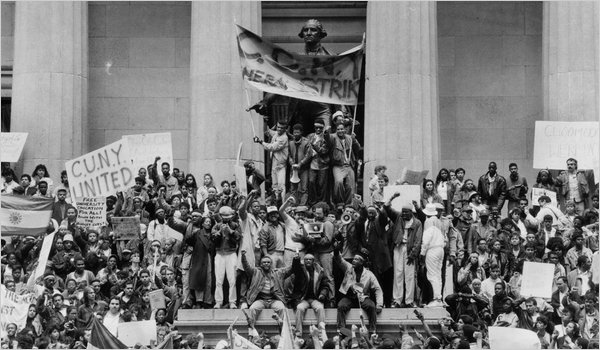
Perhaps the best example of this is the history of City University of New York.  During the 1920s and 1930s, CUNY, especially City College of New York, was known as the “Ivy League of the Proletariat.”  Top students crowded into CCNY, especially Jewish students excluded from Ivy League colleges.  It was an elite institution, admitting only the most qualified students.  Back then, it was also free.  If you could get in, you could go.

Do these CUNY tuition protesters look "conservative" to you?

Do these CUNY tuition protesters look “conservative” to you?

In the late 1960s, student activism forced a change in admissions policy.  To fight elitism and cultural prejudice, leftist activists pushed through an open admission policy.  Back then, it was leftist student radicals who called for cheap college for all.

Does ALEC’s model bill signal a shift?  Is it now a “conservative” cause to limit the cost of public higher education?


Orange Is the New Blah…

Okay, I admit it. I’ve been watching Orange Is the New Black. And I like it. But one episode I saw the other night included a painful example of what I’ve been calling the “missionary supposition” of anti-religious folks.

Orange Is the New Hack

Orange Is the New Hack

First, a short introduction for those readers with better things to do: The show follows the prison career of a privileged woman as she serves her time. At first, I didn’t want to watch it. It sounded too much like the terrible genre of ‘brave excursions outside the gated community,’ ignorant self-righteous claptrap along the lines of Barbara Ehrenreich’s Nickel and Dimed.

But after a couple of episodes, I was hooked. The protagonist’s story of elite woe is not as central as I feared. Each of the incarcerated women has her own story and the show makes the most of each.

**SPOILER ALERT: The following contains info about the end of season 1. And some bad language.**

Just because I watch, though, I can’t help but protest some of the stupid blunders incorporated into the story. In a couple of episodes, the protagonist, Piper Chapman, goes a few rounds with fellow inmate Tiffany “Pennsatucky” Doggett. In the show’s depiction of Doggett and in Chapman’s high-handed attitude toward Doggett’s religiosity, we see the worst sort of anti-religious bigotry and ignorance.

Religious = Psychopathic

Religious = Psychopathic

I don’t have much of a problem with the show’s scathing depiction of conservative evangelical religion. We see this most frighteningly in the character of Doggett. Doggett is the unofficial leader of the charismatic Bible group at the prison. She leads deluded healing services and peppers her speech with Biblical references. Not only is Doggett portrayed as a snaggle-toothed, closed-minded, ignorant hillbilly with a heavy penchant for krazy, she actually only won her role as religious prophet by shooting an abortion-clinic worker out of petty spite.

Now, if this show wants to depict religious people that way, fair enough. It is embarrassingly biased, but if the show wants to take that kind of anti-conservative-religion slant, so be it.

But it’s harder for me to swallow the wildly ignorant understanding of religion from one unfortunate scene in the episode “Fool Me Once” [season 1, episode 12, about 55 minutes in]. Pennsatucky wants to baptize Chapman in the laundry sink. At that point, Chapman unleashes her real opinion about the whole thing. IMHO, the following scene demonstrates a terrible misunderstanding of the nature of religious belief, non-religious belief, and the nature of America’s culture wars, not just on the character’s part, but by the makers of this show:

Chapman: Okay, nope, see, I can’t do this. I’m sorry. I really want us to get along. I do. But I can’t pretend to believe in something I don’t. And I don’t.

Pennsatucky: Chapman: We’ve all had our doubts.

Chapman: No, see, this isn’t ‘doubts.’ I believe in Science. I believe in Evolution. I believe in Nate Silver, and Neil deGrasse Tyson, and Christopher Hitchens, although I do admit he could be kind of an asshole. I cannot get behind some supreme being who weighs in on the Tony awards while a million people get whacked with machetes. I don’t believe a billion Indians are going to hell, I don’t think we get cancer to learn life lessons, and I don’t believe that people die young because God needs another angel. I think it’s just bullsh*t, and on some level I think we all know that, I mean, [addressing other Christians] don’t you?

Other Christian #1: [sheepishly] The angel thing does seem kinda desperate…

Pennsatucky: [threateningly, to OC#1] I thought you was a Christian.

OC #1: [defensively] I am, but I got. . . some questions. . .

Whooch! Didja see that? Again, I don’t have a beef if this show wants to malign religious conservatives, if it wants to depict anti-abortion activists as cynical, stupid, self-serving sociopaths. It’s an awkward hack job, IMHO, but not as bad as the wildly ignorant fantasy depicted in the scene above.

As I’ve argued in the pages of the Reports of the National Center for Science Education, too many anti-creationists show this same sort of ignorant “missionary supposition.” They think, along with Piper Chapman and the makers of this show, that the truths of anti-religion are so blindingly obvious that any (thinking) religious person must secretly share them.

Now, to be fair, I should point out that I do (roughly) share those beliefs.  I believe in science.  I believe in evolution.  I like Neil deGrasse Tyson and I don’t think anyone is going to hell.  But just because I agree doesn’t mean I can stomach the weirdly ignorant assumptions in which those statements are wrapped.

When Chapman recites her sophomoric list of village-atheist taunts, the gathered Christians are only kept from agreeing by the bullying of their psychopathic religious leader. In this sort of atheist fantasy, the truths of science only fail to conquer when hearers are not free to acknowledge their obvious awesomeness.

This attitude mirrors nothing so much as the overweening confidence of early religious missionaries. Many Bible missionaries in the early part of the twentieth-century, for example, assumed that the truth of the Bible was so overwhelming that anyone who caught a glimpse of its pages must be supernaturally converted. As a result, Bible missionaries spent a great deal of time and treasure to distribute the Gospel around the world.

At Chicago’s Moody Bible Institute, for example, evangelists distributed printed tracts and gospels throughout the nation and the world, based on this assumption about the supernatural power of Holy Print. As William Norton of the MBI’s Bible Institute Colportage Association related in 1921,

A man was given a tract by the roadside; simply glancing at it, and coming to a hedge, he stuck the tract into the hedge; but it was too late; his eyes had caught a few words of the tract which led to his conversion.

In this understanding of salvation and conversion, some truths have such power that the merest exposure to them is enough to convert the unwilling. Ironically, folks at places such as the Moody Bible Institute have gotten much more sophisticated in their understanding of conversion, while self-satisfied atheists like the makers of Orange Is the New Black apparently have not.

Among conservative evangelical Protestants these days, the difficulties of missionary work are more thoroughly appreciated. As conservative Christian educator David Harley wrote in 1995, missionaries must begin with a “sensitive appreciation of other cultures.” Missionaries who try to plunk down in the midst of a non-Christian population and simply begin spreading Truth amount to nothing more than “evangelical toxic waste,” Harley argued.

Actual missionaries no longer think they can convert without effort. They no longer tell each other to shout out the Gospel and count on it to spread itself. Rather, religious people show a more nuanced understanding of the ways people change their minds.

But there still seem to be people out there so ignorant of other cultures that they think they can convert the heathen with a simple exposition of the Truth. Folks who think that by declaiming a few holy names, such as Christopher Hitchens and Neil deGrasse Tyson, the scales will fall from the eyes of the benighted Christian multitudes.

Pish posh.


Want School Reform? Go Medieval!

It’s hard to cross the street these days without bumping into a new panacea to fix America’s schools.  Longer school days, more parent choice, uniforms, more art, more math, more tech, less tech…everybody’s got a new idea to fix education.

We read today in the pages of Forbes Magazine a different sort of proposal.  To fix America’s high schools, Pascal-Emmanuel Gobry writes, we should go medieval.  To be specific, we should emulate the tutorial style of education developed in the middle ages at Oxford University.  Could it work?  Or, more intriguing, could proposals like Gobry’s serve as a new grand educational rapprochement between conservatives and progressives?

In that tutorial system, Gobry argues, students read a book every week and write a short essay about it.  Then they share the essay with a small group, including a tutor and two or three fellow students.  There is no grading, there are no test scores.  The reading list would include great books, however we wish to define them.

Could it work?  Gobry insists that this plan is both practical and “urgent.”  Elsewhere, Gobry wrote that too often education is misunderstood.  His plan would put it back on track.  Even liberal leaders, Gobry pointed out recently, seem to agree that education is meant mainly to produce technically qualified but dead-eyed engines of economic growth. “Nobody stops to ask what education is for,” Gobry lamented,

because the answer is implicitly accepted by all: an education is for getting a job. It is, in other words, for being a cog in the giant machine of post-industrial capitalism. It is, in other words, for the opposite thing that our forefathers wanted for us. I do not use these words lightly, but it is against–in the sense that a headwind is against a ship–the very foundations of our liberty and our civilization.

We could nitpick about whether Gobry’s plan could work.  As a ten-year veteran classroom teacher, I can see plenty of holes that Gobry does not seem to recognize.  But a more interesting question for ILYBYGTH readers is this: Could Gobry’s proposal serve as the foundation of a grand rapprochement between liberals and conservatives?

Here’s what I mean: At the roots of both “progressive” and “conservative” educational reform traditions there lurks a desire to free students of mindless routine and push them to more rigorous study, more authentic, transformational learning.  John Dewey, for example, hoped his school reform program would eliminate mind-numbing recitations and force students to engage more thoughtfully with the big ideas.  And William F. Buckley sparked the post-war conservative fusion movement with his searing critique of the soft and soulless education peddled at his alma mater.

Dewey became the spokesperson for progressivism, while Buckley personified conservatism.  But when it came to the goals and process of learning itself, the two thinkers were not very far apart.  This may seem a shocker, but Gobry’s short essay supports the notion.  What thinking conservative would not support a notion of education that presses students to engage profoundly with the formative documents of our civilization?  That forces teachers to do more than process young humans and train them in lock-step obedience?  And what thoughtful progressive does not want an education that makes human freedom its primary goal?  An education that tears up meaningless standardized tests and instead engages students of every background to struggle with humanity’s oldest problems?

In the end, I don’t really think Gobry’s great-books plan will work as a silver bullet to fix America’s public schools. But Gobry’s line of thinking might serve as a way to get conservative and progressive intellectuals to come together in recognition of their vast similarities.


Bloomberg Bashes College Liberal Orthodoxy

It’s not news when conservative intellectuals complain about liberal orthodoxy at America’s colleges.  But recently former New York Mayor Michael Bloomberg told Harvard’s commencement audience that colleges needed to include more conservative voices.

The conservative intellectual world has long been aghast at the purported liberal bias of American higher education.  After all, it was in many ways William F. Buckley Jr.’s enfant-terrible critique of Yale that launched the post-war conservative fusion movement.  More recently, as we’ve noted in these pages, conservatives in Colorado managed to insert a prominent conservative into the faculty of that state’s flagship university.  And conservatives have offered prescriptions to heal America’s blighted leftist ivory towers.

In this commencement season, the world of higher education has been aflutter with commencement cancellations.  Rutgers pulled the plug on Condoleeza Rice, Brandeis said thanks but no thanks to Ayaan Hirsi Ali, and Asuza Pacific University cancelled Charles Murray’s talk.

Mayor Bloomberg warned that universities must welcome a real intellectual diversity.  Chanting and protesting to shut out conservative voices, Bloomberg warned, threatened the very purpose of the university.  “In the 1950s,” Bloomberg told Harvard,

the right wing was attempting to repress left-wing ideas.  Today on many college campuses it is liberals trying to repress conservative ideas even as conservative faculty members are at risk of becoming an endangered species.

Not surprisingly, conservatives have embraced Bloomberg’s theme.  Richard D. Land of the Southern Evangelical Seminary agreed heartily in the pages of the Christian Post.  Bloomberg, Land enthused,

has done the nation a great service by speaking bold truth to intolerant power.

Liberal intolerance was prevalent when I was a Princeton undergraduate in the 60s. It has become far worse in the intervening decades. Too many students are being brainwashed and indoctrinated, instead of educated, in our nation’s colleges. Unless such dangerous trends are reversed, it will increasingly imperil everyone’s liberties – personal, civil, and religious.

Similarly, Glenn Beck gushed, “you have to respect his willingness to speak so definitively about the intolerant culture at far too many universities and colleges.”

As I argue in my upcoming book, conservatives have worried about the ideological slant of America’s elite colleges throughout the twentieth century.  Now they have a prominent ally in former mayor Bloomberg.