Rosenhouse Responds to a Critic

“Gall,” “tortured reasoning,” “gross theological ignorance,” and “demented” “troll[s].”  Discussions about creationism and evolution have it all!

A few days back, we posted a review of Jason Rosenhouse’s Among the Creationists.  As usual, any mention of this subject generated some heated comments.

This morning, Professor Rosenhouse offered a rebuttal of some of the critical comments.  He responded to the charges that he had misrepresented creationist claims, among others.

Everyone interested in the creation/evolution debate should check out his reply.

Creationists Are Right, Leading Atheist Concludes

Sorry for the overly dramatic headline. But that really is one of the conclusions of atheist mathematician Jason Rosenhouse.

They are not right that the earth is some 6,000 years old.  Nor are they correct that humans are the special beloved product of God’s magic touch.  But in his book Among the Creationists, Rosenhouse concludes that young-earth creationists are correct that the foundational idea of evolution poses a threat to the very core of Christian belief.

Get your copy today!

Get your copy today!

Rosenhouse’s book is required reading for any outsider who hopes to understand the world of American creationism in the twenty-first century.  Rosenhouse deliberately eschews the simple, satisfying approach of most outsiders.  He does not belittle or deride these ideas or their adherents, though he does forcefully argue against them.

As Rosenhouse describes, he is a mild-mannered mathematician with an unusual hobby.  For the past several years, he has attended creationist conferences and pored through creationist publications.  This experience did not soften Rosenhouse’s intellectual opinion about the scientific illegitimacy of creationism. But it did open his eyes to the galaxy of different types and approaches to creationism. And it convinced him of the overriding need to maintain civility, especially in these difficult discussions.

Indeed, some of the most illuminating parts of the book are the vignettes Rosenhouse includes.  In one story (pages 8-11), he describes an impromptu conversation in a Subway restaurant outside of one of the creationist conferences he attended.  Rosenhouse overheard a group of Christian creationists—a woman and some teenagers—talking about the strangeness of atheism.  He offered his conversational services as a real live atheist.  The young people seemed interested and willing to talk cordially. A nearby woman soon interrupted and warned the teenagers away from Rosenhouse, who she suggested had “been educat[ed] beyond [his] intelligence” (10).  In the end, though, the Christian busybody warmed up to Rosenhouse and even prayed for him.

Did anyone convince anyone else?  No.  But was this conversation worth having?  I think so. Rosenhouse reported feeling that the adults were occasionally rude in their obvious opinion that he was some sort of “zoo animal” (10).  But he also noted that creationists like the ones at Subway almost always remained cordial and even welcoming.  Was he likely to convert to creationism or conservative Protestantism?  Not at all.  But his understanding of the entire dilemma did change in important ways.  How about the people he spoke with? Were any of them likely to embrace the obvious truths of mainstream science? Also not likely.  But my hunch—and Rosenhouse’s—is that such friendly conversations with a real live atheist do a great deal to keep open the minds of creationists everywhere.  As Rosenhouse states, “any hope of doing long-term good comes from being scrupulously polite” (10).

Indeed, Rosenhouse occasionally takes “our side” to task for its own brand of ignorance. As he points out, “Insularity is a two-way street” (15).  If some of the ferocious anti-creationists out there took some time to find out more about the real world of American creationism, they would without a doubt be surprised at what they found. For one thing, with a few exceptions, Rosenhouse’s loud-and-proud scientific atheism was welcomed to these creationist conclaves with politeness and even intellectual excitement.  Second, creationism is a bigger tent than many outsiders understand. One creationist conference organizer, for instance, complained to Rosenhouse about the “piles of garbage” that passed as scholarship among creationists (14).

Throughout the book, Rosenhouse succeeds at illuminating the intellectual world of creationism.  He takes such beliefs seriously, while never granting them legitimacy as scientific ideas.  For example, Rosenhouse laments the “tiresome” assumptions of some of his non-creationist colleagues about the biblical beliefs of creationists (43). Rosenhouse carefully explains some of the ways creationists interpret the Bible.  The label “Literalism” does not do justice to this tradition.  For most creationists—or at least for the “mainstream” tradition of young-earth creationism—passages in the Bible should be taken at their obvious meaning.  If something is clearly meant as a parable, it should be read that way.  But readers should not add in baroque interpretive schemes to warp the Bible’s clear meaning into more culturally palatable explanations. As Rosenhouse concludes, Genesis really does support a YEC interpretation. There is not much in the text to suggest that these passages were meant to be read as anything but real descriptions of real historical events.  More provocatively, Rosenhouse challenges us non-creationists to grant creationists their fair treatment. If creationists’ dismissal of all evolutionary science is absurd, so it is arrogant and self-serving for us simply to dismiss such a widely held belief (159, 167).

For those who have not yet read this book, all this might make it sound as if Rosenhouse fell in love with creationism as he falls all over himself to find the tiniest points of agreement.  Nothing could be further from the truth.  Rosenhouse never grants the truth claims of creationists.  He sternly and repeatedly opposes both their notions and their tactics.  For instance, Rosenhouse revisits some of the oldest anti-creationism arguments.  Where did Cain get his wife? (164) Why do creationists only insist on some parts of Genesis, and not others?  Why, for example, do creationists not insist the earth is flat, with a dome-shaped covering? (163)  Just as a literal six-day creation seems to be the obvious interpretation of the Bible’s first lines, so a flat earth is the most near-to-hand interpretation of the text.  These old chestnuts, Rosenhouse argues, still have more than enough punch to deflate the most self-satisfied creation scientist.  More important, Rosenhouse points out that most creationist science is based on utterly false interpretations of basic concepts.  Even worse, creationists often suggest that evolution is only dominant due to a wide-ranging conspiracy, a claim Rosenhouse justly dismisses as pathetic (36).

Yet in spite of his firm opposition, Rosenhouse concludes that creationist reactions to the challenge of evolution are more intellectually respectable than those who try to marry creation and evolution. It makes no sense, Rosenhouse argues, to pretend that evolution does not fundamentally challenge traditional faith (219).  Some creationists respond in a way that makes sense; they reject evolution.  They may be entirely and sometimes cruelly wrong, Rosenhouse believes, but at least they have recognized the magnitude of the challenge posed to traditional Christian belief by evolution.

So stop reading this tripe and go get yourself a copy of Rosenhouse’s book.  For those of you who are creationists or recovering creationists, the volume will give you a sense of how the movement appears to a socially pleasant but intellectually hostile outsider. To us outsiders—liberals, scientists, and others who have only tangential knowledge about American creationism—this book is an absolute must read.  It joins other indispensable books in this field, such as Ron Numbers’ The Creationists, George Marsden’s Fundamentalism and American Culture, and Edward Larson’s Summer for the Gods as starting places to understand this durable culture war battlefield.

Fundamentalist Science, Spock, and Oprah

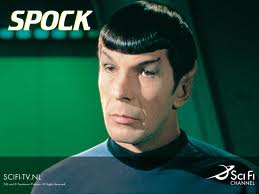
What do Science, Spock, and Oprah have to do with each other?

They help explain the thinking of anti-religion activists such as biologist Jerry Coyne.  The way some atheists figure, since religion is not logical, it should have no impact on our deliberations.  Oprah doesn’t agree. But who wields more clout in our culture, Oprah or Jerry Coyne?  Or, to put it another way, who is the star of Star Trek, Spock or Capt. Kirk?

Fundamentalist Science is highly illogical.

Fundamentalist Science is highly illogical.

I love to read Professor Coyne’s blog, Why Evolution Is True.  He always makes intelligent arguments for the propriety of a scientific understanding of reality, and the dangers of “accommodationism” with religion.  Plus he has lots of pictures of cats and bugs.

Recently, two posts bumped up against each other that demonstrated the difficulties with Coyne’s approach to these issues, IMHO.  In one post, Coyne reviewed survey data that revealed the relative overabundance of atheism among America’s top scientists.  In the next, Coyne bemoaned the appearance of Oprah Winfrey as Harvard’s commencement speaker this year.  As Coyne pointed out, Winfrey has done a great deal to promote anti-scientific rubbish over her career.

Now, I’m no Oprah fan.  Nor am I particularly religious.  But I can’t help but notice that Coyne’s fundamentalist attitude about this subject fuels the bitterness of our continuing culture wars over the role of religion and science in the public square.  This kind of bitterness is both unnecessary and counterproductive.

Science-advocates such as Coyne promote a particular vision of science as rigidly opposed to religion.  Coyne often protests against truckling to religious thought among scientists and science educators, such as the folks at the National Academy of Sciences or the National Center for Science Education. As I’ve noted before, Coyne’s extreme view of the necessary divide between science and religion puts him at times on the side of extreme creationists.

But Coyne’s religion- and Oprah-bashing put him on the side of some other curious figures as well.  Most famously in pop culture, Gene Roddenberry created Spock as the Asperger’s First Officer to balance Kirk’s testosterosity.  Spock always argued for the rule of logic and was always trounced by Kirk’s shoot-from-the-hip style of emotional leadership.

Smarter writers, too, have explored this Spock/Kirk, Coyne/Oprah divide. Most famously, Dostoyevsky’s Ivan Karamazov concluded reasonably and logically that God could not exist.  However, Ivan could not handle Smerdyakov’s gruesome conclusion to that logic.  Nor could Ivan counter Alyosha’s loving-kiss argument.  Like Spock, Ivan’s blind reason could not cope with the complexities of human experience.

Truth may not be democratic.  But our society is.  It is a good thing to have smart people complain about the influence of thoughtless media-mongers like Oprah.  But those smart people must also recognize that Oprah—unlike the elite atheist scientists—has her finger on the pulse of the culture.  She knows what people find important. She knows what people find interesting.  Oprah’s imprimatur does not make an idea true.  But it does mean that the idea matters somehow.

Dismissing such things out of hand demonstrates an unnecessary Spock Syndrome.  Simply because ideas are illogical does not mean they are not true, in an important sense.


Beautiful Women Want Creationism

From the Old News Department: Miss USA finalists are friendly to creationism.

I just discovered two-year-old footage from the Miss USA 2011 competition.  As Tanya Somanader broke the news at the time, almost all of the 51 contestants supported the idea of teaching creationism in public schools.

Alyssa-Campanella-Miss-California-USA-2011-is-crowned-Miss-USA-in-Las-Vegas

“They’re teaching what?!?!?”

The video interviews still make for compelling viewing.  I’m no big fan of beauty pageants.  I don’t know anyone who is.  But as I found out a while back, there has been a strange correlation between conservative religion and Miss America over the years.

As Tanya Somanader noted, only two candidates affirmed that evolution should be taught in schools as science, unalloyed by creationism or intelligent design. The rest of the candidates offered either a two-model answer or flat-out rejection of evolution for America’s schools.

Miss New York, for example, agreed that evolution should be taught in public schools, but so should religion.  Miss North Dakota offered a more relaxed answer.  “Sure, why not?” she said, “Evolution should be taught . . . I think it’s good that people hear both sides of, I guess, ‘the story,’ so to speak.”  Miss Oregon agreed.  “I think every theory of how we came to be here should get a shout out in education,” she answered.

These fence-straddling answers tell us something about the conservative cultural politics common among high-level beauty pageant winners.  More telling, they show us what national finalists think will be a winning answer to the question of evolution education.  Almost all of the finalists advocated a temperate-sounding compromise, one that welcomed all theories into the public school classroom.

Even those like Miss North Carolina who stressed the fact that they personally did not believe in evolution made irenic noises about allowing evolution to have some space in public education.

To some extent, this proves that elite beauty-pageant contestants are savvy politicians.  Gallup polls demonstrate that the overwhelming majority of Americans favor the teaching of both evolution and creationism in public schools.  By waffling on this important question, these Miss USA wannabes show their understanding of this diplomatic demilitarized zone in our continuing culture wars.  Of course, the two-model approach is horrifying to mainstream scientists and science educators.

Not all the Miss USA contestants took even this middle path, however.  Miss Kentucky, for example, concluded, “I just personally don’t think it’s a good topic for school subjects. At all.”  Even harsher, Miss Alabama declared, “I do not believe in evolution, I do not think it should be taught in schools, and I would not encourage it.”

Wrong Not Crazy

Are creationists crazy?  Dumb?  Ignorant?  Guilty of child abuse?

Of course, some creationists might be all or any of those things.  But in spite of the overheated accusations of some science advocates, creationists are not dumb or crazy BECAUSE of their creationism.  More to the point, assuming that creationists can only be crazy stops any authentic attempt to understand creationism.  In the long run, that sort of ignorance on the part of evolution educators hurts the cause of evolution education itself.

This is not a popular thing to say.  Creationists don’t like it because it suggests that many people think of them as idiots.  Many anti-creationists don’t like it because they take the idiocy of creationism as an article of faith.

When I made this simple point in the pages of the Chronicle of Higher Education a few months back, I was called an idiot and worse.

Recently, Josh Rosenau, Policy Director of the National Center for Science Education, emphasized this important idea in a talk to an audience at Santa Clara University.  Rosenau has argued this unpopular position before.

In his recent talk, Rosenau pointed out (minute 15 of the 45-minute video) that “Science Denial” may be wrong, but it is not irrational, nor is it antiscience.  People who do not believe in evolution often know about it.  People who do not believe in evolution have their own consistent, internally logical, socially supported intellectual community.  As Rosenau noted, creationism is often “driven by personal identity and deep, real, important concerns.”

Continuing kudos to Rosenau and the NCSE.  This message is often politically unpalatable, but it is the only way to make progress in these depressingly durable creation/evolution battles.  Name-calling and point-scoring only deepen the culture-war trenches.

Creationist Bogeymen

Say, did you hear what happened to Senator Kruse’s “Truth in Education” bill in Indiana?

Unless you’re a close personal friend of the Senator, I’m guessing you haven’t.  The career of bills like this one can tell us a thing or two about the cultural politics of creationism.

Senator Kruse garnered some headlines six months ago for his plan.  Kruse, the chairman of the Indiana State Senate Education Committee, promised a new law that would guarantee students’ right to challenge their teachers’ pronouncements.  The barely disguised goal was to allow creationist students to confront evolutionary teaching.

At the time, pundits and scribblers announced Kruse’s plan as the latest offensive in a creationist juggernaut.  Reporters noted the connections to Seattle’s Discovery Institute, the leading intelligent-design think tank.  Progressives lamented this latest power play by religious conservatives.  One commenter called the bill the latest effort to “march the education of American children toward the 19th century.”  Another explained Kruse’s new effort as an end run around evolution.

But here’s the problem: Kruse’s bill didn’t do any of those things.  It didn’t do anything.

Kruse’s bill died the quiet death of most legislation.  As House Bill 1283, Truth in Education went nowhere.  But no one reported on that. [**DOUBLE CORRECTION: First, HB 1283 was not introduced by Senator Kruse, but by Kruse’s ally, Representative Jeff Thompson.  Second, the National Center for Science Education, that tireless watchdog of all things creationism, did in fact report on the fate of HB 1283.  Thanks to Glenn Branch of the NCSE for calling our attention to it.]

To be fair, several of the journalists who talked about the looming threat of Indiana’s latest creationist bill wondered if the bill would ever get anywhere.  But a casual news reader could be forgiven for assuming that creationists pass laws like this all the time.  The news media’s hunger for the sensational feeds a skewed perspective on what is and is not legal in America’s schools.

This is not new.  In 1942 Oscar Riddle and his colleagues conducted a survey of high-school science teachers.[1]  They asked teachers if they taught evolution or special creation, and why.  Those answers were illuminating.  Over three thousand teachers responded to the questionnaire.  Those who claimed not to teach evolution gave a wide range of reasons.  One teacher from North Carolina explained that evolution education was “a taboo subject to most people” (73).  A Nebraska teacher said she avoided evolution education mainly due to “Lack of time.”  One California teacher added, “Controversial subjects are dynamite to teachers” (74).  In the stereotype-shattering department, another California teacher from a “large city” explained that he or she didn’t teach evolution because the “Fundamentalist beliefs of majority of our students may not be attacked (negro and Mexican)” [sic] (74).

Most relevant here, lots of teachers incorrectly believed evolution education was illegal in their states.  Since the 1920s, as I detail in my 1920s book, a handful of states really did pass anti-evolution laws or education-department rules.  But a significant percentage of teachers in the 1940s believed incorrectly that their states had also done so.

Why?  My hunch is that anti-evolution bills get much more attention than they deserve.  Any conservative religious lawmaker can earn quick points for introducing a bill destined to go nowhere.  This was the case in the 1920s, the 1940s, and it is the case today.  Senator Kruse’s bill did not change anything for any students in Indiana.  But it did contribute to a widespread notion that creationism is on the march all over the country.


[1] Oscar Riddle, F.L. Fitzpatrick, H.B. Glass, B.C. Gruenberg, D.F. Miller, E.W. Sinnott, eds., The Teaching of Biology in Secondary Schools of the United States: A Report of Results from a Questionnaire (Washington, DC: Union of American Biological Sciences, 1942).

Oh, Horror! Stephen King Plumps for Intelligent Design

Promoting his new book, Stephen King told NPR’s Terry Gross that intelligent design is the only thing that makes sense.  Not only that, but King promoted a particularly religious interpretation.

I choose to believe it. … I mean, there’s no downside to that. If you say, ‘Well, OK, I don’t believe in God. There’s no evidence of God,’ then you’re missing the stars in the sky and you’re missing the sunrises and sunsets and you’re missing the fact that bees pollinate all these crops and keep us alive and the way that everything seems to work together. Everything is sort of built in a way that to me suggests intelligent design. But, at the same time, there’s a lot of things in life where you say to yourself, ‘Well, if this is God’s plan, it’s very peculiar,’ and you have to wonder about that guy’s personality — the big guy’s personality. And the thing is — I may have told you last time that I believe in God — what I’m saying now is I choose to believe in God, but I have serious doubts and I refuse to be pinned down to something that I said 10 or 12 years ago. I’m totally inconsistent.

Eric Hedin and the Care and Feeding of Young Scientists

Scientists aren’t necessarily stupid.  Yet, as we’ve seen, some academic scientists demonstrate a curious ignorance or even proud self-delusion about important aspects of science and culture.

Perhaps the continuing kerfuffle over Professor Eric Hedin and Ball State University can shed some light on this puzzle.

The case began, it appears, with complaints by University of Chicago scientist and science activist Jerry Coyne.  Coyne complained that the teaching of Eric Hedin at Ball State University represented the indoctrination of students by a religious zealot. Professor Hedin taught a course cross-listed as “The Boundaries of Science” or “Inquiries in the Physical Sciences.”  True enough, Hedin’s reading list leaned heavily on old-earth creationism and intelligent design.  Worst of all, Professor Coyne argued, Hedin’s course proselytized for a specific sort of Christianity and called it science.  The university and department reluctantly agreed to investigate Hedin’s teaching.

Professor Coyne hoped the university would pressure Professor Hedin to stop his preaching.

Other leading science bloggers disagreed.  PZ Myers argued that Hedin’s teaching, though lamentable, must be allowed as an issue of academic freedom.  “If we’re going to start firing professors who teach things that are wrong,” Myers insisted, “we’re all going to be vulnerable.”

The debate between these science activists on the boundaries of acceptable university teaching might help us understand why so many scientists are so strangely unaware of the cultural context of their work.  Neither Professor Coyne nor Professor Myers seems to think that Professor’s Hedin course might actually be of value to the scientists-in-training at Ball State.  Myers defends the classes as a protection of Hedin’s rights, not the protection of student interests.

Is it not possible that such intellectual diversity could be a positive good?

In issues of race, the US Supreme Court has ruled that diversity is a legitimate goal of university admissions.  Racial diversity, in other words, is not only good for members of racial minority groups.  Diversity is good for everybody who wants to learn.

Does not the same principle apply here?

Of course, we would want to avoid the absurd extension of this principle.  We would not want to teach people things that were obviously not true only to give students some sort of intellectual workout.  But the ideas taught by Hedin are not the ravings of some isolated madman.  Rather, they represent an influential and important tradition in our culture.  Though these ideas do not qualify as representatives of mainstream science, they are nevertheless ideas about science.  Scientists should know about them.

Raising young scientists in an ideological or cultural hothouse produces fragile flowers.  It helps explain why so many smart people emerge from this training so remarkably dumb about important ideas.

If we looked into this question as one of encouraging intellectual diversity, we could shift the debate in useful ways.  Everyone can agree that students can benefit by being exposed to a diversity of ideas.  The question becomes, then, at what level and in what format should students learn about heterodox ideas?  What courses should count as requirements, and what courses should be elective?  Most important, where are the boundaries of acceptable diversity?  These are questions with which university faculties have long experience.

In my field, for instance, it would not make sense for introductory courses in American history to teach only a Marxist interpretation of the past.  Students from all sorts of fields take those introductory courses.  For many students, such a course may be their only collegiate exposure to American history.  It would not make sense for those students to learn that history is the unfolding of the class struggle.  But for history majors, students will benefit from having one or more advanced courses taught about specific interpretive traditions, whether or not the instructor is a Marxist.   Even though I do not think a Marxist interpretation is the best approach, I support the inclusion of such courses in university programs.  Not only to defend the teaching rights of professors, but more importantly, to ensure students experience a true diversity of intellectual approaches.

In the case from Ball State, it does not seem as if Professor Hedin’s religion-heavy course should be the ONLY exposure students have to science.  Nor should this course be taught as an introduction to science as a whole. But students who take a full course load of science classes could certainly benefit from considering such ideas.  Even if taught by an instructor who embraces the theological implications.  Other courses might study other aspects of science, and might usefully be taught by professors with strong intellectual commitments to a particular worldview.

Making the debate a question of when and how students encounter intellectual diversity is not as exciting as debating if religious ideas can be taught as science.  It is not as exciting as arguing whether professors have the academic freedom to teach heterodox ideas.  But it seems to me the most productive way to discuss Professor Hedin’s case.


Jonny Scaramanga Gives Us…Creation Rock!

Think creationism is a bunch of dweebs with thick glasses stammering as they refute mainstream science?  Think again!

UK former fundamentalist Jonny Scaramanga offers some priceless creation-rock videos today.  Jonny grew up with this stuff, but for secular folks like me, it is a revelation.

Geoff Moore and the DistanceCheck out Jonny’s guest post at Laughing in Purgatory, and, best of all, watch the video he saved for his own blog, Leaving Fundamentalism.  This video mixes “Smokin in the Boys Room” with “Take On Me.”

Thanks Jonny… Motley Crue + A Ha + The Genesis Flood = Wow.

What do Pastors Believe about Origins?

What do America’s professional Protestants think about evolution and creation?  Biologos has published the results of a survey of US Protestant pastors.

Those concerned with creationism and evolution have published many surveys of the ways evolution is taught in public schools.  Those surveys tend to focus on the ideas of high-school biology teachers.  Most recently, the work of Penn State political scientists Michael Berkman and Eric Plutzer offered a thorough nation-wide look at what biology teachers think and teach.

Source: Biologos Forum

Source: Biologos Forum

This survey, in contrast, asked 602 “senior pastors” for their views.  The results invite a few comments.

First of all, we should note that this is not a survey of religious Americans’ views about evolution and creation.  Rather, this is specifically a survey of a spectrum of US Protestant pastors’ views.  There were no leading Catholics involved, much less Muslims, Jews, Hindus, or any other religious group.  That matters.

Second, the numbers themselves make some interesting points.  We are not surprised by the majority (54%) who call themselves young-earth creationists.  We are surprised, though, by the strong showing for “uncertain” (12%) and the relatively weak showing for “theistic evolution” (18%).  Could these two answers be reasonably combined to form a much stronger bloc—nearly a third—of American pastors who take a theistic but uncommitted view of evolution?

Finally—for now, though the Biologos editors have promised to dig in more deeply to these survey results in the future—what about the striking Biologos note in its seventh point?  As the Biologos editors point out, a majority of pastors with young-earth creationist (YEC) beliefs agreed that publicly challenging those views might cost them their jobs.  In other words, for pastors with YEC beliefs, even a whiff of doubt or skepticism must be avoided.  This seems to confirm the accusations of anti-creationists.  If YEC pastors feel obliged to maintain their positions—feel dug in to YEC beliefs regardless of evidence or personal struggles—it seems fair to accuse YECs of closed-mindedness, obdurate clutching of YEC due more to social and economic pressure than to Biblical conviction.

Certainly, Biologos is not a disinterested party.  The organization hopes to promote “evolutionary creationism” or “theistic evolution.”  And my social-science chops, I’m afraid, aren’t sharp enough to offer a good critique of this survey methodology.  But if we take Biologos’ word for it, there might be a large number of YEC pastors out there who stick to their YEC guns for other reasons than Bible-based conviction.