Culture Wars Update: Who’s Winning?

Is the sky falling for progressives like me? In The Atlantic, journalist Molly Ball argues that liberals are losing the culture wars. The same topic just came up in our recent panel of educational historians. Is Ball right?

Four horsemen?

Four horsemen?

She looked at the results of the recent mid-term elections. In Ohio, voters rejected recreational marijuana. In Houston, they voted against gender-neutral bathrooms. In San Francisco, they booted an immigration-friendly sheriff. In Virginia, gun control struggled. In Kentucky, Kim Davis’s brand of in-your-face culture-war bluster helped win the governor’s office.

Ball’s conclusion?

taken together these results ought to inspire caution among liberals who believe their cultural views are widely shared and a recipe for electoral victory.

Fair enough. But not surprisingly, our all-star panel of historians came to different conclusions. To historians, these electoral losses don’t seem so cataclysmic. After all, consider the historical context: people are voting about making pot legal. Can you really deny Andrew Hartman’s argument that the echoes of the 1960s are dominated by the accents of hippies?

And yes, Houston lost its push for bathrooms that recognize the fluidity of gender. But look again: Who lost? The city in Texas with the openly gay mayor, that’s who.

We can make the same case for the other elections as well. Yes, conservatives here and there will have some successes in blocking the progressive changes that continue to roll through our society. Such blocking maneuvers, however, are a rearguard action.

Voting against gender-neutral bathrooms does not change the fact that we are now considering gender-neutral bathrooms. Thirty years ago—heck, even five years ago—that would not have been up for debate.

I think we need a more nuanced answer to the question of winning and losing when it comes to our culture wars. In my recent book, I looked at the educational activism of conservatives during the twentieth century. A lot of the time, they won. But just as with these recent cases, conservatives tended to succeed only in blocking or delaying certain limited sections of progressive change. Progressives still set the cultural agenda.

Here’s my two cents: first of all, I agree with our dean of educational historians, Jon Zimmerman. Jon argued this week that it is mostly meaningless to talk about winning or losing in this context. As does this Atlantic article, talk about winning or losing is usually a tactic to rally the faithful of each side, not a clear-headed analysis of shifting cultural trends.

Having said that, I think we can discern a century-long trend with these sorts of fights. In every case, conservatives might win or lose the specific battle. They do not win the war. What they do win, time after time, is the right to be listened to, the right to be considered part of the conversation about these issues.

For progressives like me and most of my friends, progressive change seems like an obviously good idea. Of course people should be able to smoke pot if they want. Of course transgender people should be able to use appropriate bathrooms. Of course guns should be controlled, immigrants welcomed, and same-sex marriage rights should be honored.

When we see election results like this one, though, we are reminded that not everyone agrees with us. When we see how strongly people disagree, we should not tear our hair and gnash our teeth. We should not lament the narrow-mindedness of our fellow citizens.

Rather, we should recognize the vast differences between Americans when it comes to these issues. As we do here at ILYBYGTH, we should do our best to understand and even sympathize with those voters who disagree with us.

After all, the only real victory in our bitter culture wars will come when we can respect those with whom we disagree.


The E-Word

You don’t have to love your enemies. You don’t even have to like them. But a founding principle of ILYBYGTH is that we should all try to understand those with whom we disagree. Indeed, as journalist and FOILYBYGTH* Trey Kay notes in a recent episode of his podcast Us & Them, there is a critical difference between disagreeing with someone and calling him or her an “enemy.”

And don't forget about frenemies!

And don’t forget about frenemies!

If you haven’t yet checked out Us & Them, it’s worth a listen. Different episodes explore issues near and dear to SAGLRROILYBYGTH, such as neo-confederate history, gay rights, and conservative textbook watchdogs Mel and Norma Gabler.

In the most recent episode, Kay explores the question of the enemy. As Kay reports, these days it’s not shocking to hear leading politicians describe the opposing party as the “enemy.” What sort of tone does that set for our day-to-day civil discourse? Can I have lunch with someone who is an “enemy?” Could I work on a school board with one?

Trey includes parts of a conversation he had with your humble editor. We talked about the origins of the name of this blog, and about the difficulties of understanding those with whom we disagree. As I told Trey, this blog is, in part, an effort for secular folks like me to understand what conservative religious people might mean if they say “I love you, but you’re going to hell.”
As he included in the segment, I think there are more important goals than simply winning culture-war battles. If we disagree about issues of religion and politics, we need at least to try to include those with whom we disagree in a civil discussion. We can’t do that if we resort to knee-jerk demonization.

That’s easy enough to do with things we don’t really care about. But what about when it hits home? What about when it is a question of what our kids are learning in school, or what rights we have? For example, for creationists it can be very difficult (I imagine) to relax and talk civilly to someone who wants to teach their kids that humans were not created by God. For people like me, it is enormously difficult not to demonize opponents who don’t agree with us about same-sex marriage rights.

So what do we do? To start, we can listen to the Us & Them podcast.

*Friend of I Love You but You’re Going to Hell, natch.

Are the Culture Wars History?

I don’t get out much. So when I was invited to participate in a panel at the annual meeting of the History of Education Society, I jumped at the chance. Especially when it gave me the chance to rub shoulders with some nerd all-stars.

Meet me in Saint Looey...

Meet me in Saint Looey…

Our panel will include four authors of books familiar to SAGLRROILYBYGTH. First, Jon Zimmerman will tell us something about global sex ed from his new book, Too Hot to Handle.zimmerman too hot to handle

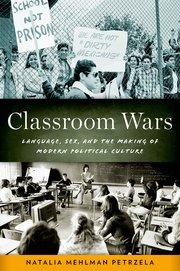
Then, Natalia Mehlman Petrzela will keep the sex-ed ball rolling while adding in some bilingual ed as she talks about her book, Classroom Wars.petrzela classroom wars

Next, Andrew Hartman will share some insights about education and culture wars from his blockbuster War for the Soul of America.Hartman

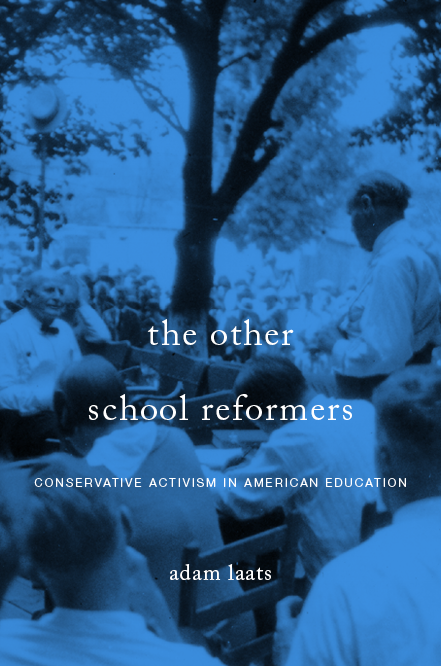
Last, I’ll talk a little bit about what it has meant to be “conservative” when it comes to education, from my new book.

What will we talk about? Hard to say until we get there, but the theme that ties these books together is that of educational culture wars. What have Americans (and people worldwide) seen fit to teach their kids about touchy subjects such as sex and God? Who has been allowed to make decisions about school?

One disagreement we might have could be about the winners and losers. If there are such things as educational culture wars, we all have different conclusions about who has won. Jon Zimmerman argues that kids overall—especially in the United States—get very little sex ed, due to consistent activism against it. I think, too, that conservatives have been able to exert veto power over many big educational programs. Both Andrew and Natalia, though, say that by and large progressive ideas have come out the winner in these battles.

What do you think:

  • Are there such things as educational culture wars?
  • If so, are they all in the past?
  • And, maybe most interesting to most people…who won?

Required Reading: Classroom Wars

What should schools teach?  How should they teach it?  Who gets to decide?  These are the questions that keep SAGLRROILYBYGTH up at night, and now we have a great new book to shed light on the infinitely complicated ways they play out in real life.

Natalia Mehlman Petrzela’s new book, Classroom Wars: Language, Sex, and the Making of Modern Political Culture examines battles in California over bilingual ed and sex ed during the 1960s and 1970s.  As Petrzela explains,

This book focuses on bilingual (Spanish-language) and sex education in California in order to understand how grass-roots citizens came to define the schoolhouse and the family as politicized sites during the late 1960s and 1970s.

Full disclosure: Petrzela and I are friends and colleagues.  We’ve worked together for several years now, and we’ll be doing some presentations together in upcoming months at academic conferences about history, education, and culture wars.  Even if we weren’t friends, though, I would love this book.   petrzela classroom wars

For one thing, Petrzela’s careful examination of California’s educational politics shows us the ways culture-war politics are not somehow “natural,” but rather develop over time due to specific historical circumstances and activism.

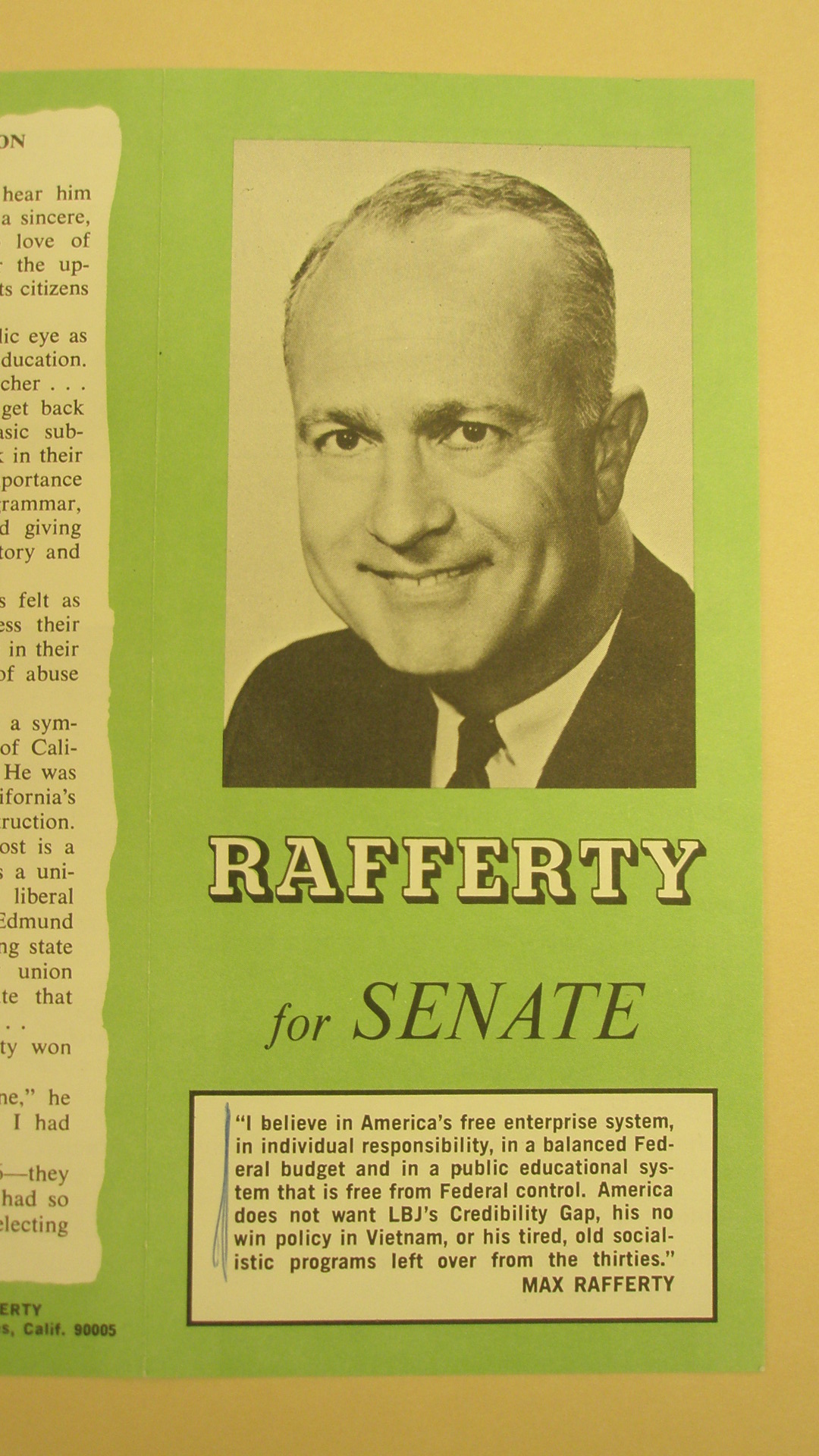
For example, as she describes, in the early 1960s bilingual ed had lots of support among conservatives.  Arch-conservative Max Rafferty pushed for it, and even as late as 1968, many California legislators touted bilingual ed as the “American thing to do.”  Soon, however, bilingual education was tied together with leftist radicalism.  Students in 1968 staged huge “blow-out” protests in LA, carrying “Viva la Revolucion!” signs and demanding that all Anglo teachers be fired.  As Petrzela puts it,

In the two years following the BEA’s [Bilingual Education Act] passage and the blowouts [student walkouts], bilingual-bicultural education evolved from a relatively uncontroversial issue that garnered significant bipartisan support to a lightning rod dividing and defining conservatives and liberals.

Among activists, too, we need to be careful before we assume too much.  In the education bureaucracy of California, for instance, Petrzela introduces us to the complicated positions of folks such as Eugene Gonzalez, associate superintendent and chief of the division of instruction.  Gonzalez was close with conservative leader Max Rafferty, and like Rafferty he spoke out against the methods used by radical student protesters.  But he also continued to push for better and fairer education for latino/as in California schools.  Other Mexican-American activists, such as Alfred Ramirez, refused to go along with the protesting students at all.  He pushed Gonzalez to crack down on the Latino protesters and to get rid of bilingual programs entirely.

Nor were California’s educational culture wars a simple, stereotypical battle between progressive teachers and students on one side against conservative activists on the other.  That may often be the case, but as Petrzela recounts, in 1970 conservative teachers in LA founded their own union, the Professional Educators of Los Angeles.  And, though one conservative teacher lamented her position as a “minority among educators,” Petrzela also reveals that students, too, were split.  In at least one case, a group of conservative students gathered to denounce the “leftist-liberal bias” of their teachers.

We also see in these pages a clearer-than-usual vision of what conservative activists wanted.  At root, Petrzela shows us, conservatives felt as if they had too often been frozen out of discussions of sex ed and bilingual ed.  They felt they had not been included, not been consulted.  Many times, conservative activists and parents worried that a blundering school administration was trying to insert itself between parents and children.

When this wasn’t the case, many conservatives did not protest against sex education.  In conservative San Diego County, for example, sex ed was not at all controversial.  Part of the reason was because the teachers had a strong reputation in the whole community as family women with “high moral standards.”  By the end of the 1970s, Petrzela tells us, policy-makers had figured it out.  By then, most sex ed curricula were no longer so ferociously controversial, largely because parents and conservative organizations had been consulted beforehand.

Petrzela also tackles one of the toughest questions of these educational culture wars: Who won?  She argues that over all, over time, progressives tended to score victories.  In about half the cases of controversy over sex ed, Petrzela found, California districts actually expanded their sex ed programs after the blow-ups.

In every case, Petrzela makes her case well that schools matter.  As she puts it,

In the 1960s and 1970s, militant Chicanos in East Los Angeles, suburban housewives in Anaheim, and political aspirants as varied as Max Rafferty and Julian Nava all pinned their hopes on the public schools as the primary institution for cultivating an ethical, informed, moral next generation.

For all of us who want to look beyond the headlines of America’s continuing educational culture wars, this book is a good place to start.

Conservatives against Kim Davis

Which side are you on?

That’s the question that fuels most of our culture-war animosity. Instead, the question we should all be asking is this: What’s the right thing to do? In the case of same-sex refusenik Kim Davis, some conservative intellectuals and pundits are willing to break ranks and see the bigger picture.

In case you’ve been milking the last warm days of summer and haven’t seen this story, Kim Davis is the Kentucky county clerk who has been jailed and released for her refusal to issue same-sex marriage certificates. Opportunistic conservative politicians such as Mike Huckabee have promoted Davis as a conservative Christian hero, stage-managing Davis’s release as an American triumph, equal parts Christianity Triumphant and Rocky III.

https://www.youtube.com/watch?v=ydyFhIjdRlU

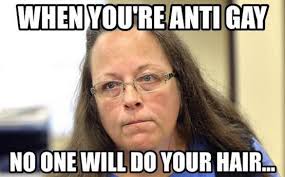
Governor Huckabee’s shameful pandering to frustrated Christian voters should be an embarrassment for every conservative out there. But progressives also could stay a little classier in this case. For those like me on the progressive side of things, the furor and venom over the Kim Davis case burst onto our Facebook feeds like a sweaty middle-school pimple. I don’t agree with Davis’s refusal to do her job, but I also think it is counter-productive and petty to attack Davis’s hairstyle.

Missing the point...

Missing the point…

We could all learn a lesson from a few conservatives who refuse to conform to their culture-war scripts. Fox News anchor Shep Smith, for example, earned the ire of conservative viewers for pointing out the obvious hypocrisy in the case. Critiquing the Huckabee rally, Smith commented,

They set this up as a religious play again. This is the same crowd that says, ‘We don’t want Sharia law, don’t let them tell us what to do, keep their religion out of our lives and out of our government.’

Predictably, conservative Fox News viewers reacted furiously, calling Smith a “puke” and accusing him of “anti-Christian bias.”

But Smith was not alone. Conservative intellectuals also took issue with Davis’s brand of publicity-hogging culture-warriorism. Writing in the pages of The American Conservative, crunchy conservative Rod Dreher warned that Davis had ignored the central point of civil disobedience. Dreher argues,

It’s clear that there are many Christians who support Kim Davis because she’s doing something, even if that something is arguably counterproductive. This is unwise. . . . If the public comes to think of religious liberty as the constitutionally guaranteed right to ignore the Constitution whenever it suits us, the cause of religious liberty — which is guaranteed by the First Amendment — is going to suffer tremendously. Conservatives are supposed to understand the difference between the vice of cowardice and the virtue of prudence. If religious liberty means that even officers of the state can defy the law without consequence, then it makes every individual a potential tyrant.

Writing from the conservative bastion of the Southern Baptist Convention, Russell Moore and Andrew T. Walker made a similar point. While Moore and Walker bemoaned the “judicial overstep” and “government inaction” that led to this situation, they did not excuse Davis’s reckless behavior. “We must recognize,” they note,

the crucial difference between the religious liberty claims of private citizens and government officials. Let us be clear: Government employees are entitled to religious liberty, but religious liberty is never an absolute claim, especially when it comes to discharging duties that the office in question requires. While government employees don’t lose their constitutional protection simply because they work for the government, an individual whose office requires them to uphold or execute the law is a separate matter than the private citizen whose conscience is infringed upon as a result of the law. It means the balancing test is different when it comes to government officials because of their roles as agents of the state. Government officials have a responsibility to carry out the law. When an official can no longer execute the laws in question due to an assault on conscience, and after all accommodating measures have been exhausted, he or she could work for change as a private citizen, engaging the democratic process in hopes of changing the questionable law.

We must be very clear about the distinctions here between persons acting as an agent of the state and persons being coerced by the state in their private lives. If the definition becomes so murky that we cannot differentiate between the freedom to exercise one’s religion and the responsibility of agents of the state to carry out the law, religious liberty itself will be imperiled.

For these brave conservative commentators, agreement with Davis’s opinion of same-sex marriage did not mean an automatic endorsement of Davis’s actions. All of us could learn from their example.

Those of us who consider ourselves progressives should commit to examine every case with the same gimlet eye. Just because we agree with someone’s position in general does not mean we must agree with their actions in every case.

Conservatives should be reminded to differentiate between today’s headlines and the big picture. Civil disobedience is a right and duty of us all, at times. But not every act of civil disobedience is equal, and civil disobedience has never meant simply flouting the laws we don’t like.

More important, we must all be willing to speak up against our own “side” when it is in the wrong. The first question should not be “Which side are you on?” but always “What is the right thing to do?”

The Kids Aren’t Alright…with Transgender

My Fellow Progressives: What if time isn’t on our side? We tend to think that each new generation will get cooler, more tolerant, more progressive. But what about those stubborn conservative kids who consistently disprove our assumptions? A new student protest in Missouri shows once again that young people are not somehow automatically progressive.

Who is the future here?

Who is the future here?

Academic historians learnt this lesson the hard way. Beginning in the 1930s, liberal academics assumed that the fundamentalists of the 1920s had melted away in the glare of modernity. In their liberal imaginations, historians such as Norman Furniss explained that fundamentalism had died away, a vestige of an older, stupider time.

For many liberal historians, the fact that they no longer saw fundamentalists on their campuses or in the headlines of their newspapers proved their case. It backed up their assumptions that the modern world would squeeze out people who embraced a decidedly old-fashioned way of reading the Bible.

Of course, fundamentalists hadn’t died away after the 1920s. Beginning in the later 1950s, evangelists such as Billy Graham brought the fundamentalist tradition back to America’s headlines and center stage. It took a new generation of historians, many of them raised in fundamentalist families, to explain what had happened. Writers such as Ernest Sandeen, George Marsden, and Joel Carpenter demonstrated the continuing strength and vitality of American fundamentalism.

Protestant fundamentalism, these historians showed, was a thoroughly modern phenomenon. In the face of progressive assumptions that people would naturally become more secular and more morally sophisticated, lots of Americans actually became more religious and more firmly moored in Biblical morality.

Progressives today share a similar short-sighted demographic hangover. Many of us, even those of us too young to have lived through the social movements of the 1960s, remember the vibe of youth power. As Andrew Hartman has argued so eloquently in his new book, the ideas of the 1960s fueled much of the later culture war vitriol. In the face of much evidence to the contrary, it was often assumed by 1960s culture warriors (and their successors) that youth was somehow naturally progressive.

Not your father's GOP...

Not your father’s GOP…

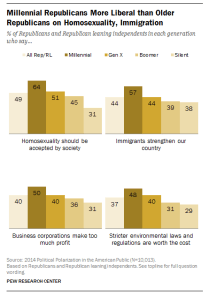
To be fair, my fellow progressives aren’t entirely wrong. We tend to assume that young people will be less anti-gay, less racist, less conservative, and we can point to good poll data to back it up. As Pew reported last year,

in addition to the [Millennial] generation’s Democratic tendency, Millennials who identify with the GOP are also less conservative than Republicans in other generations: Among the roughly one-third of Millennials who affiliate with or lean Republican, just 31% have a mix of political values that are right-of-center, while about half (51%) take a mix of liberal and conservative positions and 18% have consistently or mostly liberal views. Among all Republicans and Republican leaners, 53% have conservative views; in the two oldest generations, Silents and Boomers, about two-thirds are consistently or mostly conservative.

But there’s a big problem embedded in these kids of poll data. Though many young people tend toward more liberal views, there are still enormous percentages of people who buck the trend. The recent protest in Missouri can illustrate the ways young people can and will embrace socially conservative ideas.

In that case, a transgender high-school senior, Lila Perry, had been allowed to use the girls’ bathroom. Students walked out in protest. The students and their parents, supported by outside groups such as the Alliance Defending Freedom, tend to consider Lila to be still male, in spite of her identification as female. As one activist parent put it, his daughters encountered an “intact male” in the locker room.

In spite of what we might expect, we don’t see in this case progressive young people fighting against the bureaucracy. Instead, the bureaucracy in this case moved quickly to establish a policy protecting the rights of transgender students. In reply, conservative students insisted on the rights of “real” girls to be protected from such students.

If history is any guide, as more young people become progressive, the conservative holdouts will become more firmly attached to their conservative principles. Conservative young people will become more likely to take action. Protests like the one at Hillsboro High School will become more common.

Why Don’t Conservatives Like to Win?

You’ve heard the news by now: The College Board revised its framework for the Advanced Placement US History course.  Recently in the pages of the Wall Street Journal, Daniel Henninger crowed that this reversal proved that conservatives could influence national education policy.  Unfortunately, Henninger makes the same mistake as every other pundit out there.  He seems to think that conservatives at some point in the past lost their influence over national education policy.  It just ain’t so.

Franklin's In, "neo-Marxism's" out.

Franklin’s in, “neo-Marxism’s” out.

For those of you who were napping, a quick reminder: Under pressure—significant pressure—from conservative thinkers and lawmakers, the College Board agreed to revise these standards for its AP US History course.  Conservative thinkers had complained that the old framework put too much emphasis on

such abstractions as ‘identity,’ ‘peopling,’ ‘work, exchange, and technology,’ and ‘human geography’ while downplaying essential subjects, such as the sources, meaning, and development of America’s ideas and political institutions. . .

Henninger argues that, with the conservative revision, the new framework is “about as balanced as one could hope for.”  More interesting for our purposes, he argues that this conservative victory is “an important political event.”  He thinks it “marks an important turn in the American culture wars. . . .”  To Henninger, this conservative victory is a new thing, a change in the ways American culture and politics work.  Until now, Henninger intones, conservative ideas about proper education were

being rolled completely off the table by institutions—‘Washington,’ the courts, a College Board—over which [conservatives] had no apparent control.

Until now, Henninger tells us, conservatives had not been able to influence national education policy.  Only “neo-Marxist” experts decided on what vulnerable young minds would learn.

Balderdash.

Perhaps Henninger’s problem is his limited range.  To be fair, he only says that this has been the case since 1992.  As SAGLRROILYBYGTH are well aware, America’s educational culture wars have a vital history that stretches back across the twentieth century.  Henninger ignores it at his peril.

As I argue and detail in my recent book, since the 1920s conservative activists have been able, time and time again, to derail, defang, and water down progressive curricula and textbooks.

But here’s the real kicker: We can’t really single out Henninger for short-sightedness.  For almost a century now, both progressive and conservative intellectuals and activists have assumed that conservatives had been kicked out of the conversation.

You read that right.  Ever since the 1920s, conservative and progressive reformers alike have committed the same sort of Henningerism.  They have assumed in the face of historical fact that “The Schools” had been taken over by progressive ideas and curricula.

To cite just one example of this trend, consider the case of progressive textbook impresario Harold Rugg.  Rugg was a progressive’s progressive, committed to pushing the nation in leftist directions by seizing control of its public schools.

In the 1930s, it looked as if he had succeeded.  Millions of schoolchildren read his tendentious textbooks.  At the end of the decade, however, conservative activists in the American Legion and elsewhere organized to block such progressive “subversion.”

They succeeded.  Just like today’s College Board, school administrators and textbook publishers in the 1930s fled in horror from the potential controversy over Rugg’s books.  Sales plummeted.  Schools hid them away.  School boards thought about burning them.

Seems like any right-thinking observer would conclude that conservative activists could exert significant control over the national curriculum, right?

In fact, Rugg himself concluded that the progressives had won, that a shiny progressive victory was just around the next corner.  As he wrote in his 1941 memoir, progressive schooling

has already begun to shake the old and inadequate out of our educational system and to lead to the building of a new school to implement democracy.  Nothing save a major cultural catastrophe can now stop its progressive advance. It was utterly inevitable that workers in education would find the vast library of documented data produced on the other frontiers and use it in the systematic reconstruction of the schools.

You might think that conservative activists would dispute Rugg’s rosy left-wing prediction.  But they didn’t.  Instead, conservatives at the time performed their own odd Henningerisms.  One of the leaders of the anti-Rugg fight, Alfred Falk of the Advertising Federation of America, warned a friend that left-wing educational thinking had taken over schools years before, all part of a “deliberate plan worked up by a well-defined group of left-wingers and educators, collaborating for a number of years on this huge project of reconstructing our society.”

We could multiply these examples of Henningerism endlessly.  Time and time again, long before 1992, conservatives have concluded incorrectly that they had been kicked out of the schools.  And progressives gleefully agreed.

It brings us to our interesting question: Why do conservatives and progressives agree—in the face of vast reams of historical evidence to the contrary—that conservatives are have been locked out of national education policy-making?

Us & Them Visits the Gablers

Who’s in charge of American public education? Some folks say that “progressive” ideas took over education back in the 1930s. John Dewey and his ilk, these folks insist, turned American education in progressive directions. But what about all the ferocious and successful conservative input into what schools teach? In the latest episode of Trey Kay’s Us & Them, Trey looks at the influence of Mel and Norma Gabler since the 1960s.

What Norma says goes...

What Norma says goes…

Trey only has a half-hour to work with, so he couldn’t include the longer historical context. For those in the know, however, Texas’s culture-war battles over textbooks and curriculum go back far longer than the 1960s, and they have changed in bigger ways than he has time to delve into.

Nevertheless, everyone interested in culture wars and education should spend a half-hour with the new Us & Them episode. Trey talks with former Texas board of ed chairman Don McLeroy, as well as with liberal critic Kathy Miller.

Throughout the 1990s and early 2000s, Texas’s fights over textbooks attracted attention nationwide. Conservatives pushed for more traditional visions of American greatness. Liberals fumed that Texas’s culture-war politics doomed schoolchildren to a skewed vision of the past. (For the best introduction to those fights, be sure to check out Scott Thurman’s documentary The Revisionaries.)

Before those recent battles, however, Mel and Norma Gabler made themselves famous as mom-and-pop culture-war heroes. Beginning in the 1960s, the Gablers insisted on their rights to speak at the hearings of the Texas State Board of Education. They compiled damning lists of factual errors in adopted textbooks. More important, they insisted on revisions to make textbooks more traditional, more religious, and more patriotic.

As you might expect, the Gablers play a leading role in my recent book about conservative educational activism. Long before they waged their gadfly campaign, however, similar culture-war fights roiled educational politics in Texas and elsewhere. Going back to the 1920s, Texas demanded and received special editions of its textbooks. The board demanded the excision of evolution and anti-Southern history. The board only adopted what one publisher in 1926 called “tactfully written” books that did not mess with Texas.

Indeed, when the Gablers became involved, they looked to several existing organizations for guidance and inspiration. As I recount in my book, the first group they looked to was the Texas chapter of the Daughters of the American Revolution. Since the 1920s, the DAR had played a leading role in textbook publishing and culture-war monitoring. In 1951, for example, the Texas DAR mobilized its thousands of members to make sure that schools and textbooks “taught the principles embraced by our forefathers.” That year, the Texas DAR claimed to have sent 1,695 of its members to observe history classrooms across the state.

If we hope to understand culture-war politics, in Texas and elsewhere, we need to be aware of this longer history. We also need to understand the ways 21st-century ed politics have changed. Throughout the twentieth century, conservative activists like the Gablers envisioned themselves as outsiders, charging hard to block the work of a progressive educational establishment. Like the Gablers and the DAR, conservative groups such as the American Legion successfully blocked textbooks they didn’t like.

By the 21st century, however, things had changed. Some conservative intellectuals have argued that dominant efforts in recent education policy, such as the Common Core standards and the No Child Left Behind Act, were actually inspired by conservative ideas and intellectuals. As Michael Petrilli and Frederick Hess of the American Enterprise Institute claimed about NCLB, that law “sketched a vision of reform informed by conservative intuitions and insights.”

Instead of the Gabler-style outsider approach, conservatives these days can claim to have taken over key parts of the educational establishment.

No one can gainsay the enormous influence of the Gablers on educational culture wars in the twentieth century. Everyone who is interested will benefit from listening to the Us & Them episode. Just remember to keep it in historical context!

Progress and Punishment

What should teachers do when students misbehave? This might seem like a simple nuts-and-bolts question, but for generations it has triggered culture-war debates. Conservatives often insist that children need traditional punishments; progressives warn that those punishments only make behavior worse and that harsh discipline tends to land heaviest on minority kids.

Are we ready yet?

Are we ready yet?

In the recent issue of Mother Jones, Katherine Reynolds Lewis reviews the disciplinary work of psychologist Ross Greene. Like other progressives over the course of the last century, Lewis argues that traditional forms of school discipline are utterly wrong-headed.

As Lewis reports,

Under Greene’s philosophy, you’d no more punish a child for yelling out in class or jumping out of his seat repeatedly than you would if he bombed a spelling test. You’d talk with the kid to figure out the reasons for the outburst (was he worried he would forget what he wanted to say?), then brainstorm alternative strategies for the next time he felt that way. The goal is to get to the root of the problem, not to discipline a kid for the way his brain is wired.

Teachers using Greene’s approach build positive relationships with misbehaving kids. Instead of offering a set of rewards and punishments, teachers try to let students explain and vent their negative feelings.

According to Lewis, the system works. Reluctant teachers (and prison guards) have been brought around by the dramatic positive results.

Hooey.

Hooey.

Historically, not everyone has been so smitten with these sorts of interventions. As I argue in my recent book, conservative school activists in the 20th century insisted that Greene-style reforms were hopeless. Not only did they fail, conservatives thought, such progressive claptrap fundamentally misunderstood the nature of humanity and education.

As Max Rafferty put it in 1968, children need to be understood on their own terms:

a child is not a little man. He is a being in transition and a lot closer to the raw simplicities of the primeval jungle than any of us will ever be again or than we like to think we ever were. Childhood may be mystic, as Victor Herbert said, but it’s often very far from merry.

For one thing, the child lives in a world where both time and space are vastly different from ours. A year to a child may easily be a week to us. A bungalow to us six-footers is a skyscraper to him, a wooded grove the limitless forests of Xanadu.

He is notably impatient where we have learned patience. He is openly and candidly selfish where we have been pressured by the needs of society to conceal our own self-interest. He is direct where we are devious, simple where we prefer to be complicated.

In response to earlier generations of Greene-style disciplinarians, Rafferty responded,

There speaks the progressive educationist. Adjust to your environment at any cost. Don’t try to change things. After all, nothing is really ‘right’ or ‘wrong.’

Bunk.

What’s wrong with teaching the kid that fighting in school is wrong?

Why not outlaw profanity and bring back the good old soap-in-the-mouth bit for youngsters who can’t keep a clean tongue in their heads? The school exists to make Johnny a better boy.

In an earlier work, Rafferty blasted the progressive assumptions of Greene-style approach to discipline.

a child usually has neither the maturity nor the judgment to understand the need for self-discipline. Too many instructors, fresh from college and still pretty Dewey-eyed about things, compromise themselves and their careers in a hopeless attempt to convince some freckled-faced [sic] urchin with devilment coming out visibly all over him that he must discipline himself when all he really needs is a session after school with the ruler. . . . Prior to 1930 school discipline was built around corporal punishment. It always had been. Education had walked and in hand with the hickory stick apparently since time began, and virtually every teacher who ever lived took this state of affairs for granted.

School, you see, was not considered ‘fun’ in those days. It was a mighty serious business and was conducted that way. At any rate, once the two premises are accepted that (1) boys won’t behave in schools unless compelled to do so and (2) boys must be made to behave so that they can learn things that are essential for them to know, then the whole paraphernalia of corporal punishment falls into proper perspective. . . . Things have changed of late in the field of discipline, and more than somewhat. They started to change at home first, back in the twenties and thirties. The prime mover in their change was the new psychology, which was widely publicized and which caused parents seriously to doubt their proper role vis-à-vis their children for the first time in the recorded history of the human race. . . . The result was the emergence of the least-repressed and worst-behaved generation of youngsters the world had ever seen. The psychologists had been right in one respect. Junior certainly had no repressions. He could have used a few.

In Lewis’s telling, Rafferty’s brand of traditionalism flies out the window when teachers and parents see the positive results of progressive discipline. I’m not so sure. After all, as Rafferty’s work from the 1960s shows, Greene’s brand of progressive reform has been around since the 1920s. It didn’t convince conservative skeptics then and I don’t think it will now.

The questions go deeper than just classroom efficiency. Some traditionalists, IMHO, will continue to believe that old-fashioned forms of discipline—yes, including corporal punishment—are not just more effective, but more closely connected to the true nature of childhood.

Who Do You Talk To?

Birds of a feather and all that.  We tend to cluster around people like ourselves, don’t we?  This is more than just a social quirk, though. It seems to be a basic requirement of culture wars: All of us spend more time talking to people who tend to agree with us.  We are made more confident that all right-thinking folks agree.  When it comes to academics and intellectual life, this basic truism might have devastating consequences.  But is it true?  Do you ever/often/sometimes/always talk with people with whom you have fundamental culture-war disagreements?

I respect your right to disagree!

I respect your right to disagree!

Academics have a well-earned reputation for ivory-tower insularity. For the past century or so, as I found in the research for my new book, conservative critics have blasted academics time and time again not only for being biased, but for being unaware of life outside of their cloisters.

Renowned historian Gordon Wood, for instance, took to the pages of the conservative Weekly Standard recently to accuse his colleagues of a failure to communicate. The academic echo chamber had become stifling. As Wood put it,

College students and many historians have become obsessed with inequality and white privilege in American society. And this obsession has seriously affected the writing of American history. The inequalities of race and gender now permeate much of academic history-writing, so much so that the general reading public that wants to learn about the whole of our nation’s past has had to turn to history books written by nonacademics who have no Ph.D.s and are not involved in the incestuous conversations of the academic scholars.

Wood’s charges elicited a flurry of outraged responses, and, for the purposes of full disclosure, I should say that they struck me as a strangely curmudgeonly diatribe from such a prominent personage. Our personal politics aside, however, more scholarly inquiries have backed up Wood’s charge that too many academics are out of touch with reality.

In her study of elite academics, for example, Elaine Howard Ecklund found them to be jaw-droppingly ignorant of general trends in American religion. Many professors had no idea even of the vital religious practices going on at their own elite universities.

And, as Neil Gross argued in Why Are Professors Liberal and Why Do Conservative Care?, the professoriate tends to perpetuate its own leftist biases. Not by scheming cadres of devious commie professors, but simply by creating an atmosphere that tends to attract like-minded left-leaning people.

If it is true that elite social scientists are really skewed toward a particular political perspective, and if it is true that many academics are woefully ignorant about the very social realities they purport to study, it must shake our confidence in any “expert” testimony. And, when that’s the case, the reassuring bromides of our close culture-war allies can seem all the more convincing.

To my mind, the only remedy is for each of us to find out more about people different from us. To talk with people with whom we disagree.
Of course, for blog-readers, I guess this is preaching to the choir. Bloggers tend to consume all sorts of other blogs. Creationists might read the Sensuous Curmudgeon. Scientists might read the BioLogos Forum and Around the World with Ken Ham. Conservative Christians read Jerry Coyne, and Professor Coyne might read Agellius’s Blog.

Do any of us do this in real life, though? Does anyone have regular conversations about culture-war issues in which we share fundamental disagreements? We all have an uncle, mother, or neighbor who might differ from us on these issues, but we often politely avoid such impolite topics.

Or is that just me? Do YOU talk to lots of types of people with whom you disagree?