Leading Historian Would Vote for Hitler

He just flew in from New York...

He just flew in from New York…

HT: MM

Would you vote for Philip Hitler? Jonathan Zimmerman would. At least, that’s what he told the funny man on The Daily Show the other day.

It’s a pretty funny bit. But more important, it’s great to see our leading educational historian getting to yuk it up with Jon Stewart’s minions.

If you’re not up on the world of educational history, you may not know Jon Zimmerman’s work. But for historians, Zimmerman’s the king. Kind of like the Derek Jeter of educational historians, except Zimmerman shows no signs of quitting.

When I started my graduate work, Zimmerman’s book Whose America pointed me toward the study of culture-war issues in educational history. And now, as part of Zimmerman’s book series on the history and philosophy of education, I’m working with philosopher Harvey Siegel on a volume about the ups and downs of evolution education. So Zimmerman has been hugely influential in my career, and I’m sure every other ed historian out there could say something similar.

And now it looks as if he’s moving into the comedy business. Fantastic.


Orange Is the New Blah…

Okay, I admit it. I’ve been watching Orange Is the New Black. And I like it. But one episode I saw the other night included a painful example of what I’ve been calling the “missionary supposition” of anti-religious folks.

Orange Is the New Hack

Orange Is the New Hack

First, a short introduction for those readers with better things to do: The show follows the prison career of a privileged woman as she serves her time. At first, I didn’t want to watch it. It sounded too much like the terrible genre of ‘brave excursions outside the gated community,’ ignorant self-righteous claptrap along the lines of Barbara Ehrenreich’s Nickel and Dimed.

But after a couple of episodes, I was hooked. The protagonist’s story of elite woe is not as central as I feared. Each of the incarcerated women has her own story and the show makes the most of each.

**SPOILER ALERT: The following contains info about the end of season 1. And some bad language.**

Just because I watch, though, I can’t help but protest some of the stupid blunders incorporated into the story. In a couple of episodes, the protagonist, Piper Chapman, goes a few rounds with fellow inmate Tiffany “Pennsatucky” Doggett. In the show’s depiction of Doggett and in Chapman’s high-handed attitude toward Doggett’s religiosity, we see the worst sort of anti-religious bigotry and ignorance.

Religious = Psychopathic

Religious = Psychopathic

I don’t have much of a problem with the show’s scathing depiction of conservative evangelical religion. We see this most frighteningly in the character of Doggett. Doggett is the unofficial leader of the charismatic Bible group at the prison. She leads deluded healing services and peppers her speech with Biblical references. Not only is Doggett portrayed as a snaggle-toothed, closed-minded, ignorant hillbilly with a heavy penchant for krazy, she actually only won her role as religious prophet by shooting an abortion-clinic worker out of petty spite.

Now, if this show wants to depict religious people that way, fair enough. It is embarrassingly biased, but if the show wants to take that kind of anti-conservative-religion slant, so be it.

But it’s harder for me to swallow the wildly ignorant understanding of religion from one unfortunate scene in the episode “Fool Me Once” [season 1, episode 12, about 55 minutes in]. Pennsatucky wants to baptize Chapman in the laundry sink. At that point, Chapman unleashes her real opinion about the whole thing. IMHO, the following scene demonstrates a terrible misunderstanding of the nature of religious belief, non-religious belief, and the nature of America’s culture wars, not just on the character’s part, but by the makers of this show:

Chapman: Okay, nope, see, I can’t do this. I’m sorry. I really want us to get along. I do. But I can’t pretend to believe in something I don’t. And I don’t.

Pennsatucky: Chapman: We’ve all had our doubts.

Chapman: No, see, this isn’t ‘doubts.’ I believe in Science. I believe in Evolution. I believe in Nate Silver, and Neil deGrasse Tyson, and Christopher Hitchens, although I do admit he could be kind of an asshole. I cannot get behind some supreme being who weighs in on the Tony awards while a million people get whacked with machetes. I don’t believe a billion Indians are going to hell, I don’t think we get cancer to learn life lessons, and I don’t believe that people die young because God needs another angel. I think it’s just bullsh*t, and on some level I think we all know that, I mean, [addressing other Christians] don’t you?

Other Christian #1: [sheepishly] The angel thing does seem kinda desperate…

Pennsatucky: [threateningly, to OC#1] I thought you was a Christian.

OC #1: [defensively] I am, but I got. . . some questions. . .

Whooch! Didja see that? Again, I don’t have a beef if this show wants to malign religious conservatives, if it wants to depict anti-abortion activists as cynical, stupid, self-serving sociopaths. It’s an awkward hack job, IMHO, but not as bad as the wildly ignorant fantasy depicted in the scene above.

As I’ve argued in the pages of the Reports of the National Center for Science Education, too many anti-creationists show this same sort of ignorant “missionary supposition.” They think, along with Piper Chapman and the makers of this show, that the truths of anti-religion are so blindingly obvious that any (thinking) religious person must secretly share them.

Now, to be fair, I should point out that I do (roughly) share those beliefs.  I believe in science.  I believe in evolution.  I like Neil deGrasse Tyson and I don’t think anyone is going to hell.  But just because I agree doesn’t mean I can stomach the weirdly ignorant assumptions in which those statements are wrapped.

When Chapman recites her sophomoric list of village-atheist taunts, the gathered Christians are only kept from agreeing by the bullying of their psychopathic religious leader. In this sort of atheist fantasy, the truths of science only fail to conquer when hearers are not free to acknowledge their obvious awesomeness.

This attitude mirrors nothing so much as the overweening confidence of early religious missionaries. Many Bible missionaries in the early part of the twentieth-century, for example, assumed that the truth of the Bible was so overwhelming that anyone who caught a glimpse of its pages must be supernaturally converted. As a result, Bible missionaries spent a great deal of time and treasure to distribute the Gospel around the world.

At Chicago’s Moody Bible Institute, for example, evangelists distributed printed tracts and gospels throughout the nation and the world, based on this assumption about the supernatural power of Holy Print. As William Norton of the MBI’s Bible Institute Colportage Association related in 1921,

A man was given a tract by the roadside; simply glancing at it, and coming to a hedge, he stuck the tract into the hedge; but it was too late; his eyes had caught a few words of the tract which led to his conversion.

In this understanding of salvation and conversion, some truths have such power that the merest exposure to them is enough to convert the unwilling. Ironically, folks at places such as the Moody Bible Institute have gotten much more sophisticated in their understanding of conversion, while self-satisfied atheists like the makers of Orange Is the New Black apparently have not.

Among conservative evangelical Protestants these days, the difficulties of missionary work are more thoroughly appreciated. As conservative Christian educator David Harley wrote in 1995, missionaries must begin with a “sensitive appreciation of other cultures.” Missionaries who try to plunk down in the midst of a non-Christian population and simply begin spreading Truth amount to nothing more than “evangelical toxic waste,” Harley argued.

Actual missionaries no longer think they can convert without effort. They no longer tell each other to shout out the Gospel and count on it to spread itself. Rather, religious people show a more nuanced understanding of the ways people change their minds.

But there still seem to be people out there so ignorant of other cultures that they think they can convert the heathen with a simple exposition of the Truth. Folks who think that by declaiming a few holy names, such as Christopher Hitchens and Neil deGrasse Tyson, the scales will fall from the eyes of the benighted Christian multitudes.

Pish posh.


“Conservative Thought” or “Bigotry”? A Conservative Professor Makes Waves

Is it “conservative” or “bigoted” to express skepticism toward sensitivity training about transgender people? About sexual-harassment investigations?

Steven Hayward finds himself facing these questions as he completes his one-year position as visiting professor of conservative thought at the famously left-leaning University of Colorado at Boulder. ILYBYGTH readers may remember the program that brought Hayward out to Boulder. Conservative critics of the university had complained that the school did not include any conservative intellectual presence. As a result, outside political pressure pushed through the program to welcome a series of one-year visiting professors to the campus. The hope was that these prominent conservative intellectuals would spark debate and a more profound sense of intellectual diversity.

Steven Hayward

Steven Hayward

Predictably, the sparks have begun flying. Hayward has been accused of bigotry. His representations of conservative thought, he has charged, have been said to “‘border’ on ‘hate speech.’” In response, Hayward declared, “they’re welcome to fire me if they want.”

What’s the issue? Hayward publicly questioned university policies about sexual harassment and gender sensitivity training. In an interview and an editorial a few weeks back, Hayward asked if the CU philosophy department was really guilty of sexual harassment. In his editorial, Hayward compared the investigation to a witch hunt:

Unquestionably philosophy is among of the most male-dominated disciplines in universities today, but inviting outside review by the American Philosophical Association’s (APA) Committee on the Status of Women was guaranteed to produce a finding as predictable as the Salem Committee to Investigate Witchcraft in 1691. The irony of this situation is the unacknowledged reversal of the presumption of “privilege” that was at the heart of the original (and justified) feminist complaint about sexism a generation ago. While it may still be justified in the case of academic philosophy, it should not be beyond question whether mere statistical “underrepresentation” should be regarded as prima facie evidence of guilt, and therefore allowing the APA report to assert damning findings about the whole department while disclosing virtually no concrete facts.

And recently, Hayward poked fun at campus sensitivity trainings. New faculty at Boulder, as at many college campuses, must attend a session geared toward increasing their awareness about transgender sensitivity. What pronouns should we use when addressing students? How can we avoid unintentional offense to those who do not fit into neat traditional gender divisions? Hayward dismissed this sort of training as “gender-self-identification whim-wham.”

Students reacted with predictable fury. “Bigotry is not diversity,” proclaimed student editorialists Chris Schaefbauer and Caitlin Pratt. In Hayward’s breezy dismissal of the complaints of sexual harassment in the philosophy department, Schaefbauer and Pratt charged, he engaged in the worst sorts of “victim-blaming.” In his dismissive comments about sensitivity toward gender-identity issues, Hayward “invalidate[d] the lived realities of transgender individuals and mock[ed] the LGBTQ community as a whole.”

The kerfuffle has raised some important questions about intellectual diversity and culture-war politics. Is it possible for a university to include a diversity of opinions? Or is there a need for inclusive environments to police any ideas that challenge that sense of inclusivity?

As we’ve seen recently with the case of Brendan Eich at Mozilla, some issues seem to include less wiggle-room than others. It is widely considered “bigotry” these days to oppose same-sex marriage. But I would suggest, in spite of what some conservative intellectuals have asserted, that it is not seen as bigotry to oppose abortion. It might be seen as “bigotry” to make fun of non-traditional attitudes toward gender identity, but it is generally not seen as bigotry to press for lower taxes or more free-market solutions to social problems.

Can a university include a diversity of opinions about sexual-harassment policies? About gender-sensitivity training? Or, to paraphrase one pithy conservative commenter on Hayward’s blog, have birkenstocks become the new jackboots?

It wasn’t a tough call to predict this sort of situation. Back when Hayward was announced as the first Visiting Professor of Conservative Thought at Boulder, your humble editor made the following guess:

this experiment seems certain to degenerate into the most fruitless sort of culture-war grandstanding.

It’s not very satisfying to be proven right when the case was so clear. It can be depressingly difficult to engage in discussions that cross culture-war trench lines.

Conservative thought has always struggled with accusations of bigotry. By framing themselves as defenders of tradition and traditionalism, conservative intellectuals have put themselves in the position of defending the gender and racial hierarchies that were part and parcel of those traditions. Perhaps most famously, conservative intellectual guru William F. Buckley supported segregationism in the 1950s. Though Buckley later repudiated those views, we must ask a difficult question: Will conservative intellectuals always have to defend yesterday’s traditions?

And, on the other side, student leftists have struggled with accusations of hypersensitivity. It is not difficult to lampoon campus activists. Students preach diversity while sometimes demonstrating a stern intolerance toward ideas that ruffle their feathers.

Is this just a question of irreconcilable cultural politics? Will conservative intellectuals continue to outrage leftist sensibilities? Or is there some way to find agreement about the definition and value of intellectual diversity across the culture-war trenches?


Do YOU Need Evolution?

Our intrepid editor sat down this week with Prajwal Kulkarni, the genius behind Do I Need Evolution?  Praj agreed to offer some reflections on his recent career as culture non-warrior.

Does He Need Evolution?

Does He Need Evolution?

ILYBYGTH: Why do you care about creationism?

Praj: Thanks for agreeing to interview me Adam. I’m quite honored.

I actually care about creationists much more than I do creationism. They are real people, and many of them are among the smartest, kindest people I know. Also, contrary to popular belief, not all of them want creationism in public schools.

Ta-Nehisi Coates, one of my favorite writers, once described how he did not want more “positive” writing about black Americans. Instead he simply wants to portray them as complex human beings: “I do not wish it to show us “in a more positive light.”…I would have us depicted in all our rancid splendor–boastful and marvelous, rhythmic and self-interested, dumb, clear, hateful, and, on occasion, brave.”

I’m not suggesting an equivalence between media bias against Christians and African-Americans. But I do think we should have a similar goal for evangelical Christians. Creationists can be as complicated and contradictory as all of us, and they are not merely a problem to be solved. The media and scientific community, to put it mildly, do not realize this. I’ve spent a fair amount of time in various church communities. As I’ve gotten to know evangelical Christians as real human beings, I now see that rejecting evolution is not necessarily something to worry about.

Now that I’ve gotten that off my chest, let me finally answer your question about creationism. There are two big reasons I care about the issue.

First, as a (former?) scientist, I’m horrified at our irrational, unscientific arguments. Where did we get the idea that believing in creationism will prevent someone from becoming a doctor or a physicist? Scientific thinking and rationality cannot be modeled as an on-off switch, and suggesting otherwise is unscientific.

Second, I think creationism is really a proxy for deeper disagreements about public education, scientific literacy, scientific authority and expertise, democratic decision-making, religion, etc. I’ve always found those deeper philosophical issues fascinating, and I can’t think of another topic that touches on all of them so strongly.

ILYBYGTH: Can you tell us something about your intellectual background and education?

Praj: Growing up, I think there was an implicit expectation I would be a science person. Both of my parents are doctors, and pretty much everyone on my mom’s side of the family studied science in some way. But even when I was very young, I was attracted to philosophical issues. I also always had somewhat of an unorthodox streak in me. I remember arguing Hindu philosophy with family and friends.

At Penn State, I initially thought I would get a bachelors in engineering of some form and then work in industry. But I fell in love with a modern physics class at the end of my sophomore year. I did my undergraduate thesis in numerical relativity, one of the most abstract and theoretical branches of physics. I thought I wanted to do physics the rest of my life.

Pretty early in grad school, however, I realized that I did not want to do physics research my whole life. I started realizing that I’m much more of a breadth rather than depth person. And so I started studying policy and politics in my spare time. After grad school I worked in Washington, DC in science policy for two years.

I look at my current obsession interest in evolution and creationism as an extension of those previous interests in philosophy, politics, and policy.

ILYBYGTH: As a trained physicist, what’s your opinion on the relationship between “creation science” and “mainstream science?”

Praj: Oh boy…you just opened an ugly can of worms. Philosophers have been debating the “demarcation problem” (how to demarcate science from non-science) for literally thousands of years. You can spend a lifetime reading the scholarship. I’ve just spent several weeks myself!

The short, cop-out (but honest) answer is that I actually don’t find the question very interesting. I realize it’s the question for most people. But suppose tomorrow everyone agrees that creationism isn’t science. The deeper issues I raised above would still exist. That’s where the action is as far as I’m concerned.

But to not cop out and give a real answer…creationism is not science. I do think the science/not-science distinction is a lot more complicated than typically portrayed in the media (you can give yourself a headache reading the debates on naturalism), but that’s true for lots of issues. Since I don’t want to swim in afore-mentioned can of worm, I’m going to leave it at that for now!

ILYBYGTH: Okay, now for the hard one: If there is a creation/evolution culture war going on, aren’t you a traitor?  That is, doesn’t your work with DINE offer aid and comfort to creationists?

Praj: I really don’t think there should be a war. If there is one going one, I guess I’m a conscientious objector. I don’t view either creationists or scientists as the enemy, and it’s problematic to conceive of our fellow citizens this way.

And if I am giving aid and comfort to creationists, then I’m quite happy and proud of myself! I want everyone to be engaged in science and feel they are a part of it. A single belief doesn’t disqualify anyone. I find this with-us-or-without-us mentality is grotesque. Dick Cheney should not be our role model.

Do You Read the Bible? Why?

Do you read the Bible?  Regularly?  If you do, you’re in good company.  Or at least you have lots of company.  Results from a survey have been published by the Center for the Study of Religion in American Culture at Indiana University—Purdue University Indianapolis, fondly known as Ewee-poohee.

The survey-meisters attached Bible-related question to two large-group surveys, the General Social Survey and the National Congregations Study.  The authors suggested a few key findings:

*   There is a 50/50 split among Americans who read any form of
scripture in the past year and those who did not. Among those who did,
women outnumber men, older people outnumber younger people, and
Southerners exceed those from other regions of the country.

*   Among those who read any form of scripture in the past year, 95%
named the Bible as the scripture they read. All told, this means that 48%
of Americans read the Bible at some point in the past year. Most of those
people read at least monthly, and a substantial number-9% of all
Americans-read the Bible daily.

*   Despite the proliferation of Bible translations, the King James
Version is the top choice-and by a wide margin-of Bible readers.

*   The strongest correlation with Bible reading is race, with African
Americans reading the Bible at considerably higher rates than others.

*   Half of those who read the Bible in the past year also committed
scripture to memory. About two-thirds of congregations in America hold
events for children to memorize verses from the Bible.

*   Among Bible readers, about half had a favorite book, verse, or
story. Psalm 23, which begins, “The Lord is my shepherd…” was cited most
often, followed by John 3:16.

*   Bible readers consult scripture for personal prayer and devotion
three times more than to learn about culture war issues such as abortion,
homosexuality, war, or poverty.

*   There are clear differences among Bible readers consulting scripture
for specific reasons. Age, income, and education are key factors.

*   Those reading the Bible frequently consult it on culture war issues
more than two times the rate as those who read it less frequently.

*   Less than half of those who read the Bible in the past year sought
help in understanding it. Among those who did, clergy were their top
source; the Internet was the least cited source.

*   Among Bible readers, 31% read it on the Internet and 22% use
e-devices.

*   Bible reading differences among religious traditions followed
predictably the historic divides between Protestants and Catholics, and
between white conservative and white moderate/liberal Protestants.
However, reading practices defy some stereotypes about certain groups.

What can we take away from these headlines?  First, for those of us who don’t read the Bible regularly and who don’t really care about what the Bible might say about any given social issue, this report serves as a reminder that many Americans see the Bible very differently.  For instance, if I read the above numbers correctly, about a quarter of respondents told interviewers that they thought it was important to memorize chunks of the Bible.  Also, those who do tend to read the Bible also tend to use the Bible to prove points on social issues.  For example, I do not find the Bible to be relevant to the issue of gay marriage, but many Americans do.  Finally, we see yet another reminder that religious divisions do not neatly match political ones.  African Americans, for example, tend to vote Democratic.  Yet they also tend to read the Bible more often than other groups.

Yet moving past the headlines, we also see some confirmation in this report of stereotypes about the Bible.  For instance, the authors found that Bible-reading was much more common among old people than among the young.  Of those over 75, 56% reported reading the Bible in the past year.  Of those between 18-29, only 44% did so.  Also, Bible-reading was most prevalent in the South (61%) and least prevalent in the Northeast (36%).

Yet even the body of the report contains intriguing surprises.  For example, of those who said they consider the Bible the “inerrant Word of God,” a significant percentage did not read the Bible at all in the past year.  If we add in respondents who said they believed the Bible was the “divinely inspired Word of God,” we get an astonishing result: Those Bible-lovers made up 65% of the people who said they had never read the Bible in the past year!  That’s right: of the people who said they had not read the Bible in the past year, 50% still thought the Bible was divinely inspired, and 15% thought that the Bible was inerrant.  Clearly, Bible-reading does not correlate with theological convictions about the importance or status of the Bible.

And, of course, people read the Bible for all sorts of reasons.  It was no surprise to find that the most common reason people give for reading the Bible is prayer and personal devotion.  But large numbers of respondents also claim to read the Bible to find out how to make more money, how to heal themselves, and how to predict the future.  As the study concludes, these uses of the Bible correlate strongly to levels of formal education.  People who have gone to college tend to use the Bible less for these sorts of purposes.  As the authors put it, “those with less education read the Bible at twice the rate of someone with a college degree for the purposes of learning about culture war issues, health and wealth, and what the future holds” (24-25).

So what can this survey tell us?  The IUPUI researchers asked prominent scholars for their opinions.

As prominent historian of religion Mark Noll commented, one hoped-for result of this survey was to add needed complexity to public discussions about the Bible.  “These IUPUI surveys,” Noll suggested, “should bring sanity back into journalists’ reporting on religion, at least to the extent that they show how important non-political use of scripture continues to be in modern American life.”

Professor of African American Studies Sylvester Johnson added a different take-away message.  This survey, Johnson noted, demonstrates the persistence of “the dominant reality of biblical fundamentalism in Black churches.”  Many observers, Johnson said, have long attributed a social progressivism to African American churches that simply doesn’t match the cultural reality.

In any case, whether it is used as a symbol of cultural identity, a source of clues to the future, or a dusty tome on a shelf that is left alone to molder, Americans still care about the Bible.


C’est la Guerre…La Guerre Culturale

We hear it from time to time.  Scientists claim that only America suffers from widespread creationism.  Hip liberals fume that only America puts prudes and fogies in political office.  America’s culture wars seem to be uniquely American.  Or are they?

We read in The Economist about a recent education culture-war in France that seems as American as apple pie.  It seems France—the land of laid-back attitudes about sex and uptight attitudes about food—has more in common with the US of A than some people might like to admit.

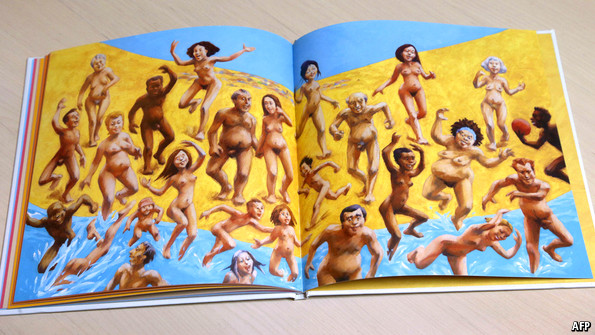
The recent flap follows the American pattern.  A new curriculum has riled cultural conservatives.  The new school materials, ABCD of Equality, hoped to instill ideas of gender equality in young people at a young age.  Books in the series, including “Jean Has Two Mummies” and “Daddy Wears a Dress,” hoped to teach students that gender and sexuality do not need hard-and-fast boundaries.  As often happens in this country’s culture-war politics, the book that sparked the most outrage was not even officially part of the curriculum, but rather part of a list of suggested additional picture-books on an affiliated website.  That book, “Everybody Naked!” showed page after page of, well, just what the title suggests.

Everybody Naked!

Everybody Naked!

In France, according to the Economist essay, a coalition of cultural conservatives objected.  Objections to the book series unite Catholic and Muslim traditionalists.  One conservative activist warned that such books represent a government attempt to “re-educate our children,” to make them doubt their religion and experiment with their gender and sexuality.  In clear echoes of West Virginia, conservatives called for a school boycott until the books were removed.  And, just as Patricia Polacco’s books have put mild-mannered librarians on the front lines of America’s culture wars, French conservatives have applied pressure on libraries to remove the offensive titles.

Of course, no two culture wars are exactly the same.  I doubt, for example, that any American sex educator would even suggest “Everybody Naked” for America’s elementary schools.  But in its broad contours, the kerfuffle in France demonstrates the international nature of culture-war politics.


A Different Sort of School Shooting…

If you don’t like the way a school is run in the US of A, what’s the worst thing you’d be willing to do?  Historically, the 1974-1975 fight over textbooks in West Virginia might have been the bloodiest in this country.  But sad news from Nigeria updates us on a much more brutal sort of educational culture war.

Conservative militants in Northeast Nigeria yesterday attacked a remote boarding school, killed the male students, and dispersed the females.  Why?  The group, Boko Haram, believes that the national curriculum taught at the school teaches corrupt Western values.  Indeed, the group’s name translates roughly as “Western Education Is a Sin.”

The remains of the school.

The remains of the school.

According to teachers, the militants attacked the school in Buni Yadi and shot dead at least 29 students, wounding another 11.  The militants told female students to leave, to abandon education and to get married.

This is not the first of these school attacks.  According to the BBC, Boko Haram has killed almost 300 people in similar school attacks this year, thousands since 2009.

All the more reason for us to speak carefully when we disagree with one another about schools, culture, and politics.  Language that dehumanizes the opposition can lead all too quickly to this sort of pogrom.

“Rent” and Culture-War Cowards

A brave stand for traditional conservative values?  Or a petty dictator afraid of a changing world?

The recent decision of a high-school principal in Connecticut to ban the musical Rent will be called both of these things.  But there’s a better and simpler accusation: The principal is acting out of predictable culture-war cowardice.

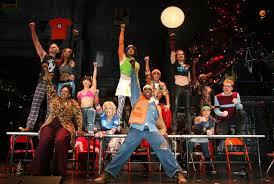
As reported by the New York Times, Marc Guarino of Trumbull High School in Trumbull, Connecticut suddenly announced that the school’s drama club would not be allowed to put on a showing of Rent.  The popular musical deals with themes of drug use, HIV, and homosexuality.  To be sure, this is a cleaned-up high-school version, with the profanity removed and one sexually explicit song taken out.  But Principal Guarino still thought it was too racy for his school.

Power to the High Kickers!

Power to the High Kickers!

He’s not the only one to do so.  The play has been yanked from other high schools around the nation.

Predictably, administrators like Guarino have been accused of homophobia and head-in-the-sand obscurantism.  The world is changing, critics charge, and young people need to be aware of real-world issues like those presented by the musical.

So far, Guarino’s not talking.  So his decision might really be due to a belief that young people need to be protected from the world of singing, dancing, drug-using sex-havers.

But there’s a depressingly obvious explanation that is much more likely.  Guarino and the Trumbull school board are probably simply offering a public-school administrator’s knee-jerk response to anything that might raise the tiniest hint of controversy.  More than bad test scores, more than teen hijinx, school administrators fear becoming the center of a fight.  Because savvy administrators know that they will be the losers.

In my new book (coming soon to a bookstore near you!), I look at the most famous school controversies of the twentieth century.  In case after case, no matter what the fight is about, administrators lose.  In 1950, Pasadena’s superintendent got blamed for changing educational patterns.  In 1974, Charleston, West Virginia’s superintendent got blamed for new textbooks.

When a culture-war fight breaks out in schools, no matter what the topic, school administrators are the first casualty.

As a result, principals and other administrators develop keep political antennae.  If any book, teacher, or musical threatens to introduce a whiff of controversy into their schools or districts, most administrators ban it outright.  They want to stop any fight before it starts.

The response to Rent by Susan Collins, a school superintendent in West Virginia, demonstrates this reflexive culture-war caution.  A few years ago, she described her feeling to the New York Times.  “Our high school shows,” she explained,

are so important to our community — we have alumni who come back, we bus in children for them — and I didn’t see ‘Rent’ working here. . . . But look, I know we can’t stick our heads in the sand, I know drugs are out there, I know children are having babies at 12, I know teens are having sex and always must have safe sex. But I don’t know if we need ‘Rent.’

When a drama-club teacher proposed the show for Collins’ district, it only took her one viewing of the DVD to make a quick decision: No way.  She worried that her “back in the woods” community would not take kindly to this sort of on-stage sexiness.

She wasn’t against it.  But she wasn’t willing to stand up and shove it in the face of her community, either.

More than culture warriors, public school administrators often take this role of culture-war avoiders.

Though their book got the most attention for its survey of evolution education, political scientists Michael Berkman and Eric Plutzer made a broader point about schooling and culture wars.  Teachers, they argued, are best understood as “street-level bureaucrats.”  In teaching controversial issues, teachers tend to reflect the middle-of-the-road values of their communities.

The bland CYA politics of principals like Trumbull’s Guarino reflect this same sort of deliberate centrism.  Is Rent bad for kids?  Conservatives might say yes; progressives might say no.

But school controversy on any sort of culture-war issue is definitely bad for the career of any public-school administrator.


Red Carpet Culture War

Maybe it’s not the big-time red carpet.  Not the Emmys, the Tonys, or the Grammys.

But the People’s Choice Awards this year are promising to give people a chance to vote for their culture-war preference.

According to the Christian Post, The Bible and Liberace are going head to head.

In the category “Favorite TV Movie/Miniseries,” voters have placed these two at first and second place so far.

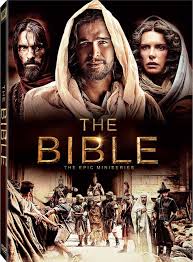
The Bible Miniseries?

The Bible Miniseries?

The Bible series has been a favorite among evangelical viewers.  Produced by “Touched by an Angel” star Roma Downey and her husband Mark Burnett, the project hoped to bring the Gospel message into the homes and hearts of millions.  As we’ve noted here on ILYBYGTH, the producers even hoped to bring The Bible into America’s public schools.

...or the story of this tempestuous love affair?

…or the story of this tempestuous love affair?

“Behind the Candelabra,” on the other hand, tells the love story of the flamboyant entertainer Liberace and his much younger lover Scott Thorson.

What do the people like better?  We’ll find out soon…


Gay Marriage Turns Children into Slaves

Will gay marriage lead to child slavery?

That’s the forecast implied recently by George Weigel in a recent column.

Weigel comments on a new bill proposed in Washington DC by the Council’s “most aggressively activist gay member.”  The bill would legalize surrogate child-bearing.  To Weigel, this arrangement treats both biological mother and child as mere commodities to be negotiated over.  As he laments,

The highest local legislative body in the federal capital is considering a bill that would commodify children as fit objects for sale and purchase—which is precisely what happened in Washington’s antebellum slave markets.

A tad histrionic, you say?

The liberal voice inside my head (and yes, I have several contending voices in there) shouts that this is just another cynical conservative attempt to demonize gay marriage.  Calling surrogate parenting a form of human trafficking is nothing but another bald-faced attempt to push irrelevant non-issues to the fore in the contentious discussion over gay marriage.

And I certainly believe that Dr. Weigel is trying to be provocative here.  But there is more behind Weigel’s accusation than just garden-variety demonization.

As we’ve argued repeatedly (see, for example, here, here, or here), questions of child ownership are central in every iteration of America’s blustery culture wars.

Schools have responsibility for children.  So do parents.  But who gets to make which decisions?

Some may assert that no one owns a child; a child is a person and therefore owns him- or herself.

But that sidesteps the issue.

Children, by definition, are not yet adults.  They are not able—legally or developmentally—to take responsibility for themselves.

Until they can, others must assume custodial roles.

When Dr. Weigel insists that non-traditional child-raising raises the specter of slave markets, he is walking a well-trod rhetorical path.

If children can’t quite own themselves, then questions about ownership will remain central to every culture-war discussion.