The Prodigal College Returns

The trend seems clear: Michigan, Florida State, Texas State, Ohio State, and other big schools have banned fraternities. School administrators are scrambling to control dangerous drinking, deadly hazing, and horrifying sexual assault. I can’t help but ask: Have the fundamentalists been proven right?
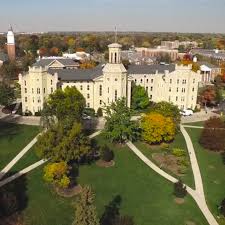
blanchard hall

Do all paths lead back to Blanchard Hall?

A hundred years ago, after all, as I explore in my new book, fundamentalists founded their new network of evangelical colleges, institutes, and universities for two main reasons. First, they wanted an intellectual refuge. Mainstream colleges, fundamentalists universally agreed, had drunk the Kool-aid of evolutionism and materialism. At least as dangerous, however, were the behavioral norms that had come to prevail at mainstream schools.

In the 1920s, fundamentalist school leaders such as Charles Blanchard at Wheaton College in Illinois and Bob Jones at Bob Jones College in Florida promised their schools would protect students from both loose ideas and loose behavior.

At Wheaton, for example, fraternities were banned, along with smoking, drinking, cinema, dancing, and card-playing. The school posted spies outside the downtown movie theater to make sure Wheaton students weren’t sneaking in. At Bob Jones, students were prohibited from “loitering,” talking freely with members of the opposite sex, and absolutely anything that hinted of “jazz.”

For a century now, evangelical schools have been mocked as small-minded anti-intellectual “church colleges,” hopelessly out of touch with modern higher ed. They have also been attacked—often by their own students—as ridiculously controlling.

Back when he was a Wheaton student in 1966, for example, historian Mark Noll led the drive to reexamine the “Pledge.” It was simply not possible, students felt, for them to receive a decent college education if they weren’t allowed to make their own decisions. They were embarrassed to tell their friends at other schools that they weren’t allowed to go to the movies.

But who is embarrassed now? As leaders of secular colleges struggle to find ways to impose restrictions on student behavior, are they reverting to fundamentalist arguments of the 1920s? As Frank Bruni argued recently in the New York Times,

On a range of fronts, fraternities — and sororities — contradict our stated values and undercut our supposed goals for higher education, putting our inconsistencies and hypocrisies under a magnifying glass.

To ban them, though, or even to take real moves to enforce rules against certain types of student behavior, wouldn’t be as simple as it seems. As the first generation of fundamentalist college leaders lamented, a central principle of mainstream higher education has been the notion that students themselves must be in charge of their decisions.

To make any real change in the deadly culture at many frats, mainstream college leaders would need to make big changes in the way they see their role. Like fundamentalist colleges and their evangelical heirs, mainstream schools would need to insist on their roles as moral guardians.
Ready for Pre-Order!

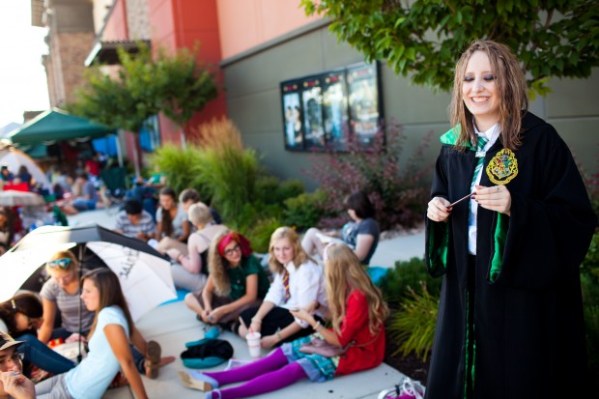
I know, I know, a lot of eager readers were planning to dress up as their favorite evangelical university president and camp out at their local bookstore when the new book was released.

harry potter camp out

I’m pretty sure she’s dressed as Wheaton’s Hudson Armerding…

I’m happy to say that’s not necessary. You can put in pre-orders now for Fundamentalist U. Oxford is saying the books will ship February 1, 2018.

Could This Happen at an Evangelical College?

As John Leo reports at Minding the Campus, Professor Anthony Esolen is under pressure. He’s accused of being “racist, xenophobic, sexist, homophobic, and religiously chauvinistic.” He says he’s just being truly Catholic and accuses his Catholic college of straying. As I finish up my book on the history of evangelical and fundamentalist higher education, the story brings a question to mind: Would this—could this—DOES this happen at evangelical colleges?

For those who are outside the orbit of Catholic higher education, let’s start with an inadequate primer: The Catholic Church and its schools include several different orders. Many Catholic colleges, including famous ones such as Georgetown, Boston College, and Marquette, are run by the Jesuits. Other big names, such as Catholic University and Notre Dame, are run directly by the Church. Esolen’s Providence College is Dominican. All of them are Catholic, but they have different bureaucracies and different ways of doing things.

Anthony-Esolen

Plus Catholique que L’Administration?

Why does it matter? Each order has its own history and its own theological, cultural, and educational traditions. Some tend to be more conservative; some more liberal. As a very loose and general rule, American Jesuits and Franciscans tend to be more liberal when it comes to some things. Dominicans, in my very limited experience, tend to be more conservative. But it varies enormously.

At his Dominican school, Anthony Esolen thinks that the Dominicans are not being nearly conservative enough. As he has complained,

The dirty not-so-secret is that the same people who for many years have loathed our Development of Western Civilization program — the focus of curricular hostility — also despise the Catholic Church and wish to render the Catholic identity of the college merely nominal.

In a lot of ways, it sounds like the perennial tensions at evangelical colleges. Since the early 1960s, market pressure among evangelical and fundamentalist colleges has been so great that any rumor of faculty heterodoxy at evangelical schools has been ferociously squelched by school administrators. In other words, in their life-or-death struggle to attract as many students as possible, administrators at evangelical colleges have worked hard to shut down any whiff of liberalism among their faculty. They have been terrified of alienating conservative parents and losing their tuition dollars.

And school-watchers know it. Conservative and fundamentalist critics—including trustees and celebrities—have scrutinized the goings-on at evangelical schools with a gimlet eye. In many cases, they have threatened to publicize the liberalism of evangelical schools, hoping to cow administrators into cracking down. Time and time again, evangelical administrators have taken drastic action to head off any accusation that they are no longer trustworthy.

It sounds as if Professor Esolen is working from a similar playbook. As he said on Facebook recently, “It is no longer clear to me that Providence College would qualify as ‘worth attending’.”

In the world of fundamentalist and evangelical higher education, these sorts of enrollment threats carry a great deal of weight. Young-earth creationist Ken Ham, for example, has been able to push schools to shore up their creationist credentials by wondering, in effect, if some evangelical schools are still worth attending.

But here’s where I’m puzzled. Have evangelical schools had to wrestle with professors who are too conservative? Too creationist? Too fundamentalist?

I can think of a few cases, but nothing seems perfectly analogous.

For example, take the story of Gordon Clark at Wheaton. Back in the 1930s, Clark had a sterling resume, with an Ivy League PhD. Wheaton College was happy to have him, for a while. Clark’s ferocious Calvinism, however, sat roughly with Wheaton’s interdenominational, big-tent-evangelical tradition. Clark pooh-poohed the emotional revivalism so popular among Wheaton’s students. In 1943, for instance, he dismissed a campus revival as mere “mass psychology,” not true salvation. And he disdained a popular evangelical method of Bible reading, the dispensational approach. So Clark didn’t last at Wheaton.

It’s sort of similar to Esolen’s case, but not exactly. Professor Clark never accused Wheaton of abandoning its evangelical tradition. Rather, Clark wanted evangelical students to be more rigorously conservative, more systematically Calvinist. But Clark never thought Wheaton had abandoned its Calvinist roots, because it hadn’t. Professor Clark understood that Wheaton shared the perennial problem of interdenominational evangelical schools everywhere: They wanted an impossibly generic orthodoxy.

On the campuses of evangelical colleges and universities, we mostly hear about professors who get in hot water for being too liberal, not too conservative. Most recently, for example, the case of Larycia Hawkins comes to mind. She was booted (yes, she was booted, no matter that she officially agreed to depart on her own) for wearing a hijab, bragging about it, and proclaiming that Muslims, Jews, and Christians all worshipped the same God.

For all you SAGLRROILYBYGTH out there who know the world of evangelical higher education better than I do….am I missing something? Are there other conservative professors who get in trouble for being more fundamentalist than their evangelical schools? Could Professor Esolen’s dilemma be repeated on an evangelical campus? HAS it been?

From the Archives: A Swizzle Mystery

Hello from sunny Biola University! In my continuing quest to dig into the history of conservative evangelical colleges, I’ll be working in the archives here all week. And I found a stumper in the archives this afternoon.

My oeil has been tromped...

My oeil has been tromped…

As I strolled across campus this morning, I was thinking that everything looked pretty similar to things at my own beloved State University of New York. The students looked the same, the vibe was the same…there was nothing particularly different about the goings-on at this Christian campus compared to my own secular campus. Except, of course, for the fact that the sun was shining and flowers were blooming and the air didn’t hurt when it hit your skin.

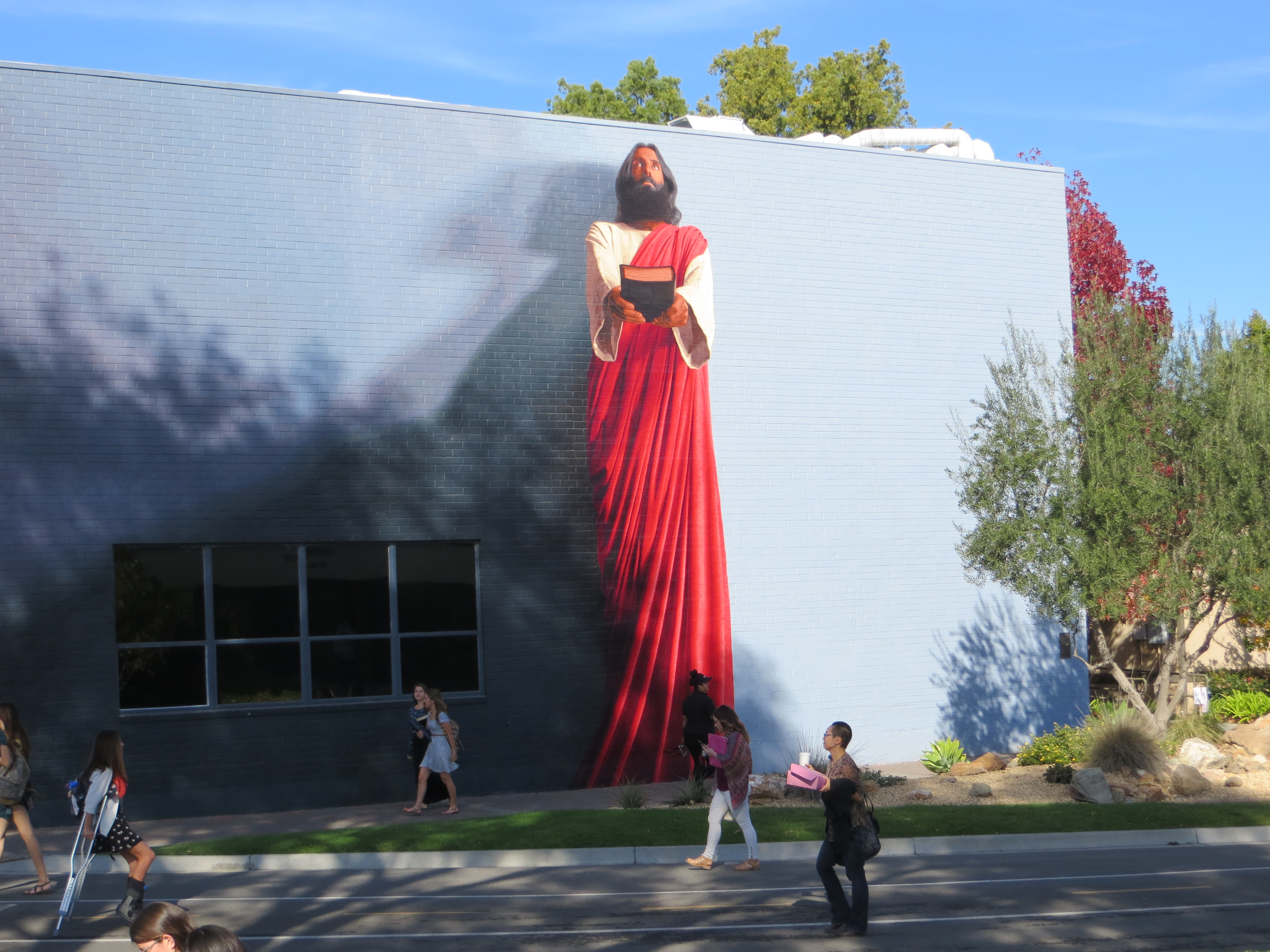
But then, I noticed something I wouldn’t be likely to see on my home campus. As far as I know, we don’t have any humongous Jesus paintings on our buildings.

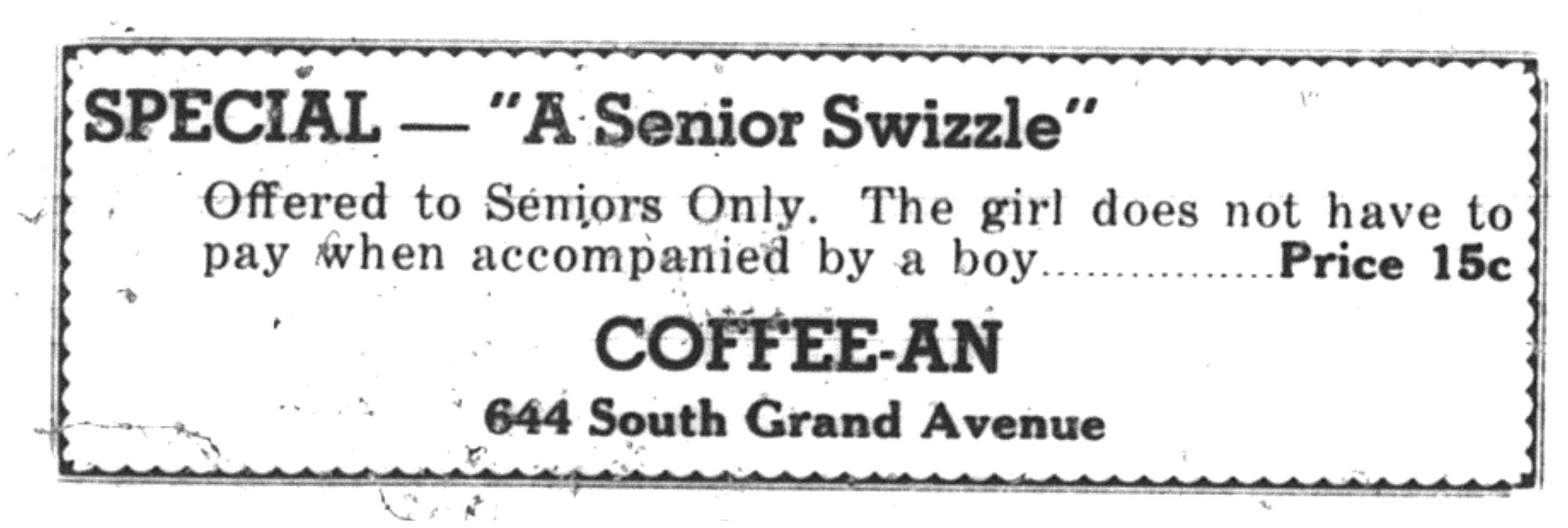
But let’s get to our archive challenge. Among the wonderful holdings here, the Biola library includes issues of the Biola student newspaper going back to 1938. And in the May 1938 edition, I saw this ad. For the life of me, I can’t figure out what it means. I looked up “swizzle,” of course, but besides a “rum swizzle” and a “swizzle stick” I couldn’t find a clue.

??????????????????

??????????????????

Any suggestions?  For full information, I can tell you that the Coffee-An was a lunch counter next to campus.  They advertised regularly in Biola publications.