I Love You but You Didn’t Do the Reading

Another week in the books. Here are some of the ILYBYGTH-themed stories that swirled around the interwebs this week:

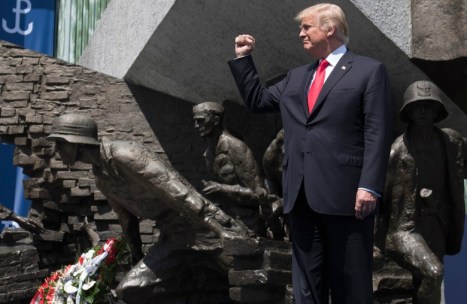
Forget Nixon, forget Mussolini: A better historic parallel to Trump, at HNN.

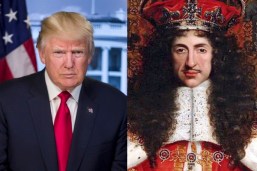
TRUMP CHARLES

The closer parallel?

Why did school-based Catholic priests commit more abuse? At HP.

The ugly truth from Alabama: Evangelicals, racism, and Trump, at WaPo.

Are low-income students being squeezed out of elite universities? Nope. But another group is. At AEI.

Is there a “socialist surge” among Democrats?

Did you see this one? Eighteen Oklahoma teachers explain why they’re quitting, at VICE.

How do elite schools stay so white? At NYT.

Historians wonder what to do in an era of “fake news” at CHE.

There’s One Word Missing from this Essay about Trump’s Christian Nationalism

Sorry for the long title, but it’s all true. I read with great interest Gene Zubovich’s recent article in Religion & Politics about Trump’s appeal to Christian Nationalism. It’s a great argument, but Zubovich leaves out one crucial word.

Nationalism-GettyImages-809665350_780x508

For Jesus AND America…

Zubovich hits the nail squarely on the head when he argues that Trump’s shameless appeals to God and Country are a big part of Trump’s appeal among conservative evangelicals. As Zubovich puts it,

Trump has repeatedly argued that when America remains true to its faith and traditional values, God will bless the country with the might to defeat its foes. And his words resonate with Christian nationalists—those who believe the United States was founded as a Christian nation and must continue to be one—because they tie together so many of the Christian Right’s beliefs and instincts. We have good reason to believe that Christian nationalism is one of the reasons evangelicals overwhelmingly support Trump.

Moreover, Zubovich recognizes the other side of this coin. Though big majorities of conservative evangelicals love Trump’s Christian-nationalist spiel, evangelicals also provide its most trenchant critics. For example, as Zubovich explains,

In May, American clergy issued the “Reclaiming Jesus” manifesto, which rejected Trump’s nationalist slogan of America First “as a theological heresy for followers of Christ.” . . . [They] reminded Americans: “Our churches and our nations are part of an international community whose interests always surpass national boundaries.” They went on to say, “We, in turn, should love and serve the world and all its inhabitants, rather than seek first narrow, nationalistic prerogatives.”

So far, so good. But Zubovich leaves out a vital bit. This debate over the relationship between nationalism and globalism among American evangelicals has always really only been a debate among WHITE American evangelicals. For other groups, most notably African American conservative evangelicals, the temptation to lump religion in with government has never been an issue.

Don’t get me wrong: It’s not that there aren’t a lot of patriotic African American conservative evangelicals in the USA. There certainly are. The urge to equate the government with the church, though, has only been a curse among white evangelicals. For obvious historical reasons, African Americans have always tended to keep their church strictly separate from other social institutions, institutions that all too often embraced slavery, Jim Crow, and anti-black racism.

Insisting on this one word, then, is more than just academic nitpicking. If we want to understand Trump’s appeal among conservative evangelicals—and we DO want to understand it—we need to be very careful to remember that only one segment of American conservative evangelicals has suffered from a muddling of religious zeal with patriotic fervor.

Papal Fundamentalism

It’s not what they meant to happen, but it seems to be happening a lot these days. As we heard from recent King’s College graduate Christian McGuire, some smart young evangelicals are turning to the Catholic Church. Evangelical-watchers have been seeing it lately everywhere we look. Thanks a tip from a SAGLRROILYBYGTH, for example, I ran across these charismatic folks who are enamored with Catholic tradition. It might feel like a new trend, but this “papal fundamentalism” has been predicted since the 1920s.

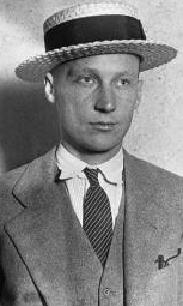
RollinLyndeHartt

Called it.

Rollin Lynde Hartt called it in 1925. Hartt may not be a household name today, but during the 1920s he was considered a leading expert on fundamentalism in the popular press. The Rev. Hartt was a liberal Congregational minister, dedicated to puncturing what he saw as the profoundly negative implications of the surging fundamentalist movement among his fellow Protestants. He hoped fundamentalism would wither and die away, but he feared (correctly) that fundamentalism wasn’t going anywhere.

When Hartt predicted the coming-together of the fundamentalist movement and the Catholic Church—what he derided as “Papal Fundamentalism”—he meant it as an insult. Hartt thought fundamentalism shared Catholicism’s un-Christian fetish for merely human authority. As Hartt put it in a 1925 magazine article,[1]

there is something essentially Catholic about the Fundamentalists’ demand for reliance upon authority; and in temperament every good Fundamentalist is a good Catholic.

HT: DW

[1] Rollin Lynde Hartt, “The Disruption of Protestantism,” Forum 74 (November 1925): 680-683.

Why Won’t They Admit They’re Political?

Nobody would be fooled this time. So why do conservative “court evangelicals” like Franklin Graham still pretend that they’re not into politics?

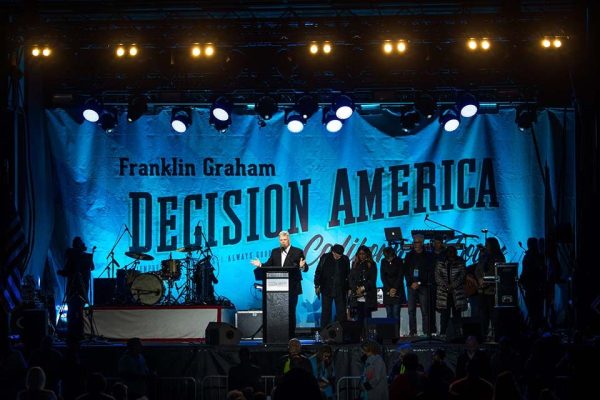
Franklin graham decision america 2018

Graham’s “religious” rally.

Here’s what we know: A recent NYT profile of Franklin Graham’s California bus tour leaves little doubt. The goal of Graham’s crusade, as NYT writer Elizabeth Dias puts it, is

to urge evangelicals to vote and to win California for Jesus.

It’s a political rally on wheels. So why does Graham pretend it’s not? In his official crusade propaganda, Graham explains his political goals in thinly disguised religious language. He says,

The goal isn’t to turn California red, but to get Christians involved in the everyday happenings of their communities so that others come to know Christ through them. That often means standing up for Christlike values.

When asked to explain his goal to puncture Calfornia’s liberal “blue wall,” Franklin Graham retorts,

I want to pierce that blue wall but not for politics. I want to pierce that blue wall for Christ.

And when the evangelistic association tries to describe the bus tour “in a few words,” none of those words are about explicitly about politics, even though they’re clearly about politics. As they explain,

It’s part prayer rally. Part evangelistic outreach. Part energizing and challenging the church to live out their faith in Jesus Christ.

For too long—as I’ve argued in my new book and in recent posts in these pages—pundits and even historians have accepted these sorts of statements at face value. They’ve accepted the self-serving myth of conservative evangelical preachers that they retreated from politics after the Scopes Trial in 1925, only to re-enter the political fray in the late 1970s, led by “New Christian Right” leaders such as Jerry Falwell Sr.

It doesn’t hold water. As great historians such as Daniel K. Williams have established beyond any sort of reasonable doubt, conservative evangelicals have ALWAYS been into politics. The change of the 1970s was simply an aggressive embrace of one political party, the GOP.

So why bother? Why does Franklin Graham bother to pretend he’s not staging a political campaign, when everyone knows that he is?

Fundamentalist U & Me: Eric C. Miller

Welcome to the inaugural edition of Fundamentalist U & Me, our occasional series of memory and reflection from people who attended evangelical colleges and universities. The history I recounted in Fundamentalist U only told one part of the complicated story of evangelical higher education. Depending on the person, the school, and the decade, going to an evangelical college has been very different for different people.

Miller_2017This time, we are talking with Eric C. Miller, an Assistant Professor of Communication Studies at Bloomsburg University of Pennsylvania, and a contributor at Religion Dispatches and Religion & Politics. His email is emiller@bloomu.edu.

ILYBYGTH: When and where did you attend your evangelical institution?

I attended Grace College in Winona Lake, Indiana from 2000-2001 before transferring to the University of Pittsburgh.

ILYBYGTH: How did you decide on that school? What were your other options? Did your family pressure you to go to an evangelical college?

Grace College is affiliated with the Grace Brethren denomination, a conservative evangelical sect based largely in Pennsylvania, Ohio, and Indiana. I grew up in a Grace Brethren Church where I was active in the youth group. During the summer prior to my senior year, I went on Operation Barnabas, a seven-week missions trip in which 90+ Grace Brethren teenagers travel around the country in blue school buses, visiting churches and encouraging their members through Bible School-style events and performances. I had such a great time and made so many close friends that I couldn’t wait to enroll at Grace and see them again. As expected, many of them did the same. A strong minority of that freshman class had been on OB at some point in the previous three years.

Prior to taking that trip, I had planned to look around and apply to a variety of schools. But in the end I only applied to Grace. My parents didn’t pressure me, but they were glad that I was going to a solidly evangelical college.

ILYBYGTH: Do you think your college experience deepened your faith? Do you still feel connected to your alma mater? What was the most powerful religious part of your college experience?

Yes and no. I recognized from the beginning that the student body was homogenous. Everyone looked, believed, and acted more or less the same. It was an easy place to be a conservative, mid-western, white evangelical, as there was a wide support network and very few temptations. I loved being immersed in that community. At the same time, I found myself feeling a little oppositional. I was critical of George W. Bush, for instance, which was atypical. I also recall a guest lecture by Jerry Falwell, Sr. that I attended begrudgingly. Among friends, I was known as a campus liberal, but I would have remained moderate-to-very-conservative by any objective standard.

When I decided to transfer, I did so for missional reasons. I didn’t think it was good for Christian young people to be sequestered on rural campuses, so I moved to Pittsburgh to help win the world for Christ. Friends and family worried that I was making myself vulnerable to secular ideas and worldviews—which turned out to be correct—but I fancied myself a missionary. (Plus I was a little concerned that my horizons weren’t being broadened, and that I might end up married at twenty.)

Though I do think about making the trip to visit Winona Lake from time to time, I wouldn’t claim to be connected to that campus in any tangible sense. The most powerful religious part of the experience may have been leaving—I considered it a personal sacrifice.

ILYBYGTH: Would you/did you send your kids to an evangelical college? If so, why, and if not, why not?

No. I don’t have kids yet, but if or when I do I will not encourage them to go to an evangelical college. Despite my own positive experiences, I think these schools generally fail—or refuse—to provide some of the basic amenities that a college campus should offer as a matter of course. By restricting their students to a very narrow understanding of the world, policing their behavior within a very narrow moral code, and housing them within a very narrow community of the like-minded, these institutions mold their students into carbon copies of a particular type. There is no doubt that this process can be very comforting for those who participate, as long as they don’t resist. But resisting things is part of real growth, and both students and faculty should be free to stretch.

ILYBYGTH: Do you still support your alma mater, financially or otherwise? If so, how and why, and if not, why not?

No. I’m no longer conservative or evangelical, so I can’t say that I support what they’re doing. Plus they don’t send me letters anymore.

ILYBYGTH: If you’ve had experience in both evangelical and non-evangelical institutions of higher education, what have you found to be the biggest differences? The biggest similarities?

Grace and Pitt are different in just about every respect. I moved from a small, rural, almost uniformly white, conservative, evangelical college to a large, urban, diverse, secular university. They’re so different that I’m not sure the compare/contrast would even be illuminating. But I should note that the adjustment was hard. It was very easy to make close friends at Grace, and very difficult at Pitt. It turned out to be a pretty lonely time in my life.

ILYBYGTH: If you studied science at your evangelical college, did you feel like it was particularly “Christian?” How so? Did you wonder at the time if it was similar to what you might learn at a non-evangelical college? Have you wondered since?

Since I was only there for one year, I only took a collection of general education courses. But it was commonly understood that the faculty were operating on a young earth creationist model, based on a literal reading of Genesis.

Years later I had the opportunity to apply for a professorship at Grace, which I briefly considered. But the faith statement remained very rigid, and there was just no way I could sign it.

ILYBYGTH: Was your social life at your evangelical college similar to the college stereotype (partying, “hooking up,” drinking, etc.) we see in mainstream media? If not, how was it different? Do you think your social experience would have been much different if you went to a secular institution?

My social life at Grace was extremely tame. No parties, no alcohol, no drugs, no sex—any one of these things could have gotten you expelled. There were no fraternities or sororities. If you left the dorm for the weekend or overnight, you had to sign paperwork and let your RA know where you would be. It was a closely monitored environment, and your peers were just as likely as your supervisors to call out your infractions. We all knew it was oppressive, but we didn’t really care. We had signed up for this. Instead there were lots of game nights, organized sports, coffeehouse-style live music, ministry opportunities, and other forms of wholesome fun.

My social life at Pitt was different, and would have been very different if I hadn’t remained mostly the same. I got involved in the campus Christian Fellowship, but found it hard to infiltrate. On most weekends I was either out drinking (and then feeling guilty about it) or not drinking (and so staying in and relatively alone). I actually missed my Grace friends a lot when I got to Pitt. But admitting that would have meant conceding that the move had been a mistake.

ILYBYGTH: In your experience, was the “Christian” part of your college experience a prominent part? In other words, would someone from a secular college notice differences right away if she or he visited your school?

Definitely. It was an extremely prominent part—it was the prominent part. Aside from all the rules and the good clean social life, there were mandatory chapel services, ministry obligations, the curriculum-in-general, and the soft social pressures to do things like attend church weekly, volunteer for local youth groups and organizations, support the approved political propositions and candidates, etc. Grace was—and I’m sure remains—very proud of its Christian identity. That identity infuses everything and is impossible to overlook.

ILYBYGTH: What do you think the future holds for evangelical higher education? What are the main problems looming for evangelical schools? What advantages do they have over other types of colleges?

Evangelical colleges may always have prospective students as long as evangelicals continue having children—which they seem to do quite a lot! These schools are advantaged by a very coherent worldview with strict expectations for behavior and belief. Secular people tend to assume that these are liabilities, and sometimes they may be—especially among independent types, rebels, and racial or sexual minorities, for instance. But most of the straight, white, conservative evangelicals that I met—including, for a time, myself—really loved the inclusion, the accountability, and the sense of purpose that come with membership in that community. You know exactly what to do with your life, how to do it, and who to do it with. Once lost, that unequivocal sense of direction is difficult to recover or replace.

And yet, I think evangelical colleges may be headed for some of the same problems that confront evangelicalism in general. There is a disconnect between evangelical theology and culture, such that the two are very often in direct opposition. While evangelical theology hopes to represent the will of Christ—with all of the faith, hope, and love that he preached—evangelical culture is basically a subset of American conservatism—with all of its standard appeals to fear, nostalgia, and power. When this theology and this culture come into collision, white evangelicals have been far too quick to side with the culture.

When I was a college student in the early aughts, evangelical support for George W. Bush offered the first real challenge to my faith. I struggled to square Bush Administration policy choices with the red letter teaching of Christ, so I found myself both confused and disappointed by friends and family who offered him their uncritical support. But that experience pales in comparison to what I feel today. If evangelical support for Bush left me disappointed, evangelical support for Donald Trump has disgusted me beyond words. When I awoke on Election Day and read that 81 percent of white evangelical voters had gone for Trump, a part of me died. The part of me that always wanted to reconnect with the faith of my youth—that stubborn desire to find my way home that all ex-evangelicals feel to varying degrees—just evaporated in my chest. It was a pivotal moment for me and it has fundamentally changed the way I feel about the movement and the people that I used to love.

If my experience is representative, then evangelical colleges may be confronted with declining enrollments in the years to come. If the Millennial generation is as progressive and as activist as some suggest, then even the devout may opt to avoid these culturally evangelical institutions. For their sake, and for the sake of Christian virtue, and with something like love, I find myself hoping that those numbers implode.

Thanks, Professor Miller!

Did YOU attend an evangelical college? Are you willing to share your experiences? If so, please get in touch with the ILYBYGTH editorial desk at alaats@binghamton.edu

 

I Love You but You Didn’t Do the Reading

Another week, another round-up of the weekly news from all around the interwebs:

Larry Cuban on insider and outsider superintendents.

Life after fundamentalism: A red-letter story from Cedarville University, at RACM.

Trump & White Racism:

Evangelical college students don’t know about evangelical religion. And they don’t care. At FT.

Does evangelical political activism drive people away from religion? At PS.Bart reading bible

Changing charters: LA teachers organize unions, at TI.

Why do white evangelicals love Trump? It’s not their fault; it’s their psychology, at Slate.

Don’t Read This

It keeps showing up. Even the smartest, best-informed people still make a huge mistake when it comes to understanding the history of white American evangelicals.

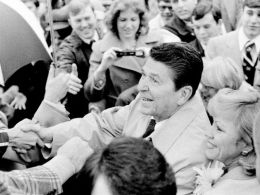
reagan at BJU 1980

The Gipper greets BJU students, 1980.

As SAGLRROILYBYGTH know, we’ve been obsessed these days about white evangelicals’ love affair with Trump. In talks and article after article after article, we’ve wondered why white evangelicals support a seemingly amoral leader.

We’re not the only ones. Evangelicals themselves such as John Fea and Michael Gerson have wondered about it. And recently John Ehrenreich took another stab at the question. Ehrenreich makes some great points, but he miscategorizes twentieth-century evangelical history.

I’m 100% on board with Ehrenreich’s central theme. As he puts it,

behind the apparent disparity, there exists a psychological kinship between Trumpism and evangelical thought—at least, for white evangelicals. . . . The similarities in their approaches to the world run so deep that I believe that white evangelicals would continue to support Trump even if Roe v. Wade weren’t in the picture.

Right.

It seems obvious: there is an intense and powerful tradition of Make-America-Great-Again thinking among white evangelicals, a tradition to which Trump makes an intense and powerful (if surprising) appeal. If we really want to understand white evangelicalism in America, it does not help to start and finish with theological notions, IMHO. We need to include the mish-mash of history, memory, nostalgia, and politics that leads many white Americans—including white evangelicals—to yearn for the good old days.

Bibb-Graves hall bju til 2011

It didn’t start with Reagan. Bibb Graves was the Governor of Alabama and close political friend of Bob Jones College in the 1920s…

Trump appeals to something deep, something beyond tax policy or even abortion policy. Now, I don’t buy Prof. Ehrenreich’s explanation of this evangelical-Trump affinity. He wants to tie the Trump connection to white-evangelical psychology, which seems a little simplistic.

But that’s not my main beef. This morning I’m objecting to Prof. Ehrenreich’s quick sketch of twentieth-century evangelical history. He repeats the tired myth that white evangelicals only really became political and conservative in the 1970s. He argues that white evangelicals had been split, politically, between progressive and conservative wings. Only in the late 1970s, he thinks, did the bulk of white evangelicalism embrace political conservatism. As he puts it,

by the end of the ’70s, things began to change. The percent of the American population adhering to evangelical beliefs grew rapidly. Right-wing fundamentalist preachers took over organizations such as the Southern Baptist Convention. There was a rapid rise of separatist Baptist churches, proclaiming a fundamentalist theology, denouncing the moral ills of society and communism, and often promoting segregationist views. In 1979, Jerry Falwell joined hard-line conservative activists such as Heritage Foundation and American Legislative Exchange Council co-founder Paul Weyrich to form the Moral Majority, a political action group focused on mobilizing Christians against “secular humanism” and moral decay. Evangelical pastors threw themselves into the political arena and worked for 1980s conservative electoral victories. Simultaneously, largely evangelical white voters in the South shifted rapidly from the Democratic Party to the Republican Party, and American politics as a whole moved sharply to the right.

I thought we were beyond this. The facts of Ehrenreich’s historical sketch are basically correct, but taken together they don’t prove that conservative evangelicals got political only in the 1970s.

As our leading historians such Daniel K. Williams and Matthew Avery Sutton have demonstrated, white evangelicals ALWAYS were political. Yes, there were progressive and conservative wings, but there was never a “retreat” from politics. As Williams showed, something big really did happen in the 1970s, but it was not that white evangelicals got into politics. They had always been into politics. Instead, what happened was that white conservative evangelicals embraced the GOP as their single political vehicle.

Maybe I shouldn’t be surprised. It’s easy to think that white evangelicals retreated from mainstream politics in the 1930s, only to reemerge with a flourish in the Reagan years. After all, it is a story that white evangelicals have told themselves and the rest of us for many years. As I point out in my recent book about evangelical higher ed, fundamentalist college leaders often insisted that they and their schools were above politics.

Consider the example of Bob Jones Jr. and Bob Jones University in the era of the so-called “New Christian Right.” In 1969, Junior told a friend that he was “opposed to party politics . . . on principle.” In the very same 1969 letter, though, he gave a glimpse of what he meant by that. Was BJU above political activism? Not at all. As Junior explained, BJU was always “urging our students to remember how their senators voted when the next election comes up in their state.”

In other words, white conservative evangelical leaders such as Bob Jones Jr. SAID they were above politics, but what they meant was that they were not wedded to one major party or the other. By 1976, Jones had begun to change his tune. As he put it in 1976, evangelical leaders

should denounce what’s spiritually and morally wrong, and if that means getting into politics, so be it.

When Jones said he was “getting into politics,” what he meant was that he was embracing the GOP alone. He might have sincerely thought that he and his school were above politics before that, but it just wasn’t true. Way back to the 1950s and into the 1980s, Junior continued to talk about getting “into” or “out of” politics, but he never meant that he wouldn’t be throwing his political weight around.

And he certainly never meant that he was somehow split between progressive and conservative political ideas. For fundamentalists like Jones, going all the way back to the 1910s, Christian politics were always conservative politics.

When the Reagan administration angered Jones Jr., for example, Junior threatened in 1982 to take his followers “out” of politics. As he put it, he might just urge BJU voters to

stay away from the polls and let their ship sink.

Now, clearly, withholding votes from the GOP is just as political an act as giving votes is. When white evangelicals in the twentieth century talked about staying out of politics, they didn’t really mean it. They didn’t really mean they wouldn’t vote for conservative candidates or mobilize for conservative issues.

All they meant was that they weren’t married to one party or the other.

When will we stop reading the misleading myth that white evangelicals retreated from politics until Falwell and Reagan?

I Love You but You Didn’t Do the Reading

From fajita robbery to lynching memorials to teacher strikes, this past week had a little bitta everything.  Here are some stories that came across our desk…

Too risky: Penn State cancels student outing club, citing fears that students might get hurt. At MC.

Hard time: Man gets 50 years for stealing $1.2 million in …. fajitas. At USAT.

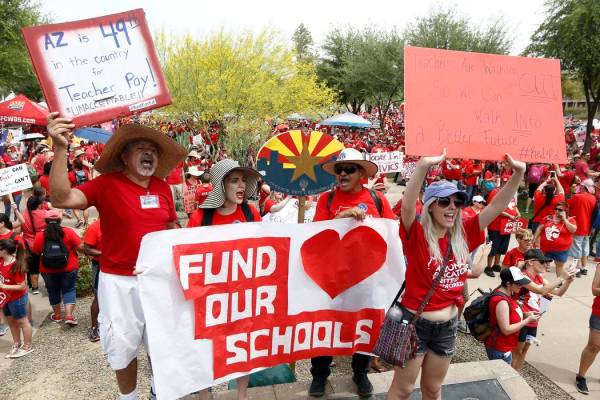
az teacher strike

Left? Right? Dollars? Sense?

Teachers take to the streets:

Pietist Schoolman Chris Gehrz wonders: Did evangelicals kidnap the name “evangelical?” At AB.

White evangelicals are playing with fire, at The Atlantic.

  • “But by tying themselves to the Trump brand, white evangelicals risk their movement’s ability to grow.”

Forget stem-cell research and creationism. The real war on science comes from the left, says John Tierney of City Journal. HT: MM.

Ugly truths: Lynching memorial opens in Montgomery, at NPR.

  • Why didn’t this news generate more culture-war commentary? Here at ILYBYGTH.

Gone but Not Forgotten

Do I have a problem? For sure. Am I embarrassed about it? Not at all. But I do want to make my case for the importance of old grudges and festering scars in understanding the world of evangelical higher education.

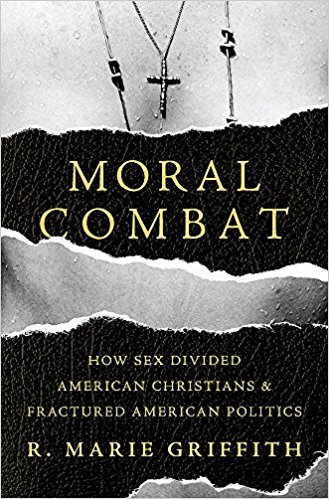
griffith moral combat

Good company…

Here’s the context: I’m grateful to Professor John Compton and the LA Review of Books for a recent review of Fundamentalist U. I’m doubly honored to have my book partnered with R. Marie Griffith’s recent blockbuster Moral Combat.

Even better, Compton has nice things to say about my book. As he puts it, Fundamentalist U

offers an invaluable introduction to the esoteric world of Christian higher education. Few existing studies offer this level of insight into the inner workings of schools like BJU and Liberty.

Compton captures the central dilemmas I emphasized, such as the tension between keeping students safe and keeping up with changing academic trends. He notes the important divisions that emerge between new “evangelical” colleges and stalwart “fundamentalist” ones.

I can’t help but comment, though, on one of Compton’s points. He is doubtless absolutely correct when he states,

some readers may be turned off by Laats’s fascination with long-forgotten rivalries involving long-dead university administrators[.]

I am certainly fascinated by such things. And I don’t doubt that sensible people have better things to do with their time than ponder the administrative squabbles in Cleveland, Tennessee or Wheaton, Illinois in 1937. This is why I don’t get invited out very often. Most people are, in fact, turned off by my fascination with these questions.

For those of us who hope to understand American evangelicalism, though, there’s no way we can consider such rivalries “long-forgotten.” As in any family feud, time may have obscured the details, but it has not tempered the animosity. If anything, bitter feelings caused in 1937 may have earned angry compound emotional interest over the decades, giving original squabbles a power and fury they didn’t originally possess.

To give just one example from the book, I can certainly see how many readers might not immediately care about the firing of President J. Oliver Buswell from Wheaton College in the 1930s. President Buswell wanted Wheaton to pursue a more theologically pure separatist approach. He wanted Wheaton to encourage its faculty and students to withdraw from mainline Protestant denominations and focus instead on creating a consistently conservative evangelical institution.

Wheaton’s trustees disagreed. They insisted that Wheaton maintain its efforts to attract conservative students who remained within mainline denominations as well as those that joined breakaway fundamentalist churches.

As Professor Compton notes, all the players in this 1930s drama are long-dead. But their squabble is anything but long-forgotten. Throughout its history, Wheaton struggled to figure out how to handle the tension between conservative purity and (relatively) big-tent inclusiveness. Time after time, whenever faculty members challenged the vagaries of Wheaton’s assumptions about orthodoxy, they were given the boot.

If you think these patterns are no longer in effect, just ask Professor Hawkins. Perhaps no one in that recent Wheaton battle invoked the specter of President Buswell’s 1930s ouster, but the college as a whole still deals with the echoes of every long-ago conflict.

I Love You, Donald Trump

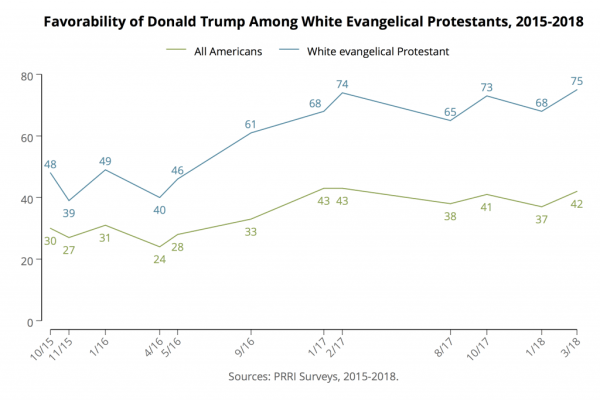
Fumes of bewilderment are still rising above the academic swamp. Nerds like me just can’t figure it out: Why do white evangelicals love President Trump so much? Why, that is, do they not merely hold their noses and grudgingly support Trump as the least-worst candidate, or the practical-but-boorish choice, but actively embrace his leadership? New poll numbers suggest that white evangelicals are the only group that is liking Trump more and more as the scandals roll out.

PRRI-Trump-Favorability-and-white-evangelicals-2015-2018-1-1024x683

Lovin the Donald.

The contradiction that seems so obvious to me is apparently a false one. To me, it would make sense if white evangelicals became disaffected with Trump’s in-your-face leadership style, with his reputed sexual dalliances, and with his hazy patriotism.

Among white evangelical respondents, there is no problem. A whopping seventy-one percent of white evangelical women like Trump. An even higher eighty-one percent of men do.

Could this be a division between “faculty-lounge” evangelicalism and the popular sort? The numbers suggest otherwise. True, college-educated white evangelicals support Trump in lower numbers, but still at a very high sixty-eight percent. Among those who have not been to college, seventy-eight percent of white evangelicals are pro-Trump.

Why so much Trumpism? One of my conservative evangelical friends offered his two cents. As he put it,

Adam, it is very simple why Trump has such wide-spread support among conservatives, we finally have a president on our side in the culture wars.