Creation Wins the Culture War

Quick: What rhymes with mitochondria?

It’s a tough question, and it helps illustrate the uphill cultural battle evolution has faced for the past hundred years in America.

A fluffy piece in Sunday’s New York Times gives us an example of this persistent imbalance.

The article describes the results of an outreach program to New York City teens, Science Genius.  The program hopes to use hip-hop as a sweetener to connect urban youth to science.

A victory for evolution and mainstream science?  I don’t think so.  I’m no creationist, but I can’t help but conclude that pop music seems to be more suitable for creationism than mainstream science.

Though the supporters of the NYC program claim some limited successes, even those claims highlight the deep difficulties of engaging young people of every cultural background with mainstream science.

We don’t want to make too much out of just one example, but listeners are not likely to be much moved by rhymes like the following: “Bioclast, foliation, and that granite, . . . I can tell you something ‘bout an aphanitic.”

I applaud the student, and the program, but rapping the truths of mainstream science doesn’t fall as trippingly off the tongue as those of creationism.

How much evolution music can you name?  Good stuff?

Creationists, on the other hand, can claim all sorts of pop music from the headlining Jonas Brothers to internet-cluttering obscure artists across the world.  Christian and Creation rock has long been an enormous and aggressive cultural presence, as ex-fundamentalist Jonny Scaramanga has remembered.

Where is the evolution-rock?

As critic Jason Rosenhouse perceptively noted in his book Among the Creationists, mainstream science does not have to worry about creationist challenges to the strength of real evolutionary science.  But creationists, Rosenhouse argues, DO have an easy time of constructing narratives that make sense to people.  Mainstream science?  Not so much.

Perhaps this is why people trust their intuition about creation and evolution more than they trust mainstream science.  As Penn State political scientists Michael Berkman and Eric Plutzer noted in their book Evolution, Creationism, and the Battle to Control America’s Classrooms, even the small minority of Americans who agree that mainstream science is firmly evolutionist support the inclusion of creationism in America’s classrooms.  That’s right: even those Americans who recognize that scientists agree about evolution tend to agree that creationism should be part of public science education.

Why is that?  At least part of the reason must be because mainstream science does not offer a compelling story to which Americans can cling.  There is no telos, no plot, no conflict (in the literary sense), no protagonists worth following.

Creationism, on the other hand, makes a good deal of intuitive sense.  It makes sense that a world so complex, so morally challenging, must have been created on purpose.

Evolutionary science, for its part, needs to make the case that humanity occurred somehow, but we don’t know exactly how.  It needs to explain that the feelings people have of purpose, of cosmological intent, are only vestiges of happenstance.

A hard bill of goods to sell on the pop-culture marketplace.  Just like it is hard to find a rhyme for mitochondria.


An Atheist and a Fundamentalist Walk into a Bar…

Can skeptics and believers talk civilly to one another? Can creationists and mainstream scientists ever have a constructive dialogue?

Most of the time, the best efforts at culture-war mediation leave everyone only more bitter and more convinced of the “extremism” and “irrationality” of the other side.

Thanks to coverage from the Texas Freedom Network, we recently caught up with an illuminating intellectual exchange between a leading creationist advocate and a witty, informed science skeptic.  Neither one seems to have been “converted” by the argument, but the civil yet heated discussion demonstrated the possibilities of creation-evolution dialogue.

Steven Novella, president of the New England Skeptics Society, interviewed Texas creation activist Don McLeroy last month.  You can hear the full interview on the Skeptics’ Guide to the Universe podcast.  Also fascinating, you can follow the post-interview back-and-forth on Novella’s NeurologicaBlog.

As we’ve argued here before, trying to understand Don McLeroy is a great way to begin making sense of conservatism in American education more broadly.  As the chairman of the Texas State Board of Education in 2010, McLeroy spearheaded a campaign to overhaul Texas’ influential textbook guidelines.  In that fight, McLeroy cared about more than evolution.  He also promoted an emphasis on such disparate themes as the Christianity of the founding fathers, the beneficence of the National Rifle Association, and the civic value of country music.

In the May 8, 2013 interview, Novella and his colleagues asked mainly about McLeroy’s position on evolution education.

During the interview, McLeroy makes his case for teaching the scientific alternatives to mainstream evolution theory.  As Novella and his associates point out, McLeroy carefully avoids making a case for teaching creationism or any religious ideas in public schools. Instead, McLeroy consistently advocates only for teaching the scientific criticisms of evolutionary theory.  Most of the discussion consists of a back-and-forth on the merits and weight of those criticisms.

Are there enough real scientific challenges to evolutionary theory to merit their inclusion in public-school science curricula?

One of the most intriguing points of the exchange was McLeroy’s insistence that religious thinkers are free to be more open-minded about the scientific claims of evolution.  Since religious intellectuals are open to the idea of both materialistic and supernatural explanations, McLeroy claimed, they have greater ability to weigh the evidence. This argument did not sit well with Novella and his colleagues.

Another fascinating discussion resulted from McLeroy’s defense of his anti-expert position.  During the 2010 school fight in Texas, as captured so movingly in Scott Thurman’s Revisionaries documentary, McLeroy argued that educators needed to seize control from “experts.”  Novella and his associates explained to McLeroy why this claim seemed preposterous to them.  Why should science curricula ignore the thinking of mainstream scientists—the real experts—and instead follow the inclinations of one dentist from Texas?

I was surprised to hear McLeroy’s willingness to waffle.  As I’ve argued before, McLeroy’s indictment of “experts” has a storied history, of which Novella and his colleagues seemed unaware.  For many anti-evolution activists, indeed for many conservative educational activists on a range of issues, the baleful influence of educational experts has long been assumed.  The recent trashing of CSCOPE in Texas demonstrated only the most recent emergence of this anti-expert sentiment.  I wished Dr. McLeroy had tried to articulate some of this broader anti-expert tradition.

More important than the details of the transcript, however, was the tone of the interview and post-interview exchange.  Neither Novella nor McLeroy apologized for their beliefs.  Neither held back from pointed and fundamental criticisms of the other, though as guest McLeroy tended to be more polite.  Yet the two sides managed to speak politely to one another.  McLeroy called Novella a “scholar and a gentleman.”

For his part, Novella called McLeroy

an exemplary guest. He stayed polite throughout, and did not bristle even when directly confronted on his position. He also did something I find extremely rare in such interviews – occasionally acknowledging a point on the other side or a weakness in his own position. He also had clearly made a genuine effort to read pro-evolution material and criticisms of his position.

I came away with the impression that he is genuinely trying to understand the creation/evolution debate and to rely on only valid arguments.

Did either side walk away from this exchange converted?  Definitely not.  But was the exchange worthwhile?  Certainly yes, for several reasons.

First of all, for interested observers, this back-and-forth gave both sides a chance to make their own arguments.  Readers and listeners can see what intelligent advocates might say on some basic stumpers of the creation/evolution debate.

Second, in any tense culture-war standoff, elaborate courtesy and face-to-face meetings help defuse the tendency to demonize the opposition.  For evolution believers like me, the contours of the debate change when I hear a friendly, seemingly well-intentioned leader of the creationist cause, if only to prove that both sides can include people of good will.


Would You Sign It? UPDATE

This just in: the new petition to urge President Obama to ban creationism and intelligent design has evolved!

When we first noticed it yesterday, it had garnered 7662 signatures.  One day later, it has tallied 11,321.  That’s 3659 signatures per day. In order to guarantee Presidential consideration, the petition needs 88,679 more signatures by July 15. 

That would require, by my awkward public-school mathematics, just about 3550 new signatures per day.  So the future looks bright for this symbolic sally into the culture-wars No Man’s Land. 

Who knows what the future brings.  Perhaps this campaign will fizzle after the initial buzz dies down.  Or just maybe, more and more people will sign per day, blasting past the 100,000 minimum requirement. 

I don’t think that would present President Obama with much of a political dilemma.  Unlike GOP leaders, Obama does not really need to truckle to religious conservatives.  He could easily issue a few diplomatic murmurings about the importance of thorough, accurate science education in the nation’s schools. 

I will keep my eyes peeled, in any case, to see how this petition plays out.  Stay tuned. 

Would You Sign It?

Should creationism be banned from schools?  Intelligent design?

That’s the question posed by a new petition on the White House’s website.

As of this morning, the petition has garnered 7,662 signatures.  It only needs 92,338 more by July 15 to earn an official response.

The language seems mild to an evolution believer like me:

Since Darwin’s groundbreaking theory of Evolution by Natural Selection, scientists all around the world have found monumental amounts of evidence in favor of the theory, now treated as scientific fact by 99.9% of all scientists.

However, even after 150 years after the establishment of evolution, some schools across the US are “teaching the controversy,” including Creationism and Intelligent Design. Both of these so-called “theories” have no basis in scientific fact, and have absolutely zero evidence pointing towards these conjectures. These types of loopholes in our education are partially to blame for our dangerously low student performances in math and science.

Therefore, we petition the Obama Administration to ban the teachings of these conjectures that contradict Evolution.

I agree with these sentiments.  Though there are legitimate scientific questions about evolution, such questions do not merit teaching evolution as merely a “controversy.”  Evolution is a fundamental idea about science and deserves to be taught as such in public schools.

However, I think this talk of a “ban” misses the point.  The religious notions of creationism and intelligent design are already banned in public schools.  This kind of anti-creationist activism only antagonizes the substantial number of Americans who sympathize with religious explanations of the origins of life.  Antagonizes without purpose.

In the pages of the Christian Post, for example, young-earth creationist Ken Ham correctly pointed out that the petition could never have any real impact on the teaching of creationism.  The petition only proved, Ham insisted, “the intolerance of evolutionist activists who do not want to see any challenge to their deeply held secularist worldview.”  Since the petition did not specify public schools, Ham argued, this petition can be seen as an aggressive attempt to dictate the teaching even of religious private schools.

Similarly, John West of the Discovery Institute, an intelligent-design think-tank, called the petition “ill-informed, confused, and beside the point.”

I don’t want to see creationism of any sort taught in public schools.  But I agree here with West and Ham.  This petition looks like another well-meaning but ill-considered scheme by overzealous anti-creationists.

Would you sign it?

Not Jesus OR Evolution, Jesus AND Evolution

What dead-end questions do we keep asking in our continuing creation/evolution debates?

  • What does real science say?
  • What does real religion require?
  • What does the Bible mean?
  • How does the evidence prove the claims of Darwin?

As we’ve seen recently, smart people can bump heads endlessly on these questions without ever convincing one another.  As I argued in my 1920s book, these go-nowhere debates have been going on for almost a century.

More evidence today that the real question we should be asking is different.  Instead of asking about true religion or true science, it seems the real question is simpler:

  • Who am I?

A piece on the BioLogos Forum recently demonstrates the centrality of this basic question to attitudes about evolution and creation.

Geochemist Steven M. Smith relates his story.  For followers of the creation/evolution controversy, it is a familiar one.  An earnest young Young Earth Creationist sees the scientific evidence for a young earth.  This evidence brings on not only a scientific or religious crisis, but an existential one.  As Smith relates, his young self felt forced to choose between his Christian identity and the unassailable evidence of science.

For Smith, it was Christian support, including the “Christ-like” model of a Christian academic mentor that convinced him that he could be both Christian and scientific.

Smith’s story is not an outlier.  As anthropologist and science educator David Long argued so convincingly in his book Evolution and Religion in American Education, the central question for most students is not one of scientific evidence or religious belief.  The real question is one of identity.  Evidence that contradicts deeply held beliefs can trigger an existential crisis.  Though a few extraordinary individuals might pull off a wholesale revolution in their understandings of their selves, most people reject the evidence and stick with their well-established identities.  In the case of Long’s study of biology students at a large secular public university, most students from creationist backgrounds did not “convert” to belief in evolution.

As Steven Smith’s story suggests, simply pouring more science on people will not make much of a difference.  If we want to promote more and better evolution education, we need to consider the profound implications of evolution for the identities of many creationists.  An acceptance of evolution, for many, is not simply an acquiescence to evidence.  Instead, unless and until they find a way to construct an identity consonant with both their religion and the scientific evidence, it would entail a wholesale revolution in their understandings of themselves.

If we want more people, more creationists, to accept the evidence for an old earth and common ancestry of species, it makes sense to support those religious folks who can help create and promote such identities.


Rosenhouse Responds to a Critic

“Gall,” “tortured reasoning,” “gross theological ignorance,” and “demented” “troll[s].”  Discussions about creationism and evolution have it all!

A few days back, we posted a review of Jason Rosenhouse’s Among the Creationists.  As usual, any mention of this subject generated some heated comments.

This morning, Professor Rosenhouse offered a rebuttal of some of the critical comments.  He responded to the charges that he had misrepresented creationist claims, among others.

Everyone interested in the creation/evolution debate should check out his reply.

Creationists Are Right, Leading Atheist Concludes

Sorry for the overly dramatic headline. But that really is one of the conclusions of atheist mathematician Jason Rosenhouse.

They are not right that the earth is some 6,000 years old.  Nor are they correct that humans are the special beloved product of God’s magic touch.  But in his book Among the Creationists, Rosenhouse concludes that young-earth creationists are correct that the foundational idea of evolution poses a threat to the very core of Christian belief.

Get your copy today!

Get your copy today!

Rosenhouse’s book is required reading for any outsider who hopes to understand the world of American creationism in the twenty-first century.  Rosenhouse deliberately eschews the simple, satisfying approach of most outsiders.  He does not belittle or deride these ideas or their adherents, though he does forcefully argue against them.

As Rosenhouse describes, he is a mild-mannered mathematician with an unusual hobby.  For the past several years, he has attended creationist conferences and pored through creationist publications.  This experience did not soften Rosenhouse’s intellectual opinion about the scientific illegitimacy of creationism. But it did open his eyes to the galaxy of different types and approaches to creationism. And it convinced him of the overriding need to maintain civility, especially in these difficult discussions.

Indeed, some of the most illuminating parts of the book are the vignettes Rosenhouse includes.  In one story (pages 8-11), he describes an impromptu conversation in a Subway restaurant outside of one of the creationist conferences he attended.  Rosenhouse overheard a group of Christian creationists—a woman and some teenagers—talking about the strangeness of atheism.  He offered his conversational services as a real live atheist.  The young people seemed interested and willing to talk cordially. A nearby woman soon interrupted and warned the teenagers away from Rosenhouse, who she suggested had “been educat[ed] beyond [his] intelligence” (10).  In the end, though, the Christian busybody warmed up to Rosenhouse and even prayed for him.

Did anyone convince anyone else?  No.  But was this conversation worth having?  I think so. Rosenhouse reported feeling that the adults were occasionally rude in their obvious opinion that he was some sort of “zoo animal” (10).  But he also noted that creationists like the ones at Subway almost always remained cordial and even welcoming.  Was he likely to convert to creationism or conservative Protestantism?  Not at all.  But his understanding of the entire dilemma did change in important ways.  How about the people he spoke with? Were any of them likely to embrace the obvious truths of mainstream science? Also not likely.  But my hunch—and Rosenhouse’s—is that such friendly conversations with a real live atheist do a great deal to keep open the minds of creationists everywhere.  As Rosenhouse states, “any hope of doing long-term good comes from being scrupulously polite” (10).

Indeed, Rosenhouse occasionally takes “our side” to task for its own brand of ignorance. As he points out, “Insularity is a two-way street” (15).  If some of the ferocious anti-creationists out there took some time to find out more about the real world of American creationism, they would without a doubt be surprised at what they found. For one thing, with a few exceptions, Rosenhouse’s loud-and-proud scientific atheism was welcomed to these creationist conclaves with politeness and even intellectual excitement.  Second, creationism is a bigger tent than many outsiders understand. One creationist conference organizer, for instance, complained to Rosenhouse about the “piles of garbage” that passed as scholarship among creationists (14).

Throughout the book, Rosenhouse succeeds at illuminating the intellectual world of creationism.  He takes such beliefs seriously, while never granting them legitimacy as scientific ideas.  For example, Rosenhouse laments the “tiresome” assumptions of some of his non-creationist colleagues about the biblical beliefs of creationists (43). Rosenhouse carefully explains some of the ways creationists interpret the Bible.  The label “Literalism” does not do justice to this tradition.  For most creationists—or at least for the “mainstream” tradition of young-earth creationism—passages in the Bible should be taken at their obvious meaning.  If something is clearly meant as a parable, it should be read that way.  But readers should not add in baroque interpretive schemes to warp the Bible’s clear meaning into more culturally palatable explanations. As Rosenhouse concludes, Genesis really does support a YEC interpretation. There is not much in the text to suggest that these passages were meant to be read as anything but real descriptions of real historical events.  More provocatively, Rosenhouse challenges us non-creationists to grant creationists their fair treatment. If creationists’ dismissal of all evolutionary science is absurd, so it is arrogant and self-serving for us simply to dismiss such a widely held belief (159, 167).

For those who have not yet read this book, all this might make it sound as if Rosenhouse fell in love with creationism as he falls all over himself to find the tiniest points of agreement.  Nothing could be further from the truth.  Rosenhouse never grants the truth claims of creationists.  He sternly and repeatedly opposes both their notions and their tactics.  For instance, Rosenhouse revisits some of the oldest anti-creationism arguments.  Where did Cain get his wife? (164) Why do creationists only insist on some parts of Genesis, and not others?  Why, for example, do creationists not insist the earth is flat, with a dome-shaped covering? (163)  Just as a literal six-day creation seems to be the obvious interpretation of the Bible’s first lines, so a flat earth is the most near-to-hand interpretation of the text.  These old chestnuts, Rosenhouse argues, still have more than enough punch to deflate the most self-satisfied creation scientist.  More important, Rosenhouse points out that most creationist science is based on utterly false interpretations of basic concepts.  Even worse, creationists often suggest that evolution is only dominant due to a wide-ranging conspiracy, a claim Rosenhouse justly dismisses as pathetic (36).

Yet in spite of his firm opposition, Rosenhouse concludes that creationist reactions to the challenge of evolution are more intellectually respectable than those who try to marry creation and evolution. It makes no sense, Rosenhouse argues, to pretend that evolution does not fundamentally challenge traditional faith (219).  Some creationists respond in a way that makes sense; they reject evolution.  They may be entirely and sometimes cruelly wrong, Rosenhouse believes, but at least they have recognized the magnitude of the challenge posed to traditional Christian belief by evolution.

So stop reading this tripe and go get yourself a copy of Rosenhouse’s book.  For those of you who are creationists or recovering creationists, the volume will give you a sense of how the movement appears to a socially pleasant but intellectually hostile outsider. To us outsiders—liberals, scientists, and others who have only tangential knowledge about American creationism—this book is an absolute must read.  It joins other indispensable books in this field, such as Ron Numbers’ The Creationists, George Marsden’s Fundamentalism and American Culture, and Edward Larson’s Summer for the Gods as starting places to understand this durable culture war battlefield.

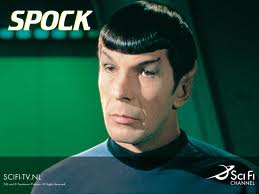
Fundamentalist Science, Spock, and Oprah

What do Science, Spock, and Oprah have to do with each other?

They help explain the thinking of anti-religion activists such as biologist Jerry Coyne.  The way some atheists figure, since religion is not logical, it should have no impact on our deliberations.  Oprah doesn’t agree. But who wields more clout in our culture, Oprah or Jerry Coyne?  Or, to put it another way, who is the star of Star Trek, Spock or Capt. Kirk?

Fundamentalist Science is highly illogical.

Fundamentalist Science is highly illogical.

I love to read Professor Coyne’s blog, Why Evolution Is True.  He always makes intelligent arguments for the propriety of a scientific understanding of reality, and the dangers of “accommodationism” with religion.  Plus he has lots of pictures of cats and bugs.

Recently, two posts bumped up against each other that demonstrated the difficulties with Coyne’s approach to these issues, IMHO.  In one post, Coyne reviewed survey data that revealed the relative overabundance of atheism among America’s top scientists.  In the next, Coyne bemoaned the appearance of Oprah Winfrey as Harvard’s commencement speaker this year.  As Coyne pointed out, Winfrey has done a great deal to promote anti-scientific rubbish over her career.

Now, I’m no Oprah fan.  Nor am I particularly religious.  But I can’t help but notice that Coyne’s fundamentalist attitude about this subject fuels the bitterness of our continuing culture wars over the role of religion and science in the public square.  This kind of bitterness is both unnecessary and counterproductive.

Science-advocates such as Coyne promote a particular vision of science as rigidly opposed to religion.  Coyne often protests against truckling to religious thought among scientists and science educators, such as the folks at the National Academy of Sciences or the National Center for Science Education. As I’ve noted before, Coyne’s extreme view of the necessary divide between science and religion puts him at times on the side of extreme creationists.

But Coyne’s religion- and Oprah-bashing put him on the side of some other curious figures as well.  Most famously in pop culture, Gene Roddenberry created Spock as the Asperger’s First Officer to balance Kirk’s testosterosity.  Spock always argued for the rule of logic and was always trounced by Kirk’s shoot-from-the-hip style of emotional leadership.

Smarter writers, too, have explored this Spock/Kirk, Coyne/Oprah divide. Most famously, Dostoyevsky’s Ivan Karamazov concluded reasonably and logically that God could not exist.  However, Ivan could not handle Smerdyakov’s gruesome conclusion to that logic.  Nor could Ivan counter Alyosha’s loving-kiss argument.  Like Spock, Ivan’s blind reason could not cope with the complexities of human experience.

Truth may not be democratic.  But our society is.  It is a good thing to have smart people complain about the influence of thoughtless media-mongers like Oprah.  But those smart people must also recognize that Oprah—unlike the elite atheist scientists—has her finger on the pulse of the culture.  She knows what people find important. She knows what people find interesting.  Oprah’s imprimatur does not make an idea true.  But it does mean that the idea matters somehow.

Dismissing such things out of hand demonstrates an unnecessary Spock Syndrome.  Simply because ideas are illogical does not mean they are not true, in an important sense.


Beautiful Women Want Creationism

From the Old News Department: Miss USA finalists are friendly to creationism.

I just discovered two-year-old footage from the Miss USA 2011 competition.  As Tanya Somanader broke the news at the time, almost all of the 51 contestants supported the idea of teaching creationism in public schools.

Alyssa-Campanella-Miss-California-USA-2011-is-crowned-Miss-USA-in-Las-Vegas

“They’re teaching what?!?!?”

The video interviews still make for compelling viewing.  I’m no big fan of beauty pageants.  I don’t know anyone who is.  But as I found out a while back, there has been a strange correlation between conservative religion and Miss America over the years.

As Tanya Somanader noted, only two candidates affirmed that evolution should be taught in schools as science, unalloyed by creationism or intelligent design. The rest of the candidates offered either a two-model answer or flat-out rejection of evolution for America’s schools.

Miss New York, for example, agreed that evolution should be taught in public schools, but so should religion.  Miss North Dakota offered a more relaxed answer.  “Sure, why not?” she said, “Evolution should be taught . . . I think it’s good that people hear both sides of, I guess, ‘the story,’ so to speak.”  Miss Oregon agreed.  “I think every theory of how we came to be here should get a shout out in education,” she answered.

These fence-straddling answers tell us something about the conservative cultural politics common among high-level beauty pageant winners.  More telling, they show us what national finalists think will be a winning answer to the question of evolution education.  Almost all of the finalists advocated a temperate-sounding compromise, one that welcomed all theories into the public school classroom.

Even those like Miss North Carolina who stressed the fact that they personally did not believe in evolution made irenic noises about allowing evolution to have some space in public education.

To some extent, this proves that elite beauty-pageant contestants are savvy politicians.  Gallup polls demonstrate that the overwhelming majority of Americans favor the teaching of both evolution and creationism in public schools.  By waffling on this important question, these Miss USA wannabes show their understanding of this diplomatic demilitarized zone in our continuing culture wars.  Of course, the two-model approach is horrifying to mainstream scientists and science educators.

Not all the Miss USA contestants took even this middle path, however.  Miss Kentucky, for example, concluded, “I just personally don’t think it’s a good topic for school subjects. At all.”  Even harsher, Miss Alabama declared, “I do not believe in evolution, I do not think it should be taught in schools, and I would not encourage it.”

Wrong Not Crazy

Are creationists crazy?  Dumb?  Ignorant?  Guilty of child abuse?

Of course, some creationists might be all or any of those things.  But in spite of the overheated accusations of some science advocates, creationists are not dumb or crazy BECAUSE of their creationism.  More to the point, assuming that creationists can only be crazy stops any authentic attempt to understand creationism.  In the long run, that sort of ignorance on the part of evolution educators hurts the cause of evolution education itself.

This is not a popular thing to say.  Creationists don’t like it because it suggests that many people think of them as idiots.  Many anti-creationists don’t like it because they take the idiocy of creationism as an article of faith.

When I made this simple point in the pages of the Chronicle of Higher Education a few months back, I was called an idiot and worse.

Recently, Josh Rosenau, Policy Director of the National Center for Science Education, emphasized this important idea in a talk to an audience at Santa Clara University.  Rosenau has argued this unpopular position before.

In his recent talk, Rosenau pointed out (minute 15 of the 45-minute video) that “Science Denial” may be wrong, but it is not irrational, nor is it antiscience.  People who do not believe in evolution often know about it.  People who do not believe in evolution have their own consistent, internally logical, socially supported intellectual community.  As Rosenau noted, creationism is often “driven by personal identity and deep, real, important concerns.”

Continuing kudos to Rosenau and the NCSE.  This message is often politically unpalatable, but it is the only way to make progress in these depressingly durable creation/evolution battles.  Name-calling and point-scoring only deepen the culture-war trenches.