What Unbroken Leaves Out

**SPOILER ALERT: If you haven’t yet read Unbroken or seen the recent movie, you might want to skip this. But it’s so interesting, you’ll be sorry.**

Unbroken?...or Un-Finished?

Unbroken?…or Un-Finished?

What is the takeaway message from the life of Louis Zamperini, subject of the new film Unbroken? The power of resilience? The unplumbed depths of human courage?

…or is it the healing power of Protestant fundamentalism?

In the pages of World Magazine, Cal Thomas asks an intriguing question: Why did the recent film leave out the central role played in Zamperini’s life by the fundamentalist revival of Billy Graham?

When protagonist Louis Zamperini returned home from his hellish ordeals at sea and in Japanese prison camps, he struggled with alcoholism and depression. As the original book by Laura Hillenbrand makes very clear, Zamperini overcame these demons through fundamentalist faith. After attending a 1949 revival by fundamentalist preacher Billy Graham, Zamperini turned his life around.

This conversion was not an incidental part of Zamperini’s story. Zamperini, we could say, gave America a powerful demonstration of the healing power of a particular brand of fundamentalist Protestantism. But that is not the way celebrity director Angelina Jolie saw it. Thomas wants to know why Jolie left that part out. As Thomas puts it,

it is puzzling why Jolie, who directed the film, and the Coen brothers, who wrote it, left out the most important part of Zamperini’s story.

Not only is Zamperini’s conversion a central part of his life story, it reflects the power of a specifically fundamentalist religion. Some readers may be more familiar with Billy Graham’s later work, when Graham had begun to articulate a kinder, gentler evangelical faith. In the 1940s, however, at the time of Zamperini’s conversion, Graham’s crusades packed a firmly fundamentalist punch. Not just theologically, either, but politically.

In his 1940s campaigns, for instance, the message of conversion was wrapped in a conservative anti-communist package. At the blockbuster Rose Bowl campaign of 1950, for example, theologian Harold Ockenga introduced Graham’s sermon as “The Answer to Communist Aggression.”

And just as Billy Graham was helping Zamperini defeat his demons, Graham insisted on his loyalty to the fundamentalist message. Though later a split developed between the most conservative fundamentalists and Graham’s famous crusades, that split had not yet developed by 1949. At that time, Graham loudly proclaimed his loyalty to the fundamentalist message. In a 1949 letter to staunch fundamentalist leader Bob Jones Sr., for example, Graham called Jones the

model toward which we are patterning our lives. Your counsel means more to me than that of any individual in the nation.

During the late 1940s, Billy Graham remained a staunch fundamentalist partisan. The message that saved Zamperini was not just one of generic Christian healing, but one of specifically fundamentalist rigor. In this one famous case, at least, we can see the ways fundamentalism’s unyielding moral stance pulled a suffering soul out of a personal hell.

We can’t help but echo Cal Thomas’s question: Why didn’t Angelina Jolie include this part? Jolie no longer returns my calls, but I can’t help but think that she might have some aversion toward fundamentalism.

I’m no fundamentalist myself. American fundamentalism has its share of skeletons in its closets, as we’ve explored here at ILYBYGTH. It may be fair to accuse the latter-day followers of Bob Jones Sr., for example, of terrible misconduct. But if we really want to be fair, shouldn’t we also acknowledge the ways that fundamentalism has saved lives?

Investigative Report: Sex Abuse at Fundamentalist U

HT: DW

Are fundamentalist universities guilty of encouraging sex abuse? Does “purity culture” encourage predators? Does the environment at fundamentalist universities force victims, at best, to suffer in silence and shame?

We don’t have all the answers, but the GRACE report of sex abuse at Bob Jones University offers a few clues. Short answer: BJU is guilty of establishing an idiosyncratic administration and campus culture that punished victims and rewarded loyalty over caring and competence.

I’ve taken some heat in the past for wondering if fundamentalist universities had been targeted unfairly on this subject. Certainly, fundamentalist schools have done a terrible job in handling sexual assault and abuse. But so have secular and liberal schools. Wasn’t it possible, I asked, that the no-drinking, no-partying culture at fundamentalist colleges helped deter some cases of assault? Given the large number of alcohol-fueled assault cases recently, I still think these are fair questions.

In spite of such questions, however, the recent GRACE report paints a damning picture of Bob Jones University. I’ll repeat: I do not think it is fair to assume that conservative schools will somehow automatically do a worse job of handling abuse and assault cases than other schools. However, the GRACE report points to systemic problems at BJU that are likely shared by smaller, less prestigious fundamentalist colleges and schools.

As I see it, BJU has failed in two significant ways. First, it has insisted on a climate in which student complaints of any kind were viewed as a moral failing for the complainer. Second, since the 1930s BJU has maintained a policy of rewarding staff loyalty over any other concern. As a result, leading administrators were woefully—perhaps even criminally—incompetent to deal with student victims of sexual abuse and assault.

I do not make these charges lightly. Nor do I have any personal animus toward BJU or other fundamentalist colleges. But the record is clear.

First, some brief facts of the case. Two years ago, administrators at BJU commissioned an outside study of their response to abuse claims. In itself, this sort of outside examination made a clear break with BJU tradition. The assembled commission, Godly Response to Abuse in the Christian Environment, or GRACE, recently published its findings. BJU’s current leader, Steven Pettit, has apologized for any suffering the university has caused or ignored.

That is a start. The university, in my opinion, has two main faults for which it needs to apologize.

First, the leaders of the school have insisted for decades on one cardinal rule: No “griping.” Students who complain have been consistently treated as disloyal, or at least suspicious. For example, in one statement made by the founder, Bob Jones Sr., on June 19, 1953, Jones advised the BJU community of the first rule: “Griping not tolerated, but constructive suggestions appreciated.”

In practice, the culture at BJU has promoted a suffer-in-silence mentality.

Second, and perhaps more problematic, hiring and promotion practices at BJU have encouraged loyalty above all other factors, including competence. In cases of abuse and assault, this has led to terrible consequences. As the GRACE report documents, administrator Jim Berg handled many abuse reports since 1981. Time after time, Berg demonstrated his lack of preparation. For a while, Berg was unaware of South Carolina’s mandatory-reporting law.

The blame here belongs to more than Berg alone. Berg’s leadership role was the product of an institutional culture that valued loyalty first. Berg’s decisions and professional intuitions were the product of a culture that saw itself as removed from all obligations to the outside world.

The evidence for this loyalty-first culture is abundant. In the same 1953 statement referred to above, Bob Jones Sr. warned faculty that he had an obligation to fire anyone “who is not loyal.” This statement came in the wake of mass resignations at the school in 1952 and 1953.

That was not the only time the school’s leaders made their emphasis on loyalty clear. In 1936, just before another group firing, Bob Jones Sr. warned one faculty member,

First: There must be absolute loyalty to the administration. If something happens in the administration which you do not like, your protest is your resignation. If you stay here you must not under any circumstances criticise [sic] the administration.

The results of such a sustained policy are clear. Those who remained in leadership positions at BJU were rewarded for loyalty first, competence second. In the case of student abuse and assault, such an emphasis left students in the hands of utterly unprepared administrators.

All schools—all institutions—can suffer from incompetence, of course, but the BJU policy of loyalty-first intentionally undervalued professional competence.

It bears repeating that BJU’s current leader has apologized for these faults. As he put it,

I would like to sincerely and humbly apologize to those who felt they did not receive from us genuine love, compassion, understanding and support after suffering sexual abuse or assault …To them I would say—we have carefully listened to your voice. We take your testimony in this report to our hearts. We intend to thoroughly review every aspect and concern outlined in the investigation and respond appropriately.

And, sadly, we must remember that fundamentalist institutions are by no means alone in establishing and protecting cultures of abuse. Other religious groups, such as the Catholic Church, and other colleges, such as Penn State University, have similarly criminal histories.

As it might at those institutions, perhaps the future at BJU and other fundamentalist universities will be brighter than the past.

From the Archives: Fundamentalist Luxury

Why do families choose fundamentalist colleges? As regular ILYBYGTH readers know, I’ve been wondering about this question as part of the research for my new book. Today’s work in the archive of Bob Jones University offered one surprising answer from the early days.

I’ll be working in the archive here all week. The archivist has been extraordinarily helpful and productive, digging through piles of files to track down whatever I’ve mentioned.

I'll be here all week...

I’ll be here all week…

One of the questions I’m curious about is the appeal of these schools. In its early days, Bob Jones College (it only became Bob Jones University in the late 1940s) worked hard to attract new students. In the early files, I found an example of a personal letter written by a college official to a potential student in 1928.

It’s not clear who wrote it, but it may have been any of a handful of early 1920s administrators. In any case, the letter starts out as you’d expect. As I argued in my 1920s book, back then schools such as BJC promised a safe haven from the developing higher-education world of evolution, smoking, and flappers.

So the letter’s first questions are about what we’d expect:

Would you like to attend a school where you would be taken care of physically, where you have fine Christian boys and girls for associates—where you would have fine, scholarly, Christian teachers who would give you personal and constant attention, and where expenses are reasonable? If so, fill in the enclosed application blank.

But as always, it’s more complicated than that. Check out the promises at the end of the letter:

I will give you and [your friend] a room together. This is one of the nicest dormitories you ever saw. There is a connecting bath between every two bed rooms, hot and cold running water in every room and steam heat for winter time. It is the last word in physical convenience and comfort.

Not what I expected! But of course, it makes sense that a college recruiter would pull out all the stops in an effort to get students for a brand new college…any brand new college. To me, this is more evidence that the world of fundamentalist higher education shared a good deal more with mainstream schools than we tend to think.

Rah rah

Rah rah

Just as colleges these days go broke building climbing walls and luxury dorm suites, so colleges in the 1920s fell all over themselves to attract paying students. Even fundamentalist colleges—or, at least, this one fundamentalist college—promised a collegiate life of luxury.

If Fundamentalists Hate So Many People, Why Do They Love Artists?

Why does the leading fundamentalist university in America also have one of its best private art collections? Not just a collection of Jack Chick cartoons, either, but a diverse collection of religious art from the greatest of European old masters? One writer recently called this bewildering. The answer lies in the misunderstood nature of fundamentalism itself.

This is not what fundamentalist art looks like at Bob Jones University.

This is NOT what fundamentalist art looks like at Bob Jones University.

In the pages of The Imaginative Conservative, Dwight Longenecker recently described his trip to the art museum on the campus of Bob Jones University. As Longenecker explained,

I thought the art gallery would be perhaps a small and preachy collection of kitsch Evangelical art: pictures of the rapture taking place, memorabilia of the Jones family or stilted illustrations of Bible stories. I was wrong. The Bob Jones gallery houses an astounding array of old master paintings, icons, antiques, sculpture and Biblical antiquities.

And Longenecker asks the right questions: How can a school famed for its rigid fundamentalism host such an eclectic display of non-fundamentalist art? How can Bob Jones Jr. denounce Jerry Falwell as “the most dangerous man in America” in 1980 due to his willingness to work with conservative Catholics, yet splurge on a collection of Catholic and Russian Orthodox art treasures?

Fundamentalist art, BJU-style.

Fundamentalist art, BJU-style.

One question Longenecker doesn’t ask is also vital: How can a university pay faculty and staff much less than going salary rates, while its leader travels across Europe, purchasing world-class art for a private gallery?

The answer lies in the history of fundamentalist higher education itself. As I’m exploring in my new book, beginning in the 1920s, fundamentalist colleges struggled to figure out how to remain fundamentalist. After all, too many religious colleges had slidden into liberalism and eventually into secularism. Harvard, University of Chicago, Duke…too many leading schools had begun with conservative religious intentions, only to drift into worldly liberalism and pluralism.

Different schools worked out different solutions. One leading college, Wheaton College in Illinois, eventually settled into a pattern. The board of trustees kept careful watch on the goings-on among students and faculty. But the wider fundamentalist world, too, constantly questioned Wheaton’s leaders about on-campus events and tendencies. Conservative evangelicals around the country felt a right and a responsibility to keep Wheaton safely orthodox.

Wheaton’s archives are full of this sort of fundamentalist scrutiny. To pick just one example, President Hudson Armerding received a short, scrawled note in late 1968 from a woman who had no apparent personal connection to Wheaton. She was not an alumna, not a parent of a student. She was just a concerned fundamentalist who worried about the school’s continuing conservatism. “Recently after a church meeting,” she wrote to Wheaton’s president,

a group of persons was discussing Wheaton College. Some said that your school now teaches ‘theistic evolution’ and has departed from the fundamentals of the Bible. Is this true? Would you please investigate your curriculum? Also—statements made were that [sic] the school allows ‘worldly practices’—movies, smoking, etc. Please reply. Thank you.

At Bob Jones College (it became Bob Jones University only in the late 1940s), on the other hand, the 1930s wrought a very different way of maintaining orthodoxy. During that period, the school’s founder, Bob Jones Sr., established a principle of “loyalty.” The school community would be guided and maintained in its fundamentalist rigor by unswerving loyalty to the school’s original fundamental purpose. Faculty would be expected to support the school fervently and unstintingly. As Bob Jones Sr. put it in one chapel talk,

We are not going to pay anybody to ‘cuss’ us. We can get ‘cussin’’ free from the outside. . . . We have never been a divided college. . . . We are of one mind in this school. We have not always had smooth sailing, but we have thrown the Jonah overboard. If we get a Jonah on this ship, and the ship doesn’t take him, we let the fish eat him! We throw him overboard. . . ‘United we stand, divided we fall.’ That is the reason that in this school we have no ‘griping.’ Gripers are not welcome here. If you are a dirty griper, you are not one of us. . . . God helping us, we are going to keep Bob Jones College a kingdom that isn’t divided and a house that stands together.

In practice, this expected loyalty to the school became an expected loyalty to the school’s leader. The Bob Joneses—Senior, Junior, then III—embodied the meanings of “fundamentalism” at the school. As outsiders have struggled to understand, this development allowed Bob Jones College to be more liberal in some matters, while still maintaining its status as a ferociously fundamentalist school.

For example, at the far less conservative Wheaton College, students were not allowed to put on plays until the 1960s. The worry of the broad fundamentalist community was that “worldly” drama might tarnish students’ religion.

But throughout its existence, Bob Jones University has encouraged students to dive into drama, especially the not-particularly-Christian work of Shakespeare. This may seem like a paradox, a mystery, but it is explained by the principle of loyalty at BJU. At BJU, the entire fundamentalist community did not debate whether or not Shakespeare was acceptable for fundamentalists. The leaders decided.

And once they decided, it became a principle of loyalty for faculty and community members to go along. One faculty member in the 1930s criticized the school’s policy of putting on Shakespearean dramas. Such worldly amusements, she argued, could not help guide the fundamentalist faith of BJC students. At a school like Wheaton, those arguments carried a lot of weight. But not at Bob Jones College. As Bob Jones Sr. later explained,

She walked around and said, ‘You know, I’m so concerned. They have drama at Bob Jones College, and I think we should have a prayer meeting.’ . . . that’s her privilege. You don’t have to love Shakespeare. . . . But she knew Bob Jones College loved Bill Shakespeare.

She was fired.

For many observers, this is the constant paradox of Bob Jones University. As Dwight Longenecker reports from his visit to the art gallery, the school combines an indefatigable insistence on rigid fundamentalism with an embrace of non-fundamentalist art that might shock even moderate evangelicals. From the worldly Shakespeare to the Catholic Old Masters, Bob Jones University has the ability to be less conservative about some things than more moderate schools.

Dwight Longenecker attributes this seeming paradox to the “eccentric and unique flair” of Bob Jones Jr., president of the school between 1947 and 1971. There’s truth to that, but only part of the explanation. At Bob Jones University, the loyalty/leadership principle allowed Bob Jones Jr. to indulge his taste for non-fundamentalist art and drama in ways that less conservative fundamentalist institutions could never have allowed.

This history matters for more than just the campus surprise of BJU’s beautiful art museum. The influence of BJU among fundamentalists is hard to overstate. Due to its extensive network of influential alumni and its powerful school-publishing arm, the meanings of “fundamentalism” at Bob Jones University can influence the meanings of fundamentalism nationwide.

And with so much of that meaning determined by the school’s leaders, the personality and taste of a leader such as Bob Jones Jr. can have an enormously outsized influence on fundamentalism in general.

Were the Fundamentalists Right All Along?

Is it time for atheists to celebrate? ThinkProgress calls a recent federal court decision a “major win” for them. In that decision, Oregon’s Judge Ancer Haggerty declared that Secular Humanism deserved to be counted as a religion.

But isn’t that what fundamentalists have been saying for decades? Is this decision really a long-term win for conservative religious folks, who have long argued that secular humanism is a religion? If SH is a religion, it can’t be promoted in public schools. Will fundamentalists be able to use this court decision to demand SH-free textbooks and state standards?

SH SchaefferI take a detailed look at this anti-SH school campaign in my upcoming book. The notion that SH functioned as a religion was popularized among fundamentalists by evangelical intellectual Francis Schaeffer. In his 1982 book A Christian Manifesto, Schaeffer defined SH as a religion that made the terrible error of denying God and making humanity the “measure of all things.”

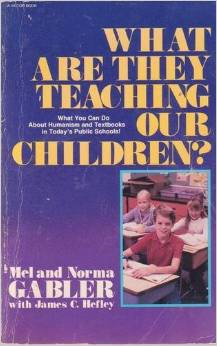
Mel and Norma Gabler, the school watchdogs who pushed Texas’ schools in profoundly conservative directions during the 1970s and 1980s, denounced SH as a “religion with an anti-biblical, anti-God bent.” Beginning with John Dewey in the 1930s, the Gablers believed, humanists had taken over schools and pushed leftist, amoral ideas on generations of schoolchildren. SH was not a neutral arbiter between religions, the Gablers argued, but rather a pernicious religion of its own. As such, it should not be allowed to do its damning work in public schools.SH Gablers

Tim LaHaye agreed. The blockbuster fundamentalist author argued in his Battle for the Public Schools (1983) that SH taught kids in public schools to be “anti-God, antimoral, antifamily, anti-free enterprise and anti-American.” By 1980, LaHaye wrote, humanism had achieved a “stranglehold” on the US government. As LaHaye put it,

Public education today is a self-serving institution controlled by elitists of an atheistic, humanist viewpoint; they are more interested in indoctrinating their charges against the recognition of God, absolute moral values, and a belief in the American dream than they are in teaching them to read, write, and do arithmetic. I call these people humanist educrats.

SH LaHayeThis claim among fundamentalists has become ubiquitous over the years. Conservatives insist that public schools are only interested in freezing out real religion. False religions, especially SH, receive special treatment. Kids in public schools, fundamentalists insist, are not actually in a neutral environment. They are, instead, effectively in an SH madrasah.

So here’s the $64,000 question: will last week’s federal court ruling fuel this fundamentalist fire? In coming years, will fundamentalist activist groups be able to prove their claims about SH and schools by citing Judge Haggerty’s argument?

It will help to look at the specifics of the case. In this case, an SH prisoner complained that he was being treated unfairly. He had demanded similar privileges for his SH group to those given to a list of religious groups. If Catholics, Shias, Sikhs and Druids could have special meeting times, Secular Humanists should too.

The judge agreed. In Haggerty’s words, “Secular Humanism is a religion for Establishment Clause purposes.” That is, as far as the Constitution is concerned, the government cannot favor any one religion over another. Judge Haggerty pointedly noted that his decision was in line with earlier court decisions that differentiated between Secular Humanism in general and organized groups of Secular Humanists who demanded equal treatment. It does not matter if SH in general is a religion. Those who claim equal privileges to religious groups deserve them.

So, in short, the judge did not decide that SH was or was not a religion. His decision was based on the notion that any religion or non-religion deserves equal treatment by the government. But here’s my hunch: For the coming few decades, fundamentalist pundits will refer to this case as proof that SH is a religion. They will ignore the niceties of Judge Haggerty’s decision. We might even see a re-do of the Mozert v. Hawkins County case from the 1980s. In that case, fundamentalist parents insisted that school textbooks pushed the religion of SH on their trusting children.

A new generation of fundamentalist activists might take heart from this decision. It is proof, fundamentalists might conclude, that they’ve been right all along.

Who “Gets” Left Behind

I remember reading the novels.  I read them in the gym of the high school I taught in.  Sometimes students would ask me about them, and I’d say they were about the end of the world.  But I also sometimes wondered if people would think I was a fundamentalist, an end-of-the-worlder, a kook.  Now that the new movie is out, friend of ILYBYGTH Daniel Silliman has offered a thoughtful essay about what it means to be a fan of Left Behind.

For those of you who haven’t heard, the Left Behind series blew a lot of minds when it came out in the 1990s.  Fundamentalist writer Tim LaHaye and his colleague Jerry Jenkins set out to present another gripping fictional story of the end of the world.  But not just any end of the world.  Left Behind told the story of the way many American fundamentalists have come to interpret the Bible’s eschatology.

Clarence Larkin's theological charts were very popular among the first generation of fundamentalists in the 1920s.

Clarence Larkin’s theological charts were very popular among the first generation of fundamentalists in the 1920s.

Since around the beginning of the twentieth century, many (but by no means all!) fundamentalists and conservative evangelicals have embraced the theology of dispensational premillennialism.  This interpretation of the Bible sets out a series of ages, or “dispensations.”  Our current Age is set to expire sometime soon.  When it does, this theology predicts, Jesus will lift all true believers to meet him “in the air.”  This event will be known as the “rapture.”  After the rapture, those who have been left behind will suffer through seven years of tribulation before Jesus returns in glory.  Once Jesus and his angelic hosts have defeated the Antichrist on the field of Armageddon, a thousand years of peace and love will follow on earth, the millennium.

That’s a quick and dirty summary, but for our purposes, it will do.  Tim LaHaye was not the first prophecy writer to fictionalize this story.  As many evangelicals of a certain age will remember, an older generation of films such as A Thief in the Night told a similar story, in a similarly dramatic fashion.

http://www.youtube.com/watch?v=QnsXGkx4FWU

But LaHaye’s Left Behind series took this Bible apocalypse into the mainstream.  Millions of people read the books.  And evangelical sorta-star Kirk Cameron made a series of movies to bring the message to even more fans.  And now, for some reason, there’s a new movie version, this time starring Nicholas Cage.

For nerds like me, the interesting question is not whether the new film is good or bad.  (Although I couldn’t find a single review that said it was good.  Just bad, really bad, and “God-awful.”)  Instead, I want to know what it can tell us about American religion.  Specifically, I want to know why so many people gobble up these fundamentalist bedtime stories.  Is America really that sympathetic to fundamentalism?  Does some part of our national psyche still yearn for this sort of stern hellfire morality play?

Daniel Silliman tackles this question of audience.  Take a few minutes to read his whole essay.  In short, he demonstrates that we can’t really assume much about America based on its seeming never-ending appetite for Biblical apocalypses.  Just because millions of people read these books, we can’t assume we know if those readers bought into the fundamentalist end-of-the-world story.

Left Behind

Some people, Silliman notes, will watch this movie ironically.  That is, they will rush out to see the movie to see just how silly those Christians will get this time around.  Like the infamous Snakes on a Plane, many movies become popular because of their badness.

But Silliman also gives some examples of people who seem to embrace the film precisely because they embrace the theological message.  Just because the story seems outrageous to me doesn’t mean that other viewers are not watching it with very different attitudes.

In other words, we must be careful about assuming too much from this film.  If it flops, we will not be able to say that America has turned its back on fundamentalist theology.  And if it’s a huge box-office success, we won’t be able to say that America is still a fundamentalist fief.

From the Archives: Campus Rape in the 1930s

Do fundamentalist colleges encourage sexual assault?  It’s a terrible and difficult thing to talk about.  As we’ve seen in these pages, some alumni insist that fundamentalist schools force victims of sexual assault to blame themselves.  But we’ve also seen that sexual assault is not at all unique to religious schools.  As I continue the research for my new book about the history of evangelical colleges and universities, I’ve stumbled across a story that might shed light on these tricky questions.

Despot in Denver

Despot in Denver

The way we word the questions themselves is controversial: Are fundamentalist schools cults that pander to the lusts of authoritarian leaders?  Or do the strict sexual ethics of conservative evangelicalism help protect young women and men from predatory teachers and authority figures?

Critics of conservative evangelical colleges warn that that the pervasive “purity culture” of these schools leads directly to rape.  Bloggers such as Samantha Fields have accused fundamentalist colleges of blaming victims of sexual assault.  Journalists have blasted schools such as Patrick Henry College for fostering a rape-friendly environment.  Prominent evangelicals have suggested that the problem is not one of theology, but of an authoritarian institutional culture.  For example, Boz Tchividjian famously suggested that abuse can happen “in any culture, elevating leaders beyond accountability, leaving victims’ rights to their whim, and sidelining critics who challenge their rule.”

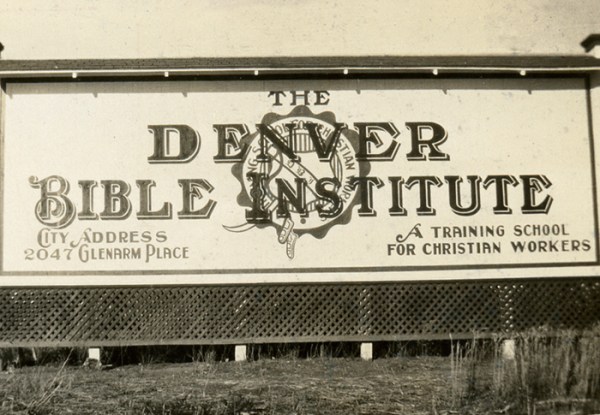
I’ve stumbled across a story from the 1930s that might illuminate the longer history here.  In 1936, a high-powered panel of fundamentalist leaders convened to investigate Denver Bible Institute (now part of Colorado Christian University).  At the time, DBI was led by charismatic founder Clifton L. Fowler.  Fowler wanted to join the Evangelical Teacher Training Association, and to do so ETTA demanded that rumors be cleared up.

Unfortunately for Fowler, an extremely disturbing picture emerged.  Fowler, the investigators concluded, ran DBI like a sex-crazed despot.  Students and faculty were pressured to declare lifelong commitments to the schools.  Married faculty members were pushed into pledging “continence.”  (I’m not sure what was meant by “continence” in this context.  Any suggestions?)  Students were encouraged to separate from parents and home churches.  Community members felt pressure to offer Fowler detailed confessions of their sexual sins.  And, yes, Fowler apparently routinely engaged in sexual activities with male students.

From one perspective, this historical episode might seem to confirm the dangers of authoritarian fundamentalist schools.  For as long as there have been fundamentalist schools, we might conclude, leaders have felt free to engage in predatory sexual practices.  Community members felt constrained by their own admitted sexual sinfulness from criticizing the dictatorial leadership.

On the other hand, as Michael Hamilton argued in his excellent 1994 dissertation, Fowler did not have a free hand to do as he pleased.  The accusations against Fowler forced DBI out of decent fundamentalist company.  Local fundamentalist churches cut off DBI.  The Evangelical Teacher Training Association would not let DBI join.  Fowler, in other words, was restrained in his behavior because of the network of fundamentalist schools and churches in which he worked.

As usual, history does not offer any pat solutions.  But this episode does demonstrate the long lifespan of these questions at fundamentalist schools.  It shows that school founders have always been accused of sexual predation.  But it also shows that fundamentalist leaders and communities worked hard to police their own ranks.

In this case, at least, both national leaders and local community members refused to look the other way.

Children Must Submit

First learn to obey

First learn to obey

HT: MM

What is the role of the child in school? Many conservative thinkers, now and in the past, have insisted that children must learn to submit to teachers’ authority. Before they can learn to read or figure, children have to learn that obedience is their proper attitude. These days, this penchant for submissive children has leached out of the world of traditionalist thinking into the burgeoning world of charter schooling. A recent interview with a leading scholar highlights the ways conservative values have reasserted themselves as the mainstream norm.

Thanks to a watchful colleague, I came across this interview with Penn’s Professor Joan Goodman. Professor Goodman works in the Teach for America program at Penn and spends a good deal of time in urban charter schools. In many of those schools, Goodman finds a rigorous standardization and a vigorous effort to train children to be submissive. As Goodman told EduShyster,

these schools have developed very elaborate behavioral regimes that they insist all children follow, starting in kindergarten. Submission, obedience, and self-control are very large values. They want kids to submit. You can’t really do this kind of instruction if you don’t have very submissive children who are capable of high levels of inhibition and do whatever they’re told. . . . They want these kids to understand that when authority speaks you have to follow because that’s basic to learning.

At the same time, Goodman notes, the schools insist on lockstep performance by teachers. Every teacher is supposed to be delivering the same content at the same time in the same way. Goodman calls it a “very uniform and scripted curriculum.”

Ask anyone familiar with urban charter-school education these days, and you’ll hear similar stories. For those of us trying to figure out what “conservatism” means in education, this leads us to some difficult questions: Did these goals and values move from fundamentalist and conservative activists into the mainstream? And if they did, how?

In my historical research into the worlds of conservative educational activism, I’ve seen it time and again. For decades—generations, even—conservative thinkers have insisted that submission is the first lesson of successful schooling. Without submissive children, teachers will not be able to transmit information. Without the successful transmission of information from teacher to student—according to this conservative logic—education has not happened.
Originally published in 1979...

Originally published in 1979…

In the world of Protestant fundamentalist education, youthful obedience is often elevated to a theological value. Writing for an A Beka guide in the late 1970s, fundamentalist writer Jerry Combee warned that Christian teachers must be stern disciplinarians. “If Christian educators give one inch on discipline, the devil will take a mile.” Combee continued,

Permissive discipline, for example, is wrapped up with teaching methods that always try to make learning into a game, a mere extension of play, the characteristic activity of the child. Progressive educators overlooked the fact that always making learning fun is not the same as making learning interesting. . . Memorizing and drilling phonetic rules or multiplication tables are ‘no fun’ (though the skillful teacher can make them interesting). They can have no place in a curriculum if the emotion of laughter must always be attached to each learning experience a la Sesame Street.

That same A Beka guide to good fundamentalist schooling promised that good schools always taught in lockstep. At the time, A Beka offered a curriculum for private start-up Christian fundamentalist schools. Not only would schools get curriculum infused with dependably fundamentalist theology, but

the principal can know what is being taught. He can check the class and the curriculum to make certain that the job is getting done. Substitute teachers can also step in and continue without a loss of valuable teaching time.

Some bloggers confirm that fundamentalist schooling has continued to emphasize obedience over intellectual curiosity. Jonny Scaramanga, Galactic Explorer, and Samantha Field have all shared their experiences with this sort of fundamentalist educational impulse. In their experiences, fundamentalist schools and homeschools have insisted on obedience, and have done so in a sinisterly gendered way. Young women and girls, especially, were taught to submit to male authority figures. Every student, however, seems to be pressed to submit and conform, not as a punishment, but rather as a foundation for education.

To be fair, as I argued in an academic article a while back, there has been a lot of disagreement among fundamentalist Protestants about proper education. Just as the folks at A Beka were insisting that proper education began with submission, the equally fundamentalist thinkers at Bob Jones University pushed a very different vision of proper education. Led by long-serving dean Walter Fremont, the school of education at Bob Jones promoted a more child-centered sort of fundamentalist education.

We also need to note that this insistence on submissive children is not just a fundamentalist one. Secular conservatives have long insisted that learning can only begin with obedience. In many cases, this has been a conservative response to a left-leaning progressive pedagogy. For example, leading progressive thinker Harold Rugg began his career with recommendations for proper classroom attitudes. In an article from the 1920s, Rugg instructed teachers to share authority with students. Good teaching, Rugg wrote, did not dictate to children; it did not insist on obedience. Rather, good teaching pushed students to think of themselves as autonomous, self-directed learners. Good teachers, Rugg insisted, asked students again and again, “What do you think?”

In the 1920s, this notion of proper student behavior divided progressives from conservatives. One conservative leader of the Daughters of the American Revolution offered a very different vision of good teaching. Writing in 1923, Anne Minor explained that the best teachers begin with “truth and integrity, orderliness and obedience, loyalty and love of country.”

In the 1950s, another conservative Daughter of the American Revolution warned that teaching had gone astray when it encouraged children to be “persistent in their own ideas, disobedient, and resent[ful of] parental discipline.”

Another secular conservative in the 1950s agreed. One letter-writer to the Pasadena Independent described the problems with progressive education this way:

discipline, as well as the lack of fundamental knowledge teaching [sic], is one of the biggest lacks of the progressive school. Some parents shift the discipline to the school which is wrong, of course, but if the parents are at fault for lack of discipline, so are the schools. . . . Lack of consideration of others is the biggest fault of children today, and should not be too difficult to correct. Tantrums should never be tolerated, sassiness and disobedience should be controlled at an early age.
rafferty what they are doing to your children

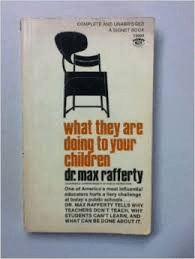
And, of course, other conservative educational thinkers and activists also pressed for an obedience-first vision of good education. The leading secular conservative voice of the 1960s, Max Rafferty, agreed that schools could only function if children first learned to submit. As Rafferty put it in his 1964 book What They Are Doing to Your Children,

School, you see, was not considered ‘fun’ in those days. It was a mighty serious business and was conducted that way. At any rate, once the two premises are accepted that (1) boys won’t behave in schools unless compelled to do so and (2) boys must be made to behave so that they can learn things that are essential for them to know, then the whole paraphernalia of corporal punishment falls into proper perspective. . . . Things have changed of late in the field of discipline, and more than somewhat. They started to change at home first, back in the twenties and thirties. The prime mover in their change was the new psychology, which was widely publicized and which caused parents seriously to doubt their proper role vis-à-vis their children for the first time in the recorded history of the human race. . . . The result was the emergence of the least-repressed and worst-behaved generation of youngsters the world had ever seen.

As I researched my upcoming book about conservative activism in education, I found this theme repeated over and over. It goes something like this: Good schooling means the transmission of information to children. That transmission cannot occur unless children submit to teachers’ authority. Therefore, any meaningful education reform must begin with the establishment of an atmosphere of relentless obedience and submission.

Professor Goodman doesn’t talk about “conservatism” or “fundamentalism” in the schools she visits. And many of the reformers these days who push for youthful obedience and teacher standardization would never call themselves conservatives, let alone fundamentalists. But it is difficult not to notice the overlap.

Conservative notions of youth and education, it seems, have become the standard way to think about educational reform among groups such as Teach For America. First and foremost, in this understanding of education and youth, children must submit.

Fundamentalist Parents Can’t Relax

Rich parents can relax.  At least according to an article in this week’s Economist.  But fundamentalist parents never can.  They have to worry about more than their kids’ careers.  They have to fret about eternal damnation.  And they have to worry that Satan lurks in every textbook, every TV show, and every mainstream school.

The Economist article is worth reading in its entirety.  As it explains,

Well-to-do parents fear two things: that their children will die in a freak accident, and that they will not get into Harvard.

Getting into Harvard might be harder than getting into heaven...

Getting into Harvard might be harder than getting into heaven…

Both fears lead to exaggerated and ultimately counterproductive lifestyles.  In terms of safety, the article notes, an American child under five years of age in 1950 was five times as likely to die of disease or accident as that same kid would be today.  And though it is difficult to get into Harvard, most kids of affluent families will have fine careers without an Ivy-League transcript.

But fundamentalist parents have more to worry about.  Since the birth of American fundamentalism in the 1920s, conservative evangelicals have fretted about the influence of mainstream culture on their offspring.  Even if their kids don’t get polio, and even if their kids do get into Harvard, fundamentalist parents have to worry that success in life will lead to terrible punishment after death.  For fundamentalists, even Harvard itself can be more of a threat than an achievement.

As historian Randall Balmer put it in his blockbuster book Mine Eyes Have Seen the Glory,

the greatest fear that haunts evangelical parents is that their children will not follow in their footsteps, that they will not sustain the same level of piety as their parents—stated baldly, that they are headed for hell rather than heaven.

As I argued in my 1920s book, historically this fear for the children has fueled fundamentalism’s public campaigns.  Fundamentalist leaders and parents worried that no level of affluence and economic privilege could protect their children from a culture sliding nonchalantly straight to hell.

As conservative leader William Jennings Bryan explained in 1922, even the rich and powerful had lost the ability to protect the faith of their children.  As a former Secretary of State, Bryan knew many of these families personally.  He wrote about one acquaintance, a US Congressman, whose daughter came home from college only to tell the family that “nobody believed in the Bible stories now.”

It was not only conservative Congressmen who worried.  Fundamentalist evangelist Bob Jones Sr. liked to tell the story of a less powerful family who had a similar experience.  This family, Jones explained in one of his most popular 1920s sermons, scrimped and saved to send their precious daughter to

a certain college.  At the end of nine months she came home with her faith shattered.  She laughed at God and the old time religion.  She broke the hearts of her mother and father.  They wept over her.  They prayed over her. It availed nothing.  At last they chided her.  She rushed upstairs, stood in front of a mirror, took a gun and blew out her brains.

Even when fundamentalist families did not experience that sort of cataclysm, we must keep their anxiety in mind when we try to understand fundamentalism from the outside.  Why do conservative evangelicals fight against evolution?  Why do they insist on school prayer?  Why do they worry about rights for homosexuals?

In all these cases, conservative evangelicals’ public activism is made more desperate by their intense worry about their children.  In this, there is no difference between conservative evangelicals and mainstream Americans of any background.  As the Economist article points out, almost all parents love their children and make sacrifices for them.  In the case of mainstream affluent parents, it might even help if they relaxed a little bit.  As Bryan Caplan of George Mason University argues,

Middle-class parents should relax a bit, cancel a violin class or two and let their kids play outside.

Easy enough.  But fundamentalists face a very different situation.  If we want to understand the mind of fundamentalists, we can try a mental experiment.  Non-fundamentalist parents have a hard enough time relaxing about their kids, even though they feel at home in mainstream culture.  Non-fundamentalist parents fret too much about their kids’ futures, even if they don’t feel alienated by their local public schools and elite universities.

Let’s try to translate the anxiety experienced by fundamentalist parents into mainstream terms.  Imagine, for example, the sorts of public outcry there would be if public schools began promoting ideas or practices that affluent secular parents found dangerous.  For instance, what do you think would happen if a public school somewhere began promoting smoking as a fun and healthy activity?


The Left Seizes Science

You’ve heard the howls from creationists over Neil deGrasse Tyson’s recent Cosmos series.  But did you know non-creationist conservatives also get cheeved at Tyson’s science punditry?

Science Snob?

Science Snob?

The creationist complaints make sense.  The hugely popular new science series pointedly called out young-earthers for their belief in a newish universe.  The series also insisted on the creation of species through evolution.

But the complaints of non-creationist conservatives might not seem so obvious.  In the pages of National Review, Charles C.W. Cooke took Tyson to task for his leftism, not just for his love of evolution.  Cooke accuses Tyson and others of his ilk of a puffed-up condescension, of glibly associating liberal politics with superior intellect.

Too many of these self-righteous faux-nerds, Cooke writes, wrap their insouciance in the mantle of science.  For these Tyson fans and wanna-bes, being smart does not mean doing actual intellectual work, but rather simply adopting a pre-packaged list of things to dislike.  As Cooke puts it, that list includes anything

southern, politically conservative, culturally traditional, religious in some sense, patriotic, driven by principle rather than the pivot tables of Microsoft Excel, and in any way attached to the past.

This sort of prejudice against anything recognizably conservative likes to call itself the side of “science,” Cooke argues.  Yet among progressives, real science often takes a beating.  “Progressives . . . ,” Cooke says,

believe all sorts of unscientific things — that Medicaid, the VA, and Head Start work; that school choice does not; that abortion carries with it few important medical questions; that GM crops make the world worse; that one can attribute every hurricane, wildfire, and heat wave to “climate change”; that it’s feasible that renewable energy will take over from fossil fuels anytime soon . . .

Yet in spite of this demonstrably unscientific attitude, Cooke laments, the Left insists on calling itself the “reality-based” party.

Cooke is not the first to complain about such things.  In the first generation of creation/evolution controversies, anti-evolution activists worked hard—and failed—to claim “science” for their side.  As I noted in my 1920s book, leading anti-evolutionist William Jennings Bryan maintained his membership in the staunchly pro-evolution American Association for the Advancement of Science.  He refused to allow that leading science group to be wholly taken over by fans of evolution.

Similarly, prominent 1920s fundamentalist activist William Bell Riley fought hard to keep his generation of Neil deGrasse Tysons from pushing conservatives out of the world of science.  As Riley put it in a 1927 speech, the creation/evolution debate was not a debate between

Experts on the one hand, and, as someone has said, ‘organized ignorance,’ on the other.  This is not a debate between the educated and the uneducated.

Like Bryan in the 1920s and Cooke in 2014, the conservative Riley was loath to cede the scientific and intellectual high ground to evolution-lovers.

One of the results of that first decade of evolution controversies was the formation of durable cultural associations, the associations about which Cooke complains.  Since the 1920s, “science” has become indelibly associated in the public mind with progress, with social experiment, with iconoclasm.  Politically, if not logically, all of those things are part of the broad package of cultural leftism.  And, like it or not, conservatism has been associated time and again with obstructionism and heedless obscurantism.

For conservative pundits like Cooke, trying to fight that tradition will be an uphill battle.