I’m Convinced: We Need More Conservatives on Campus

[Update: For new readers, this conversation has evolved since the post below.  In short, I’m not convinced anymore.  I now think there are better, more practical solutions to this dilemma.  Check out the developments here.]

My eyes were opened a few years back. I was offering a senior seminar in the history of American conservatism. Several students—some of whom eventually took the class and some of whom did not—came to my office and said something along the lines of “Thank God we finally have a conservative professor!” When I explained to them—sympathetically but clearly, I hope—that I was not actually conservative myself, students had a variety of reactions. Some were deflated. But another common response convinced me that Jon Shields and Jon Zimmerman are right.
Shields Passing on the Right

Time for more affirmative action?

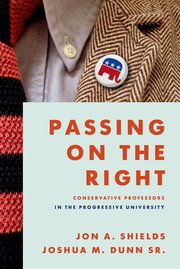
Shields has made the case again recently that college campuses need to recruit more professors who come from conservative backgrounds. He reviews the available research and concludes that conservatives are victims of explicit, intentional bias. As a result, there are far fewer conservative professors than we need if we want to have truly diverse campuses.

Years ago, Zimmerman made a similar argument. Like me, he’s no conservative himself. But he thinks universities need to be more inclusive places, more representative of our society’s true diversity. The best way to do that, he argued, was to reverse the trend toward intellectual homogeneity among college faculty. As he wrote back in 2012,

Race-based affirmative action has made our universities much more interesting and truly educational places, adding a range of voices and experiences that hadn’t been heard before. Hiring more conservative faculty would do the same thing.

I’m convinced, and not just because Jon Zimmerman is the smartest guy I know. The things I heard from my wonderful students told me that something was indeed wrong with our current set up.

When I told students that I wasn’t conservative myself, many of them told me something along these lines: You may not be conservative personally, but at least you don’t make fun of me or belittle me for being a conservative.   At least I can be “out” with my conservative ideas in your class. In most of my classes, I feel like I have to keep my ideas to myself or I will be attacked by students and teachers alike.

Yikes!

Please correct me if I’m off base, but isn’t that EXACTLY the problem that our campaigns for campus inclusivity have been meant to address? I know some folks think this notion of affirmative action for conservatives is a travesty, an insult to underrepresented groups that have faced historic persecution and discrimination. I understand that position and I agree that conservatives as a group cannot claim the same history as other groups.

But is there anyone out there who would want a campus climate in which students were belittled and attacked for their ideas?

Even if we want to do something about it, however, it is not at all clear how. As Neil Gross has argued, there is not really a liberal conspiracy when it comes to hiring professors. Rather, there has been a more prosaic tendency for people to go into fields in which they think they will be comfortable.

Maybe we could look to Colorado as a guide. They have had a conservative affirmative-action plan going for a while now at their flagship Boulder campus. How has it worked?

In any case, I’m looking forward to Professor Shields’s new book, scheduled for release next year. It promises to share the data gathered from 153 interviews and other sources. Maybe it will help us break out of this logjam.

Should College Classes Make Students Uncomfortable?

Whitney Cox is right on. In her classes at the University of Houston, she insists that conservative religious students be open to the idea of discomfort as they study the Bible. Can we translate her advice to college students in general?

whitney cox

Preach!

Cox tells the story of a “star pupil” who worries that her Bible class might shake up his preconceptions. It should, she replies. She doesn’t want to tell the student what to believe. In fact, she insists that she is not willing or able to do so. But she does want her class to challenge him to think about the Bible in new ways.

Hear, hear. That is the purpose of education, especially higher education. IMHO.

So here’s our question: What if we change things around a little bit? What if we replace a conservative religious student with a left-leaning social-action student?

I’ve argued lately that the recent tumults on college campuses result from an “impulse to orthodoxy” among such leftist students. Students demand an end to ideas that make them feel “unsafe.” They demand the ouster of faculty and administrators with whom they disagree.

Could such students and such campuses benefit from Cox’s advice? Here’s what she told her conservative student:

I find frustrating the too-frequent sentiment from Christians that equates interrogating and examining the texts with destroying faith. There is a strain of anti-intellectualism in modern US Christianity that is vile, unbiblical, and deadlier to faith than scholarly examination could ever be. It demands an unquestioning obedience and punishes anyone who doesn’t conform to the party line, who dares to question the people in power.

I am forever angry at the orthodoxies that demand literal belief as an all-or-nothing proposition, not only because that kind of approach makes you immune to reason, but because it means that more likely than not, that one bit of counter-information that makes it through takes down the rest like a Jenga tower. I’ve seen this a lot with people raised as strict creationists but who later realize that the scientific support for evolution is overwhelming — and because they’ve been taught they can’t doubt one part without doubting it all, they end up tossing it all out the window. Because they’ve learned that any questioning is evil, they decide they have to take all their questions elsewhere.

Fantastic, and right on.  SO right on, in fact, that we should broaden it to include other sorts of student worry as well.

What if we tweaked the wording here and there? What if we gave this advice to students?

I find frustrating the too-frequent sentiment from left-leaning students that equates interrogating and examining the texts with racism. There is a strain of anti-intellectualism in modern US society that is vile, anti-social, and deadlier to social justice than scholarly examination could ever be. It demands an unquestioning obedience and punishes anyone who doesn’t conform to the party line, who dares to question the people in power.

Please don’t misunderstand me. As I’ve said repeatedly, I support the moral impulse behind the student activism at many schools today. Like many commentators, though, I worry that the necessary tension has been leached out of campus life.

Schools must be aggressive and decisive in their efforts to make sure every student feels welcome. Incidents such as the repeated racial hazing at Mizzou, for example, are not merely over-wrought snowflake problems.

The flip side of that campus necessity, however, is that students must be intellectually challenged. They must be physically safe. More than that, they have a right to demand institutional action to help them feel confident that they are safe from demeaning microaggressions.

Too often, however, this vital goal of safe spaces has turned into an overzealous drive for intellectual safety. Nothing will kill higher education faster than that.

I’ll say it again.  We need to remember both halves of the higher-education mandate:

  • Students must be physically and even emotionally safe.
  • Students should never feel intellectually safe.

If we’re doing our jobs, as Whitney Cox is, this should apply in equal measure to conservative creationists and progressive anti-racists.

Students: Customers, Wards, or What?

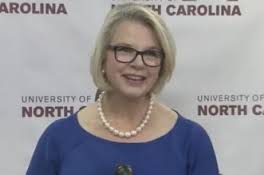
The devil stalks the University of North Carolina. At least, that’s the impression I get when I read the progressive Nation’s description of new system president Margaret Spellings. Of all the damning evidence against Spellings, perhaps the worst thing, for these progressives, is that she referred to students as “customers.” I wholeheartedly agree that good education, healthy education, shouldn’t be understood this way. But I don’t think progressives like me have come up with a better analogy. The only other likely candidate makes us even more uncomfortable.

Margaret Spellings

Sympathy for the Devil…?

Spellings has a long career in education. She has been one of the fiercest and most successful proponents of Milton Friedman’s prescriptions for better schools. If markets are allowed to do their magic, this school of thought explains, much of the dead hand of institutional lethargy will be stripped away.

In the K-12 world, market reformers have pushed vouchers, charters, and “choice,” with a lot of success. During her tenure as Education Secretary, President Spellings famously promoted a similar sort of market approach to higher education. The solutions to university blahs, the Spellings Report explained, lay in a new vision of students as “consumers,” with schools competing for their business.

“In this consumer-driven environment,” the report argued,

Students increasingly care little about the distinctions that sometimes preoccupy the academic establishment. . . . Instead, they care—as we do—about results.

A good college, from this perspective, is one that gives students good financial pay-back for their tuition investment. The “results” for “consumers” should be significant, in terms of higher salaries and better economic prospects for families.

Colleges, the Spellings Report insisted, need to adapt or die. If a for-profit college can deliver marketable skills better and faster, it should be encouraged, not deplored. Such law-of-the-jungle competition would push colleges in the right directions, toward “improving their efficiency.” A good higher-education system, the Spellings Report concluded, would give “Americans the workplace skills they need to adapt to a rapidly changing economy.”

Those of us who don’t like this vision of the proper form and function of higher education are not without alternatives. But for progressives, the primary alternative would not be an improvement.

For long centuries, colleges and universities operated on a very different model, what we might call the “family” plan. Students were not consumers, but rather more like apprentices. They entered into higher education with an understanding that they would be shaped according to the guidance of the school.

As historian Roger Geiger explained so clearly in his recent history of higher education, this system persisted much longer than did the apprentice system for young workers. Well into the nineteenth century, students had very few rights, very few choices to make.

They didn’t like it. As Geiger relates, the 1810s were a far more turbulent decade on American campuses than were the 1960s or 1970s. Indeed, if today’s students at North Carolina don’t like Spellings’s consumer model, they might learn a lesson from their predecessors. In 1799, UNC students held a week-long riot, in which they captured and horsewhipped their unpopular presiding professor. (See Geiger, pp. 116-129.)

What made these students so angry? The family model of higher education insisted on draconian rules for student life, including onerous daily recitals and endless rounds of mandatory chapel services. Students did not “consume” higher education in this family model, they submitted to it.

During the 1960s, student agitation against in loco parentis rules represented a late protest—and a very successful one—against the persisting vestiges of the family model. Students demanded an end to mandatory curfews and even core curricula.

The family model never totally disappeared, of course. Indeed, today’s “safe space” protests are usually built on an implicit assumption that the university will protect and shield students, implying a continuing authoritative family relationship.

In general, though, progressive students, faculty, and administrators don’t like the family model. They don’t want to impose a set of readings or experiences for students. They want students to be empowered to design their own educational experiences, to a large degree.

But if we don’t like the old family model, and we don’t like the new consumer model, what else is there?

As usual, I don’t have answers, only more questions.

  • If we don’t want to think of college students as customers, and we’re not willing to re-impose an authoritarian system, what should we call them?
  • Put another way: If the family model is out, and the consumer model is out, what’s left?
  • What could it mean to think of students as producers, rather than consumers?
  • If the nature of consumption has changed radically in the past fifteen years with online shopping and etc., might it mean something very different these days to call students “consumers”?
  • Is there wiggle room in the consumer model? Think of the differences, for instance, between equipping someone with tested, high-quality gear for a life-long expedition and equipping them with shiny junk they really don’t need.

Power on Campus: Fundamentalists Have the Last Laugh

It doesn’t make a lot of sense. At places such as Yale, Claremont McKenna, and Missouri, presidents are resigning and faculty are trembling. Ham-fisted protesters are demanding an end to free speech. Halloween costumes have become a disguise for racial oppression. To regular joes and pundits alike, this burst of campus outrage can seem puzzling. But there is one group to whom this phenomenon would make perfect sense.

A brief review of the cases:

The episodes can tell us a good deal about the real levers of power on campus. Who doesn’t have power? Administrators charged with insensitivity toward systematic racism and oppression. They get the boot, and fast, if they seem to oppose racial inclusivism.

Who else doesn’t have power? Students who want bread-and-butter economic reforms of higher ed. Even when a million students protested for lower tuition and lower student debt, it didn’t generate the same feverish buzz as these recent racial protests. To my knowledge, no university president has resigned because his or her school is expensive.

Who else is out? Even protesters against racial insensitivity, if they try to use physical coercion. When that happened recently at Missouri, for instance, the offending bully resigned and even sympathetic leftist pundits agreed that the protesters weren’t “always-wise.”

Just as informative, these protests tell us who really has power on campus. Who has it? Football teams. Duh. But even those athletes are energized by a surprising fact.

The real power on campus these days comes from an ancient but complicated moral idea. We might call it “the impulse to orthodoxy.” It can be tricky to understand, especially since no one is talking about it in those terms. The impulse to orthodoxy includes a moral two-step: Not only must people behave in a moral way, but they must actively seek out and root out those who fail to understand the proper reasons for moral action.

How does this ancient idea work in today’s campus protests? The successful campus protests these days insist not only that school leaders fight racism. More telling, protesters are fired up by the idea that they are under a moral imperative to expose and exclude all those who do not adequately understand the nuances of systematic racism.

At Missouri, for example, system president Tim Wolfe eventually resigned due to a perceived lack of administrative action against repeated racial incidents. The protesters wanted more than new policies. They wanted Wolfe out. Why? Because Wolfe personally seemed to misunderstand or even belittle complaints about systematic racism. One student leader went on a much-publicized hunger strike until Wolfe was kicked out. The student, Jonathan Butler, explained that only the ouster of Wolfe would make the school “a better place.”

At Yale, too, the impulse to orthodoxy has caused some observers to scratch their heads. On one level, it seems like a slightly hysterical protest about a fairly reasonable request. Faculty masters Nicholas and Erika Christakis suggested that students might relax about Halloween costumes. So what’s the problem? Morally orthodox students could not stand Christakis’s suggestion that they simply “look away” from offensive outfits. For the orthodox, looking away from immorality is as bad or worse than the immorality itself.

A similarly insufficient zeal damned an administrator of the elite Claremont McKenna College in California. Dean of Students Mary Spellman wrote a sympathetic email to a student who complained about racial insensitivity. So what’s the problem? Spellman included a line about non-white students who “don’t fit our CMC mold.” To protesters, such language smacked of a hidden, intolerable insensitivity.

In all these cases, school leaders and faculty are under attack for two reasons. First, they are accused of displaying an inadequate understanding of and zealousness about racial inclusivity. The oft-confusing part, though, comes from the second reason. The impulse to orthodoxy demands that such inadequate agreement be tirelessly sought out and ruthlessly purged. It is not enough to apologize. Campus protesters feel free to use any coercion, stamp out any speech, if those things seem to promote immorality.

Today’s racial protesters will be surprised at the people who might understand them best: Protestant fundamentalists. As I’m finding out as I research my new book, the history of fundamentalist higher education is mostly the story of a similar impulse to orthodoxy. Beginning in the 1920s, it was not enough for fundamentalists simply to protest against secularization of the academy. It was not enough simply to disagree with the theological implications of evolution. Rather, for fundamentalists since the 1920s, it was necessary to demand that schools purge all such things. When that didn’t work, fundamentalists opened their own schools, places such as Wheaton College, Bob Jones University, and Bryan College.

Throughout their histories, fundamentalist colleges have taken drastic action to purge any hint of compromise. In 1961, for example, Wheaton scientist Russell Mixter had to offer elaborate apologies to those who thought he might have accepted mainstream evolutionary theory.

These days, similar drastic action is wracking the campus of Bryan College. Faculty who seem not to be sufficiently zealous in their embrace of a young earth are being shown the door.

Of course, the specific moral ideas are extremely different. At fundamentalist colleges, the dangerous trends were toward theological modernism and evolutionary science. At today’s elite mainstream colleges, the moral imperative demands the removal—root and branch—of those who don’t sufficiently act against systematic racism.

Yet the impulse remains the same. The moral imperative of orthodoxy requires more than just a certain set of ideas. It implies a tireless and ruthless dedication to root out all those who do not adequately understand or embody those ideas.

Yale + Halloween = Kardashian

Do we dare not to care?  You’ve seen the news by now: Students and administrators at Yale fretted that thoughtless Halloween costumes might subject them to “cultural appropriation” and steal from them their “voice” and “agency.”  Certainly, it’s easy enough to poke fun at this sort of holiday “snowflake”-ism.  But there’s another question we should also ask: Why do we care?

Insensitive appropriation of cats?...pirates? ...bad taste?

Insensitive appropriation of cats?…pirates? …bad taste?

In case you’ve been preoccupied with real life, the story can be told quickly.  (If you’d like more detail, try here, here, or here.)  Yale’s administration issued an email suggesting that students should think in advance about the cultural sensitivity of their costumes.  Don’t use blackface.  Don’t go as a “wild Indian.”  Etc.  One faculty member, Erica Christakis, responded that such warnings reduced adult Yale students to quivering infants.  Can’t we all be trusted, she asked, to act a little subversive on Halloween?

The response was swift and sure.  Students and their allies denounced Christakis and called for her removal.  They denounced her intentions and racist and oppressive, though she had explicitly supported “concerns about cultural and personal representation.”

It is easy enough to bemoan Yalies’ response to this Halloween email as another egregious overreach by “Snowflake Totalitarians,” privileged students who censor and shout down any smidge of a disturbing idea.  It is also fairly easy to defend the students, in the words of one writer, “to understand why people of color would feel marginalized by the email and the university.”

I’ve said it before and I’ll say it again.  I tend to agree with the protestors.  Or, at least, I’m happier to see students morally outraged—perhaps to excess—than to see students drinking their way through country-club collegiate life.

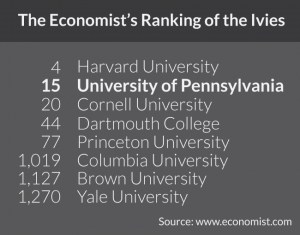
But let’s consider a different question today: Why do we care?  Why is it so very interesting to so many of us what goes on at Yale?  After all, hardly anyone actually goes to school there.  For almost everyone, college life is worlds removed from the elite goings-on at Yale, or Princeton, or Harvard.  And, if we measure college by relative earnings, Yale comes out near the bottom.yale low rank

So why do we care?  I’d like to suggest two possible reasons and I’ll welcome suggestions and denunciations.  In essence, though, I think we’re seeing here the higher-educational fruits of Americans’ ferocious love/hate relationship with celebrities.

First, I think there’s some amount of schadenfreude at play.  Just as ratings skyrocket when Kim Kardashian stumbles through another atrocious episode of her public life, we regular folk outside of the Ivy League love to see those snobs act stupid.  More proof, if we needed it, that those grapes were sour to begin with.

Also, I detect among academic schlubs like myself a certain titillation with the celebrity factor.  No one doesn’t know Yale.  Americans are excited and interested in the lifestyles of the rich and famous.

When Ivy-League students act with predictably adolescent over-zealousness to each new situation, do we all have to talk about it so much?  Or will it be culturally insensitive of us to take Professor Nicholas Christakis’s advice and “look away”?

Required Reading: Gloege on MBI

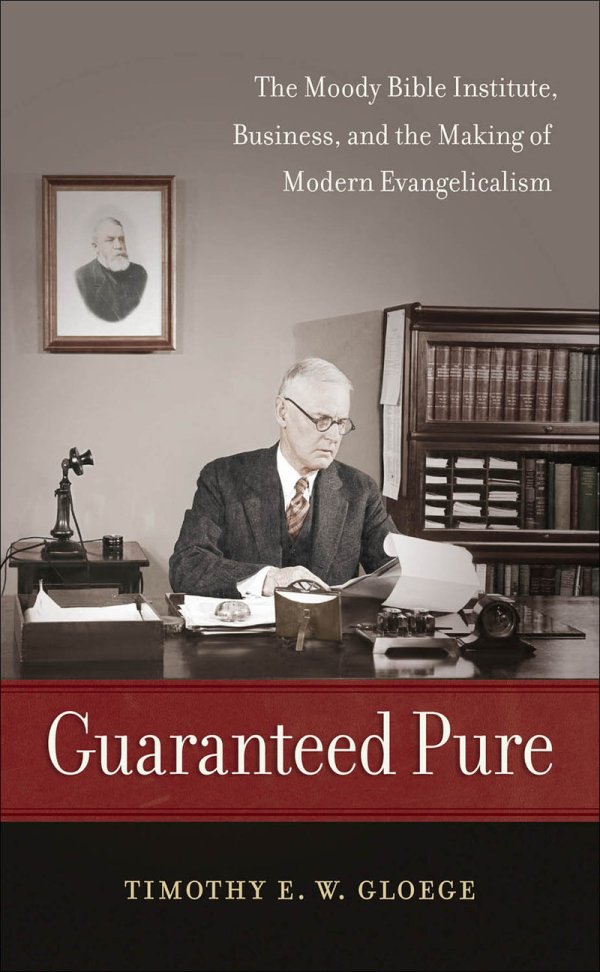
It’s not just a metaphor, not just a handy way of speaking. According to Timothy Gloege, fundamentalism acts like a business because it was founded like a business. In his terrific new book Guaranteed Pure: The Moody Bible Institute, Business, and the Making of Modern Evangelicalism, Gloege digs into the history of America’s premier Bible Institute to uncover the reasons for these tight connections. Along the way, he tells us a lot about the history of evangelicalism and of evangelical higher education.Gloege Guaranteed Pure

As SAGLRROILYBYGTH are sick of hearing, I’m up to my ears in writing my new book about fundamentalist/evangelical higher education. And Guaranteed Pure is the best book on the subject I’ve read in a long time.

For those in the know about evangelicalism and evangelical education, the centrality of MBI doesn’t need explaining. Started in the 1880s by Bible evangelists and their corporate backers, MBI became a juggernaut of publishing, broadcasting, and education. By the mid-twentieth century, MBI loomed large among evangelicals as a brick-and-mortar institution, a solid headquarters for a fundamentalist movement that often ran on shoestrings and prayers. As Gloege puts it near the end of his story (pg. 227), “It is difficult to think of an interwar fundamentalist that did not have or attempt to establish some connection to MBI.”

For those who are unfamiliar with these histories, Gloege’s book would be a great place to start. He offers vivid and fully realized portraits of central personalities such as Reuben Torrey. He fleshes out the complicated relationship between different types of conservative evangelicals around the turn of the twentieth century, from California Pentecostals to Minneapolis Fundamentalists and everything in between.

No matter how well you know these connections, you’re sure to find something enlightening in Guaranteed Pure. For example, Gloege offers the best history I’ve read of the emergence of The Fundamentals, a twelve-volume series of books that is often seen as the first articulation of emerging fundamentalism.

As Gloege recounts, the big-business ethos that emerged in the end of the 1800s did more than just set the tone for the founding of Moody Bible Institute. Rather, leaders such as Henry Crowell of Quaker Oats applied the same emerging modern attitudes toward marketing and profits to MBI as he did to oatmeal. That didn’t mean Crowell was cynical or insincere. Rather, it merely helps us make sense of the sometimes-strange career of early fundamentalism.

For example, every attempt to define early fundamentalism clearly quickly runs up against seemingly insuperable problems. Historian Matthew Sutton, for instance, in his recent book American Apocalypse offered a compelling definition. The thing that set radical evangelicals apart from other religious traditions, Sutton argued, was their overweening concern with the coming apocalypse. In Sutton’s words, it was “fundamentalists’ anticipation of the soon-coming apocalypse [that] made them who they were” (pg. 3).

True enough, but we quickly run into problems. There were leading intellectuals such as J. Gresham Machen who explicitly didn’t fit that label, yet who were considered—even by themselves—to be the brains of the fundamentalist impulse. And there were leading fundamentalist schools such as Bryan University (later Bryan College) that considered and rejected a statement about the coming premillennial apocalypse in their all-important creed.

Professor Sutton knows these things, but by asserting a theological definition on a wide-ranging movement he was forced to trim some edges here and there.

Gloege offers a way out of this pickle. Instead of giving us a rigid definition of fundamentalism, Gloege instead defines it in action. As he puts it (pg. 3),

Fundamentalism is often described in terms of manifestos and theological propositions. Yet at MBI at least, the life force of the movement was its corporate evangelical framework, which operated at a more foundational level. It functioned as a set of unexamined first principles—as common sense. Once developed, these principles became for conservative evangelicalism what the rules of grammar are to a conversation: something used rather than analyzed.

How could Machen be a fundamentalist intellectual if he hemmed and hawed about the fundamentalist movement? How could Bryan University be a fundamentalist school if it eschewed fundamentalist end-of-the-world theology?

Easy. They could be fundamentalists if everyone knew they were. They could be fundamentalists if it seemed like common sense to include them.

Gloege’s priceless contribution in terms of pinning this sort of definitional jello to the wall is not the only major contribution of his book. For those of us interested in evangelical higher ed, Gloege’s business context makes some things clear in new ways.

For example, evangelical colleges are famously anxious about the public image of their students. Depending on the decade, students were not allowed to smoke, drink, dance, or attend plays or movies. Even when they were not at school. Why? Because students were not seen as consumers of evangelical education, they were seen as its product. They were its advertisements, its guarantors of purity.

As Gloege describes, in the 1910s MBI published a painstakingly detailed student guide. Every aspect of student life was regulated, theoretically at least. Why was this so important? In Gloege’s words (pg. 159),

the students and faculty were themselves a form of promotion for the institute. MBI served as a sort of test kitchen demonstrating the effectiveness and purity of its message. No longer conceptualized primarily as workers learning on the job, students were treated as products of the Bible Institute.

Of course, such big-business thinking permeated all sorts of institutions at the time, not just MBI or evangelical colleges. As historian Roger Geiger argues in his new history of American higher education, not only MBI but all institutions of higher education were undergoing a transformative triple revolution during this same period.

Indeed, Gloege could easily have expanded his argument beyond the walls of the MBI. As I’m arguing in my new book, too, there’s no better way to make sense of fundamentalism and evangelicalism in the twentieth century than by uncovering the history of its most important institutions.

Do I Need to See the Light?

Joel Carpenter is. Mark Noll is. George Marsden is. Ron Numbers is was. John Turner is. John Fea is. I’m not. Does it matter?

Many of the best academic historians of evangelicalism and fundamentalism grew up as part of an evangelical church. Indeed, among academic historians in general, since the 1960s it has been seen as a big plus to have a personal background with the group(s) we study.

It’s not universal. As far as I know, Matthew Sutton didn’t. Molly Worthen didn’t. Tanya Luhrmann didn’t. And if they did, it is not a big part of their public persona. In other words, they write as scholars of evangelical religion, not necessarily as evangelical scholars of evangelical religion.

This is more than just “PC” cliquishness. Historians are sobered and humbled by their own history. Though African American historian WEB DuBois clearly debunked the dominant but false histories of Reconstruction way back in the 1930s, white historians didn’t catch up until the 1960s.

With fundamentalism in particular, non-evangelical historians did a terrible job. Until the 1970s, mainstream historians told us that fundamentalism died after the Scopes Trial of 1925. It had done nothing of the sort, of course. A new generation of evangelical historians such as Ernest Sandeen and George Marsden knew it hadn’t, since they had grown up with it.

Having a background in the world of conservative evangelicalism gives historians an ear for the language and a feel for the connections between groups. When I was stumbling through my graduate work at Wisconsin, for example, my mentor Ron Numbers was able to point me toward super-rare creationist documents from the 1930s. How did he know about them? They were written by his grandfather!

That sort of connection is something we outsiders can never acquire.

As outsiders, though, we non-evangelical historians enjoy some benefits. For us, there are no pre-existing good guys or bad guys. We aren’t embarrassed by the rhetorical excesses of 1920s fundamentalists. They don’t have anything to do with us! We don’t feel a need to demonstrate how different such hellfire preachers are from our own intellectual roots. To us, it’s all archival material.

In short, evangelical historians will always have insights I lack. But they will also have hang-ups and assumptions I’m free from.

Recent discussions on this blog have pointed out the continuing importance of these questions. When I noted the recent visit of Bob Jones University President Steven Pettit to the scenic campus of Wheaton College, I was mostly interested in the turbulent historical relationship between the two schools. At least one commentator, however, accused me of trading in “guesswork and gossip.” I didn’t mean to suggest that BJU was somehow “moving toward neo-evangelicalism.” Many readers within the world of fundamentalism and evangelicalism have very strong feelings about such things. I don’t.

As I plow forward with my new book about conservative evangelical colleges and universities, I need to keep these issues in mind. I need to remind myself that I might be missing out on subtleties of tone or implication that are obvious to those raised within this tradition. I need to watch for connections that are not made explicit to outsiders, but are nevertheless glaringly obvious to those in the know.

Ben Carson Wants Federal Control of Higher Education

If you’d like to be popular at a GOP event these days, don’t wear an Education Department lapel pin. As they have for decades now, conservative presidential candidates these days are falling all over themselves in their threats to eliminate the Education Department. But not Ben Carson! The uber-conservative neurosurgeon has something he wants the Ed Dept. to do.

SAGLRROILYBYGTH are tired of hearing this, but I’ve pointed out in my recent book and in the pages of Time.com that conservatives have not always hated the idea of federal influence in education. Back in the 1920s, cultural conservatives wanted the federal government to pump money into educational programs that would make America more conservative. Some conservative intellectuals these days have made similar noises—if the Ed Dept. can push conservative programs, some conservatives think, then conservatives need to get over their antipathy.

Dr. Ben Carson’s plan for the Ed Dept. goes even further. As he told Glenn Beck, Carson wants the federal government to seize control of higher education.

Here’s the plan: Carson hopes the Ed Dept. will “de-fund” colleges that ban conservative speakers. The department, Carson explained, should “monitor our institutions of higher education for extreme political bias and deny federal funding if it exists” [about 3:41 of the interview].

It’s not clear exactly what Dr. Carson thinks such defunding will mean. Nor can I tell how “extreme political bias” would be defined. But such quibbles largely miss the point.

For us at ILYBYGTH, the remarkable take-away from Carson’s candor is that he wants to assert sweeping new powers for the Education Department. This is a departure from both the past fifty years of mainstream conservative thinking and from the past hundred-fifty years of Seventh-day Adventist tradition.

Adventists, after all, have never been supporters of government power. Not even to push society in ways they might prefer. As liberal pundits have become eager to point out, Carson’s rhetoric about strong Americanism is a marked departure from SDA tradition. These days, Dr. Carson displays a weirdly non-SDA penchant for a powerful, intrusive government.

It’s certainly the case with Carson’s recent comments about the Education Department. I can’t imagine that SDA universities such as Loma Linda or Pacific Union College would endorse more federal control of their activities.

What Joe Biden Didn’t Mean to Say

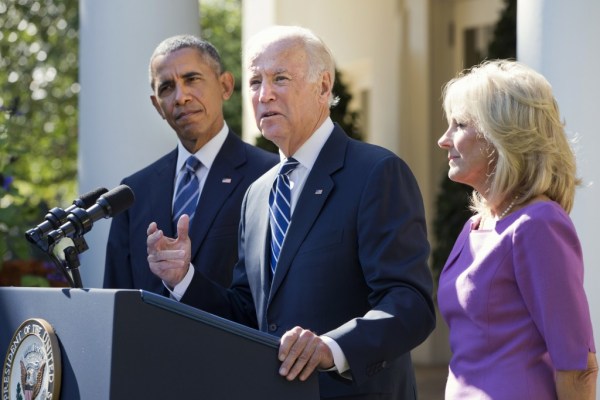
Unlike the GOP, the Democratic presidential hopefuls seem united about education policy, to the point of boringness.  In his promise not to join the race, however, VP Joe Biden made some odd historical claims about schooling.  Surely he didn’t mean to imply what my nerdy ears heard.

Say, it ain't so, Joe...

Say, it ain’t so, Joe…

The Democratic leaders seem to have rallied around the promise of free or reduced college tuition for all.  That was the point Vice President Biden made.  “We need to commit,” Biden intoned,

To 16 years of free public education for all our children.  We know that 12 years of public education is not enough.  As a nation, let’s make the same commitment to a college education today that we made to a high school education 100 years ago.

With apologies to the SAGLRROILYBYGTH, let me clarify at the outset: I am no Biden-basher.  I will be voting Democrat in the upcoming presidential election.  Guaranteed.

But that doesn’t mean that Democrats get a free pass to Stupid.  Let’s politely ignore for the moment Biden’s implication that students in the USA now receive 12 years of public education.  For most kids, the real number is thirteen years, including kindergarten.  In many states, it is fourteen years or more, including pre-k and preschool.  But let’s not focus on such details.

The real stumper in VP Biden’s claim is that the United States committed to free high school for all in or around 1915.  That just doesn’t fit, for two reasons.  First, the history of high school attendance and tuition is much more depressing and complicated than Biden implies.  Second, there is a much more obvious parallel that he and other leading Democrats could draw.  Why don’t they?

To take them one at a time: Every nerd knows that a majority of 14-17-year-olds did not begin attending high school until the 1930s, not the 1910s.  Moreover, most so-called “public” high schools—the line between “public” and “private” schools as we know them was vague—stopped charging tuition by the 1870s, not the 1910s.  As historian extraordinaire William J. Reese has demonstrated in his book The Origins of the American High School, the high school has had a long and jagged path from elite finishing school to mass institution.  There was no obvious transformation 100 years ago.

Here’s the worst part for Biden: The reason more kids began attending high school in the 1930s was depressingly obvious.  The Great Depression crushed the economy and squeezed the most vulnerable workers out of scarce jobs.  For young people, there was often no viable option outside of school.  I know Biden didn’t mean it, but his promise to revisit America’s commitment to high-schooling for all implies a desire to return America’s economy to the dumpster.

Nerds have another question for Democrats: Why don’t they make the more obvious parallel?  This great nation has a long history of free college tuition.  Some of the best of our public institutions began with free (ish) tuition for locals.  If we want to go back that far, The University of Pennsylvania was opened as a radical new vision of higher education, one that would be attainable to all.  Cornell University, too, promised that students could work their way through without worrying about tuition costs.

In more recent and relevant history, the University of California system—still home to our country’s most prestigious public universities—long promised a tuition-free education for residents.  The City College of New York, too, was built on the idea of free elite college educations.

Of course, students still paid in one way or another.  School was not absolutely free but rather a mish-mash of fees and living costs.

When they talk about free college, why don’t Democratic leaders talk about this history?  Maybe they do and I just haven’t paid close enough attention.  But in recent debates and speeches, Secretary Clinton, Senator Sanders, Governor O’Malley and now VP Biden all repeated this dream of free college as a new thing, an innovation, a shiny promise.

Why don’t they sell it instead for what it is: One of America’s most cherished traditions of higher education?

I have a hunch.  Democratic leaders don’t want to be seen as old-school leftists, rewarming the failed policies of the 1780s, 1860s, 1930s, or 1960s.  Instead, they want to appear to offer the public something new, something bold, something untried and remarkable.

I’m all for it.  My beloved university is not tuition-free for all, but it fulfills the promise of affordable public higher education for many of our students.  I believe in the American tradition of affordable and attainable higher education for those who want it.

But I also believe in learning from the past.

Time to Bury the Fundamentalist Hatchet?

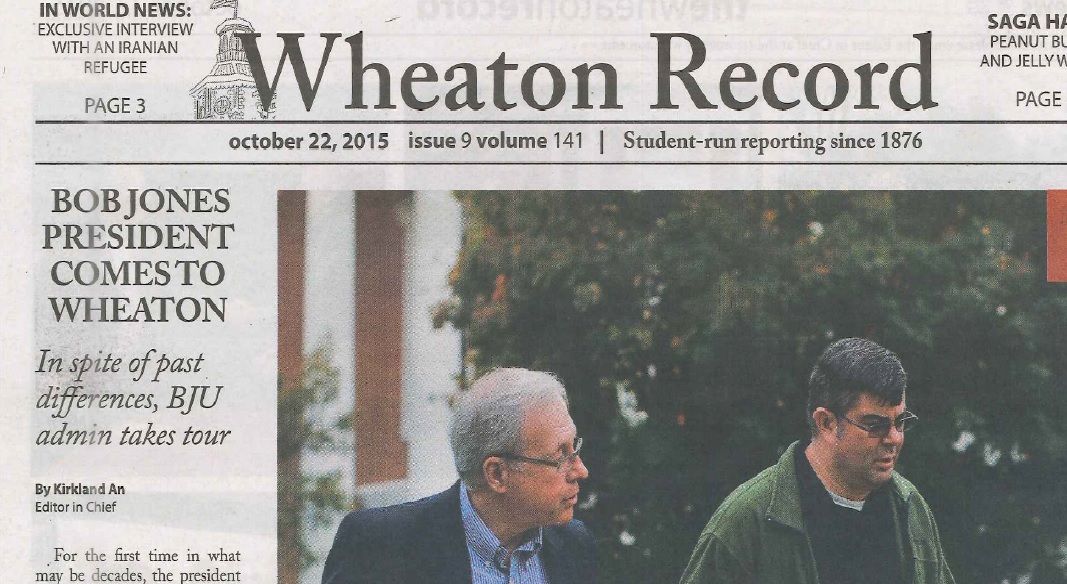
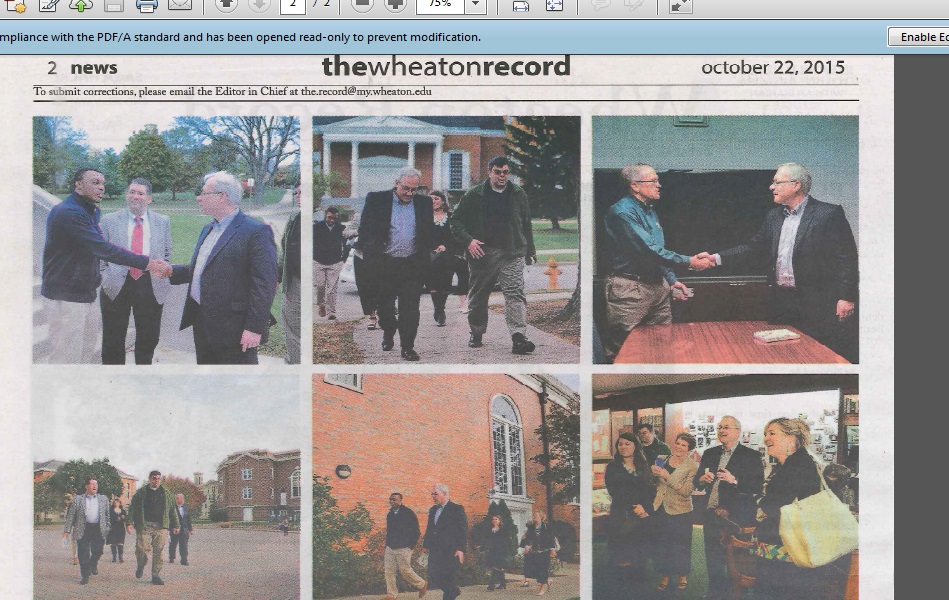
Maybe there’s hope for us all. In the world of evangelical higher education, the relationship between fundamentalist Bob Jones University and evangelical Wheaton College has always been a rocky one. According to a story in the Wheaton Record [sorry, not available online], last week BJU president Steve Pettit visited Wheaton’s campus, the first time a Jones leader has done so in a long time. There were smiles all around. Does this mean that the times they are a-changin?

Smiles, everyone, smiles...

Smiles, everyone, smiles…

For those who don’t know their history, last week’s visit may have seemed like no big deal. The leader of one evangelical college visited another evangelical college. What’s the big whoop? As I’m discovering in the research for my new book about the history of conservative evangelical higher education, this détente may signal an important shift in the worlds of fundamentalism and evangelicalism.

Since the beginning in the 1920s, leaders of the two schools fought viciously. BJU founder Bob Jones Sr. accused sitting Wheaton president J. Oliver Buswell of jealousy. Jones wrote,

Dr. Buswell and his field staff working under him were putting out propaganda everywhere that Bob Jones’ credits had no value and that we were misrepresenting facts when we told students that our graduates were admitted to leading graduate schools. . . . [Buswell is a] conceited, frustrated, ambitious, disappointed man.

Ouch. For his part, Buswell retorted that he had never said such things, had never been anything but friendly and helpful to Jones’s new school. What he had done, Buswell admitted, was protest against the sin-friendly policies at Bob Jones College. For those who don’t know their Wheaton history, it may come as a shock to find out that in the early days, Wheaton accused Bob Jones of not being fundamentalist enough. Wheaton’s President Buswell had critiqued Bob Jones’s new school in a review of a book of Jones’s sermons. The sermons themselves were first-rate, Buswell wrote.

But Dr. Jones, let me ask you a question or two. Your own educational program is reeking with theatricals and grand opera, which lead young people, as I know, and as you ought to know, into a worldly life of sin.

Double ouch.

Things never got much better from that point on. Bob Jones Jr., son of the founder and second president of Bob Jones University, told a story of his father’s traveling days. One time, Jones Sr. was on a train with some Wheaton students. One of the students, “trying to be very smart,” asked Jones how Bob Jones College could allow dramatic productions and still call itself fundamentalist. As Bob Jones Jr. explained,

Wheaton used to turn up their self-righteous noses at our drama, but they played inter-collegiate football, which we had had to give up at Bob Jones University because we found the people were betting on our games, littering our campus with whiskey bottles when they came out to see us play; and we found that inter-collegiate athletics were a definite blight to our spiritual lives.

By the 1970s, the relationship turned from one of frigid civility to outright hostility. In 1974, Bob Jones III officially changed the status of Wheaton in BJU’s internal coding system from “Friendly” to “Unfriendly.” Jones’s secretary explained the shift in an internal memo:

The above school or organization has been coded “F”; however, Dr. Bob III, has changed the code now to “U” to make our coding system more consistent. It has been a problem for some people because an organization or school would be coded “F” but we would treat them like “U” people.

From that point on, BJU officials would not even maintain their polite façade of cooperation with Wheaton officials. In 1977, an administrator from Wheaton wrote to Bob Jones III to ask for guidance in establishing a student drama program. He asked if Jones would offer some tips from its long experience with such programs. Through a secretary, Jones informed the Wheaton official, “because of the Neo-Orthodox position of Wheaton College, we are unable to give you the assistance you request.”

Pettit visits wheaton 2

No self-righteous noses here…

Given that protracted and ugly history, President Pettit’s visit to Wheaton’s campus seems revolutionary indeed.

Have things turned a corner? Does President Pettit’s visit really signal a thaw in this long evangelical cold war? Several signs point to yes.

First of all, Pettit is no Jones. For the first time in the history of BJU, the school is not led by a direct descendant of the founder. Maybe that gives Pettit a little more wiggle room to ignore family feuds.

Also, BJU is changing. It now claims accreditation as well as athletic teams. It has apologized for its history of racism.

Wheaton is changing, too. As did BJU in the 1970s and 1980s, Wheaton has tussled with the federal government. Just as BJU did in the 1980s, Wheaton insists that its religious beliefs must give it some leeway when it comes to federal rules.

If Wheaton sees itself pushed a little more out of the mainstream, and Bob Jones University pushes itself a little more toward that mainstream, they might just meet somewhere in the middle. There will always be some jealousy between these two giants of evangelical higher education, but it seems possible that the worst of the fundamentalist feud may have passed.