Getting Stoned at Bob Jones University

Is it now okay to be gay at fundamentalist Bob Jones University? Last week, former president and current chancellor Bob Jones III apologized for vicious anti-gay rhetoric from 1980. But this does not mean that homosexuality is now an accepted thing at BJU.

Time to celebrate?

Time to celebrate?

For those like me outside the orbit of fundamentalist colleges, the cultural politics of BJU can come as a shock. BJU has a long history of holding out against progressive social trends. Until the twenty-first century, for example, the South Carolina university proudly opposed interracial marriage.

As I’m finding as I research Bob Jones and other fundamentalist colleges, BJU has always been an outlier. The family leadership has a long tradition, when challenged, of doubling down on its own opinions as God’s Truth. Any criticism from within or without merely strengthened the leaders’ resolve. Again and again, this has led to purges of dissenting faculty, students, and administrators.

For those in the know, then, the recent apology for anti-homosexual rhetoric seems like another welcome change. In a press release, BJIII responded to a petition from a gay-rights group at BJU. In 1980, at a White House press conference, then-president BJIII suggested that the appropriate punishment for homosexuality was stoning. Here’s what he said back then:

I’m sure this will be greatly misquoted. But it would not be a bad idea to bring the swift justice today that was brought in Israel’s day against murder and rape and homosexuality. I guarantee it would solve the problem post-haste if homosexuals were stoned, if murderers were immediately killed as the Bible commands.

In his recent apology, BJIII distanced himself from such shocking language. As he put it,

I take personal ownership of this inflammatory rhetoric. This reckless statement was made in the heat of a political controversy 35 years ago. It is antithetical to my theology and my 50 years of preaching a redeeming Christ Who came into the world not to condemn the world, but that the world through Him might be saved. Upon now reading these long-forgotten words, they seem to me as words belonging to a total stranger—were my name not attached.

So can gay people at BJU now come out of their fundamentalist closets? Apparently not. As anti-fundamentalist Jonny Scaramanga noted, BJIII’s apology still condemned homosexuality. The statement apologized for the threat of stoning, not for labeling homosexuality a sin. BJIII carefully noted that he did not believe stoning was the appropriate punishment for “sinners.” He never apologized for considering homosexuality itself a sin.

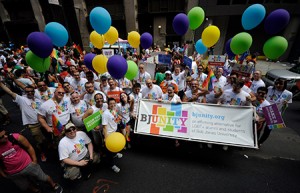
Nevertheless, as the response from the gay-rights group BJU Unity makes clear, homosexuals are part of the BJU community. As I’m finding in my current research, they always have been. BJIII’s apology is not nothing, but it does not welcome homosexuals openly into BJU’s fundamentalist family.

Conservative Warriors and Homosexuality

Where is the line? What can conservatives say about homosexuality that won’t be considered bigotry? The case of Professor John McAdams has lit up the conservative intellectual world with its implications for the eroding respectability of conservative opposition to gay rights and the utterly transformed intellectual environment on US college campuses.

Let’s start with a few caveats. First, full disclosure: I taught one semester at Marquette University, Professor McAdams’s school. I also taught for several years down the street at Marquette High School, which is no longer directly connected to the university. I feel an abiding love for both institutions. More important, I am unapologetically biased in this case. I believe it is legitimate and important to regulate speech in public (and some private) forums, including college classrooms. Hard as it is to hear, some ideas do not deserve to be granted equal status with others. Ideas that dehumanize classes of people are not just as good as other ideas. For instance, if a student in a seminar wants to insist that no white people can possibly understand US history because they are by definition part of an exploitative class, such talk should be ruled out of bounds. It would tend to exclude an entire class of people simply because of their cultural identity. Similarly, if a student wanted to rule that homosexuals were incapable of being moral in their relationships, or that women cannot understand certain concepts, or that non-citizens have no right to be heard in political discussions, such talk should be out of bounds.

Of course, many conservative intellectuals share that basic framework, but they disagree bitterly that traditionalist notions about homosexuality constitute that same sort of exclusionary mentality. In other words, many conservative thinkers agree that public speech shouldn’t be racist or chauvinist, but they disagree that conservative ideas about homosexuality fall into that same category.

The steamroller drive of homosexual rights in recent months and years has put some traditionalist conservatives on edge. A few recent cases have raised hackles among many conservative thinkers. At Mozilla and Gordon College, to cite just two examples, conservative intellectuals attracted instant and furious retribution for statements that have been perceived as anti-gay. In each case, ideas that would have been unremarkable just a few years ago are now taken as beyond the pale of respectable public speech.

In the case of Professor McAdams, college politics and bureaucracy have added new wrinkles into the question of acceptable conservative opinion about homosexuality. In brief, McAdams has been suspended with pay and asked to stay away from campus. Why? He blogged about the statements of a teaching assistant. That TA had told a student that opposition to homosexual marriage would not be considered in a class on ethics. The student complained to Professor McAdams, and McAdams outed the TA on his blog.

As McAdams noted, his support for the student prompted furious condemnation by “leftist academics,” who “demanded our head on a pike.” A group of prominent faculty at Marquette published an open letter on the issue. McAdams’s actions, they write, constituted “harassment and intimidation” of the TA. Other members of the Marquette community, they write, altered their behavior to avoid similar attacks from McAdams.

In the end, McAdams has been suspended with pay. The Fox-News commentariat has had its chance to recoil in horror at the anti-conservative “inquisition.”

There is, of course, more at stake here than intellectual positions about homosexuality and gay rights. We also must consider faculty politics and the unfortunate ways academics learn to teach. How do teaching assistants learn to handle disagreement among students? When does a tenured professor have a duty not to attack publicly a non-degreed teaching assistant? How should faculty respond when a colleague behaves in ways they dislike?

At the center of all these questions, however, is the question of conservatism and homosexuality. Not too long ago, opposition to gay marriage was a common part of our mainstream political discussion. These days, in college seminars, newspapers, technology companies, and public policy, any conservative notion that homosexuals do not have the right to marry one another is often considered rank bigotry.

Is it possible for conservative intellectuals to oppose gay marriage without being branded bigots? Has that culture-war train left the station?

Gay + Christian = Celibate: A Long Tradition

What is a gay conservative Christian to do? With plenty of justification, many Americans think that conservative Catholics and evangelicals are anti-gay. A recent article in the Washington Post suggests that homosexual Christians have found a new answer to this conundrum, though those in the know know that there’s nothing new about it.

Michelle Boorstein’s article discusses the spiritual path of bloggers such as Eve Tushnet, whom Boorstein describes as a leader of a

small but growing movement of celibate gay Christians who find it easier than before to be out of the closet in their traditional churches because they’re celibate.

When Tushnet converted to Catholicism, Boorstein describes, she felt as if she were the first gay Christian to choose celibacy. To be fair, neither Boorstein nor Tushnet claims this is brand new.  It is “easier” to be openly gay, Boorstein writes.  But not easy.  As the article discusses, such a decision opens one up to attacks from both sides. Some conservatives hope that God can “heal” homosexuals. Such folks want homosexual Christians to abjure their homosexual identities. From the other side, some gay activists argue that choosing celibacy is a terrible option, a truckling to anti-gay animus among conservatives.

What the article doesn’t examine is the long history of this question among conservative evangelicals. As one might expect, issues of sexuality and sexual attraction have long played a central role at America’s network of conservative evangelical colleges. What should young people do if they feel sexually attracted to their own gender? What should loving Christians tell them in college classes and counseling sessions? In my current round of archival research into the history of these schools, I’m seeing a long tradition of the answer “discovered” by folks such as Tushnet: Gay conservatives can remain true to their religious beliefs and true to their sexual attractions by committing to lifelong celibacy.

Certainly, as Boorstein notes, the language has changed, as have public attitudes. In the past, conservatives did not claim their homosexuality as openly or as proudly. But this does not mean that the celibacy “solution” is at all a new one.

In the 1930s, for example, among the troubles at the Denver Bible Institute was the leader’s insistence that all relationships be “continent.” This leader, Clifton Fowler, was accused of homosexual attractions. Indeed, he was accused of active homosexual sexual relationships. His solution was to insist that all married relationships—apparently all potentially sexual relationships—remain celibate. In that case, the facts were obscured by conflicting accusations on all sides. It seems clear, however, that the celibate “solution” to the perceived dilemma of homosexual attraction among Protestant fundamentalists is nearly as old as American fundamentalism itself.

In a later generation, the language used to discuss homosexuality and celibacy grew slightly more frank, while remaining just as harshly anti-gay. In 1951, a student at Biola College (now Biola University) promised counselors that he would remain celibate. As I read the record, this promise was taken at the time as a satisfactory and traditional “solution” to the problem of gay fundamentalism. Take, for example, the following explanation he offered to his dean:

as to the matter [i.e., homosexuality] that has been at the root of all my grief, I am positive that I am cured. The perverted urge will probably come upon me many times in the future but now that I know giving in to it has cost me all that I held dear, I am certain that I will be enabled to grasp the strength of the Lord to withstand.

Back in 1951, it seems, as in the late 1930s, among these conservative Christians, celibacy seemed an appropriate and acceptable solution to homosexual attractions. The student here did not suggest that being “cured” of homosexuality meant becoming heterosexual. Rather, all he promised was the ability to “withstand” what he called his “perverted urge.”

Continuing into the 1970s, leaders at evangelical schools seemed open to the idea that celibacy could be an acceptable evangelical answer for homosexuals. For instance, in a 1977 interview with Wheaton College’s student newspaper, Wheaton President Hudson Armerding offered this response:

The church should respond in love toward those with homosexuality [sic] tendencies and in humility seek to assist such persons to maintain and develop a life-style that is in obedience to the Word of God.

Armerding did not insist that evangelical homosexuals be “cured” of their sexual identity. Rather, he simply demanded that they find a “life-style”—presumably including celibacy—that went with Armerding’s understanding of God’s Word.

From the 1930s to the 1970s, then, evangelical homosexuals could remain both evangelical and homosexual by living celibate lives. Nor does the notion of celibate homosexuality seem particularly revelatory to evangelical collegians today. Julie Rodgers currently works at Wheaton College as an openly gay celibate Christian. She helps counsel students about sexual issues, among other things.

Certainly, the language these days has changed. Rodgers, for example, openly describes herself as gay. The gay celibate student at Biola College in 1951, in stark contrast, was driven to extremes in his attempt to hide his gay identity. Back in the 1930s, Clifton Fowler never admitted to any homosexual attractions, though there seems ample evidence of it.

Nevertheless, for those in the know, there is nothing new among conservative evangelicals and fundamentalists about the celibate “solution” to homosexual attractions.

Evangelicals and Homosexuality on the College Campus

Maybe President Lindsay feels better knowing that only high pressure can create diamonds. Because the leader of evangelical Gordon College is feeling intense pressure from two sides right now. On one hand, the school’s accrediting agency has threatened to take away its accreditation if Gordon does not revise its policy on homosexuality. On the other, the school’s conservative supporters insist the policy must stay in place. If history is any guide, it appears one group might make the crucial difference in this case.
Are all welcome?  MUST all be welcome?

Are all welcome? MUST all be welcome?

This Gordon-ian knot is one that all conservative evangelical colleges have tried to pick apart. Schools such as these are in a pickle: they need to remain intellectually respectable and financially viable, yet a decision either way threatens both intellectual consistency and the bottom line.

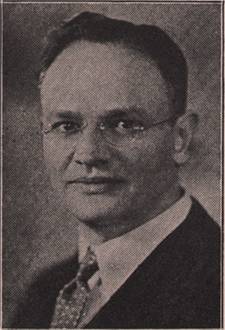
As I’m finding as I research my new book, similar schools have had a difficult time walking this line. In the 1930s, for example, Wheaton College leaders moved fast to bring Wheaton up to accreditors’ standards. As historian Michael Hamilton argued, the president at the time, Oliver Buswell, viewed accreditation as more than just a piece of paper. To Buswell, accreditation was the “one of the best ways to earn intellectual respect for fundamentalist Christianity.”

But college leaders such as Buswell were also under intense pressure to maintain both the appearance and the reality of theological steadfastness. Leaders needed to maintain the confidence of the evangelical community that their schools were not slipping into secularism. In 1929, for instance, Buswell withdrew from publication a controversial book he had written. Why? As he explained to a colleague, above all Buswell felt the need to keep “the confidence of fundamentalist leaders . . . in the administration of Wheaton College.”

Losing either accreditation or the respect of the “fundamentalist” community could mean a wasting death for an evangelical college. And the two have often pushed in opposite directions.
WWBD?

WWBD?

Much has changed since then, but President Lindsay at Gordon College finds himself coming under similar pressure from both sides. [Full disclosure: I worked with Michael Lindsay in the Spencer Foundation/National Academy of Education Postdoctoral Fellows program. I consider him a friend and colleague.]

For those who are just joining us, this story began back in July, when President Lindsay signed an open letter to President Obama about religious exemptions to an anti-discrimination law. Now, the question has become whether Gordon’s Statement on Life and Conduct violates the rules of its accrediting agency.

At issue is the Gordon ban on “homosexual practice.” The New England Association of Schools and Colleges has collaborated with Gordon in setting up a “discernment” group to examine the policy.  (As an aside, we could ask why only this part of the policy has come under investigation. After all, the Gordon policy also bans “blasphemy” and “profanity,” not to mention heterosexual sex outside of marriage. Doesn’t this impinge upon the free speech rights of potential students?)

For a host of reasons, the accrediting agency doesn’t care about blasphemy. But it is threatening to withdraw accreditation over the ban on “homosexual practice.” For Gordon College, loss of accreditation would have serious consequences. Its graduates would not necessarily be considered qualified for graduate school. Nor could they receive student loans backed by the federal government. Perhaps most important, though, loss of accreditation would be a symbolic slap in the face. Gordon would face the challenge of proving its continued intellectual respectability.

But that is not the only pressure facing Gordon right now. Just as President Buswell at Wheaton worried about both mainstream intellectual respectability and credibility within the world of conservative evangelicalism, so President Lindsay faces a double-sided threat.

Beyond accreditation pressure, Lindsay must consider the opinions of the far-flung community of conservative evangelicals. As one conservative pundit wrote recently in the pages of the Christian Post,

To Michael Lindsay, the gifted president of Gordon, and to the board of trustees, I remind you: Many eyes are watching you, knowing that the decisions you make could either strengthen or dishearten many other schools that will soon be put under similar pressure.

As this conservative writer worried, Gordon might be willing to “sell its soul” to maintain accreditation.  If it did, conservative students and parents might take their tuition dollars elsewhere.  But if it doesn’t it might lose accreditation.  Without that sort of mainstream credibility, students and parents might take their tuition dollars elsewhere.

So what is a conservative school leader to do? How can President Lindsay balance the pressure to reform with the pressure to hold fast to the faith once delivered to the saints?

In this case, there is a new wrinkle. Traditionally, alumni are one of the groups most likely to push school leaders to maintain conservative positions. Today, though, some Gordon alumni are hoping to convince Gordon to change its ways. A group of two dozen alums have published a letter encouraging Lindsay to remove any hint of anti-gay discrimination from Gordon’s policies.

In the past alumni have been one of the most vocal groups fighting any change at evangelical colleges. Conservative evangelical colleges have long been keenly aware of the pressures to modernize and secularize. Traditionally, alumni of these schools have been staunch foes of any perceived change, since any change could lead to an utter loss of the school’s steadfast character. Historian Michael Hamilton described this alumni attitude this way:

colleges, more than any other type of institution, are highly susceptible to change, and that change can only move in one direction—from orthodoxy toward apostasy. . . . The very process of change, no matter how slow and benign it may seem at first, will always move the college in a secular direction, inevitably gathering momentum and becoming unstoppable, ending only when secularization is complete.

In Gordon’s case, however, alumni—at least some of them—are pushing in the other direction. It is impossible to predict what will happen at Gordon. The board of trustees may decide this policy needs updating. Or they may not. And President Lindsay might decide that this language is a central part of the school’s evangelical character. Or he may not.

This case highlights the double pressure faced by conservative evangelical colleges. In a sense, they must serve two masters: the pressure to maintain a vague and shifting “respectability” with mainstream institutions; and the pressure to remain bastions of orthodoxy in a world hurtling headlong into secular mayhem.

Kids: You’re Not Really Gay

What should conservatives tell gay kids?  One writer suggests that kids should learn that they’re not really gay.  But that writer, Michael Hannon, also wants us to tell non-gay kids that they’re not really straight.

Hannon’s original argument suggested that the construction of the notion of sexual identities in the nineteenth century doomed conservative Christians to a double danger.  First, it led some people to identify as homosexuals.  According to Hannon, such an identity enshrines sinful behavior as the core of a person’s identity.  To Hannon, anyway, it seems there is no moral way to have sex as a homosexual, since gay marriage is not for him a moral possibility and sex outside of marriage is immoral.

But heterosexuality is just as bad.  By allowing conservatives who identify as heterosexuals to rest satisfied that they had the “right” sexual identity, heterosexuality left people clueless about the abundant dangers of the entire idea of sexual identity.

In other words, if I understand him correctly, Hannon hoped religious conservatives would take their argument up one level.  Instead of suggesting that homosexuality was sinful and heterosexuality was not, Hannon wants us to recognize that the concept of a sexual identity—any sexual identity—was deeply problematic.  As he elaborated in a recent follow-up, Hannon argued that the real goal of religious people must not be Hollywood’s marriage-as-happy-ending, but a more complicated goal of spiritual friendship.

This is not the usual semi-hysterical “homosexual agenda” talk we hear from some religious pundits.  Over and over, conservative activists have warned that “sneaky” homosexuals are using public schools to infect young minds with gayness.  Hannon is making a much more subtle argument.

To be clear, Hannon does indeed think that homosexuality tends to promote sinful behavior.  As he put it,

Self-describing as a “homosexual” tends to multiply occasions of sin for those who adopt the label. . . .  Whereas the infusion of the theological virtues sets the Christian free, identifying as homosexual only further enslaves the sinner. It intensifies lust, a sad distortion of love, by amplifying the apparent significance of concupiscent desires. It fosters a despairing self-pity, harming hope, which is meant to motivate moral virtues. And it encourages a strong sense of entitlement, which often undermines the obedience of faith by demanding the overthrow of doctrines that seem to repress “who I really am.”

But this is not the only problem of sexual identities.  Too many conservatives, Hannon charges, accept heterosexuality as a healthy sexual identity.  They yearn for boy-meets-girl and scorn boy-meets-boy or girl-meets-girl, but in essence such conservatives miss the point.  Encouraging young people to understand themselves as primarily sexual beings—gay or straight—puts too much emphasis on sexual identities entirely.

What should young people hear about sexual identities?  Neither that they are inherently gay nor straight, Hannon says.  Rather, that sex is part of humanity, but never should make up the core of a person’s identity.

Critic John Corvino doesn’t buy it. According to Corvino, Hannon seems to be

asking for something much more difficult for us moderns to imagine: a world without sexual orientation as we understand it. Yet it’s hard to see how to avoid the closet as a necessary first step toward this goal. Worse, one worries that aiming for this goal would at most achieve a disastrous middle ground: a world where orientation categories were still salient but where the taboo against voicing them would leave those with same-sex desires lonely and miserable.

How about you?  Do you think Hannon’s argument has legs?  Can religious conservatives get out of their culture-war pickle by moving away from a condemnation of homosexuality and instead to a broader distaste for sexual identities as a whole?


Obama Persecutes Christian Schools

Does President Obama have it out for conservative evangelical Christians?  Does he plan to crush them by hitting them where it hurts?  In the pages of today’s Christian Post, Michael Zigarelli worries that Obama’s anti-discrimination policy will do just that.  By putting the squeeze on religious colleges, Zigarelli writes, Obama plans to squeeze the life out of conservative evangelicalism.  This sort of conspiracy-theorizing may sound far-out to non-conservatives like me.  But for those who know the history of evangelical education, it might not seem so wacky.

Zigarelli is commenting on the recent controversy at Gordon College in Massachusetts.  As we’ve noted in these pages, President D. Michael Lindsay of Gordon College attracted attention for signing an open letter to President Obama.  In case you missed the story, Lindsay signed the letter requesting an exemption from a planned executive order.  The order would ban discrimination against LGBTQ persons.

For those like me outside of the world of conservative evangelicalism, Lindsay’s attitude sounds an awful lot like a license to discriminate.  If, as Lindsay wrote, Gordon College does not discriminate against gay students and does not plan to start, why would they need such an exemption?

I don’t want to put words in anyone’s mouth, but as I understand it, the evangelicals did not ask to be able to discriminate against anyone, but rather to be able to continue their policy that requires all students and faculty to agree to a goal of chastity outside of marriage.  As we discussed here at ILYBYGTH, to many non-evangelicals and former evangelicals, that seems like a distinction without a difference.

But if we put those sorts of questions to one side for a moment, we can see that Zigarelli’s attitude demonstrates key elements of evangelical thinking.  His op-ed articulates some of the fears of conservative evangelicals.  For many conservatives, Obama’s order means more than just the end to discrimination.  It means the end of conservative evangelicalism in general.  Once conservatives are no longer able to operate their schools and colleges as they see fit, they will no longer be able to educate their children properly.  As Zigarelli concludes ominously,

Empty desks will follow empty pews, at least if this capricious; destabilizing theology is foisted upon our Christian schools. It’s time to take a stand.

To historians, this sort of rhetoric sounds familiar. As I’ve argued in the pages of the Journal of Religious History, conservative evangelicals made very similar sorts of statements after the Supreme Court’s anti-prayer decision in 1963. That school decision prompted conservative evangelicals to shift their thinking about their relationship to the broader American culture. As the editors of the flagship evangelical magazine Christianity Today expressed it, before that decision, they were confident of their roles as leaders of America’s “devout masses.” After the decision, though, they worried that conservative evangelicals had become nothing but a “believing remnant” in a sinful American culture.

For evangelicals, like all other Americans, any loss of control over schooling can signal a loss of control over public life itself. Some of us may scratch our heads and wonder why evangelicals worry so much about President Obama’s planned non-discrimination order. If, as President Lindsay insists, conservative schools don’t discriminate against homosexuals, what do they have to worry about?

Throughout the twentieth century and into today, though, conservative evangelicals have maintained a tense relationship with the wider American culture. Many conservatives believe themselves to be the representatives of the real American mainstream, the “moral majority.” At the same time, however, conservatives see themselves as persecuted outsiders in a twerking culture besotted with sin, sexuality, and secularism. When big public-policy decisions seem to hurt Christian education, evangelicals react vigorously.

Does Obama plan to crush conservative opposition? As Zigarelli admits, such statements may sound “absurd” and “alarmist.” But given the past fifty years of evangelicals’ relationship with public education, the notion that the federal government might take drastic steps that hurt Christian education does not seem absurd or alarmist at all.


Are Christians Too Bigoted to Work With?

You may have seen the headline by now: Christian College Discriminates Against Homosexuals.  And the follow-up: City Cuts Off Christian College.  But isn’t it weirdly ironic that non-religious governments now seem to be repeating the separatist struggles of fundamentalists?  Doesn’t it seem odd that the drive for tolerance pushes pluralists to act like the more extreme religious separatists?

In this case, it was the public decision of Gordon College President D. Michael Lindsay to sign a letter to President Obama that sparked the furor.  [Full disclosure: Lindsay and I worked together as 2009 Spencer/National Academy of Education postdoctoral fellows, and I admire Lindsay personally and consider him a friend and colleague.]  Along with a host of other prominent evangelical leaders and intellectuals, Lindsay asked President Obama for a religious exemption to a planned executive order banning workplace discrimination against homosexuals.

Lindsay’s participation caused a furious reaction.  Gordon alumni and students petitioned Lindsay to retract.  Gordon College’s accrediting agency promised to investigate.  And most notably, the nearby city of Salem, Massachusetts canceled its partnering contract with Gordon to operate an historic city building.

Let me be clear about a couple of points.  First, I personally agree that institutions should not discriminate against homosexuals.  Public governments, especially, have a duty to include all members of society, not only passively, but actively.  IHMO.  Also, I do not wish to argue whether Lindsay’s position is or is not “anti-gay,” since he has publicly insisted that Gordon College does not discriminate against homosexuals.  And though I find it curious, I don’t want to ask why President Lindsay has become the center of this controversy, even though the letter was signed by many other evangelical leaders as well.  Even on my humble little blog, for example, I’ve experienced a surge of search terms such as “D. Michael Lindsay bigot” and “Gordon College Anti Gay.”  Why has Lindsay become the focus in this case?  Why not all the other signatories?

Though interesting, we have to leave such questions aside for now.  From an historical point of view, there is a more interesting aspect to this case.  It seems that those who support tolerance and diversity have, in some ways, adopted the position of the traditionally conservative fundamentalists.

Here’s what I mean: In the twentieth century, conservative Christian colleges carried on a furious and often angry internecine debate about the propriety of partnering with non-Christian institutions.  Schools such as Gordon and Wheaton College earned the vicious denunciation of more conservative schools such as Bob Jones University.  Among the many accusations, more conservative, “fundamentalist” schools often insisted that the more open, “evangelical” schools had tainted themselves by their open association with non-Christian ideas.  Separatist fundamentalists often cited the Bible passage 2 Corinthians, chapter 6, verse 14:

Be ye not unequally yoked together with unbelievers: for what fellowship hath righteousness with unrighteousness? and what communion hath light with darkness?

In order to be truly Christian, separatists argued, believers could not allow themselves to be joined with those who did not share their belief.  So, for instance, when fundamentalist megastar Jerry Falwell worked with conservative Catholics and Jews in the Moral Majority, fundamentalist leaders at Bob Jones University denounced Falwell as the “most dangerous man in America.”

This rigid separatism, indeed, has been one of the hallmarks of American fundamentalism.  Some fundamentalists have insisted that they must practice even a “secondary separation,” not sharing Christian fellowship with other Christians if those other Christians share fellowship with questionable folks.

Now, it seems the city of Salem feels it must practice a strangely similar form of separatism.  As Salem Mayor Kimberly Driscoll informed Gordon College in a recent letter, the city must separate itself from the college.  Why?  Because, Driscoll wrote, Lindsay’s position implied open discrimination against the LGBT community.  The college had every right to do so, Driscoll believed, but the city could no longer be affiliated with such things.  The city’s non-discrimination law, Driscoll informed Lindsay, “prohibits our municipality from contracting with entities that maintain discriminatory practices.”

This is not the only time when the beliefs of liberals and fundamentalists have neatly swapped sides.  In the creation-evolution debates, for example, creationists took over evolutionists’ positions.  As historian Ronald Numbers has pointed out, by the 1990s creationists began appropriating the language of 1920s liberals.  In the 1920s, evolution supporters insisted that teaching only one theory was bigotry.  By the 1990s, creationists started saying the same thing.

In this case, we see a weird and clearly unintentional echo.  Mayor Driscoll feels compelled to separate her government from any entity that practices discrimination against homosexuals.  It is not enough, morally, for her government itself to avoid such discrimination.  The principle of separation seems to have migrated from fundamentalists to their supposedly tolerant opponents.


The Kids Are Alright

Want to see a progressive society? Just wait. Each new generation gets less uptight about gay marriage, evolution, abortion rights, and gender equality. Right? Maybe not. Controversy-loving sociologist Mark Regnerus has produced another study sure to provoke more outrage. In this case, Regnerus claims to find that young conservative evangelicals are not swinging toward a glowing progressive future.

Regnerus first came to culture-war attention with his 2012 study of gay-marriage parenting. Unlike most other sociological studies, Regnerus found that children raised by same-sex parents did not fare as well as children raised by their biological parents.

In his new study of attitudes towards sex in America, Regnerus concluded that young conservative evangelicals are bucking the trend toward youthful progressivism. While young Americans in general might be more welcoming toward gay marriage, abortion rights, and gender equality, young conservatives are not, Regnerus claims.

Conservative Baptists Russell Moore and Andrew Walker take great solace from Regnerus’ findings. Moore and Walker, leaders of the Southern Baptist Convention’s Ethics & Religious Liberty Commission, celebrate the “sexual counter-revolution” heralded by Regnerus’ study. Conservative Christians, Moore and Walker noted recently in the pages of National Review Online, can trust that the new generation will cling to tradition. As they put it,

Regnerus’s research suggests that younger Evangelicals aren’t hewing to the culture’s expectation that they conform to its values. That’s a welcome reality, especially given the significant cultural pressures that young Christians face in today’s culture. This lines up with what we, as conservative Evangelicals, see happening in our own congregations across America.

As American culture secularizes, the most basic Christian tenets seem ever more detached from mainstream American culture. Those who identify with Christianity, and who gather with the people of God, have already decided to walk out of step with the culture. Beliefs aren’t assumed but are articulated over and against a culture that finds them implausible. Evangelical views on sexuality seem strange, but young Evangelicals in post-Christianizing America have already embraced strangeness by spending Sunday morning at church rather than at brunch.

Certainly, ever since the birth of conservative evangelicalism as a dissenting identity in the 1920s, young evangelicals have stayed true to conservative ideas. In the 1920s, as I argue in my 1920s book, young members of the new “fundamentalist” coalition defied new stereotypes of “flaming youth” to assert a proudly traditional, religiously orthodox youthful conservatism. And as I’m exploring in my current research, in the 1960s conservative evangelical college campuses were hotbeds of a different sort of student activism, the “sexual counter-revolution” noted by Moore and Walker.

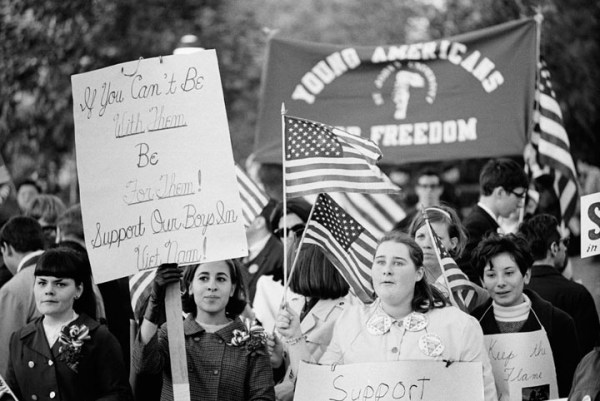
An Earlier Generation of Youthful Counter-Revolutionaries: YAF, 1967

An Earlier Generation of Youthful Counter-Revolutionaries: YAF, 1967

But just as Regnerus’ gay-marriage research seemed too pat, too comforting to conservative activists, so this finding does not seem to deserve the celebration lavished upon by Moore and Walker. Young conservatives may be more traditional than their young contemporaries. But those young conservatives might also be more progressive than their elder evangelicals. The times might not be a-changin’ as fast as some progressives have often assumed, but it seems a little weird for conservative evangelical leaders to conclude that young evangelicals are not moving toward the new mainstream on sexual issues.


Kicking Christians Out of College

Does being an evangelical Christian automatically make one an anti-gay bigot? If so, can tolerant universities still allow such groups among their students? Those are the tricky questions highlighted in a recent New York Times article about evangelical culture and higher education. As the NYT story noted, this clash between pluralist campuses and “exclusivist” religious groups seems like a tough nut to crack.

But is it fair to assume that all evangelical students are bigots? That opposition to gay marriage pushes students beyond the bounds of polite society? To put it in the most provocative terms: Are evangelical student clubs being ousted because they are seen—sometimes unfairly—as being anti-gay?

The story opens with an update from Bowdoin College in Maine. At that elite liberal-arts school, the tiny evangelical student club has been cut off from official university support. Why? Because, like many evangelical student groups, the Bowdoin group insisted that leaders must be Christians themselves. This led to what the NYT article called a “collision between religious freedom and antidiscrimination policies.” At Bowdoin, as at many other schools, leadership at university-sponsored clubs must be open to all students, regardless of race, religion, or sexual identity.

The official question in the Bowdoin case is not about homosexuality or same-sex marriage. But it would be easy for a casual reader to miss that. The article mentions other schools in which evangelical students have gotten into trouble for anti-gay activity. At Vanderbilt, for instance, one Christian fraternity kicked out a gay member. Indeed, it was precisely that anti-gay activism that led Vanderbilt to force student groups to sign antidiscrimination pledges.

But Bowdoin’s student group does not seem particularly fervent about issues of homosexuality or same-sex marriage. At least according the article, the evangelical club at Bowdoin does not have a single party line about the morality of gay marriage. It’s hard to see a group as anti-same-sex marriage if some of its members support same-sex marriage.

Some studies have suggested that the faculty leaders at universities tilt decidedly against evangelical students. One 2007 study of university faculty concluded that evangelicals were “the only religious group about which a majority of non-Evangelical faculty have negative feelings.” And, as Rice sociologist Elaine Howard Ecklund found, faculty at elite schools often have a very skewed notion of evangelical belief. It does not seem like a stretch to think that these faculty prejudices might tip university policy.

For their part, evangelical intellectuals have struggled long and hard to prove that their opposition to gay marriage and, in some cases, to homosexual sex does not make them bigots. Perhaps the most vocal pundit on the issue, Ryan T. Anderson, insisted that conservatives had legitimate reasons for opposing gay marriage. But too often the other side wouldn’t listen. “Marriage re-definers,” Anderson complained in 2013,

don’t tend to say what many opponents have said, that this is a difficult question on which reasonable people of goodwill can disagree. No, they’ve said anyone who disagrees with them is the equivalent of a racist. They’ve sent a clear message: If you stand up for marriage, we will, with the help of our friends in the media, demonize and marginalize you.

Don’t get me wrong: I am personally fervently in support of same sex marriage rights. I’m opposed to locking anyone out of access to influence because of their sexual identity, religion, race, or other causes. But it seems as if universities would do well to uncouple these issues of club leadership, religious belief, and homosexual rights.

Could a student club demand religious beliefs of its leaders, while still welcoming gay and lesbian students to become leaders? Is it fair for universities to assume that evangelical belief automatically implies anti-homosexual attitudes?


Persecution, Mozilla, and Gay Rights

Who is the bully? Who is the victim? Is it former Mozilla CEO Brendan Eich? Or is it the many LGBT people who might not have equal marriage rights?

Unless you’re living under a rock, you’ve heard the story by now. Co-founder and former Chief Technology Officer of Mozilla Brendan Eich recently resigned from his new job as Chief Executive Officer. Why? In 2008, he donated $1000 to support California’s Proposition 8. The Proposition would have banned same-sex marriage. His donation caused such a backlash against Mozilla that Eich resigned.

Throughout the furor, Eich made conciliatory noises about the values of diversity and tolerance, but he did not abjure his political beliefs against gay marriage. For many in the tech community, such beliefs are tantamount to bigotry and politicized hatred. To be against gay marriage, for many folks (full disclosure: I include myself in this group), implies a willingness to deny equal legal rights to a category of people. This is the very definition of bigotry. Such a position, pro-gay-marriage activists insist, is akin to denying people the right to marry across the race line.

In short, by opposing gay marriage, Eich defined himself as a bully and a bigot. To oppose gay marriage, many felt, puts Eich and his ilk beyond the pale of civil society.

In the conservative intellectual community, of course, the shoe is on the other foot. Conservatives insist that the bullying is being done by the pro-gay-marriage crowd. How is it “tolerant,” conservatives ask, when successful business leaders are forced to step down strictly because of their political beliefs? The bigots here, conservatives argue, are those who won’t allow a true intellectual or political diversity. The real bullies, conservatives say, are those who won’t allow for any disagreement with their worldview.

As usual, one of the most perspicacious articulations of these positions came recently from Princeton’s Robert George. In the pages of First Thoughts, George argued the case that the victims here were religious folks. Anti-Eich-ism, George asserts, threatens to squeeze religious folks out of the public sphere entirely. As Professor George puts it,

Now that the bullies have Eich’s head as a trophy on their wall, they will put the heat on every other corporation and major employer. They will pressure them to refuse employment to those who decline to conform their views to the new orthodoxy. And you can also bet that it won’t end with same-sex marriage. Next, it will be support for the pro-life cause that will be treated as moral turpitude in the same way that support for marriage is treated. Do you believe in protecting unborn babies from being slain in the womb? Why, then: “You are a misogynist. You are a hater of women. You are a bigot. We can’t have a person like you working for our company.” And there will be other political and moral issues, too, that will be treated as litmus tests for eligibility for employment. The defenestration of Eich by people at Mozilla for dissenting from the new orthodoxy on marriage is just the beginning.

Are conservatives the victims here? Is it legitimate political activism to oppose same-sex marriage? Or is it bigotry and intolerance?