Hating the Haters

Should Fred Phelps’ funeral be a protest site?

Insta-pundits have debated the issue.  With the anti-homosexual founder of the Westboro Baptist Church possibly on death’s door, would it be proper for gay-rights activists to protest at Phelps’ funeral?

fredphelps

Fred Phelps in Action

Phelps attracted the most attention, after all, for his policy of hateful protests at the funerals of US servicemen and –women.  His “God Hates Fags” signs became a byword for extremist fundamentalism.

Should those opposed to Phelps’ awful tactics engage in those tactics?  We think not.

While it might be satisfying to stand with “God Hates Haters” signs, it would only exacerbate the culture of hate.


Lesbian, Feminist . . . Christian?

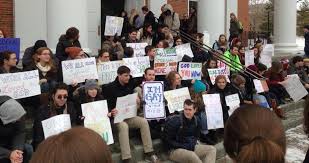
Student demonstrations aren’t big news.  But recently evangelical Christian students at evangelical flagship Wheaton College came out to agitate for, well, for coming out.

Student Demonstration at Wheaton

Student Demonstration at Wheaton

Wheaton College had invited Rosaria Champagne Butterfield to give a chapel talk.  Students protested that Butterfield’s message, her “train-wreck conversion” story, promoted damaging messages about homosexuality and Christian faith.

Butterfield attracted attention last year with her conversion story in the pages of Christianity Today.  As she told the story, she was a happy, moral, engaged citizen who happened to be a lesbian.  In her earlier career as a feminist academic, she pitied and pilloried evangelical Christianity for its anti-woman, anti-homosexual attitudes.  But after engaging with a local evangelical pastor and his family, Butterfield felt herself drawn to the faith.  She felt herself drawn to Biblical truths, to promising obedience before asking for understanding.  She fought against this conversion.  As she put it,

But the Bible got to be bigger inside me than I. It overflowed into my world. I fought against it with all my might. Then, one Sunday morning, I rose from the bed of my lesbian lover, and an hour later sat in a pew at the Syracuse Reformed Presbyterian Church.

As we’ve seen in these pages, the tangled mess of morality, sexuality, and Christianity has caused heartache and abuse, and college campuses often become the stage on which these questions find themselves played out.  Last month, Butterfield’s chapel talk at Wheaton College became the focus of a silent student demonstration.  Christian students at the evangelical school wanted the world to know that Christianity did not require “healing” from homosexuality.  Student Justin Massey told the student newspaper,

We feared that if no conversation was added to the single message of the speaker that students who are not very well informed were going to walk into chapel, hear the message, and have misconceptions confirmed or that students who are LGBT would be told that this story is the absolute way that things happen.

After the chapel talk, Butterfield met with student demonstrators.  The student newspaper published a short interview.  Butterfield explained that she was a feminist on issues such as equal pay for equal work, but that feminism as a “worldview” did not work.  She insisted that she viewed sexuality through a Biblical lens, one that condemned both homosexuality and homophobia as sins.

Students disagreed.  They thought Butterfield misinterpreted the Bible, and that her attitude gave a pass to the sorts of patriarchal sexual abuse cases that we’ve discussed in these pages.

For those of us outside the world of evangelical Christianity, the discussion was illuminating.  First of all, we see how both sides of the issue use the Bible to buttress their arguments.  Students at Wheaton did not lambaste Butterfield for making arguments based on an ancient book.  Rather, they insisted that Butterfield relied on bad interpretations of that text.  Also, we see, as the student protesters insisted, that there is “more than a single story” about sexuality in evangelical higher education.  Some of us were surprised recently to find that Christian professors do not universally condemn homosexual students.  Many of us, like Dr. Butterfield in her earlier life, assume that homosexuality is something on which evangelical Christians agree.  This story shows us the true complexity of sexuality in evangelical thinking.


Fundamentalist Ducks

Okay, okay, I admit it.  I’ve been itching to write something about the recent Duck Dynasty culture-war imbroglio.  But until now there didn’t seem to be much worth saying.  One sentence said it all: Famous redneck shows ugly blind spot in racial issues and homosexual identities.  Didn’t seem like much more needed talking about.

For those of you who live in caves, bearded patriarch Phil Robertson ruffled feathers with recent ignorant and hateful comments about homosexuals and racial history.  In all his Louisiana life, he told a GQ reporter, he never saw an African American who seemed upset about lacking basic civil rights.  And homosexuals, he opined, should learn to prefer vaginas to men’s anuses.  After all, as Robertson concluded with invincible logic, “I mean, come on, dudes!  You know what I’m saying?”

Until today, everything I’d read about the scandal either defended Robertson’s right to his theology or attacked him for his hate.  But this morning I came across the comments of the brainy conservative Rod Dreher in the pages of Time.com.  For those not familiar with Dreher’s story, he moved back to his small-town Louisiana roots from a go-go New York media career after a family tragedy.

Dreher hit the nail on the head.  While Dreher doesn’t agree with Robertson’s positions, he remarked on the ridiculously excessive shock expressed by many media mavens.  Too many of those “culture-makers,” Dreher lamented,

are often every bit as parochial as those they condemn, but flatter themselves that they are the tolerant, cosmopolitan ones. I have lived in Manhattan, and I live once again in my tiny south Louisiana hometown. To paraphrase Solzhenitsyn, the border between narrow-minded and tolerant runs not between city and country, North and South, degreed and uneducated, but down the middle of every human community and every human heart.

. . .

The Duck Dynasty mess revealed that not all fundamentalists live in the Bible Belt, and that some of the biggest hicks live in Hollywood. The Duckman’s win is a score for authentic diversity and pluralism in the public square, and a victory for the right to be wrong without being ruined.

Hear hear.

When I began my current job as a university professor, I gave a talk about my dissertation research.  That work—which became my first book—concerned the first generation of American fundamentalists.  I soon realized that my tolerant, cosmopolitan university audience contained more than its share of Dreher’s hip hicks.  Not the entire audience, by any means, but certainly an influential group.  These culture-makers did not hope to understand fundamentalists; they did not seem interested in puzzling out the intellectual world I had tried to portray.  Instead, they only rushed to demonstrate their shock and horror at the ideas of people very different from themselves.

At the end of the talk, one member of my academic audience raised her hand and asked in a frustrated tone, “What is WRONG with these people?”  Heads nodded throughout the room.  The person who asked the question was not dumb, was not ignorant.  She was a prolific researcher and dedicated teacher.  In fact, she had worked throughout her career to make schools more inclusive for all sorts of students.  Yet she saw no contradiction in dismissing the thinking of a large percentage of Americans as “these people” out of hand.

Like Dreher, I don’t think Robertson’s comments are worth talking about, much less defending.  But the reaction to his comments can tell us a good deal about the current state of America’s intellectual myopia.   It serves as a sobering reminder of the widespread and unacknowledged ignorance among many Americans about what America is really like.


Red Carpet Culture War

Maybe it’s not the big-time red carpet.  Not the Emmys, the Tonys, or the Grammys.

But the People’s Choice Awards this year are promising to give people a chance to vote for their culture-war preference.

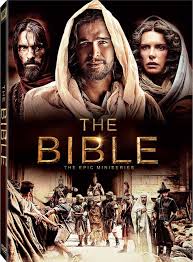
According to the Christian Post, The Bible and Liberace are going head to head.

In the category “Favorite TV Movie/Miniseries,” voters have placed these two at first and second place so far.

The Bible Miniseries?

The Bible Miniseries?

The Bible series has been a favorite among evangelical viewers.  Produced by “Touched by an Angel” star Roma Downey and her husband Mark Burnett, the project hoped to bring the Gospel message into the homes and hearts of millions.  As we’ve noted here on ILYBYGTH, the producers even hoped to bring The Bible into America’s public schools.

...or the story of this tempestuous love affair?

…or the story of this tempestuous love affair?

“Behind the Candelabra,” on the other hand, tells the love story of the flamboyant entertainer Liberace and his much younger lover Scott Thorson.

What do the people like better?  We’ll find out soon…


Who’s the Victim Here?

Is Craig James a bigot?  Or a victim of religious persecution?  Or both?

Can we liberals allow discrimination against bigots?  Or must we fight against discrimination in all its forms?

James has been in the news lately.  He was fired from his job as a Fox News sportscaster.  The reason?  In his run for the US Senate in 2012, James insisted that he would not support same-sex marriage.  Such marriages, James explained, were against his religion.

The Family Research Council, an organization of conservative religious activists, called the firing an example of religious persecution.  “What Fox Sports did,” the FRC warned,

is much worse than censorship. What Fox Sports is doing is demanding conformity on issues that aren’t even relevant to James’s job — then threatening his livelihood when he refuses. That’s not your garden variety viewpoint discrimination; it’s ideological terrorism. And it has to stop.

From the other side of the issue, the Texas Freedom Network defended the firing.  Intelligent people of goodwill can disagree, the TFN argued, if this is a case of religious discrimination.  But whatever we call it, the TFN blogged, it tells us something about the changing cultural climate.  “it’s worth considering,” the TFN pointed out,

that Fox Sports didn’t fire James because of his religious beliefs. They fired him because they thought his intolerant public statements about gay people would hurt their company.

I generally agree with the folks at the TFN.  However, this seems to me to be a very sketchy argument.  Would we defend a restaurant owner who refused service to ethnic minorities because he or she worried having them in the restaurant would hurt business?


Bullies, Schools, Homosexuality, and the Confederate Flag

Who is a school bully?  Can it be a teacher who disciplines students for wearing Confederate flags or for denouncing homosexuality?

That is the question conservative commentator Anthony Esolen asks today on The Public Discourse.

Esolen, Professor of English at Providence College, considers a recent case from Michigan.

In this compellingly tangled case of homosexuality, history, religion, and education, a teacher hoped to fight anti-homosexual attitudes among his students.  This teacher participated in a school event in which teachers and students wore t-shirts opposing anti-gay bullying.  The teacher showed his class a video about anti-gay bullying, then engaged in a discussion about it.  During the discussion, the teacher noticed that one student wore a Confederate-flag belt buckle.  The teacher ordered the student to remove the buckle.  When another student asked about the obvious contradiction between the student’s right to wear the buckle and the teacher’s right to wear the t-shirt, the discussion exploded.  The teacher eventually disciplined both students, one for the buckle, and one for insisting that his Catholic faith forced him to disapprove of homosexuality.

Esolen brings up these snarled issues in all their complexity.  Does a Catholic student have a right to disapprove of homosexuality?  Does a teacher have a duty to discipline dissenting students?  Can a student wear offensive belt buckles or t-shirts?  What ideas are too offensive to be protected in schools?

Also, importantly, Esolen considers whether an economics teacher should be engaged in these sorts of pedagogical discussions.  If teachers are, as Esolen argues, “a group of tutors hired by a group of parents,” shouldn’t those teachers respect parents’ beliefs more rigorously?

Religion? Or Discrimination?

What if I think my religion condemns homosexuality?

The US Constitution says the government must not interfere with my right freely to practice my religion.  Does that mean I have a right to discriminate against homosexuals?

Thanks to liberal watchdog Texas Freedom Network, we see a case from San Antonio that forces us to confront this dilemma.

According to the San Antonio Business Journal, the Texas-based Liberty Institute has complained about a proposed city ordinance in San Antonio.  The proposed ordinance would extend the city council’s non-discrimination rule to include sexual orientation and gender identity.

Conservative Christians have complained that this expanded rule would effectively prohibit them from the free practice of their religion.

Such issues often wend their way through education debates.  For instance, religious conservatives in America have warned against the “homosexual agenda” in public education.  In this CitizenLink video, for example, conservative Christian commentators explain the “sneaky” nature of pro-homosexual ideology in America’s schools.  Conservatives have repeatedly scoured their school libraries and classrooms for books that cram a “gay is okay” message down the throats of unsuspecting schoolkids.

Thinking conservatives have complained that sexual orientation and gender identity are not simply the newest civil-rights issue.  In cities with an anti-discrimination rule, would conservative opposition to homosexuality become illegal?  Would conservative Christians find themselves forced to choose between the free practice of their religion and their observation of the law?

The San Antonio City Council has found itself in the thick of this dilemma.  By proposing a ban on anti-gay discrimination, are they unintentionally proposing a ban on many conservative Christians?  Are they trampling conservative constitutional rights in an effort to protect the rights of homosexuals?


“I Hope You Rot in Hell:” Greetings from a Liberal Fundamentalist

Are there “fundamentalists” of every political and cultural persuasion?  That is, do some people cling to such extreme and unbending worldviews—from the political and cultural left as well as the right—that they lash out at any dissent?  People—religious or not—who cannot tolerate any deviation from the Truth As They Know It?

It seems we have an example of such a thing from the cornfields of Iowa today.

The Sioux City Journal reported recently on a simmering conflict between an evangelical pastor and a gay politician.

Pastor Cary Gordon of Cornerstone World Outreach complained that Human Rights Commissioner Scott Raasch had made hateful and threatening comments a few years back.  At issue, apparently, was The Reverend Gordon’s opposition to Iowa Supreme Court judges who had supported gay marriage.

A few years ago, according to the Sioux City Journal, their disagreement degraded into the following Facebook exchange:

In one comment, Raasch wrote: “You are haters and bigots and you will get what’s coming to you sooner or later. I hope you rot in hell.”

Gordon replied, “I hope you repent of your sins and accept Jesus as your Lord and Savior. I wouldn’t want you or anyone else to go to hell.”

Raasch wrote, “I know Christ and don’t need a snake oil salesman like you to tell me about him. I guess that’s the difference between us because I think there are many people that deserve to burn in hell … including you and your entire family.”

Ouch.

The Reverend Gordon called for Raasch’s removal from the Human Rights Commission.  Someone with such extreme views, Gordon argued, should not be in charge of making rulings on discrimination cases that involve religious issues, as well as issues of race, creed, gender, and sexual orientation.

Raasch has admitted that he made the comments, and apologized for any stress caused.

Is this an example of what we might call “liberal fundamentalism?”  A case where someone feels so morally assured of his own righteousness that he lashes out at dissenters in such an angry way?


Being Gay at a Catholic College

Is gay okay the Catholic way?

Religion writer Michael O’Loughlin recently surveyed the experiences of gay students at a variety of Catholic colleges.  The answer, maybe not surprisingly, is that different schools do things differently.

At Chicago’s DePaul University, O’Loughlin found, students can minor in LGBTQ Studies. Students and faculty are out and supportive.

Other schools, such as Washington DC’s Catholic University, have a more mixed record.  Students are gay, O’Loughlin reported, and that’s only sort of okay.

One constant, at Catholic universities as across American culture, is rapid change.

O’Loughlin returned after just a handful of years to his alma mater, St. Anselm College in Manchester, New Hampshire.  When he attended, gay students kept their sexual identity private. Now, the school itself has initiated programs to make all students, explicitly including homosexual students, feel welcomed, loved, and guided.

As some of the comments on O’Loughlin’s essay proved, not all Catholics are okay with this trend.  As “JP” noted,

Can one imagine a group of Catholic adulterers or thieves organizing at a Catholic college in order for their “voice to be heard”? Homosexual acts as well as larceny or adultery are still considered Mortal Sins by the RCC.

Catholic schools are not alone in their struggles with this issue.  As we noted a while back, Brandon Ambrosino shared his experiences with faith and sexuality at the conservative evangelical flagship school, Liberty University.  Just as Catholic colleges have had a range of responses to the issues of student homosexuality, so folks at conservative Protestant schools  have had surprisingly mixed reactions as well.


Being Gay at a Fundamentalist School

What would it be like to be gay in the intense world of fundamentalist higher education?

In a recent article in The Atlantic, Brandon Ambrosino shared his story of coming out at fundamentalist Liberty University.

Being gay is not okay in the world of conservative evangelical Protestantism, but Ambrosino’s story describes a faculty and administration that loved him as a person, first and foremost.  When Ambrosino told a favorite professor about his sexual identity, the professor replied this way:

“I love you,” she said. I stopped crying for a second and looked up at her. Here was this conservative, pro-life, pro-marriage woman who taught lectures like “The Biblical Basis for Studying Literature,” and here she was kneeling down on the floor next me, rubbing my back, and going against every stereotype I’d held about Bible-believing, right-leaning, gun-slinging Christians.

This professor was not an outlier.  Everyone from the Bible-thumping-est theologian to the Liberty therapist focused on their love for Brandon.  Not in the hate-the-sin-love-the-sinner way, either, but just in the love-the-person way.

Ambrosino concludes that fundamentalists don’t fit the “hate” stereotype.  There is hate all around, perhaps, but religious conservatives haven’t cornered the market.  As Ambrosino concludes,

I think the really vocal anti-gay Christians display this smidge [of hate], but I also think the really vocal anti-Christian gays display it as well. Not tolerating someone for his narrow-mindedness is perhaps the epitome of intolerance. I learned from my time at Liberty that this bigotry happens on both sides: not only were there some Christians who wanted to stone some gays, but there were even some gays who wanted to stone a few Christians. Just the other day, I saw a man driving a car with two bumper stickers. One was a rainbow. The other showed a picture of a lion, and contained the caption “The Romans had it right.” Just another open-minded gay man, I suppose.