Is Jerry Falwell an Idiot?

Is Jerry Falwell Jr. an idiot or a genius? Falwell, the president of Liberty University, has hit the jackpot with Liberty’s incredibly popular—and incredibly lucrative—online programs. Falwell has plowed that money into Liberty’s brick-and-mortar campus. Is Falwell a higher-ed visionary? Or does he simply not recognize the way things are really going in higher education?

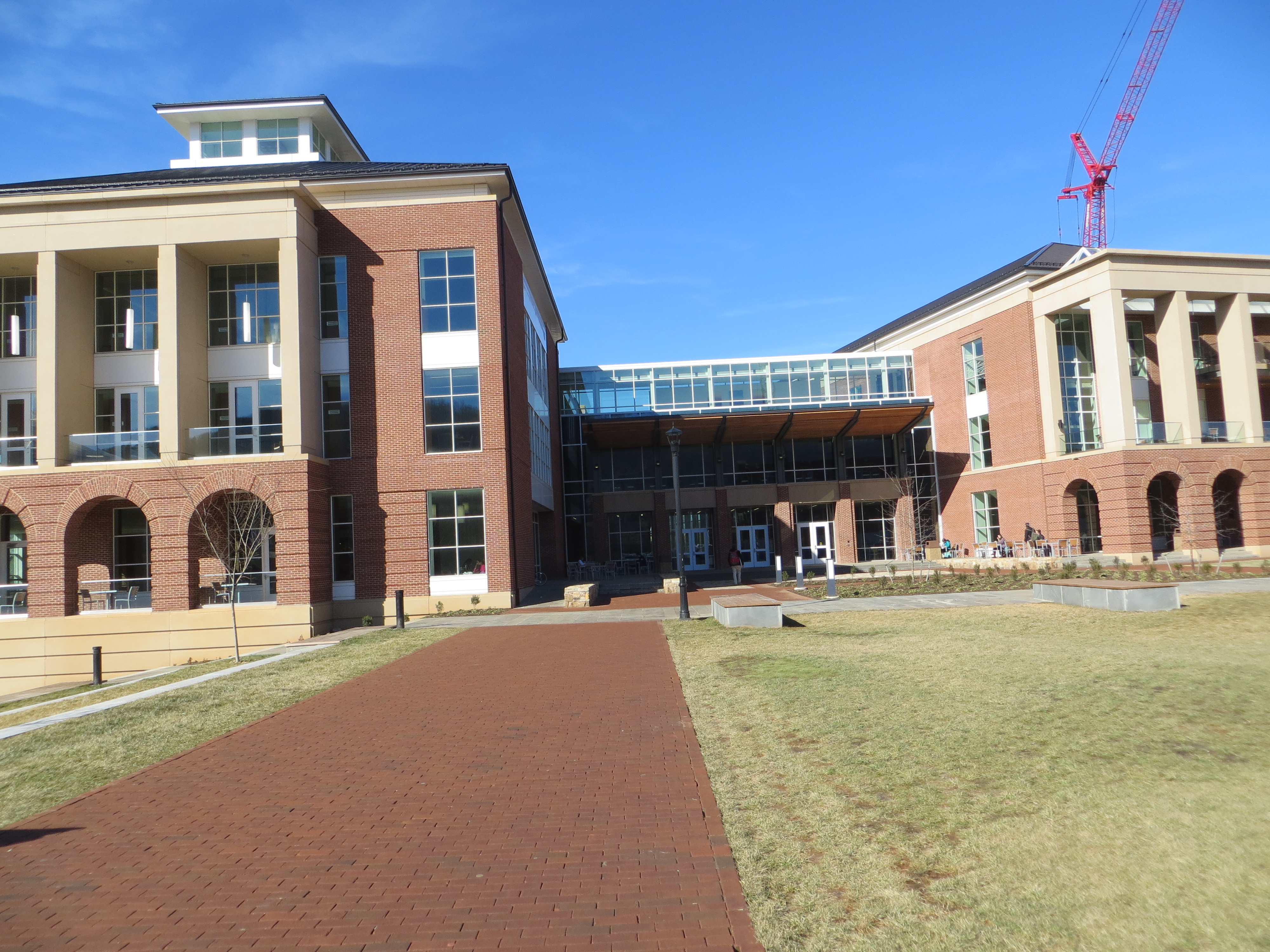
The money is hard to ignore. Between 2006 and 2012, Liberty’s net assets increased from $150 million to $860 million, thanks mainly to its booming online business. Instead of using those funds only to increase online education, Liberty has bankrolled an ambitious sports program and a recession-busting campus building program.

The new bajillion-dollar Jerry Falwell Library

The new bajillion-dollar Jerry Falwell Library

Most campuses are going the other direction. At traditional schools, including my beloved State University of New York, presidents and chancellors are scrambling to find ways to profit from online education.

Perhaps Liberty’s got something to prove. Founded only in 1971, it originally met in the basement of the Thomas Road Baptist Church. As I explore Liberty’s archives this week as part of the research for my next book, I’m finding reminiscences of those early years. One early ministry student remembered that he used to have revival meetings on the “old trash dump road” above the current campus. There was no campus back then, so these earnest “preacher boys,” this alum remembered, used to

Even the archives are nice.

Even the archives are nice.

pray, sing, and practice preaching for about an hour to an hour and a half. We would pray and preach in the Spirit! Walking, shouting, and praying up and down that road, calling out your name to the Father, tears streaming down our cheeks!

As do most fundamentalist schools, Liberty feels a constant need to prove that it is just as good, intellectually, as mainstream universities. As first president Pierre Guillermin put it in an early fundraising letter, any Christian college must maintain “performance standards of unquestionable academic excellence and admirable professional credibility.”

No more Trash Dump Road...

No more Trash Dump Road…

The campus building program may result from a deep need to prove that Liberty is a real university, not just a fundamentalist camp meeting. Or it may be something more strategic. College administrators these days are wracked with anxiety about the future of higher education. Will students in the future simply take classes from a menu of online providers? Will giants such as MIT and Harvard provide the world’s best content online? Can smaller schools continue to exist?

It seems President Falwell is betting big that people will continue to want a traditional campus, with traditional amenities such as sports programs and libraries.

I think he’s right. So far, the leaders in Massive Open Online Courses are not start-up companies in their garages, but established schools such as MIT and Harvard. People still have high expectations that their education—even their online classes—will come from a “real” university.

Spanked with the Bible Belt

Well, fry my biscuits;…things really are different down here. Historians have gone to great lengths to disprove the common misconception that fundamentalism is somehow only a southern thing, or only a rural thing. But there IS something profoundly different about Southern rural fundamentalism.

Go tell it on the mountain...

Go tell it on the mountain…

For those who are just joining us, I’m spending this year traveling to conservative evangelical colleges to research my next book, thanks to funding from the generous Spencer Foundation. Right now, I’m in scenic Lynchburg, Virginia, home of Liberty University. When I rolled into town, I saw something that blew my mind. No, it wasn’t the huge “LU” sign that had taken over a mountainside. I expected that.

Since the mid-1970s, academic historians have thrown out some old myths about American fundamentalism. Led by scholars such as George Marsden and Joel Carpenter, the new generation of histories no longer insist that fundamentalism is an outgrowth of hillbilly religion. Rather, fundamentalism has thrived in America’s biggest cities as well as in its rural hollers.

Consider my itinerary for this research year. To figure out what fundamentalism has meant across the twentieth century, I’ve traveled to schools such as Biola, Wheaton, and Gordon College. I plan to head to The King’s College and the Moody Bible Institute. My travels will take me to Los Angeles, Chicago, Boston, and New York City. Those are nobody’s ideas of rural backwaters. And yet they are the intellectual and spiritual headquarters of much of the fundamentalist movement.

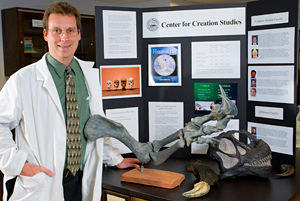
Creationism in the lobby...

Creationism in the lobby…

Fair enough. But there is something different about things down here in the South, something different outside of bigger cities. Not only did I drive along Jerry Falwell Parkway to get here, but the lobby of my boring corporate hotel held a big surprise. The books for sale included the standard stuff about horses, cats, and jokes for kids, but there were also a lot of prayer, psalm, and Bible books. Even more remarkable, the shelf included relatively radical creationist books such as Ray Comfort’s Scientific Facts in the Bible.

This is the kicker: Sure, fundamentalism can thrive in big cities. It can certainly thrive in the North. But down here in the South, outside of big cities, fundamentalism becomes the usual fare. It becomes the accepted norm, not just one way to be religious. Even a non-religious, totally vanilla environment such as my hotel lobby offers books that prove the scientific veracity of the Bible.

...and horses.

Satan, Demons…and horses.

My hunch is that our so-called Bible Belt refers to those parts of our great country in which conservative Protestantism is something people assume they all share. It refers to those places where your new neighbor will ask you when you move in if you’ve found your church yet. It refers to those places where people think the “real” America is much whiter and more born-again Christian than it really is.

That’s my impression, anyway. I was raised in Boston, in a non-religious household. I’m guessing people more intimately familiar with life in the “Bible Belt” will know more about this sort of thing.

Homeschooling: A Scheme to Take Over America

What do Sarah Palin, Gordon College, and Christian homeschoolers have in common? According to evangelical-turned-atheist Frank Schaeffer, they are all “still fighting a religious war against their own country.” I’m no homeschooler or Palin fan, but Schaeffer’s accusations just don’t hold up to historical scrutiny.

Schaeffer’s most recent broadside appeared in Salon. In his article, Schaeffer blasted a wide range of “far-right” institutions. When parents choose to pull their kids out of public schools to indoctrinate them at home, Schaeffer charged, it amounts to nothing less than “virtual civil war carried on by other means.” As Schaeffer put it,

the evangelical schools and home school movement were, by design, founded to undermine a secular and free vision of America and replace it by stealth with a form of theocracy.

According to Schaeffer, this nefarious plot spreads beyond the anti-democratic practice of homeschooling. The “far-right,” Schaeffer insists, turns women into submissive breeding mares. The Right has opened its own colleges and universities as part of its plan to take over civil society. Jerry Falwell himself, Schaeffer relates, explained his reasons for opening Liberty Law School. “Frank,” Falwell confided, “we’re going to train a new generation of judges to change America!”

Is the sky really falling?

Is the sky really falling?

Inspired by the apocalyptic rhetoric of wild-eyed prophets such as Rousas Rushdoony, and marshalled by irresponsible self-aggrandizers such as Sarah Palin, the Christian Right will not stop until it has taken over. Conservative religious folks, Schaeffer insists, want nothing less than to impose a rigid theocracy on the United States. They will not be content until they have dictated the morals and mores of their neighbors as well as those of their children.

Are Schaeffer’s charges fair?

Certainly, he has the right to boast of his insider connections. His father, the late Francis Schaeffer, really did inspire a fair bit of the social philosophy of today’s conservative evangelicals. Schaeffer Senior articulated in the 1970s and 1980s the notion that US culture had been infiltrated by a sneaky “secular humanist” worldview. In order to properly live as Christians, then, Schaeffer Senior advocated a wide-ranging rejection of modern social mores. Perhaps most important for day-to-day culture-war politics, Schaeffer Senior along with C. Everett Koop denounced abortion rights as equivalent to murder.

At times, Frank Schaeffer seems blinded by his own imagined influence. In this Salon article, for example, he shamelessly name-drops his connections to writers such as Rousas Rushdoony and Mary Pride. He claims to have been “instrumental” in bringing together the New Christian Right in the 1970s and 1980s.

Such unpleasantness aside, however, do Schaeffer’s charges stick? Are Christian homeschooling and evangelical higher education part of a long-ranging plot to undermine American traditions of pluralism and tolerance?

Short answer: No.

Before I offer a few examples of the ways Schaeffer’s breathless expose doesn’t match reality, let me explain my background for those who are new to ILYBYGTH. I am no apologist for fundamentalist Christianity. I’m no fundamentalist, not even a former fundamentalist. When it comes down to it, I will fight hard against fundamentalist-friendly school rules about prayer or sex ed. I don’t homeschool my kid. I don’t attend or teach at an evangelical college. I’m only a mild-mannered historian, with the sole goal of deflating hysterical culture-war accusations.

With that in mind, let’s take a closer look at some of Schaeffer’s claims.

First, is Christian homeschooling really as sinister as he claims? Schaeffer suggests that homeschoolers have been inspired by the work of leaders such as Mary Pride and Nancy Leigh DeMoss. The point of homeschooling, Schaeffer charges, is to train girls and women to submit to fathers and husbands, to glory in their second-class role as child-bearers and house-keepers.

There are indeed homeschoolers who adopt these notions. But anyone who follows the work of historian Milton Gaither can tell you that the world of homeschooling—even the more limited world of conservative evangelical homeschooling—is a kaleidoscope of missions, strategies, and techniques. I don’t doubt that some Christian parents hope to impose a rigid patriarchal vision on their children. What falls apart, though, when looked at carefully, is the notion that these folks are somehow the “real” reason behind Christian homeschooling. What falls apart are accusations that Christian homeschoolers are some sort of monolithic force scheming to take over the rest of our society. In reality, Christian homeschoolers are a remarkably fractious bunch.

Second, what about Rousas Rushdoony? As Schaeffer correctly points out, Rushdoony was the intellectual force behind “Reconstructionist” theology. In short, Rushdoony believed that Christians should impose true Christian morality on all of society, including Old-Testament-inspired laws about sex and conduct. In reality, though, the direct influence of Rushdoony’s social ideas has been rather limited. As scholars such as Michael J. McVicar have argued, Rushdoony has had far more influence on liberal pundits than on the conservative rank-and-file.

Next, are evangelical colleges really training a generation of conservative culture warriors? As I conduct the research for my next book, I’m struck by the ways evangelical colleges have been battlegrounds more than training centers. In other words, evangelical colleges and universities have had a hard time figuring out what they are doing. They are hardly in the business of cranking out thousands of mindless drones to push right-wing culture-war agendas.

For one thing, evangelical colleges have usually insisted on maintaining intellectual respectability in the eyes of non-evangelical scholars. Even such anti-accreditation schools as Bob Jones University have used outside measures such as the Graduate Record Examination to prove their academic bona fides. As historian Michael S. Hamilton noted in his brilliant study of Wheaton College, this desire prompted Wheaton in the 1930s to invite outside evaluators such as John Dale Russell of the University of Chicago to suggest changes at the “Fundamentalist Harvard.” This need for intellectual legitimacy in the eyes of mainstream intellectuals has continually pulled fundamentalist schools closer to the mainstream. Such colleges—even staunchly “unusual” ones like Bob Jones—have been much more similar to mainstream colleges than folks like Schaeffer admit.

Schaeffer uses Gordon College in Massachusetts as an example of the ways Christian colleges train new generations of young people to see the US government as evil. But as I found in my recent trip to the Gordon College archives, the community at Gordon has always been divided about the purposes of higher education. Back in the 1960s, Gordon College students held protests, sit-ins, and “sleep-ins” to change Gordon’s policies and attitudes. As one student put it during a 1968 protest, “we want to be treated like real college students.” How did the evangelical administration respond? By commending the students’ commitment to “activism over apathy.” To my ears, that does not sound like a brutal and all-encompassing mind-control approach.

The world of conservative evangelicalism, of “fundamentalism,” is one of continuous divisive tension. There is no fundamentalist conspiracy of the sort Schaeffer describes. Or, to be more specific, there are such conspiracies, but there are so many of them, and they disagree with one another so ferociously, that the threat Schaeffer warns us about is more fiction than fact.

Does Christian homeschooling really serve as a first step in a long-ranging scheme to take over America? Only in the fevered imaginings of former fundamentalists such as Frank Schaeffer.

MOOCing Jesus

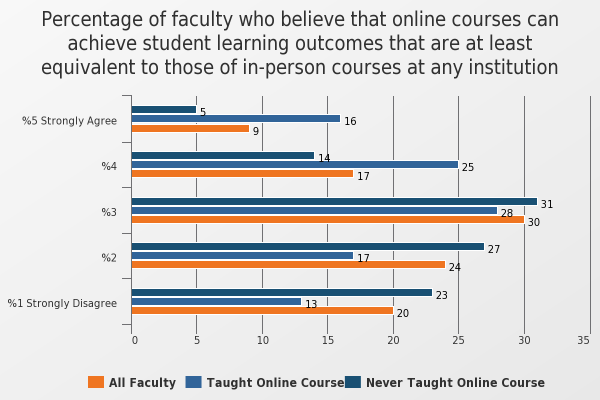
Does online education work? A new survey of college faculty by Gallup for Inside Higher Education offers an unstartling new answer: It depends. Here at ILYBYGTH, we have a different question: Does online education work for conservative religious colleges?

After all, as I’m exploring in my new book, conservative religious colleges have always had a different goal from secular schools. Instead of just hoping to prepare students for careers and intelligent life, conservative schools have also intended to bolster the faith of their students. They have worried that any change might lead them into a slow slide into secularism. As a corollary, most conservative schools have maintained stricter lifestyle rules over students than secular colleges have. Conservative schools have insisted that classes be led faithfully, not just competently. But can they do this in online classes?

The survey of faculty for Inside Higher Ed includes some interesting points. [You can click to get the entire report, but you have to register.] In brief, faculty remain unconvinced that online education can deliver equal results to old-fashioned in-person classes. Online classes might do a good job—in some cases—at delivering content. But most faculty agree: there is something important lost when face-to-face interaction isn’t a leading part of university classes.

IHE CHART

Source: Carl Straumsheim, “Online Ed Skepticism and Self-Sufficiency: Survey of Faculty Views on Technology,” Inside Higher Education, October 29, 2014.

The survey specifically excluded some of the schools we’re interested in, what it calls “Bible colleges and seminaries.” And none of the questions included anything about student faith.

But no one interested in online higher education these days can ignore the fundamentalist elephant in the room. Liberty University, a school founded by Jerry Falwell in 1971, now claims almost 100,000 online students. In addition to standard online coursework, Liberty offers online spiritual help, too. Students can join online prayer groups and Bible blogs.

But this menu of religious fare does not seem to match the traditional goals of conservative religious colleges. At most schools, the faith of students has been the primary concern, not merely an additional click on a webpage. And most college administrators have been keenly worried about sliding into heterodoxy and secularism. In his brilliant 1994 dissertation about Wheaton College, historian Michael Hamilton explained this sentiment like this:

The paradigm that has dominated Wheaton through the [twentieth] century holds that colleges, more than any other type of institution, are highly susceptible to change, and that change can only move in one direction—from orthodoxy toward apostasy. . . . The very process of change, no matter how slow and benign it may seem at first, will always move the college in a secular direction, inevitably gathering momentum and becoming unstoppable, ending only when secularization is complete.

This mindset, I believe, is common among conservative evangelical schools. From Wheaton, to Biola, to Gordon, to more conservative schools such as Bob Jones and Liberty…all have worried that change will equal declension. All have been concerned, first and foremost, that novelty will lead faculty and students to abandon their faiths.

So here’s the question we wished Inside Higher Ed had asked professors at conservative schools: How can online education remain orthodox? How can the faith of students be preserved if student/teacher interaction is weakened?

And perhaps this is the toughest question for the folks at Liberty University: Has their wildly successful pursuit of online education changed their goal? Has Liberty abandoned its religious mission? Or, rather, could this massive online presence be compared to the televangelism of an earlier generation? Could the thousands of online students be seen as an enormous “mission field” for Liberty’s evangelical message?

“The Talk:” Evolution Edition

What do young people need to know about evolution?  A recent commentary from University of Washington professor David Barash has sparked a new round of debate.  For us at ILYBYGTH, it sparks a different question: When and how should ‘resistant’ students learn about evolution?

We all know that some religious students get uncomfortable when the subject of evolution comes up.  “Until recently,” Barash wrote, “I had pretty much ignored such discomfort, assuming that it was their problem, not mine.”  They should be uncomfortable, Barash concluded.  There were foundational ideas in many religious traditions that science simply made untenable.

For example, students who really understood evolutionary science would have a hard time maintaining a belief in a fundamentally good and all-powerful deity.  As Barash put it,

The more we know of evolution, the more unavoidable is the conclusion that living things, including human beings, are produced by a natural, totally amoral process, with no indication of a benevolent, controlling creator.

Also, students who hope to maintain a belief in the special nature of humanity will be in for a rude awakening.  Humans, evolutionary scientists have demonstrated conclusively, are “perfectly good animals,” but not anything specially created.

Finally, the old watchmaker argument just doesn’t hold water.  Though life might seem irreducibly complex, modern evolutionary science has demonstrated that, as Barash put it,

an entirely natural and undirected process, namely random variation plus natural selection, contains all that is needed to generate extraordinary levels of non-randomness.

Not surprisingly, creationists have reacted with outrage.  Stephen Meyer of the intelligent-design bastion Discovery Institute blasted Barash as “willfully ignorant” of recent scientific developments.  Other creationists have called Barash “intellectually dishonest.”  Even Catholic writers berated Barash.  As one Franciscan blogger put it, “His laboratory pontification exceeds his areas of competence.”

Such reactions, it seems to this writer, accomplish Barash’s goals perfectly.  With his insouciant attitude toward religious perspectives and his history of anti-religious polemics, it’s hard not to conclude that Barash and the editors at the New York Times hoped for exactly this sort of outraged response.

Here at ILYBYGTH, we want to ask different questions.  For instance, we want to know if students from anti-evolution homes can be taught about evolution without simply rejecting it.  We want to know if our deep culture-war trenches over evolution education can be bridged by a different approach.

As we’ve learned from scholars such as Dan Kahan, what people say they know about evolution tells us about their identity, not their knowledge base.  As Kahan puts it, it tells us about who they are, not what they know.  There is not a significant difference between evolution-supporters and evolution-deniers when it comes to knowledge about evolution.  That is, people who say they believe in evolution or agree with evolutionary theory don’t actually know more about it than people who say they don’t.

And, as ethnologist and science-education guru David Long has demonstrated, “evolution” is tied to a bundle of non-scientific meanings for many resistant students.  Knowledge of evolutionary theory was not a problem for the creationist students Long studied.  Instead, acceptance of the idea of evolution presented identity challenges to these students.

Perhaps more shocking to culture warriors like Barash, creationists WANT their children to know about evolutionary theory.  But they want their children to be protected from attitudes like his; creationists want their children to learn about evolution from people who understand and respect their religious qualms.

How do we know this?  Because many conservative religious schools INSIST that all students take a course on evolutionary science.  Liberty University, for example, has made an evolution/creation course a requirement for graduation.  And here at ILYBYGTH, I have been educated by creationist parents who earnestly hope to teach their children about evolution.

Learning about evolution, Liberty style

Learning about evolution, Liberty style

In an upcoming book, philosopher Harvey Siegel and I argue that the way forward in evolution education is to promote an “understanding-not-belief” approach.  Public schools must teach students the best available science.  And right now, that includes the modern evolutionary synthesis.  But public schools must also refrain from imposing religious (or anti-religious) ideas on students.

It’s a tall order, and many smart commentators have pointed out the difficulties with our prescription.  As David Long has suggested, our book might just be a “red herring” in these discussions.

But imagine how very different our version of “the talk” would be from David Barash’s.  Like Barash, we want teachers to tell all students that evolution is the best current science.  It is.  But that doesn’t mean that people can’t and don’t have good reasons for speaking out against it.  Students should be allowed, no, encouraged, to separate their personal identities from their knowledge about evolution.  Knowing evolution makes them educated, not evil.

Perhaps most important, a teacher’s attitude can make all the difference.  If a teacher hopes to make students “shift uncomfortably in their seats,” then Barash’s approach will work.  But a good teacher recognizes the world of difference between a healthy, growthful intellectual discomfort and an antagonistic, coercive one.  Barash hopes to jolt creationist students out of their intellectual blinkers.  But his approach will only weld those blinkers on more securely.

A better “talk” will be one that helps students understand that evolution is an idea, not an identity.

Dynasties and Christian Colleges

Why do conservative Christian colleges pass from father to son?  That’s the question asked recently by Mark Oppenheimer in the New York Times.  He looks at the dynastic succession of school presidents at schools such as Liberty and Bob Jones.  But does Oppenheimer give short shrift to the history of the question?

It’s an intriguing line of inquiry.  Leading schools such as Liberty University, Oral Roberts, and Bob Jones University all have histories of passing leadership from father to son.  Sometimes this has worked well, Oppenheimer points out, but sometimes it has not.

Why have conservative schools constructed these sorts of dynasties?  Oppenheimer explains it as a sort of sectarian necessity.  Colleges such as Liberty and BJU started as outgrowths of the founders’ evangelistic efforts.  Those efforts included the creation of a sub-cultural identity.  Only a limited circle of true believers could be trusted to carry on the legacy.  As a result, Oppenheimer argues,

It would thus be a small band of insiders, versed in the particulars of the founder’s message, who would even be eligible to carry it into the future. That may be why, for example, the presidential search committee at Bob Jones University, while not seeking another Jones descendant, has stated “a preference for a B.J.U. graduate.”

Oppenheimer wisely consulted scholars such as Matthew Sutton and D. Michael Lindsay.  Lindsay warned not to read too much into this dynastic tradition at evangelical schools.  After all, the cases Oppenheimer cites make up only a handful, among hundreds of colleges.  And they are only at the “newer colleges.”

I have the greatest respect for President Lindsay as a scholar, school leader, and all-around nice guy.  [Full disclosure: Lindsay and I served together as postdoctoral fellows with the National Academy of Education.]  But in this case, Lindsay whitewashes the connection between legacy and Christian colleges.  And unfortunately, Oppenheimer lacks either the word count or the historical knowledge to push Lindsay on the issue.  It’s a shame.

After all, in contrast to Lindsay’s assertion, dynasties in evangelical colleges go way back.  And there seems to be some tentative connections we could suggest between the drive for orthodoxy and the family connections.  For example, the flagship evangelical school, Wheaton College, passed from father to son in 1882.  And though this might make today’s evangelicals uncomfortable, Charles Blanchard, son of founder Jonathan Blanchard, originally took the school in an explicitly fundamentalist direction.  To be fair, as I argue in my 1920s book, the meanings of “fundamentalism” as Blanchard the Younger understood them in the 1920s were significantly different than they became after Blanchard’s death.

There can be no mistake, however, in Charles Blanchard’s intention.  He wanted to align Wheaton College with fundamentalism, with orthodoxy, with the fight against modernism.

The question we still need to ask, though, is how much this drive for orthodoxy resulted from the dynastic structure of the college.  Did Charles Blanchard feel pressure to maintain his father’s orthodox legacy?  Did Bob Jones Jr.?  Jerry Falwell Jr.?

Oppenheimer asks a good question in this article.  But we wish he had the space and the background to push it a little further.

What Mormons Want Evangelicals to Learn in College

College is about fulfilling God’s mission.

That’s what Glenn Beck told the crowd at Liberty University the other day.  As Jonathan Merritt notes in Religious News Service, it is remarkable historically that Beck, a member of the Church of Jesus Christ of Latter-Day Saints—the Mormons—was invited to preach to the evangelical community of Liberty University.  Traditionally, as we saw in the presidential candidacy of LDS member Mitt Romney, evangelicals have looked askance at Mormonism.

As Merritt reports, Beck did not hide his LDS beliefs.  Rather, he flouted them, displaying Mormon relics such as Joseph Smith’s watch.

But that was not the only remarkable part of Beck’s talk.  Beck offered Liberty students a vision of the purpose of higher education.  You may have come here to help you get a job, Beck told the college crowd, but that’s not really what your education is for.  “You are at this university for a reason,” Beck reported.  What is God’s reason for higher education?  God did not say, Beck insisted, “I’m gonna send you down because you need to be . . . an accountant.”  [26:56]

The purpose of a university education, Beck told the audience, was not merely professional.  “You came to this university thinking, maybe,

I have to have an education to get a job.  You need this education from Liberty University because of your only true job.  The purpose that you were sent here for.  To magnify Him.  To bring Him to others.  To do what it is that you’re supposed to do.  To preserve liberty, the liberty of all mankind.

According to Beck, that sort of education is the true aim of education, whether students are LDS, Baptists, Mennonites, or whatever.  Life is a mission from God.  Higher education is simply further training for that mission.

Of course, Liberty University itself has a more ecumenical attitude toward the true purpose of education.  On Liberty’s website this morning, for instance, the casual reader is quickly reassured that Liberty certainly wants to train “Champions for Christ.”  But another of the four circulating mottos declares that Liberty “helps students and alumni find the right job or internship.”

Glenn Beck may be confident about the real purpose of Christian higher education.  But evangelical college students seem to want their college to walk both sides of the line.


Cruz at Liberty: Freedom under Attack

Senator Ted Cruz told the commencement crowd at Liberty University that they were in danger. Unless they remained willing to sacrifice for their faith, unless the Liberty community remained willing to get active in politics, the religious liberties of the United States could be crushed under the heel of a metastasizing federal government.  Unlike some typical graduation speakers, he hoped the career path of his audience would include some time in prison.

In some ways, Cruz’s commencement address sounded very similar to such addresses at colleges all across the nation and all across the political and religious spectrum. In spite of the fact that Senator Cruz has earned a reputation of one of the staunchest and most outspoken religious conservatives in national office, his speech often seemed mere boilerplate graduation fare: he told the crowd they were all inspirational; he told a few mildly humorous anecdotes; he allowed himself to notice how very famous he was; and he exhorted the crowd to get on out there and change the world.

But in the context of Liberty University, founded in 1970 by fundamentalist leader Jerry Falwell, Cruz also included more ideologically charged material. He reviewed the conservative vision of the nature of the United States. Throughout United States history, Cruz insisted, we see nothing more starkly evident than the fact that “Faith and freedom are intertwined.”

The United States had weathered storms, Cruz said, but he warned ominously, “religious liberty . . . has never been more imperiled than it is right now.”

Cases such as the Hobby Lobby suit or that of the Little Sisters of the Poor, Cruz told the Liberty audience, demonstrate the dangers to religious freedom. These cases are not about contraception, Cruz warned. If religious people can be forced to go against their beliefs to satisfy the demands of big government, Cruz warned, then the generations of sacrifice by Godly Americans will have been for naught.

The folks at Liberty had a chance to change things, Cruz concluded. If they were brave enough to remember that they were “called to action as believers,” Liberty grads could “change the world.” But they had to be willing to suffer for it, to sacrifice for it. Like The Reverend Dr. Martin Luther King Jr., Cruz told his Liberty audience, Christians need to be willing to go to jail to promote their beliefs.

“How many of us,” Cruz asked, “have been to prison for Christ?”


Christian School: Be a Girl

Does an eight-year-old girl have the right to like traditionally “boy” things such as baseballs and short haircuts? Or, more precisely, is she permitted to cause confusion about her gender identity among her fellow students? Not if she wants to attend Timberlake Christian School in Virginia.

Does this story represent an outrageous outlier along the fringes of Christian education, or is this typical of the strictly gendered worldview of conservative evangelical Protestantism? Here at ILYBYGTH, we try not to rush to assume the worst about conservative schooling. In this case, however, it seems the school really did push Sunnie to be more of a girl.  And prominent evangelical intellectuals are willing to defend this decision as central to the cultural politics of conservative evangelical Protestantism.

According to a story by James Gherardi at WSET TV in Lynchburg, Virginia, eight-year-old Sunnie Kahle likes to have short hair. She likes to dress in jeans and t-shirts. She likes to play outside. For all these reasons, school administrators at Timberlake Christian School worried she was not acting enough like a girl. To be more specific, they worried about student confusion. Apparently, a group of boys had attempted to pull Sunnie into a boys’ bathroom.

It seems this is not a case of a student who chooses to identify as a different gender than the one she has been assigned. Sunnie agrees that she is a girl. She just likes to have short hair and play outside in the mud. Her fellow students think she acts too much like a boy and insisted she use the boys’ bathroom instead of the girls’ room.

School administrators worried that Sunnie’s dress and behavior did not match the school’s gender standards. As principal Becky Bowman told Sunnie’s guardians (her great-grandparents) in a letter,

we believe that unless Sunnie as well as her family clearly understand that God has made her female and her dress and behavior need to follow suit with her God ordained identity, that TCS is not the best place for her future education.

For their part, Sunnie’s great-grandparents insist they will not accommodate the school’s demands. Sunnie is just fine, they insist. They pulled her out of TCS and enrolled her in the local public school.

For those of us outsiders trying to understand conservatism in education, we have some questions we need to ask: Does the attitude of TCS represent the thinking of many other conservative evangelical Protestants? Would other Christian schools have acted similarly? Or was this an outrageous exception, a story that garnered international attention precisely because it was so outlandish?

As we’ve noted in the past, conservative Christians have long worried about loosening gender norms in schools. School bathrooms, specifically, have been a hot-point in these school-gender deliberations. Can students who were identified as one gender at birth, but who choose to identify as another, use bathrooms of their chosen gender? That is, can a student who was called a “boy” at birth but who calls herself a “girl” use the girl’s room? This has been a concern far beyond the reaches of Timberlake Christian School.

And significantly, Mat Staver of Liberty University School of Law has waded into this controversy. Staver has announced that Liberty will represent the nearby Christian school. This issue, Staver announced, “is far beyond a simple ‘hairstyle and tomboy issue’ as inaccurately portrayed.” The support and involvement of Staver and Liberty University makes it appear as if this issue represents something widespread among conservative evangelical Protestant educators.

For their part, the school clarified its position. This was never about hairstyles or clothing, they insist. Nor was Sunnie every kicked out of the school. Rather, this was in line with the school’s duty to create and maintain a Christian environment. As the school explained in a public statement to the Roanoke Times,

Parents and guardians send their children to the School because of our Christian beliefs and standards. We have a duty to create an environment that is supportive of these Christian values. We cannot have conflicting messages or standards because such conflict will confuse our students and frustrate the parents and guardians who have entrusted the education of their children to us.

When elementary children and their parents or guardians express concerns regarding use of the restroom and other matters arising from the sensitive issues here, the School has a duty to address those concerns and to ensure that all interests are heard and protected in accordance with the Christian mission of the School.

At least according to these sentiments, this episode was more than just an over-hyped miscommunication. The school really did insist that Sunnie make her gender identity clearer to other students. And school administrators really did envision this as part of the central mission of the school.

But note also that the school was not the gender-monolith we might think. According to Sunnie’s great-grandmother Doris Thompson, Sunnie’s kindergarten teacher worried about Sunnie’s gender identity. But Sunnie’s first-grade teacher did not. Then again this year in second grade, the issue cropped up once more. It seems the teachers at TCS have different attitudes themselves about the centrality of gender identity to proper Christian education.

So what’s the connection between gender identity and conservative Christian schooling?   It seems the attitudes of Timberlake Christian School administrators represent widespread feelings among conservatives. Girls must be clearly girls. Boys must be clearly boys. This is not just a question of haircuts and blue jeans. This is a more profound question of public behavior and gender expectations.  At TCS, traditions of gender behavior and identification have become a central part of non-negotiable theological principles.


Violence at Liberty University

It has become an all-too-familiar report from college campuses.  Virginia Tech, Northern Illinois, Santa Monica College…the list gets depressingly long.

Most recently, the conservative evangelical world has been shocked by news of a student shot dead near the campus of Liberty University.  One Liberty junior told the Christian Post, “This is the last place I would ever imagine something like this would happen.”

The incident seems to have resulted from a physical confrontation between a sledgehammer-wielding student and a gun-wielding police officer, according to a report in the Washington Post.  This does not seem to fit the profile of a gun-wielding young person taking out as many fellow students as possible before turning the gun on himself.

Nevertheless, the fact that it happened at conservative bastion Liberty University has raised some eyebrows.  Some critics assumed at first that this violence must have resulted from Liberty’s ballyhooed decision to allow students to carry concealed firearms.  As President Jerry Falwell Jr. said at the time that policy was implemented, “I think it’ll continue to create a higher level of security on campus than what was found at Virginia Tech.”  Liberty also recently famously courted a student who had gotten into trouble in high school for packing heat.

It seemed at first that Liberty’s gun chickens had come home to roost.  But to be fair, the recent student death at Liberty did not result from gun-packing students.  Nevertheless, many in the conservative evangelical community hold Liberty to a higher standard.  Not only should students eschew mass murder as has happened on less religious campuses, but the campus of Liberty should be safer in every way.

Liberty, after all, was founded to be different than the sorts of secular, pluralistic colleges that have seen the worst campus shootings.

Perhaps as Liberty moves closer to mainstream pluralist colleges in terms of sporting victories (see here, too) and student rules, it will move closer to mainstream colleges in the depressing statistic of student shootings, too.