Don McLeroy’s Long Game

What do Phyllis Schlafly, Moses, and country/western music have in common? They all get happy shout-outs in new history textbooks in Texas.  Or at least, that’s what conservative education leaders wanted.  As Politico reported yesterday, new history textbooks in Texas are causing a stir.  But this time, it is liberal activists, not conservative ones, who are denouncing the textbooks as biased and ideological.
What Hath McLeroy Wrought?

What Hath McLeroy Wrought?

The new textbooks were written to satisfy new standards approved years ago by the Texas State Board of Education.  Back then, conservatives on the board, led by the genial Don McLeroy and the obstreperous Cynthia Dunbar, pushed through new standards that warmed the hearts of conservative activists.

No one who watched Scott Thurman’s great documentary about these Revisionaries can forget the moments when the SBOE debated including more country-western music and less hip hop.  More positive statements about Reagan and the National Rifle Association.  More happy talk about America’s Christian past and less insistence on the horrors of racial segregation.

The Revisionaries

The Revisionaries

As Don McLeroy said at the time, “America is a special place and we need to be sure we communicate that to our children. . . . The foundational principles of our country are very biblical…. That needs to come out in the textbooks.”

Now those changes in the Texas standards have shown up in new social-studies textbooks.  As Stephanie Simons reports in Politico, liberals have complained that the new texts are woefully biased.  In some spots, the books apparently knock Affirmative Action.  They pooh-pooh the benefits of taxes.  They imply that racial segregation was really not so bad.

For those who know the history of America’s educational culture wars, this seems like a drastic turnabout.  Throughout the twentieth century, conservative school activists complained that they had been locked out of educational influence by a scheming leftist elite.  Textbooks and standards, conservatives complained, had been taken over by pinheaded socialist intellectuals.

In one of the most dramatic school controversies of the twentieth century, for instance, conservative leaders lamented the sordid roots of new textbooks.  That battle took place in Kanawha County, West Virginia, across the tumultuous school year 1974-1975.  Conservatives were disgusted by the sex and violence embedded in new literature textbooks.  But some of them weren’t surprised.

Conservative leader Elmer Fike told readers that the textbooks were bound to be rotten.  In Fike’s opinion, conservatives didn’t even need to read the books.  As he explained,

You don’t have to read the textbooks.  If you’ve read anything that the radicals have been putting out in the last few years, that was what was in the textbooks.

As the Kanawha County battle ground on, California’s conservative celebrity schoolman Max Rafferty came to town.  Rafferty, too, told a crowd of West Virginians that they shouldn’t put any faith in textbook publishers.  Those publishers, Rafferty explained, only wanted to make a buck.  As he put it,

They have no particular desire to reform anybody, do anybody any good or find a pathway to heaven.

These days—in Texas at least—the shoe is on the other foot.  The conservative standards that the state adopted in 2010 have pushed market-conscious textbook publishers to come up with books that meet them.  And at least some conservatives are delighted with the success of their long game.  As conservative school board member David Bradley told journalist Stephanie Simon, liberals who complain about biased textbooks can lump it.  “They need to put on their big-girl panties,” Bradley crowed, “and go run for office.”



Just the Facts, Ma’am

What should good history teaching look like?  As we’ve noted here at ILYBYGTH, conservative critics have warned that the new Advanced Placement US History framework pushes a “consistently negative view of the nation’s past.”  Now, two big historical associations have defended the guidelines.  But those associations are downplaying a central reason why so many conservative critics object to the APUSH framework.

Anyone with ears to hear can’t miss the conservative concern about the tenor of the new APUSH framework.  From the Republican National Convention to the blogosphere to the stuffed-shirt crowd, conservative pundits have teed off on the new guidelines for the advanced history classes.

Time and again, conservative activists such as Larry Krieger have warned that the new guidelines leave out key documents such as the Mayflower Compact and teach children that America’s history is the story of white exploitation, greed, and genocide.

The National Council for History Education and the American Historical Association have published letters in defense of the APUSH guidelines.  Mainly, these history groups insist that the new framework is not biased.  As the AHA puts it,

The AHA objects to mischaracterizations of the framework as anti-American, purposefully incomplete, radical, and/or partisan.

The 2012 framework reflects the increased focus among history educators in recent years on teaching students to think historically, rather than emphasizing the memorization of facts, names, and dates.  This emphasis on skills, on habits of mind, helps our students acquire the ability to understand and learn from key events, social changes, and documents, including those which provide the foundations of this nation and its subsequent evolution.  The authors of the framework took seriously the obligation of our schools to create actively thinking and engaged citizens, which included understanding the importance of context, evidence, and chronology to an appreciation of the past.

But there is a minor theme in these defenses.  In the snippet above, the AHA signatories mention that good history education goes beyond the “memorization of facts.”  Similarly, the NCHE insists, “The point of education is not simply to acquire a specific body of information.”

But for many conservative activists and their supporters, the definition of education is precisely the acquisition of knowledge.  And that definition has proven enormously politically powerful over the years.  Please don’t get me wrong—I’m an ardent supporter and sometime member of both the NCHE and the AHA.  But these letters downplay the culture-wars significance of what Paolo Freire called the “banking” model of education.

Not that conservative critics aren’t concerned with the partisan tone of the new guidelines.  That is certainly a key motivating factor for many, I’m sure.  But behind and beyond those worries lies a deeper conservative concern with the definition of education itself.  Not all, certainly, but many conservatives want education in general to remain the transmission of a set of knowledge from teacher to student.

This notion of proper education is so deep and so profound that it often goes unarticulated.  Conservatives—and many allies who wouldn’t call themselves conservative—simply assume that education consists of acquiring knowledge, of memorizing facts.  And this assumption lurks behind many of the big education reforms of our century.  The test-heavy aspects of the No Child Left Behind Act and the new Common Core standards rely on a notion of good education as the transmission of information.  If a student has really learned something, the thinking goes, a test can find out.

For over a century, progressive educators have railed against this powerful assumption about the nature of education.  But for just as long, conservative activists have worked hard to keep this idea of education at the center of public schooling.  As I argue in my upcoming book, conservatives have been able to rally support for this “banking” vision of proper education in every generation.

In the 1930s, for instance, one leader of the Daughters of the American Revolution defined education precisely as a body of ideas that “shall be transmitted by us to our children.”

And in his popular 1949 book And Madly Teach, pundit Mortimer Smith insisted that true education consisted precisely of transmitting the children “the whole heritage of man’s progress through history.”

Similarly, in 1950, an angry letter-writer in the Pasadena Independent insisted on the transmission model as the only proper method of education.  As this writer put it,

Children have the right to learn by being taught all and more than their parents and grandparents learned—one step ahead instead of backward, through each generation.

Perhaps the most articulate advocate for this notion of traditional, transmissive education was California State Superintendent of Public Education Max Rafferty.  In his official jobs and his syndicated newspaper column, Rafferty insisted that the only worthwhile definition of education was the transmission of knowledge from adult to child.  Two fundamental principles of “common sense” in education, Rafferty argued in 1964, were the following:

  • Common sense told us that the schools are built and equipped and staffed largely to pass on from generation to generation the cultural heritage of the race.

  • Common sense took for granted that children could memorize certain meaningful and important things in early life and remember them better in later years than they could things that they had not memorized.

We could list a thousand more examples.  This tradition among conservative activists has remained so powerful that it often goes without saying.  And it lurks behind conservative agitation against each new generation of progressive educational reform.

So when groups such as the AHA and the NCHE defend the new APUSH guidelines, they should spend more time explaining and defending their notion that good education relies on more than just the memorization of facts.  For many parents and teachers, the transmission of those facts is precisely the definition of good education.

Creationism, Conservatism, and the Common Core

What does creationism have to do with the newish Common Core Learning Standards? Some conservative activists and politicians are rejecting both in a knee-jerk attack on educational reform. In one new educational bill in Ohio, conservatives simultaneously threw out the Common Core and opened the door to creationism. But this isn’t just a question of creationism. Rather, this is a symptom of a broader conservative attitude toward public schooling.

Not just science, but history and literature are also targeted in this conservative educational power grab.

We first became aware of this new bill in Ohio thanks to the watchdoggery of the folks at the National Center for Science Education. The NCSE, naturally, worried first about the apparent opening of Ohio’s public-school science classes to intelligent design and creationism. Ohio’s House Bill 597 would insist on new standards that specifically “prohibit political or religious interpretation of scientific facts in favor of another.”  The sponsor of the bill, Andy Thompson of Marietta, told the Cleveland Plain Dealer that he included that language to allow school districts the freedom to include a variety of ideas about evolution, not to mandate that districts include intelligent design or creationism.

Representative Thompson wants the Common Core OUT and conservative curricula IN.

Representative Thompson wants the Common Core OUT and conservative curricula IN.

But the anti-Common Core bill also includes a broad-spectrum attack on the purportedly progressive nature of school curricula in other subjects as well. The original draft of the bill specified that 80% of the literature taught must be from American or British authors before 1970, though Thompson quickly backpedaled from that goal. But why was such a target included in the first place? As I detail in my new book, conservatives since the 1970s have looked skeptically at the trend toward “multicultural” literature. Conservative leaders from Max Rafferty to Bill Bennett have insisted that proper education—conservative education—must be based on the classics of our Western civilization. Anything else, they insisted, dooms children to a savage unawareness of their own cultural heritage.

In history, too, the Ohio bill insisted that history instruction include

the original texts and the original context of the declaration of independence, the northwest ordinance, the constitution of the United States and its amendments with emphasis on the bill of rights; incorporate the Ohio constitution; define the United States of America as a constitutional republic; be based on acquisition of real knowledge of major individuals and events; require the study of world and American geography; and prohibit a specific political or religious interpretation of the standards’ content.

Here also we hear echoes of long-time conservative worries. From Lynne Cheney to Dinesh D’Souza, it has become a commonplace of the conservative imagination that leftist history has taken over public education. As I argued recently in a commentary in History News Network, conservatives assume that students are taught that American history is the record of cruel white hate crimes against Native Americans, women, and African Americans. The Ohio bill hopes to rectify this America-bashing by mandating “real knowledge,” not just hate-filled Zinn-isms.

As we’ve seen time and again, conservatives are not united in their thinking about the Common Core. Some conservatives love them….or at least like them. Others blast the standards as yet another attempt at sneaky subversion from Washington.

In this new Ohio legislation, we see how some conservatives combine their loathing of the Common Core with a grab-bag of other conservative educational goals: Less evolution in science class, more America-loving in history class, and less multiculturalism in literature class. Taken together, conservatives such as Ohio’s Andy Thompson hope to broaden the anti-Common-Core juggernaut into a more ambitious conservative panacea.


How to Hit your Child

What do you do when your kids misbehave?  Do you hit them?  Or is that a form of abuse?  It seems as if our culture is confused about this question.  Throughout the twentieth century, as I argue in my upcoming book, conservatives argued that parents and teachers MUST beat children in traditional ways.  Anything else threatened civilization itself.  Has that attitude changed?

Is this "abuse?" Or is this "parenting?"

Is this “abuse?” Or is this “parenting?”

In American culture, a certain form of physical correction of children by parents has long been the norm.  Especially “spanking.”  In this kind of punishment, the child is swacked on the butt by the parent, either with a hand, a spoon, a brush, a belt, or some other mild weapon.

As a survey article in National Review Online describes, states now differ in their laws about spanking.  In New York, for instance, a judge recently ruled in favor of parents’ right to spank, as long as it is done mildly, with only an open hand.  In the New York case, the parent insisted he had not used a belt on his child.  That would have crossed the line, he felt.  In other states as well, courts have struggled to draw clear boundaries between acceptable spanking and unacceptable child abuse.

Until 2012, according to the NRO article, all 50 states recognized parents’ right to spank their own children.  In that year, Delaware passed a law forbidding any form of physical punishment.  At the first and second degrees, parents in Delaware can be charged with a felony for causing harm to their children.

As you might expect, a certain sort of conservative finds this sort of law outrageous.  Not only should the rights of parents over their children be sacrosanct, some conservative activists have argued, but spanking is a healthy and humane form of punishment.  The Home School Legal Defense Association, for example, called Delaware’s new law “a violation of the right of parents to direct the upbringing of their children, including the long-recognized right to administer reasonable corporal discipline.”

It’s not a new issue.  As I found during my research for my upcoming book, educational conservatives have long insisted on the right and duty of both parents and teachers to use physical punishment on unruly youth.  For some conservatives, this sort of corporal punishment is the only way to properly shape character.  As the old saying goes, “Spare the rod and spoil the child.”

In 1950 Pasadena, for instance, local activists bubbled over with their outrage at progressive novelties in their local public schools.  One parent insisted that teachers must use “whipping . . . when the situation calls for such punishment.”  The problem, many conservatives in Pasadena thought at the time, was not that teachers might abuse students.  Rather, the danger came from a generation of children left uncorrected and unbowed to authority.  Such unguided youth, one letter-writer complained, were in danger of total “moral disintegration.”  And the obvious reason for that disintegration, according to this anonymous writer, was the “fatal lack of the right kind of instruction in our schools.”

A few years later, conservative stalwart Max Rafferty agreed on the importance of corporal punishment.  In his 1964 book What Are They Doing to Your Children, Rafferty warned of the dangers of progressive methods.  New teachers, Rafferty explained, came

Fresh from college and still pretty Dewey-eyed about things, [they] compromise themselves and their careers in a hopeless attempt to convince some freckled-faced [sic] urchin with devilment coming out visibly all over him that he must discipline himself.

Instead, Rafferty believed, the traditional methods remained the best.  Each teacher should learn when and how to correct a student using physical punishment.  In the old days, Rafferty wrote, such things were beyond argument.  In times past, Rafferty described, some parents might

Storm into the schoolyard and whip the teacher for abusing little Willie, but by far the more typical parental reaction to the tearful complaint ‘Teacher licked me!’ was to reach for the razor strop and give a home version of teacher’s treatment out in the woodshed.

Rafferty and the Pasadena conservatives knew that such physical punishment was controversial in their own times.  Each conservative writer appealed to a past in which teachers and parents had an unfettered right and duty to use appropriate methods to raise children right.  In 1950 and 1964, conservatives saw themselves as stalwarts of traditional methods.  Those methods had already come under attack by dunderheaded progressives.

So there is nothing new to controversy over corporal punishment.  Yet clearly, as the NRO review shows, things are changing.  Could we be on the cusp of a new age for corporal punishment?  Will more states follow Delaware in outlawing all forms of physical punishment?


Conservatives: Shut Up and Love the Common Core

What are conservatives to make of the Common Core State Standards?  As we’ve seen, some conservatives hate them.  Some don’t mind them.  Today we see a plea for conservatives to embrace the new standards as the best hope to fulfill long-held conservative school dreams.

In the Burkean pages of The Imaginative Conservative, Kevin T. Brady and Stephen M. Klugewicz argue that the new standards hold promise.   Forget threats that the new standards are a new federal power grab.  Forget worries that the new standards will water down our cultural heritage.  Forget predictions that school children will be forced to memorize Maoist proverbs.

Take a closer look, Brady and Klugewicz write, and conservatives will see plenty to like about the new standards.  The suggested readings include conservative favorites such as TS Eliot, Patrick Henry, GK Chesterton, and none other than Ronald Reagan.

Though some on the political Right have created a “straw man” out of the new standards, Brady and Klugewicz argue that the standards will actually serve to weaken the power of the political Left.  After all, the authors say, “teachers and educational bureaucracies already tend to lean Left.”  Too many teachers are woefully ignorant of true history and traditional literature.  The new standards will force such ideologically slanted teachers to explore the real cultural heritage of Euro-American civilization.

For instance, in order for a teacher to teach students Martin Luther King Jr.’s “Letter from Birmingham Jail,” teachers will need to connect with their heritage.  “In order for [teachers] to understand what King is writing about,” the authors contend,

teachers need to know who the 8thcentury B.C. Hebrew prophets were. They need to know a little about Paul of Tarsus, the Macedonian call, Socrates, Augustine, Thomas Aquinas, Shadrach, Meshach, Abednego, Roman persecutions, the Boston Tea Party, Hungarian freedom fighters, Jesus, Elijah Muhammad, Amos, Martin Luther, John Bunyan, Lincoln, Jefferson, and T.S. Eliot to understand King’s meaning. King spoke to an audience of clergymen and to many others who shared a common educated culture. If teachers do not know these references, they cannot teach this landmark document accurately. Moreover, teachers in Catholic schools are free to ignore the exemplars entirely and use Christian/Catholic texts: Thomas á Kempis, Thomas More, even papal encyclicals. Such a text-based approach ought to please conservatives, who have complained about the trend of “deconstructing” texts and promoting the idea that it is how the student “feels” about a text that is important, not what the text actually says.

We must note that one of the authors seems to have more than academic interest in the success of the new standards.  Kevin Brady owns a company that sells Common-Core aligned materials to schools.  The success of the Common Core will help his own wallet.  That said, the notion that all of America’s schoolchildren should learn a common core of knowledge does have long roots among American conservative educational thinkers.  Long before ED Hirsch, prominent conservative reformers such as Max Rafferty insisted that the way to fix American education is to give every student and every teacher a healthy dose of a common core of cultural knowledge.  And a generation before Rafferty’s leadership, curmudgeonly conservative Albert Jay Nock insisted that real learning should include the “Great Tradition” of learning first and foremost.

For almost a century, then, conservative thinkers and activists have yearned for a common core for America’s school children.  Is the Common Core the fulfillment of these conservative dreams?


Common Core Poisons the Well

What’s wrong with the Common Core?  According to one conservative scholar, it threatens to take away the very glue that holds our culture together.

As we’ve seen, no one is quite sure what to make of the new Common Core State Standards.  In addition to debates over the efficacy of these new curriculum and assessment tools, progressives and conservatives all argue about whether or not these standards are ideologically dangerous.  Some conservatives say the standards are anti-Catholic.  Others blast them as a “progressive beer bong.”  Still other conservatives defend the Common Core standards as the least bad approach to public schooling.

In a recent speech, historian Terrence O. Moore of Hillsdale College revived another accusation: The Common Core is taking away our great stories.  According to the Christian Post, Moore blamed the new standards for culture-cide.  The standards, Moore insisted, “attempt to take away the great stories of the American people and replace them with the stories that fit the progressive, liberal narrative of the world.”

Too often, Moore concluded, the new standards encourage teachers and students to read about our culture’s great narratives, rather than spending time with the narratives themselves.  As a result, Moore said, the real aim of education is thwarted.  Instead of pushing the Common Core’s goal of “college and career readiness,” real education should push young people to become more human.

In his new book on the subject, Moore spells out his argument in fuller depth.  I admit, I haven’t read the book.  But I wonder if Moore is aware of his ideological genealogy.  In his book, Moore blames “The Story-Killers” of the Common Core standards for turning students away from their rich intellectual heritage.  He offers a “common-sense” solution to the problem.  With the general argument and even the offer of a new common-sense conservative approach to schooling, Moore is reviving the 1960s-era talk of Max Rafferty.

Max Rafferty isn’t a name we hear much in conservative talk about schooling and education, but it should be.  As California’s State Superintendent of Education in the 1960s and as a popular syndicated columnist, Rafferty spelled out many of the ideas that Moore seems to revive.

For example, in a 1963 collection of his newspaper columns, Rafferty complained of the mindless watering down of curriculum.  Students used to read our culture’s great stories, but since the 1930s more and more of them had been brutalized with intellectual pablum.  If you doubted it, Rafferty wrote, just try this experiment: Take any class of students.

suddenly, as though opening an enchanted window upon a radiant pageant, give them the story of the wrath of Achilles. . . .

Watch their faces. . . .

This is teaching.  This is what you trained to do. . . .

Let us say to these diluters of curricula, these emasculators of texts, these mutilators of our past, ‘We have had enough of you.  The world is weary of you. . . . With your jargon of behaviorism and Gestalt and topological vectors and maturation levels, you have muddied the clear waters of childhood long enough.  You have told us to teach the whole child, but you have made it impossible to teach him anything worth learning.  Little by little you have picked the meat from the bones of Education and replaced it with Pablum.  You have done your best to produce a race of barely literate savages.

Just as Moore apparently does in his recent book, Rafferty insisted that the solution for this “utilitarian” nonsense was simple “common sense.”  In a 1964 book, Rafferty laid out his vision of the power of common sense.  “Common sense,” Rafferty insisted,

                told us that the schools are built and equipped and staffed largely to pass on from generation to generation the cultural heritage of the race.

Common  sense took for granted that children could memorize certain meaningful and important things in early life and remember them better in later years than they could things that they had not memorized.

Common sense in recent years believed that putting children of like abilities together for at least a part of their school experience would help them to find their own rate of achievement and advance accordingly.

Common sense, since anyone could remember, had always held that children who did their homework covered more ground in school and learned more than children who didn’t.

Common sense told us that discipline, like good manners, had to be taught to a child over a period of years.

Does Professor Moore know about Rafferty’s arguments?  Or do these ideas just cycle back around for conservative intellectuals?

Max Rafferty’s books used to be widely read.  Not so much anymore.  I wonder if more conservatives would be interested in digging into their own intellectual heritage.

Why Are Schools So Terrible?

Conservative intellectuals have long asked the question: What went wrong with America’s schools?

Of course, the question presumes that something HAS gone wrong.

We at ILYBYGTH don’t really care if America’s schools are terrible.  We’re more focused on dissecting conservative approaches to the question. How have different conservatives at different times offered different answers to this perennial question?

Now available free online is an argument I put together a few years back. The article appears in the pages of the storied Teachers College Record.

This article looks at the school-history visions of four very different conservative thinkers: Milton Friedman, Max Rafferty, Sam Blumenthal, and Henry Morris. Each of them agreed that public schools had become ineffective, even dangerous institutions. But the reasons they gave for that lamentable decline differed. Friedman, for example, blamed teachers’ unions and government control, beginning just after the American Civil War. Rafferty blasted the wrong-headed “progressive” takeover of the 1930s. Blumenfeld and Morris both looked further back, to a Unitarian coup at Harvard University variously timed either in 1805 (Blumenfeld) or in 1869 (Morris).

These conservative activists do not only differ in the timelines they gave for America’s educational decline, but also in their diagnoses and prescriptions. Friedman wanted a free-market solution. Rafferty hoped for clear-headed traditionalism. Blumenfeld wanted to scrap public education entirely. Morris hoped to heal schools with creationism.

In every case, these conservatives based their arguments about schooling on a historical vision. They are not alone. Activists of every political stripe use history to prove their points. In this essay, I outlined the ways a few prominent conservatives did so.

Sit Down, Shut Up: Old School Teaching for New School Results

What’s the best way to teach children?

Get them to suffer.  Get them to fear.  Get them to obey.

That’s the message, anyway, of a recent essay by Joanne Lipman in the Wall Street Journal.

Lipman, of course, might put in another way.  In her words, she wants us to “revive old-fashioned education. . . . with strict discipline and unyielding demands.”

How should we do this?  Lipman offers eight guidelines.

We should understand that the highest levels of performance are helped, not hurt, by “a little pain.”  We need to get back to memorization.  Kids need to be allowed to fail, to understand that failure is a necessary aspect of improvement.  Plus, “strict” teachers do better than “nice” ones.  Also, creativity can be achieved through hard work.  Not by coddling, but by teaching “grit.”  Teachers need to get out of the habit of fulsome, unearned praise.  Last but not least, children need to experience stress in order to maximize their improvement.

Lipman claims scientific support for her platform, even though some of her cited studies don’t sound rock-solid.  Some have small sample sizes.  Just because something worked for a couple dozen students doesn’t mean it will be generally true.  Others have unconvincing methodologies.  One study, for instance, asked undergraduates about the stresses they had experienced in their lives.  Then the researchers dunked the students’ hands in ice water.  Those who had experienced stress, the study concluded, did not feel as much discomfort.

Such dubious science does not make me clamor to expose my daughter to more yelling at school.  But whether or not we accept the scientific rigor of Lipman’s sources, we cannot deny the political and cultural clout her argument for more traditional teaching has had over the decades.

In the 1920s, one leader of the influential Daughters of the American Revolution denounced innovations in classroom teaching.  Too many ‘modern’ teachers, President General Grace Brosseau lamented in 1929, thought that teaching consisted of presenting students with options.  Balderdash, Brosseau insisted.  Teachers must continue to deliver information to students in an authoritative way.  “One does not place before a delicate child,” Brosseau argued,

a cup of strong black coffee and a glass of milk; or a big cigar and a stick of barley candy; or a narcotic and an orange, and in the name of progress and freedom insist that both must be tested in order that the child be given the right of choice.  Instead, one carefully supplies only what will make for the development of the young body and assure its normal growth.

Schools, Brosseau insisted, must return to authoritative teaching.  Teachers must insist on hard work and dedication.  They must decide, instead of foisting all decisions off on immature children.

This traditionalist theme was taken up in the 1960s by the influential education pundit Max Rafferty.  Rafferty insisted that the only way to improve education was to return to traditional methods and content.  Young people need to memorize, to compete, to work hard, Rafferty claimed.

In his 1964 book What Are They Doing to Your Children, Rafferty offered a vision of “Education-In-Depth” that might delight Lipman and other contemporary traditionalists.  Children, Rafferty argued, must submit to sometimes-unpleasant processes.  “Before a child can learn to write creatively and imaginatively,” Raffferty believed, “he must submit to the discipline of learning the writing trade—the metaphor, the syntax, the verb conjugations, and above all the spelling.”

Schools must stress “subject matter,” not feelings.  They must give lots of homework.  They must teach the basics, such as multiplication tables.  Perhaps most of all, they must reverse the “progressive” poison by teaching children to “not be afraid of hard work.”

As I’ve argued elsewhere, Rafferty’s model still has influential admirers today.  Lipman does not seem to be one of them, at least not consciously.  She does not seem aware of the tradition of traditionalism in education.  My hunch is that she’d like to dissociate her call for “old-fashioned” education with some of the views of Rafferty or Brosseau.  Lipman might prefer to have her vision of traditionalism associated with rigorous social science than with the flag-waving patriotism and anti-communism of earlier traditionalists.

Nevertheless, Lipman and other fans of traditional discipline and memorization might be well advised to study their own history.


Decadence and the Fall of American Public Education

Things today ain’t as good as when I was young.

That’s the central notion, the vaguely articulated impulse, the often-unexamined presumption behind a good deal of conservative educational rhetoric.  Schooling these days has declined from glory days of the past.

In an essay in The American Interest, Charles Hill warns of the real consequence of decadence in American life.

As Hill notes, the idea of civilizational decline and fall is an old one.  Yet Hill insists that it retains explanatory power; Hill makes the case that twenty-first century America is sliding into a dizzying downward spiral.  Everything from technologically induced “screen culture” to awkward proletarianization of elites can be better understood as part of a lamentable decadence.

As Hill concludes,

Around the turn of the 19th to the 20th century, “decadence” arose as a romantically thrilling elitist fashion, providing a “sweet spot” in which a privileged, self-selected class could revel in dissolute practices while applauding their own cultural superiority. At the turn of the 20th to the 21st century something akin has emerged—call it a democratized form of decadence—among a far wider swath of the population, with the support of government and approbation of the cultural elite. Many observers have gazed upon such phenomena, then and now, and have seen mainly the sources of shifts in the art world. We move from the 1913 New York Armory Exhibition to mainstreaming of “street art” a century later rather effortlessly. But if what is at stake is world order, with national character and identity as its foundation stone, and democracy as the procedurally and practically most efficacious political form, then the fate of the art world may be the least of our concerns.

The essay is worth reading in its entirety.

Of particular interest here are its implications for American education.  Hill makes a few points about this himself.  For one thing, he notices the disturbing intellectual ramifications of “screen culture” especially among the young.  A generation accustomed to viewing people on computers, tablets, TVs, and phones, able to view without being viewed, Hill argues, adds a “new dimension” to old ideas about decadence.  Weaned on screen culture, Hill says, young people “can become oblivious to others.”

In a nuts-and-bolts way, Hill notes the way our current decadence has squeezed out learning in favor of training.

Of more consequence than the specific educational ramifications argued by Hill is the sense of decline Hill articulates.

As I’ve argued elsewhere, it is nearly impossible to understand the conservative impulse in American educational thought and activism without grasping the power of the idea of decadence.  Leading conservative intellectuals—even ones from very different backgrounds—have all grounded their educational philosophy on a notion that the educational system in the United States has ground down in a systematic pattern of decline.

In his landmark work Capitalism and Freedom, for example, free-market theorist Milton Friedman insisted that American public education entered a noticeable period of decline after the American Civil War when the government “gradually” (page 85) stumbled into the near-total “‘nationalization,’ as it were, of the bulk of the ‘education industry’”(page 89).

Conservative education leader Max Rafferty agreed about the decadence, but argued for a different time and cause.  The problem really began, Rafferty believed, in the 1930s, when “Dewey-eyed” reformers injected a deeply flawed notion of education into the American cultural bloodstream.  Instead of learning heroic truths and facing moral challenges, students in post-1930 “life-adjustment” classrooms only learned to revel in their own inability to determine right from wrong.  Such decadent teaching and learning, Rafferty argued in his 1963 book Suffer, Little Children, produced a weak generation, unable to combat the existential threat from “a race of faceless, godless peasants from the steppes of Asia [that] strives to reach across our bodies for the prize of world dominion.”

Though he viewed the goals of education very differently from Rafferty and Friedman, creationist leader Henry Morris agreed that public education had declined dramatically.  The root of the problem, Morris argued in his 1989 book The Long War Against God, lay in a one-two punch of Unitarianism and secularism.  The first blow had come in 1869, when Unitarians took over Harvard University.  Their example led American education away from its roots in what Morris considered to be authentic Christianity (pages 46-47).  The second decisive weakening came later, with John Dewey’s rising influence in public education.  That influence, Morris argued, led public schools away from religion into a markedly anti-religious humanism.

These examples could be multiplied nearly endlessly.  William J. Bennett, for instance, has argued with his Index of Leading Cultural Indicators that American culture as a whole—especially including its public schools—has declined terrifyingly since 1960.

It is taken as an article of faith among many conservative educational thinkers and activists that education today is worse than it has been.

This is more than the common griping about “kids these days.”  This is more than the old story about how when I was young I had to walk to school barefoot, through ten feet of snow, uphill both ways.

To understand conservative thinking about education, we have to understand this assumption of decadence.  Not many activists articulate this sentiment as clearly as the intellectuals described here.  Not many offer the careful examination of the meanings of decadence expressed by Charles Hill’s recent essay.

But behind many of the policies promoted by educational conservatives lurks this ubiquitous sentiment: things today are worse than they have been in the past.  Schools today are worse than they have been in the past.


Lock Up the Principals!

Lock em up!  Charge em with felonies!

That is the prescription for education reform from Professor Richard Vedder.  In the pages of Minding the Campus, Vedder lamented recently the sad state of affairs in schools that train America’s teachers.  Ed schools, Vedder pointed out, do not attract the best or the brightest.  On elite campuses, Vedder argues, ed schools are seen as a “weak link, sometimes something of an embarrassment.”  Such lackluster ed schools only perpetuate an educational miasma.

How to get around this?  Vedder offers a bold plan:

the goal should be to eliminate undergraduate colleges of education. And rather than fight the battle one university at a time, state governments can make it happen easily:  make it a felony for a principal to knowingly hire a graduate of a college of education to teach our youth in public schools.

Though I am a card-carrying faculty member at one of the schools Vedder wants to criminalize, I will not use this space to defend schools like mine.  Instead, I will only point out the somewhat surprising durability of this anti-ed-school animus among American conservatives.

Why has the ed school been seen for so long as such an intellectually dangerous place?

Perhaps a look at the twentieth-century record will help…

In the ferociously anti-communist atmosphere of the 1930s, for instance, many conservative activists blamed ed schools for training subversive teachers.

In 1938, American Legion national leader Daniel Doherty claimed that “Many of our institutions of higher learning are hotbeds of Communism.”

Doherty was in illustrious company.  A few years earlier, conservative US Congressman Hamilton Fish had denounced schools such as Columbia, New York University, City College of New York, the University of Chicago, Wisconsin, Penn, and North Carolina as “honeycombed with Socialists, near Communists and Communists.”

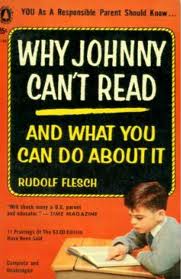
Into the 1950s, leading conservatives blamed ed schools for promulgating terrible teaching.  In his blockbuster phonics book Why Johnny Can’t Read (1955), for example, Rudolph Flesch blamed Teachers College, Columbia, for masterminding a plot to spread ineffective but progressive reading techniques.

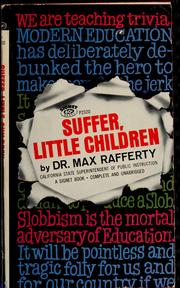
flesch why johnny cant readAs usual, among educational conservatives, few have articulated an idea with the same style and verve as the prolific Max Rafferty, in the 1960s the State Superintendent of Education in California.  In his syndicated column, published in book form in 1963 as Suffer, Little Children, Rafferty zeroed in on the role of education schools in promoting educational blah.

At that time, Rafferty identified the danger as a wrong-headed and misleadingly named “progressive education.”  Such dunderheaded notions, Rafferty argued, oozed out of ed schools to create a nation barely able to compete with the aggressive Soviet Union.

1963

1963

As Rafferty put it,

For thirty years, our Columbia University philosophers, our educational psychologists, and our state department consultants have been leading us down a primrose path where report cards read like Abbott and Costello comedy routines, where competition was a naughty word, and where memorization and drill were relics of the Dark Ages.

In the last three years, we have found out for ourselves that our morals are rotten, our world position degenerating so abysmally that a race of lash-driven atheistic peasants can challenge us successfully in our own chosen field of science, and our rate of juvenile murder, torture, rape, and perversion so much the highest in the world that it has become an object of shuddering horror to the rest of the human race.  More, our greatest leaders today, both in and out of Education, now assure us that these fairy stories with which we have for thirty years bulwarked our thinking and our actions are just—plain—not—true.

My hunch is that Superintendent Rafferty would approve of Professor Vedder’s suggestion.  Close down the ed schools, teach teachers the way we teach everybody else.

My hunch is that somewhere at the back of this conservative ire is a feeling that education schools have become the domain of the academic left.  On many campuses, not only do education schools represent a different sort of student, they often also represent a dwindling redoubt of the unapologetic academic left.

Are there other reasons why smart conservatives feel such virulent distaste for ed schools?