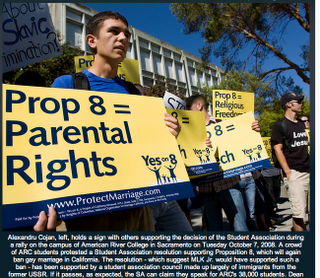
Kicking Christians Out of College

Does being an evangelical Christian automatically make one an anti-gay bigot? If so, can tolerant universities still allow such groups among their students? Those are the tricky questions highlighted in a recent New York Times article about evangelical culture and higher education. As the NYT story noted, this clash between pluralist campuses and “exclusivist” religious groups seems like a tough nut to crack.

But is it fair to assume that all evangelical students are bigots? That opposition to gay marriage pushes students beyond the bounds of polite society? To put it in the most provocative terms: Are evangelical student clubs being ousted because they are seen—sometimes unfairly—as being anti-gay?

The story opens with an update from Bowdoin College in Maine. At that elite liberal-arts school, the tiny evangelical student club has been cut off from official university support. Why? Because, like many evangelical student groups, the Bowdoin group insisted that leaders must be Christians themselves. This led to what the NYT article called a “collision between religious freedom and antidiscrimination policies.” At Bowdoin, as at many other schools, leadership at university-sponsored clubs must be open to all students, regardless of race, religion, or sexual identity.

The official question in the Bowdoin case is not about homosexuality or same-sex marriage. But it would be easy for a casual reader to miss that. The article mentions other schools in which evangelical students have gotten into trouble for anti-gay activity. At Vanderbilt, for instance, one Christian fraternity kicked out a gay member. Indeed, it was precisely that anti-gay activism that led Vanderbilt to force student groups to sign antidiscrimination pledges.

But Bowdoin’s student group does not seem particularly fervent about issues of homosexuality or same-sex marriage. At least according the article, the evangelical club at Bowdoin does not have a single party line about the morality of gay marriage. It’s hard to see a group as anti-same-sex marriage if some of its members support same-sex marriage.

Some studies have suggested that the faculty leaders at universities tilt decidedly against evangelical students. One 2007 study of university faculty concluded that evangelicals were “the only religious group about which a majority of non-Evangelical faculty have negative feelings.” And, as Rice sociologist Elaine Howard Ecklund found, faculty at elite schools often have a very skewed notion of evangelical belief. It does not seem like a stretch to think that these faculty prejudices might tip university policy.

For their part, evangelical intellectuals have struggled long and hard to prove that their opposition to gay marriage and, in some cases, to homosexual sex does not make them bigots. Perhaps the most vocal pundit on the issue, Ryan T. Anderson, insisted that conservatives had legitimate reasons for opposing gay marriage. But too often the other side wouldn’t listen. “Marriage re-definers,” Anderson complained in 2013,

don’t tend to say what many opponents have said, that this is a difficult question on which reasonable people of goodwill can disagree. No, they’ve said anyone who disagrees with them is the equivalent of a racist. They’ve sent a clear message: If you stand up for marriage, we will, with the help of our friends in the media, demonize and marginalize you.

Don’t get me wrong: I am personally fervently in support of same sex marriage rights. I’m opposed to locking anyone out of access to influence because of their sexual identity, religion, race, or other causes. But it seems as if universities would do well to uncouple these issues of club leadership, religious belief, and homosexual rights.

Could a student club demand religious beliefs of its leaders, while still welcoming gay and lesbian students to become leaders? Is it fair for universities to assume that evangelical belief automatically implies anti-homosexual attitudes?


Persecution, Mozilla, and Gay Rights

Who is the bully? Who is the victim? Is it former Mozilla CEO Brendan Eich? Or is it the many LGBT people who might not have equal marriage rights?

Unless you’re living under a rock, you’ve heard the story by now. Co-founder and former Chief Technology Officer of Mozilla Brendan Eich recently resigned from his new job as Chief Executive Officer. Why? In 2008, he donated $1000 to support California’s Proposition 8. The Proposition would have banned same-sex marriage. His donation caused such a backlash against Mozilla that Eich resigned.

Throughout the furor, Eich made conciliatory noises about the values of diversity and tolerance, but he did not abjure his political beliefs against gay marriage. For many in the tech community, such beliefs are tantamount to bigotry and politicized hatred. To be against gay marriage, for many folks (full disclosure: I include myself in this group), implies a willingness to deny equal legal rights to a category of people. This is the very definition of bigotry. Such a position, pro-gay-marriage activists insist, is akin to denying people the right to marry across the race line.

In short, by opposing gay marriage, Eich defined himself as a bully and a bigot. To oppose gay marriage, many felt, puts Eich and his ilk beyond the pale of civil society.

In the conservative intellectual community, of course, the shoe is on the other foot. Conservatives insist that the bullying is being done by the pro-gay-marriage crowd. How is it “tolerant,” conservatives ask, when successful business leaders are forced to step down strictly because of their political beliefs? The bigots here, conservatives argue, are those who won’t allow a true intellectual or political diversity. The real bullies, conservatives say, are those who won’t allow for any disagreement with their worldview.

As usual, one of the most perspicacious articulations of these positions came recently from Princeton’s Robert George. In the pages of First Thoughts, George argued the case that the victims here were religious folks. Anti-Eich-ism, George asserts, threatens to squeeze religious folks out of the public sphere entirely. As Professor George puts it,

Now that the bullies have Eich’s head as a trophy on their wall, they will put the heat on every other corporation and major employer. They will pressure them to refuse employment to those who decline to conform their views to the new orthodoxy. And you can also bet that it won’t end with same-sex marriage. Next, it will be support for the pro-life cause that will be treated as moral turpitude in the same way that support for marriage is treated. Do you believe in protecting unborn babies from being slain in the womb? Why, then: “You are a misogynist. You are a hater of women. You are a bigot. We can’t have a person like you working for our company.” And there will be other political and moral issues, too, that will be treated as litmus tests for eligibility for employment. The defenestration of Eich by people at Mozilla for dissenting from the new orthodoxy on marriage is just the beginning.

Are conservatives the victims here? Is it legitimate political activism to oppose same-sex marriage? Or is it bigotry and intolerance?


Who’s the Victim Here?

Is Craig James a bigot?  Or a victim of religious persecution?  Or both?

Can we liberals allow discrimination against bigots?  Or must we fight against discrimination in all its forms?

James has been in the news lately.  He was fired from his job as a Fox News sportscaster.  The reason?  In his run for the US Senate in 2012, James insisted that he would not support same-sex marriage.  Such marriages, James explained, were against his religion.

The Family Research Council, an organization of conservative religious activists, called the firing an example of religious persecution.  “What Fox Sports did,” the FRC warned,

is much worse than censorship. What Fox Sports is doing is demanding conformity on issues that aren’t even relevant to James’s job — then threatening his livelihood when he refuses. That’s not your garden variety viewpoint discrimination; it’s ideological terrorism. And it has to stop.

From the other side of the issue, the Texas Freedom Network defended the firing.  Intelligent people of goodwill can disagree, the TFN argued, if this is a case of religious discrimination.  But whatever we call it, the TFN blogged, it tells us something about the changing cultural climate.  “it’s worth considering,” the TFN pointed out,

that Fox Sports didn’t fire James because of his religious beliefs. They fired him because they thought his intolerant public statements about gay people would hurt their company.

I generally agree with the folks at the TFN.  However, this seems to me to be a very sketchy argument.  Would we defend a restaurant owner who refused service to ethnic minorities because he or she worried having them in the restaurant would hurt business?


Gay Marriage and School Bathrooms

Will same-sex marriage turn public schools into orgies of sexual confusion?  Ken Ham of Answers in Genesis has connected the dots.

The Supreme Court is wrestling with two cases about same-sex marriage.

Conservatives have long insisted that same-sex marriage would lead to a breakdown in the value of marriage itself.  One commenter recently called same-sex marriage the threshold of an “abyss of nihilism.”

Ham’s analysis sexualizes that nihilism and brings it right into public schools.  Ham, America’s leading young-earth creationist, insists that same-sex marriage is only part of an “evolving sexual agenda.”  (Ham is a smart guy, so I am confident he chose that word—“evolving”—intentionally.)

In Ham’s recent piece, he argues that the next step after gay marriage will be a profound and aggressive attack on all traditional gender norms.  As evidence, he cites recent public-school guidelines in Massachusetts.  As we’ve noted on ILYBYGTH, these new school rules allow students to identify their own gender identity and require schools to respect those identifications.

As Ham writes, the trickiest part of this school rule has become bathrooms.  If a student was born a boy but identifies as a girl, Massachusetts schools must respect that choice. Ham worries about a boy who pretends to identify as a girl just to get access to the girls’ locker room.

Ham is not the first conservative thinker to make this connection between same-sex marriage and a sexual free-for-all in public schools.  But for those of us non-conservatives who try to understand conservatism in American education, Ham’s argument offers two important reminders.  First, schools are tied into every culture-war argument.  Though marriage laws seem relatively distant from education policy, conservative (and liberal) arguments against same-sex marriage often rely on the harmful effects gay marriage will have on children and schooling.  Second, for those outside the orbit of American creationism, Ham’s argument underscores the fact that creationism is an outgrowth of conservative Christianity, not the root.  Besides Ham’s use of the word “evolving” to damn the same-sex marriage “agenda,” this article does not talk about creationism or evolution.  Rather, Ham concludes that the main reason to oppose same-sex marriage and the abandonment of gender rules is more broadly Christian.  As Ham argues,

As Christians, we should affirm our children’s God-given genders and cultivate godly masculinity and femininity in them, rather than encouraging them to abandon the gender God gave them in the womb . . .

For Ham, as for many creationists, Christianity comes first.  Creationism is only one important element of the crusade.  Ham himself has often reminded readers of this fact.  Nevertheless, it is common for outsiders like me to pigeonhole Answers in Genesis as narrowly interested in establishing the case for a young earth.

As Ham’s recent argument proves, AiG’s sort of young-earth creationism has a much broader conservative agenda.


Lesbians and Libraries: We’re All Victims Now

The recent fuss over Patricia Polacco’s In Our Mothers’ House has followed a familiar pattern.  First, a mother from conservative Davis County, just north of Salt Lake City, complained when her daughter brought the book home from her school’s library.  The book celebrates a family with two mothers and three children.  Next, the school district decided to keep the book, but put it behind the library counter.  Students would need a parent’s permission to check out the book.  Finally, the American Civil Liberties Union sued, claiming the book must be freely available for all students.

In this case as in so many others, both sides rushed to insist on their own victimhood.

Both sides make the customary arguments.  The ACLU fights for First Amendment freedom.  In the words of one ACLU blogger,

“Removing library books because they ‘normalize a lifestyle that parents don’t agree with’ or contain positive portrayals of LGBT protagonists violates the First Amendment rights of all students to access ideas in a school library on a viewpoint-neutral basis.” 

Conservative Christians claim the books are part of a widespread conspiracy—the “homosexual agenda”—to teach children in public schools that all sexual lifestyles are equally valid.  In this case, opponents of the book cite Utah law, which they say forbids school curricula that promote homosexual lifestyles.

Just as predictably, both sides depicted themselves as the victims.  Consider the author’s defense.  Polacco, writing on the ACLU’s blog, told the story of the book’s origins:

“One year I was visiting a fourth grade class and the teacher had arranged for me to hear essays that her students had written entitled: ‘My Family.’ . . . one little girl stood up and began to read. She was immediately asked to take her seat by an aide. The aide said scornfully, ‘No dear…you don’t come from a real family…sit down!’

“This child came from a family of two mothers and two adopted siblings. I was so appalled and insulted on that child’s behalf that I immediately, after school that day, went back to my hotel room and wrote, In Our Mothers’ House.”

From the other side, one commenter on a conservative Christian website asked, “Does the ACLU also require that Bibles be on the shelves!”  Another lamented, “Law suit by law suit [the ACLU] are coarsening the moral fabric of America, and our children are the victims!”  A third chimed in, “I don’t hate these people [i.e. homosexuals] & if they want to live this way that’s their business but don’t try to push it on the rest of us!! God help them!!”

Clearly both sides in this school-library dispute focus on their own victimhood.  The ACLU insists that hiding such books behind library desks hurts families.  Polacco argues that treating some families as illegitimate hurts children.  Conservative Christians, for their part, worry about the creeping influence of the ACLU.  Conservatives fret that they have no voice in public institutions.  Their books, most notably the Bible, have been “kicked out,” while books that denigrate traditional lifestyles and morals are promoted.

Neither side publicly notices their own strengths.  We will not hear conservative Christians gloating over the Christian-friendly policies of this Utah school district.  Nor will we hear ACLU types celebrating the power and influence of their national watchdog presence.

Does the rush to victimhood matter?  Only in the sense that a cornered animal fights the fiercest.  By reassuring ourselves that we are the true victims, we condone any escalation in culture-war rhetoric or strategy as a matter of simple self-defense.  If we are all victims, we all have the moral high ground; we all have license to fight dirty.

Mommy, I Can Marry a Princess!

What is so frightening about gay marriage?  A TV ad from California’s 2008 battle over same sex marriage gives us a clue.  Gay marriage, to many conservatives, will ultimately tear families apart. 

For those of us trying to understand conservative, traditionalist, ‘fundamentalist’ culture in America, this TV ad offers some insight into conservative thinking.  Many of us are puzzled by conservative opposition to gay marriage.  Like Jonathan Rauch, it seems to me that a defense of traditional values should logically want to see as many people married as possible. 

Image source: A Collection of Odd

But for many conservatives, a redefinition of marriage will represent a cultural camel’s nose under the tent.  That is, if two same-sex partners are allowed to marry, then a slew of other cultural transformations will soon thrust themselves into mainstream culture.  Any opposition to these radical changes will soon be tarred as mere bigotry. 

In the same-sex marriage debate–as in so many cultural contests–schools and schooling play a central role.  For many conservatives, public schools often play the role of cultural contaminant.  Ideas such as evolution, secularism, moral relativism, and sexual liberation, in the conservative vision, are transmitted into cultural circulation by being injected into children at public schools.  Schools are used by progressive activists to subvert the proper relationship between parent and child.  Schools fill the heads of impressionable children with pernicious ideas about the nature of morality and values. 

We see a particularly striking example of this in California’s TV ads.  During the fight over California’s Proposition 8  in 2008, ads depicted a girl coming home from school, happily telling her worried mother that she learned she could marry a princess.  The ad warned ominously: without Proposition 8 parents would have no legal right to complain.

This ad plays upon a very commonly held notion about the flawed relationship between traditional values, families, and public schools.  In this vision, schools become the institution that transforms cultural change from a general trend to a problem within conservative families. Schools become intrusive agents warping the minds of children and turning those children against the dearest beliefs of their parents.  

I’m sympathetic.  I support gay marriage, evolution, pluralism, etc.  But I recognize that many of my well-meaning education colleagues really do envision public schools as a vehicle to transform children’s culture.  When cultural conservatives worry about camels’ noses, I believe they are smart to worry.  Progressives yearn ardently for a network of public schools as “change agents.”  Just as fervently as conservatives worry about the intrusive moral role such schools might hope to play.

NEW TOPIC: Family & Sexuality

What makes up a family?  What is the right way to have sex?  Fundamentalist America has strong feelings about these questions.  For many outsiders like me, conservative opinion on these issues is truly perplexing.  If it is “conservative” to want a smaller government, for instance, why is it also “conservative” to regulate all the sexual behavior in all the bedrooms in the country?  If Fundamentalist America wants strong families, why do they deny same-sex partners the rights to marry and raise healthy, happy children?  Even more foundationally, why does Fundamentalist America even care if people are gay, straight, or otherwise curved?  How does it stop a conservative Christian from following her religion if other people have sex in ways she doesn’t like?

For the next several weeks, ILYBYGTH will explore these questions.  Posts will fall into three basic categories:

  • The fights against same-sex marriage;
  • Notions of sexuality; and
  • Contraception.

Just as we’ve done with the topics of creationism, traditionalist education, and the Bible, our goal will be to present the best possible arguments from Fundamentalist America.  Our goal as outsiders will be to understand conservative thinking on these issues, not to attack or defend it.

This will certainly be tricky.  It is much easier to speak calmly and dispassionately about such things as evolution, John Dewey, and Bible apocalypses than the intimate relationships that make up family life.  Attacks on homosexuality, for example, come much closer to home for many people on both sides of the issue than, say, denunciations of evolution.

One more reminder: when we talk about “Fundamentalist America” here at ILYBYGTH, we mean something wider than simply those very conservative evangelical Protestants who might call themselves small-f fundamentalists.  We are talking here about a broad conservative, traditionalist impulse, shared among many different types of conservative people.  Conservative Catholics, Protestants, Jews, and Muslims may all be part of this sweeping interpretation of FA.  Indeed, even mainly secular people who favor traditional society may include themselves as part of this coalition.

The purpose of ILYBYGTH is to understand the ideas of this deeply conservative tradition in America.  You can help.  Share your experiences, comment on posts, ask questions.  Even with this intensely personal and highly emotional topic, we’ll resolve to talk calmly, respectfully, and with a sincere desire to understand, even if we can’t agree.


IN THE NEWS: Faith and Race

What does it mean to be a citizen of Fundamentalist America?  For some, it means making hard choices.

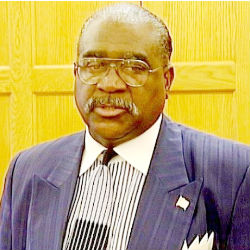
For instance, the Reverend Keith Ratliff of Des Moines, Iowa recently resigned his leadership post in the NAACP.  He did so after the NAACP officially endorsed same-sex marriage.  Ratliff was forced to choose between his religious beliefs and his leadership post, and he chose religion.

Ratliff’s story highlights the changing nature of Fundamentalist America.  For most of American history, conservatives, like progressives, have been starkly divided by the color line.  The recent decisions of prominent African American conservatives, like Ratliff, to emphasize their conservative ideology and theology demonstrates this change.  Even before resigning his leadership post in the NAACP, for instance, Ratliff publicly endorsed conservative Republican Bob VanDer Plaats for governor in 2010.

As reported by Catholic Online, Ratliff defended his decision as part of his Biblical faith:

During a Statehouse rally in March 2011, Ratliff said his support for traditional marriage was biblically based, adding, “This isn’t a private interpretation, a Burger King religion, and by that I mean a ‘have it your way’ religion.”

The Bible in America: Proof-Texting and the Cultural Divide

Quick: What does the Bible have to say about vegetarianism?  …about the war in Iraq?  …about Catholicism?

I don’t know the answers to these questions.  And, without meaning any disrespect, I can honestly say I don’t care.  I don’t think my ignorance on these issues makes me “ignorant.”  I don’t think it makes me uneducated.  I just don’t think the Bible’s opinions on these issues are important.  Don’t get me wrong: I’m not anti-Bible.  In fact, I’m confident I’d be better off if I had spent my youth memorizing the Psalms instead of the lyrics to the Gilligan’s Island theme song.  But I didn’t.  And I don’t feel the loss.
Just sit right back and you’ll hear a tale…

However, many citizens of Fundamentalist America would consider my ignorance deeply embarrassing.  For many conservative religious folks, especially among the Protestant denominations, the ability to cite Scriptural chapter and verse is one sign of an adequate spiritual education. 

This divide fuels America’s culture wars.  Many non- or anti-fundamentalists doubt that fundamentalists are even capable of rational, logical intellectualism.  (Consider a few examples: here, here, here, here, and here.)  The more ardently conservatives dig into their Bibles to prove their points, the more confident anti-fundamentalists become that conservatives have lost all claim to intellectual coherence.    

And many fundamentalists don’t seem to understand that their compilations of Biblical proof-texts carry very little weight outside the borders of Fundamentalist America.  They build arguments against homosexuality  or same-sex marriage based on collections of chapter and verse.  But such arguments are only compelling—or even comprehensible—if we accept the premise of the Bible proof-text in the first place.  As a result, different sides do not speak to one another.  They speak—or yell—past one another, scoring points that only the people on their own side can recognize.    

If we outsiders are to understand Fundamentalist America, we need to understand the proof-text tradition.  Why do religious conservatives care so much what Leviticus has to say about whether or not people should have sex with animals?   Why is it so important that evidence for a young earth can be found not only in Genesis, but also in Mark 10:6, 1 Corinthians 15:26, and Matthew 19:4,5? 

It is not a stretch to say that this style of proof-text argument had been, until the late 1800s or early 1900s, the standard style of theological disputation among Protestants.  In the nineteenth century, European scholars began to look at the Bible in a new way.  By the turn of the twentieth century, leading American Protestant theologians disputed the intellectual usefulness of the Scriptural proof-text.  In 1907, for instance, William Newton Clarke lambasted his more conservative colleagues for their continued reliance on this method.  “Even if,” Clarke argued, “a proof-text method were a good method in itself, it could not be successfully employed now, since the texts of the Bible have suffered such serious though unintended distortion.”  Since liberal theologians had come to disagree with the notion of an inerrant Bible, the method of proving an argument by assembling an overwhelming dose of chapter and verse no longer seemed compelling.

During the twentieth century, however, among Bible-centered Protestants—including self-styled fundamentalists, neo-evangelicals, Pentecostal groups, conservative Lutherans, and others—the proof-text tradition continued.  For those groups who maintained a faith in the Bible as inerrant, it remained convincing to prove every point with an assembly of relevant texts. 

Consider the following doctrinal statement from David Cloud’s Way of Life Ministries.  Each point is proven with an array of relevant texts. 

STATEMENT OF FAITH

Way of Life Literature
P.O. Box 610368, Port Huron, MI 48061
866-295-4143 (toll free), fbns@wayoflife.org
http://www.wayoflife.org


THE SCRIPTURES

The Bible, with its 66 books, is the very Word of God. The Bible is verbally and plenarily inspired as originally given and it is divinely preserved in the Hebrew Masoretic Text and the Greek Received Text. The Bible is our sole authority in all matters of faith and practice. The King James Version in English is an example of an accurate translation of the preserved Hebrew and Greek texts; we believe it can be used with confidence. We reject modern textual criticism and the modern versions that this pseudo-science has produced, such as the American Standard Version, the New American Standard Version, the Revised Standard Version, and the New International Version). We also reject the dynamic equivalency method of Bible translation which results in a careless version that only contains the general ideas rather than the very words of God. Examples of dynamic equivalency versions are the Today’s English Version, the Living Bible, and The Message.

2 Samuel 23:2; Psalm 12:6-7; Proverbs 30:5-6; Matthew 5:18; 24:35; John 17:17; Acts 1:16; 3:21; 1 Corinthians 2:7-16; 2 Timothy 3:15- 17; 2 Peter 1:19-21; Revelation 22:18-19

THE CREATION

We believe in the Genesis account of Creation and that it is to be accepted literally and not figuratively; that the world was made in six 24-hour days; that man was created directly in God’s own image and did not evolve from any lower form of life; that all animal and vegetable life was made directly and made subject to God’s law that they bring forth only “after their kind.”

Genesis 1; Nehemiah 9:6; Job 38:4-41; Ps. 104:24-30; Jn. 1:1-3; Acts 14:15; 17:24-26; Rom. 1:18-21; Col. 1:15-17; Hebrews 1:1-3; 11:3

THE WAY OF SALVATION (THE GOSPEL)

Salvation is by the grace of God alone, which means that it is a free gift that is neither merited nor secured in whole or in part by any virtue or work of man or by any religious duty or sacrament. The gift of God’s grace was purchased by Jesus Christ alone, by His blood and death on Calvary. The sinner receives God’s salvation by repentance toward God and faith in the Lord Jesus Christ. Though salvation is by God’s grace alone through faith, it results in a changed life; salvation is not by works but it is unto works. The faith for salvation comes by hearing God’s Word. Men must hear the gospel in order to be saved. The Gospel is defined in 1 Corinthians 15:1-4.

John 1:11-13; 3:16-18, 36; 5:24; 14:6; Acts 4:12; 15:11; 20:21; Romans 10:9-10,13, 17; Ephesians 1:7; 1:12-14; 2:8-10; Titus 3:3-8; Hebrews 1:3; 1 Peter 1:18-19; 1 John 4:10

CIVIL GOVERNMENT AND RELIGIOUS LIBERTY

We believe that civil government is of divine appointment for the interests and good order of human society; that magistrates are to be prayed for (1 Tim. 2:1-4), conscientiously honored and obeyed (Mat. 22:21; Rom. 13:1-7; Titus 3:1; 1 Pet. 2:13-14), except only in the things opposed to the will of God (Acts 4:18-20; 5:29); that church and state should be separate, as we see in Scripture; the state owing the church protection and full freedom, no ecclesiastical group or denomination being preferred above another. A free church in a free state is the Christian ideal.

We can see the proof-text tradition in David Cloud’s sermons as well. 

The way Cloud and Way of Life use proof-texts is just one example from a galaxy of possible examples out there.  Especially among Bible-based conservative evangelical Protestant groups, the proof-text is the method by which truth is established.  The Bible is the inerrant authority.  In order to make any point, about any subject, the name of the game is proof-texting.  Of course, among many conservative Protestants, the term “proof-text” has taken on negative connotations.  It should not mean that one simply has to slap a bunch of Bible citations together to prove a point.  In this continuing intellectual tradition, the cogency of the argument is based on the proper selection of texts.  How well do the selected texts establish the point at hand?  Does the author use each text in a way that respects the context and original meaning of the selected passage?  Does the author consider relevant passages that might disagree with this interpretation?  Or does a poorly educated pastor merely assume an air of false erudition by throwing Scriptural citations around willy-nilly

To be sure, it is an intellectual tradition that no longer carries weight in mainstream religion and culture.  Though large majorities of Americans might believe that the Bible contains the answers to all of life’s questions, those same majorities do not necessarily agree that the Bible should be the main intellectual authority in all matters.  Indeed, especially galling to many non- and anti-fundamentalists is proof-texters’ assumption that their particular religious tradition should be considered binding in matters of public policy.  In other words, it may be fine for Way of Life to demonstrate the validity of its creed through proof-texts.  But that does not mean that proof-texts can be used to demonstrate the need to teach religious doctrine in science classes. 

These are important arguments.  Proof-texters need to understand that their intellectual tradition does not carry weight outside the borders of Fundamentalist America.  But that is a much different thing than admitting to being non-intellectual or anti-intellectual.  If we outsiders can better understand the tradition of proof-texting, we will be better able to speak intelligently, reasonably, calmly, and even productively with Fundamentalist America.     

FURTHER READING: William Newton Clarke, The Use of the Scriptures in Theology (Edinburgh: T. & T. Clark, 1907); Timothy P. Weber, “The Two-Edged Sword: The Fundamentalist Use of the Bible,” Nathan O. Hatch and Mark A. Noll, eds., The Bible in America: Essays in Cultural History (New York: Oxford University Press, 1982), 101-120.