What’s Wrong with Safer Schools?

For anyone who thinks Dan Patrick has a solution to school shootings, I have a two-hundred-year-old solution to urban poverty to sell you. As-is.

NYC manual 2 diagrams alphabet wheel

The solution to urban poverty, 1820 style…

You may have seen it by now: In the aftermath to the latest horrific school shooting, Texas’s Lieutenant Governor Dan Patrick has suggested tightening up school architecture. As Patrick put it,

We may have to look at the design of our schools looking forward, and retrofitting schools that are already built and what I mean by that is there are too many entrances and too many exits. . . . There aren’t enough people to put a guard at every entrance and exit.

Let’s be clear: There’s nothing wrong with thinking about school architecture and changing doors. What IS wrong is diverting attention from a real problem by directing conversations toward secondary considerations. In this case, we need to talk about school cultures that coerce and alienate students. We need to talk about gun laws that put deadly weapons in the hands of angry boys.

Along the way, we might ALSO talk about entrances, but it can’t be our main focus. In this case, IMHO, Dan Patrick is trying to wiggle out of a difficult political position by diverting attention from the real problems.

And, as I’m finding in my current research, this sort of diversionary tactic is the oldest trick in the school-reform book. Two hundred years ago, city planners in places such as Philadelphia, Boston, and New York faced a difficult dilemma. They had crowds of children in their streets from low-income families. The families couldn’t afford to send them to school so the children were growing up without being able to read or write.

What could be done? From London, Joseph Lancaster promised a solution. He described his system for educating poor children in meticulous detail. With the right school architecture and equipment, he promised, cities could eliminate the problem of poverty in just a few short years.

It didn’t work.

Just like Lt. Gov. Patrick’s plans to block doors and windows, Lancaster’s supposed solution treated minor symptoms in order to ignore the underlying cause. The right reading strategy is a good thing, but it is not a cure for urban poverty.

From the Archives II: A Dream Deferred

Sad but true: American public schools are segregated places. Kids’ chances of going to school with someone from a very different economic background are slim and getting slimmer. As I continue my work in the Philadelphia archives, I’ve come across another bit of evidence that this was not what Americans wanted.

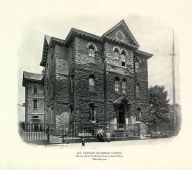
mt vernon school philly

School for all (boys)…at least in theory

In 1828, the education committee of the state senate of Pennsylvania issued a report. There was no disagreement, they said, about the immense value of public education. As they put it,

The diffusion of education among the great body of the people, is an object very near the hearts of the benevolent and humane. It is conceded to be the most powerful means of furthering the cause of morality and religion; and its importance to a country possessing a republican form of government, is universally admitted.

Moreover, schools funded by the public should serve to unite the public. At Pennsylvania’s public schools, the committee promised (with emphasis added):

All the rising generation of a great community are instructed in the rudiments of learning. The doors of the common school houses are open to all without distinction, and the children of the rich and the poor meet there in the participation of a common benefit, upon terms of the most perfect equality. Such a system is above all praise, and deserves imitation every where.

At least, that was the dream. So far, it hasn’t happened. The children of the rich tend to go to schools with other children of the rich. Likewise for the children of the poor. But then again, it has only been 190 years. Maybe we’ll get there soon.

From the Archives: Bad News for Striking Teachers

History might not be destiny, but it can be depressing. As I’ve worked in the Philadelphia archives for my new book, I’ve found some reminders that teachers have always had to shell out their own money just to do their jobs.

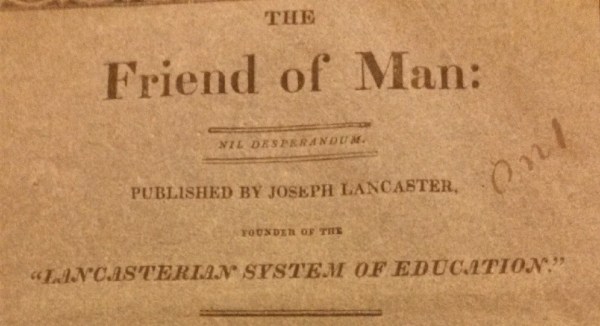
Friend of Man 1 cover

Working without pay has always been considered part of the job…

These days, teacher protests have focused on both low pay and low school funding. As in Oklahoma, teachers have generated sympathy and political power by pointing out how shoddy their classrooms are, and how often they dip into their own wallets to pay for basic classroom materials.

oklahoma textbooks 1

Teachers shouldn’t have to pay for everything, but they’ve always had to…

As I read Joseph Lancaster’s 1821 newsletter I couldn’t help but notice a disturbing parallel. When Lancaster started his career as an educator, he wrote, he visited the nearby town of Stockport, near Manchester. The schools had been terrible until teachers stepped up. They needed better supplies. They needed an expensive new school building. As Lancaster described, the teachers

as a body, offered to work extra hours at their trades, and from their own earnings, to save and devote the sum of five hundred pounds sterling to the proposed building—within twelve months.

Joseph Lancaster told this as a happy tale, showing the possibilities of education if we all pulled together. Almost two hundred years later, though, I can’t help but be a little bummed out that teachers are still expected to donate their scanty mite in order to keep the school lights on.


This Can’t Be For Real…

I get it, I really do. I think arming teachers is a terrible idea, but I understand that lots of people disagree with me. When it comes to ideas like the ones we’re seeing this morning, though, we can’t possibly disagree. Does anyone really think this is a good idea? More important, the kerfuffle might tell us something about how schools work in the real world.

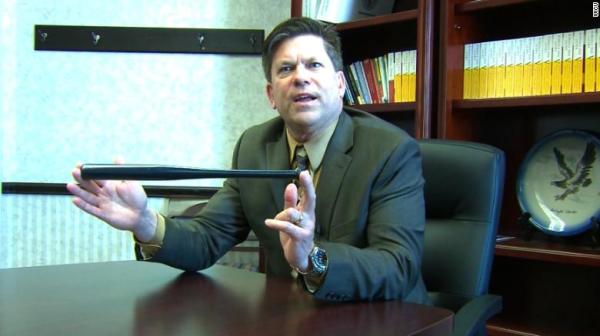
mini bats pa school district

The superintendent explains his plan…

Here’s what we know: Some school districts in Pennsylvania have approved plans to arm their teachers…with miniature baseball bats. You know, the kind you got as a kid when you went to a Brewers game, then left on your desk in your bedroom until finally someone threw it out or something.

The head of the local teachers’ union defended the move. As he put it,

This is a tool to have in the event we have nothing else. . . . Part of the formula now is to fight back. . . . The theory behind the attack option is to create noise, distract, or defend against an active shooter. For a classroom or office setting, this translates to books, staplers, chairs, fire extinguishers, etc. being used as defensible tools.

It gets even weirder. Another district in my area doesn’t give teachers sports memorabilia, but it does provide each classroom with…wait for it…buckets of rocks. When an alert SAGLRROILYBYGTH informed me of this plan, I thought it was a joke. But it seems real. Superintendent David Helsel told Reuters he planned to put buckets of rocks in every classroom. As he explained,

We didn’t want our students to be helpless victims. . . . River stones were my idea. I thought they would be more effective than throwing books or book bags or staplers.

Can they be serious? Is there any support out there for these sorts of preposterous plans?

It seems merely wacky, but this story tells us something about the way public schools often work in practice. There will be a controversial idea—evolution, sex ed, or, as in this case, arming teachers. District leaders will want to be seen taking action, but they also want to avoid controversy at all costs. The result? Half measures that veer sharply into the ridiculous.

We’ve All Got It All Wrong

Whether you call yourself a conservative, a progressive, or something else, if you’re like me you’ve probably got it all wrong. As I was reminded in a discussion last night, those of us who try to shape schools usually make a huge mistake—one we could recognize if we just thought about it for half a second.univ of hawaii

Here’s the background: I was happy last night to talk with some graduate students at the University of Hawaii. (No, I didn’t get to go there in real life. I wish. We used cutting-edge interwebs technology to talk.) They had read my book about the history of educational conservatism and they had some great questions, ideas, and experiences to share.

As I argue in the book, it’s difficult to generalize about conservative activists. Just like progressives, conservative thinkers and doers come from a dizzying array of backgrounds and they are motivated by a huge spectrum of ideas and beliefs. But one thing they do share—at least the ones I studied—is an unexamined faith that school shapes society. I hate to quote myself, but this is how I put it in the book:

Educational conservatives have insisted, in short, on two central ideas. First, schools matter. Conservatives, like their progressive foes, have rarely questioned the notion that the schools of today generate the society of tomorrow. Second, because schools matter, their content and structure must be guarded ferociously. Ideas that challenge inherited wisdom must not be crammed down the throats of young, trusting students. And teachers must not abdicate their roles as intellectual and moral authorities. Educational conservatism, in other words, has been the long and vibrant tradition of defending tradition itself in America’s schools. Without understanding this tradition, we will never truly understand either American conservatism or American education.

One idea on which everyone can agree, in other words, is that schools shape society. The reason so many of us spend so much energy on school reform is precisely because we think it matters. For some conservatives in the twentieth century, teaching kids evolution was dangerous because it threatened to take away their moral and religious compass. For others, teaching kids about sex was a bad idea because it tended to unhinge their self-control. And for yet others, teaching kids socialist ideas was obviously terrible because it would lead to the corruption of their morals and of the entire society.

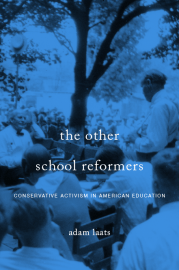
OTR COVER

You can fix schools all you want, but you can’t fix the outcomes…

Last night, the Hawaii students shared stories that helped puncture those school-reform assumptions. One student, for example, reported that he came to the realization that he was conservative in high school. He was guided to that realization by his favorite teacher. At first, I assumed that the teacher was a conservative, too, and inspired the student by reading Hayek and Burke and smoking a pipe. In fact, the student told us, his favorite teacher was a heart-on-her-sleeve liberal. She taught social studies in a progressive way, one that hoped to help students examine their own ideas and decide questions for themselves. In the student’s case, that meant he came to the realization that his ideas were apparently “conservative.” The left-y teacher, in other words, didn’t indoctrinate this student into leftism, but precisely the opposite.

Another Hawaii student told a very different story. She only realized that she was a liberal when she was teaching Sunday school at her church. The goal was to help young people deepen their religious faith, but it had the opposite effect on her. Instead of becoming more religious, teaching Sunday school convinced this student that her church was full of hooey.

What’s the takeaway? Once we hear the stories, it seems pretty obvious. School doesn’t really work the way we sometimes think it will. No matter what our politics, we can’t control the future of our students by teaching them X or Y or by keeping them away from Z or A. Students are not predictable, programmable outputs. They have their own ideas and backgrounds and sometimes our best-laid plans at shaping America’s future will come out in ways we didn’t predict.

The Problem with Theoretical Children

Two hundred years is a long time to bang your head against a wall. When it comes to school reform, though, that’s what we seem to do. I’m just back from an archive trip in Philadelphia and I’m spooked by the parallels between school-reform mistakes back then and those pointed out just this week by a savvy teacher in New York.

The New York teacher, Emily Kaplan, tells a story any experienced teacher can relate to. She studied at a great university, learned all she could about children and teaching. When she got to her first classroom, she immediately ran into a situation she had never prepared for: One of her students just wouldn’t/couldn’t stop farting. It’s funny, but it’s more than funny, too. As Kaplan puts it, most of our big-picture ed-reform plans are made for “theoretical children.” As she explains,

Theoretical children are useful: they are predictable, generalizable. They lend themselves easily to an agenda; nothing they do is inexplicable. Their development is linear, their roadblocks routine. They exist neatly in quantified data; they are easily essentialized. Theoretical children don’t cry for no reason, they don’t laugh out of turn; theoretical children certainly don’t fart.

Theoretical children are discussed often by scholars and policymakers, but theoretical children don’t populate our classrooms— because theoretical children don’t exist.

Kaplan is right on. Every real teacher knows that plans need to be held lightly; theories need to be embraced tentatively. As I’m learning in my new research, the effort by experts to change schools based on what children theoretically will do has always plagued our school-reformm dreams.

Last week I began the archival grunt work for my new book. I’m exploring the school-reform plans of Joseph Lancaster and his devotees. Two hundred years ago, nearly exactly, the Pennsylvania legislature passed a law mandating Lancaster-style schools for Philadelphia. Why were the lawmakers so excited about this educational plan?

lancaster schools

Nothing can go wrong if the system is right.

In large part, Lancaster convinced politicians that he had figured out a perfect system. He pitched a school set-up that would deliver cheap, effective literacy, numeracy, punctuality, and nondenominational Protestantism to poor children. In 1803, for example, he published his flawless system, a system built on the actions of “theoretical children.”

As Lancaster explained, school discipline had long been a problem, but he had solved it. He outlined at painful length and detail the way he had supervising boys—“monitors”—track the behavior of their fellows. Students who misbehaved would have logs tied around their necks. They would be shackled together with other miscreants. If that didn’t work, they might be

put in a sack, or in a basket, suspended to the roof of the school, in the sight of all the pupils, who frequently smile at the birds in the cage.

Lancaster didn’t like shaming his students this way, but he thought it was the perfect solution. As he explained, when the misbehaving student

Finds how easily his punishments are repeated—that he himself is made the instrument—and no respite or comfort for him, but by behaving well, it is more than probable he will change for the better.

In theory, the plan was perfect. In theory, anyone could follow the simple steps laid out for good student behavior. In theory, students responded well to Lancaster’s machinations.

Guess what—it didn’t work. As Emily Kaplan points out, children don’t exist only in theory. They fart. They rebel. And sometimes, if you tie a log around their neck or hang them in a birdcage, they don’t respond well.

News Again: The Oldest Scandal in Public Schools

Don’t act surprised. The depressingly predictable scandal in DC schools serves as yet another reminder of a centuries-old truth about public education. When people tell you they have figured out how to fix urban schools on the cheap, they’re either lying or fooling themselves. When they show you proof, they’re faking it.

ballou HS DC

Where magic didn’t happen….

Here’s what we know: NPR investigated Ballou High School in Washington DC. The school showed remarkable sudden improvements. Graduation rates suddenly jumped to 100% and all the grads were accepted to college.

A triumph, right? Not really. Turns out about a third of the students hadn’t been to school enough to meet minimum requirements. Many of them couldn’t read or write well. Teachers felt enormous pressure to move kids along, whether or not they had met any of their educational goals. Some teachers reported a “culture of fear;” they felt forced to do things they knew weren’t right.

Now wunderkind chancellor Antwan Wilson is in the spotlight. What did he know and when did he know it? Not only Wilson, but informed school folks are all keenly aware of the sobering truth: We all knew this would happen and we’ve known it for centuries. Even for those few folks who don’t read ILYBYGTH to find out the centuries-old story of urban school reform, there are so many recent examples that no one can claim ignorance.

Consider Rod Paige and the overstuffed “Houston Miracle.” Or the ugly cheating scandal in Atlanta. Time and time again, when reformers and administrators build sparkling careers on their sudden, dramatic improvements, they have simply cut corners, cheated, and fudged numbers.

For SAGLRROILYBYGTH in the know, these sorts of educational con jobs are the oldest story in urban public education. As I’m researching these days, in the early 1800s Joseph Lancaster set the pattern that Paige, Wilson, and many others would follow. Lancaster was an earnest young Quaker who opened a school for urban urchins in London. He copied a system that allowed him to educate hundreds of students with only one adult teacher.

Soon, a group of wealthy philanthropists hyped Lancaster’s “Borough Road Miracle.” Lancaster thought he had figured out something radically new. He promised he could establish similar schools for America’s cities. He promised he could turn illiterate “Street Arabs” into upstanding literate Christian citizens.

lancaster schools

The promise: Everyone learns, no one pays…

He couldn’t.

In a few years, Lancaster’s over-hyped schools had flopped and failed. Parents and students complained that they were abused and under-educated. Teachers warned that Lancaster’s methods didn’t work. Lancaster himself was in debt up to his ears and fled to Caracas.

The lesson? It’s not that school reform isn’t possible or desirable. Rather, we need to remember that charismatic, ambitious reformers will always promise more than they can deliver. Politicians will tend to glom on to silver-bullet solutions that don’t cost any extra. School reports that sound too good to be true usually are.

School reform IS possible, but it isn’t easy and it isn’t cheap. If we really want to fix our public schools, we need to stop looking for magic solutions and rather do the difficult and expensive job of improving every school.

Gratuitous Superbowl Reference: What Does Tommy Brady Have to Do with School Reform?

Okay, I admit it: I don’t know much about sports. I DO know that toilet cleanliness isn’t the first thing I think of when I think of the Superbowl. So if Febreze can horn in on Superbowl frenzy with a stupid ad, then we here at ILYBYGTH feel compelled to try to make some connection to Tommy Brady, too. So here it is: The reason schools are so difficult to reform is because they don’t have clearly painted endzones.

febreze superbowl ad

Like sports? Clean your toilet!

Here’s what we mean: In football, unorthodox thinking gets rewarded, if it works. Coaches who come up with schemes that get the ball across the pylon win games. In schools, unorthodox thinking is much more difficult. Why? Because there isn’t a good way to prove that it works. People like Eva Moskowitz use test scores, but that is clearly inadequate. Would you want your second-grader to endure silent lunches?

Other folks suggest measuring the difference in student knowledge at the end of a year, compared to the beginning, but teachers and researchers howl in protest. With something as complicated as a student’s life, how can you say that you can measure the effectiveness of their classes that way?

In the end, we don’t have a clearly defined goal for what makes schools better, because we don’t have agreement on what counts as “good” when it comes to education.

  • Higher test scores? Sure. But we also want students to learn to think outside the box.
  • Winning at competitions? Of course. But we also want students to get practice working together.
  • Memorizing important information? That’s a good thing, IMHO, in spite of what generations of my progressive comrades have said. But I wouldn’t be happy with a school that did only that.
  • Getting into college? That sounds good, but in practice it usually tells us more about students’ families than their schools.

Bill Belicheck and Tommy Brady can wear ugly outfits, be old, and deflate their balls as much as they want. They will still be recognized as great, even by their worst enemies. They can point to accomplishments and measurements that everyone has agreed on.

With schools, we just don’t have that. So we end up falling into endless arguments without any way to point to a clear winner.

A Google, a Plan, a Canal

Why don’t start-up tech types understand school reform? They’re excited about it. By and large, though, their schemes flop. Why? The history of school reform offers a big-picture answer.erie canal

Googlers might think they have the wrong logarithm. Or the wrong charismatic leader. Or maybe the wrong business plan. There’s a simpler, better answer that my current research is making painfully clear to me. It might seem like google has nothing to do with the Erie Canal, but when it comes to school reform, they look depressingly similar. Like the school reformers of the early 1800s, today’s googlers are plagued by a fundamental problem they don’t even see:

The wrong metaphor.

Google-founded schools don’t work. They approach school like a start-up business, as curmudgucrat Peter Greene has pointed out time and time again.

It’s not only google, of course. Other techies have experienced similar flops when they thrust themselves into the school-reform game. We can’t forget, for instance, Mark Zuckerburg’s warm-hearted but dunderheaded efforts in Newark.

Today’s tech types have had enormous success with google and facebook and uber and etc. So they jump too quickly to assume that those successes will apply to school as well. In general, and with some exceptions I’m sure, techies invest in bad school reform schemes because they misunderstand the nature of schooling. They think of it too often as a question of information delivery. They assume—based on google’s big success at shepherding information—that they can improve schools the same way they improved the interwebs. If they can only get their proprietary app right—they assume—and get free of stuck-in-the-mud thinking and red tape, there ain’t nuthin they can’t do.

They aren’t the first to make this sort of goof. In fact (and this is the thing that really chaffs us nerds), though they think they are making ground-breaking social changes, today’s tech-fueled reformers are reading from a very old school-reform script. Though many of them are motivated by the best intentions, if they took time to read even one book they could dodge some of these predictable perils. Heck, they could even avoid the library and just spend time with Larry Cuban’s blog or Peter Greene’s.
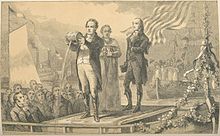
clinton opening erie canal

Clinton connecting the waters, 1826.

It wouldn’t take much for today’s ambitious reformers to recognize their similarity to those of earlier generations. As I work on my next book about urban school reform in the early 1800s, I’m struck by the parallels. Take, for example, the big dreams of DeWitt Clinton. Clinton was the 19th-century equivalent of today’s tech heroes. He was brilliant, talented, connected, and far-sighted. Most important for our purposes, he embraced new technology in the face of old-fashioned opposition. He pushed through modern solutions to ancient problems, and it all happened fast enough for him to witness the amazing social improvements wrought by his efforts.

In Clinton’s case, it wasn’t the interwebs, but a really long ditch. Clinton believed in the possibilities of a transformational investment in the Erie Canal. Naysayers said nay, but Clinton was proven right. The canal utterly changed the face of American society. Small farmers and city-dwellers alike benefitted.

Elated and maybe a little puffed-up, Clinton looked around for new worlds to conquer. At the time, New York City was growing by leaps and bounds. Its schools couldn’t keep up. Clinton dived into school reform, putting all his chips on Joseph Lancaster’s scheme to transform and systematize schooling for all students, especially those without a lot of money.

You know the end of the story already: It didn’t work. At least, not the way Clinton planned. Unlike a canal, a school system is not something that can be created once and for all. A school system needs more than a one-time start-up investment. The problems that make schooling difficult are not the same as the problems that make a canal difficult.

urban apple orchard

They can thrive anywhere…

It might help if well-intentioned reformers thought of school differently. School isn’t a start-up business. School isn’t a canal.

What IS school? There are many ways we could think about it, but this morning I’d like to suggest one idea and I invite SAGLRROILYBYGTH to suggest their own.

To get school reform right, we can’t think of school like a start-up business. We can’t think of it like a canal. We might do better if we thought of school like an orchard. Why?

  • Orchards take a long time to be healthy and productive, but can be damaged or killed quickly.
  • Orchards are intensely local; they can’t be shipped or packaged easily.
  • Orchards take constant loving care from many people.
  • There are some things that all orchards need, like sunshine, water, and fertilizer.
    • The exact recipe for success, though, depends on local conditions.
    • …and it isn’t the ingredients themselves that lead to success, but the constant loving care with which they are applied and monitored.
  • Orchards can thrive anywhere, but in some places they need more intensive care and maintenance than others.
  • Orchards can be tweaked easily, but they can’t be radically transformed quickly.
  • A healthy orchard isn’t focused on the people taking care of it, but rather on the things it produces.
  • Different orchards can thrive while producing different things; one measurement won’t compare apples very easily.

Now that I see that list in black and white, I’m not sure. Maybe that’s not the best metaphor. I’m not sure if children are supposed to be the fruit…? Or if kids are the ones picking the fruit of education…?orchard

When it comes to thinking about schools, though, I can’t help but think that imagining schools as orchards is better than thinking about them as start-ups or canals. As today’s tech leaders have discovered, thinking about schools as start-up tech firms leads to predictable flops. As yesterday’s leaders found out, thinking about schools as canals didn’t work either.

So maybe thinking about schools as orchards isn’t the best metaphor. I bet people can come up with better. In the meantime, though, I’ll look forward to a multi-million-dollar school reform plan that starts with a more profound understanding of the way real schools work.

I Love You but You Didn’t Do the Reading

Happy Monday the 13th! I hope you have good luck today. Here are a few of the stories and trends that passed across our desk this week:

Scales and schools: How do well-meaning reformers keep goofing? Why do they insist on “scaling up” good schools when it never works?

Red Dynamite: At Righting America at the Creation Museum, Carl Weinberg untangles the connections between creationism and anti-communism.Bart reading bible

Education culture-war news from the midterm elections: School board vote in Colorado dings vouchers.

Ahhh…Thanksgiving. The holiday to gather around a table and yell culture-war insults at our friends and family. At 3 Quarks Daily, Scott Aikin and Robert Talisse reflect on “familial angst” on Turkey Day.

Why are college students so touchy about free speech? As reported by IHE, a new survey says it’s because they’re Americans.

Arica Coleman looks at the career of neo-confederacy in American textbooks, at Time.

What’s wrong with charter schools? The Progressive examines the debates in North Carolina.

…and what’s wrong with “personalized learning?” EdWeek listens to three critics.

John Oliver takes on Ken Ham. Should Kentucky’s Ark Encounter receive tax incentives?