Year-End Quiz: Do You Speak Conservative?

It’s the end-of-the-year rush for every sort of retrospective.  Can you take the ILYBYGTH challenge?

Thanks to the folks at the Texas Freedom Network Insider, we have several lists of the most contumacious quotes from America’s conservative punditry.  One list describes the year in creationist/no-climate-change quotations, one from the anti-Islam contingent, and one from the continuing “War on Christmas” campaign.

Here’s the idea: The Insider compiled these quotes as a demonstration of the intellectual outrageousness of contemporary conservatism.  Here at ILYBYGTH, we have a different goal: Can we understand what these conservatives meant?  Can we see the point each speaker hoped to make?  Of course, we know that some quotations are just plain dumb.  This is not only true for conservatives, of course.  Every sort of political blabbermouth can say stupid stuff.  But in some cases, it seems that the quips that seem the most outrageous to liberal secular folks like me actually represent a coherent, compelling conservative worldview.

If you call yourself a conservative, can you explain these quotations in terms that might seem less outrageous to non-conservatives?

Or, if you think of yourself as non-conservative, can you try to put yourself deep enough into the conservative mindset to understand what each speaker was getting at?

So put down the pumpkin pie, stop donning your gay apparel, and try the quiz!

Quote #1: Pat Robertson on the definition of Islam:

I hardly think to call it a religion, it’s more of — well, it’s an economic and political system with a religious veneer.

Quote #2: Rafael Cruz, father of obstreperous Tea-Party favorite Ted Cruz, on the connection between evolution and communism:

You know most Americans have their head in the sand about evolution. I’ve met so many Christians that tell me ‘well, evolution is a scientific fact.’ Baloney! I am a scientist, there is nothing scientific about evolution. But you know something, Karl Marx said it, ‘I can use the teachings of Darwin to promote communism.’ Why? Because communism, or call it socialism if you think communism is too hard a word, necessitates for government to be your god and for government to be your god they need to destroy the concept of God. That’s why communism and evolution go hand in hand. Evolution is one of the strongest tools of Marxism because if they can convince you that you came from a monkey, it’s much easier to convince you that God does not exist.

Quote #3: Fox News’ Megyn Kelly, complaining about efforts to imply that Santa was not white:

Just because it makes you feel uncomfortable doesn’t mean it has to change. Jesus was a white man, too. It’s like we have, he’s a historical figure that’s a verifiable fact, as is Santa, I just want kids to know that. How do you revise it in the middle of the legacy in the story and change Santa from white to black?

How bout it?  Can you beat this year-end quiz?  What did these conservatives mean?  For folks like me, can you do the mental gymnastics to put yourself into a world in which these statements make sense?  Be sure to check out the fuller lists at the Texas Freedom Network Insider.

Happy 2013 and best wishes as we slide into 2014!


God, Darwin, Creationism, and UFOs

What do Americans believe?

A new Harris poll suggests that Americans believe all sorts of things.  Folks who think religion is a bad thing might be heartened by recent increases in the numbers of people who claim not to believe in God.  But the same anti-religion types might be depressed by the high numbers of believers and by their descriptions of their belief.

Consider some highlights: the number of respondents (out of 2,250 overall) who claimed not be “not at all religious” was 23%, up from 12% in 2007.  And the numbers of respondents who said they thought the Bible was the “word of God” was down 6% since 2008.

But before the American Humanist Association breaks out the bubbly, consider some countervailing numbers: even though the number of Bible-believers may have declined slightly, it still represents just under half of respondents. That is, almost half of Americans—if we can extrapolate from these responses—will tell you that the Bible is the Word of God.

And though the number of respondents who said they “believe in Darwin’s theory of evolution” is up five percent, the new total is still under half, far fewer than the number (58%) who say they believe in the Devil.

How about creationism?  Here are a few numbers to chew on: 29% of respondents say they don’t believe in “Darwin’s theory of evolution,” but 36% of them claim to believe in creationism.

Here’s my hunch: science pundits might fixate on the lead sentence that “36% each believe in creationism and UFOs.”  Some folks who don’t like creationism but don’t know much about it might conclude that belief in these things is somehow similar.  Those who don’t know enough real science, these pundits might assume, are prone to believe in all sorts of kooky non-science.

Such mistaken assumptions misunderstand the nature of creationism.  Belief in UFOs might come from all sorts of backgrounds, from eccentric FBI agents to rural isolation.

But in the USA, creationism represents something more than the lack of knowledge about evolution.  Instead, creationism comes from its own intellectual tradition, one that does more than simply ignore evolution.  You would be hard pressed, for example, to find a network of colleges and universities dedicated to teaching a worldview centered on the existence of UFOs.  But there is indeed a strong network of religious schools that teach creationism.

Certainly, belief that humanity resulted from God’s special creation can have lots of intellectual sources.  But it is a fundamental mistake of outsiders like me to assume that such creationist belief is a lack of something, a deficit of knowledge about evolution.

There are pundits out there who assume that these poll numbers represent a victory for anti-religious activism.  I’m not so sure.  Americans seem to believe all kinds of things.  The wobble in numbers represented by these results may point toward an anti-religious trend.  That is, if the number of respondents who said they did not believe in God increased ten percent in the last ten years, we might conclude that pretty soon large majorities of Americans will join them.

I doubt it.  My hunch is that these increases in atheism and skepticism will not represent a continuing trend.  Large numbers of people believe that the Bible is the Word of God.  Large numbers of people believe in things that mainstream science would pooh-pooh.  And they will continue to do so for a long time to come.


Teaching Evolution to Christians

Young Christians don’t know much about evolution.  As a result, they are either turning away from the faith or embracing a distorted hellfire theology.

That’s the diagnosis, anyway, from two academics at Bryan College.  Brian Eisenback and Ken Turner describe the problem of teaching evolution to young people who have spent their youth in Christian schools, nervous public schools, or Christian homeschools.  Eisenback, an entomologist, and Turner, an Old-Testament scholar, offer a new curriculum that promises to teach real evolutionary science without pushing students away from the faith or into bad theology.

As the authors describe, too many of their Christian students have faulty understandings of evolution.  As they put it,

If they were taught anything about evolution, students were often told that evolution is a component of an atheistic philosophy that aims to disprove God and undermine the authority of Scripture. For many, evolution was not a substantial component of their education; instead, more time and effort was spent on anti-evolution arguments. When these students are confronted with the evidence for evolution from multiple scientific disciplines, they are often shocked by the scope of evidence and react by wondering if their faith is still legitimate. They have often been taught that a Christian who holds a high view of Scripture rejects evolution, and Christians are obligated to interpret Genesis in a particular way. When they learn about evolution in a college biology classroom, they may feel their faith threatened or called in to question.

As a result, Eisenback and Turner explain, students often reject their home faith in toto or they hold their faith tighter and learn to feel suspicious toward mainstream science.  Whether they go to school in Christian schools that use curricula such as the Apologia series, or they go to pusillanimous public schools that tend to downplay evolutionary science, too many Christian students get only a distorted echo of real science, Eisenback and Turner point out.

Their solution?  A BioLogos-funded curriculum that will teach evolutionary science thoroughly and respectfully, yet do so in a profoundly Christian context.  Their curriculum will begin not with a primordial soup, but with the Old Testament.  It will include a broad range of ideas about life’s origins.  As Eisenback and Turner put it, they hope students will recognize the false dichotomy too often given between “atheistic evolution and young earth creationism.”

Will it work?  Will this curriculum help overcome the decades-long tension between evolution education and conservative evangelical belief?  Will students at Christian schools learn evolution better?  Will their faith be more durable when they encounter the compelling claims of mainstream science?

I wish Eisenback and Turner all the best.  As someone who hopes to see more and better evolution education in all kinds of schools, I strongly support efforts to bring good science into households that have, IMHO, been misled into believing that their faith won’t allow them to trust mainstream science.  But I can’t help but raise a couple of issues.

First, as many ILYBYGTH readers have taught me, there are intellectual and logical stumbling blocks to this approach.  In this as in many contentious issues, it ends up being simply dishonest at some point to mumble through some central concepts in the hope that “we can all just get along.”  For many evangelical Protestants, one such stumbling block is apparently the historicity of Adam & Eve.  Science demands a large genetic pool of original ancestors.  Many readings of the Bible demand an historical first pair.  Without that first pair and a real historical original sin, there is no need for salvation from Jesus, I’m told.  More than the age of the earth or the historicity of a global flood, this issue of sin and salvation are non-negotiable for many religious people.  How will this curriculum handle this stubborn intellectual conflict?

Second, though I do not know much about evangelical theology or genetics, I do know a thing or two about classroom teaching.  As an historian, I have seen, time after time, laments that America’s young people are not learning X or Y.  In most cases, the jeremiads about the state of student knowledge are followed up with grandiose plans to fix standards or textbooks.  Today’s huffapaloo about the Common Core Learning Standards, for instance, is based on deeply held assumptions that those standards are the most important way to fix or wound schooling, depending on one’s perspective.  But standards, textbooks, and curricula are not the most important determinant of learning.

As a teacher, I’ve learned to be skeptical about curricular panaceas.  I taught middle school and high school for ten years.  I’ve taught in a state university now for almost seven.  In all these teaching contexts, I’ve seen students go through identical curricula with wildly different results.  In other words, curricula/textbooks/syllabi/standards can be great, or they can be terrible, but either way, they will not determine student learning.  Don’t get me wrong: all other things being equal, good textbooks/standards/curricula are better than bad ones.  But good teachers, devoted parents, interested and engaged students…these are the things that make learning go on.  Without them, the best curricula are not going to produce great learning.  With them, bad curricula won’t get in the way.

Finally, we must also ask the $64,000 question: What about students in public schools?  They make up a vast majority of students.  Eisenback’s and Turner’s frankly theological curriculum could never be used in public schools without making a joke of the US Constitution.  But can there be a way to reach public-school students with evolutionary science when they live in communities that look askance at such things?

I’ll say it again: I hope Eisenback’s and Turner’s curriculum project takes off.  I hope students in Christian schools and Christian homeschools use their materials to see that questions of evolution are more complex than a stark choice between Darwin & hell on one side, and Jesus & bad science on the other.  But as Eisenback and Turner themselves would likely be the first to agree, these ambitions come with important roadblocks that must be overcome.

 

Affluenza and the Crisis of “Modern” Youth

How old was your grandmother in 1924?  If she was in her teens or early twenties, did she kill someone and get away with it?  Probably not.  But if you were reading headlines back then, you might reasonably conclude that young people in that decade had lost their moral bearings.  You might think that young people ran around doing crimes just for fun.  And if you’ve been reading headlines recently, you might think the same were true now.

Unless you’ve been living under a rock, you’ve heard some outraged comments about a recent case from Texas.  In this “affluenza” case, sixteen-year-old Ethan Couch killed four people after drinking, drugging, and getting behind the wheel of his car.  Most shockingly, his defense lawyer argued that the teen should not serve jail time since he suffered from too much indulgence from his rich but negligent parents.  His affluent parents never taught him that there could be consequences for bad behavior.  Instead of a twenty-year sentence, the judge gave Couch ten years of probation.  He will spend some time drying out in a $450,000-per-year rehab facility in order to learn some morals, his lawyer promised.

The case stirs all sorts of passions.  Can a rich kid get away with murder?  Are youth today spinning out of control?  Have we raised a generation of moral monsters, looped on prescription drugs and void of any restraining conscience?

But the history nerds out there can’t help but notice the parallels to a similar case from the 1920s.  In 1924, Nathan Leopold and Richard Loeb, aged 20 and 19 respectively, kidnapped and murdered fourteen-year-old Bobby Franks.   Why?  To see if they could get away with it.

Obviously, theirs was a very different case from Couch’s.  They did not accidentally kill anyone.  They planned it ruthlessly.  But the outrage at the judges’ decisions sounds the same.  In the case of Leopold and Loeb, superstar attorney Clarence Darrow managed to get life sentences for Leopold and Loeb, not executions.  The defense?  In a nutshell, Darrow claimed that these young men could not be held morally accountable for their crime, since they had never been taught proper morality.  Their affluent background had taught them that morality was fungible, that life was negotiable.

Just as in today’s reaction to the affluenza verdict, Americans in the 1920s were shocked and outraged by this defense.  The prosecutor denounced Darrow’s argument as “anarchistic.”  As one letter to the editor published in the New York Times declared, this verdict

demonstrates that nobody in this world is responsible for any of his actions.  Since I am the helpless victim of a mechanistic universe. . . . the blame falls not on me but on my ancestors and society.

The point here is not that these judges’ decisions are correct.  Nor that Couch, Leopold, and Loeb aren’t moral monsters.  Rather, the point is that every generation since at least the 1920s has seen dire warnings in high-profile cases of moral monstrosity among young people.  Every generation has lamented the possible meanings for this brand of modern youth.  Every generation has proclaimed the end of moral America.  Yet every generation—ours included—must remind itself that almost no one does these things.  Almost no one kills people while hopped up on fancy prescription drugs.  Almost no one kills a kid just to see if they can get away with it.

Most people are much more like my late Iowa grandmother, who would have been sixteen in 1924.  She did not do any of the things “modern” youth did, if we define that by the example of monsters like Leopold and Loeb.  Rather, though she’s no longer around to ask, it’s safe to guess she was outraged by them, just as she would be outraged by the recent affluenza case.

If the suburbs are eating our children, they are digesting them extremely slowly.  There may be plenty of crises for young people today: a sour economy, structural racism, cheap drugs, etc.  But here’s the important point to remember: these crises are not unique to today.  For almost a century, “modern” conditions have been blamed for a sickening youth culture.  It is not “modernity” that is to blame, whether that was the modernity of 1924 or of 2013.  Rather, every generation has seen morally monstrous young people benefit from outrageous legal defenses from overpaid celebrity defense attorneys.

,

What Technology Do We Need in Schools?

More is more.  That is the mantra of many public-school technophiles these days.  It rests on an often-implicit notion that any problems with schools can be cured with just the right dose of technological innovation.

It is a mantra that Andrew J. Ellison takes to task this morning in the pages of the Front Porch Republic.  Real education, Ellison argues, must be based on mastering language, the most fundamental technology of all.  Bypassing such authentic learning with a series of flashy touch-screens and web apps will only impede learning, he insists.

Of course, one does not have to be culturally conservative to have qualms about the overheated rush to technologize America’s schools.  The recent massive flop of LA’s expensive IPad gamble can turn any taxpayer’s stomach.  And as Stanford’s Larry Cuban has argued compellingly, every American generation has had naïve dreams about the promises of new technology.

Ellison worries specifically about a new program sponsored by President Obama.  Obama asks America’s schoolchildren to submit videos in which they prove that technology improves education.

Ellison notes that the language of this question skews any discussion of the merits of classroom technology.  As he puts it,

the assumption is clear: if you are critical of the faddish and unreflective technologization of our schools, your view is not part of the mainstream.  If you are skeptical of the outlandish educational promises being made by the peddlers of the current classroom iPad fad (maybe because you remember the non-fulfillment of the outlandish promises made in the 1970s about videocassette-based education, or the outlandish promises made about Apple II-based education in the 1980s), your views are unwelcome.  If you are even just a teeny weeny bit inclined to think that the perennial human problem of cultivating intellectual and moral excellence cannot be solved by ANY electronic technology, and that the pursuit of technological solutions to these problems is as inappropriate as the pursuit of a moral and spiritual solution to landing a man on the moon, then you might be discouraged from entering the contest.

In addition to the blithe assumptions of technology’s spotless promise, Ellison lambastes the needlessly and gratingly childish language that the White House uses to promote its program.  Like many clueless adults, the White House tries to wrap its outreach in language that young people will presumably embrace.  Instead of speaking intelligently to young people about real issues involving technology, the White House takes a depressing Hannah-Montana tone:

Yeah, having your schoolwork posted on the fridge at home is cool. But having a video you made posted on the White House website and screened at 1600 Pennsylvania Avenue? We think that’s pretty cool, too. That’s why we’re super-excited to announce the first-ever White House Student Film Festival.

As Ellison points out, this language assumes that young people are somehow unable to handle real language or real questions about technology and culture.  “The condescension of consciously  informal English,” Ellison argues,

is exactly the opposite of real teachers worthy of the name speak to the children entrusted to their classrooms, the opposite of the way we ought to talk to young people if we want to uplift, ennoble, inspire, exhort, challenge—in a word, educate—them.  If we want to make young people better, we have to pull them up towards something better—and while that certainly doesn’t mean that we should talk at uncomprehending 3rd graders in the most difficult and complex literary English we can muster, it does mean that when we speak to children, when we write for them, and when we assign things to them to read, we should be aiming ahead of them, as if we were training a wide receiver to run faster and strain harder to catch the football.

Only if educators focus their efforts at teaching young people to master the real beauty and promise of language will education really happen, Ellison concludes.  Indeed, this sort of training will provide young people with a real mastery of the only educational technology that really matters.  After all, Ellison insists, language is

the first and most human of all technologies, the one upon which all social life depends, the one absolutely indispensable technology, without command of which we become completely unfit for life as free citizens, productive workers, and human beings in the 21st century, at the mercy of others and subject to forces beyond our control and even recognition.


Pre-K? No Way

Among some conservative intellectuals and pundits, nothing says “government overreach” like public education spending.

This morning in the pages of National Review Online, Michelle Malkin spits some bile at President Obama’s plans to invest in universal early-childhood education.

As have other conservatives such as Lindsey Burke and Rachel Sheffield of the Heritage Foundation, Malkin denounces federally sponsored pre-kindergarten schooling in the harshest terms.

Malkin argues that the vaunted promises of universal pre-k don’t stand up to intelligent scrutiny.  As have other fed-skeptics, Malkin seems to mix up a few federal reports.  She refers second-hand to a journalist’s citation of a 2010 study of pre-k’s long-term effectiveness.  If she really wanted to bash federally sponsored universal pre-k, though, she would have been wiser to cite the Department of Health and Human Services 2012 follow-up to that study.  The 2010 study suggested that Head Start programs had a significant positive impact on children.  The 2012 follow-up, in contrast, implied that those positive effects dissipated by third grade (roughly age 7/8).  The numbers seem pretty clear: universal pre-k is not the simple social and educational panacea that some progressives had hoped for.

But more than just these policy arguments, Malkin thinks federally sponsored universal pre-k has a bigger moral problem.  As she puts it,

Let’s set all of this science aside for the moment. There’s a bigger elephant in the room. As I’ve pointed out for years, these cradle-to-grave government-education/day-care services encourage drive-through, drop-off parenting. Subsidizing this phenomenon cheats children, undermines family responsibilities, and breeds resentment among childless workers who are forced to pay for costly social services.

Perhaps this moral dilemma is the reason why Malkin is not overly concerned with the social-science exactitude of her sources.  Her argument goes like this: federally sponsored pre-k doesn’t work.  And even if it did, it would still lead our society in morally monstrous directions.


School Is Life

For one homeless girl in New York City, school is life.  In any case, that’s the story told recently in a New York Times feature article.  “For Dasani,” the story opens,

School is everything—the provider of meals, on-the-spot nursing care, security and substitute parenting.

In the progressive tradition, as Bill Reese demonstrated so powerfully almost thirty years ago in Power and the Promise of School Reform, this vision of school as social-redistribution center fulfills a long-held and deeply cherished ideal.

But how do conservatives view this use of public schools?

To be sure, in various instances, as I noted in an article several years ago in Church History, conservatives have also taken advantage of the wide reach of public schools.  Conservative evangelicals, for example, have used schools as a convenient distribution network for Bibles and religious tracts.  But in general, conservatives in America have not yearned for redistribution the same ways progressives have.  Schools, many conservatives might agree, must be understood as educational institutions, not welfare agencies.  When public schools try to do too much, some conservatives might argue, they end up doing nothing at all.

When school reform has worked for conservatives, Ross Douthat argued recently, it has been when market-based reforms have made schooling more equitable for low-income and minority students as well as affluent whites.  That sort of concrete reform, Douthat wrote, has been the primary success conservatives have scored in overcoming their legacy as the party of white racism.

But that is not the sort of success trumpeted in the NYT feature.  Those market reforms, the article argues, merely move schooling and public services farther out of the reach of girls like Dasani.

No, the article concludes, for homeless youth like Dasani,

school and life are indistinguishable.  When school goes well, she is whole.  When it goes poorly, she can’t compartmentalize like some students, who simply ‘focus’ on their studies.

According to the New York Times feature, Dasani’s life as a homeless eleven-year-old in glitzy New York City is rough.  She shares a room in a shelter with her entire large family.  They endure infestations of mice, roaches, and sexual predators.  In contrast, Dasani’s classroom is a “cozy haven of book-lined shelves and inspirational words scrawled in chalk.”  At school, Dasani gets attention from a brilliant and caring classroom teacher, as well as a social worker and medical professionals.

For us at ILYBYGTH, this seems like a perfect example of a perennial question at the heart of educational culture wars.  What are schools for?  Ought they provide all the services needed by every child, no matter how extensive those needs might be?  Or should schools limit themselves to a narrower definition of “education,” focusing on academic work and leaving families to provide the rest?

In America’s twentieth century, one’s position on this question often served as a quick-and-easy definition of “progressives” vs. “conservatives.”  Progressives wanted schools to think of education as a whole-life question, meeting children where they were and providing every social service possible to ensure a high-quality education for everyone.  Conservatives, in contrast, have pushed for the elimination of “fads and frills” from public schools.  The government—in school or anywhere else—ought not take primary responsibility for children or anyone else.

In this story, we see one example of the way this long-running disagreement has been won, largely, by the progressive vision.  Dasani’s life is far from easy.  But her ability to secure a range of services through her public school demonstrates the long-run triumph of one central progressive idea.

The Ink Is Dry!

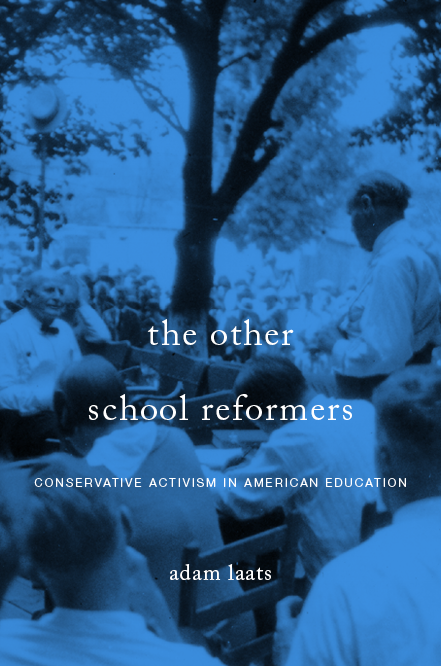
I’m tickled pink to announce I’ve signed a deal with Harvard University Press to publish my next book.  The subject?  No surprise to ILYBYGTH readers: the book takes a historical look at educational conservatism in America’s twentieth century.  What did conservatives want out of schools?  How did they work to make that happen?

I’m extremely pleased to have the book join HUP’s top roster of educational histories.  All my favorite books are on that list: David Tyack & Larry Cuban’s Tinkering Toward Utopia, Jon Zimmerman’s Whose America?, Jeffrey Moran’s Teaching Sex, and now Bill Reese’s Testing Wars.

I’m honored to join this all-star lineup.  My book—which at this point I’m calling The Other School Reformers: The Conservative Tradition in American Education—takes a look at the four most explosive school controversies of the twentieth century.  My approach has been to examine these four culture-war fights to see what sorts of educational reform conservatives wanted in each case.  At first, I thought I’d pile up histories of leading conservative organizations and individuals: the American Legion, Max Rafferty, the Gablers, etc.  But I couldn’t find a way to decide whom to include and whom to leave out.  Did the White Citizens’ Councils count as educational conservatives?  Did the Institute for Creation Research?  Did Arthur Bestor?

Instead of imposing my own definitions on the outlines of educational conservatism, I took more of a naturalist’s approach.  I set up my blind, so to speak, at the four most tumultuous fights over the content of American schools and watched to see what kinds of conservative activists showed up.

The school controversies were all very different.  First I examine the Scopes Trial of 1925.  Then the Rugg textbook controversy of 1939-1940.  After that, the firing of Pasadena’s progressive superintendent in 1950.  Finally, the literally explosive fight over schools and textbooks in Kanawha County, West Virginia, in 1974 and 1975.

What did I dig up?  In short, I argue that there is a coherent tradition linking conservative school reform across the twentieth century.  Not that these different activists had any sort of conscious organization or program.  Conservatives differed—often differed widely—about key issues such as public religion, race, and the role of government and experts.  More than that, the consensus among conservatives changed over time, as American culture and society changed.  For example, racial attitudes among white conservatives changed enormously between 1925 and 1975.  But in spite of all this change and difference, a recognizable tradition of educational conservatism linked these disparate school reformers.  Conservatives usually agreed with progressive school reformers that good schools were the key to a good society.  But unlike progressives, conservatives wanted schools to emphasize traditional knowledge and beliefs: patriotism, religion, and the benefits of capitalism, for example.

In addition, my book makes the case for the importance of understanding these conservative activists as school reformers in their own right.  Too often, the history of American education is told as the heroic tale of progressive activists fighting bravely against a powerful but vague traditionalism.  My book argues instead that educational conservatism is more than just a vague cultural impulse; conservatism has always been a raft of specific policy ideas for specific historical contexts, fought for by specific individuals and organizations.

So be sure to save some space in your holiday gift list for next year.  The book is slated to appear just in time for Christmas/Hannukah/Kwanzaa/Festivus 2014.


Required Reading: Molly Worthen on the Intellectual Civil War among American Evangelicals

What does it mean to be an “evangelical” in America?

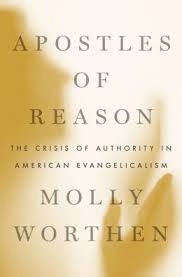
Molly Worthen of the University of North Carolina—Chapel Hill discussed her latest book recently with Tiffany Stanley of Religion & Politics.  The interview is sprinkled with gems that make me look forward to reading Worthen’s new book, Apostles of Reason: The Crisis of Authority in American Evangelicalism.

apostles of reason

Of course, for those of us interested in the intersection of conservative politics and American education, the meanings of “evangelical” are always of intense interest.  Controversies over sex education, prayer in schools, and creationism often feature conservative Protestant evangelicals as main players.

What does it mean to be “evangelical?”  In this interview, Worthen suggests three central questions that define the boundaries of the evangelical experience.  As she explains them,

First, how do you reconcile faith and reason? How do you maintain one coherent way of knowing? Second, how do you become sure of your salvation? How do you meet Jesus and develop a relationship with him, to use the language that some evangelicals prefer. And third, how do you reconcile your personal faith with an increasingly pluralistic, secular public sphere?

Worthen also suggests some useful insights into the complex interaction between evangelicalism and education.  For example, how does the historically defined divide between white and black evangelicals play out in schools?  As Worthen puts it,

If you really grilled black or Latino Protestants on this question [of creationism], many of them would say, “I prefer the Genesis narrative to Darwin’s account, but do I get worked up about it? No. I’m more concerned about educational opportunities for my kids and more concerned about structural injustice.”

And of creationists in general, Worthen hits on the deeper intellectual divide at the heart of the evolution/creation trenches.  “I think it’s a mistake,” Worthen told Religion & Politics’ Stanley,

to understand creationists as “anti-science,” at least if we want to understand how they see themselves. The reality is that the creationist movement comes out of a tradition of Biblical interpretation that understands itself as deeply rationalist, deeply scientific, that rests on the premise that God’s revelation is all one, that God is perfect and unchanging, and therefore his revelation must be perfect and unchanging too. Our two modes of encountering his revelation, in scripture and in the created world, cannot contradict each other. . . . To understand reality accurately, they say, you must take as your founding assumption the truth of God’s revelation. I think that is crucial for understanding the frame of mind of creationists and how they view their project.

Of course, as Dr. Worthen knows, it meant very different things to assert this “creationist” way of knowing in 1877 than it did in 1977.  As she points out, one of the main features of the American evangelical experience has been a profound and continuing tension between the claimed authority of religious leaders and that of the wider secularizing society.

In schools, this evangelical “crisis of authority” has often played out as a continuing tension between a lingering desire to assert Protestant authority over “our” schools and a lamentation that “God has been kicked out” of American education.

One of the continuing dilemmas of religious historians has been to reconcile the mixed bag of evangelical intellectual life.  On one hand, American evangelicalism has included many of the great thinkers of the American tradition.  On the other hand, it has included in its big revival tent some of America’s most fervently anti-intellectual personalities.  I’ll look forward to reading in more detail about the ways Worthen wrestles with these perennial questions.

Science and Its Discontents

What keeps Americans from believing in evolution?  In climate change?

Around here, we focus on principled religious dissent, such as the creationism of ministries such as Answers In Genesis or the Institute for Creation Research.

But what about a much broader, more amorphous sort of anti-science?  What about a strangely popular anti-science that isn’t part of any religious subculture, but is rather a mainstay of mainstream culture itself?

It seems as if the most influential scientific dissenter out there might not be Ken Ham or Henry Morris, but Oprah.

Scientific Dissenter #1?

Scientific Dissenter #1?

In a recent essay in The Verge, Matt Stroud discusses the implications of Oprah’s reign of error.  In this piece, Stroud points out that the alt-science on offer by Oprah’s pet gurus has done more than just confuse schoolchildren.  In the case of James Arthur Ray, Oprah’s scientific influence has actually killed people.

In 2009, according to Stroud, Ray led a group of believers into a sweat-lodge in Arizona.  In the end, three of those scientific dissenters were dead and many more suffered injury.

Why would they subject themselves to this sort of physical peril?

Because Oprah told them to.

Stroud makes a strong case that Ray’s meteoric rise to celebrity depended on Oprah’s alt-science imprimatur.  To be sure, Ray had been peddling his version of energy-science before Oprah discovered him.  But when Oprah touted a 2006 film in which Ray discussed his alt-scientific ideas about “Harmonic Wealth,” Ray became a national and international figure.

Stroud demonstrated the link between Oprah’s support and Ray’s success.  Soon after Oprah showcased the film and book in which Ray made his alt-science case, Ray was everywhere.  As Stroud put it,

Ray soon appeared on Larry King Live to say, “Well, Larry, science tells us that every single thing that appears to be solid is actually energy. Your body is energy. Your car is energy, your house, everything, money, all of it is energy.” The Today Show, Fox Business News, and local network affiliates followed. He toured the country while guesting on smaller venues from Tom Green’s internet talk show to Coast to Coast AM with George Noory. He even judged a Miss America pageant. “Whatever you fear or love will come into your life,” he’d repeat for his agreeable hosts.

Stroud doesn’t make the connection, but this sort of shoot-from-the-hip spiritual guruism can be far more influential, and far more dangerous, than the principled and storied religious dissent of creationists.

Let’s look at another example of the disparate influence of traditional science dissenters and that of Oprah.  Perhaps Ken Ham and his Answers In Genesis ministry can attract attention to the question of atheism with their series of billboards in Times Square and Fisherman’s Wharf.  But Oprah can make a much more influential statement just by questioning one of her guests.  Recently, Oprah told super-swimmer Diana Nyad that Nyad didn’t sound like a real atheist.  More than any billboard, Oprah’s off-the-cuff theism provoked an outpouring of hand-wringing over questions of belief and unbelief.

The disturbing implication for those of us who hope to see better science education in schools is that the problem is not limited to principled religious dissent.  Much more widespread and amorphous is the sort of alternative-science guruism on tap from media moguls like Oprah.

Oprah has made her billions by knowing what millions of Americans want to hear.  Outside the traditional ranks of religious skeptics like the folks at Answers In Genesis, the market-driven dissent of Oprah’s pet gurus can cause much more confusion and consternation.