“Rent” and Culture-War Cowards

A brave stand for traditional conservative values?  Or a petty dictator afraid of a changing world?

The recent decision of a high-school principal in Connecticut to ban the musical Rent will be called both of these things.  But there’s a better and simpler accusation: The principal is acting out of predictable culture-war cowardice.

As reported by the New York Times, Marc Guarino of Trumbull High School in Trumbull, Connecticut suddenly announced that the school’s drama club would not be allowed to put on a showing of Rent.  The popular musical deals with themes of drug use, HIV, and homosexuality.  To be sure, this is a cleaned-up high-school version, with the profanity removed and one sexually explicit song taken out.  But Principal Guarino still thought it was too racy for his school.
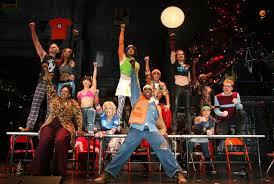
Power to the High Kickers!

Power to the High Kickers!

He’s not the only one to do so.  The play has been yanked from other high schools around the nation.

Predictably, administrators like Guarino have been accused of homophobia and head-in-the-sand obscurantism.  The world is changing, critics charge, and young people need to be aware of real-world issues like those presented by the musical.

So far, Guarino’s not talking.  So his decision might really be due to a belief that young people need to be protected from the world of singing, dancing, drug-using sex-havers.

But there’s a depressingly obvious explanation that is much more likely.  Guarino and the Trumbull school board are probably simply offering a public-school administrator’s knee-jerk response to anything that might raise the tiniest hint of controversy.  More than bad test scores, more than teen hijinx, school administrators fear becoming the center of a fight.  Because savvy administrators know that they will be the losers.

In my new book (coming soon to a bookstore near you!), I look at the most famous school controversies of the twentieth century.  In case after case, no matter what the fight is about, administrators lose.  In 1950, Pasadena’s superintendent got blamed for changing educational patterns.  In 1974, Charleston, West Virginia’s superintendent got blamed for new textbooks.

When a culture-war fight breaks out in schools, no matter what the topic, school administrators are the first casualty.

As a result, principals and other administrators develop keep political antennae.  If any book, teacher, or musical threatens to introduce a whiff of controversy into their schools or districts, most administrators ban it outright.  They want to stop any fight before it starts.

The response to Rent by Susan Collins, a school superintendent in West Virginia, demonstrates this reflexive culture-war caution.  A few years ago, she described her feeling to the New York Times.  “Our high school shows,” she explained,

are so important to our community — we have alumni who come back, we bus in children for them — and I didn’t see ‘Rent’ working here. . . . But look, I know we can’t stick our heads in the sand, I know drugs are out there, I know children are having babies at 12, I know teens are having sex and always must have safe sex. But I don’t know if we need ‘Rent.’

When a drama-club teacher proposed the show for Collins’ district, it only took her one viewing of the DVD to make a quick decision: No way.  She worried that her “back in the woods” community would not take kindly to this sort of on-stage sexiness.

She wasn’t against it.  But she wasn’t willing to stand up and shove it in the face of her community, either.

More than culture warriors, public school administrators often take this role of culture-war avoiders.

Though their book got the most attention for its survey of evolution education, political scientists Michael Berkman and Eric Plutzer made a broader point about schooling and culture wars.  Teachers, they argued, are best understood as “street-level bureaucrats.”  In teaching controversial issues, teachers tend to reflect the middle-of-the-road values of their communities.

The bland CYA politics of principals like Trumbull’s Guarino reflect this same sort of deliberate centrism.  Is Rent bad for kids?  Conservatives might say yes; progressives might say no.

But school controversy on any sort of culture-war issue is definitely bad for the career of any public-school administrator.
 

Red Carpet Culture War

Maybe it’s not the big-time red carpet.  Not the Emmys, the Tonys, or the Grammys.

But the People’s Choice Awards this year are promising to give people a chance to vote for their culture-war preference.

According to the Christian Post, The Bible and Liberace are going head to head.

In the category “Favorite TV Movie/Miniseries,” voters have placed these two at first and second place so far.

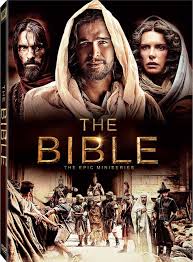
The Bible Miniseries?

The Bible Miniseries?

The Bible series has been a favorite among evangelical viewers.  Produced by “Touched by an Angel” star Roma Downey and her husband Mark Burnett, the project hoped to bring the Gospel message into the homes and hearts of millions.  As we’ve noted here on ILYBYGTH, the producers even hoped to bring The Bible into America’s public schools.

...or the story of this tempestuous love affair?

…or the story of this tempestuous love affair?

“Behind the Candelabra,” on the other hand, tells the love story of the flamboyant entertainer Liberace and his much younger lover Scott Thorson.

What do the people like better?  We’ll find out soon…


Cheap Art for Cheap Conservatives

What do American conservatives hang on their walls?  Fr. Dwight Longenecker argues that too many of them fall for the sentimental hypocrisy of Thomas Kinkade.  Instead, they ought to recognize the sincerity of painters such as Andrew Wyeth.

Speaking in broad brush strokes, the American art scene seems a dangerous place for conservative intellectuals.  Take your pick: urinals on walls, celebrity soup cans masquerading as cutting-edge, a urine-soaked Jesus…what passes for “art” these days often drives conservatives bonkers.

But that is not the grim totality of today’s art scene.  Beyond the Tea-Party politicism of painters such as Jon McNaughton, conservatives can look to a broad array of recognizably conservative themes and artists in recent memory.

Jon McNaughton's "The Forgotten Man"

Jon McNaughton’s “The Forgotten Man”

But beware, warns Fr. Longenecker.  It would be too easy for conservatives to embrace the hypocritical Christianity and on-his-sleeve sentimentality of fakers such as Thomas Kinkade.  Kinkade made his millions peddling paintings of an imagined America, a happy hobbit-land of glowing farmhouses and quaint clustered villages.  Such false nostalgia, Longenecker insists, is a mere distraction from the real themes of thinking conservatism.

Image Source: The Imaginative Conservative

Image Source: The Imaginative Conservative

Better to embrace the harder truths of a painter such as Andrew Wyeth, Longenecker argues.  Wyeth’s America is not as chipper as Kinkade’s, but it has a deeper sensibility.

Image Source: The Imaginative Conservative

Image Source: The Imaginative Conservative

As Longenecker concludes,

If Kinkade illustrates the worst aspects of American conservatism–a sickening sentimentality, shallow prosperity gospel Christianity and ruthless Walmart marketing, Wyeth illustrates an authentic conservatism–rooted in deep personal emotion, an understated faith in goodness, beauty and truth, a concern for value instead of money and a disregard for marketing.


Thanksgiving Reflection: The Pilgrims Were Communists!

Here’s a Thanksgiving riddle: Why do conservative intellectuals and pundits insist that America was founded by communists?

Over the past several years, this idea has become a common theme among conservative commentators.

Rush Limbaugh, for example, has explained that the real story of the Pilgrims might surprise many people duped by mainstream histories.  After all, Limbaugh concluded, “It was a commune, folks.”

Capitalist from (almost) the Start

Capitalist from (almost) the Start

Similarly, the Heritage Foundation explains that the Pilgrims practiced what early governor William Bradford called “communism.”

Libertarian John Stossel reminded readers recently of the Pilgrims’ communist beginnings:

The Pilgrims started out with communal property rules. When they first settled at Plymouth, they were told: “Share everything, share the work, and we’ll share the harvest.”

The colony’s contract said their new settlement was to be a “common.” Everyone was to receive necessities out of the common stock. There was to be little individual property.

That wasn’t the only thing about the Plymouth Colony that sounds like it was from Karl Marx: Its labor was to be organized according to the different capabilities of the settlers. People would produce according to their abilities and consume according to their needs.

It would seem that conservatives would hate this conclusion.  After all, the notion of the greatness of the American founders has long been a centerpiece of conservative thought.

So why do conservatives insist that the original settlers were communist?

For most conservatives, the communist experiment of early settlers is used to prove the superiority of private property and market principles.  In most tellings, early communism proved disastrous.  As a corrective, leaders such as William Bradford in Massachusetts introduced radical market-oriented reforms.

The original founders may have been communists, the story goes, but they quickly learned the error of their ways.  Capitalism and private property triumphed.

Is it true?

Ironically, unlike the normal historical back-and-forth, in which conservative historians insist that America’s founding was glorious and other academic historians point out the many flaws in that tale, in this case mainstream historians have argued that the early settlers were not really as communist as conservatives say they were.

Speaking to the New York Times a few years back, for example, Richard Pickering of the living-history museum Plimouth Plantation explained that the early Pilgrims did originally hold property in common, but the end goal was private profit.

In Jamestown, the charge of collectivism is even more tenuous, according to some historians.  Karen Kupperman of New York University concluded, “To call it socialism is wildly inaccurate.”  Kupperman explained that the entire settlement was part of a joint-stock company, one from which each settler hoped to reap a private, and hopefully enormous, profit.  Kupperman asked, “Is Halliburton a socialist scheme?”

So here’s one for your Thanksgiving diary: When it comes to the historical memory of America’s early founders, we see a perplexing reversal.  Conservative pundits insist that America was founded by communists, and mainstream historians rebut that the free-market has always been America’s true guiding star.

Still left unclear: Did the Pilgrims play football?

The Missionary Supposition

Is evolution a religion?  Are its teachers missionaries?

That has long been the accusation by some conservative religious folks.  The godfather of today’s young-earth creationist movement, Henry Morris, insists that it is.

Given that history, it is with trepidation and full humility that I’ve argued recently in the pages of the Reports of the National Center for Science Education that evolution educators might learn something from religious missionaries.

I want to be as clear as I can about this: I do not think that evolution is a religion.  I do not think evolution educators should consider it their job to “convert” young people to an evolutionary worldview.

But I do think evolution educators have been plagued historically by an attitude that creationism is simply an absence of something, a lack of knowledge about evolution.  To be sure, thoughtful evolution educators have long avoided that trap.  The folks at the National Center for Science Education, for instance, have made a strong case that we need to understand creationism if we want better evolution education. 

The attitude of many evolution educators throughout history, however, has been that creationists must simply not know enough about evolution.  Once creationists hear the truth, according to this line of thinking, they will hop on board the evolution train.

Ironically, that understanding of creationism and evolution teeters perilously close to the attitude among many early religious missionaries.  The Bible, many Protestant missionaries believed, contained such powerful, supernatural power that it would be instantly embraced by heathens worldwide.  All missionaries had to do was spread the Word.  Indeed, this faith in the transformative power of Gospel text remains strong among groups such as the Gideons and the American Bible Society.

But most religious missionaries these days understand that conversion needs more than just the Gospel.  Many conservative Protestant missionaries insist that the home cultures of local groups must be studied thoroughly and lovingly by would-be Bible missionaries.  Without that sort of preparation, real missionaries insist, evangelization is a waste of time, and may even be what one missionary writer called “evangelical toxic waste.”

What do I suggest?  I argue in my RNCSE essay that evolution educators need to spend more time understanding creationism.  If we really want to teach evolution in the United States, we need to do more than just spread the word.  We need to spend time learning about the cultures that refuse to believe evolutionary theory.

We need to study history, anthropology, and religion in addition to biology, geology, and genetics.  Awkward as it might be to admit, one “-ology” that evolution educators have ignored to their peril is missiology.


The Real Pharaoh’s Secret: The Creation Museum

Get this: one of the new Doritos commercials was filmed at Answers In Genesis’ Creation Museum.

Image Source: Answers in Genesis Creation Museum

Image Source: Answers in Genesis Creation Museum

How do I know?  Ken Ham told me.  And the other five bajillion people who follow him on Facebook.

Why did Doritos film at the Creation Museum?  Are they peddling their snacks as young-earth creationist favorites?  Not according to Ham.  He says part of the museum simply has the style of an “Egyptian temple” so the filmmakers liked it.


Is the Common Core Un-American? Professor Deneen Says Yes

What should conservatives do with the new Common Core Learning Standards?

Trash them, demands Notre Dame political theorist Patrick Deneen.  In doing so, Deneen makes some fishy assertions about the educational imaginations of our Founding Fathers.

As ILYBYGTH readers are well aware, there is no unified “conservative” position on the Common Core.  Some smart conservatives hate them.  Other smart conservatives hold their noses and endorse them.

Professor Deneen signed on to the recent letter against the standards to the US Catholic Bishops.  Deneen and other prominent Catholic intellectuals voiced their dismay at the intellectual, political, and spiritual implications of the new standards.

In his recent essay in The American Conservative, Deneen spells out in more detail his objections.

The standards, Deneen warns, represent a monstrous over-emphasis on only two of the five main purposes of education.  The standards push schools to focus only on basic facts and logic. They ignore the formation of good citizens with character and a sense of wonder.

In this case, according to Professor Deneen, two-fifths of a loaf is worse than none at all. These standards, he argues, are not simply a good attempt at a difficult task.  Rather, they are fundamentally flawed, since they are based on a “dessicated and debased conception of what a human being is.”

So far, so good.  But Professor Deneen argues that this sort of common educational standard violates the best American traditions, and this doesn’t seem to fit the historical record.

The good professor is a mighty smart guy, well versed in the political thought of our founders.  So I have a hard time sussing out what he means by the following:

Because humans in their social and political communities are various, it was understood by our Founders that the way that these educational purposes to be achieved would be various, and so the commitment to local control of education was not born of a resignation in the absence of a strong central government, but a positive embrace of variety and multiplicity.

I’m no expert in early America, but that just ain’t so.  Prominent founders such as Thomas Jefferson, Benjamin Franklin, and Benjamin Rush all pushed for greater systematization and centralization of schooling.  Each of them hoped to organize a chaotic network of educational opportunities into a more coherent centralized system of schooling.

Perhaps none of these founders would have wanted a single system for all of the states, as the Common Core standards hope for.  But each of these founders, at least, would have applauded the attempt to make education less happenstance and more predictable.

I understand Professor Deneen’s disgust at the lopsided nature of the Common Core State Standards, even if I don’t agree with it.  But I don’t see the basis for his claims that this sort of effort violates the spirits of the Founders.  On the contrary, this sort of rationalization and systematization is just the kind of thing those big-idea men would have drooled over.


In Defense of the Lecture

Outside of dunce caps or ferule-slapping, it would be hard to find a teaching technique that has been more roundly disparaged by generations of progressive educators than the lecture.

Stultifying and obsolete, ineffective and time-wasting, the “sage-on-the-stage” approach to education has long been Pedagogic Enemy Number One for progressives.

Not so fast, writes Collin Garbarino in the pages of First Thoughts.  In spite of snarky progressive claims to the contrary, Garbarino argues, the lecture “worked in the fourteenth century, and it still works today.”

Garbarino is responding to an interview in The Atlantic with technophile David Thornburg.

Thornburg used a 1350 painting to illustrate the continuing ridiculousness of lectures.  In the painting, students sleep, chat, and otherwise while away the time while a puffed-up Henry of Germany imparts some Teutonic knowledge on Bologna’s university students.

Image Source: First Thoughts

Image Source: First Thoughts

Hold the phone, Garbarino challenges: Take another look at that painting.  Sure, many students are not listening.  But many are.  The front rows are packed with students avidly drinking in Henry’s wisdom.

Don’t blame the lecture for shoddy education, Garbarino argues.  After all, as Garbarino points out, we don’t blame books for ignorance; we don’t attack all blog posts because most of them are stupid.  Garbarino suggests two proper targets for reform: disengaged students and weak lecturers.

As in Bologna in 1350, some students benefit from lectures, others do not.  The lecture as a format is an efficient and practical way to educate, Garbarino says.  The fact that some students choose not to participate does not mean that the format itself is no good.

Similarly, lots of lecturers are terrible.  They are more concerned with publishing than with preparing scintillating lectures.  Or they may lack that ineffable something that makes someone a compelling speaker.  But just because some lecturers do a bad job of it does not damn the lecture entirely, Garbarino argues, any more than terrible books imply that we should no longer read.


Violence at Liberty University

It has become an all-too-familiar report from college campuses.  Virginia Tech, Northern Illinois, Santa Monica College…the list gets depressingly long.

Most recently, the conservative evangelical world has been shocked by news of a student shot dead near the campus of Liberty University.  One Liberty junior told the Christian Post, “This is the last place I would ever imagine something like this would happen.”

The incident seems to have resulted from a physical confrontation between a sledgehammer-wielding student and a gun-wielding police officer, according to a report in the Washington Post.  This does not seem to fit the profile of a gun-wielding young person taking out as many fellow students as possible before turning the gun on himself.

Nevertheless, the fact that it happened at conservative bastion Liberty University has raised some eyebrows.  Some critics assumed at first that this violence must have resulted from Liberty’s ballyhooed decision to allow students to carry concealed firearms.  As President Jerry Falwell Jr. said at the time that policy was implemented, “I think it’ll continue to create a higher level of security on campus than what was found at Virginia Tech.”  Liberty also recently famously courted a student who had gotten into trouble in high school for packing heat.

It seemed at first that Liberty’s gun chickens had come home to roost.  But to be fair, the recent student death at Liberty did not result from gun-packing students.  Nevertheless, many in the conservative evangelical community hold Liberty to a higher standard.  Not only should students eschew mass murder as has happened on less religious campuses, but the campus of Liberty should be safer in every way.

Liberty, after all, was founded to be different than the sorts of secular, pluralistic colleges that have seen the worst campus shootings.

Perhaps as Liberty moves closer to mainstream pluralist colleges in terms of sporting victories (see here, too) and student rules, it will move closer to mainstream colleges in the depressing statistic of student shootings, too.


Catholics against the Common Core

Don’t do it, a group of Catholic academics advised their bishops recently.  Don’t let Catholic schools follow the new Common Core Learning Standards.

As with everything Catholic, the signatories of this letter were a diverse bunch.

They were led by Notre Dame’s Gerard Bradley and included prominent conservatives such as Anthony Esolen, Robert George, and Patrick Deneen.  Also signing on was Lehigh University’s intelligent-design black sheep, Michael Behe.

Why did this group want to keep the new standards out of Catholic schools?

For one thing, they argued the new focus on nonfiction threatens to water down the rich cultural heritage of Catholic schooling.  “Common Core,” the letter charges,

shortchanges the central goals of all sound education and surely those of Catholic education: to grow in the virtues necessary to know, love, and serve the Lord, to mature into a responsible, flourishing adult, and to contribute as a citizen to the process of responsible democratic self-government. . . . Perhaps a truck-driver needs no acquaintance with Paradise Lost to do his or her day’s work.  But everyone is better off knowing Shakespeare and Euclidean geometry, and everyone is capable of it.

But there is more at stake than just a profound, moral education.  Bradley’s letter worries that future new standards will directly contradict the specifically religious values at the heart of the Catholic faith.  As the letter put it,

In science, the new standards are likely to take for granted, and inculcate students into a materialist metaphysics that is incompatible with the spiritual realities—soul, conceptual thought, values, free choice, God—which Catholic faith presupposes.  We fear, too, that the history standards will promote the easy moral relativism, tinged with a pervasive anti-religious bias, that is commonplace in collegiate history departments today.

As Richard Perez-Pena noted in the New York Times, the letter-writers do not represent the entirety of Catholic opinion.  Sister John Mary Fleming, executive director for Catholic education at the United States Conference of Catholic Bishops, said she viewed the new standards as an opportunity, not a threat.  And Sister M. Paul McCaughey, superintendent of Chicago’s Catholic schools, agreed that Catholic schools must maintain their high educational standards, but did not see the standards as a problem.