
If life gives you Lemons…change fifty years of SCOTUS precedent. That might be the new motto of Ed Secretary Betsy DeVos, as she pushes through a change in the relationship between private religious schools and public ones.
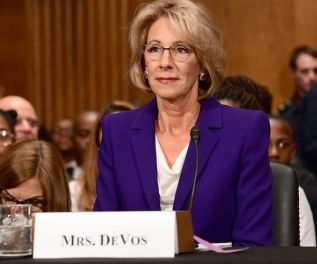
…I’ll make Lemon-ade.
Now, I’ve been accused by very smart SAGLRROILYBYGTH of being hyperbolic when it comes to interpreting DeVos’s recent moves, so I’ll try to be careful in my hysteria here. Here’s what we know: This week DeVos introduced a change in enforcement of federal law regarding the interaction between public schools and private religious ones. It may sound like a snoozer, but it has enormous implications for those interactions. And those interactions, in turn, have huge implications for the presumed boundaries between religion and government in these United States.
Some facts in the case:
- Queen Betsy’s proposed change would cease enforcement of a rule banning religious groups from providing secular services to students in private religious schools.
- So, for example, if a student in a Catholic school needed speech therapy, the law requires the public school district to provide those services.
- In the past, the district had to provide the services itself, or hire a non-religious contractor to do it.
- Now, the public school district can hire a religious organization—not the private religious school itself—to provide those services.
- The services are only supposed to be “secular, neutral and nonideological” in nature. In other words, things like speech therapy and literacy coaching, not religious instruction.
Clear as mud?
To understand why these changes are such a big deal, we need to revisit the SCOTUS ruling that has laid the foundation for the past half-century of policy regarding public aid to religious schools. One of the outcomes of that case, Lemon v. Kurtzman, was the famous “Lemon test.” This three-prong guideline helped Americans find the proper line when it came to public funding of religious education. Since 1970, when deciding if relations were too close between a religious school and the government, we could check these three guidelines:
- Does the statute have a “secular legislative purpose?”
- Is the “principal or primary effect . . . one that neither advances nor inhibits religion?”
- Does the rule “foster an excessive government entanglement with religion?”
In the original case, SCOTUS considered laws that helped pay the salaries of religious-school teachers. They found that those laws did indeed have a secular purpose—states wanted all children to get good educations. They punted on the second part—they didn’t rule on what the primary effect of the laws were. But the justices agreed that the laws violated the third rule. By putting government in charge of part of the school day of teachers at religious schools, the laws hopelessly entangled government with a religious institution.
To this reporter, it seems DeVos’s new rule would throw the Lemon Test out the window. Imagine the likely outcomes. A public school district would be able to hire a speech therapist (for example) who is employed by the Catholic Church, or by Focus on the Family, or by any other of a million religious organizations. The school district would not be able to pay for any type of religious instruction, but only the secular services provided.
In practice, the school district would have to monitor the goings-on in the speech-therapy sessions themselves. The “entanglement” of the public school district and the religious service provider would be beyond “excessive.”
Furthermore, if any religious service provider were able to capture the market for, say, speech therapy in religious schools, it would be able to earn a huge payday from the public tax coffers. I can’t see how that is anything other than a rule that “advances . . . religion.”
Is it a done deal? Not yet. As Americans United protested,
Betsy DeVos is neither the Supreme Court nor Congress. She does not get to unilaterally declare that a statute is unconstitutional, especially with a provision that is designed to protect church-state separation, a bedrock of our democracy.
An administrative decision not to enforce certain provisions of existing legislation is not at all permanent. Just ask Obama. If DeVos’s plan survives, however, it will reverse the past fifty years of church-state guidelines when it comes to private religious schools.
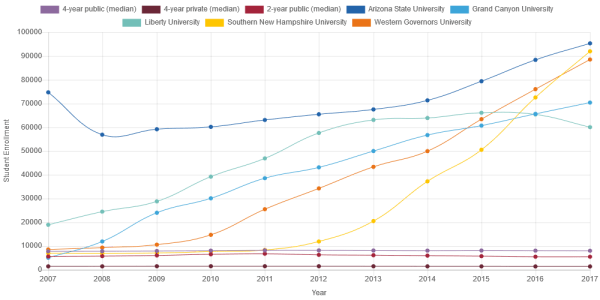
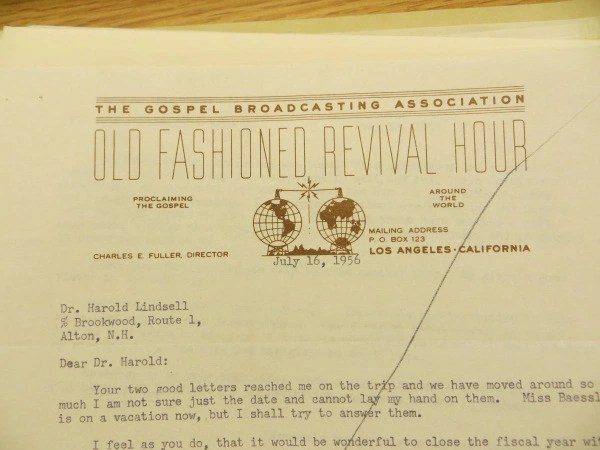
 As Alexander asked in the pages of the Monitor Herald (Calhoun City, MS), January 3, 1963, “Have you ever heard or read about a more subtle way of undermining the American system of work and profit and replacing it with a collective welfare system?”




 I Love You but You're Going to Hell