Whew…

It wasn’t pretty, but it got done. I just sent in my proofs and index for Fundamentalist U: Keeping the Faith in American Higher Education. It’s a huge relief—that’s the last step for me before the book comes out.

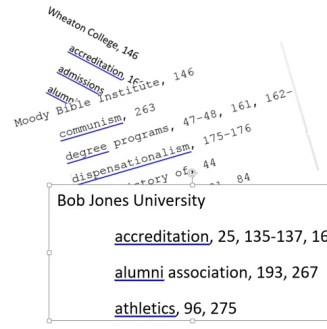
index mash up FUndy U

How the sausage gets made…

Making an index is a weird job. There are professional indexers you can hire, but to me it seems like an intrinsic part of an author’s job. Nobody knows the book as well as the author; no one can tell what sections need to be emphasized in the index and which ones can be cut out.

Making this index wasn’t particularly fun, but it was a good chance for me to pore over the proofs one last time. It allowed me to think about the book’s argument from a new perspective and get a new take on writing I did quite a while ago.

So what’s next? I just sent it all in to the Oxford folks and they will put it all together. We’re hoping the book will come out in early 2018. I’ll keep you posted!

Creationist College History, Part II: Parting the Waters

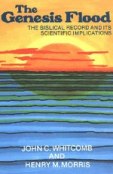
I know, I know, it has been hard to sleep for the last couple days. With the cliff-hanger ending of my last guest post about evangelical colleges at Righting America at the Creation Museum, I’m sure it has been difficult to wait for the sequel.genesis flood 1961 ed

Well, wait no longer: Today at RACM you can read the second half of my argument about the way evangelical higher education influenced the career of American creationism.

What Goes on at Creationist Colleges?

Thanks to Bill and Sue Trollinger, the wizards behind Righting America at the Creation Museum, I’ve had a chance to share a few of my ideas about the vital role played by higher education in the evolution of American creationism.

Gustafson chimes cartoon bible a myth at many colleges

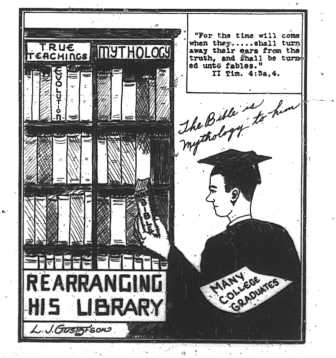
Evolution has always been forbidden fruit, but not always in the same ways. This cartoon came from Biola University’s student paper, c. 1939.

This morning RACM has kindly published the first half of my argument about the tangled and troubled history of creationism at America’s evangelical and fundamentalist colleges and institutes. As you might suspect, even though fundamentalists all agreed that evolution was bad, they didn’t agree on much more than that.

Check out the full two-part argument at Righting America at the Creation Museum.

If You Don’t Think It Matters, then YOU’RE the Idiot

Liberty 48, Baylor 45. Bam. Jerry Falwell Jr. might be an idiot for investing unwisely in athletics and brick-and-mortar campus facilities, but at least his investments have paid off. The long-held dream of Jerry Falwell Sr. and his successors seems to be coming to fruition.

As I’ve been working on my upcoming book about the history of evangelical higher education, I couldn’t help but wonder: Why do so many schools invest so much money in seemingly antiquated relics of higher-educations past? If the future of higher ed is online, why do schools make such sacrifices to have winning sports teams and ivy-covered buildings?

In the case of Liberty University, it would make sense if they avoided pricey campus investments. They made all their money, after all, in the flashy world of online education. And it was a lot of money. Instead of presenting themselves as a new, more modern-than-thou online institution, though, Liberty plowed those winnings back into the trappings of traditional higher education.

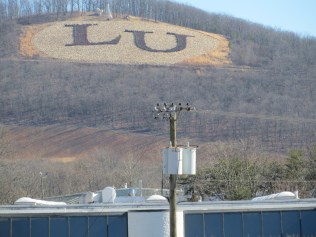
The campus is beautiful and growing fast. It even has an all-year snowboarding hill built into Liberty Mountain. Harvard doesn’t have one of those.

LU sign on mountain

Mountain-sized ambitions…

We might think—as I have—that Liberty’s leaders are merely missing the boat. We might think that they are trapped in a dead-end vision of higher education.

If they are, however, at least they are making that vision come true. Their recent upset win over football powerhouse Baylor was treated on campus as a major miracle. Students were given an official holiday to rub Baylor’s noses in it. President Falwell even relaxed the famous curfew rules in order to encourage Liberty’s students to celebrate.

All the hoopla shows how much athletics means to Liberty. As then-president Pierre Guillermin crowed way back in 1982, Liberty Baptist College (it only became Liberty University in 1985) planned to be

the Notre Dame of the Christian world athletically and the Harvard of the Christian world academically.

This recent football triumph brings that vision one step closer. And it tells us something about the nature of higher education. College has never been only about professional preparation. Yes, in order to be a teacher or a doctor or an engineer one needs a college degree. But “college” as a whole has never been limited merely to that sort of thing.

When Americans think of higher education, we tend to think of a bundle of things all wrapped together. We want to earn a degree, true, but we also want to have an “experience.” We want to attend a “real” college, one that has ivy and winning sports teams.

To a great degree, this unarticulated assumption is the reason why MOOCs flopped. The ability to take challenging classes online can’t replace the allure of a full-bore college experience.

At some level, President Falwell grasps this key fact in a way policy nerds have not. He sacrificed a great deal (not personally, but in institutional terms) to have a winning football team.

For Falwell, as for generations of scrimping and struggling evangelical colleges, the looming, nagging worry has been that they have not been seen as real colleges. They’ve been seen as dumpy little church schools, though they’ve dreamed of being taken seriously.

The win over Baylor means—at least for today—Liberty’s dreams have come true.

Why Campus Free Speech Laws Won’t Free Campus Speech

We’ve been down this road before. When conservative lawmakers hope to protect the right of conservative speakers on college campuses these days, they rehash a tactic from the 1920s evolution/creation battles.

shapiro-by_katie_cooney_720

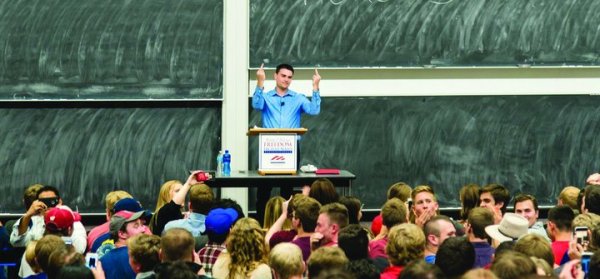
Conservative pundit Ben Shapiro speaks freely at the University of Wisconsin.

Will it work this time? Not a chance. Why not? I lay out my argument this morning at History News Network. Click on over and check it out.

From the Archives V: “No, He Is a Fundamentalist”

Editor’s Note: As SAGLRROILYBYGTH are sick of hearing, I’m just about finished with my book about the history of evangelical higher education. As always, there was a ton of great material I couldn’t fit in. I’ll share some of the archival gems here.

What is a fundamentalist? It’s not as easy a question as it might seem. As we’ve explored in these pages, any attempt at a simple definition quickly runs up against big problems. One quirky document from the archives of the Moody Bible Institute helped me understand how the term “fundamentalism” was really used during the twentieth century.

The biggest problem—at least to my way of thinking—is that fundamentalism said it was one thing, when it was actually something quite different. As Tim Gloege has argued convincingly in his book about the early history of the Moody Bible Institute, fundamentalists tended to talk about themselves as defenders of orthodoxy, but their views were in fact quite un-orthodox or even anti-orthodox.
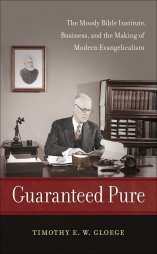
Gloege Guaranteed Pure

Or maybe a “grammar. . . a corporate evangelical framework.”

They had to be.

Especially in the first half of the twentieth century, fundamentalism was something theologically new, a lowest-common-denominator coalition dedicated to fighting against theological modernism. Unlike real orthodoxies, fundamentalism could never agree on a set of hard and fast theological doctrines.

Instead, fundamentalism served, in Gloege’s words, as “the performance of ortho­doxy facilitated by modern promotional techniques.”

Fundamentalism, in other words, wasn’t a specific set of beliefs or practices, but a loud and often belligerent clubbishness in favor of conservative attitudes about church and culture. The kicker comes from the fact that early fundamentalists such as William Bell Riley said over and over again—loudly and often belligerently—that fundamentalism WAS a set of specific theological doctrines.

Riley wasn’t lying, but he was wrong. Riley wanted to insist on his nine-point creed as the one and only definition of true fundamentalism, but he couldn’t impose such a definition. Not for lack of trying, but because as a coalition of conservatives, fundamentalism itself could never be hemmed in by mere theology.

That’s the argument I’ll be fleshing out in more detail in my upcoming book anyway. On the campuses of fundamentalist colleges, universities, seminaries, and Bible institutes, the tenuous and ill-defined nature of fundamentalism was always starkly evident, if not often politely discussed.

As I was reviewing my files the other day, I came across one document that underlined the ways “fundamentalism” was used in real life. For admission to the Moody Bible Institute, students were required to submit recommendation forms. Like all higher-ed institutions, MBI wanted to know if potential students were good students. Unlike students at secular schools, though, potential MBI students had to provide evidence that they had good missionary potential.

One question asked recommenders if a potential student had any “doctrinal, or other peculiarities that would unfit him for Christian work”.reference he is a fundamentalist BETTER

One recommender’s response to that question can give us some insight to how the idea of “fundamentalism” worked in practice. Did the potential student have any “peculiarities”? “No,” the recommender wrote, “he is a fundamentalist.” To this recommender, at least, calling someone a “fundamentalist” meant that the person was vouched for, that the person was solid theologically, that he could be trusted as a missionary.

It did NOT mean that he or she shared a certain set of ideas about Christianity or about the proper way to read the Bible. It did not mean that he or she agreed with William Bell Riley’s nine-point list of fundamentals. It meant only that he or she had no “peculiarities.” He or she was within the circle of fundamentalist trust, even thought the exact outline of that circle could never be agreed upon.

What did being a “fundamentalist” mean? In practice, in this case at least, “fundamentalism” was an affiliation more than an orthodoxy. It was an in-group marker rather than a doctrinal platform. It identified someone as trustworthy without going into specifics about their theological or denominational beliefs.

From the Archives IV: The View from 1944

Editor’s Note: As SAGLRROILYBYGTH are sick of hearing, I’m just about finished with my book about the history of evangelical higher education. As always, there was a ton of great material I couldn’t fit in. I’ll share some of the archival gems here.

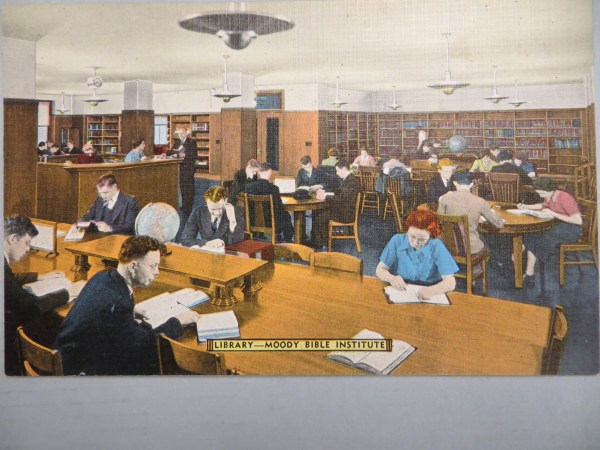
What did life look like at Moody Bible Institute in the 1940s? Thanks to one student scrapbook preserved in the archives, we have a couple of great souvenir postcards from the era to give us a hint.

1940s postcard dining room

Students fought hard to be able to eat with members of the opposite sex.

1940s postcard library

Getting those dispensations right…

1940s postcard proposed auditorium

Big plans for the future…

1940s MBI banner and patch

Rah rah.

What Is the REAL Deal with Fundamentalists and the Big Eclipse?

As Bart Simpson put it best, “The ironing is delicious.” Secular folks like me blast kooky fundamentalists for their wacky ignorance of science, while we ourselves show a curiously stubborn ignorance about what fundamentalists really believe. Tomorrow’s big eclipse gives us another example of the way most outsiders don’t understand conservative evangelical culture.

What are fundamentalists thinking about tomorrow’s eclipse? It might be tempting to agree with the right-wing watchers at Americans United for Separation of Church and State. The AU folks stumbled across a blog post from Billy Graham’s daughter Anne Graham Lotz. Lotz worried that the eclipse is meant as a warning of God’s impending judgment on the USA. Foolish Americans, Lotz warned, are blithely

preparing to mark this significant event with viewing parties at exclusive prime sites. The celebratory nature regarding the eclipse brings to my mind the Babylonian King Belshazzar who threw a drunken feast the night the Medes and Persians crept under the city gate.  While Belshazzar and his friends partied, they were oblivious to the impending danger.  Belshazzar wound up dead the next day, and the Babylonian empire was destroyed.

At Americans United, Rob Boston warned that this sort of blather proved the sad truth about “fundamentalist Christians these days.” Folks like Lotz, Boston wrote, wallow in their

utter repudiation of science. It’s not that they can’t understand it – they choose not to try. Furthermore, they often heap disdain upon it.

Now, I’m no fundamentalist and I’m not worried that the eclipse is a fulfillment of Joel 2:31 or Ezekiel 33:1-6. In fact, I don’t really care what the Bible says about eclipses or anything else. But as I work on my new book about American creationism and my soon-to-be-released book about the history of evangelical higher ed, I can’t help but protest that Boston’s viewpoint is astoundingly ironic. Secular anti-fundamentalists like Boston (and me) need to do more to understand the real relationship between conservative evangelical religion and mainstream science. Too often, it’s not that we can’t understand it, it’s that we choose not to try. And then we often heap disdain upon it.

…oh, the ironing!

In fact, even the most conservative radical creationist institutions in these United States are acting remarkably similar to mainstream institutions in their embrace of tomorrow’s eclipse as a way to bring science to the masses. To be sure, it’s a very different sort of science, what ILYBYGTH calls “zombie science,” but it is nearly the opposite of an “utter repudiation” of science. Radical creationists LOVE science; they engage in endless missionary outreach to bring their vision of real Biblical science to the benighted secular and moderate-evangelical multitudes.

At Answers In Genesis, for example, radical creationist missionaries are falling all over themselves to help curious people view the eclipse and draw the correct scientific lessons from it.

At fundamentalist Bob Jones University in Greenville, South Carolina, administrators are pulling out all the stops to use the eclipse to spread the word. Located right in the path of totality, BJU is hosting a huge party, with speakers explaining the proper way to understand the relationship between the Bible and science.

bju eclipse

Belshazzar at BJU?

Bryan College, too, another creationist stalwart, is throwing a viewing party on campus, with faculty experts offering lectures on the proper fundamentalist way to understand eclipses.

Are these radical-creationist institutions saying the same thing as secular institutions about the eclipse? Of course not. No secular scientific experts care much about the Bible’s explanation of eclipses. But just as secular scientific organizations are using eclipse mania to attract attention to their programs, so too are these creationist groups crowing about their scientific expertise and their many scientific resources.

So, even though some conservative evangelicals are warning people away from viewing parties and eclipse-related hubbubbery, many more are using the eclipse as a way to explain their vision of the proper relationship between God and science.

What Gets Conservative Kids Excited?

So…what do conservative college students get excited about? Monarchism, apparently. That’s the word from conservative stalwart Patrick Henry College, at least. And, as I found in the research for my upcoming book about conservative evangelical higher education, today’s monarchist enthusiasts are joining a long tradition at conservative schools. I can’t help but wonder if today’s college presidents will respond the way presidents always have responded.

It might just be hopeful dreaming, but at National Review Jeff Cimmino argues that young students at conservative colleges are jumping on to the traditionalist bandwagon. Mostly, at schools such as Hillsdale, Patrick Henry, as well as at mainstream schools such as Notre Dame, smart young conservatives are discovering the work of Russell Kirk, Edmund Burke, and other traditionalists.

There are also kookier ideas floating around student lounges. Christian McGuire, the student editor of a conservative review at Patrick Henry College, reported loads of enthusiasm for conservative Catholic thinking and Russell Kirk. But that’s not all. According to Cimmino,

When asked whether monarchist sentiments could be found on campus, McGuire responded firmly: “Yes, absolutely.” Though still very much a minority view at Patrick Henry College, some traditionalist-minded students are open to the idea of a king.

A king! Zoiks. It sounds kooky, but as I discovered in my recent research in the archives of other conservative evangelical schools, such student intellectual enthusiasms are nothing new.

Cimmino doesn’t mention it, but monarchism and Burkeanism have not been the most potent intellectual traditions that have excited young evangelical intellectuals. Time and again, students at evangelical schools have discovered—as if it were new—the bracing intellectual rigor of Calvinism.

I include in my book, for example, the story of Calvinist dissent at Wheaton College in the 1930s and 1940s. Back then, high-flying scholar Gordon Clark accepted a job at Wheaton. Clark had an Ivy-League PhD and the kind of elite academic credentials evangelical colleges like Wheaton yearned for.

But Clark’s Calvinism rubbed along awkwardly in the interdenominational world of 1930s American fundamentalism. As soon as he arrived, Clark started a “Creed Club” on campus. His brainy Calvinism excited and attracted plenty of Wheaton students. But Clark’s unyielding intellect made him unpopular with the administration.

Callow Calvinist students began protesting, for example, that Wheaton placed far too much emphasis on missionary work. And they began adopting Clark’s dismissive attitude toward campus revivalism. Like their hero Professor Clark, students began deriding such things as mere “mass psychology.”

What did Wheaton do? In 1943, they showed Clark the door. They loved his resume, but they couldn’t accept the notion that their students were pooh-poohing ideas so near and dear to the heart of American fundamentalism. If such student enthusiasms got too much attention, Wheaton worried it would lose support from the fundamentalist community.

Could that pattern repeat itself?

At Patrick Henry, especially, administrators might get nervous if students veer to the right of their school’s goal of reclaiming America for Christ.

What would Patrick Henry leaders do, for example, if over-enthusiastic student monarchists began pooh-poohing American Constitutionalism? If they bruited about the idea that republicanism itself—Americanism itself—was nothing but a mistake to be corrected?

Maybe I’ve spent too much time in the archives of university presidents, but I can’t help but think that Patrick Henry’s leaders would have to put a stop to such things, worried about what it might do to their school’s reputation as an outpost of more-American-than-thou religious conservatism.

…still Think “Evangelical” Is Not a Political Label?

Albert Mohler can say what he wants. To this reporter, there is a much more obvious conclusion. For those of us who struggle to understand evangelical identity, another recent poll seems like more evidence that we can’t rely on religious ideas alone.

SAGLRROILYBYGTH are sick of hearing about it, but I can’t stop mulling it over. In my upcoming book about evangelical higher education, for example, I argue that a merely theological definition of American evangelicalism will not suffice. The reason it is so important to study evangelical colleges, universities, seminaries, and institutes—at least one of the reasons—is because these institutions make it startlingly obvious that religion and theology are only one element defining evangelical identity, sometimes a remarkably small one.

Smart people disagree. Recently, for example, Neil J. Young took Frances FitzGerald to task for over-emphasizing the political element of evangelical identity. And a few months back, John Fea called me on the carpet for over-emphasizing the culturally and politically conservative element of evangelical higher education.

And smart people will surely disagree about the implications of recent poll results from the Washington Post and Kaiser Family Foundation. To me, they seem like more proof that American evangelicals are more “American” than “evangelical,” at least when it comes to their knee-jerk responses to poll questions.

The poll asked people whether poverty was more the result of personal failings or of circumstances beyond people’s control. As WaPo sums it up,

Christians, especially white evangelical Christians, are much more likely than non-Christians to view poverty as the result of individual failings.

Now, I’m not much of a Christian, and I’m not at all evangelical, but I can’t help but think that blaming the poor’s lack of effort for their poverty is not a very Christian attitude. And plenty of Christians agree with me. According to Julie Zauzmer in WaPo, African-American Christians tend to blame circumstances by large margins. The divide stretches beyond race. Democrats tend to blame circumstances. Republicans tend to blame individual failings.

Zauzmer reached out to experts to try to explain why white evangelical Christians might feel this way. She gave Albert Mohler of the Southern Baptist Theological Seminar a chance to explain it away. And Mohler did his level best. The reason white evangelicals blame the poor for their poverty, Mohler told her, was because

The Christian worldview is saying that all poverty is due to sin, though that doesn’t necessarily mean the sin of the person in poverty. In the Garden of Eden, there would have been no poverty. In a fallen world, there is poverty.

I just don’t buy it. If we really want to understand why white evangelical Americans tend to blame the poor for their poverty, we are better off looking at Reagan than at Revelation, at Goldwater than at Genesis. Blaming the poor has deep political and cultural roots. American conservatives—at least since the early twentieth century—have insisted that poverty in the Land of Opportunity must be due to individual failings rather than to structural problems in society. When American evangelicals mouth such notions, they are allowing those political and cultural beliefs to speak louder than their strictly religious or theological beliefs.

If we want to understand American evangelicalism—especially among white evangelicals—we need to understand that the “conservative” half of “conservative evangelicalism” is just as vital as the “evangelical” half. We need to understand that white evangelicals are complicated people, motivated by a slew of notions, beliefs, and knee-jerk impulses.

Why did so many white evangelicals vote for Trump? Why do so many white evangelicals blame the poor for their poverty? If we really want to make sense of it, we can’t focus on the merely religious beliefs of evangelicals. We have to look at the big picture.