Shoot ‘em Up at Fundamentalist U

Christians, get yr guns. That’s the message this week from Liberty University President Jerry Falwell Jr. The message for us fundamentalism-watchers is that we’ll never get the whole picture about conservative evangelical religion if we limit ourselves to theology alone.

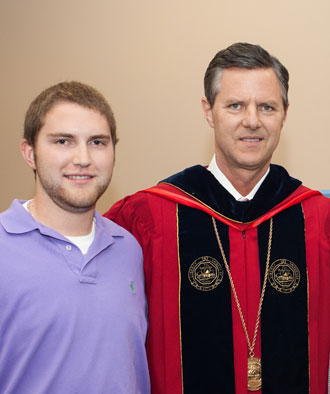
In response to shootings in San Bernardino and elsewhere, Falwell told students at his booming megaversity that they could “end those Muslims.” He told students about the concealed .25 in his own back pocket, joking that he didn’t know if it was illegal or not.

Cole-Withrow-Jerry-Falwell-Commencement-Liberty-University-20130517

Jerry, Get Your Gun

For Liberty watchers like me, this is not the first time the school has taken an aggressive pro-gun position. And for fundamentalism watchers like me, it is more proof that a fundamentalist is never only a fundamentalist.

To put it in nerdy terms, some historians have suggested a theological definition of fundamentalism. Fundamentalist Protestantism has been explained as the tradition of millennialism. It is best understood, others say, as “radical apocalyptic evangelicalism.” These definitions are helpful for distinguishing fundamentalism from close cousins such as Pentecostalism, Holiness Wesleyanism, and conservative Anabaptism.

Such definitions fail to explain, however, outbursts like the one from President Falwell. There’s nothing about the apocalypse in his yen for guns. Rather, it is a product of the simple fact that fundamentalists—like all people—are amalgams of multiple identities. Falwell is a fundamentalist, true, but he’s also an American. He’s also a Southerner. He’s also a conservative. And, of course, he’s also a gun-lover.

It is not only Liberty U that has struggled with this conundrum of fundamentalist identity. As SAGLRROILYBYGTH may recall, a popular administrator at Mid-America Nazarene University took considerable heat for reminding students that Christian religion did not always come wrapped in the American flag. From a theological position, what Dean Beckum said was utterly unremarkable. But conservative evangelical religion in America is more than just religion. It is also conservative. It is also American.

President Falwell and Liberty University, as I’m arguing in my current book, are emblematic of the complicated nature of conservative evangelical higher education. As institutions, they are driven by humdrum factors such as tuition, enrollment, athletics, and accreditation. As evangelical institutions, they’re driven by a desire to maintain a religiously pure, “safe space” for their students. As conservative institutions, they’re driven by a wide variety of political impulses, including the overpowering urge to shoot em up.

How Facebook Can Save America

It won’t be by buying new computers for schools. It won’t even be by dumping bajillions of dollars into schools. But Mark Zuckerberg’s recent announcement that he plans to donate 99% of Facebook shares—some 45 BILLION dollars’ worth—might just make a difference if he can learn from his mistakes.
facebook-zuckerberg-chan-launching-private-school-thumb-525x403-16272

Take my money…Please!

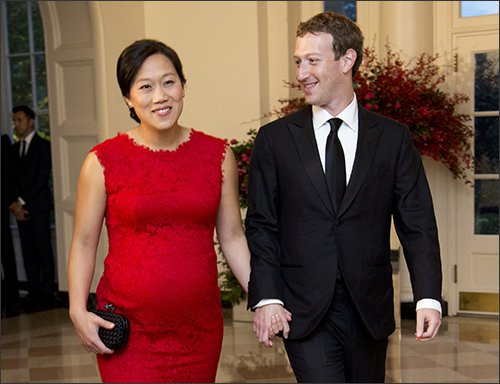
You’ve seen the story by now. Mark Zuckerberg and his wife Priscilla Chan have pledged oodles of their nerd-gotten gains to help low-income families. Good for them. The danger is that they will continue to misunderstand the nature of the relationship between schooling and society.

Money helps. But in the past, philanthropists in general and Zuckerberg in particular have misunderstood the basic relationships involved. As a result, big money has not made a big impact.

You may have read about Zuckerberg’s ill-fated promises in Newark. Charmed by Mayor Cory Booker, Zuckerberg pledged up to $100 million in matching funds to improve Newark schools.

As journalist Dale Russakoff described in her book The Prize, big dreams petered out into only meh results. Russakoff blamed poor communication between philanthropists, city managers, teachers, and parents. The money, she argued, did not go to the right places at the right time, because Zuckerberg and Booker took a “knight in shining armor” approach to complicated educational problems. Instead of communicating with interested locals, they hired fancy $1000-a-day education consultants. Instead of building a consensus about problems and solutions, they dictated solutions and labeled people as problems.

There is a more basic difficulty, however, that Russakoff did not address. She argued that the roll-out of the Newark plan was flawed and ill-considered. At a more foundational level, however, even the best-considered plans to fix society by fixing schools are doomed.

We’ve said it before and we’ll say it again: Schools can’t fix society. Schools ARE society.

In other words, if a society is racist, dominated by a wealthy elite, and strangled by cultural divisions, a new set of textbooks, computers, or state standards will not change that. Throughout the twentieth century, as I argued in my recent book, conservative activists repeated progressives’ attempts to reform society by reforming schools. Without the proper understanding of the ways schools function in society, such plans are doomed before they begin.

Consider the sobering example of Native American education. As a recent article in Politico described, government-run schools are a failure. And they fail despite the fact that they spend more money per student than do comparable schools.

The Facebook folks have made some worrying noises. In announcing their gift, they suggested that they were still trapped in their old, mistaken views. They seemed to be saying that society can be healed—poverty can be alleviated—if only we can make sure that all kids have good schools. It is just not that simple.

In their announcement, for instance, Zuckerberg and Chan declared that their money would help level the social playing field. As they put it,

You’ll have technology that understands how you learn best and where you need to focus. You’ll advance quickly in subjects that interest you most, and get as much help as you need in your most challenging areas. You’ll explore topics that aren’t even offered in schools today. Your teachers will also have better tools and data to help you achieve your goals.

Even better, students around the world will be able to use personalized learning tools over the Internet, even if they don’t live near good schools. Of course it will take more than technology to give everyone a fair start in life, but personalized learning can be one scalable way to give all children a better education and more equal opportunity.

Watch out! Despite their qualification that “it will take more than technology to give everyone a fair start in life,” it sounds as if the rest of their plan depends on their assumption that the right technology can indeed do just that.

To be fair, they make smarter noises elsewhere. They have also argued, for example, that

“We need institutions that understand these issues are all connected.” . . . Only with schools, health centers, parent groups, and organizations working together, they said, “can we start to treat these inequities as connected.”

That is exactly right. Only if we understand that young people are more than just schoolchildren can we see the problem with earlier philanthropic efforts in education.

We need to be careful about the conclusions we draw. Some observers have concluded that since increased spending on schools does not lead to utopia, we don’t need to increase funding for schools. That’s not right.

Rather, we need a better analogy. Spending money on schooling is not like putting a Band-Aid on a gut wound. Rather, spending money on schooling for low-income students is like building a three-legged stool with one strong leg. Only one. Because the other two legs are harder to reach, they are usually ignored. But a three-legged stool needs three strong legs, not just one. The legs need to be improved at the same time, in the same degree, in order to make a real difference.

I’ll say it again and then I’ll be quiet: We DO need to pour money into schools.  But not ONLY into schools.  We need to address questions of poverty and structural racism.

When Evil Sounds Like You

No one is in favor of murder. And all of us use pretty heated language at times. That’s why all of us have an extra responsibility to denounce violence perpetrated by those who agree with us. It looks like leading GOP candidates have failed at this important culture-war responsibility.

Dear

War and Culture War

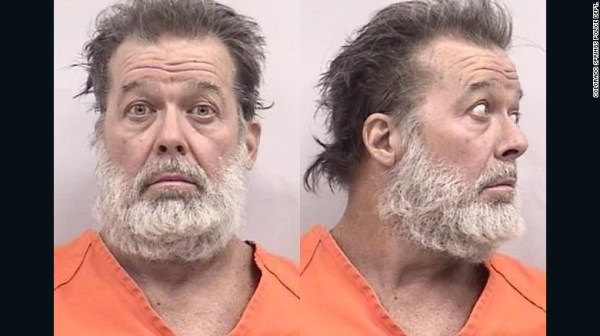
It is still early days, but it seems as if the terrible shootings at the Colorado Planned Parenthood clinic may have been inspired by anti-abortion sentiment.  Suspect Robert Dear seems to have claimed he was motivated by Planned Parenthood’s alleged sale of “baby parts.”

I would expect every prominent cultural conservative to denounce this sort of political violence in the strongest terms. Yet, as progressive sources such as The Nation and ThinkProgress have pointed out, the leading Republican Party presidential hopefuls have done no such thing.

I am truly stumped.  I would think that every politician would rush to distance him- or herself from such an atrocity.  Especially leaders such as Marco Rubio and Ted Cruz, who have campaigned against Planned Parenthood as a retailer of baby parts.

Yet they did not.  Other anti-abortion activist groups have done so, including the National Right to Life Committee, Operation Rescue, and other pro-life activists.

Precisely because they are known to share very strong anti-abortion sentiments, such folks have leaped to denounce the shootings in the strongest terms. This is as it should be. Culture-war activists, after all, stand to be accused of collusion with such crimes. They have a duty to tell the world that such violence is not and never will be part of their strategy.

As NRLC put it,

National Right to Life, which represents 50 state affiliates and more than 3,000 local chapters, unequivocally condemns unlawful activities and acts of violence regardless of motivation.  The pro-life movement works to protect the right to life and increase respect for human life.  The unlawful use of violence is directly contrary to that goal.

The National Right to Life Committee has always been involved in peaceful, legal activities to protect human lives threatened by abortion, infanticide and euthanasia.  We always have and will continue to oppose any form of violence to fight the violence of abortion.  NRLC has had a policy of forbidding violence or illegal activity by its staff, directors, officers, affiliated state organizations, and chapters.  NRLC’s sole purpose is to protect innocent human life.

This kind of talk is not political bravery, but merely common decency mixed with self-protection. Leaders such as Marco Rubio, Ted Cruz, and Donald Trump, then, could simply agree with these pro-life groups. They could work hard—and even cynically try to appear “presidential”—by weighing in against this sort of terrorist attack.

Yet they haven’t.

This is bad news for all of us, regardless of our political opinions or religious beliefs. If it is true that GOP candidates did not want to appear too energetic in their denunciation of this sort of extremist violence, then our political climate offers little hope for any sort of reasonable discussion of sensitive issues.

When simple human decency, combined with savvy political strategizing, don’t compel prominent politicians such as Marco Rubio to distance themselves in the most forceful way from folks such as accused attacker Robert Lewis Dear, we should all tremble.

Why? Because it hints at a breakdown of our implicit agreement about the fundamental nature of civil society. Aspiring GOP leaders should be falling all over themselves to demonstrate their understanding of this central idea. They should be jostling with one another to show just how leader-y they are in their denunciation of this sort of extremism.

If they don’t, we should worry that they think voters won’t like such denunciations. We should worry that these candidates, with their finely tuned political antennae, have decided that plenty of GOP voters condone or at least excuse this sort of terrorism.

If they’re right, we’re facing a frightening prospect.

We hope that in coming hours and days, GOP leaders will recognize their proper role. We hope they will see that it is their job to police their right wing, just as it falls upon progressives to police their left. Both sides, we must agree, must agree that terrorism is not part of their culture-war coalition. Once someone crosses a line into assassinations, we must all agree, they are no longer part of our civil society.

Only this implicit agreement keeps our vicious culture wars from devolving into all-too-common real culture wars.

Which Neighbor Should Evangelicals Love?

Evangelical Protestants are on fire to help Syrian refugees. Except, they’re not. As Chris Gehrz points out, journalists who jump too quickly to define the “evangelical” position on refugees usually miss the boat.

Franklin Graham

What Would Billy Do?

There’s no doubt that leading evangelical organizations have taken the lead on welcoming refugees. The National Association of Evangelicals, for example, has warned policy-makers not to let fear of terrorists get in the way of Christian charity. As President Leith Anderson put it,

We are horrified and heartbroken by the terrorist atrocities in Paris, but must not forget that there are thousands more victims of these same terrorists who are fleeing Syria with their families and desperately need someplace to go.

At flagship evangelical magazine Christianity Today, too, editor Mark Galli has recently reminded Americans of their moral requirement to welcome and assist refugees.

As usual, though, Professor Chris Gehrz asks a more complicated and insightful question: Do such official and quasi-official statements really represent the thinking of most evangelicals? Gehrz worries it does not. He cites recent poll data that show large majorities of white evangelicals opposing a pro-refugee policy.

Gehrz wonders if other prominent evangelical voices might have more pull than do Galli or Anderson.  For instance, what about Franklin Graham’s warning that Islam is a clear and present danger? In a Facebook post, Graham wrote,

We cannot allow Muslim immigrants to come across our borders unchecked while we are fighting this war of terror. If we continue to allow Muslim immigration, we’ll see much more of what happened in Paris – it’s on our doorstep.

Similarly, at evangelical WORLD Magazine, Cal Thomas has called a pro-refugee policy “wishful thinking.” Even US passport-holders, Thomas writes, should not be allowed back into the country if they have visited countries that host ISIS training camps.

At The Gospel Coalition, Kevin DeYoung has suggested that the entire question is not cut-and-dried for compassionate Christians. As he wrote,

Christian charity means loving the safety of the neighbor next door at least as much as loving the safe passage of the neighbor far away. It’s not unreasonable or unfeeling to think that in some cases supplying refugee camps with humanitarian aid or protecting safe havens elsewhere could be a responsible approach that avoids the risks of immediate resettlement in the United States.

Those of us who aren’t evangelical Christians should learn a couple of important lessons from this back-and-forth. First, as I’m arguing in my current book about evangelical higher education, there is no simple way to define “evangelical” in strictly religious terms. Throughout the twentieth century, at the very least, to be an evangelical has meant an irreducible blend of religious, cultural, political, and social identities. It may be tempting to try for a clean-and-clear religious definition of “evangelical,” but the term has always been and will always be a mix of things.

Second, as Professor Gehrz points out, we need to be wary when people tell us about the “evangelical” position on any question, political or even theological.

What do “evangelicals” think about refugees? All sorts of things.

The GOP and the God of Hate

Maybe I was wrong all along. My inbox has been filling up with links to a startling article in yesterday’s New York Times. Is the GOP really under the thrall of violently anti-gay extremists?

https://vimeo.com/129707480

I’ve argued in the past that my fellow secular progressives need to relax. The chance, I’ve said, of a fractious bunch of fundamentalists uniting to do anything more complicated than hosting an end-times bake sale were slim to none. Pre-tribulationists can’t get along with post-tribulationists. Lutherans can’t stand Seventh-day Adventists. Catholics look nervously at all of them.

More important, each side in our continuing culture-war debates tends to exaggerate the clear and present danger presented by the other side. Leftists point to abortion-clinic bombers. Conservatives warn of government jackbooted thugs. In general, I think we all need to remember that these boogiemen are distortions, fantastic bugbears trotted out to demonize the opposition.

But the news from Des Moines has me scratching my head. Kevin Swanson, an Orthodox Presbyterian pastor, hosted leading GOP hopefuls Ted Cruz, Bobby Jindal, and Mike Huckabee at a National Religious Liberties Conference. Swanson has become infamous lately for his repeated calls for homosexuals to be put to death.

Put to death!

According to the New York Times, Governor Huckabee claimed not to know of Swanson’s scary positions. Ted Cruz seemed unruffled. After all, his own father was a featured speaker of the conference.

Is this a simple case of primary extremism? In every election, the far fringes of each party wield outsize influence. We might say that such extremism will expend itself before the primary campaign gets rolling.

Similar claims, after all, have been made of President Obama’s connections with atheist terrorist Bill Ayers. Ayers was a real terrorist. His radical group really did try to bomb people. But he has long since—kinda sorta—denounced violence as a political tactic.

I’m flummoxed. I find it hard to believe that any serious presidential contender would consent to be associated with such a violent extremist.

Power on Campus: Fundamentalists Have the Last Laugh

It doesn’t make a lot of sense. At places such as Yale, Claremont McKenna, and Missouri, presidents are resigning and faculty are trembling. Ham-fisted protesters are demanding an end to free speech. Halloween costumes have become a disguise for racial oppression. To regular joes and pundits alike, this burst of campus outrage can seem puzzling. But there is one group to whom this phenomenon would make perfect sense.

A brief review of the cases:

The episodes can tell us a good deal about the real levers of power on campus. Who doesn’t have power? Administrators charged with insensitivity toward systematic racism and oppression. They get the boot, and fast, if they seem to oppose racial inclusivism.

Who else doesn’t have power? Students who want bread-and-butter economic reforms of higher ed. Even when a million students protested for lower tuition and lower student debt, it didn’t generate the same feverish buzz as these recent racial protests. To my knowledge, no university president has resigned because his or her school is expensive.

Who else is out? Even protesters against racial insensitivity, if they try to use physical coercion. When that happened recently at Missouri, for instance, the offending bully resigned and even sympathetic leftist pundits agreed that the protesters weren’t “always-wise.”

Just as informative, these protests tell us who really has power on campus. Who has it? Football teams. Duh. But even those athletes are energized by a surprising fact.

The real power on campus these days comes from an ancient but complicated moral idea. We might call it “the impulse to orthodoxy.” It can be tricky to understand, especially since no one is talking about it in those terms. The impulse to orthodoxy includes a moral two-step: Not only must people behave in a moral way, but they must actively seek out and root out those who fail to understand the proper reasons for moral action.

How does this ancient idea work in today’s campus protests? The successful campus protests these days insist not only that school leaders fight racism. More telling, protesters are fired up by the idea that they are under a moral imperative to expose and exclude all those who do not adequately understand the nuances of systematic racism.

At Missouri, for example, system president Tim Wolfe eventually resigned due to a perceived lack of administrative action against repeated racial incidents. The protesters wanted more than new policies. They wanted Wolfe out. Why? Because Wolfe personally seemed to misunderstand or even belittle complaints about systematic racism. One student leader went on a much-publicized hunger strike until Wolfe was kicked out. The student, Jonathan Butler, explained that only the ouster of Wolfe would make the school “a better place.”

At Yale, too, the impulse to orthodoxy has caused some observers to scratch their heads. On one level, it seems like a slightly hysterical protest about a fairly reasonable request. Faculty masters Nicholas and Erika Christakis suggested that students might relax about Halloween costumes. So what’s the problem? Morally orthodox students could not stand Christakis’s suggestion that they simply “look away” from offensive outfits. For the orthodox, looking away from immorality is as bad or worse than the immorality itself.

A similarly insufficient zeal damned an administrator of the elite Claremont McKenna College in California. Dean of Students Mary Spellman wrote a sympathetic email to a student who complained about racial insensitivity. So what’s the problem? Spellman included a line about non-white students who “don’t fit our CMC mold.” To protesters, such language smacked of a hidden, intolerable insensitivity.

In all these cases, school leaders and faculty are under attack for two reasons. First, they are accused of displaying an inadequate understanding of and zealousness about racial inclusivity. The oft-confusing part, though, comes from the second reason. The impulse to orthodoxy demands that such inadequate agreement be tirelessly sought out and ruthlessly purged. It is not enough to apologize. Campus protesters feel free to use any coercion, stamp out any speech, if those things seem to promote immorality.

Today’s racial protesters will be surprised at the people who might understand them best: Protestant fundamentalists. As I’m finding out as I research my new book, the history of fundamentalist higher education is mostly the story of a similar impulse to orthodoxy. Beginning in the 1920s, it was not enough for fundamentalists simply to protest against secularization of the academy. It was not enough simply to disagree with the theological implications of evolution. Rather, for fundamentalists since the 1920s, it was necessary to demand that schools purge all such things. When that didn’t work, fundamentalists opened their own schools, places such as Wheaton College, Bob Jones University, and Bryan College.

Throughout their histories, fundamentalist colleges have taken drastic action to purge any hint of compromise. In 1961, for example, Wheaton scientist Russell Mixter had to offer elaborate apologies to those who thought he might have accepted mainstream evolutionary theory.

These days, similar drastic action is wracking the campus of Bryan College. Faculty who seem not to be sufficiently zealous in their embrace of a young earth are being shown the door.

Of course, the specific moral ideas are extremely different. At fundamentalist colleges, the dangerous trends were toward theological modernism and evolutionary science. At today’s elite mainstream colleges, the moral imperative demands the removal—root and branch—of those who don’t sufficiently act against systematic racism.

Yet the impulse remains the same. The moral imperative of orthodoxy requires more than just a certain set of ideas. It implies a tireless and ruthless dedication to root out all those who do not adequately understand or embody those ideas.

The Evangelical Vote: ABT

Who will conservative evangelicals vote for? Over the past forty years, it has become a common assumption that the “Religious Right” can make or break a presidential campaign. Among some evangelical pollsters and opinion-makers, a new “ABT” attitude—anyone but Trump—seems to be emerging.

For lots of WORLD's evangelical insiders, it's ABT...

For lots of WORLD’s evangelical insiders, it’s ABT…

Thomas Kidd of Baylor University made his position clear. “I will not support Trump under any circumstances,” Professor Kidd wrote,

and I would use what little influence I have to stop him from being elected president. If that means that Hillary Clinton or another Democrat gets elected by default, I am fine with that.

Russell Moore, too, the public face of the Southern Baptist Convention, denounced Trump in no uncertain terms:

We should also count the cost of following Donald Trump. To do so would mean that we’ve decided to join the other side of the culture war, that image and celebrity and money and power and social Darwinist “winning” trump the conservation of moral principles and a just society.

At evangelical WORLD Magazine, J.C. Derrick recently defended his survey of evangelical attitudes. The WORLD poll, Derrick explained, does not sample randomly from the population. It picks 103 people who have substantial claim to the label “evangelical insiders.” Who do THEY think should be president?

Ann Coulter accused the WORLD survey of being an anti-Trump set-up. Only Trump, Coulter fumed, displayed “real Christian courage.”

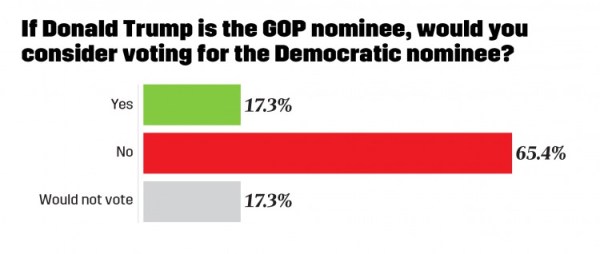
WORLD’s evangelical insiders disagreed. These days, they prefer Marco Rubio. Most telling, more than a third of respondents said they would either vote Democrat or stay away from the polls if Trump were the GOP candidate.

Ouch.

Similar stories emerge from another evangelical poll from the National Association of Evangelicals. NAE leaders were not in agreement about whom they thought best represented their values, but they seem heading toward the ABT camp. As the NAE report put it,

Trump did not perform well in the NAE poll with some leaders specifically noting ‘Not Trump’ or ‘Anyone but Donald Trump.’

With primaries and caucuses just around the corner, I wonder if this sort of evangelical ABT will catch on among conservatives.

The REAL Reason It Doesn’t Matter that Ben Carson is a Creationist

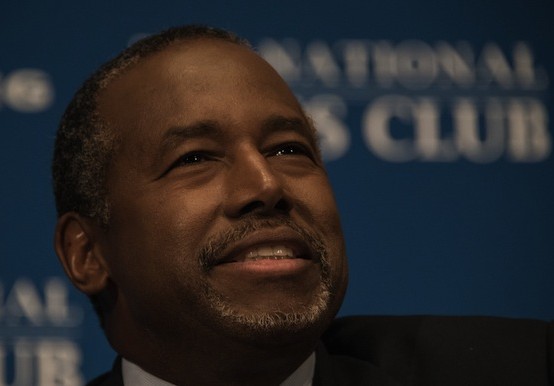
Have you seen it yet? Commentators such as Rod Dreher and Jeff Jacoby have opined that Ben Carson’s creationist Seventh-day Adventist faith doesn’t matter. All sorts of leaders, they write, hold kooky religious ideas. But that’s not why Dr. Carson’s faith doesn’t disqualify him. There’s a more complicated reason.

It's always worthwhile talking to an intelligent man...

It’s always worthwhile talking to an intelligent man…

Jacoby argues that Carson would be a perfect surgeon general. He could follow other creationist surgeon generals such as C. Everett Koop. When liberals comment that Carson’s creationist beliefs mean he’s anti-science, Jacoby points out that all sorts of religious people have all sorts of anti-scientific beliefs. Such theology does not mean they can’t perform their scientific duties.

As Jacoby concludes,

Can you regard someone’s religious creed as preposterous, yet entrust the person who is faithful to that creed with public office? Of course; Americans do it all the time. I can’t see Carson as president, but what I really can’t see is why his religion or his doubts about evolution (neither of which I share) should even enter the conversation.

There’s a simpler reason why Dr. Carson’s creationism doesn’t really matter. Like other humans, Carson is not a simple religious robot. We cannot read his denomination’s creed and assume we know everything he believes on every issue.  More important, we cannot read his creed and assume we know much about his lived faith.

As critics have pointed out, Dr. Carson has ranged far afield from his SDA roots in his effort to win votes. Traditionally, for example, Adventists decry the use of violence. Traditionally, too, Adventists insist on a rigid separation of church and state. Recent campaigning seems to have pushed Dr. Carson to put his conservative American identity in front of his SDA denominational identity on these issues. He has argued for more weapons in the hands of everyday Americans and more religion in everyday government.

I disagree with Dr. Carson’s positions on all these issues (for that matter, I also disagree with SDA orthodoxy on all these issues), but I’m glad he is not simply a creature of his denominational beliefs. After all, if someone had only their religious beliefs to guide them, he or she would be a terrifying leader.

What if a surgeon general believed only in faith healing, so he or she canceled government health programs? What if a leader of the Joint Chiefs of Staff believed only that non-Christians were evil, so he or she indulged in missionary warfare?

Luckily, that sort of religious extremism is atypical. Most of us have official beliefs that don’t really impact the way we live our day-to-day lives. We are Americans first, and then we are Catholic, or Muslim, or Hindu.

Indeed, it is not only religious people who do this but also anti-religious people. As Dostoyevsky’s Ivan personifies in Brothers Karamazov, there are atheists who fail to follow their anti-religious beliefs to their logical conclusions.

And thank goodness they do.

In short, Dr. Carson’s creationist beliefs don’t disqualify him for high office because he seems willing to back-burner them when necessary.

The One Thing We Know for Sure about Schools…

This week’s National Assessment of Educational Progress (NAEP) scores prove it. When it comes to education, there is one reliable truth out there. It’s not news; any educational historian worth his or her mortarboard could tell you about it.

But first, the news: NAEP, the “Nation’s Report Card,” shows stagnant or declining scores in math and reading. A bummer, after fifteen years of emphasis on jacked-up standards and high-stakes testing in public schools.

Up, up, up, ... and down.

Up, up, up, … and down.

Understandably, teacher activists who have derided the latest test-heavy reform efforts have offered bitter I-told-you-sos. The test-hungry reformers have scrambled to explain the decline. Michael Petrilli at the Fordham Institute retreats to the obvious explanation: It’s complicated. It might be due to non-testing factors such as classroom confusion, Petrilli explains. It might be due to the declining economy. Most important, Petrilli says, we need to remember that this decline might be only a “blip,” not a “trend.”

But anyone who knows the first thing about educational history knows it’s simple. There is one reliable constant in American education.

We can see it in bombshell cases such as Brown v. Board of Education (1954). Reformers hoped that ending legal racial segregation in schools could go a long way toward healing racism in this country. Sixty-plus years later, those assumptions seem painfully naïve. Schools are still segregated by race; cities even more so.

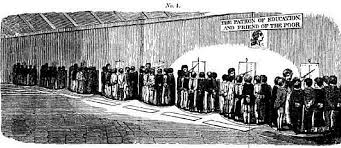
We can see it all the way back in the roots of urban school systems. Two hundred years ago, school reformer Joseph Lancaster promised a new method of organizing schools that would solve America’s poverty problem. Hundreds of low-income students could be educated with a cheap and simple monitorial system.

How schools can save society, 1815.

How schools can save society, 1815.

Guess what? It didn’t work. As long as there have been public school systems in this country, there have been eager reformers who have offered one idea or another as a silver bullet. Each reform, we’ve heard, will be the ticket to healing America’s schools and society. We’ve been told for hundreds of years that America’s schools will FINALLY fulfill their promise to end poverty, fix the economy, and etc. etc.

It’s just not that simple. Today’s round of high-stakes testing made elaborate promises. No Child, we heard, would be Left Behind. Schools, we heard, could now finally fix social inequalities and heal society’s injustices.

Would that it were so.

What we have instead is another reminder of the one thing we can count on in schooling, the one reliable truth about education.

Ready for it?

Here it is: Schools can’t fix society. Schools ARE society.

Ben Carson Wants Federal Control of Higher Education

If you’d like to be popular at a GOP event these days, don’t wear an Education Department lapel pin. As they have for decades now, conservative presidential candidates these days are falling all over themselves in their threats to eliminate the Education Department. But not Ben Carson! The uber-conservative neurosurgeon has something he wants the Ed Dept. to do.

SAGLRROILYBYGTH are tired of hearing this, but I’ve pointed out in my recent book and in the pages of Time.com that conservatives have not always hated the idea of federal influence in education. Back in the 1920s, cultural conservatives wanted the federal government to pump money into educational programs that would make America more conservative. Some conservative intellectuals these days have made similar noises—if the Ed Dept. can push conservative programs, some conservatives think, then conservatives need to get over their antipathy.

Dr. Ben Carson’s plan for the Ed Dept. goes even further. As he told Glenn Beck, Carson wants the federal government to seize control of higher education.

Here’s the plan: Carson hopes the Ed Dept. will “de-fund” colleges that ban conservative speakers. The department, Carson explained, should “monitor our institutions of higher education for extreme political bias and deny federal funding if it exists” [about 3:41 of the interview].

It’s not clear exactly what Dr. Carson thinks such defunding will mean. Nor can I tell how “extreme political bias” would be defined. But such quibbles largely miss the point.

For us at ILYBYGTH, the remarkable take-away from Carson’s candor is that he wants to assert sweeping new powers for the Education Department. This is a departure from both the past fifty years of mainstream conservative thinking and from the past hundred-fifty years of Seventh-day Adventist tradition.

Adventists, after all, have never been supporters of government power. Not even to push society in ways they might prefer. As liberal pundits have become eager to point out, Carson’s rhetoric about strong Americanism is a marked departure from SDA tradition. These days, Dr. Carson displays a weirdly non-SDA penchant for a powerful, intrusive government.

It’s certainly the case with Carson’s recent comments about the Education Department. I can’t imagine that SDA universities such as Loma Linda or Pacific Union College would endorse more federal control of their activities.