Required Reading: Matthew Lee Anderson on Non-Culture War Conservatism

“Why do the angry people get all the attention?” 

That was one of those audience questions that has stuck with me.  It was at a talk about the history of American creationism I gave a while ago to an audience of (mostly) committed students of biological evolution.  I had included one of my go-to bits from the aggressive atheist Richard Dawkins.  I often explain my purpose in studying conservative religion in American public life as a quest to deflate Dawkins’ 1986 warning: Anyone who does not believe in evolution, Dawkins insisted, must be “ignorant, stupid or insane (or wicked, but I’d rather not consider that).”  Though I don’t believe in creationism, I think many people who are not ignorant, stupid, or insane do believe it.  Our talk turned after that to the prominence of mean-spirited, angry culture warriors.  Why do such voices get all the attention, when most of us, whatever our beliefs, would prefer a respectful dialogue?  

Yesterday at Mere Orthodoxy, Matthew Lee Anderson posted another in his series on what it would take for conservative religious Americans to create a post-culture war persona.    

Anderson suggests “four moves” that would move the public engagement of conservative religious Americans in healthier directions:

1) Recover a robust doctrine of creation that is isn’t afraid to be doctrinal.

2) Emphasize the moral imagination and attempt to construct arguments that both appeal to and buttress it.

3) Remember that the church does not simply engage the culture, including politics, but is a culture and so has her own political order.

4) Reframe American exceptionalism around America’s responsibilities rather rather than its virtues. 

As Anderson admits, some of these moves might just be restatements of the goals of the last two generations of culturally engaged evangelicalism.  Carl Henry’s call in 1947 for a “progressive Fundamentalism with a social message” comes to mind.  But for those of us from the outside, those of us trying to understand conservative religion in American public life in order to take away some of the power of all the “angry voices,” understanding Anderson’s moves (and his supporting reading lists) might be a good place to start.

Required Viewing: In God We Teach

As we’ve noted recently, the controversy over religion in public schools did not go away in 1963 when the Supreme Court ruled that school-sponsored devotions violated the First Amendment. 

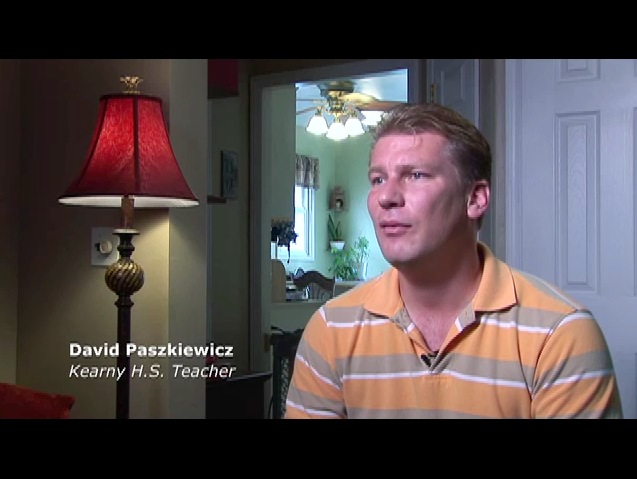
A new documentary probes a recent case from New Jersey.  As reviewed by Rob Boston on Wall of Separation, the film In God We Teach examines what can happen when an activist teacher meets an activist student.  In this 2006 case, teacher David Paszkiewicz was accused of preaching conservative evangelical Protestantism in class. 

As Boston describes,

David Paszkiewicz told students, “If you reject [Jesus’] gift of salvation, then you know where you belong” and “[Jesus] did everything in his power to make sure that you could go to heaven, so much so that he took your sins on his own body, suffered your pains for you, and he’s saying, ‘Please, accept me, believe.’ If you reject that, you belong in hell.”

Paszkiewicz had also promoted creationism in class, telling students that there were dinosaurs on Noah’s Ark.

A student in the classroom, Matthew LaClair, knew this was inappropriate. He also suspected that school officials would not believe him without evidence, so LaClair began recording portions of the classes. Soon he had solid evidence of Paszkiewicz’s in-class proselytizing.

For ILYBYGTH readers, the most interesting part of the film sounds like the parts in which Paskiewicz is allowed to explain his rationale.  Boston excoriates the teacher.  In Boston’s words,

I was struck by the teacher’s complete and utter inability to engage in any serious form of self-reflection. [Filmmaker Vic] Losick’s technique is to simply let the characters in this drama tell their stories. He doesn’t take a side. But only a theological ally of Paszkiewicz could see him as anything other than a typical smug and arrogant fundamentalist who believes that he has all of the answers – and that this gives him the right to spread his views in public school classrooms.

Paszkiewicz also comes off as disingenuous. At first, he tried to deny having made the “you belong in hell” statement. But LaClair had it on tape, so that failed. Paszkiewicz then fell back on blaming the students. They asked him about religion, you see, so had to talk to them about it. In the documentary, AU’s Lynn handily explains why this is nonsense.

I’m planning to take an hour and four minutes to see for myself.  Losick’s film is available online.  I’ll be interested to see if ILYBYGTH readers agree with Boston’s indictment of Paszkiewicz.

Required Reading: RJ Snell and a NEW New Christian Right

“Isn’t a ‘Fundamentalist intellectual’ an oxymoron?”

People ask me that question a lot.  There are lots of ILYBYGTH readers out there who are intrigued, but baffled, by the culture of conservative Christianity in America.  Like me, these are mostly folks who came from secular or liberal backgrounds.  Like me, most of these people just don’t have an intuitive grasp of the culture of conservative Christianity in America.

And a lot of those folks (still) assume a connection between conservative Christianity and intellectual sterility.  They tend to agree with Richard Dawkins’ 1989 statement, that if you meet someone who doesn’t believe evolution, that person must be “ignorant, stupid or insane (or wicked, but I’d rather not consider that).”  In this case, some secular or liberal people who don’t understand Fundamentalist America assume that any conservative Christians must be like Dawkins’ creationists.  In this understanding, the very definition of conservative Christianity means accepting a bunch of outdated ideas hook, line, and sinker.

In this vision of Fundamentalist America, conservative Christianity appears like a threatening monolith, a Borg-like* force that insists on transforming America into a goose-stepping echo box.

One of the first steps toward understanding what we’re calling Fundamentalist America is to understand the limits of that stereotype.  If we want to understand FA, we might start by trying to get a sense of the complexity of it.

A recent article by RJ Snell at Front Porch Republic will help.  In “Thoughts toward a New Religious Right,” Snell criticizes the impulse among some conservative Christian political activists to embrace an ethos of individualism too eagerly.

Snell writes,

We’re accustomed to thinking that the greater a being, the less it requires from others, the more it is self-sufficient, but this is only partially true. Shellfish have no friends, while humans need friends to thrive, and this is a mark of our grandeur, not our inadequacy.  

Snell critiqued the last generation of Christian activists for slipping too easily into the myth of the rugged individualist.  In their eagerness to combat an aggressive idea of collectivism, conservative Christians leaped precipitously into its opposite.  In doing so, Snell argues, conservative Christians forgot the central lessons of their own faith.

We outsiders who are hoping to understand the thinking of conservative religion in America could do well to begin with essays like Snell’s.  It is easy to think we understand the meanings of Fundamentalist America once we grasp a few high-profile ideas.  But if we really want to understand, we need to dig into the many different ideas and thinkers that make up its kaleidoscopic vision.

*Nerd alert.

The Bible in America: What Is the Bible For?

The questions we’ve been wrestling with for the past few weeks here at ILYBYGTH concern the nature, function, and meanings of the Bible in Fundamentalist America.

As I’ve admitted, I do not get it.  But I make no claim to be a Bible believer, at least not in the sense most conservative Christians mean.  I do know that if we hope to understand life in Fundamentalist America, we need to understand the ways Fundamentalist America understands the idea of “the Bible.”  Many of the non-Fundamentalists and anti-Fundamentalists I meet assume that reliance on the Bible as a source of morality and knowledge must imply a certain closedmindedness.  For many folks outside the boundaries of Fundamentalist America, the two sides in America’s rumbling culture wars are precisely that: on one side are openminded intellects who rely on Science and Reason; on the other side are militant Fundamentalists who depend on Scripture and Tradition.

If we want to understand Fundamentalist America, we need to probe beyond those political stereotypes.  Yesterday, Peter Leithart shared some thoughts on the use and meanings of the Bible on First Things.  My hunch is that Dr. Leithart would reject the label “fundamentalist.”  Nevertheless, his exposition What is the Bible For? will help outsiders understand what the Bible can be for in Fundamentalist America.

As Leithart agrees,

The Bible rarely lives up to our ordinary standards of practicality. Page after page is given over to genealogical lists of obscure people whose only role is to be a human bridge between famous ancestors and notorious descendants. A third of Exodus is nothing but verbal blueprints for building the tabernacle and the first quarter of Leviticus contains detailed regulations concerning sacrifice. Two lengthy chapters of Leviticus diagnose the varieties of skin disease that cause impurity. It seems so tedious, and even when the Bible holds our interest, it doesn’t seem very useful. Stories of plagues, exodus, and wars of utter destruction make for juicy reading, but how do they help one become virtuous? Why can’t the Bible be more relevant?

Both the problem and the solution, Leithart articulates, come not from the text but from the reader.  To understand the Bible, in his telling, we need to look at it as more than a old book:

Scripture is ethical paedeia, not an ethics manual. All Scripture is practical because God breathed all of it to form people, both individuals and community. God tells stories to stock our memory with a common moral past that projects his people into the future. God’s word expands our imagination to grasp more of what’s really there and to envision what might be there in the future. The Bible is useful because it opens our eyes, and because it’s highly impractical to walk through life with our eyes closed.

REQUIRED READING: The Irish Way

Over at Religion in American History, Janine Giordano Drake offered a thoughtful review of James Barrett’s The Irish Way.

For outsiders who hope to understand Fundamentalist America, Drake opens her essay with a interesting disclaimer:

People usually laugh when I tell them that, though I went to public school all my life, I didn’t meet a white, self-identifying Protestant until I got to college. Nobody ever “witnessed” to me; there were no “youth groups” around to my knowledge, and certainly nobody told me to read (or adhere to) the Bible. There were no “Christian groups” at my high school, and school prayer was never an issue. I usually don’t know what to say when people think I’m exaggerating. No, I’m not from an Old World immigrant community. I’m a fourth generation New Yorker, and I’m from the suburbs of New York City.

As Drake explains in her review, Barrett’s book offers a vision of multiethnic America that challenges casual assumptions about the historical dominance of white evangelical Protestantism.  I’m not sure how many academic historians these days assume that such was really the case for America’s past, but I agree that such assumptions are common among non-academic folks, and especially among conservative evangelical Protestants themselves.  Or, to be more precise, such assumptions are pointedly insisted upon among a segment of conservative evangelicals.

In any case, Drake describes Barrett’s book as giving us a “thick urban world” dominated not by evangelical Protestants but by Irish Catholics.  In Drake’s words,

The Irish, Barrett argues, were America’s first “ethnic group.” That is, Barrett finds that the Irish effectively taught subsequent ethnic groups how to be both respected as White Americans and simultaneously not-Anglo-Saxon-Protestant. He writes, “The Irish Catholic version of civic identity differed… from that of the WASP mainstream. At its best, it stressed a broad American Catholic identity that nonetheless recognized the integrity and worth of distinct ethnic cultures, and the rights of ethnic minorities to maintain these cultures” (102). In inventing an American way to be ethnic, Barrett argues, Irish Catholic Americans taught subsequent groups how to comfortably sustain their own culture and religion while also becoming American. In many ways, of course, this maintenance/reinvention of one’s ethnicity revolved around rejecting the Anglo-Protestant concept of civic identity that required Protestant religious sensibilities.

For those of us interested in understanding Fundamentalist America, this is a useful reminder of why we need to expand our definition of “fundamentalism.”  When we talk about Fundamentalist America including all sorts of conservative religious folks, including (some of) the urban Irish Barrett’s book describes, we use a definition most academic religious historians would not like.  The traditional academic definition of fundamentalism still insists that the term necessarily includes only a subset of conservative evangelical Protestants.  For academic religious historians, the best working definition of “fundamentalism” still comes from historian George Marsden.  In his 1980 Fundamentalism and American Culture, Marsden defined the term as “militantly anti-modernist Protestant evangelicalism.”

But such a restricted definition ignores the ways conservatives of different faiths have come together in the past generation to form a powerful cultural bloc.  If we leave militant conservative Catholics–some of them the heirs of Barrett’s Irish Way–out of our definition, we won’t be able to grasp the ways Fundamentalist America really works.

Of course, the other option is to change our terminology.  If we called this bloc of traditionalist Americans something besides “Fundamentalist,” we could avoid this whole mess.  For instance, we could call it “Moral Majority” America, or “Christian America,” or “Bible” America, or something.  In my opinion, though, none of these alternatives captures the energy and drive of Fundamentalist America.

To return to Drake’s opening, I certainly would not laugh if she told me that no one at her public school ever asked her to join her prayer circle.  No one ever asked me.  I went to public high school in the very Irish northern suburbs of Boston.  Officially, however, I suppose my family would fit as WASPs, though we were only half “AS” and only very vaguely “P.”  Nevertheless, for most of my life I assumed that the borders of Fundamentalist America remained somewhere far south and west of me.  Only once I began working as a high-school teacher did I realize that I was simply unaware of the fact that I had been living all along deeply within those borders.  My ignorance of the strong culturally conservative presence all around me didn’t mean that it wasn’t there.  It was there among the Irish who trod Barrett’s Irish Way, just as it was among the “WASP” successors to Dwight Moody who still maintained their strong Boston presence.


John Fea and Christian America

Messiah College historian and author of Was America Founded as a Christian Nation? John Fea posted a terrific article today.  In his Anxious Bench piece, John Fea shares a series of intriguing glimpses of his travels and travails through Christian America.

He tells of his run-ins with main-line Protestant ministers, right-wing talk-show hosts, and even Therapy Dogs International.

REQUIRED READING: “The New Phrenology”

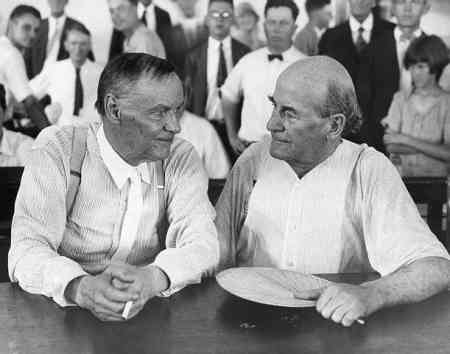
Fundamentalists resent liberals’ smugness.  Fundamentalist intellectuals, especially, have long chafed at their opponents’ equation of conservatism with ignorance and isolation.   In the Scopes Trial of 1925, celebrity anti-evolutionist William Jennings Bryan–former Secretary of State, holder of multiple earned and honorary college degrees–protested that he had met with “kings, emperors, and prominent public men,” but he had never been called an “ignoramus . . . by anyone except an evolutionist.”  Until his dying day, Bryan maintained a protest membership in the staunchly pro-evolution American Association for the Advancement of Science.

Bryan and the man who called Bryan an "ignoramus."This week we have a new articulation of this fundamentalist tradition.  In a scathing piece in this week’s The Weekly Standard, editor Andrew Ferguson tees off on liberal “psychopundits” who use questionable social-science research to prove “that Republicans are heartless and stupid.”

The first of Ferguson’s targets is journalist and academic Thomas Edsall.  In a March article in the New York Times, Edsall summed up a handful of research studies that prove that richer people tend to pooh-pooh poor people’s problems.  Ferguson takes Edsall to task for wrapping his punditry in a hazy gauze of shady research.

Ferguson also attacks writer Chris Mooney.  Not surprisingly, Ferguson was offended by the premise of Mooney’s new book, The Republican Brain: The Science of Why They Deny Science—and Reality.  As with Edsall, Ferguson blasts Mooney’s “wide-eyed acceptance of this social science, no matter how sloppy or ideologically motivated.”

As with other conservative intellectuals, what seems to gall Ferguson the most is the combination of ignorance and intellectual snobbery.  On one hand, liberals, evolutionists, and other anti-fundamentalists lambaste conservatives for attacking “Science.”  On the other, those same anti-fundamentalists often misuse or misunderstand the very science they claim to be supporting.

REQUIRED READING: Protester Voices

For those who hope to understand Fundamentalist America in the twenty-first century, a good place and time to start would be Kanawha County, West Virginia, 1974.

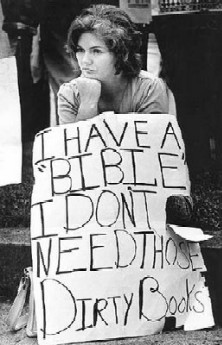
The raucous 1974-1975 school year in this county surrounding Charleston saw a burst of public controversy over the teaching in its public schools.  Protesters vilified a set of textbooks adopted by the school district.  At its peak, the protest and school boycott included a sympathy strike by the area’s miners and even a spate of gunshot attacks and the bombing of a school-administration building.  The fight in Kanawha County, as argued by both protesters and historians, can correctly be seen as the birthplace, or at least the midwife, of an emerging populist conservative movement.

The controversy has attracted its share of recent attention from scholars such as Carol Mason and journalists such as Trey Kay.

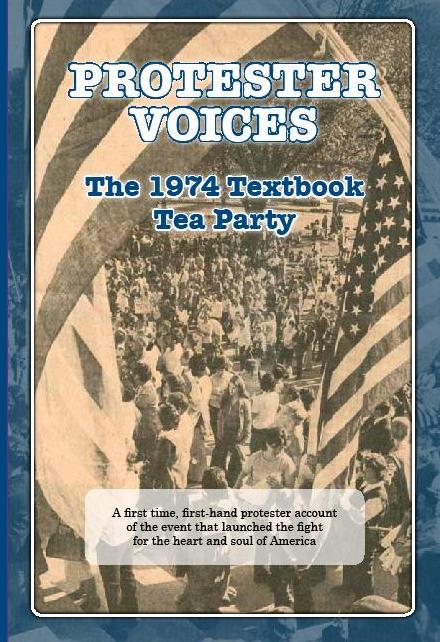
Thanks to the energetic activist Karl Priest, we now also have an account of the controversy written from a prominent member of the movement itself.  Priest’s 2010 book Protester Voices offers a view from inside the textbook protest movement.

Priest’s story is unabashedly partisan.  The tone and style of his book are those of a bare-knuckled culture warrior rather than those of a disinterested academic.  Priest has achieved a reputation as one of today’s leading anti-evolution internet brawlers.  In addition to his anti-evolution work, Priest is also currently active in Exodus Mandate.  This organization promises “to encourage and assist Christian families to leave government schools for the Promised Land of Christian schools or home schooling.”  Those who hope to explore the worlds of conservative Christian activism in twenty-first century America will soon run into the work of Karl Priest nearly everywhere they turn.  Indeed, when ILYBYGTH first starting imagining how intelligent, educated people could embrace creationism (see, for instance, here, here, here, here, and here), we were accused of being merely a front for Priest.

In his 2010 book, Priest takes other writers to task for their anti-protester bias.  He dismisses Carol Mason, for example, as someone who “concentrate[s] on the exception to the rule” (37).  The protest movement, Priest insists, must not be understood as an irruption of racism or vigilante violence.  The protesters themselves cannot fairly be dismissed as “wild-eyed ignoramuses” (xiii).  Such accusations, Priest insists, demonstrate the bias of left-leaning scholars more than the lived reality of the protest itself.  The leaders of the movement, in Priest’s view, “suffered financial loss. . . . [and] endured snide remarks and mocking.”  They did so in order to defend their schools and community against the imposition of taxpayer-funded textbooks that included aggressive racism and sexual depravity.  Priest defends the rank and file of this movement, also slandered mercilessly by other writers, as “Norman Rockwell Americans” (63).

Priest agrees with other commentators that this textbook controversy provided the launching pad for a new kind of conservative activism.  Kanawha County attracted national leaders such as Mel Gabler and Max Rafferty.  The fledgling Heritage Foundation sent legal advisers.  The 1974 protest, Priest claims, heralded the new generation of populist conservatism that continues in today’s Tea Party movement.

For anyone hoping to understand Fundamentalist America, this book is an important resource.  Not only does Priest’s account offer a staunch defense of the fundamentalist side of one of the most significant controversies of the late twentieth century, he also includes a reflection on the meanings of fundamentalism itself.  Though he prefers the term “Bible-believing Christian,” Priest insists that “Being a fundamentalist, contrary to what liberals have propagandized, is nothing to be ashamed of just by the attachment of the term” (3).

Required Reading: Fundamentalist America Defends Its Borders

The knives are sharp!  At the Religion in American History blog, Randall Stephens has published a collection of snippets of angry reviews of his recent book and New York Times op-ed.

For all those who are trying to make sense of Fundamentalist America, the book, the op-ed, and the hostile reviews are all worth reading.

Stephens and his co-author Karl Giberson took to task the culture of conservative evangelical Protestantism–maybe the most powerful single faction of what we call Fundamentalist America–for supporting a raft of puffed-up self-declared experts.  Stephens and Giberson themselves are evangelical Christians and teach at a Christian college.  But the false experts, they insist, do not represent the totality of evangelical Protestant intellectual life.  A fundamentalist “Rejection of Reason” is only one possible style of evangelical belief.

The angry denunciations of their work demonstrate the defensive stance of some twenty-first century conservative Christians.  As Stephens points out in his blog post, the “haters” were notable for the “red-faced, veins bulging-out-of-the neck, barking jeremiad passion” of their reviews.

Required Reading: Greg Forster and the Hundred Years’ War

At the Witherspoon Institute’s Public Discourse this morning, Greg Forster introduced a three-part series inquiring into the changing relationship between evangelicals and politics in the United States over the past century.  The series, Evangelicals and Politics: The Hundred Years’ War, promises to examine the tense relationship between conservative evangelicals and political life.

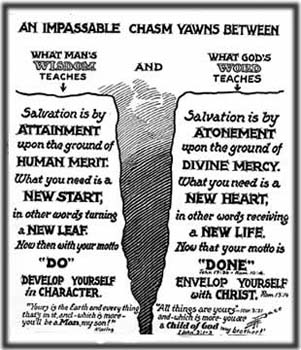
An Impassible Chasm

From EJ Pace, Christian Cartoons, 1922

Forster is deeply sympathetic to the cultural claims of conservative evangelical Protestants.  Though he would likely dispute the label, he writes about what I call Fundamentalist America from deep inside its boundaries.  He works and has worked for a variety of conservative foundations, including the Kern Family Foundation and the Friedman Foundation for Educational Choice.  He has written about the Joy of Calvinism and argued in favor of the marketization of schooling.

In this series, he asserts that evangelical political activism has been a force for good throughout the twentieth century.  “Good citizens,” he notes,
“don’t stand by while their nation is threatened, and evangelical political activity has accomplished much good. Although the rising tide of moral disorder has not been reversed, its progress has been halted in many respects, and forces of renewal are gathering. All of this was made possible largely by evangelical efforts.”

But Forster does not simply present the History of Heroic Fundamentalists.  He takes conservative evangelicals to task for misunderstanding the implications of the Great Schism, the split among Protestants around the turn of the twentieth century between “modernists” and “fundamentalists.”  In Forster’s words:

“Before the schism, America had a longstanding social consensus on how to reconcile religious freedom with public morals: the state would legislate based on the moral consensus of society, but keep its hands off directly confessional issues and try to steer clear of inhibiting diverse religious exercise. Meanwhile, beyond the bounds of state power, America’s leading institutions would be predominantly defined by and loyal to the Protestant view of the world. This strong yet informal Protestant cultural authority would keep the citizenry moral, so the coercive power of the state could be mostly kept out of moral formation in the interests of religious freedom.

“The Protestant schism was the decisive factor that ended the old social order. To be sure, a variety of other factors were already weakening it; for example, the injustices imposed upon Catholics and Jews were becoming steadily harder to ignore. However, the schism destroyed the framework of the social order from within. Protestantism could no longer serve as a moral center of society once no one could say with any confidence what “Protestantism” was.

“But evangelical leaders misunderstood the nature of the threat. They didn’t seem to grasp that the schism had destroyed America’s Protestant cultural consensus. They spoke and acted as though it was still basically sound in the country at large, and was only being challenged by a cabal of liberal secularists who were hijacking America’s culturally leading institutions (especially denominational bodies and universities). In short, they thought of the crisis more in terms of apostasy by a relatively narrow set of leaders than a true schism of the church.

“Because of this misunderstanding, evangelicals turned to politics as a tool for mobilizing social power and cultural influence to wage their battle against the liberal secularists. They expected that politics would give them the power they needed, because elections are based on majority rule and America was still basically a Protestant country.”

Forster’s analysis fits.  In some key “fundamentalist” political battles, conservatives hoped to mobilize the power of the state to support their cultural power.  As I argue in my book Fundamentalism and Education in the Scopes Era, (coming soon in paperback, pre-order now!) 1920s fundamentalists were successful when they mobilized a broad spectrum of Protestant support.  They were less so when they fought against liberal Protestantism.  So, for instance, when they disputed the teaching of evolution in public schools, liberals successfully castigated them as hillbillies and anti-intellectuals.  But when they pressed for laws mandating Bible reading in public schools, they met far less resistance.

I’m looking forward to the rest of Forster’s series.