The Perfect Valentine’s Day Gift

Nothing says “I Love You” more than a book about conservatism and education in American twentieth-century history. Looks like the timing will be perfect.

How to say "I Love You" (But You're Going to Hell)

How to say “I Love You” (But You’re Going to Hell)

My new book is slated for release in early February. Hard to know how it will be received, but one pre-reviewer has called it “a major rethinking of the history of American education.” Another has added, “it would be flat-out wrong to ignore this important book.” Pshaw. . .

For the sophisticated and good-looking readers of ILYBYGTH, the content might not be surprising. In this book, I try to figure out what it has meant to be “conservative” about education in the United States.  How have issues such as creationism, school prayer, and sex ed developed over the course of the twentieth century?  How are they related?  How have conservative attitudes and strategies changed?  How have they remained the same?

In the early days of my research, I had planned to explore the educational activism of leading conservative groups such as the American Legion and the Institute for Creation Research. I was stuck with two big problems, though.

First, the Legion and other conservative groups remained active throughout the twentieth century. How could I describe different conservatives without rehashing the chronology over and over again? I didn’t want to work from the 1920s to the 1970s in every chapter. What to do?

My second problem was one of definition. How could I choose which “conservative” groups to study? I could copy the method of leading conservative scholars such as Russell Kirk or George Nash and use my selection to make an argument about the definition of conservatism. Both Kirk and Nash picked their subjects to give a particular definition to conservatism. For both writers, being a true conservative has meant being a heroic intellectual battling waves of ignorance and knee-jerk leftism. But I’m no conservative myself, and I wasn’t interested in imposing a flattering (or un-flattering, for that matter) definition on American conservatism. What to do?

Luckily for me, I had some help. At a conference back in 2009, I was describing my research. One of the audience members suggested a new approach. Instead of picking and choosing which activists counted as “conservative,” instead of describing the activism of one group after another, why not do it differently? Why not let conservative activists define themselves? This leading historian suggested that I investigate events, not groups.

That’s what I did. I looked at the four biggest educational controversies of the twentieth century: The Scopes Trial of 1925, the Rugg textbook fight of 1939-1940, the Pasadena superintendent ouster of 1950, and the Kanawha County textbook battle of 1974-1975. In each case, conservative activists and organizations fought for their vision of “conservative” schools. By looking at controversies instead of organizations, I could let conservatives define themselves. And I could move chronologically through the twentieth century without rehashing the stories in each chapter.

Did it work? Now I have to let readers and reviewers be the judge. My goal was to explore what it has meant to be “conservative” in the field of education. I did not want to make the relatively simpler argument that conservatism has really meant X or Y. I did not want to give conservatives a heroic history they could draw upon. Nor did I want to give their enemies a catalog of conservative sins. I’m hoping readers think this approach has worked.

So if you’re looking for that perfect romantic gift, consider The Other School Reformers!

School Politics Cracks the Race Wall

The unions like the one on the left...

The unions like the one on the left…

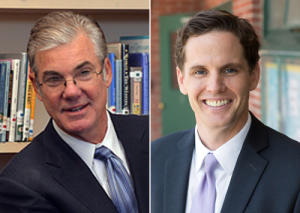
Who backs market reforms of schools? Conservatives, of course, and rich people. Oh, and African American voters. The race for superintendent of public instruction in California is suggesting a dramatic realignment of electoral politics. But those conservative dreams might not be warranted.

As we’ve explored in these pages (here and here, for example), white conservatives have long dreamed of shaking off their racist reputations. In school politics, it seems those efforts have finally begun to bear fruit.

It has not been easy. The conservative, or, to be more precise, the more conservative candidate for New York City mayor tried to woo non-white voters with similar school appeals. That candidate, Joe Lhota, blasted Bill de Blasio for his opposition to charter schools. Such schools, Lhota insisted, were the only educational hope for “minorities and inner city children, and children of immigrants.”

In New York City, it didn’t fly. But the race in California is much different. According to the San Jose Mercury News, one candidate for superintendent has cobbled together a coalition of super-rich backers and conservative voters, plus Latino and African American support.

That candidate, Marshall Tuck, is running neck-and-neck with the establishment choice, incumbent Tom Torlakson. Tuck’s success is built on his appeal to both the rich and the poor. The teachers’ unions have spent plenty to support Torlakson, but Tuck has still managed to outspend them, thanks to his deep-pocketed backers among the usually conservative California business elite.

Non-white voters like Tuck’s plan. According to a recent poll, Tuck leads by 38% among African American voters and 13% among Latinos. Why? One expert thinks that such voters want more charter schools, more vouchers, and less power for teachers’ unions.

Could this be the realignment conservatives have long been dreaming of? A chance to appeal to the conservative feelings among non-white voters? A chance to split off non-whites from the clutches of the Democratic Party and get them voting Republican on issues such as gay rights, abortion, and school choice?

After all, there have been similar epochal realignments in electoral politics. Most famously, FDR managed to convince African Americans to vote Democrat. Since the days of Abraham Lincoln, African Americans had been solidly Republican. Or, more recently, Reagan wooed “lunchpail” Democrats to the side of the GOP.

Could we be on the verge of a similar realignment? One in which conservative non-white voters ditch the Democrats in favor of the more conservative GOP? And if so, will school politics lead the charge?

There are a couple of things that should temper the hopes of conservative poll watchers. First, this California race is non-partisan. Both candidates are Democrats. So conservative African Americans and Latinos can vote for the more conservative candidate without abandoning the party of FDR and LBJ.

Second, though Tuck is the candidate with the more conservative positions, he’s not calling himself that. Instead, as with much of school politics, Tuck is calling his marketization plan the side of “school reform.” And his election fund, filled by mega-rich donors, officially calls itself “Parents and Teachers for Tuck.”

In this case, non-white voters seem to like the market idea that conservatives have long promoted. But they like it when it comes in a Democratic Party wrapper. They like it when it is called the progressive choice, not the conservative one.

Will non-white voters soon flock to the conservative banner? Maybe, but this race shows they might only do so if conservatism calls itself something else.

Don McLeroy’s Long Game

What do Phyllis Schlafly, Moses, and country/western music have in common? They all get happy shout-outs in new history textbooks in Texas.  Or at least, that’s what conservative education leaders wanted.  As Politico reported yesterday, new history textbooks in Texas are causing a stir.  But this time, it is liberal activists, not conservative ones, who are denouncing the textbooks as biased and ideological.

What Hath McLeroy Wrought?

What Hath McLeroy Wrought?

The new textbooks were written to satisfy new standards approved years ago by the Texas State Board of Education.  Back then, conservatives on the board, led by the genial Don McLeroy and the obstreperous Cynthia Dunbar, pushed through new standards that warmed the hearts of conservative activists.

No one who watched Scott Thurman’s great documentary about these Revisionaries can forget the moments when the SBOE debated including more country-western music and less hip hop.  More positive statements about Reagan and the National Rifle Association.  More happy talk about America’s Christian past and less insistence on the horrors of racial segregation.

The Revisionaries

The Revisionaries

As Don McLeroy said at the time, “America is a special place and we need to be sure we communicate that to our children. . . . The foundational principles of our country are very biblical…. That needs to come out in the textbooks.”

Now those changes in the Texas standards have shown up in new social-studies textbooks.  As Stephanie Simons reports in Politico, liberals have complained that the new texts are woefully biased.  In some spots, the books apparently knock Affirmative Action.  They pooh-pooh the benefits of taxes.  They imply that racial segregation was really not so bad.

For those who know the history of America’s educational culture wars, this seems like a drastic turnabout.  Throughout the twentieth century, conservative school activists complained that they had been locked out of educational influence by a scheming leftist elite.  Textbooks and standards, conservatives complained, had been taken over by pinheaded socialist intellectuals.

In one of the most dramatic school controversies of the twentieth century, for instance, conservative leaders lamented the sordid roots of new textbooks.  That battle took place in Kanawha County, West Virginia, across the tumultuous school year 1974-1975.  Conservatives were disgusted by the sex and violence embedded in new literature textbooks.  But some of them weren’t surprised.

Conservative leader Elmer Fike told readers that the textbooks were bound to be rotten.  In Fike’s opinion, conservatives didn’t even need to read the books.  As he explained,

You don’t have to read the textbooks.  If you’ve read anything that the radicals have been putting out in the last few years, that was what was in the textbooks.

As the Kanawha County battle ground on, California’s conservative celebrity schoolman Max Rafferty came to town.  Rafferty, too, told a crowd of West Virginians that they shouldn’t put any faith in textbook publishers.  Those publishers, Rafferty explained, only wanted to make a buck.  As he put it,

They have no particular desire to reform anybody, do anybody any good or find a pathway to heaven.

These days—in Texas at least—the shoe is on the other foot.  The conservative standards that the state adopted in 2010 have pushed market-conscious textbook publishers to come up with books that meet them.  And at least some conservatives are delighted with the success of their long game.  As conservative school board member David Bradley told journalist Stephanie Simon, liberals who complain about biased textbooks can lump it.  “They need to put on their big-girl panties,” Bradley crowed, “and go run for office.”


Are Conservatives Secretly Racist?

No matter how much they may deny it, conservative intellectuals and activists these days are often accused of being secretly racist.  Influential African American conservatives such as Thomas Sowell, Clarence Thomas, and Ben Carson are accused of being suckers and “Uncle Toms.”  As an article in the New York Times argues, perhaps the racial strife in Ferguson, Missouri will give conservatives a chance to prove their anti-racist claims.

Is this the "conservative" side? ...

Is this the “conservative” side? …

As I argue in my upcoming book, racial thinking among white conservatives as a whole has changed dramatically over the course of the twentieth century.  In the 1920s, school battles did not pit conservatives as the “racist” side against “anti-racist” progressives.  Indeed, in fights about evolution in the 1920s, mainstream scientists such as Henry Fairfield Osborn often supported the white-supremacist notions of writers such as Madison Grant.  White conservatives in the 1920s were mostly guilty of what we would call racism, but then again, so were white non-conservatives back then.

By the 1950s, mainstream conservatives had changed their thinking on racial issues dramatically.  First of all, the tumult over school desegregation led some conservative intellectuals such as William F. Buckley Jr. to support “states’ rights” over racial desegregation.  And in the massively resisting South, white resistance to desegregation often became coupled with a conservative anti-communism.

But outside the South, white conservatives often tried to insist that their opposition to school desegregation was not due to racism.  In Pasadena, for example, a progressive superintendent’s plan to desegregate the district met with ferocious opposition from conservatives.  But those conservatives insisted that they were not racist.  They insisted that their opposition to desegregation did not mean that they thought non-whites were inferior.

...Or is THIS the "conservative" side?

…Or is THIS the “conservative” side?

Similarly, in the school controversy that engulfed Kanawha County, West Virginia in 1974, white conservative activists insisted that they were not racist.  They opposed new textbooks that included passages from racial firebrands such as Eldridge Cleaver and George Jackson.  But, as conservative leader Elmer Fike put it,

The protesters do not object to authors because they are black, but they do believe convicted criminals and revolutionaries like Eldridge Cleaver should not be recognized.

Since then, mainstream white conservatives have worked hard to prove that their conservatism does not make them racist.  Does this new racial firestorm in Missouri give them a new chance to prove their sincerity?

In a recent article in the New York Times, journalist Jeremy W. Peters suggests it might.  Peters cites the nervousness of conservative leaders such as Rand Paul, Ted Cruz, and Erick Erickson.  All three conservatives, Peters notes, have spoken out against the massively militarized police response to the unrest in Ferguson, Missouri.  Peters says that this sort of conservatism marks a shift.  Since the late 1960s, conservatives have traditionally been the side of law and order.  These days, Peters wonders, conservatism might find itself embracing instead a renewed emphasis on limiting the power of government.  What conservative, Senator Paul might ask, wants to see a militarized police force bearing down on protesting citizens?

But the Missouri conflagration suggests another important question as well.  If conservatives really are the anti-racists many of them claim to be, this Ferguson situation might offer white conservatives a chance to side with African American conservatives as a united anti-racist conservative voice.  Legitimate protests against overweening government power could certainly rally conservative support, white and black.

And if conservative activists want to prove that they are not secretly racist, what better way to do so than to side with the protesting citizens of Ferguson, Missouri?


Does Anyone Actually Read the Index?

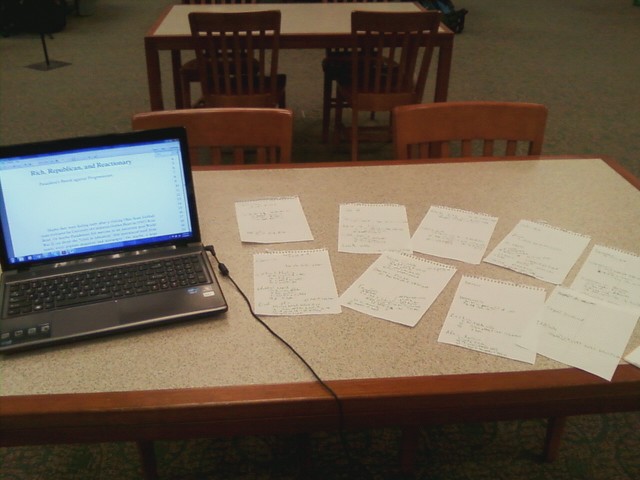
My eyeballs are beginning to chafe.  This week, I’m finishing up the index for my new book.  It’s a lot of work, even though I had a gifted grad student do most of the intellectual heavy lifting.

How the sausage gets made...

How the sausage gets made…

So now I’m wondering: Does anyone actually read the index?  I know professional academic historians do.  In fact, that’s one of the first cheap tricks we learn in our PhD programs.  We flip quickly to the back to see what we can glean from the index.  What are the book’s themes?  What are its main ideas?  Its blind spots?

But do any normal people read a book’s index?  Make no mistake, I’m compiling a kick-ass index, whether anyone ever reads it or not.  But I can’t help but wonder if readers will find useful my painstaking distinctions between “authoritarian teaching” and “traditional education.”

Coming soon...

Coming soon…

Will anyone care that I spent so many long hours in a stuffy library teasing out the nuances of “educational conservatism” as opposed to the broader category of “conservatism” in general?


Can Conservatives Care about Black People?

Would you take twenty-five million dollars from a conservative donor?

That’s the question posed recently to the United Negro College Fund.  The love-em-or-hate-em Koch brothers gave a $25 million donation, and some voices in the academic community want the UNCF to give the money back.  We have a different question to ask.

The prominent historian Marybeth Gasman argued that the UNCF should give the money back.  [Full disclosure: Professor Gasman and I will both be contributing chapters to an upcoming volume about agnotology and education.]  For anyone who knows the history of African-American higher education, Gasman wrote, this sort of conservative funding raises ominous red flags.

As Gasman has demonstrated, philanthropists have too often exerted control over historically black colleges and universities (HBCUs) and the UNCF.  James Anderson, too, has argued that philanthropists have pushed HBCUs away from liberal-arts education and towards manual training courses.

With that history in mind, Professor Gasman insisted that the Koch money is tainted.  “The Koch brothers,” she wrote,

have a considerable history of supporting efforts to disenfranchise black voters through their backing of the American Legislative Exchange Council. In addition, the Koch brothers have given huge amounts of money to Tea Party candidates who oppose many policies, initiatives, and laws that empower African Americans.

Balderdash, say leading conservative intellectuals.  In the pages of Forbes  Magazine, George Leef argued that the UNCF should be celebrating.  First of all, Leef insisted, the Koch brothers’ anti-big-government activism will help African Americans, not harm them.  And in addition, the money is just money.  Take it, spend it, help people, Leef concluded.

In an interview with Michael Lomax of the UNCF, American Enterprise Institute’s Frederick Hess suggested a similar happy ending.  Lomax told Hess that he hoped to take money from whomever he could.  Too much ideological thinking, Lomax said,

has really poisoned the thinking of some people all across the country. For them, there’s this kind of purity thing that, unless we agree on everything, there is no common ground.  Call me a pragmatist but, if I can agree on something meaningful with folks that I don’t agree with on other things, I’m going to try to work on what we agree on and, hopefully, build a meaningful and productive relationship.

Professor Gasman worried that the Koch brothers will use their gift to have a nefarious influence on the UNCF. Lomax insists it won’t. But in the world of conservative education policy, we’ve seen a different struggle.

As I argue in my upcoming book, conservative intellectuals and activists have argued since the end of World War II that their school policies did not make them racist. As we’ve seen in these pages, conservatives have worked long and hard to overcome the accusation that conservatism is inherently anti-black.

In 1950 Pasadena, for example, progressive superintendent Willard Goslin pushed a new zoning plan that would have desegregated Pasadena’s schools by race. Conservatives reacted furiously and eventually booted Goslin. But their opposition to desegregation, conservatives insisted, did not make them racist. To prove it, many conservatives cited the support of prominent African American leaders. As one conservative activist told a packed school-board meeting, her anti-deseg petition could not possibly be racist, since it was signed by “her Negro, Mexican and Oriental neighbors.”  Plus, this woman told the meeting, she could not be racist, because she had become friends with a “Negro physician” in her neighborhood.

Similarly, in the fight over textbooks in 1974 Kanawha County, West Virginia, conservatives insisted that their position did not make them racist. In that case, new textbooks included provocative passages from writers such as Eldridge Cleaver and George Jackson. White conservatives hated the books, but not because they were racists, they insisted. In their support, conservatives cited prominent African American voices such as George Schuyler.

In all these cases, conservative educational activists trumpeted the support of African American voices to prove that their conservative ideas did not make them racist. In a way, foes of the Koch brothers could argue that this UNCF gift will serve a similar purpose. If folks like Professor Gasman accuse the Koch brothers of racism, the Koch brothers can now call on Michael Lomax and the UNCF to burnish their anti-racist credentials.

Professor Gasman argued that the Koch gift will come with unacceptable strings. But we could also ask this question: Is the UNCF now vouching for the Koch brothers? Is the UNCF willing to back the Koch brothers when they insist that their conservative activism does not make them racist?


Conservative Christians: More Racist than Pro-Life

HT: JS

Historian Randall Balmer made the case recently in the pages of Politico that the Christian Right did not emerge as a response to loosened abortion laws.  Rather, the “real” roots of the New Right, Balmer argues, were in the defense of racial segregation.  Unfortunately, the argument looks more like punditry than history.

I’m a big fan of Professor Balmer.  In fact, I’m re-reading his book Mine Eyes Have Seen the Glory right now as I begin research for my next book.  And his Politico essay is certainly worth reading in its entirety.  But he makes more of a political argument here than a solid historical one.  If I were to offer a more precise headline, I’d suggest something far less catchy, but closer to the historical truth, something terrible like, “The Real Roots of the Christian Right: Not Biological Reproduction, but Cultural Reproduction.”
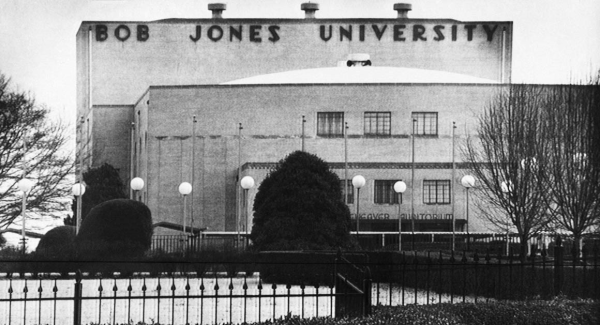
The Roots of Racist Academies?

The Roots of Racist Academies?

In other words, in the late 1970s, evangelical Protestants got involved in politics in big numbers because they were worried about preserving their status as a certain sort of favored class in American life.  This included things such as racial segregation, but to say that racial segregationism drove the movement is woefully misleading.  It was a broad sweep of issues, most urgently educational issues, that drove evangelicals back into politics in the 1970s.

Balmer makes the solid case that abortion did not spark the emergence of the New Christian Right.  The timing just doesn’t work.  In the immediate aftermath of the Roe v. Wade decision, evangelicals seemed largely indifferent to the issue of abortion.  For readers who find this hard to believe, a look at Daniel Williams’ book God’s Own Party will help.

What DID motivate conservative evangelicals, Balmer notes, was the increasing pressure on private religious schools from the IRS.  In the wake of decades of desegregation laws, the federal government had begun revoking tax exemptions from private schools that discriminated on the basis of race.  As Balmer correctly points out, this anti-federal animus motivated far more conservative evangelicals in the 1970s than did pro-life campaigns.

Nevertheless, Balmer’s conclusion doesn’t hold water.  “Although abortion had emerged as a rallying cry by 1980,” Balmer insists,

the real roots of the religious right lie not the defense of a fetus but in the defense of racial segregation.

It is true that school segregation played a role in the rise of the evangelical private school movement.  And it is certainly true that Bob Jones University maintained a rigorous white supremacist position long after most other white conservatives had abandoned it.  But to argue that racial segregation somehow formed the “real roots” of the New Christian Right oversimplifies the historical realities.

Please don’t get me wrong: I’m no apologist for racism or for conservative evangelicalism.  I agree that many white conservative evangelicals, like other white Americans, had and have a shameful attitude toward racial equality and racial integration.  My argument is an academic one: If we want to understand the history of conservative evangelicalism, we won’t get far by insisting that racism was the “real root” of their political activism in the 1970s.

That sort of argument is sadly similar to attempts by conservatives to smear all Democrats by citing the radical words of leftists such as Saul Alinsky or Bill Ayers.  It’s not that some Democrats don’t sympathize or even follow Alinsky or Ayers.  But to say that such folks are the “real root” of liberal thinking is just not accurate.

To make a better historical case, Balmer should have argued that issues about schooling motivated evangelicals in the 1970s to get involved in politics.  Those issues included racial segregation, but they also included questions of school discipline, perceived drug use at schools, perceived immorality at public schools, and a host of other issues.  For all these reasons, a burst of new private schools popped up to serve conservative evangelical families.  And the defense of such schools drove many evangelicals into politics in the 1970s.

Were these schools “segregation academies?”  The history is clear, but not simple.  Certainly, some white evangelical parents—along with white non-religious parents—chose private religious schools as safe racist harbors in the days of school desegregation.  The timing proves it.  Though many evangelical parents may have cited 1960s Supreme Court rulings such as Engel v. Vitale (1962) or Abington v. Schempp (1963) as the time when public schools went to hell, the burst of private Christian schools did not happen until the late 1970s.

Not coincidentally, those were the years when large school districts came under pressure for the first time to desegregate by race.  But we commit an intellectual error if we conclude glibly that such schools ONLY represented racist havens.  I’ve wrestled with the question of “Christian day” schools and racial segregation in a book chapter a few years back.  Consider a couple of complicating factors.

The situation in Louisville, for instance, seems at first to confirm the hypothesis of racial integration as a primary factor in the growth of private evangelical schools.  After that city’s court order to bus children in 1974 as part of an ambitious desegregation plan, there was a spike in enrollment at the city’s existing Catholic and secular private schools.  In addition, a crop of new evangelical schools immediately opened to serve white families who did not want to bus their children.  One study found that most of the parents at these new evangelical schools identified desegregation as their primary reason for leaving the public schools.  Another academic study of Louisville’s desegregation history, however, suggests some important qualifications.  At two private evangelical schools that had existed for years before the 1974 court order, only one of sixty-eight fundamentalist families used the schools as a “haven” from busing.  Although whites fled from public schools to a range of private schools, this indicates that at least some of the existing evangelical schools did not take advantage of the surge of white interest in private education.

Another statistic that confounds glib conclusions about the primarily racial motivation for new Christian schools is that the largest recipient of white students fleeing from desegregation was not private evangelical schools but rather the booming suburban public high schools of the 1970s and 1980s.  Contrary to popular impressions, throughout the 1970s and 1980s, the numbers of students attending private schools nationwide dropped from 13.6 percent in 1960 to 9.8 percent in 1990.  Meanwhile, the proportion of white students attending public elementary and high schools nationwide increased markedly.  Those students, however, had moved mainly into suburban public schools.  For instance, the suburban schools surrounding Atlanta served ninety-eight percent of the area’s white students in 1986.

Throughout the twentieth century, conservative evangelicals cared deeply about education.  In the 1970s, savvy political organizers recognized that many evangelicals thought schooling had become threatened.  As Professor Balmer correctly points out, part of that perception came from the perceived “threat” of racial mixing in schools.  But that was only one element of the perceived danger to education.

The real roots of the Christian Right can’t be limited only to racism.  Rather, we will do well to understand how profoundly important educational issues were to the new political mobilization that swept evangelical America in the 1970s.

The Files Are In!

Well, there’s nothing more to be done about it now.  I’ve just sent my final draft of my next book manuscript to the publisher.  There’s a sense of relief at being done, but also trepidation at the impossibility of further revisions.  After years of researching, writing, then revising, revising, revising, it’s hard to believe I won’t be able to keep tweaking and improving.

Pre-order your copy today!

Pre-order your copy today!

In general, though, I’m extremely pleased with the shape of the manuscript.  In a nutshell, I try to make the case that we’ve seen a potent tradition of educational conservatism in the United States, one that has had a decisive impact on the structure and content of schooling.  And, I argue, that tradition has not been recognized by historians or education scholars.

To make this case, I examine in four looooong chapters the four biggest school controversies in twentieth-century America: the Scopes Trial of 1925, the Rugg textbook controversy of 1939-41, the Pasadena superintendent ouster of 1950, and the Kanawha County textbook battle of 1974-75.  What did conservatives say and do in these controversies?  In each case, the attention-grabbing events attracted conservative participation from both locals and national leaders.  In each case, the issues prompted conservatives to articulate their visions of proper schooling.  To me, that’s the interesting question.

We’re still a ways from final publication.  The publisher will send me proofs in July.  At that stage, I’ll put together the index and fine-tooth-comb the proofs for any typos.  But I won’t be able to make substantive changes at that point, just minor corrections.

During these last weeks, as I’ve been going over the copy-edited chapter files, I’ve been very grateful for the careful work of the editor.  She or he pointed out some embarrassing errors on my part and I’ve been able to make changes in the argument.  Hopefully this draft is as crystal-clear as I can make it.

I’m looking forward to hearing what readers think of the book.  For that, I’ll have to wait until 2015.  The press will release the book on January 12, 2015.  Pre-orders are available!


Pre-Orders Now Available!

Want to be the first on your block to get your copy of The Other School Reformers?  Then pre-order your copy today!

Pre-order your copy today!

Pre-order your copy today!

As I was happy to announce recently, Harvard University Press will be releasing the book in early 2015.  But the pre-order just became available on sites such as Amazon.  The hardcover won’t be available until January 12, 2015, but if you pre-order today, you’ll be sure to WOW your friends and family by getting your hands on it first.

The Other School Reformers

Clear your calendars! We have a release date. The Other School Reformers will be hitting store shelves in February.  I know that’s a long time to wait, so I’m suggesting everyone dress up as their favorite conservative educational activist and camp out outside their local bookstore.

Coming January 2015.

Coming January 2015.

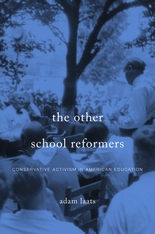
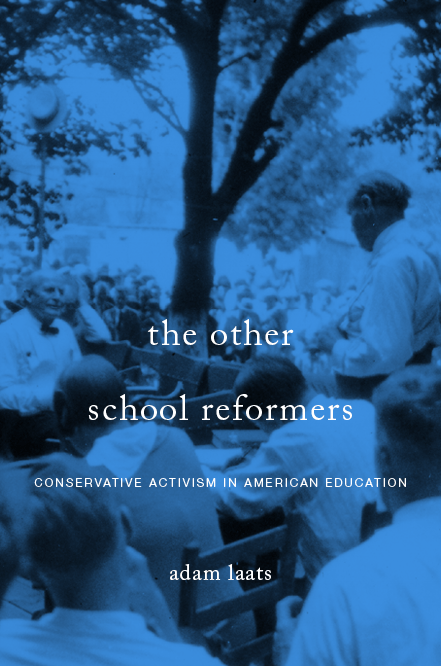
Thanks to the Smithsonian for this terrific cover image.  That’s Clarence Darrow (standing) facing William Jennings Bryan at the Scopes Trial.  In this book, I examine four epochal school controversies from the twentieth century.  In each case, I ask what conservative intellectuals and activists wanted out of schooling.  My goal is to find out what it meant to be “conservative” when it came to education.

The catalog listing just went up.  Here’s how the talented folks at Harvard University Press describe the book:

The idea that American education has been steered by progressive values is celebrated by liberals and deplored by conservatives, but both sides accept it as fact. Adam Laats shows that this widely held belief is simply wrong. Upending the standard narrative of American education as the product of courageous progressive reformers, he calls to center stage the conservative activists who decisively shaped America’s classrooms in the twentieth century. The Other School Reformers makes clear that, in the long march of American public education, progressive reform has more often been a beleaguered dream than an insuperable force.

Laats takes an in-depth look at four landmark school battles: the 1925 Scopes Trial, the 1939 Rugg textbook controversy, the 1950 ouster of Pasadena Public Schools Superintendent Willard Goslin, and the 1974 Kanawha County school boycott. Focused on issues ranging from evolution to the role of religion in education to the correct interpretation of American history, these four highly publicized controversies forced conservatives to articulate their vision of public schooling—a vision that would keep traditional Protestant beliefs in America’s classrooms and push out subversive subjects like Darwinism, socialism, multiculturalism, and feminism. As Laats makes clear in case after case, activists such as Hiram Evans and Norma Gabler, Homer Chaillaux and Louise Padelford were fiercely committed to a view of the curriculum that inculcated love of country, reinforced traditional gender roles and family structures, allowed no alternatives to capitalism, and granted religion a central role in civic life.

Almost makes me want to read it myself.  For me, the next steps will be to review and copy-edit the full manuscript next month.  Then in July I’ll put together the index, with help from a talented graduate student.