The Tough Questions

How do we start?  What about students? …and isn’t it cheating to sneak in a definition after I say I’m not going to impose a definition?
floridagators3

They’ll bite!

Those were some of the smart and tough questions leveled at your humble editor last night after my talk at the University of Florida’s College of Education research symposium.  The edu-Gators (ha) were a wonderful group of scholars to talk with.  I got a chance to hear about their work in schools and archives, then I got to run my mouth a little bit about the culture-war questions that keep me up at night.

The theme of the symposium was “Strengthening Dialogue through Diverse Perspectives.”  Accordingly, I targeted my talk at the difficult challenge of talking to people with whom we really disagree.  I shared my story about dealing with a conservative mom who didn’t like the way I was teaching.  Then I told some of the stories from the history of educational conservative activism from my recent research.
University of Florida

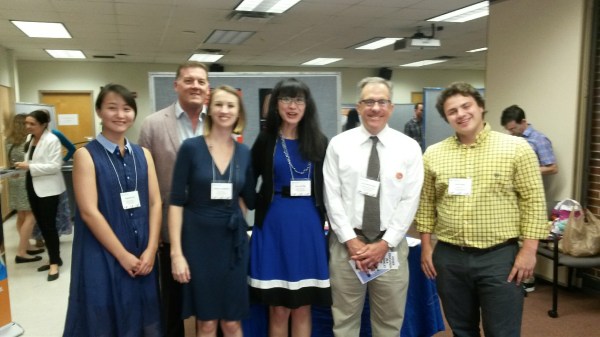
The UF crew…

What has defined “conservative” activism in school and education?  Even though there isn’t a single, all-inclusive simple definition of conservatism—any more than there is one for “progressivism” or “democracy”—we can identify themes that have animated conservative activists.  Conservatives have fought for ideas such as order, tradition, capitalism, and morality.  They have insisted that schools must be first and foremost places in which students learn useful information and have their religion and patriotic ideals reinforced.

Underlying those explicit goals, however, conservatives have also shared some unspoken assumptions about school and culture.  Time and time again, we hear conservatives lamenting the fact that they have been locked out of the real decisions about schooling.  Distant experts—often from elite colleges and New York City—have dictated the content of schools, conservatives have believed.  And those experts have been not just mistaken, but dangerously mistaken.  The types of schooling associated with progressive education have been both disastrously ineffective and duplicitously subversive, conservatives have believed.

That was my pitch, anyway.  And the audience was wonderful.  They poked the argument (politely!) to see if it would really hold.  One student asked a tough question: Given all this history, all this poisoning of our dialogue between conservatives, progressives, and other, how do we start?  A second student followed up with another humdinger: I talked about conservative parents and school board members and leaders, but what about students?  What should a teacher do if she finds herself confronted with a student who has a totally different vision of what good education should look like?  Last but not least, a sharp-eyed ed professor wondered if I wasn’t doing exactly what I promised I wouldn’t do: Impose a definition on “conservatism” by offering a list of defining ideas and attitudes.

How did I handle them?

Well, SAGLRROILYBYGTH, your humble editor did his best, but those are really tough ones.  In general, I think the way to begin conversations with people with whom we have very strong disagreements is to start by looking at ourselves.  Are we making assumptions about that person based on things he or she isn’t actually saying?  Are we seeing them through our own distorted culture-war lenses?

And if students in class disagree with us about these sorts of culture-war principles, we need to remember first and foremost that they are our students.  If a student in my class, for example, is super pro-Trump, I want her to know first and foremost that I welcome her in my class and she is a member of our learning community.  It gets tricky, though, if a student wants to exclude other students based on these sorts of religious and ideological beliefs.

Last but certainly not least, I don’t think it’s unfair to offer themes and ideas that have defined conservatism over the years.  I’d never want to impose those definitions on historical actors, Procrustes-style.  But once we take the time to listen and learn to our subjects, we can and should suggest some things that they have had in common.

On to breakfast with graduate students and a chance to participate in Dr. Terzian’s schools, society and culture colloquium.  Bring on the coffee!
Hello, Florida!

Good morning, SAGLRROILYBYGTH!

Wish me luck–I’m on my way to the Sunshine State.  Thanks to my colleague Sevan Terzian, I’ll be giving a keynote talk at the University of Florida’s research symposium this evening.  I can’t wait.

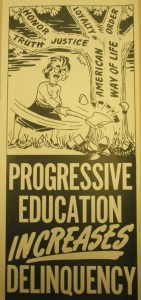
What will I be talking about?  Well, you’ll have to wait until after the talk for a synopsis, but I can tell you that I’ll be using these images from my research into twentieth-century educational conservatism.

Allen Zoll’s attack on progressive education, from Pasadena, 1950

The American Legion warns of treasonous textbooks, 1940

Watch out for communism in your local school, c. 1951

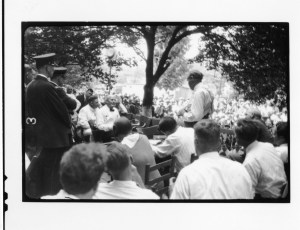
Scopes Trial, 1925

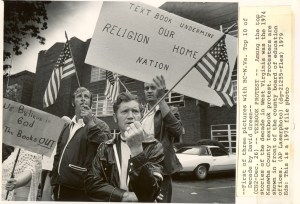
Kanawha County’s protesters, 1974

Teacher Fired for Heroic Incompetence

I’m no cynic. But anyone who’s paying attention knows that schools serve a range of purposes. We see depressing evidence today that one of their primary functions is to contain and control young people. How do we know? Because a teacher in New York City was fired, according to her, for talking about structural racism in a way that would “rile up” her African American students. Yikes.

Lee Walker Fired

Fired for heroic incompetence…

The story is grim. Jeena Lee-Walker has sued New York schools for her termination. Beginning in 2012, school administrators asked her to tone down her teaching about the Central Park Five case. As all New Yorkers remember, a group of young men were falsely convicted of raping a woman. They were eventually freed, but only after spending long years in prison.

Lee-Walker taught her students about the case. Many of them, she thought, “should be riled up” about the deep injustice done, as well as about continuing injustices in American society.

Her administrators thought differently. They gave her several bad evaluations and eventually fired her for “insubordination.”

Let me be crystal clear here: I think all teachers should be like Ms. Lee-Walker. All teachers should “rile up” their students about injustices in our society.

But we need to recognize two complicating factors. Though I’m a big fan of his, I think Curmudgucrat Peter Greene misses the boat here when he says Lee-Walker was “fired for competence.”

She was fired for two other reasons, reasons central to the successful functioning of any school. Even as we praise Ms. Lee-Walker’s bravery and integrity, we need to be a little more clearheaded about what was really going on. In short, Ms. Lee-Walker’s unwillingness to go along with the school system really DID make her incompetent as a teacher. Heroic, yes, but not willing to do the job.

That might sound odd, so let me offer two long-winded explanations.

First, teachers are not simply private citizens. Ms. Lee-Walker will not have luck protesting that her First Amendment rights have been breached. And, by and large, none of us want to cede to teachers such rights. Consider, for example, what we might think if she had been accused of promoting political or religious agendas with which we don’t agree. What if she “riled up” students by denouncing abortion? Or by denouncing evolution?

In principle, then, we need to acknowledge that teachers are bound to stick within curricular guidelines established by the school and community. I’ll repeat: in this case I think those guidelines are utterly bogus. I think we should encourage all New York City high schools to emulate Ms. Lee-Walker’s decision to teach the Central Park Five case. It is the truth and young people deserve to learn about it.

But if and when a heroic teacher decides to go against her superiors, she should be prepared to be kicked out. That is equally true whether we agree or disagree with the teacher’s ideas. I’m going to say this again, just because I think it could be misinterpreted: In this case, I side wholly with Ms. Lee-Walker. Her protest, however, should not be taken as a simple case of good teaching vs. evil administrating. Rather, this is a heroic attempt to push the curriculum in New York City schools toward this sort of teaching. Ms. Lee-Walker should have expected to get fired—even WANTED to get fired—because that was her only chance to take her appeal to a wider stage.

We don’t have to like it, but I think we need to be clear about our terms. In this sort of case, the closest analogy is that of Kim Davis, the Kentucky county clerk who refused to issue marriage licenses. To some, she was a hero, to others a poorly coiffed villain. In the end, however, she was a government bureaucrat who refused to do her job. Whatever we think of her politics or religion, no institution can function if it doesn’t purge such folks.

Rowan County Clerk Kim Davis celebrates her release from the Carter County Detention center in Grayson Kentucky

Fired for heroic incompetence…

That brings us to our second point. This story drives home the depressing custodial role schools and teachers play in our society. We tend to think of schools as educational institutions—and they are—but they are also holding pens of varying levels of pleasantness.

As a result, a big part of the job of school administrators is to keep the students relatively calm. With a dizzyingly high student-to-teacher ratio, most schools rely on passive and compliant students. When and if students choose to throw off schools’ restraints, there is not much administrators can physically do to coerce them into submission.

In some schools, this results at worst in hijinx such as food fights. In other schools, we get a prison-like atmosphere in which students are continually monitored and physically controlled.

Is that a good thing? Not at all. But if we want to make sense of this case and the many other cases like this, we need to understand the many things that schools do in our society. Teachers are not merely Socratic wisdom-peddlers in the agora. They are street-level bureaucrats who help process large numbers of young people in educational containment systems.

The point of Ms. Lee-Walker’s actions—if she was acting intentionally—was not merely to teach children something true. The point was to make a public spectacle of the fact that New York City schools do not regularly include that sort of teaching. She was not “fired for competence,” but for her stubborn insistence on principled incompetence, her brave unwillingness to go along with a system that fails students so miserably.

Just When You Thought It Was Safe to Be a Creationist on Campus…

Who’s the racist? In creation/evolution debates these days, you’re likely to hear creationists tar evolution as a racist idea. Recently, however, young-earth creationist impresario Ken Ham complains that creationist anti-racism has now been labeled a racial “microaggression.”

It has long been a favorite claim of creationist activists. At the end of the twentieth century, for example, veteran creationist campaigner Jerry Bergman argued that Darwin’s evolutionary ideas led in a direct line to the Nazi Holocaust. From the Institute for Creation Research, too, Henry Morris insisted that creationists were the true anti-racists, since they believed all humans came from the same original two ancestors.

Small wonder, then, that creationists today are flummoxed by their renewed role as racists. Ken Ham took umbrage at a new list of microaggressions published by the University of California. As have many campus commentators, the UC list warns that some statements intended to be innocent or race-neutral may actually carry undertones of white privilege. For instance, to say that race doesn’t matter, or that one does not believe in race, can be seen by some as a fair-minded anti-racist statement. For others, however, such “color-blind” statements de-legitimize the unique difficulties experienced by racial minorities.

Ken Ham does not seem interested in those sorts of distinctions. Rather, he tackles the UC accusation head-on, insisting that his creationist anti-racism is the only truly scientific position. As he puts it,

Really, “races” is just an “evolutionized” term we shouldn’t use anymore because the idea is simply not true. So for the University of California to say that we shouldn’t say there’s only one race flies in the face of what observational science has clearly shown to be true! And of course, the Bible makes it obvious there is only one race because all humans are descended from Adam! The University of California (and many other campuses) is trying to suppress certain ideas and promote only one worldview—even contrary to observational science. Our starting point really does matter!

To this reporter, Ham’s umbrage seems to miss the point. By the time California students had time to be offended by his creationist anti-racist microaggression, wouldn’t they already be even more put out by his macro-aggressive creationist evangelism?

I’m Convinced: We Need More Conservatives on Campus

[Update: For new readers, this conversation has evolved since the post below.  In short, I’m not convinced anymore.  I now think there are better, more practical solutions to this dilemma.  Check out the developments here.]

My eyes were opened a few years back. I was offering a senior seminar in the history of American conservatism. Several students—some of whom eventually took the class and some of whom did not—came to my office and said something along the lines of “Thank God we finally have a conservative professor!” When I explained to them—sympathetically but clearly, I hope—that I was not actually conservative myself, students had a variety of reactions. Some were deflated. But another common response convinced me that Jon Shields and Jon Zimmerman are right.

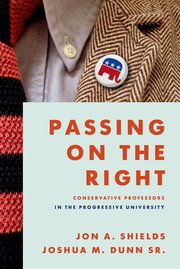
Shields Passing on the Right

Time for more affirmative action?

Shields has made the case again recently that college campuses need to recruit more professors who come from conservative backgrounds. He reviews the available research and concludes that conservatives are victims of explicit, intentional bias. As a result, there are far fewer conservative professors than we need if we want to have truly diverse campuses.

Years ago, Zimmerman made a similar argument. Like me, he’s no conservative himself. But he thinks universities need to be more inclusive places, more representative of our society’s true diversity. The best way to do that, he argued, was to reverse the trend toward intellectual homogeneity among college faculty. As he wrote back in 2012,

Race-based affirmative action has made our universities much more interesting and truly educational places, adding a range of voices and experiences that hadn’t been heard before. Hiring more conservative faculty would do the same thing.

I’m convinced, and not just because Jon Zimmerman is the smartest guy I know. The things I heard from my wonderful students told me that something was indeed wrong with our current set up.

When I told students that I wasn’t conservative myself, many of them told me something along these lines: You may not be conservative personally, but at least you don’t make fun of me or belittle me for being a conservative.   At least I can be “out” with my conservative ideas in your class. In most of my classes, I feel like I have to keep my ideas to myself or I will be attacked by students and teachers alike.

Yikes!

Please correct me if I’m off base, but isn’t that EXACTLY the problem that our campaigns for campus inclusivity have been meant to address? I know some folks think this notion of affirmative action for conservatives is a travesty, an insult to underrepresented groups that have faced historic persecution and discrimination. I understand that position and I agree that conservatives as a group cannot claim the same history as other groups.

But is there anyone out there who would want a campus climate in which students were belittled and attacked for their ideas?

Even if we want to do something about it, however, it is not at all clear how. As Neil Gross has argued, there is not really a liberal conspiracy when it comes to hiring professors. Rather, there has been a more prosaic tendency for people to go into fields in which they think they will be comfortable.

Maybe we could look to Colorado as a guide. They have had a conservative affirmative-action plan going for a while now at their flagship Boulder campus. How has it worked?

In any case, I’m looking forward to Professor Shields’s new book, scheduled for release next year. It promises to share the data gathered from 153 interviews and other sources. Maybe it will help us break out of this logjam.

Should College Classes Make Students Uncomfortable?

Whitney Cox is right on. In her classes at the University of Houston, she insists that conservative religious students be open to the idea of discomfort as they study the Bible. Can we translate her advice to college students in general?

whitney cox

Preach!

Cox tells the story of a “star pupil” who worries that her Bible class might shake up his preconceptions. It should, she replies. She doesn’t want to tell the student what to believe. In fact, she insists that she is not willing or able to do so. But she does want her class to challenge him to think about the Bible in new ways.

Hear, hear. That is the purpose of education, especially higher education. IMHO.

So here’s our question: What if we change things around a little bit? What if we replace a conservative religious student with a left-leaning social-action student?

I’ve argued lately that the recent tumults on college campuses result from an “impulse to orthodoxy” among such leftist students. Students demand an end to ideas that make them feel “unsafe.” They demand the ouster of faculty and administrators with whom they disagree.

Could such students and such campuses benefit from Cox’s advice? Here’s what she told her conservative student:

I find frustrating the too-frequent sentiment from Christians that equates interrogating and examining the texts with destroying faith. There is a strain of anti-intellectualism in modern US Christianity that is vile, unbiblical, and deadlier to faith than scholarly examination could ever be. It demands an unquestioning obedience and punishes anyone who doesn’t conform to the party line, who dares to question the people in power.

I am forever angry at the orthodoxies that demand literal belief as an all-or-nothing proposition, not only because that kind of approach makes you immune to reason, but because it means that more likely than not, that one bit of counter-information that makes it through takes down the rest like a Jenga tower. I’ve seen this a lot with people raised as strict creationists but who later realize that the scientific support for evolution is overwhelming — and because they’ve been taught they can’t doubt one part without doubting it all, they end up tossing it all out the window. Because they’ve learned that any questioning is evil, they decide they have to take all their questions elsewhere.

Fantastic, and right on.  SO right on, in fact, that we should broaden it to include other sorts of student worry as well.

What if we tweaked the wording here and there? What if we gave this advice to students?

I find frustrating the too-frequent sentiment from left-leaning students that equates interrogating and examining the texts with racism. There is a strain of anti-intellectualism in modern US society that is vile, anti-social, and deadlier to social justice than scholarly examination could ever be. It demands an unquestioning obedience and punishes anyone who doesn’t conform to the party line, who dares to question the people in power.

Please don’t misunderstand me. As I’ve said repeatedly, I support the moral impulse behind the student activism at many schools today. Like many commentators, though, I worry that the necessary tension has been leached out of campus life.

Schools must be aggressive and decisive in their efforts to make sure every student feels welcome. Incidents such as the repeated racial hazing at Mizzou, for example, are not merely over-wrought snowflake problems.

The flip side of that campus necessity, however, is that students must be intellectually challenged. They must be physically safe. More than that, they have a right to demand institutional action to help them feel confident that they are safe from demeaning microaggressions.

Too often, however, this vital goal of safe spaces has turned into an overzealous drive for intellectual safety. Nothing will kill higher education faster than that.

I’ll say it again.  We need to remember both halves of the higher-education mandate:

  • Students must be physically and even emotionally safe.
  • Students should never feel intellectually safe.

If we’re doing our jobs, as Whitney Cox is, this should apply in equal measure to conservative creationists and progressive anti-racists.

Power on Campus: Fundamentalists Have the Last Laugh

It doesn’t make a lot of sense. At places such as Yale, Claremont McKenna, and Missouri, presidents are resigning and faculty are trembling. Ham-fisted protesters are demanding an end to free speech. Halloween costumes have become a disguise for racial oppression. To regular joes and pundits alike, this burst of campus outrage can seem puzzling. But there is one group to whom this phenomenon would make perfect sense.

A brief review of the cases:

The episodes can tell us a good deal about the real levers of power on campus. Who doesn’t have power? Administrators charged with insensitivity toward systematic racism and oppression. They get the boot, and fast, if they seem to oppose racial inclusivism.

Who else doesn’t have power? Students who want bread-and-butter economic reforms of higher ed. Even when a million students protested for lower tuition and lower student debt, it didn’t generate the same feverish buzz as these recent racial protests. To my knowledge, no university president has resigned because his or her school is expensive.

Who else is out? Even protesters against racial insensitivity, if they try to use physical coercion. When that happened recently at Missouri, for instance, the offending bully resigned and even sympathetic leftist pundits agreed that the protesters weren’t “always-wise.”

Just as informative, these protests tell us who really has power on campus. Who has it? Football teams. Duh. But even those athletes are energized by a surprising fact.

The real power on campus these days comes from an ancient but complicated moral idea. We might call it “the impulse to orthodoxy.” It can be tricky to understand, especially since no one is talking about it in those terms. The impulse to orthodoxy includes a moral two-step: Not only must people behave in a moral way, but they must actively seek out and root out those who fail to understand the proper reasons for moral action.

How does this ancient idea work in today’s campus protests? The successful campus protests these days insist not only that school leaders fight racism. More telling, protesters are fired up by the idea that they are under a moral imperative to expose and exclude all those who do not adequately understand the nuances of systematic racism.

At Missouri, for example, system president Tim Wolfe eventually resigned due to a perceived lack of administrative action against repeated racial incidents. The protesters wanted more than new policies. They wanted Wolfe out. Why? Because Wolfe personally seemed to misunderstand or even belittle complaints about systematic racism. One student leader went on a much-publicized hunger strike until Wolfe was kicked out. The student, Jonathan Butler, explained that only the ouster of Wolfe would make the school “a better place.”

At Yale, too, the impulse to orthodoxy has caused some observers to scratch their heads. On one level, it seems like a slightly hysterical protest about a fairly reasonable request. Faculty masters Nicholas and Erika Christakis suggested that students might relax about Halloween costumes. So what’s the problem? Morally orthodox students could not stand Christakis’s suggestion that they simply “look away” from offensive outfits. For the orthodox, looking away from immorality is as bad or worse than the immorality itself.

A similarly insufficient zeal damned an administrator of the elite Claremont McKenna College in California. Dean of Students Mary Spellman wrote a sympathetic email to a student who complained about racial insensitivity. So what’s the problem? Spellman included a line about non-white students who “don’t fit our CMC mold.” To protesters, such language smacked of a hidden, intolerable insensitivity.

In all these cases, school leaders and faculty are under attack for two reasons. First, they are accused of displaying an inadequate understanding of and zealousness about racial inclusivity. The oft-confusing part, though, comes from the second reason. The impulse to orthodoxy demands that such inadequate agreement be tirelessly sought out and ruthlessly purged. It is not enough to apologize. Campus protesters feel free to use any coercion, stamp out any speech, if those things seem to promote immorality.

Today’s racial protesters will be surprised at the people who might understand them best: Protestant fundamentalists. As I’m finding out as I research my new book, the history of fundamentalist higher education is mostly the story of a similar impulse to orthodoxy. Beginning in the 1920s, it was not enough for fundamentalists simply to protest against secularization of the academy. It was not enough simply to disagree with the theological implications of evolution. Rather, for fundamentalists since the 1920s, it was necessary to demand that schools purge all such things. When that didn’t work, fundamentalists opened their own schools, places such as Wheaton College, Bob Jones University, and Bryan College.

Throughout their histories, fundamentalist colleges have taken drastic action to purge any hint of compromise. In 1961, for example, Wheaton scientist Russell Mixter had to offer elaborate apologies to those who thought he might have accepted mainstream evolutionary theory.

These days, similar drastic action is wracking the campus of Bryan College. Faculty who seem not to be sufficiently zealous in their embrace of a young earth are being shown the door.

Of course, the specific moral ideas are extremely different. At fundamentalist colleges, the dangerous trends were toward theological modernism and evolutionary science. At today’s elite mainstream colleges, the moral imperative demands the removal—root and branch—of those who don’t sufficiently act against systematic racism.

Yet the impulse remains the same. The moral imperative of orthodoxy requires more than just a certain set of ideas. It implies a tireless and ruthless dedication to root out all those who do not adequately understand or embody those ideas.

Yale + Halloween = Kardashian

Do we dare not to care?  You’ve seen the news by now: Students and administrators at Yale fretted that thoughtless Halloween costumes might subject them to “cultural appropriation” and steal from them their “voice” and “agency.”  Certainly, it’s easy enough to poke fun at this sort of holiday “snowflake”-ism.  But there’s another question we should also ask: Why do we care?

Insensitive appropriation of cats?...pirates? ...bad taste?

Insensitive appropriation of cats?…pirates? …bad taste?

In case you’ve been preoccupied with real life, the story can be told quickly.  (If you’d like more detail, try here, here, or here.)  Yale’s administration issued an email suggesting that students should think in advance about the cultural sensitivity of their costumes.  Don’t use blackface.  Don’t go as a “wild Indian.”  Etc.  One faculty member, Erica Christakis, responded that such warnings reduced adult Yale students to quivering infants.  Can’t we all be trusted, she asked, to act a little subversive on Halloween?

The response was swift and sure.  Students and their allies denounced Christakis and called for her removal.  They denounced her intentions and racist and oppressive, though she had explicitly supported “concerns about cultural and personal representation.”

It is easy enough to bemoan Yalies’ response to this Halloween email as another egregious overreach by “Snowflake Totalitarians,” privileged students who censor and shout down any smidge of a disturbing idea.  It is also fairly easy to defend the students, in the words of one writer, “to understand why people of color would feel marginalized by the email and the university.”

I’ve said it before and I’ll say it again.  I tend to agree with the protestors.  Or, at least, I’m happier to see students morally outraged—perhaps to excess—than to see students drinking their way through country-club collegiate life.

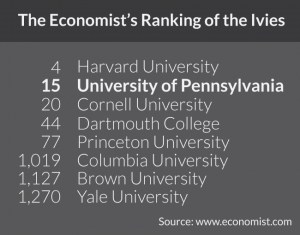
But let’s consider a different question today: Why do we care?  Why is it so very interesting to so many of us what goes on at Yale?  After all, hardly anyone actually goes to school there.  For almost everyone, college life is worlds removed from the elite goings-on at Yale, or Princeton, or Harvard.  And, if we measure college by relative earnings, Yale comes out near the bottom.yale low rank

So why do we care?  I’d like to suggest two possible reasons and I’ll welcome suggestions and denunciations.  In essence, though, I think we’re seeing here the higher-educational fruits of Americans’ ferocious love/hate relationship with celebrities.

First, I think there’s some amount of schadenfreude at play.  Just as ratings skyrocket when Kim Kardashian stumbles through another atrocious episode of her public life, we regular folk outside of the Ivy League love to see those snobs act stupid.  More proof, if we needed it, that those grapes were sour to begin with.

Also, I detect among academic schlubs like myself a certain titillation with the celebrity factor.  No one doesn’t know Yale.  Americans are excited and interested in the lifestyles of the rich and famous.

When Ivy-League students act with predictably adolescent over-zealousness to each new situation, do we all have to talk about it so much?  Or will it be culturally insensitive of us to take Professor Nicholas Christakis’s advice and “look away”?

Shocking Kids to Justice

Is it a good idea? For decades now, progressive teachers have sought to shock children into recognizing their traditional prejudices. Recently, a Kansas teacher ignited some controversy by showing a provocative video. His goal was to shock kids out of their anti-gay mindsets. They are not easy questions: Should teachers intentionally shock and provoke their students in order to make them better people?  It’s easy to see such teachers as heroes when we agree with their goals, but what about when we disagree?

But first, the latest: according to ThinkProgress, Tom Leahy is fighting for his job. Leahy, a high-school teacher from Conway Springs, Kansas, was disturbed by the anti-gay murmurings he noticed among his students. To help show his kids the light, Leahy showed them a short film, “Love Is All You Need.”

The film depicts a world in which heterosexual kids are bullied for their sexuality. One heterosexual girl ends up killing herself.

Outraged parents demanded Leahy’s ouster and the school district complied. At first, Leahy agreed to go, but after an outpouring of support he’s back in his classroom.

I think I would like Tom Leahy. He sounds like an engaged and caring teacher. I, too, was saddened and concerned in my high-school classroom by the nonchalance with which some kids made anti-gay statements. Like Leahy, I hastened to intervene to let kids know that such hateful attitudes, such targeted hostility was not okay.

But is it a good idea to shock kids into enlightenment?

The tactic has a long history. SAGLRROILYBYGTH have probably heard the story of Jane Elliott. In 1968, the story goes, when Martin Luther King Jr. was assassinated, Elliott began an anti-racism activity with her third-graders in Iowa.

Kids with blue eyes were given extra benefits. Kids with brown eyes had to wear fabric collars. Hostility quickly erupted between the two made-up groups of kids. Elliott didn’t let the two groups play together or drink from the same water fountains. She explained that collar-free kids tended to be smarter and better behaved. The next day, she reversed the set-up. Now blue-eyed kids wore the collars and suffered the consequences.

The point was to let white kids experience discrimination, to let them “[walk] in a colored child’s moccasins for a day.”

Are such shock tactics a good idea?

Sometimes, social justice is going to seem shocking. When the US Supreme Court ruled in 1954 that schools could no longer be segregated by race, nothing much changed, because no one in power was willing to ram such shocking change through the system.

Nevertheless, I think we need to remember to give such tactics the smell test. Even after forty-five years, Jane Elliott’s tactics seem harsh and unnecessarily cruel. Her taunting of her third-graders just doesn’t seem right, no matter how noble the goal.

Does Tom Leahy’s activism rise to the same level? It doesn’t seem that way to this reporter. As a former high-school teacher, I found the video he showed to be provocative, but not intentionally cruel to viewers. As far as I know, Leahy did not insult his students or belittle them in public to make his point. He merely showed a thought-provoking video.

What would I say, though, if a teacher pushed kids in directions with which I didn’t agree?  What if a teacher in a public school wanted to lead her kids in prayer?  Or what if a teacher showed a gruesome and intentionally provocative anti-abortion film?

I’m not confident that I would find such teacher activism brave and morally heroic.

Should we shock our students? Every day.

But we need to be very careful about our self-righteousness.  We must remember that our students are in class to be loved, not to be “fixed.”  This has to be true even in cases in which we agree with the moral activism of our teachers.

So how do we know when teachers are engaging in proper thought-provocation, and when they are being moral bullies?

We need to let students know that we are on their side, that we care about them as people even if we want to upset them a little with mind-blowing ideas.

Demonstrating our moral superiority by belittling kids can never be the proper path to a more just society.

Are the Culture Wars History?

I don’t get out much. So when I was invited to participate in a panel at the annual meeting of the History of Education Society, I jumped at the chance. Especially when it gave me the chance to rub shoulders with some nerd all-stars.

Meet me in Saint Looey...

Meet me in Saint Looey…

Our panel will include four authors of books familiar to SAGLRROILYBYGTH. First, Jon Zimmerman will tell us something about global sex ed from his new book, Too Hot to Handle.zimmerman too hot to handle

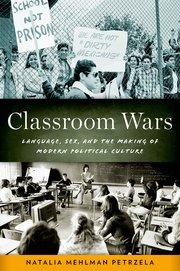
Then, Natalia Mehlman Petrzela will keep the sex-ed ball rolling while adding in some bilingual ed as she talks about her book, Classroom Wars.petrzela classroom wars

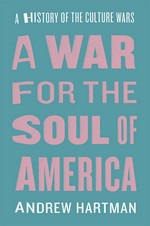
Next, Andrew Hartman will share some insights about education and culture wars from his blockbuster War for the Soul of America.Hartman

Last, I’ll talk a little bit about what it has meant to be “conservative” when it comes to education, from my new book.

What will we talk about? Hard to say until we get there, but the theme that ties these books together is that of educational culture wars. What have Americans (and people worldwide) seen fit to teach their kids about touchy subjects such as sex and God? Who has been allowed to make decisions about school?

One disagreement we might have could be about the winners and losers. If there are such things as educational culture wars, we all have different conclusions about who has won. Jon Zimmerman argues that kids overall—especially in the United States—get very little sex ed, due to consistent activism against it. I think, too, that conservatives have been able to exert veto power over many big educational programs. Both Andrew and Natalia, though, say that by and large progressive ideas have come out the winner in these battles.

What do you think:

  • Are there such things as educational culture wars?
  • If so, are they all in the past?
  • And, maybe most interesting to most people…who won?