Obama Persecutes Christian Schools

Does President Obama have it out for conservative evangelical Christians?  Does he plan to crush them by hitting them where it hurts?  In the pages of today’s Christian Post, Michael Zigarelli worries that Obama’s anti-discrimination policy will do just that.  By putting the squeeze on religious colleges, Zigarelli writes, Obama plans to squeeze the life out of conservative evangelicalism.  This sort of conspiracy-theorizing may sound far-out to non-conservatives like me.  But for those who know the history of evangelical education, it might not seem so wacky.

Zigarelli is commenting on the recent controversy at Gordon College in Massachusetts.  As we’ve noted in these pages, President D. Michael Lindsay of Gordon College attracted attention for signing an open letter to President Obama.  In case you missed the story, Lindsay signed the letter requesting an exemption from a planned executive order.  The order would ban discrimination against LGBTQ persons.

For those like me outside of the world of conservative evangelicalism, Lindsay’s attitude sounds an awful lot like a license to discriminate.  If, as Lindsay wrote, Gordon College does not discriminate against gay students and does not plan to start, why would they need such an exemption?

I don’t want to put words in anyone’s mouth, but as I understand it, the evangelicals did not ask to be able to discriminate against anyone, but rather to be able to continue their policy that requires all students and faculty to agree to a goal of chastity outside of marriage.  As we discussed here at ILYBYGTH, to many non-evangelicals and former evangelicals, that seems like a distinction without a difference.

But if we put those sorts of questions to one side for a moment, we can see that Zigarelli’s attitude demonstrates key elements of evangelical thinking.  His op-ed articulates some of the fears of conservative evangelicals.  For many conservatives, Obama’s order means more than just the end to discrimination.  It means the end of conservative evangelicalism in general.  Once conservatives are no longer able to operate their schools and colleges as they see fit, they will no longer be able to educate their children properly.  As Zigarelli concludes ominously,

Empty desks will follow empty pews, at least if this capricious; destabilizing theology is foisted upon our Christian schools. It’s time to take a stand.

To historians, this sort of rhetoric sounds familiar. As I’ve argued in the pages of the Journal of Religious History, conservative evangelicals made very similar sorts of statements after the Supreme Court’s anti-prayer decision in 1963. That school decision prompted conservative evangelicals to shift their thinking about their relationship to the broader American culture. As the editors of the flagship evangelical magazine Christianity Today expressed it, before that decision, they were confident of their roles as leaders of America’s “devout masses.” After the decision, though, they worried that conservative evangelicals had become nothing but a “believing remnant” in a sinful American culture.

For evangelicals, like all other Americans, any loss of control over schooling can signal a loss of control over public life itself. Some of us may scratch our heads and wonder why evangelicals worry so much about President Obama’s planned non-discrimination order. If, as President Lindsay insists, conservative schools don’t discriminate against homosexuals, what do they have to worry about?

Throughout the twentieth century and into today, though, conservative evangelicals have maintained a tense relationship with the wider American culture. Many conservatives believe themselves to be the representatives of the real American mainstream, the “moral majority.” At the same time, however, conservatives see themselves as persecuted outsiders in a twerking culture besotted with sin, sexuality, and secularism. When big public-policy decisions seem to hurt Christian education, evangelicals react vigorously.

Does Obama plan to crush conservative opposition? As Zigarelli admits, such statements may sound “absurd” and “alarmist.” But given the past fifty years of evangelicals’ relationship with public education, the notion that the federal government might take drastic steps that hurt Christian education does not seem absurd or alarmist at all.

 

Fundamentalist Parents Can’t Relax

Rich parents can relax.  At least according to an article in this week’s Economist.  But fundamentalist parents never can.  They have to worry about more than their kids’ careers.  They have to fret about eternal damnation.  And they have to worry that Satan lurks in every textbook, every TV show, and every mainstream school.

The Economist article is worth reading in its entirety.  As it explains,

Well-to-do parents fear two things: that their children will die in a freak accident, and that they will not get into Harvard.

Getting into Harvard might be harder than getting into heaven...

Getting into Harvard might be harder than getting into heaven…

Both fears lead to exaggerated and ultimately counterproductive lifestyles.  In terms of safety, the article notes, an American child under five years of age in 1950 was five times as likely to die of disease or accident as that same kid would be today.  And though it is difficult to get into Harvard, most kids of affluent families will have fine careers without an Ivy-League transcript.

But fundamentalist parents have more to worry about.  Since the birth of American fundamentalism in the 1920s, conservative evangelicals have fretted about the influence of mainstream culture on their offspring.  Even if their kids don’t get polio, and even if their kids do get into Harvard, fundamentalist parents have to worry that success in life will lead to terrible punishment after death.  For fundamentalists, even Harvard itself can be more of a threat than an achievement.

As historian Randall Balmer put it in his blockbuster book Mine Eyes Have Seen the Glory,

the greatest fear that haunts evangelical parents is that their children will not follow in their footsteps, that they will not sustain the same level of piety as their parents—stated baldly, that they are headed for hell rather than heaven.

As I argued in my 1920s book, historically this fear for the children has fueled fundamentalism’s public campaigns.  Fundamentalist leaders and parents worried that no level of affluence and economic privilege could protect their children from a culture sliding nonchalantly straight to hell.

As conservative leader William Jennings Bryan explained in 1922, even the rich and powerful had lost the ability to protect the faith of their children.  As a former Secretary of State, Bryan knew many of these families personally.  He wrote about one acquaintance, a US Congressman, whose daughter came home from college only to tell the family that “nobody believed in the Bible stories now.”

It was not only conservative Congressmen who worried.  Fundamentalist evangelist Bob Jones Sr. liked to tell the story of a less powerful family who had a similar experience.  This family, Jones explained in one of his most popular 1920s sermons, scrimped and saved to send their precious daughter to

a certain college.  At the end of nine months she came home with her faith shattered.  She laughed at God and the old time religion.  She broke the hearts of her mother and father.  They wept over her.  They prayed over her. It availed nothing.  At last they chided her.  She rushed upstairs, stood in front of a mirror, took a gun and blew out her brains.

Even when fundamentalist families did not experience that sort of cataclysm, we must keep their anxiety in mind when we try to understand fundamentalism from the outside.  Why do conservative evangelicals fight against evolution?  Why do they insist on school prayer?  Why do they worry about rights for homosexuals?

In all these cases, conservative evangelicals’ public activism is made more desperate by their intense worry about their children.  In this, there is no difference between conservative evangelicals and mainstream Americans of any background.  As the Economist article points out, almost all parents love their children and make sacrifices for them.  In the case of mainstream affluent parents, it might even help if they relaxed a little bit.  As Bryan Caplan of George Mason University argues,

Middle-class parents should relax a bit, cancel a violin class or two and let their kids play outside.

Easy enough.  But fundamentalists face a very different situation.  If we want to understand the mind of fundamentalists, we can try a mental experiment.  Non-fundamentalist parents have a hard enough time relaxing about their kids, even though they feel at home in mainstream culture.  Non-fundamentalist parents fret too much about their kids’ futures, even if they don’t feel alienated by their local public schools and elite universities.

Let’s try to translate the anxiety experienced by fundamentalist parents into mainstream terms.  Imagine, for example, the sorts of public outcry there would be if public schools began promoting ideas or practices that affluent secular parents found dangerous.  For instance, what do you think would happen if a public school somewhere began promoting smoking as a fun and healthy activity?


Green Eggs and (Ken) Ham

Do you think of Dr. Seuss as a “fundamentalist” author?  Me neither.  But the fundamentalists want to claim him for their own.

Marvin Olasky of World Magazine offered recently a top-ten list of good children’s books.  Topping the list was Dr. Seuss’ Horton Hatches the Egg for its staunchly pro-life message.  The story, according to Olasky, presents Horton as a “pro-life hero.”

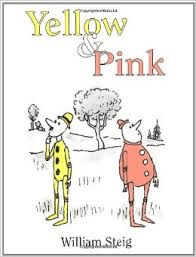
And that’s not all.  Olasky celebrates the conservative message of other leading mainstream children’s books as well.  William Steig’s Yellow & Pink tells more than just a cute story about puppets.  The two central characters wonder about their origins, with the evolution-y story of Yellow losing out to the creation-y story of Pink.

Where do we come from?

Where do we come from?

Dr. Seuss apparently didn’t like the pro-life associations of his Horton character.  But the creationism of William Steig is hard to miss in this book.

Makes me wonder—was Steig’s Shrek also some sort of creationist parable?


Does Anyone Actually Read the Index?

My eyeballs are beginning to chafe.  This week, I’m finishing up the index for my new book.  It’s a lot of work, even though I had a gifted grad student do most of the intellectual heavy lifting.

How the sausage gets made...

How the sausage gets made…

So now I’m wondering: Does anyone actually read the index?  I know professional academic historians do.  In fact, that’s one of the first cheap tricks we learn in our PhD programs.  We flip quickly to the back to see what we can glean from the index.  What are the book’s themes?  What are its main ideas?  Its blind spots?

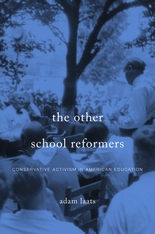
But do any normal people read a book’s index?  Make no mistake, I’m compiling a kick-ass index, whether anyone ever reads it or not.  But I can’t help but wonder if readers will find useful my painstaking distinctions between “authoritarian teaching” and “traditional education.”

Coming soon...

Coming soon…

Will anyone care that I spent so many long hours in a stuffy library teasing out the nuances of “educational conservatism” as opposed to the broader category of “conservatism” in general?


Are Christians Too Bigoted to Work With?

You may have seen the headline by now: Christian College Discriminates Against Homosexuals.  And the follow-up: City Cuts Off Christian College.  But isn’t it weirdly ironic that non-religious governments now seem to be repeating the separatist struggles of fundamentalists?  Doesn’t it seem odd that the drive for tolerance pushes pluralists to act like the more extreme religious separatists?

In this case, it was the public decision of Gordon College President D. Michael Lindsay to sign a letter to President Obama that sparked the furor.  [Full disclosure: Lindsay and I worked together as 2009 Spencer/National Academy of Education postdoctoral fellows, and I admire Lindsay personally and consider him a friend and colleague.]  Along with a host of other prominent evangelical leaders and intellectuals, Lindsay asked President Obama for a religious exemption to a planned executive order banning workplace discrimination against homosexuals.

Lindsay’s participation caused a furious reaction.  Gordon alumni and students petitioned Lindsay to retract.  Gordon College’s accrediting agency promised to investigate.  And most notably, the nearby city of Salem, Massachusetts canceled its partnering contract with Gordon to operate an historic city building.

Let me be clear about a couple of points.  First, I personally agree that institutions should not discriminate against homosexuals.  Public governments, especially, have a duty to include all members of society, not only passively, but actively.  IHMO.  Also, I do not wish to argue whether Lindsay’s position is or is not “anti-gay,” since he has publicly insisted that Gordon College does not discriminate against homosexuals.  And though I find it curious, I don’t want to ask why President Lindsay has become the center of this controversy, even though the letter was signed by many other evangelical leaders as well.  Even on my humble little blog, for example, I’ve experienced a surge of search terms such as “D. Michael Lindsay bigot” and “Gordon College Anti Gay.”  Why has Lindsay become the focus in this case?  Why not all the other signatories?

Though interesting, we have to leave such questions aside for now.  From an historical point of view, there is a more interesting aspect to this case.  It seems that those who support tolerance and diversity have, in some ways, adopted the position of the traditionally conservative fundamentalists.

Here’s what I mean: In the twentieth century, conservative Christian colleges carried on a furious and often angry internecine debate about the propriety of partnering with non-Christian institutions.  Schools such as Gordon and Wheaton College earned the vicious denunciation of more conservative schools such as Bob Jones University.  Among the many accusations, more conservative, “fundamentalist” schools often insisted that the more open, “evangelical” schools had tainted themselves by their open association with non-Christian ideas.  Separatist fundamentalists often cited the Bible passage 2 Corinthians, chapter 6, verse 14:

Be ye not unequally yoked together with unbelievers: for what fellowship hath righteousness with unrighteousness? and what communion hath light with darkness?

In order to be truly Christian, separatists argued, believers could not allow themselves to be joined with those who did not share their belief.  So, for instance, when fundamentalist megastar Jerry Falwell worked with conservative Catholics and Jews in the Moral Majority, fundamentalist leaders at Bob Jones University denounced Falwell as the “most dangerous man in America.”

This rigid separatism, indeed, has been one of the hallmarks of American fundamentalism.  Some fundamentalists have insisted that they must practice even a “secondary separation,” not sharing Christian fellowship with other Christians if those other Christians share fellowship with questionable folks.

Now, it seems the city of Salem feels it must practice a strangely similar form of separatism.  As Salem Mayor Kimberly Driscoll informed Gordon College in a recent letter, the city must separate itself from the college.  Why?  Because, Driscoll wrote, Lindsay’s position implied open discrimination against the LGBT community.  The college had every right to do so, Driscoll believed, but the city could no longer be affiliated with such things.  The city’s non-discrimination law, Driscoll informed Lindsay, “prohibits our municipality from contracting with entities that maintain discriminatory practices.”

This is not the only time when the beliefs of liberals and fundamentalists have neatly swapped sides.  In the creation-evolution debates, for example, creationists took over evolutionists’ positions.  As historian Ronald Numbers has pointed out, by the 1990s creationists began appropriating the language of 1920s liberals.  In the 1920s, evolution supporters insisted that teaching only one theory was bigotry.  By the 1990s, creationists started saying the same thing.

In this case, we see a weird and clearly unintentional echo.  Mayor Driscoll feels compelled to separate her government from any entity that practices discrimination against homosexuals.  It is not enough, morally, for her government itself to avoid such discrimination.  The principle of separation seems to have migrated from fundamentalists to their supposedly tolerant opponents.


The Kids Are Alright

Want to see a progressive society? Just wait. Each new generation gets less uptight about gay marriage, evolution, abortion rights, and gender equality. Right? Maybe not. Controversy-loving sociologist Mark Regnerus has produced another study sure to provoke more outrage. In this case, Regnerus claims to find that young conservative evangelicals are not swinging toward a glowing progressive future.

Regnerus first came to culture-war attention with his 2012 study of gay-marriage parenting. Unlike most other sociological studies, Regnerus found that children raised by same-sex parents did not fare as well as children raised by their biological parents.

In his new study of attitudes towards sex in America, Regnerus concluded that young conservative evangelicals are bucking the trend toward youthful progressivism. While young Americans in general might be more welcoming toward gay marriage, abortion rights, and gender equality, young conservatives are not, Regnerus claims.

Conservative Baptists Russell Moore and Andrew Walker take great solace from Regnerus’ findings. Moore and Walker, leaders of the Southern Baptist Convention’s Ethics & Religious Liberty Commission, celebrate the “sexual counter-revolution” heralded by Regnerus’ study. Conservative Christians, Moore and Walker noted recently in the pages of National Review Online, can trust that the new generation will cling to tradition. As they put it,

Regnerus’s research suggests that younger Evangelicals aren’t hewing to the culture’s expectation that they conform to its values. That’s a welcome reality, especially given the significant cultural pressures that young Christians face in today’s culture. This lines up with what we, as conservative Evangelicals, see happening in our own congregations across America.

As American culture secularizes, the most basic Christian tenets seem ever more detached from mainstream American culture. Those who identify with Christianity, and who gather with the people of God, have already decided to walk out of step with the culture. Beliefs aren’t assumed but are articulated over and against a culture that finds them implausible. Evangelical views on sexuality seem strange, but young Evangelicals in post-Christianizing America have already embraced strangeness by spending Sunday morning at church rather than at brunch.

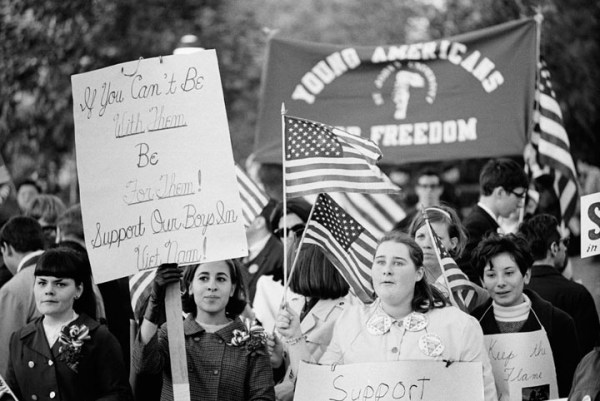
Certainly, ever since the birth of conservative evangelicalism as a dissenting identity in the 1920s, young evangelicals have stayed true to conservative ideas. In the 1920s, as I argue in my 1920s book, young members of the new “fundamentalist” coalition defied new stereotypes of “flaming youth” to assert a proudly traditional, religiously orthodox youthful conservatism. And as I’m exploring in my current research, in the 1960s conservative evangelical college campuses were hotbeds of a different sort of student activism, the “sexual counter-revolution” noted by Moore and Walker.

An Earlier Generation of Youthful Counter-Revolutionaries: YAF, 1967

An Earlier Generation of Youthful Counter-Revolutionaries: YAF, 1967

But just as Regnerus’ gay-marriage research seemed too pat, too comforting to conservative activists, so this finding does not seem to deserve the celebration lavished upon by Moore and Walker. Young conservatives may be more traditional than their young contemporaries. But those young conservatives might also be more progressive than their elder evangelicals. The times might not be a-changin’ as fast as some progressives have often assumed, but it seems a little weird for conservative evangelical leaders to conclude that young evangelicals are not moving toward the new mainstream on sexual issues.


Conservatives and Campus Rape

No one defends rape.  But these days conservative intellectuals often defend students accused of rape.  Why?  What is “conservative” about defending accused rapists?  And what does it have to with higher education?

This is a different question than a similar one we’ve asked lately.  At some conservative religious colleges, we’ve seen a debate over the relationship between theology and sexual assault.  I’ve asked if religion might deter some students from booze-fueled assault.  I’ve also wondered if the top-down authoritarian culture of many fundamentalist schools might encourage assault.

In this discussion, however, we see secular conservatives complaining about the process by which colleges handle accusations of assault.

For instance, columnist George Will attracted a firestorm of controversy when he suggested that assault victims win extra privileges on college campuses.  Liberal-dominated campuses, Will accused, were learning that “when they make victimhood a coveted status that confers privileges, victims proliferate.”

Other commentators also take the system to task.  Legal scholar David Bernstein worried that the bar for proving guilt had been lowered to dangerous levels.  At some universities, Bernstein commented, any touching that did not have explicit approval could count as rape or assault.  By that measure, Bernstein argued provocatively, only prostitutes and their clients were safe from accusations of rape.

Peter Berkowitz, too, demanded a revision of campus assault rules.  In a case from Swarthmore College that attracted a great deal of attention, Berkowitz insisted that the accused rapist did not get a fair hearing.  Too many “elite” schools, Berkowitz argued,

convene kangaroo courts to adjudicate accusations of grave crimes that should properly be left to the police and government prosecutors. Although they cannot sentence students to jail time — the cavalier manner in which these proceedings treat evidence would never pass muster in the criminal justice system — the campus bureaucracies nevertheless impose penalties capable of upending students’ lives.

None of these writers condones sexual assault. Their gripe is with the process by which those assaults are handled. Too often, being accused equals being condemned. Too often, campus committees do not respect the American traditions of being innocent until proven guilty. Each of these writers warns that a rush to convict—even with the best intentions of protecting the innocent—risks trampling the rights of the accused.

But there’s also a deeper rumbling in these essays that points to an important element of conservative thinking. In each case, by attacking campus procedures, these conservative writers condemn the leftist-dominated culture of higher education as a whole.

Peter Berkowitz, for example, located this discussion within a broader problem. Elite schools, Berkowitz wrote, have struggled with

the hollowing out of the curriculum, the aggressive transmission of a uniformly progressive ideology, the promulgation of speech codes, and the violation of due process in campus disciplinary procedures.

And George Will blamed “academia’s progressivism” for its current sorry state. “Academia,” Will concluded, “is making itself ludicrous.” But left-leaning professors and administrators brought it on themselves, Will believes. Colleges have asked for ridiculous rules and short-sighted policies, Will said, “by asking for progressivism.”

There is something more going on here than just procedural complaints. Conservatives are not only complaining about the rights of accused students. Rather, these arguments about sexual assault are part of a longer conservative tradition of fretting about university leftism. For these conservative writers, recent cases of sexual assault serve as yet another example of college radicals gone wrong.


Kicking Christians Out of College

Does being an evangelical Christian automatically make one an anti-gay bigot? If so, can tolerant universities still allow such groups among their students? Those are the tricky questions highlighted in a recent New York Times article about evangelical culture and higher education. As the NYT story noted, this clash between pluralist campuses and “exclusivist” religious groups seems like a tough nut to crack.

But is it fair to assume that all evangelical students are bigots? That opposition to gay marriage pushes students beyond the bounds of polite society? To put it in the most provocative terms: Are evangelical student clubs being ousted because they are seen—sometimes unfairly—as being anti-gay?

The story opens with an update from Bowdoin College in Maine. At that elite liberal-arts school, the tiny evangelical student club has been cut off from official university support. Why? Because, like many evangelical student groups, the Bowdoin group insisted that leaders must be Christians themselves. This led to what the NYT article called a “collision between religious freedom and antidiscrimination policies.” At Bowdoin, as at many other schools, leadership at university-sponsored clubs must be open to all students, regardless of race, religion, or sexual identity.

The official question in the Bowdoin case is not about homosexuality or same-sex marriage. But it would be easy for a casual reader to miss that. The article mentions other schools in which evangelical students have gotten into trouble for anti-gay activity. At Vanderbilt, for instance, one Christian fraternity kicked out a gay member. Indeed, it was precisely that anti-gay activism that led Vanderbilt to force student groups to sign antidiscrimination pledges.

But Bowdoin’s student group does not seem particularly fervent about issues of homosexuality or same-sex marriage. At least according the article, the evangelical club at Bowdoin does not have a single party line about the morality of gay marriage. It’s hard to see a group as anti-same-sex marriage if some of its members support same-sex marriage.

Some studies have suggested that the faculty leaders at universities tilt decidedly against evangelical students. One 2007 study of university faculty concluded that evangelicals were “the only religious group about which a majority of non-Evangelical faculty have negative feelings.” And, as Rice sociologist Elaine Howard Ecklund found, faculty at elite schools often have a very skewed notion of evangelical belief. It does not seem like a stretch to think that these faculty prejudices might tip university policy.

For their part, evangelical intellectuals have struggled long and hard to prove that their opposition to gay marriage and, in some cases, to homosexual sex does not make them bigots. Perhaps the most vocal pundit on the issue, Ryan T. Anderson, insisted that conservatives had legitimate reasons for opposing gay marriage. But too often the other side wouldn’t listen. “Marriage re-definers,” Anderson complained in 2013,

don’t tend to say what many opponents have said, that this is a difficult question on which reasonable people of goodwill can disagree. No, they’ve said anyone who disagrees with them is the equivalent of a racist. They’ve sent a clear message: If you stand up for marriage, we will, with the help of our friends in the media, demonize and marginalize you.

Don’t get me wrong: I am personally fervently in support of same sex marriage rights. I’m opposed to locking anyone out of access to influence because of their sexual identity, religion, race, or other causes. But it seems as if universities would do well to uncouple these issues of club leadership, religious belief, and homosexual rights.

Could a student club demand religious beliefs of its leaders, while still welcoming gay and lesbian students to become leaders? Is it fair for universities to assume that evangelical belief automatically implies anti-homosexual attitudes?


Sex Ed and the Diseased Children of the Revolution

HT: KC

What do Americans want their children to learn about sex?  Throughout history, two conservative authors recently argued,[*] most Americans have wanted children to learn the values of abstinence and purity.  Only the 1960s sexual revolution turned perversion and license into mainstream public-school how-to lessons.

The essay, by National Abstinence Education Association President Valerie Huber and Cedarville University psychology professor Michael Firmin, appeared in the recent issue of the peer-reviewed journal International Journal of Educational Reform.  For those of us who are interested in understanding conservatism in education, this article offers a chance to see conservative thinking in action.

There are a few odd copy errors.  Prominent education historian Milton Gaither, for example, is called “Milton Caither.”  But far more interesting than these flaws are the interpretative implications of the authors’ historical vision.

Before I describe them, though, I should point out my own biases.  I have a difficult time understanding conservative opposition to comprehensive sex education.  In my upcoming book about the twentieth-century career of educational conservatism, I describe such opposition, especially in my chapter about the 1970s.  But I still have a hard time understanding it.  To me, it seems like simple common sense that schools should provide thorough, accurate information about sex to young people.  Public schools should not moralize about sex, but whether or not students choose to have sex, they should know about the facts of life.  With the huge public-health implications of pregnancy and sexually transmitted diseases, it seems to me a simple matter of common sense that schools should teach everyone about sex.

However, as I’ve struggled to understand conservative opposition to comprehensive sex ed in public schools, I feel I’ve gained some insight.  Though I want public schools to teach kids all the facts and let the kids and their families determine the morality involved, I can sympathize with conservatives who feel that such an approach tips the discussion too far in the “pro-sex” direction.  I consider the following analogy: if your spouse were traveling on business, would you make sure he or she had condoms along in case s/he decided to have sex while s/he was gone?  That doesn’t make much sense.  Or this one: could a teacher tell students, “If you’re planning on robbing a bank, here are some ways to do it safely?”  In other words, if a behavior is obviously morally unacceptable, we shouldn’t teach young people how to do it safely.  We shouldn’t imply that we condone such immorality by helping children (or spouses) do it without consequence.  Some conservatives think that pre-marital sex is precisely this sort of immoral behavior.  Such conservatives insist that by telling young people about sex in a morally neutral fashion, we suggest that premarital sex is okay.

Huber’s and Firmin’s history of sex ed portrays an American people deeply convinced that sex is best saved for marriage.  Only perverts and revolutionaries challenged that notion.

For instance, the first prominent “pro-sex” campaigner Huber and Firmin describe is Margaret Sanger.  In the 1920s, the authors note, Sanger advocated birth control as a way to empower women and to limit the numbers of undesirable births.  Sanger’s recreational approach to sex was “radical,” the authors contend, but it became an “early influence” on sex ed in schools.

In the 1940s and 1950s, Alfred Kinsey took the study of sex to new extremes, according to Huber and Firmin.  Kinsey studied the sexual practices of a “nonrepresentative proportion of sex offenders and participants in the homosexual bathhouse community,” the authors contend.  Kinsey proffered his witches’ brew of demented sexual proclivity as unbiased research, including outlandish claims that infants had orgasms.  As did Margaret Sanger, Kinsey laid the foundations for a morality of “sexual experimentation,” according to Huber and Firmin.

It was not until the 1960s, however, that such radical notions about sex and sex education became mainstream.  The sexual revolution of that decade, Huber and Firmin argue, “turned America’s moral sensibility on its head.”  During the late 1960s and early 1970s, a new culture of sex education took America by storm, midwived by the “[l]ong hair, open-air sexual orgies, drugs, student rebellions, Vietnam, and racial tensions” of the period.

By the 1980s, luckily, “innovative organizations” had organized a sensible and effective “counterrevolution.”  These groups promoted the American tradition of sex education as abstinence-only education.  Only such education combined information about sex with the moral underpinnings that young people need.

Today, according to Huber and Firmin, most Americans agree with an abstinence-only approach to sex-ed in public schools.  Though the “public relations” efforts of “pro-sex” groups such as Planned Parenthood have had some success, the authors note that “the majority of parents, regardless of race or political party, strongly endors[e] all the major themes presented in an abstinence education class.”  As evidence, they cite a 2012 survey from the National Abstinence Education Foundation.

As I’ve argued in the pages of Teachers College Record, conservative activists have an intense interest in educational history.  It makes sense.  Whoever controls the history can make policy recommendations that claim to be in synch with American tradition.  In this case, Valerie Huber and Michael Firmin give us a history in which Americans want their children to learn the values of abstinence and purity.  Throughout the generations, some radicals such as Sanger and Kinsey have strummed a minor chord of recreational sex and gleeful perversion.  Only with the irresponsible sexual revolution of the 1960s, though, did such attitudes enter public schools in any significant number.  Thanks to the work of earnest abstinence-only “counterrevolutionaries,” however, America’s schools have hope.  Today’s schoolchildren, these conservative authors argue, can learn the real tradition of American sex ed.

——————————————————————————————————————————-

[*] The article does not seem to be available without a subscription.  For those with access to a decent library, here’s the citation to help you find the full article: Huber, Valerie J., and Michael W. Firmin. “A history of sex education in the United States since 1900.” International Journal of Educational Reform 23.1 (2014): 25+.


Comedy & Conservatism

–Knock knock.

–Who’s there?

–A smaller government, a vigorous military presence abroad, and traditional values.

Get it?  According to Frank Rich, no one does.  Conservatism just isn’t funny.  In a terrific essay last week in New York Magazine, Rich explores the tortured relationship between conservatism and comedy.

Rich wonders why there are no big conservative comedians out there, no flipside to the Jon Stewarts and Stephen Colberts.  He mentions a couple of contenders, such as Dennis Miller and even South Park.  But they are either not very funny or not very conservative.  And, as Rich points out, it seems like there would be plenty of funding for a vigorous conservative comedy effort.  But the few that have been made, such as the lamentable ½ Hour News Hour, are only embarrassing for us all.

Rich doesn’t make the case, but it seems as if conservatism, as a rule, should have the upper hand when it comes to laffs.  After all, as Hannah Arendt argued long ago, conservatives in general have the easier job in cultural polemics.  They can joke about each new innovation.  They can skewer new trends and rely on long-standing traditions to pillory liberal excesses.

But, as Rich points out, they don’t.  Why not?  Why aren’t conservatives funny?

Rich argues that too many conservative comedians are conservatives first and comedians second.  After all, “liberal” jokesters such as Jon Stewart don’t hesitate to joke about liberal heroes.  Stewart puts the jokes first and the politics second.

More Preachy than Funny

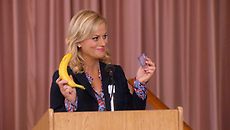
More Preachy than Funny

When liberals forget this simple rule, they are just as unfunny as conservatives.  Remember Leslie Knope’s (Amy Poehler’s) stilted attempt at sex-education humor?  It just wasn’t funny.

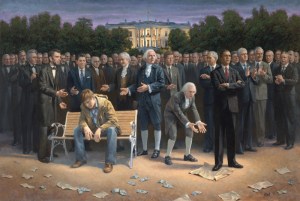
This rule applies outside of comedy, of course.  Some conservative intellectuals embrace the paintings of the late Andrew Wyeth, for example, as “conservative” masterpieces.  Consider the vast difference, though, between Wyeth’s brand of painting and the conservatism-on-his-sleeve style of Jon McNaughton.

As Rich notes about comedy, art of any sort seems to suffer when pundits put ideology first and art second.

Wyeth's "Christina's World" (1948).  Is this good art?  Or just good "conservative" art?

Wyeth’s “Christina’s World” (1948). Is this good art? Or just good “conservative” art?


Jon McNaughton's "The Forgotten Man." Politics first, art second.

Jon McNaughton’s “The Forgotten Man”