Genesis, Free Speech, and Hate Speech

What would arch-creationist Ken Ham say if someone accused him of hate speech? We don’t have to guess. At his recent talk at the University of Central Oklahoma, Ham defended his vision of proper Christian morality. Did he capture ancient Christian wisdom? Or spout off twenty-first century bigotry?

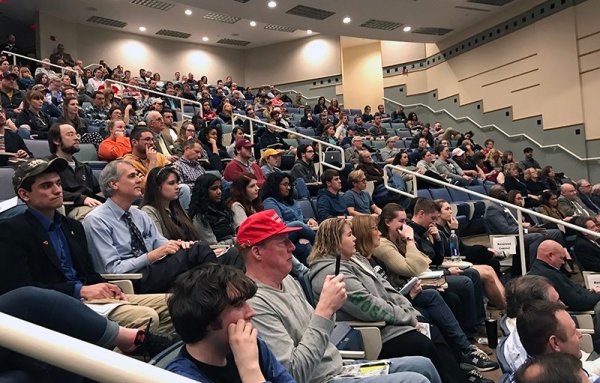
ham speech audience UCO

Part of the 500-person audience at UCO.

As SAGLRROILYBYGTH recall, we’ve tussled over this issue recently. When UCO rescinded Ham’s original invitation, we wondered if free speech was still alive. I argued at the time that free speech was something of a red herring in this case–and many similar college cases. The real issue is sponsorship. The student organization at UCO did not want to pay Ham to speak, due to Ham’s views on sexuality and marriage.

In the end, UCO President Don Betz squared the circle by using money from a separate slush fund to pay for Ham’s visit. And the talk went off without a hitch. During the Q&A, one audience member asked Ham directly about gay rights. Here’s how the interchange went, according to Religion News Service:

One questioner — a self-described “spirit-filled Christian” and member of the LGBTQ community — said: “I sought the Lord and churches for why I feel attracted to the same sex. I found the church nor churches’ traditional view on (LGBTQ) fit my experience of hearing the Lord speak directly to me. Science, not the church, gave me peace. How can you say my experience of still being a child of God isn’t valid?”

Ham said he would start by asking how the person heard from God: “My way of dealing with that would be to say, ‘Let’s judge what the actual written word of God says. Let’s judge what you’re saying against what it says.’

“Because I have a different worldview in relation to marriage and gender doesn’t mean I hate that person,” Ham added. “Sometimes, people accuse us of hate speech because we disagree with them. It’s a clash of worldviews. That doesn’t mean we hate someone. In fact, the Bible commands us to love everyone, and that’s what we do.”

What do you think?

From my perspective, Ham’s answer sidesteps the central point. I don’t want to put words in anyone’s mouth, but my hunch is that anti-Ham protesters at UCO didn’t care if Ham personally hated or loved them. The real question is whether or not he wanted to take away their civic rights to marriage equality.

Can Science Oppose Heresy?

In a sense, it’s as old as Galileo. In another, though, our question today shows the uniquely modern state of our current culture-war climate. Can someone stand up for science by opposing heresy? If we really want to understand culture-war thinking, we need to make sense of the ways they can, even if we don’t agree with them.
ramm science scripture

MUST science denial be heresy?

A conservative lament about gender-bending school policy brings this question to our attention. Ideas about gender fluidity, Margot Cleveland argues, turn otherwise intelligent people into thugs and morons. In her view, insisting that young people can and should be able to identify their own genders is both “science denial and heresy.”

I don’t agree, but that’s not the main point here. More important, I want to know how any idea can do those do things at once. How can an idea—any idea—claim to be both religiously and scientifically orthodox?

For secular people like me, it seems like a contradiction, a paradox. Yet for conservative religious intellectuals, this notion has long been both obvious and vitally true.

After all, in the street-level, Bill-Nye sense of the word, “Science” can’t really care about heresy or orthodoxy. As Neil deGrasse Tyson defines it, “Science” means the opposite of such things. In his words,

Science discovers objective truths. These are not established by any seated authority, nor by any single research paper. . . . Meanwhile, personal truths are what you may hold dear, but have no real way of convincing others who disagree, except by heated argument, coercion or by force. . . . in science, conformity is anathema to success.

Before we talk about Cleveland’s claims about heresy and science, let’s acknowledge a few things to start.

  • First, for the past fifty years or so, philosophers and historians have challenged Tyson’s simplistic definition of science. One person’s voodoo might be another’s science, and so on. Fair enough.
  • And some pundits might say that Cleveland was talking about a merely coincidental agreement between her idea of religious orthodoxy and science. That is, she might be saying that religious orthodoxies about eternal, unchanging, God-assigned gender identities happen to be biologically true as well. She might only be saying people are born with a certain set of sex characteristics and it is not scientifically nor religiously true that they can change their gender identity at will.

Those things make sense to me, but they don’t get to the heart of our dilemma. The interesting question, the difficult question is whether or not heresy and science denial can really go together as a general rule.

When it comes to the questions of evolution, climate change, sexuality, and now gender identity, conservative religious thinkers have long argued that they can. Indeed, that they must. To my mind, it is this point that is most important. If secular people like me want to really understand conservative religious thinking, we need to try harder to understand this logic. To me, it seems obviously false. To many people, though, it is compelling.

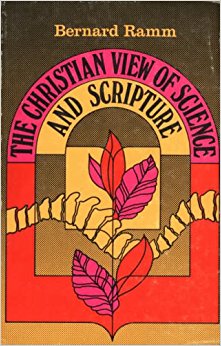
It is not only fundamentalist young-earthers who have made this case. Consider the most famous creationist dissenter from young-earth thinking, Bernard Ramm. In the 1950s, Ramm shattered the complacency of fundamentalist science with his blockbuster book, The Christian View of Science and Scripture.

In some ways, Ramm’s anti-young-earth work can be said to have sparked the modern young-earth renaissance. After all, it was in furious response to Ramm that John Whitcomb Jr. penned the young-earth counter-blockbuster The Genesis Flood in 1961.

Ramm denounced young-earth fundamentalist thinking in no uncertain terms. Young-earthers, whom Ramm called the “hyperorthodox,” missed the point of both science and scripture. Ramm explained,

If the theologian teaches that the earth is the center of the solar system, or that man first appeared on the earth at 4004 BC, or that all the world was submerged under water at 4004 BC and had been for unknown millennia, he is misinterpreting Scripture and bringing Scripture into needless conflict with science.

Instead, Ramm argued religious thinkers needed to reclaim their roles as scientific leaders. Real science, decent science, productive science, Ramm insisted, needed to be guided by the “light of revelation.” Without it, science could only be either “cheap or ironical.”

What does any of this have to do with gender-identity curriculum in California or Indiana? The way I see it, we have two ways to interpret arguments like the one made by Margot Cleveland. Either she is saying that religious truth and scientific inquiry happen to agree about gender identity, or she is making the much stronger case that religious truth and scientific truth must always agree about everything.

For those of us outside the world of conservative religious thinking, this second argument is very difficult to comprehend or even to recognize. Many of us default to Neil deGrasse Tyson’s heresy-promoting vision of true science. If we want to understand our religious friends and neighbors, though, we need to understand a world in which heresy is the very heart of science denialism.

Free to Discriminate?

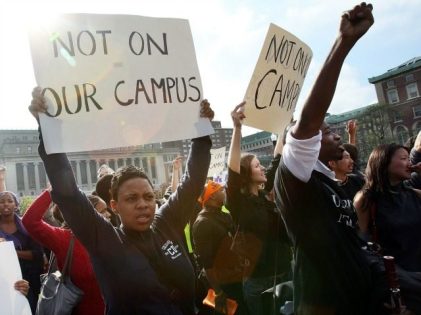
Does a creationist have the right to free speech? That’s the question we’ve been wondering about here at ILYBYGTH lately, ever since arch-creationist Ken Ham got bumped from a talk at the University of Central Oklahoma. News from state legislatures brings up another campus challenge: Do student groups have the right to discriminate?campus-protest-getty-640x480

First, the update, thanks to Donna: According to Ken Ham’s Answers In Genesis organization, he has been re-invited to UCO. Apparently, Ham will talk on campus, then move to a nearby church for a Q&A.

Today, we’ve got an even trickier free-speech/free-assembly question to examine. Should student groups be forced to abide by university anti-discrimination rules? Even for their own leaders? Americans United for Separation of Church and State lists a burgeoning new crop of state laws that would force campuses to make exceptions.

In Virginia, for example, a state senate subcommittee unanimously approved a new bill that would allow student groups to discriminate in their leadership choices. Emphasis added below:

Establishes several provisions for the protection of expressive activity on the campus of each public institution of higher education, including (i) permitting any individual who wishes to engage in noncommercial expressive activity on campus to do so freely, as long as such expressive activity does not materially and substantially disrupt the functioning of the public institution of higher education and (ii) prohibiting any public institution of higher education from (a) denying a student organization any benefit or privilege available to any other student organization, or otherwise discriminating against a student organization, on the basis of the expressive activity of the members of such organization or (b) restricting a student organization’s ability to require any leader or other member of such organization to affirm and adhere to the organization’s sincerely held beliefs, comply with the organization’s standards of conduct, or further the organization’s self-defined mission or purpose.

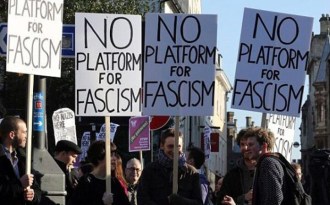
Why do some conservatives see the need for such bills? As SAGLRROILYBYGTH may recall, evangelical groups on campus have been under fire for the past few years. Intervarsity, for example, has been derecognized on many campuses. Why? Because the group requires its leaders—not members, but leaders—to agree to its statement of belief. And that statement of belief includes traditional definitions of sexual morality.campus-free-speech-720

Conservative religious folks have long fretted about these definitions of discrimination and inclusion. Why can’t conservative evangelical student groups insist that their leaders share their ideas?

The rub comes once again with the question of university support. Speakers on campus are generally free to do whatever they want, short of issuing threats or starting riots. People can talk their heads off in public areas. There have been important exceptions, as when one professor physically attacked an anti-abortion speaker on the campus of UC-Santa Barbara. campus free speech berkely republicansIn Ken Ham’s case, he wasn’t merely speaking on campus. He was sponsored and promoted by the student government. Some student groups objected to university sponsorship of a speaker that they saw as beyond the pale of legitimate public speech.
Liberal critics make the same case against these student-group laws. In AU’s opinion, such laws are a travesty. As they put it,

Religious freedom is the right to believe—or not—as we see fit. It doesn’t include a right to discriminate—and especially not while using taxpayer dollars or using the tuition fees of the very students who are being excluded. Religious student groups, of course, still have First Amendment rights on campus. They have been able to access school facilities for their meetings and use school bulletin boards to advertise their events like any other group. But they don’t have the right to force public universities to subsidize discrimination. If student groups want to discriminate, they shouldn’t receive public university recognition, tuition fees, or state taxpayer money to do so.

What do you think? Should student groups be free to discriminate? Should public money support student groups that discriminate?

Is Creationism Hate Speech?

It wasn’t about evolution or creationism. When a student group at the University of Central Oklahoma rescinded a speaking invitation for radical-creationist impresario Ken Ham, it wasn’t the biology or geology departments that had protested. Rather, it was women’s groups and LGBTQ+ organizations that objected to Ham. The controversy in Oklahoma points to a central problem for religious conservatives, one that all the bluster about “free speech” only obscures.

20171228_090906

Ken Ham’s organization makes no secret of its anti-homosexuality opinions.

I’m no conservative, but if I were I would not care as much about college speaking invitations as I would about the much-more-important real reason why Ham’s talk was canceled.

Before we get into that, though, let’s clear out a few of the distracting issues. Ham has protested that he had a contract in place and that the university “reneged.” The university says no contract was in place, only an invitation. We can remain agnostic on that question—the central issue here isn’t one of legal contracts, but of moral and social commitments.

Let’s also remember that this case doesn’t involve creationism as a whole, but only one form of creationism. Ham’s organization promotes a specific young-earth version that I’ve been calling “radical” creationism. As I argue in my current book, too often pundits equate radical creationism with creationism as a whole. It’s always important to remember what creationism really is and what it isn’t. As a whole, creationism certainly can’t be equated with Ken Ham’s ideas. For now, though, let’s move on to the central issues in this particular case.

Ham insists that his free speech rights were denied. But were they? Ham still plans to give a speech in the same town, at a nearby church. No one took away Ham’s right to speak, only an invitation to appear at a university-sponsored event. To use an intentionally inflammatory analogy, pornography is not allowed in public-school libraries, but that does not mean pornographers have lost their rights to free speech.

Today, though, such questions of contracts and free speech rights are not what we’re going to focus on. Instead, let’s look at a tougher question. Let’s examine the confusing language at the center of this case. Ham has protested with justification that his banishment violates the university’s stated goal of “inclusivity.”

The local creationist pastor who had invited Ham to Oklahoma quoted angrily from the university’s policies:

UCO claims that it “is committed to an inclusive educational” environment, and in its “Campus Expression Policy,” the university declares that it “is committed to fostering a learning environment where free inquiry and expression are encouraged. The University is a diverse community based on free exchange of ideas.”

If the tax-funded university is committed to diversity and inclusion, the pastor asked, why did it exclude the different ideas of Ken Ham?

For its part, the university and affiliated student groups would likely explain (and for the record I’d agree) that “inclusivity” on a pluralist public campus must always exclude certain notions. Those who do not agree to the fundamental ideas of social equality can’t be included. If someone at an open public meeting refuses to let other people speak or to acknowledge other people’s rights as citizens, that person will be ejected. His or her rights to be included have always been premised on the condition that he/she recognize the same rights for all other members of the community. Whether you agree with it or not (I do), that exclusionary rule has always been central to the idea of “inclusivity.”

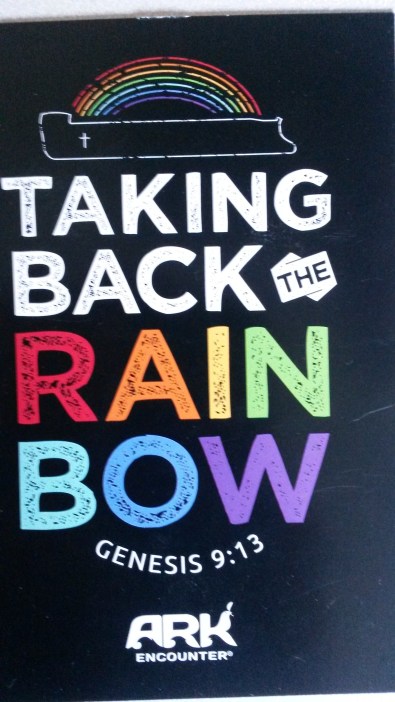
In the end, it was not creationist science that moved Ken Ham beyond the pale of civil speech, but rather his ideas about sexuality. As I was reminded recently on my trip to the Ark Encounter, a primary commitment of Ham’s creationist ministry is an insistence on the illegitimacy of homosexuality. In the eyes of Oklahoma protesters, Ham’s stance against same-sex marriage removes Ham from the circle of legitimate civic participants. By hoping to take away other people’s rights to participate equally in society, the argument goes, Ham has torn up the social contract and pushed himself out of the circle of civic rights, including the right to have his speech welcomed at a pluralist public institution.

If I were a radical creationist—and I’m not—I wouldn’t join Ken Ham and his allies in protesting about free speech rights. There is a larger issue that conservative Christians are losing—the right to have their ideas about sexual morality included in the list of legitimate opinions for public forums and institutions.

The free-speech issue, IMHO, is only a symptom of a much more profound loss by religious conservatives. In this case, Ken Ham didn’t have his rights to speak freely taken away. He still plans to speak in the same town. He is free to invite whomever he likes. He is free to say whatever he likes.

The big question, I think, is not whether or not radical creationists are allowed to speak freely. The big question, rather, is whether or not conservative Christian ideas about sexuality are still included in the list of legitimate political opinions. In this case, at least, they are not…not even in Oklahoma.

If You Don’t Teach about It, Will It Go Away?

Nothing is touchier than teaching young kids about sex. A new bill in South Dakota’s state senate illustrates the painfully deep culture-war divide we face on this topic. Progressives like me think teaching young kids about sexual identity and gender identity can save lives and create a more equitable society. Some conservatives think it warps minds and turns children into homosexuals or transgender people. But just like evolution and US history, the real divide isn’t over what to teach, it’s over how to teach it. The real issue, as always, is not sex or evolution or history, but TRUST.

Here’s what we know: A bill in the South Dakota senate would simply prohibit schools from teaching elementary students about transgender identity. It’s brief:

No instruction in gender identity or gender expression may be provided to any student in kindergarten through grade seven in any public school in the state.

This is the first bill of this sort, but it joins a group of similar bills about teaching sexual identity. As the Minneapolis Star-Tribune reports, those laws, sometimes called the “no-promo-homo” laws, are in effect in Alabama, Arizona, Louisiana, Mississippi, Oklahoma, South Carolina and Texas. They prohibit teaching positive messages about homosexuality to young students.

And, as SAGLRROILYBYGTH are well aware, it’s the “positive” part of the subject that is the trickiest. As we’ve seen in these pages time and again, conservatives mobilize to block certain books and ideas that hope to teach children that homosexuality is perfectly natural and wholesome.

PACE 1107

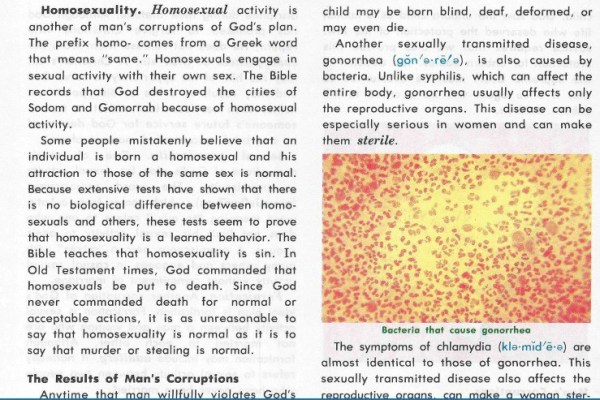
Image from PACE 1107.

But it’s not the case that conservatives don’t want their children to learn about homosexuality. In fact, even the most ardent fundamentalists teach their children about sexual identity and gender identity. The staunchly conservative Accelerated Christian Education curriculum, for example, includes a lot of information about homosexuality. For example, children will read the following:

Some people mistakenly believe that an individual is born a homosexual and his attraction to those of the same sex is normal. Because extensive tests have shown that there is no biological difference between homosexuals and others, these tests seem to prove that homosexuality is a learned behavior. The Bible teaches that homosexuality is sin. In Old Testament times, God commanded that homosexuals be put to death. Since God never commanded death for normal or acceptable actions, it is as unreasonable to say that homosexuality is normal as it is to say that murder or stealing is normal.

Now, this is a fairly extreme attitude toward homosexuality; most conservatives wouldn’t want their children learning this sort of idea either. Accelerated Christian Education is only popular among a certain subset of religious conservatives. However, when even those most anti-gay-rights conservatives teach their children explicitly about homosexuality, we see that the problem isn’t the topic, but the approach.

The problem, I think, for many conservative activists is a deep and abiding mistrust of how schools will teach young children about these issues. Conservatives (not all, but it gets repetitive to keep writing “some,” so I’ll shorten it from here on out to “conservatives”) worry that schools will indoctrinate young children with pro-gay, pro-trans messages.

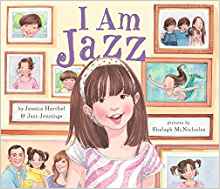
To be fair, those fears are well-founded. Most educational programs that I’ve seen really do hope to foster a sense that homosexuality and transgender are healthy ways to be a person. To cite just one example from my adopted home state of Wisconsin, activists staged a reading of the controversial book I Am Jazz in order to help trans students feel “safe and accepted.”

Indeed, the intention of such books and curricula is precisely to help young people see sexual identity and gender identity in a non-traditional light; the goal is to help everyone accept non-traditional gender identities and sexual identities as healthy and normal. The kind of gender-identity education I support doesn’t just teach students neutral facts about gender. It really does hope to help young children see sexuality and gender identities as variable.

i am jazz

What should children learn about gender identity?

And, to be double fair, if the shoe were on the other foot, I would protest as well. That is, if children in public schools were learning ACE’s message about homosexuality, I would do everything I could to block it.

In South Dakota, and likely in other states soon as well, conservatives are hoping to ban a topic they can’t control. They worry that any instruction about transgender issues will turn into an attempt to indoctrinate young minds. They fret with good reason that progressives hope to get young children to accept non-traditional gender identities and sexual identities. In the end, conservatives don’t trust the public schools to teach their values, so they simply block certain topics altogether.

Mumbling Toward Gomorrah

Which side are you on? That’s the question college administrators hate to answer. A few recent headlines make it clear that conservative evangelical college leaders continue to prefer mumbling through some of the touchiest issues they face. As I found in the research for my new book about evangelical higher education, it has always been thus.

baylor-header

What’s their position on homosexuality? …how much time do you have?

I was reminded of this dilemma when I came across a conservative lament about Baylor University in Texas. One outraged correspondent wrote to Benedictophile Rod Dreher to complain that Baylor had ditched its Baptist tradition. Officially, according to this American conservative, Baylor’s code of student conduct prohibits homosexual relationships. But as he or she described, it can be very difficult to actually find that rule spelled out. As s/he told Dreher, in order to find out that Baylor officially bans homosexuality,

You must start here Student Misconduct Defined https://www.baylor.edu/student_policies/index.php?id=32401 only to be redirected here for Sexual Conduct Policy https://www.baylor.edu/student_policies/index.php?id=32294 which says literally nothing, but directs you here: https://www.baylor.edu/content/services/document.php?id=39247. This tells you almost nothing but at least tells you sex is only allowed in marriage–but these days, who knows that means? The Baylor website basically says they understand marriage according to the 1963 Baptist Faith and Message but tough shit, we aren’t going to give you a link; you’re are on your own. I found it: http://www.baptiststart.com/print/1963_baptist_faith_message.html And it turns out that according to the Baptist Faith and Message, marriage is defined as being between a man and a woman. Whew! I’m tired already! Lots of link-chasing and more than a few logical inferences from different webpages are necessary to conclude that in fact, homosexual contact is prohibited by Baylor policy.

Baylor isn’t the only evangelical school to founder in the face of sex policy. SAGLRROILYGYTH may remember a recent case from Boston. Gordon College’s President D. Michael Lindsay set off a firestorm a couple of years ago when he reminded the Gordon community of Gordon’s long-standing policy against homosexual relationships among students. The Gordon community remains painfully divided over the question, with entire faculty committees resigning their leadership roles in protest over leadership decisions.

Now, I’m no evangelical. I’m not conservative. I wouldn’t send my child to a school that banned homosexual relationships, even if that school buried those rules deep in ivy. But as an outside observer, I can’t help but notice what so many school leaders have always known: Sometimes the best policy is mumbles. Anything else can blow up in your face.

After all, Lindsay at Gordon wasn’t changing any rules. He was not imposing a new, draconian policy. Rather, he was simply stating established Gordon rules. And that was enough to create an uproar. It would be difficult for other school leaders not to get the message. Time and time again, cautious school administrators and others can see the enormous benefits of mumbling. Of studied silences. Of intentional ambiguity.

Baylor considers itself a mainstream school, a powerhouse in both faculty lounges and football fields. The fact that its policy officially prohibits homosexual sex isn’t something it likes to promote.

Similarly, President Lindsay’s statement about student sex did nothing more than openly state the school’s longstanding policy, yet his statement has led to prolonged anguish for the Gordon community.

With stakes so high, it certainly seems to be in colleges’ best interest to maintain some flexibility in their official policies. This strategy is nothing new.

To describe just one example from my new book, in the 1960s Wheaton’s administrators faced a similar upsurge from the Wheaton community. Students wanted to revise the forty-year-old student pledge. The old rules against movies, alcohol, and card-playing—rebels insisted—reflected the college’s sad fundamentalist past. They insisted on more flexible rules in order to give them more moral responsibility.

In 1967, President Hudson Armerding agreed, sort of. He approved and announced a new set of guidelines for student behavior. From then on, instead of the old list of banned activities, students were expected to abide by the following rules:

                1.) Cooperate constructively in the achievement of the aims and objectives of Wheaton College and the responsibilities of citizenship in the community and nation.

2.) Exhibit Christian conduct, based on principles taught in the Scriptures, which will result in the glorification of God, the edification of the Church and his own growth in grace

3.) Observe, while under the jurisdiction of the college, Wheaton College’s ‘Standards of Conduct.’

4.) Take maximum advantage of the educational opportunities available to him by ordering his life so that he can live in harmony with both the academic and non-academic goals.

5.) Make full use of his God-given abilities so as to achieve maximum personal development.

6.) Continually evaluate his commitment to Christ and to the purposes of Wheaton College.

Armerding was a past master at mumbling through these questions. He could tell students with a straight face that he had heard their complaints. He really did approve a new approach.

Yet at the same time, President Armerding could tell conservative alumni and trustees that the new rules left the old ones in place. Students still had to abide by the old standards of conduct while on campus. He could look parents in the face, as he did in a 1971 chapel talk, and tell them that nothing had changed. As Armerding put it, Wheaton would never approve

a shallow permissiveness [that] conveys a distorted view of God who deals far differently with His children. . . . We believe that students should be disciplined and corrected and that this should be consistent with the teachings of the Word of God.

The questions in the 1960s and 1970s weren’t about homosexuality. But the strategies were the same. As do administrators at all types of colleges, many evangelical school leaders cherish the value of fuzzy, possibly two-sided rules.

The Ugly Truth: Sex Abuse at Evangelical Colleges

I wish it were a shock or a surprise. Instead, the terrible stories coming out of the Larry Nassar case are all too familiar: young people threatened and abused, an abuser tolerated for the sake of victory, the whole story hushed up. Why did so many responsible adults look the other way? One phrase from gymnast and whistleblower Rachel Denhollander struck me: “not simple institutional protectionism.” Denhollander sees it as a theological problem, but in the research for my new book about evangelical colleges, I found a more complicated truth.

rachel denhollander

Denholland testifies…

Of course, the demon of sexual abuse and institutional cover-up is not a problem for evangelical churches and colleges alone. The Catholic Church, big football schools like Penn State, and in the Nassar case, Michigan State all have an atrocious record of institutional protectionism.

However, I argue in my book that evangelical colleges faced a peculiar double-pronged problem. First, in the early years of the fundamentalist movement, leaders were keen to protect the reputation of their controversial movement. Second, without an outside arbiter—a denominational convention or presbytery or Vatican—fundamentalist institutions tended to turn into self-contained fiefdoms. The thoughts and plans of charismatic leaders tended to become authoritative, if not authoritarian.

A couple of examples will illustrate the trend. In the 1930s, Denver Bible Institute was wracked with a gruesome sex-abuse scandal. The accused leader and perpetrator, Clifton Fowler, turned to a blue-ribbon panel of Bible-institute worthies to clear his name. The panelists tried hard, in the words of the chair, to keep their investigation a “strictly private matter among Christian brethren.” They wanted to find out the truth about Fowler, but they didn’t want to publicize it. They were worried about the reputation of fundamentalism as a whole and Bible institutes in particular. It wasn’t a cover-up, exactly, but it was a form of discouraging complaint and public outcry.

This sort of “institutional protectionism” isn’t exactly theological, but it has been a tradition written deep into the bones of conservative evangelical and fundamentalist institutions since the 1920s. The movement has always had a sense of beleaguered outsider status, of being ripped off and usurped, kicked out of its rightful role as leaders of denominations and higher education. Certainly, this sense of hyper-defensive circle-the-wagons clubbishness is related to the theology of fundamentalism, but it is not itself a theological notion.

Maybe one more example will help illustrate the tradition. At Bob Jones College during its Tennessee years (1933-1947), founder and president Bob Jones Sr. established the patterns that guided the school for decades. Unfortunately, those patterns also fostered and abetted sexual abuse. During the 1930s, Jones established his rule against “dirty gripers.” Anyone who complained—faculty and students alike—about conditions at the school, Jones insisted, was not welcome. As Jones put it in a chapel talk:

we are not going to pay anybody to ‘cuss’ us. We can get ‘cussin’’ free from the outside. . . . We have never been a divided college. . . . Gripers are not welcome here. If you are a dirty griper, you are not one of us.

It is not difficult to see how this rule discouraged student victims from coming forward. With no other authority to turn to, evangelical colleges like Bob Jones College sometimes deteriorated into authoritarian echo chambers. For years, students and faculty at institutions like this had no chance to condemn their abusers.1940circa-cl000198-bjcsign-4students

This sort of authoritarian structure isn’t strictly a theological thing, but it is also a central part of the fundamentalist tradition. As in the Denver case, Bob Jones College leaders had to create some sort of self-supporting authority. They couldn’t turn to denominational boards or conventions. Instead, they vested authority in other ways, including in overweening charismatic leaders like the Bob Joneses.

Again, these sorts of institutional protection are not at all unique to evangelical colleges. But there are historical patterns that are specific to the fundamentalist movement. Those patterns can make abuse worse. At times, they are linked to theology, as Denholland pointed out. Far more common, though, they are a result of the unique history of evangelical institutions as a self-consciously defensive group that had no higher bureaucracy to help figure out disputes.

Flipping the Culture Wars

“Which side are you on?” When Pete Seeger asked that question, he wanted to push vacillating leftists to the workers’ side. In today’s culture-war politics, one could be forgiven for being confused which side is which. As a recent commentary at American Conservative points out, the right used to be the side of stuffy censorship and outraged morals. Now that mantle has been claimed by the left.

The culture-war flip isn’t only in the world of art. During the twentieth century our creation/evolution battles experienced a dizzying reversal. In the 1920s, as I recount in my history of educational conservatism, conservatives wanted to ban evolutionary theory outright. Even more, many conservative activists had success in making their theocratic vision for public schools legally binding.

At issue in the Scopes Trial, for example, was Tennessee’s law against the teaching of human evolution. Back then, mainstream science activists were fighting merely to have evolutionary theory included in public schools.

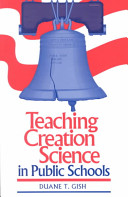
By the end of the twentieth century, the situation had flipped. As creationist pundit Duane Gish famously but incorrectly protested in 1995, at the Scopes Trial Clarence Darrow insisted “it was bigotry to teach only one theory of origins.” In fact, it wasn’t Clarence Darrow who said it, but Darrow’s fellow counsel Dudley Field Malone.

gish teaching creationism public schools

If you aren’t at the table, you’re on the menu…

But Gish’s sentiment was correct. At the Scopes Trial, evolution’s defenders insisted that all sides should be heard. By 1995, the tables had turned, and creationists merely wanted a seat at the table.

At American Conservative recently, Nick Phillips argued that the same culture-war flip has happened in the world of art. These days, we see progressive campaigners insisting that offensive images be banned. We hear of college protesters fighting to eliminate statues and paintings that portray sexist, racist themes. And Phillips asks,

We used to have a word for people who sought to enforce restrictions on the bounds of public discourse in order to insulate sacred norms from attack by non-believers. They used to be called “conservatives.” How did this happen? Why are leftists acting like conservatives?

Of course, this dynamic is as old as politics itself. Whoever has power works hard to keep it. Ideas that challenge the status quo are threats to whomever benefits from that status quo. When creationists appeal to our sense of fairness and inclusion, they have merely recognized that they can no longer simply legislate their vision. And when progressive art activists seek to ban images, they are demonstrating their feeling of proprietary control over the goings on in art houses and college campuses.

Why Conservatives Should Love Obama

He did it! I don’t how it happened, but somehow President Barack Obama managed to accomplish one of the most dreamed-for educational goals of America’s social conservatives. During his presidency, that is, early teen sexual activity dropped significantly, according to the CDC.

I know, I know, it’s ridiculous to give Obama credit for something that merely happened to coincide with his time in the White House. But that’s what culture-war pundits do all the time. In this case, the numbers are pretty significant, and the cause is among those nearest and dearest to the hearts of American conservatives.

As I argued in my book about the history of educational conservatism, helping kids avoid the allure of premarital sex has always been one of the fondest educational dreams of social conservatives, especially conservative religious reformers. Why was evolutionary theory dangerous? If we taught children they were nothing but clever animals, they would certainly behave that way. Why was old-fashioned discipline important? Because children needed to learn to control their sinful, lusting nature.

I hate to do it, but let me quote myself here. When Alice Moore first joined the school board in Kanawha County, West Virginia in the 1970s, one of her first acts was to close down a progressive middle school. When I interviewed Moore I asked her about it. Here’s what I wrote in the book about Moore’s experience:

The school, Moore recalled, was not a proper learning institution. It had become a cesspool of unrestrained sloth and lust. The students, she recalled, did “whatever they wanted to.” As she walked in for her first inspection, a young couple stood in the doorway, wrapped in each other’s arms. She had to ask them to move out of her way, which they did only with notable resentment. Other students wandered around the school and neighboring fields, smoking and engaging in all kinds of sexual activity in nearby barns. When Moore asked the principal to explain this sort of behavior, he informed Moore that the school hoped to do more than simply transmit information to students; it hoped to transform them into agents of social change. Teachers should see their roles as co-learners, not as dictators.

This sort of progressive shibboleth exasperated Moore.

At the heart of warped progressive-ed thinking, Moore believed, was a mistaken notion of the nature of humanity. Lust needed to be schooled out of children, not winked and nodded at as a “natural” thing. Moore was not at all the only conservative activist to think this way. Consider William J. Bennett’s conservative index of cultural indicators. Bennett’s accusations were clear: Hippies had wrecked everything. Progressive attitudes in education had led to woeful increases in dangerous sexual activities among young people, in addition to crime, drug use, etc.

In short, for a hundred years now, educational conservatives have desperately dreamed of reducing the progressive dominance of “If it feels good, do it” attitudes among young people. And now, at long last, we seem to have some evidence that those dreams have come true, at least in part.

CDC teen sex chart 2

The  good news no one will holler about…

Here’s what we know: The excitingly named “Morbidity and Mortality Weekly Report” from the Centers for Disease Control notes significant declines in sexual intercourse among America’s 9th and 10th graders (roughly 14- and 15-year olds). As the authors state,

Nationwide, the proportion of high school students who had ever had sexual intercourse decreased significantly overall and among 9th and 10th grade students, non-Hispanic black (black) students in all grades, and Hispanic students in three grades. A similar pattern by grade was observed in nearly half the states (14), where the prevalence of ever having had sexual intercourse decreased only in 9th grade or only in 9th and 10th grades; nearly all other states saw decreases in some or all grades. The overall decrease in the prevalence of ever having had sexual intercourse during 2005–2015 is a positive change in sexual risk among adolescents (i.e., behaviors that place them at risk for human immunodeficiency virus, STI, or pregnancy) in the United States, an overall decrease that did not occur during the preceding 10 years.

Why? We don’t know. And of course I’m kidding when I give President Obama credit. There are some things we can confidently predict, however. First of all, I don’t think we’ll see pundits shouting about this good news. As we’ve lamented here at ILYBYGTH in the past, good news about America’s schools and youth just never gets headlines.

Second, the warped popular myths about America’s public schools will continue to dominate. Gallup polls make it startlingly clear: When people know public schools, they like them. But when they describe public schools in general, people call them terrible. The notion that America’s public schools are cesspools of drugs, sex, and sloth is not true, but it is very widely held. Similarly, this data about trends in youth culture will not likely change people’s assumptions about schools and youth.

Finally, this student data points out yet again that the common story about the history of American public education is just not true. Many of us assume that progressive types took over public education back in the 1930s. We think that since the 1930s (or maybe since the 1960s) public schools have been dominated by progressive educators from fancy teachers’ colleges and think tanks. It’s just not true. Throughout their existence, public schools have reflected the values of their local communities. When those communities change their ideas about sexual activity, so too do their local schools. Educational change hasn’t come from high-level meetings by New York leftists, but rather from more nebulous and  hard-to-trace shifts in social trends.

Why do more and more young people seem to be avoiding early sexual activity? I don’t know, but I’ll guess: It’s not due to any sex-ed curriculum they’re receiving in their Health classes. No, the change in reported sexual activity is more likely due to changes in our whole society about the allure of sexual intercourse. After all, as we like to say here at ILYBYGTH, schools don’t change society, schools ARE society.

What’s the Deal with White People?

The Roy Moore saga might (or might not) finally be coming to an end. Moore lost the Senate race and he might ride his horse into the sunset. The poll results from Alabama, though, give us some puzzles to think about. We might think we understand why so many white evangelicals voted for Moore. But some other groups just don’t make sense.

As we’ve argued in these pages, a central defining feature of white evangelical history over the past century has been what historian George Marsden called the “establishment-or-outsider paradox.” For many white evangelicals, as I explore in my new book about evangelical higher education, America has been both a shining city on a hill and Babylon.

As a result, white evangelical voters have been prone to cheer candidates like our current president who promise to make America great again. President Trump is not the first leader of questionable personal morality to win evangelical votes by pandering to white evangelical yearning to take the USA back to an imagined Christian past, to return the country to Winthrop’s vision.

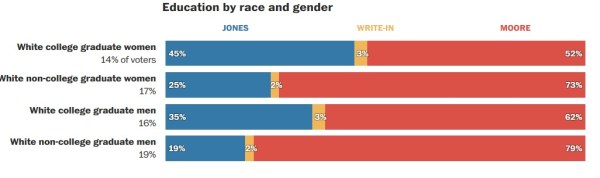
So I’m not too shocked to read that 80% of white evangelical voters in Alabama voted for Judge Moore. There is one result that befuddles me, though. A slim majority of white college-educated women also went for Moore. By a margin of 52% to 48%, this group voted for a man credibly accused of preying on teenage girls.

What gives?

We can even extend this question to the 2016 presidential election. The number of white evangelical voters who voted for Trump and Moore is very similar: 81% and 80%. While a slim majority of college-educated white women voted for Secretary Clinton over President Trump, Trump still claimed a surprising 45% of the college-educated white woman vote.

Can someone explain this one to me?Moore election results

Why do so many white college-educated women vote for these candidates? I have a feeling my cultural blinders are making it hard for me to understand this apparent truth about the American electorate.