I Love You but You Didn’t Do the Reading

Top ILYBYGTH-themed stories from the past week:

Wait…what? Can Trump eliminate birthright citizenship? HNN collected historians’ comments.

How have textbooks portrayed climate change? At TC.

It’s not college that frightens conservatives, it’s just the wrong type of college–a conservative plea for more evangelical colleges, at NR.

If anything, we should be sending more students to college — opening up further avenues of funding, both public and private, even as we pursue policies that might lower tuition or challenge the progressive domination of our campuses. Colleges will have to change, to be sure, but in the meantime conservatives would be wise not only to celebrate but to actively advance the interests of those institutions that are educating students properly right now.

Diversity training is good, says Eboo Patel at CHE. But why doesn’t it include religion?

What’s the deal with “messianic Judaism?” Neil J. Young describes the unique meanings at HuffPost.

When did evangelicals get involved in politics? Clyde Haberman tells the old myth about the 1970s at NYT.

The new digital divide, at NYT.

It could happen that the children of poorer and middle-class parents will be raised by screens, while the children of Silicon Valley’s elite will be going back to wooden toys and the luxury of human interaction.

Atheism in America: A review essay in the New Yorker.

The radical-creationist view on climate change: It’s not a shame, it’s not a crisis…it’s a sin, at AIG.

How many people really believe in a flat earth? NCSE’s Glenn Branch takes another whack at the poll numbers, at SA.

Class war or culture war? The divide in the Democratic Party, at Politico.

Ocasio-Cortez, the young Latina who proudly identifies as a democratic socialist, hadn’t been all but vaulted into Congress by the party’s diversity, or a blue-collar base looking to even the playing field. She won because she had galvanized the college-educated gentrifiers who are displacing those people. . . . Energized liberals, largely college-educated or beyond, have been voting in a new breed of activist Democrat—and voting out more established candidates with strong support among the party’s largely minority, immigrant, Hispanic, African-American and non-college-educated base.

Have schools become a “Constitution-free zone?” Interview with Justin Driver at Slate.

Academia as a cult at WaPo. HT: MM.

Three Things that Have Nothing to Do with Evolution (that Have Everything to Do with Evolution)

I’ve said it before and I’ll say it again: I just don’t care. Not just in a passive, lazy way, but in an aggressive, assertive, in-your-face sense. When it comes to creationism and evolution education, I insist on not caring if people think the earth came from Yahweh 6,000 years ago, a raven in the distant past, or a flying spaghetti monster.

Classic Film Reaction GIF - Find & Share on GIPHY

If we want to make progress in our tired old creation/evolution war, I’m arguing in my new book, we all have to stop caring about those things. We have to stop thinking it is our business if students have the correct religious beliefs about evolutionary theory. So if a conservative evangelical pastor tells me that he can put evangelical theology first and still embrace mainstream evolutionary theory, I’m all for it. Not because his theology is correct, because I don’t care about that.

In this case, the pastor is Todd Wilson. He took to the pages of the BioLogos Forum to explain his method for bridging the angry divide between young-earth creationists and evolutionary creationists. All evangelicals, the Rev. Wilson argues, can agree on some faith basics:

1. The Bible, both Old and New Testaments, is the Word of God, inspired and authoritative. Therefore whatever Scripture teaches is to be believed as God’s instruction, without denying that the human authors of Scripture communicate using the cultural conventions of their time. . . .

2. Christians should be well-grounded in the Bible’s teaching on creation but always hold their views with humility, respecting the convictions of others and not aggressively advocating for positions on which Evangelicals disagree. . . .

3. Everything in creation finds its source, goal and meaning in Jesus Christ, in whom the whole of creation will one day achieve eschatological redemption and renewal. All things will be united in him, things in heaven and things on earth.

What do these ideas have to do with evolutionary theory? Nothing, in one sense. They are all about evangelical theology, not evolutionary science. On the other hand, these ideas might hold the key to evolution education in the United States.

The Rev. Wilson hopes that he can use these points to connect better with different types of evangelical creationists. Young-earth creationists, old-earthers, evolutionary creationists, intelligent designers…all of them disagree with one another, sometimes with great vituperation.

Is his theology correct? I have no idea, and this is where those of us watching these battles from the outside should cultivate an awkward and principled indifference. Speaking in terms of public policy, we just shouldn’t care WHAT people believe about creation. What we should always do is help people develop a thorough and meaningful knowledge about evolutionary theory. What they choose to believe about it is not a question public schools can care about.

It is not—it should not be—the purview of the public schools to encourage or discourage students from having any particular religious beliefs. It IS the goal of public schools to teach students the best of everything.

Combined, those two goals mean we should teach mainstream evolutionary theory to all students. And we should be painfully aware not to step into the regions trod by the Rev. Wilson. If his young-earth creationist congregants want to believe that the Bible is the “inspired and authoritative” Word of God, that’s fine. If they want their children to believe that their religion dictates a belief in a young earth, that’s fine too.

Is Wilson right? Not only don’t we care, we shouldn’t care. We should not involve ourselves in big-picture religious beliefs that touch on questions of speciation and evolutionary theory.

Jim Carrey I Dont Care GIF - Find & Share on GIPHY

I Love You but You Didn’t Do the Reading

I don’t know how people had time to write stuff when the Brewers were in the playoffs, but they did. It has been a whirlwind week. Here are some of the top ILYBYGTH-themed stories from the interwebs:

What 81%? A new look at white evangelicals and Trump, at CT.

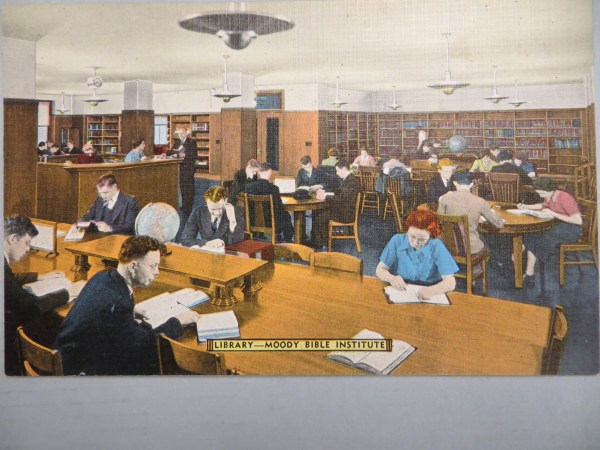
Some background on the new president of the Moody Bible Institute at RNS.

1940s postcard library

Getting those dispensations right…c. 1940s.

Trump, Pocahontas, and the Cherokee Nation: Senator Warren releases her DNA results, denied by both Cherokee Nation and Trump, at Politico.

Schools and the midterm elections: In Ohio, a failed charter network becomes a political football.

“He was clinically upset.” Rich parents reject Zuckerberg’s edu-plan, at NYMag.

Atheists keep sneaking in God through the back door. A review of Gray’s Seven Types of Atheism at NR.

What Christianity and secular humanism share is more important than their differences: No other religious tradition—Jewish, Greek, Indian, Chinese—envisions history as linear rather than cyclical or conceives of humanity as a unitary collective subject. The very idea of utopia—a place where everyone is happy—could not have occurred to people who took for granted that individuals have irreconcilable desires and ideals, and that conflict is therefore impossible to eliminate. Western universalism, Gray scoffs, is very provincial indeed.

It can happen here: A century after the Spanish flu, what are the chances of another worldwide pandemic? At Vox.

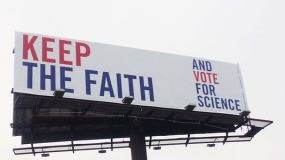
keep the faith vote for science

Hoosiers can love Jesus AND Bill Nye…

Finally! Indiana voters urged to “Keep the Faith and Vote for Science,” at IS.

How are America’s public schools really doing? It’s a trickier question than it seems, says Jack Schneider at WaPo.

America’s schools don’t merely reflect our nation’s material prosperity. They also reflect our moral poverty. . . . Reform rhetoric about the failures of America’s schools is both overheated and off the mark. Our schools haven’t failed. Most are as good as the schools anyplace else in the world. And in schools where that isn’t the case, the problem isn’t unions or bureaucracies or an absence of choice. The problem is us. The problem is the limit of our embrace.

Why is an academic life harder for women and minorities? Columbia offers its findings at CHE.

Conservative campus group restricts audience for Ben Shapiro at USC, at IHE.

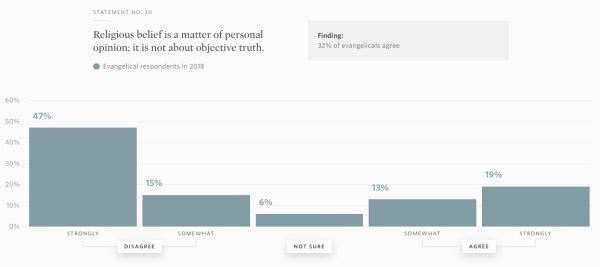
New survey: America’s evangelicals tend to like heresy, at CT.

religion as personal belief

How school reform works, until it doesn’t. Maine tries a new approach, then retreats, at Chalkbeat.

Proponents of proficiency-based learning argue that none of this reflects flaws in the concept. Maine struggled, they say, because they didn’t introduce the new systems thoughtfully enough, moving too quickly and requiring change rather than encouraging it.

Atheist and creationism-basher Lawrence Krauss announces his retirement after harassment allegations, at FA.

Finally! The Right Strategy to End Creation/Evolution Wars

What can we do to promote better public policy about climate-change science and evolution? As one group has done, we can notice the blindingly obvious fact that religion supports good science.

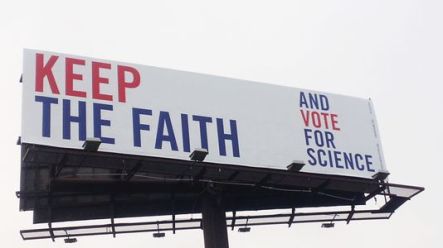
keep the faith vote for science

Hoosiers can love Jesus AND Bill Nye…

Here’s what we know: In Indiana, a group called Class Action has posted billboards in the run-up to the midterm elections. The billboards link religious faith with mainstream science.

By and large, the goal is to encourage religious voters to vote in favor of savvy climate-change science, to support politicians who want to take action to mitigate the negative effects of climate change.

Too often, radicals on both sides have harped on the old myth that religion and science are enemies. Radical young-earth creationists like Ken Ham have warned, for example, that real religion needs to be skeptical of the fake science being peddled by today’s mainstream experts.

To counter this sort of unnecessary antagonism, it just makes sense to remind voters that mainstream science is entirely compatible with even the most conservative strains of evangelical Protestantism.

As one supporter enthused,

A vote for science is a vote for creation, for the most vulnerable of the Earth and for future generations.

As another agreed,

It is smart political tactics to try to build coalitions between religious and environmental voters. . . . If we are to truly tackle the climate crisis, these efforts will be critical.

Hear, hear!

Want to end the utterly unnecessary century-long antagonism between mainstream science and conservative evangelical religion? Don’t tell religious people they are dumb. Don’t accuse them of “child abuse.” Instead, reach across the trench to notice that we all want the same things.

D-D-D-didja Like It?

It can be nervewracking. With a new book out, it is difficult to wait for the academic reviews to come in. After all, with any luck, journals will find the toughest experts to weigh in on your book. Reviewers’ reputations are on the line, too, so they don’t want to go too easy.

Nervous Sponge Bob GIF by SpongeBob SquarePants - Find & Share on GIPHY

For all those reasons and more I was ecstatic this morning to read the latest review of Fundamentalist U. The author is a top-notch historian I really admire. Not only did Professor’s Turpin‘s book, A New Moral Vision, win a hatful of awards, it profoundly changed the way I understand the historical landscape of American higher education.

So I was understandably nervous to see what she had to say in the new issue of History of Education Quarterly. Here are some of the highlights:

As a sympathetic outsider to the institutions he studies, Laats pairs depth of research and analysis with a commitment to rigorous fairness to his subjects. In Fundamentalist U, Laats does not merely explain the internal logic of an interesting, but isolated, group of colleges and universities; he also raises critical questions about the nature of broader American higher education and culture in the twentieth century. . . . Laats is an engaging writer, and the book’s chapters are filled with fascinating stories cleverly told. . . . Fundamentalist U reshapes our mental landscape of twentieth-century American higher educational institutions and is essential reading for understanding both their history and their present.

I Love You but You Didn’t Do the Reading

Lynching creationists, confirming judges, and much more. Here are a few of the stories that marched across our desk this week:

Creationist school board candidate runs a terrible ad, at FA.

swung by neck not tail

???

Sam Wineburg: New media literacy law won’t work, at WaPo.

Jon Shields on the decline of the conservative professoriate, at NA.

if one wants to be exposed to a broad spectrum of political ideas, it is still far better to attend Notre Dame or Baylor than Berkeley or Cornell.

More spoof articles get accepted by academic journals, at NR. HT: MM

a call for awareness into the different ways dogs are treated on the basis of their gender and queering behaviors, and the chronic and perennial rape emergency dog parks pose to female dogs.

Kavanaugh Karamazov? Comparing the trials of Brett and Dimitri at PD.

Trials are not the place for working out our social grievances and anxieties.

Call Obi-Wan: The US Navy now has real ray-guns. At Cosmos.

ray gun

>>pew pew<<

Did Common Core change teacher behavior? Larry Cuban says kinda.

Professor under fire for hateful comments about the Kavanaugh hearings, at IHE.

Does this flyer count asliberal indoctrination” by a public-school teacher? At PI.

pa liberal indoctrination

Civics ed? Or sinister indoctrination?

Taxpayers fund a school field trip to the Creation Museum and Ark Encounter, at LHL.

Mitch McConnell as Hindenburg, a “gravedigger of democracy,” at NYRB.

What’s the big IDEA with this fast-expanding charter network? At Chalkbeat.

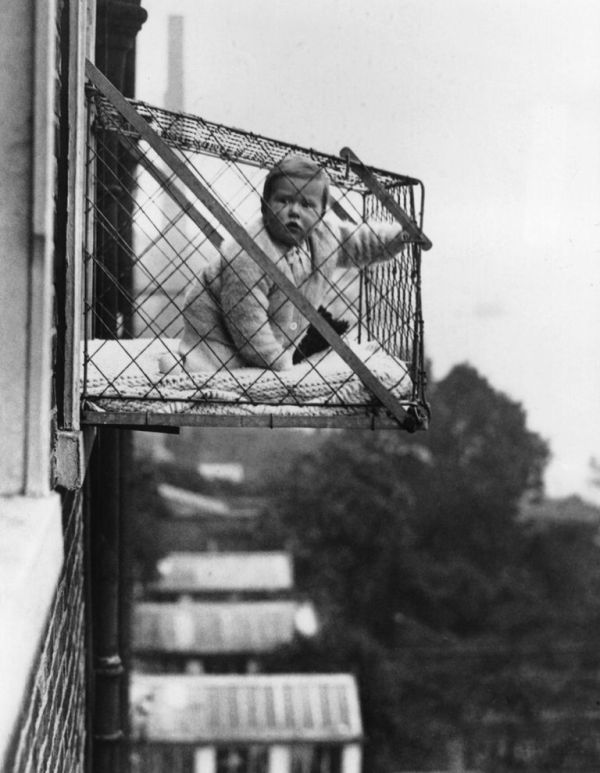
Ah, fresh air! A pop history of baby cages at GH.

baby cage

You can forget those “free-range” child-rearing practices…

Penn Puzzles

Can anyone REALLY teach students how to know and understand something without believing it? That’s one of the questions that sharp students brought up yesterday at the University of Pennsylvania.penn gse logo better

Some context: I headed down to Philadelphia yesterday to talk about evolution, creationism, and the goals of public education. My friend and hero Jon Zimmerman had asked his class to read Teaching Evolution in a Creation Nation.

As usual, readers were generally more interested in the philosophical arguments of my co-author Harvey Siegel than with my historical chapters about evolution education. Is it really possible, students wondered, to teach students to know evolutionary theory in a deep way, to understand it, without insisting that they believe it?

Harvey and I make the case that it is, but as yesterday’s lively seminar proved, it is a difficult distinction to imagine in many cases.

For example, think about the reverse. What if a public-school history teacher wanted to teach students that American history should be understood as the triumph of “JudeoChristian” values? What if the teacher assured secular parents that he was not trying to force students to “believe” in any particular religious values, but only to “know” and “understand” the importance of Christianity in the forming of United States government and society?

Or consider the challenge for any person—especially a young person—of separating out her desire to please an authority figure from her personal religious beliefs. Is it really practical to tell teachers that they don’t want to influence students’ religious beliefs? That teachers should somehow be able to separate out such closely related concepts?

Most challenging, we considered yesterday other sorts of student belief that teachers DID want to challenge. What if a student in history class, for example, argued that her racist beliefs were acceptable, because they were her personal beliefs? Could a teacher really not challenge them?

I think a teacher not only can, but must. And I think a teacher can do that without therefore insisting that he must challenge every student belief with which he disagrees. As Harvey and I argued in TECN, and as I’m elaborating in my new book about creationism, even though such real-world challenges are intense, it is still vital to clarify our goals and our mission when it comes to creationism and evolution education.

I Love You but You Didn’t Do the Reading

October already…feeling spooooky. Here are some articles that caught our attention this past week:

Our lead story this week: Asuza Pacific University on a LGBTQ+ roller coaster:

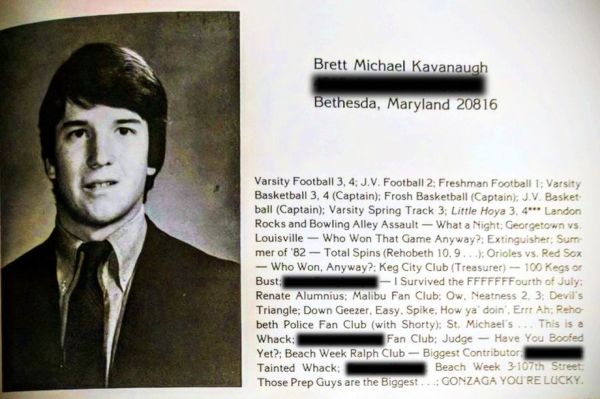
Creepy prep schools and the future of the Supreme Court, at The Atlantic.

kavanaugh yearbook photo

Does going to an elite prep school have ANYTHING to do with all this mess?

Will this school-integration plan work? At T74.

Researcher claims Protestantism still promotes schooling, at Phys.org.

Improving schools by improving lives, or vice versa? At Chalkbeat.

many policies with a shot at changing the experience of low-income students in school don’t have anything to do with the schools themselves.

Principal out after planning to “embarrass” a student who reported sexual assault, at WaPo.

Keeping a “Nazi” student after Charlottesville, at IHE.

He has a right to pursue his education at a state institution. . . . He’s a Nazi — it doesn’t mean he doesn’t get to have an education.

cvjetanovic

Should the school have kicked him out?

I Love You but You Didn’t Do the Reading

This week’s review of the latest news ‘n’ views from around the interwebs:

Atheists for Jesus: Pulling evangelical voters to the left at FA.

Peter Greene on why teachers join unions.

rockwell teacher union thugTexas school board gives history another once-over, and Hillary Clinton is out. At DMN.

Surviving purity culture at NPR.

In this culture, men and boys are talked about as being sexually weak and women and girls are supposed to be the holders of all sexual purity. So ultimately women and girls are responsible for the sexual thoughts and feelings and choices that men make, and it’s women and girls’ responsibility to dress right, to act right, to talk right, to do everything just right to ensure non-sexuality for all people — and if they don’t, they potentially risk being categorized as impure or as a harlot.

Parents in Leiyang riot over school quality, at The Economist.

A liberal ex-evangelical finds a church home, at NR.

Still no-go for yoga in many public schools, at The Atlantic.

What is behind the coddling of the American mind? It’s not just “safetyism,” says reviewer at IHE.

Students have not been coddled, they’ve been defeated.

Concerned scientists weigh in on removal of climate change and weakening of evolutionary theory in Arizona standards, at NCSE.

Queen Betsy misquotes Professor Haidt, at CHE.

Let’s call it ‘Haidt’s choice’: Pursue truth or pursue harmony.

The Most Important School Reform Issue

It’s bigger than charters. Bigger than vouchers. Bigger than flipping, or common-core testing, or APPR, or any other school reform idea out there. Those things are important, but only if we talk about them AND the biggest real issue. If we talk about other reform ideas INSTEAD of the biggest real issue, we’ll always miss the point.

Telegraph with numerals sketch

Reform schemes might be great, but they can’t do it all on their own. This pic shows one Lancasterian’s plan to revolutionize mathematics ed, c. 1830.

And the point is grim. According to my local paper, child-poverty rates in my neighborhood are shockingly high. In Rochester, New York, 56.4% of children live below the poverty line. In Syracuse, that number is 47.4%. Buffalo stands at 43.6%.

Depressing, you might say, but what does it have to do with school reform?
Everything. For centuries, well-intentioned reformers have tried to “solve” the problem of poverty by fixing American schools. It doesn’t work that way.

Yes, school reforms can help. Public schools can work well as convenient distribution points for poverty-alleviation reforms. Free breakfasts and lunches, for example, can help. So can school-based health care schemes.

Too often, though, reformers don’t talk about alleviating the effects of poverty AND improving education. Smart, well-intentioned people often simply assume that improving education can eradicate poverty on its own.

It was ever thus. As I’m finding in the research for my new book about Lancasterian reform plans, early 19th-century reformers often glibly assumed that tweaking schools would have an immediate and total effect on the rest of society. By giving low-income students a basic education, they thought, poverty would dissipate overnight like an unpleasant dream.

Just over two centuries ago, for instance, New York Governor DeWitt Clinton called the Lancasterian reform

as creating a new aera [sic] in education, as a blessing sent down from Heaven to redeem the poor and distressed of this world from the power and dominion of ignorance.

Or, as the New York Free School Society wrote in 1814, thanks to the “Lancasterian system of education,”

the darkness, which has overshadowed the minds of the poor, will gradually disappear.

In Philadelphia in 1819, thanks to the Lancasterian reform plan, reformers promised a speedy end to urban poverty. As they put it, since they adopted Lancasterian schools,

we may confidently look for that ameliorated state of society, which attempts at reformation, not in themselves radical, have hitherto failed to produce.

Perhaps most colorfully, one rapt devotee of the Lancasterian system told Lancaster in 1819,

Universal education must be the means of introducing and ushering in this Sun of Glory whose beams shall melt the chain of adamant and drive the infernal practice [of slave-holding] into outer darkness.

Two hundred years later, of course, we can see with depressing clarity: Simply changing classroom methods and schoolhouse design will not, can not, solve the problems of an unequal society.

In fact, for schools to work, we have to alleviate poverty first. Trying to fix social problems by fixing schools misunderstands the relationship between formal educational institutions and society. There is no way schools can fix society on their own. We’ve said it before and we’ll say it again: Schools don’t fix society; schools ARE society.