On the Reviewing Block

How do you decide what to read?  For nerds, academic journals provide page after page of book reviews.  I love to read and write these sorts of academic reviews.  But are they really worth the time?

Right now, for instance, I’m reviewing four books for a variety of journals.

For History of Education Quarterly, I’m writing a review of Andrew Hartman’s War for the Soul of America (University of Chicago Press, 2015). Hartman
For the journal Church History and Religious Culture, I’m reviewing Christopher Rios’s After the Monkey Trial (Fordham University Press, 2014).rios

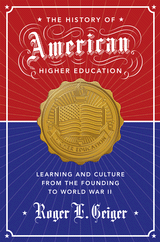
For Teachers College Record, I’m working on a review of Roger Geiger’s new book The History of American Higher Education (Princeton University Press, 2014).geiger
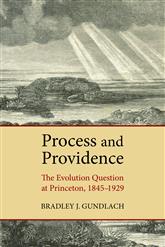
Last but not least, I just agreed to write a review of Bradley J. Gundlach’s Process and Providence: The Evolution Question at Princeton, 1845-1929 (Eerdman’s, 2013), for History: Reviews of New Books.gundlach
For those outside of the academic realm, here’s how the process works: Publishers send out review copies to a variety of journals and magazines.  Book review editors hunt down an appropriate reviewer, usually through word of mouth and academic reputation.  If the first person they ask can’t or won’t write a review, the editor asks for suggestions of other possible reviewers.

I love to write reviews for academic journals.  In each case, putting together a coherent review forces me to do more than simply absorb a book’s argument.  It forces me to take a sharper look at the sources, the implications, and the book’s strengths and weaknesses.  In all of the reviews I’m currently writing, I had planned to read each book already.  Writing the review simply forbids me to read any of them lazily.

But beyond the benefits for the writer, do these reviews matter?  After all, very few people read academic journals.  These days, the long peer-review process means that reviews in academic journals sometimes come out long after the books are published.  We might be tempted to conclude that these kinds of academic book reviews are merely an exercise in higher-education navel gazing.

I think there’s more to it than that.  After all, these reviews are not intended solely for individual readers or book buyers.  This is not just a “rotten-tomatoes” kind of review, in which readers might check out what has been said before choosing one book over another.  This is not simply “like”-ing something on Facebook or scrawling out an angry smear job on Amazon.  Those things may boost or crush sales and reach, but they don’t provide readers with careful descriptions of a book’s structure.

Book reviews in academic journals are different.  The audience for these book reviews is mostly university types, the professors who are choosing books to use with their classes and their students.  No one has time to read every book that comes out, but these short reviews allow academics to remain broadly aware of new trends in their fields.  A “good” review in this context does not mean glowing praise, but rather careful description of the book’s argument and significance.  A professor can choose which books to use in his or her classes.  Professors can also recommend certain titles to graduate students for further study.

Some things that are old fashioned deserve to wither away.  Cassette tapes, large lecture hall classes, and phones with cords come to mind.  This tradition of slow and careful review, on the other hand, may have its roots in a very different technological time.  Nevertheless, it remains a vital part of academic life.

The Social Sciences Need More Conservatives!

Let’s start with some ifs. IF diversity is really a minimum requirement for vibrant intellectual life, and IF college professors really tip toward liberalism and leftism, and IF academic groupthink has had a damaging effect on social sciences . . . IF those things are true, then don’t we need to improve political diversity in order to encourage real intellectual progress? A new study by a group of social psychologists argues that we do.  Only by encouraging researchers who embrace conservative worldviews, they write, can social scientists make real progress.

This academic team is not a collection of conservative pundits. As have other self-identified liberal academics such as Jonathan Zimmerman, these psychologists argue that in order to preserve even the liberal goals of the liberal arts, some sort of academic affirmative action is required.social-scientist

First, some background: this new study will be published soon in the journal Behavioral and Brain Sciences. It has been made available in an unedited, uncorrected pre-publication form to invite peer comment. The authors include José L. Duarte of Arizona State University, Jarret T. Crawford of The College of New Jersey, Charlotta Stern of Stockholm University, Jonathan Haidt of New York University—Stern School of Business, Lee Jussim of Rutgers University, and Philip E. Tetlock of the University of Pennsylvania. These academic psychologists are careful to note that none of them identify as political or cultural conservatives. Their argument is not a bitter lament from an excluded right wing, but rather a call to action by concerned academic insiders.

ILYBYGTH readers may remember Jonathan Haidt’s 2012 book, The Righteous Mind. In a nutshell, Haidt argued that Americans of all political stripes make up their moral minds first, then adduce reasons to explain their positions.

This new argument is different. The authors limit their claims to the field of social psychology. Their field, they contend, is

At risk of becoming a cohesive moral community. Might a shared moral-historical narrative in a politically homogenous field undermine the self-correction processes on which good science depends?

For example, studies of public attitudes toward climate change have described disagreement with mainstream science as “denial.” By calling one side “science” and the other side “denial,” doesn’t the very structure of the study adversely affect its outcome?

As the authors warn, “Embedding any type of ideological values into measures is dangerous to science.”

Not only does political homogeneity threaten to derail the answers found by social scientists, it tends to skew the questions they ask. As an example, the authors describe the career of the idea of “stereotype accuracy.” Due largely to ideological commitments, social psychologists had assumed that stereotyping was a false and negative tendency. In the 1970s, however, a rare conservative psychologist examined the question in a new way, and “found results that continue to make many social psychologists uncomfortable.” In this case, conservative psychologist Clark McCauley found that many stereotypes are actually based on rational assumptions and fact.

Why are there so few political and cultural conservatives in this academic field? The authors suggest a range of possibilities. They reject the notion that academic careers attract liberals because liberals are somehow smarter than conservatives. But they do find that the field may suffer from a self-propagating tendency. Since it is perceived as hostile to conservative thinkers, young conservative academics steer clear. Professor Haidt includes a sample of comments by conservative graduate students from his earlier work. One conservative academic told Haidt that he or she remained in the academic “closet.” Due to anti-conservative prejudice, this person wrote, “I find myself hiding my intellectual views and values every day.” Another conservative graduate student wrote that “the political ecology became too uncomfortable for me.”

This sort of weeding-out, the authors warn, threatens the field. By encouraging a culture of similar-minded researchers, the field of social psychology undermines its own scientific validity.

What is to be done? The authors offer a laundry list of suggestions, including more funding for conservative graduate students and an active recruitment process for tenure-track university positions. Universities are already good at searching for diverse faculties and student bodies. They only need to expand their notion of “diversity” to include a true intellectual, cultural, and political diversity. More broadly, the authors encourage all social psychologists to examine their own prejudices. “Instead of assuming,” they suggest,

That stereotypes are inaccurate without citing evidence, ask, ‘How (in)accurate are stereotypes? What has empirical research found?’ Instead of asking, ‘Why are conservatives so prejudiced and politically intolerant?’ . . . ask, ‘Which groups are targets of prejudice and intolerance across the political spectrum and why?’”

These are issues near and dear to ILYBYGTH hearts. Time and again, conservative intellectuals and pundits have complained that higher education has been lost to a morass of identity politics and destructive Red-Guardism. Perhaps most famously, William F. Buckley Jr. quipped that he would rather trust the government to the first four hundred people listed in the Boston phone book than to the faculty of Harvard University. More concretely, as I’m uncovering in my current historical research, conservative evangelicals have devoted considerable amounts of time and treasure to the establishment of dissenting conservative colleges, where students and faculty will be free to pursue truth undeterred by self-defeating and short-sighted secular humanism.

Certainly, this study will likely be embraced by conservatives as more proof that their complaints are justified. I wonder how many conservative intellectuals, though, will embrace the liberal premises of this study as well as its conservative-friendly conclusions. That is, will conservative thinkers agree that diversity is a requirement for true intellectual growth? Many conservatives, after all, have rejected racial affirmative-action programs that promise greater intellectual diversity. Can conservatives accept this study on conservative grounds?

It is worth repeating that this article limits its claims to the field of social psychology. But clearly its implications are worth considering for academia as a whole. Do mainstream colleges need a dose of true political diversity?

Update: Fundamentalism and Higher Education in the 1930s

For all those in the Binghamton area: We’ve had to move my talk this afternoon until Wednesday, Feb. 25th, at 4 PM in the conference room of the Institute for Advanced Studies in the Humanities, first floor Library Tower on the scenic campus of Binghamton University.  The talk will still be free and open to the public.  All are welcome; no registration is required.

Please note: This is SEPARATE from the radio discussion tonight (Monday, Feb. 23, 2015) at 6:30.  That’s still on as scheduled: Religion and the Modern University, a panel discussion featuring yours truly.  Available streaming through the interwebs.

For those who are just joining us, the talk on Wednesday will include material from my current research.  Here is the official abstract:

What has it meant to be a Protestant fundamentalist in the United States?  For some, it meant engaging in disputes with fellow Baptists or Presbyterians about the proper nature of their denomination.  For others, it has implied a wide-ranging cultural conservatism, including battles against ideas such as evolution and against social practices such attending movies and smoking.  Scholars have had no more success than pundits in defining fundamentalism, though historians have agreed that a network of colleges and universities served as central institutions in this fractious world.  In this talk, historian Adam Laats shares his research into the early history of these schools to demonstrate the ways that fundamentalist leaders and laypeople struggled to define themselves.

Religion, Education, and the Modern University

Why go anywhere else?  Binghamton University is the most exciting school in the universe.  Coming up next Monday, I’ll take part in a panel discussion on our campus radio station about the role of religion in higher education.  Set your radios to 90.5 WHRW, Monday, February 23, at 6:30 to tune in on the action.  Or, for those unlucky few outside of our immediate broadcast area, just point your browser at the streaming feature to listen online.

Where the action is! Monday, February 23, 6:30 PM EST.

Where the action is! Monday, February 23, 6:30 PM EST.

OK: AP not OK

What does creationism have to do with the Continental Army? What does George Washington have to do with the Genesis Flood? This week the news from Oklahoma gives us an example of the ways conservative ideas influence every classroom, not just the science labs.

We will have more success understanding those ideas if we see them as part of a conservative notion of proper education. These are not just ideas about science, or the Book of Genesis, or George Washington at Valley Forge, but they combine all these things into a powerful educational impulse. As I argue more extensively in my new book, in order to make sense of any aspect of educational conservatism, we need to look at it as a whole, not just as a series of separate incidents.

First, let’s look at the goings-on in the Sooner State. Representative Dan Fisher has introduced a bill that will challenge the teaching of Advanced Placement US History in Oklahoma’s public schools. Why? As do many conservatives, Fisher believes that APUSH teaches a warped, slanted, leftist view of America’s past. The new APUSH framework, Fisher explains, emphasizes “what is bad about America.”

Fisher wants to blast progressive history out of Oklahoma's schools.

Fisher wants to blast progressive history out of Oklahoma’s schools.

Fisher is not alone. As we’ve explored in these pages, conservative activists have lashed out at the new APUSH framework. I’ve argued also that many conservatives see these AP standards as only the latest efflorescence of a vicious left-wing assault on real American history. These conservative notions about sneaky progressive subversion in history classrooms have a long history themselves, as I describe in the book. At least since the 1920s, conservative thinkers and activists have lambasted history curricula as hopelessly skewed. Children learn that the USA has been built on a legacy of greed and genocide. Children learn that traditional heroes such as George Washington and Thomas Jefferson have feet of clay, or worse.

Representative Fisher, for instance, is a member of the Black Robe Regiment, according to the Tulsa World. As do many religious conservatives, this group ties together a romantic history of the United States with conservative attitudes about Scripture and religion. In those connections we catch a glimpse of the ways conservative thinking about education can link creationism with US History.

I want to be careful about what I’m saying here. I’m not arguing that there is some sort of vast underground conservative conspiracy connecting creationism with Fisher’s anti-APUSH activism. Nor am I saying that Fisher’s brand of religious conservatism is somehow the most real sort of conservative attitude about education. There are plenty of conservatives who will have no truck with this kind of religious and traditionalist interpretation of America’s past. But I do believe that deeply held attitudes about proper education fuel both creationism and Fisher’s sort of historical revanchism.

What’s the connection? At its heart, I suggest that this sort of conservatism springs from a notion that real education must come from a delivery of correct information from authoritarian sources to learners. That is, many conservatives—perhaps a better word would be “traditionalists”—believe that education must be a transmission of truth from top to bottom. That truth, if we back it up to its source, must come from God as the ultimate authority.

Perhaps this definition of proper education as the delivery of truth to each new generation seems unobjectionable. It is not. For about a century, educational thinkers have suggested that this “transmission” method is not good education. These “progressive” reformers have tried to impose instead an idea that students must construct knowledge on their own, not merely accept it or download it from authoritarian sources.

In the specific case of the new APUSH framework at issue in Oklahoma, historians have insisted that historical learning does not simply mean transmitting facts to children. And smart conservatives acknowledge that real education includes much more than just telling young people things that are true. But at its core, we might separate “traditionalist” from “progressive” ideas about education along these lines: Traditionalists think of education primarily as moving information from authoritative source to learners. Progressives think of education primarily as having learners construct knowledge.

With this sort of general attitude about education and knowledge, it’s easy to see the connections between creationism and the Continental Army, between George Washington and the Genesis Flood. For some religious conservatives, including apparently Representative Fisher of Oklahoma, knowledge about any subject must rely on traditional truths. Those truths have been delivered to us from on high. Proper education, in this mindset, consists of passing those truths along, not subjecting them to smarmy and self-satisfied criticism.

What Conservatives Want in Schools

When I started the research for my new book, lo those many years ago, my first stop was College Park, Maryland. The National Archives hold the papers of William J. Bennett, Reagan’s second Secretary of Education. To my thinking back then, Bill Bennett personified the tradition of conservative activism in education. In a recent long interview with Bill Kristol on The Weekly Standard, Secretary Bennett shares his memories of his conservative leadership in education. Among other things, Bennett articulates a long twentieth-century tradition of conservative thinking about proper education.

In addition to some wacky stories of practical jokes by President Reagan, Secretary Bennett explains what motivated him about America’s schools.

When he first took the job, Bennett explains, he visited 120 schools. Over and over again, teachers and students told him they needed some way to teach basic truths about American virtue, about American culture. The question he heard again and again, he explains, was, “How do we teach these kids moral values? They’re so different. They come from diverse backgrounds.”

It’s simple, Bennett insists: “There are certain common values.” Not only that. Students should not be taught vaguely how to learn, but rather should be taught knowledge. As he put it, “You have to start by learning something. . . . Content is what really develops the mind, the brain.”

The most important thing he has done in his entire career, Bennett explains, is his publication of his best-selling Book of Virtues. After it came out in 1993, the BoV spent eighty-eight weeks on the New York Times bestseller list. The big accomplishment of the book, Bennett says, is that it salvages traditional stories from our culture that are in danger of being lost. It insists that we all share common values, no matter our religious or cultural backgrounds.

As I argue in my new book, this notion about the first goal of American education has long been a central unifying theme of diverse conservative politicians and activists. Long before Bennett took over as Education Secretary, Max Rafferty had articulated similar sentiments from his post as State Superintendent of Public Education in California.

In addition to his bully pulpit in California, Rafferty authored a syndicated column that took his conservative ideas nationwide. Many of those ideas sound as if they could come directly from the mouth of Bennett himself. For instance, in one column from the 1960s, Rafferty argued,

Without the great hero-stories, we are left in the schools with statistics on immigration and economic development, dry-as-dust treaties and proclamations, accounts of population trends and antitrust legislation to give the children in the guise of history. They will grow up inevitably with the same amount of love and reverence for their native land which they would feel for a mathematical theorem or a chemical formula.

The best education, Rafferty wrote in another 1960s column, must include

the grand old stories that you and I remember so fondly from our childhood. Ben Franklin and his famous pun about hanging together or hanging separately. . . Sam Houston at San Jacinto, reminding enemy dictators for all time to come that Americans would forget attempts to enslave them only when Texans forget the Alamo—these and a hundred more great stories cluster about our history, bulwarking and supporting it, mingling it in a Red, White and Blue mist, clamorous with voices out of our past, dramatizing American history and American institutions so that wide-eyed children will always remember.

As Secretary Bennett remembers in this interview, his biggest success has been in putting a compilation of these traditional stories into the hands of millions of students, parents, and teachers. Like his boss President Reagan, Bennett argues that traditional stories teach virtue. Having students memorize these ancient nuggets of wisdom has done more to educate generations of Americans than all the progressive nostrums oozing out of high-falutin schools of education.

There is no simple definition of “educational conservatism.” But in this interview, Secretary Bennett articulates something that comes pretty close: the notion that proper education consists of transmitting traditional facts and values into each generation of schoolchildren.

Hookers for Jesus; or, Fundamentalists on Valentine’s Day

Well…didn’t Jesus hang around with tax collectors and prostitutes? Former sex worker Annie Lobert is promoting her new book, Fallen: Out of the Sex Industry and into the Arms of the Savior. She told The Christian Post recently that romance—real romance—should start and end with the love of Jesus Christ. It prompts us to ask a central but awkward question: Are evangelicals really all that different from the rest of us when it comes to love and sex?

To those of us outside the circle of evangelical Christianity, this sort of religion-ized sexual tell-all can seem like a cheap way for sexually repressed evangelicals to get their jollies. Time and again, as an outsider observing conservative religious culture, conservatives’ attitudes seem like nothing so much as a “health” lecture at a strict Midwestern high school in 1953.

But is that fair?

The pages of evangelical magazines exploded recently with comments about Fifty Shades of Grey. Evangelical women were scolded for reading the book, which one writer condemned as “a written form of pornography, plain and simple.” Other conservatives offer visions of what real Christian romance is, what Fifty Shades of Grace might look like.

To me, such huffing and puffing sounds downright embarrassing. Are conservative Christians really still so flustered over sex that Fifty Shades of Grey can cause such hand-wringing? But then I remember that silly flouncing over FSoG is not at all limited to evangelical culture. Americans as a whole seem to share the desire to half-condemn and half-giggle at the goings-on between the covers of FSoG.

Certainly, non-evangelical writers have also condemned the cartoonish sex and romance of the FSoG movie. And who can forget Saturday Night Live’s funny-because-it’s-true parody of Americans’ goofy obsession with the book?

In my current research, too, I’m struggling to figure out how much fundamentalist sexual angst is different from the sexual angst of mainstream culture, and how much it is largely the same. The archival record at evangelical colleges and universities is full of real anguish over questions of proper courtship and sexuality.

You’ll have to wait for the book to read the full stories, but from one college I find a 1950s story of a gay divinity student who faked his own death to escape from the condemnation he felt as a gay fundamentalist. Faked his own death. And escaped to a new life in Texas. From the 1940s, I read a bittersweet diary of a college student who agonized over her choice of future spouses. She did not feel much attraction for one potential mate, but as she wrote to her mother, a campus speaker turned her around. This speaker told of what true Christian romance should feel like. In this speaker’s case, God

showed him that God’s intent is for the man to be a special means of communicating his love to the woman, and vice versa. It is like the offerings of honey and frankincense. The honey is natural sweetness, and is never to be burned. It stinks. It cannot stand the test of fire. But frankincense smells sweeter the hotter the fire. So the natural love and the divine. His natural love for Irene ebbed and flowed, rising and falling with the state of his soul. But God’s love, in Christ, through Bill, to Irene, was constant—a thing of divine origin and purpose, pure and living. What a revelation!

For this young woman in the 1940s, the fact that she did not feel much actual attraction for her future husband became swathed in layer after layer of indecipherable religious enthusiasm.

To me, that seems awfully odd. As does faking one’s own death and secretly absconding to Texas. But I ask myself: in the 1940s and 1950s, how different were these fundamentalist feelings about sex and courtship from those prevalent in non-fundamentalist America?

Certainly, in the 1950s, almost no one felt comfortable living openly as a homosexual. In the 1940s, the romantic experiences of young heterosexual couples on secular college campuses reeked of unhealthy layers of this or that cultural imperative.

And now, conservative evangelicals fuss and fume about proper sex and relationships.  But so do the rest of us.

To put it bluntly, the question is not: How sexually messed-up are evangelical Christians? Rather, the question is: Are evangelical Christians notably MORE sexually messed up than the rest of us?

Conservatives, Evolution, and “The Question”

“Do you believe in evolution?”

That’s the question GOP presidential candidates dread. Governor Scott Walker of Wisconsin is the latest to hem and haw his way through an awkward press conference on the subject.

Of course, some GOP contenders have no need to fear. Ben Carson, for example, is a loud and proud young-earth creationist. But other potential nominees have had to dodge, duck, dive, and dip when the question comes up. Bobby Jindal, a former biology major at an Ivy League college, has confessed that he wants his own children to learn evolution. That doesn’t mean schools must teach it, though. Jindal wants “local schools” to decide what’s right for them. And Marco Rubio famously told GQ magazine that he was “not a scientist, man.”

Walker is the latest GOP notable pressured to answer “The Question.” At a London press conference, Walker did his best to avoid it. In the end, though, Walker felt obliged to clarify that he strongly believed that humanity was created by God, and that faith and science are compatible.

It has become such a staple of GOP press conferences that conservative pundits cry foul. Writing in the pages of the National Review, for example, Jonah Goldberg says these evolution questions are a cheap stunt, a way to make conservative candidates squirm. As Goldberg put it,

To borrow a phrase from the campus left, Darwinism is used to “otherize” certain people of traditional faith — and the politicians who want their vote.

As fellow conservative writer Kevin D. Williamson correctly pointed out, leading mainstream scientists will also insist that they don’t “believe in” evolution. Rather, they simply know it; they take it to be the best current explanation and model for understanding the way species have changed and developed.

Yet no matter how you slice it, “the question” has become a defining feature of Republican presidential candidates. Even candidates who seem personally to embrace mainstream evolutionary science are loath to alienate conservative religious voters. For many of those religious voters, evolution has become a moral litmus test, not just a statement of personal belief.

In the News: Atheist Hate Crime

Three people are dead, shot in the head by a murderous thug. That thug was an outspoken atheist, and the victims were publicly identified as members of a religious group. Does this count as an atheist hate crime?

To be fair, many of the facts are still up in the air, but it does not seem disputed that Craig Stephen Hicks shot three of his neighbors dead. The neighbors were all Muslim, and Hicks was an outspoken atheist.

According to a story on Yahoo News, Hicks had posted the following rant on his Facebook page:

There’s nothing complicated about it, and I have every right to insult a religion that goes out of its way to insult, to judge, and to condemn me as an inadequate human being — which your religion does with self-righteous gusto, . . . the moment that your religion claims any kind of jurisdiction over my experience, you insult me on a level that you can’t even begin to comprehend.

Is this an escalation of culture-war polemics to real-war violence? ILYBYGTH readers will recall the episode from August, 2012, when Floyd Lee Corkins shot a security guard in the office of the conservative Family Research Council. Is this another example of anti-religious terrorism?

For their part, leading atheists are scrambling to make sense of these charges. The Wisconsin-based Freedom From Religion Foundation has issued a statement blaming mental instability, not atheism, for the atrocity. Yet as Hemant Mehta (my personal favorite atheist pundit) has charged, if this shooter had been a member of any religion, leaders of that religion would be called onto the carpet to separate themselves publicly from the act.

Is it fair to ask if militant atheism somehow contributed to this heinous murder?

Homeschooling and Intolerance

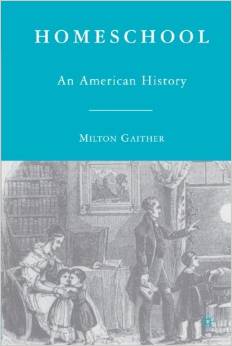
What is the deal with homeschooling? It is really a plan to produce a private army of patriarchs, as some have suggested? Due to the fractured nature of homeschooling, it is very difficult to say anything accurate about homeschoolers as a whole. Thanks to the indefatigable Milton Gaither, we see this week a study that attempts to figure out if homeschooling really does lead to greater intolerance.

For those who are not familiar with his work, Professor Milton Gaither is an historian at Messiah College in Pennsylvania. In addition to his historical work on homeschooling, he also reviews all the new research about homeschooling on his must-read blog.Gaither homeschool

This week, Gaither reviews a study by Albert Cheng. In short, Cheng compiled data gathered from students at Biola University who had been educated in part at home. Cheng wanted to know if these homeschooled students were more intolerant than their public- or private-school peers.

Read Gaither’s full review for the deets, but the short answer is no. All other things being equal, homeschooled students at Biola were a bit MORE tolerant than school-schooled students. As Gaither points out, though, all other things are not equal. The difference in tolerance between homeschooled and school-schooled students was less than the differences between students from different social backgrounds.

In other words, homeschooling tends to make students in this sample more tolerant of people from other backgrounds, but the difference is not as striking as the differences between students from rich and poor families, white and black ones, boys and girls, etc.

What’s the upshot? Gaither concludes with some intriguing implications that you need to read in full. Do public schools make evangelicals less tolerant? Do students choose relatively liberal evangelical colleges like Biola because they are already more tolerant of differences? Can we say with any confidence that homeschooling, as such, does not tend toward intolerance?