Only Conservatives Can Be Good Teachers

Quick: What’s the most important trait a child needs in order to do well in school? Brains? A cool retro lunchbox? At World Magazine this morning, Amy Henry offers what she calls the “conservative” answer.

All I need is the Hoff...

All I need is the Hoff…

She tells the story of her struggles as a classroom teacher. No matter how dedicated, no matter how creative, Henry argues, no teacher can make any headway if students offer determined resistance. As Henry tells the tale,

Four times I asked him to take out a piece of paper. Four times I asked him to find a pencil. Each and every time we reached a new vocabulary word, I stopped reading and told him to write it down. By the time the history lesson was over, I was exhausted and so was he, I suspect. Whether the directive is to get out a book, pick up a piece of trash, or sit in a particular seat, I am met with stiff resistance, if not outright refusal to cooperate.

No student, Henry insists, can be taught if he or she isn’t willing to obey. As she puts it,

without obedience none of that [good teaching] can happen. I can teach an ADHD, dyslexic, dysgraphic child with severe anxiety issues the world, but I cannot teach a high-functioning, intellectually bright, whippersnapper of a kid who won’t obey a doggone thing.

For conservatives, Henry says, the most important ingredient in education is obedience. This is not just her off-hand observation. As evidence, Henry cites new-ish poll data from Pew Research. Those who identify as “consistent conservatives” are more likely than “consistent liberals” to place a high value on children’s obedience. She interprets those numbers in a sketchy way, I think, but let’s save that argument for another post. For now, let’s talk about why so many conservatives agree with Henry.

For Henry, conservatives are the only ones who really get it.  Liberals fudge and whine, but they avoid the obvious conclusion: education in classrooms can only happen if kids come to school equipped with an obedient attitude. As we’ve talked about in these pages, this notion has proven extremely influential among certain conservative activists throughout the twentieth century.

For example, from the mid-1960s, Max Rafferty attracted a huge popular following with his traditionalist nostrums on good education. [For any up-and-coming historians out there, we really need a good academic history of Rafferty’s career and ideology. It’s a fabulous dissertation just waiting for you in Iowa City and Sacramento.] Rafferty served as the state superintendent of public education in California, but he attracted the most attention with his syndicated columns about the nature of childhood and proper education. In one such column from the early 1960s, Rafferty explained why children must begin by learning to obey. In Rafferty’s words,

a child usually has neither the maturity nor the judgment to understand the need for self-discipline. Too many instructors, fresh from college and still pretty Dewey-eyed about things, compromise themselves and their careers in a hopeless attempt to convince some freckled-faced [sic] urchin with devilment coming out visibly all over him that he must discipline himself when all he really needs is a session after school with the ruler.

In the 1970s, too, leading conservative activists Mel and Norma Gabler agreed on the primary importance on obedience. The Gablers are best known for their indefatigable textbook commentary. At every Texas textbook-adoption meeting in the 1970s, the Gablers were there with long detailed lists of ideologically suspect material from the books under consideration. Given the influence of the Texas textbook market among publishers, the Gablers managed to punch far above their weight in terms of national textbook selection.

But the Gablers cared about more than conservative histories and science books. They prided themselves on their attitude toward children and obedience. As an admiring biographer wrote,

The Gabler boys were expected to be respectful and they were. A black friend of the family was always marveling, ‘Your boys are the only ones who call me, “Mister.”’ And the parents’ response was always, ‘They’d better.’

For the Gablers, as for so many cultural conservatives, parents needed to ensure that kids came to school ready to learn. That didn’t mean just pencils and lunchboxes. That meant children must come to school ready to submit to teachers’ authority.

In the narrower world of conservative evangelicalism, too, Henry’s focus on obedience has long roots. Many conservative Christians have agreed with Henry that children must obey, for both classroom and churchly reasons.

For example, as fundamentalist writer Jerry Combee argued in a late-1970s guide to good Christian schooling,

Without Biblical discipline the public schools have grown into jungles where, of no surprise to Christian educators, the old Satanic nature ‘as a roaring lion, walketh about, seeking whom he may devour’ (I Peter 5:8). Students do well to stay alive, much less learn. . . . If Christian educators give one inch on discipline, the devil will take a mile.

Certainly, among many conservatives, Henry is absolutely correct. Only conservatives can be good teachers, because only conservatives embrace the primary need for obedience. Without obedience, all the fancy-pants progressive toys and tricks in the world will do no good. But with obedience, any child from any background can learn.

Evangelicals and Homosexuality on the College Campus

Maybe President Lindsay feels better knowing that only high pressure can create diamonds. Because the leader of evangelical Gordon College is feeling intense pressure from two sides right now. On one hand, the school’s accrediting agency has threatened to take away its accreditation if Gordon does not revise its policy on homosexuality. On the other, the school’s conservative supporters insist the policy must stay in place. If history is any guide, it appears one group might make the crucial difference in this case.

Are all welcome?  MUST all be welcome?

Are all welcome? MUST all be welcome?

This Gordon-ian knot is one that all conservative evangelical colleges have tried to pick apart. Schools such as these are in a pickle: they need to remain intellectually respectable and financially viable, yet a decision either way threatens both intellectual consistency and the bottom line.

As I’m finding as I research my new book, similar schools have had a difficult time walking this line. In the 1930s, for example, Wheaton College leaders moved fast to bring Wheaton up to accreditors’ standards. As historian Michael Hamilton argued, the president at the time, Oliver Buswell, viewed accreditation as more than just a piece of paper. To Buswell, accreditation was the “one of the best ways to earn intellectual respect for fundamentalist Christianity.”

But college leaders such as Buswell were also under intense pressure to maintain both the appearance and the reality of theological steadfastness. Leaders needed to maintain the confidence of the evangelical community that their schools were not slipping into secularism. In 1929, for instance, Buswell withdrew from publication a controversial book he had written. Why? As he explained to a colleague, above all Buswell felt the need to keep “the confidence of fundamentalist leaders . . . in the administration of Wheaton College.”

Losing either accreditation or the respect of the “fundamentalist” community could mean a wasting death for an evangelical college. And the two have often pushed in opposite directions.

WWBD?

WWBD?

Much has changed since then, but President Lindsay at Gordon College finds himself coming under similar pressure from both sides. [Full disclosure: I worked with Michael Lindsay in the Spencer Foundation/National Academy of Education Postdoctoral Fellows program. I consider him a friend and colleague.]

For those who are just joining us, this story began back in July, when President Lindsay signed an open letter to President Obama about religious exemptions to an anti-discrimination law. Now, the question has become whether Gordon’s Statement on Life and Conduct violates the rules of its accrediting agency.

At issue is the Gordon ban on “homosexual practice.” The New England Association of Schools and Colleges has collaborated with Gordon in setting up a “discernment” group to examine the policy.  (As an aside, we could ask why only this part of the policy has come under investigation. After all, the Gordon policy also bans “blasphemy” and “profanity,” not to mention heterosexual sex outside of marriage. Doesn’t this impinge upon the free speech rights of potential students?)

For a host of reasons, the accrediting agency doesn’t care about blasphemy. But it is threatening to withdraw accreditation over the ban on “homosexual practice.” For Gordon College, loss of accreditation would have serious consequences. Its graduates would not necessarily be considered qualified for graduate school. Nor could they receive student loans backed by the federal government. Perhaps most important, though, loss of accreditation would be a symbolic slap in the face. Gordon would face the challenge of proving its continued intellectual respectability.

But that is not the only pressure facing Gordon right now. Just as President Buswell at Wheaton worried about both mainstream intellectual respectability and credibility within the world of conservative evangelicalism, so President Lindsay faces a double-sided threat.

Beyond accreditation pressure, Lindsay must consider the opinions of the far-flung community of conservative evangelicals. As one conservative pundit wrote recently in the pages of the Christian Post,

To Michael Lindsay, the gifted president of Gordon, and to the board of trustees, I remind you: Many eyes are watching you, knowing that the decisions you make could either strengthen or dishearten many other schools that will soon be put under similar pressure.

As this conservative writer worried, Gordon might be willing to “sell its soul” to maintain accreditation.  If it did, conservative students and parents might take their tuition dollars elsewhere.  But if it doesn’t it might lose accreditation.  Without that sort of mainstream credibility, students and parents might take their tuition dollars elsewhere.

So what is a conservative school leader to do? How can President Lindsay balance the pressure to reform with the pressure to hold fast to the faith once delivered to the saints?

In this case, there is a new wrinkle. Traditionally, alumni are one of the groups most likely to push school leaders to maintain conservative positions. Today, though, some Gordon alumni are hoping to convince Gordon to change its ways. A group of two dozen alums have published a letter encouraging Lindsay to remove any hint of anti-gay discrimination from Gordon’s policies.

In the past alumni have been one of the most vocal groups fighting any change at evangelical colleges. Conservative evangelical colleges have long been keenly aware of the pressures to modernize and secularize. Traditionally, alumni of these schools have been staunch foes of any perceived change, since any change could lead to an utter loss of the school’s steadfast character. Historian Michael Hamilton described this alumni attitude this way:

colleges, more than any other type of institution, are highly susceptible to change, and that change can only move in one direction—from orthodoxy toward apostasy. . . . The very process of change, no matter how slow and benign it may seem at first, will always move the college in a secular direction, inevitably gathering momentum and becoming unstoppable, ending only when secularization is complete.

In Gordon’s case, however, alumni—at least some of them—are pushing in the other direction. It is impossible to predict what will happen at Gordon. The board of trustees may decide this policy needs updating. Or they may not. And President Lindsay might decide that this language is a central part of the school’s evangelical character. Or he may not.

This case highlights the double pressure faced by conservative evangelical colleges. In a sense, they must serve two masters: the pressure to maintain a vague and shifting “respectability” with mainstream institutions; and the pressure to remain bastions of orthodoxy in a world hurtling headlong into secular mayhem.

Who “Gets” Left Behind

I remember reading the novels.  I read them in the gym of the high school I taught in.  Sometimes students would ask me about them, and I’d say they were about the end of the world.  But I also sometimes wondered if people would think I was a fundamentalist, an end-of-the-worlder, a kook.  Now that the new movie is out, friend of ILYBYGTH Daniel Silliman has offered a thoughtful essay about what it means to be a fan of Left Behind.

For those of you who haven’t heard, the Left Behind series blew a lot of minds when it came out in the 1990s.  Fundamentalist writer Tim LaHaye and his colleague Jerry Jenkins set out to present another gripping fictional story of the end of the world.  But not just any end of the world.  Left Behind told the story of the way many American fundamentalists have come to interpret the Bible’s eschatology.

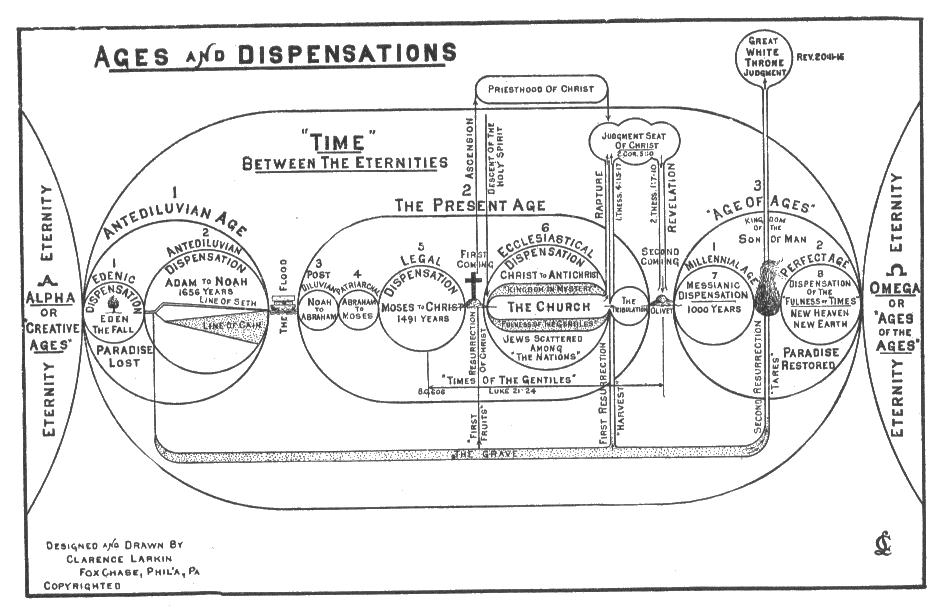
Clarence Larkin's theological charts were very popular among the first generation of fundamentalists in the 1920s.

Clarence Larkin’s theological charts were very popular among the first generation of fundamentalists in the 1920s.

Since around the beginning of the twentieth century, many (but by no means all!) fundamentalists and conservative evangelicals have embraced the theology of dispensational premillennialism.  This interpretation of the Bible sets out a series of ages, or “dispensations.”  Our current Age is set to expire sometime soon.  When it does, this theology predicts, Jesus will lift all true believers to meet him “in the air.”  This event will be known as the “rapture.”  After the rapture, those who have been left behind will suffer through seven years of tribulation before Jesus returns in glory.  Once Jesus and his angelic hosts have defeated the Antichrist on the field of Armageddon, a thousand years of peace and love will follow on earth, the millennium.

That’s a quick and dirty summary, but for our purposes, it will do.  Tim LaHaye was not the first prophecy writer to fictionalize this story.  As many evangelicals of a certain age will remember, an older generation of films such as A Thief in the Night told a similar story, in a similarly dramatic fashion.

But LaHaye’s Left Behind series took this Bible apocalypse into the mainstream.  Millions of people read the books.  And evangelical sorta-star Kirk Cameron made a series of movies to bring the message to even more fans.  And now, for some reason, there’s a new movie version, this time starring Nicholas Cage.

For nerds like me, the interesting question is not whether the new film is good or bad.  (Although I couldn’t find a single review that said it was good.  Just bad, really bad, and “God-awful.”)  Instead, I want to know what it can tell us about American religion.  Specifically, I want to know why so many people gobble up these fundamentalist bedtime stories.  Is America really that sympathetic to fundamentalism?  Does some part of our national psyche still yearn for this sort of stern hellfire morality play?

Daniel Silliman tackles this question of audience.  Take a few minutes to read his whole essay.  In short, he demonstrates that we can’t really assume much about America based on its seeming never-ending appetite for Biblical apocalypses.  Just because millions of people read these books, we can’t assume we know if those readers bought into the fundamentalist end-of-the-world story.

Left Behind

Some people, Silliman notes, will watch this movie ironically.  That is, they will rush out to see the movie to see just how silly those Christians will get this time around.  Like the infamous Snakes on a Plane, many movies become popular because of their badness.

But Silliman also gives some examples of people who seem to embrace the film precisely because they embrace the theological message.  Just because the story seems outrageous to me doesn’t mean that other viewers are not watching it with very different attitudes.

In other words, we must be careful about assuming too much from this film.  If it flops, we will not be able to say that America has turned its back on fundamentalist theology.  And if it’s a huge box-office success, we won’t be able to say that America is still a fundamentalist fief.

Salon Article Wrong on the Right

Do conservatives hate the Common Core?  Like anything in cultural politics, it all depends on what we mean by “conservatives,” “hate,” and “the Common Core.”  In other words, I understand that this is a tricky subject. But it is still painful to read writers like Gabriel Arana get the Right so Wrong.

As we’ve discussed in these pages, conservatives are anything but united about the new common standards.  Some old-schoolers such as Phyllis Schlafly blast the new standards as “control by Obama administration left-wing bureaucrats.”  And Catholic conservatives have worried that the new standards will rob students of the “the virtues necessary to know, love, and serve the Lord.”  Libertarians have bashed the core as the death knell of educational independence.  More colorfully, one conservative politician described the standards as the ultimate progressive “beer bong for American education.”  We could go on and on.  Conservative pundits and politicians have offered a vast treasure-trove of reasons to oppose the newish standards.

On the other side, thinkers have also offered plenty of conservative arguments in support of the core.  Karen Swallow Prior of Liberty University, for example, has suggested that “no one more than evangelicals” should understand the reason for effective literacy instruction.  Kevin T. Brady and Stephen M. Klugewicz argue that the new standards will serve to weaken the power of the political Left.  The new standards, these conservatives assert, will force left-leaning teachers and educational bureaucracies to embrace the rich cultural tradition of Jesus, St. Paul, Martin Luther, and GK Chesterton.  Nuts-and-bolts free-market conservatives also like the standards.  Chester Finn and Michael Petrilli, for example, think that these standards are the least-bad way to insure that America “knows how all its kids and schools are doing . . . [with] a rigorous set of shared expectations for the three R’s.”

It’s complicated.  I get it.  But that complexity only makes me lament all the more the simplistic description offered by Arana’s recent Common-Core article in Salon.  A few days ago, Arana offered this glib and breezy drive-by of conservative attitudes:

Education policy wonks on the right oppose the standards because they view it as a step toward nationalizing education — as a general rule, they prefer to keep control local. Tea Party types, on the other hand, fear they will eventually be used to teach kids about dangerous stuff like evolution. But since George W. Bush signed No Child Left Behind into law — the largest federal education initiative to date — Republicans have in principle been less opposed to federal involvement in education. A lot of the pushback from Republicans . . .  is about the Obama administration, which has enthusiastically supported Common Core.

Let’s take a look at the claims here:

First, “Education policy wonks” don’t like the standards?  It’s hard to think of any more wonk-y conservatives than Michael Petrilli.  And Petrilli, the author of Wonk-tastic articles such as “How School Districts Can Stretch the School Dollar” and “America’s Private Public Schools” is the Right’s most vocal advocate of the new standards.

Next, it is true that some conservatives worry that the Next Generation Science Standards will push more evolution into schools.  It’s also true that some conservatives have bundled their opposition to the Common Core with their opposition to evolution.  But what leads Arana to call this “Tea Party” opposition?  Some polls suggest that conservatives who identify as Tea Party members tend to deny evolution at higher rates than other members of the Republican Party.  But as Dan Kahan has pointed out, any statements about a shift in Republican attitudes about creationism overall must be tempered.  And behind it all, how often do “Tea Party” types talk about creationism, compared to their central interests in smaller government?

Last but not least, Arana is smart to point out that things might be changing.  But is he aware of the difficulties conservative politicians face when it comes to supporting the Common Core?  Jeb Bush, for example, supports the new standards but is always very careful to differentiate the standards from federal control.  In contrast to Arana’s claim, Republicans are not less opposed to “federal involvement in education.”  They MAY be less opposed to shared standards, but “federal control” still remains the third rail of conservative education policy.

So, again, I don’t bash Arana—or anyone—for not following every curve and wrinkle of conservative debates over the Common Core standards.  But if you open your mouth to deliver pearls of wisdom, it always makes sense to at least get the general outline right.

School Protests and Negative Nellies

Suburban Jefferson County is in an uproar. Teachers and students have taken to the streets. They’re protesting a move by conservative school-board members to modify the new Advanced Placement US History framework. Predictably, conservatives nationwide have rallied behind those school-board members. In ways today’s protesters might not recognize, conservative rhetoric in this case dredges up a long conservative tradition—the fight against excessive negativity toward America. In surprising ways for “The Party of No,” when it comes to educational attitudes, conservatives have often been the party of “Yes, Please.”

This Denver-area protest is not the first to result from the changing framework for the Advanced Placement US History class. Conservative pundits have attacked the changes as pernicious and short-sighted. As we’ve noted here at ILYBYGTH, those conservative concerns have a legacy all their own. Conservative intellectuals and activists have protested that the new framework depicts the main themes of US History as oppression and racism. Some conservatives have called for US History to be taught in more traditional ways, more patriotic ways.

In this case, conservative school-board members proposed a new look at the framework. The five-member board has a solid three-member conservative majority, and those three called for a reform that would emphasize “positive aspects” of US History, an emphasis on ideas that “promote citizenship, patriotism, essentials and benefits of the free enterprise system, respect for authority and respect for individual right.” In addition, conservative leaders want less emphasis on materials that “encourage or condone civil disorder, social strife or disregard of the law.”

In protest, district teachers called for an orderly sick-out. Teachers planned to call in sick to draw attention to both this change in curriculum and a proposed change to teacher pay. As word spread, students joined in. Soon, teachers and students alike took to the streets to protest any change in the history curriculum.

Predictably, conservative commentators huffed and puffed at the student protest. Gretchen Carlson of Fox News called the protesters “punks.” “How can being patriotic or learning about patriotism be a negative?” Carlson asked. “And what does it say about our young people and the teachers joining the protests that patriotism is now a negative?”

Writing in the pages of National Review Online, Ian Tuttle had a similarly dismissive attitude toward these “sign-waving baby barbarians.” Not only did the students expose their own ignorance with their hopelessly ironic protest signs, but their movement could not even count as legitimate social protest. Real protest, Tuttle fumed, was a vital patriotic legacy. This sort of display, in contrast, was only “self-indulgent grievance-mongering.”
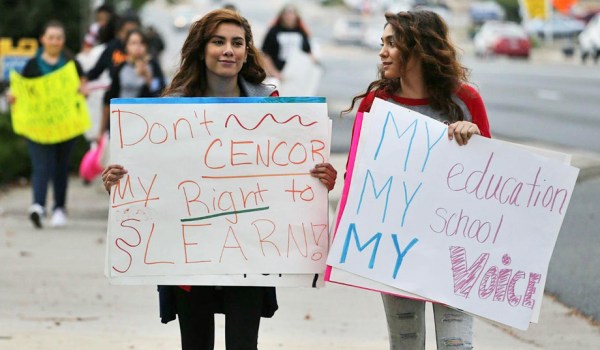
Maybe a little cencoring would be okay...?

Maybe a little cencoring would be okay…?

Back in Colorado, one of the conservative board members opined that the student protesters were being used as hapless “political pawns.” The real issue, he said, was the question of teacher pay. The teachers’ unions cynically exploited the naïve enthusiasm of students in order to line the pockets of union members.

There’s more going on here than just 1960s hangover culture wars. Beneath these specific worries about student orderliness and patriotism, there is a decided theme about the proper attitude schools and students should have toward American society in general. As I researched my upcoming book about conservative educational activism in the twentieth century, I came across this theme time and again. In addition to worries about political leftism and secularism in schools, conservatives have worried vaguely about a pervading sense of negativity in progressive school curricula. Sometimes this has had to do with the portrayal of America’s past, as in the current Colorado student protests. But sometimes it has been a broader complaint about a general negative attitude in school books.

In what follows, I’ll share three long examples from 1923, 1939, and 1970. In each case, leading conservative activists attacked the negativity of progressive educators. Just as in Jefferson County, conservatives in each case worried that students were being taught that America stunk, that life in general stunk.

First, a speech from April 16, 1923. In this speech, the leader of the National Society of the Daughters of the American Revolution warned of the creeping negativity and anti-patriotism of America’s teachers. Too many teachers, President General Anne Minor insisted, poured that negativity down the throats of trusting young schoolchildren.

Character and patriotism and obedience to law—there are the essentials of training in the schools. Do we find them everywhere? There are many who feel that there is a weakness of moral fibre [sic] in the teaching in many of our schools. And it is well known that there is an organized movement of many years’ standing among radicals to insinuate their doctrines into the schools and colleges all over the land….We want no teachers who say there are two sides to every question, including even our system of government; who care more for their ‘academic freedom of speech’ and opinion (so called) than for their country. Academic freedom of speech has no place in school, where the youth of our country are taught and their unformed minds are developed. There are no two sides to loyalty to this country and its flag. There is nothing debatable about allegiance to that flag and the Republic for which it stands. Freedom of speech does not give the right to teach disloyalty to our children and college youth. The teacher who does not wish to teach loyalty toward the land that employs him, has one good remedy. He or she may resign and go where disloyal opinions can find expression without harm to anyone. Guard well your schools, lest the life of the nation be poisoned at its source.

Years later, in 1939, a school-board member in Englewood, New Jersey lambasted the leftism and negativity of a popular set of textbooks. In this case, that conservative school board member was B.C. “Bertie” Forbes, the founder of Forbes Magazine. The textbooks at issue were a set of social-studies books by progressive scholar Harold Rugg. In this snippet, Forbes tells a story he repeated over and over again in his crusade against the Rugg books:

One of [a local teacher’s] pupils came to me, very much upset. In effect, he said that he had always regarded America and the American form of government as wonderful. But, he proceeded to relate that when the class had been asked to record their opinion as to whether ‘The people of the United States have a better government than have the people of any other county in the world,’ their teacher expressed disagreement with those young Americans who had replied, ‘Yes.’ According to this pupil she disabused their minds of any such idea. According to him, she told her young charges that the answer was ‘No’, that ‘there are several countries in Europe which have as good, if not better, forms of government than ours.’

At this critical time, when we are preparing to conscript our youths to become American soldiers, I cannot but question the wisdom of impregnating young minds with any such notion that our system of government is open to question.

If teachers of the Rugg books are seeking ‘subtly’, to use Professor Rugg’s own word, to convey such ideas to the coming generation, ideas which cannot possibly inspire them with veneration for their flag—which they are asked to salute every day—surely the parents of Englewood are entitled to learn the facts.

A generation later, in 1970, conservative activists Mel and Norma Gabler told the Texas State Board of Education that too many textbooks focused only on the negative. The Gablers went through the list of approved books, one by one. In each case, the Gablers noted the relentless negativity of the texts. In what follows, I’ll include a full long book-by-book quotation from the Gablers’ testimony:

This book contains some of the chilling, horror-type stories that seem to appeal to the morbid imagination of this age’s youth; but so much time spent thinking upon strangeness can make it almost seem normal. The characters in ‘The Jam’ are dope addicts. ‘The Hitchhiker,’ which follows, has an identical climax, both written to horrify. ‘The Birds’ was made into a Hitchcock movie, so is well-known, but in reading it there is so much more blood and gruesome detail that the reader feels the need to escape and cleanse himself from such horror. ‘Zero’ leaves the impression that it is normal for children to hate parents and for parents to be indifferent to the needs of children. Everything in the book is conducive to causing emotional instability in the impressionable mind.

This [Rebels and Regulars] is another very depressing book. As far as the language used, it is in keeping with the characters and plots of the stories, but not the sort of language the thoughtful parent would approve of in his children. There is throughout the book the undercurrent of ‘a cause,’ which gives a prejudiced viewpoint, always picturing the white man as the villain against different minority groups or individuals. Typical of the stories is ‘The Cyclists’ Raid,’ which is militant, lawless, defiant, and completely without consideration for the individual. . . . A whole semester of concentrating upon rebellion as pictured in these stories will have a negative effect upon an impressionable young person. It becomes more honorable to rebel than to obey laws or consider the rights of others. . . .

This book [Ways of Justice] indicates that justice is whatever an individual decides it should be. ‘Junkie Joe Had Some Money’ shows bullies getting away with murder because the only witness is intimidated. In ‘Manuel,’ a kindly act is rewarded with utmost cruelty, written in vivid detail. ‘Mateo [86] Falcone’ tells of a young boy who is bribed to reveal the hiding place of another, then his father kills him. Nothing here to indicate love or understanding is possible between parents and child. ‘Marijuana and a Pistol’ gives all the sordid details of a maladjusted youth who smokes ‘weeds,’ including the uncontrolled giggling and vomiting. ‘They Grind Exceedingly Small’ is a story about the person who has money, taking advantage of the poor, hard-working, underprivileged—indicating that all money and power are in the hands of the cruel, wicked, dishonest, and undeserving. . . .

Couldn’t half of the stories in this series tell about people living together in harmony, love, understanding, and helpfulness?

Is reality only negative? Does not reality also include the many acts of kindness between races that is evident across our nation? It must be remembered that qualities such as morality must be taught. They do not come naturally. Education without morality will result in a depraved society.

Our conclusion is that if these books do not contribute to rebellion, lack of respect for authority, sadism, violence, and disillusionment, they will most certainly defeat the whole purpose for studying literature in our schools; for there is absolutely nothing presented here that would open the wonderful world of the printed page to our youth and cause them to want to pursue reading for the pure joy of doing so!

In all these conservative protests, the notion that school materials must somehow be positive and patriotic takes center place. Whether it was in 1923, 1939, 1970, or today, conservatives have insisted that school materials do more than present the negative side of life. In today’s protest, the issue is the teaching of US History. And that has certainly been a central subject in these battles. But it was not only history that became controversial. As the Gablers pointed out, the negativity of the cultural left showed up in literature selections as well. As they asked so plaintively, “Is reality only negative?”  And, and President General Minor protested way back when, a pervasive, destructive negativity also showed up in teachers’ attitudes.

Again and again, conservatives have wanted students to learn positive messages. Conservatives have worried that too much negativity might produce a generation of cynics. In a sense, we might say that conservatives in schools have sometimes been the party of positivity.


Shout at the Devil

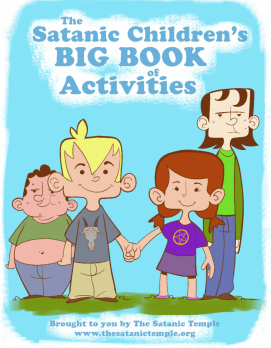
Can religious groups pass out religious literature in public schools? How about if the religion is Satanism, and the literature is The Satanic Children’s Big Book of Activities?

What's good for the goose...

What’s good for the goose…

Apologies: This news came out about ten days ago, but I’ve been wrapped up in book research and somehow missed it. Better late than never, right?

So here’s the story in a nutshell: In Orange County, Florida, the Satanic Temple has announced plans to distribute its children’s book in public schools. Why? Because evangelical Protestant groups plan to pass out Bibles and Christian literature.

According to the Satanic group’s announcement, the plan hopes to attract attention to the need for secularism. As in other high-profile cases—such as plans for a Black Mass at Harvard—the group insists it does not really worship Satan, but rather wants Americans to shake off their religious blinders.

As the temple’s spokesperson, Lucien Greaves, explained,

if a public school board is going to allow religious pamphlets and full Bibles to be distributed to students — as is the case in Orange County, Florida — we think the responsible thing to do is to ensure that these students are given access to a variety of differing religious opinions, as opposed to standing idly by while one religious voice dominates the discourse and delivers propaganda to youth.

Indeed, the book uses Satanic imagery to promote notions of pluralism and anti-bullying. The Satanic children are represented as the only ones able to use “patience and open-mindedness” to understand kids who are different. The smiling Satanic children in the book use “inclusive language” and “[spread] knowledge … to dispel fear and ignorance.”

All sounds pretty innocent, right? And, indeed, for secular folks, this publicity stunt might indeed seem to be what one journalist called “a hilarious response to a pro-religion court ruling.”

Spreading knowledge?  Or fueling fundamentalist fears?

Spreading knowledge? Or fueling fundamentalist fears?

Personally, I agree. This effort seems to make a powerful statement about the true possibilities of religious freedom in public schools. In other cases, we’ve seen parents protest against evangelical outreach to public schools. And we’ve wondered if Jesus-loving cheerleaders would really accept similar sorts of religious free speech from other religions. If public schools are really going to work, they don’t need to ban religion. But they can’t support just one sort of religion, either.

In the end, though, I can’t help but wonder if this sort of exposure does more harm than good to the very cause the Satanists claim to espouse. They came to Orange County in an effort to support the Wisconsin-based Freedom From Religion Foundation. The Satanists want to make the point that no religious literature should be permitted in public schools; no religious evangelists should be allowed to target public-school students.

As regular ILYBYGTH readers know, I’m an outsider to the world of conservative evangelical religion. But after having spent some time with conservative evangelicals and “fundamentalists,” I’m now wondering if the Satanists’ tongue-in-cheek deviltry might backfire. With this Florida campaign, the Satanic Temple is literally putting the devil on the side of the atheists. Conservative pundits can and will point to the Satanists’ efforts as evidence of the evil tilt of atheists.

So here’s the question: Is this Satanic Temple effort genius? Or self-destructive?

Does it make the point that “religious freedom” must really mean religious freedom for ALL religions? Or does it simply fuel conservative warnings that secularism is just a front for Satan?

Burning Bibles at Public Schools

Can a public school have Christian books in its library? Are religious books coming under fire? The latest story comes from Temecula, California. But religious activists have worried for generations that public schools have become aggressive book-burners.

In the current case, the Pacific Justice Institute has accused Temecula’s River Springs Charter School—apparently one of three schools in the Springs Charter School network—of anti-Christian bias. A parent complained to PJI that the school library had purged any book with a Christian bent. According to a report in Christian News, the parent told PJI that the librarian had been told to get rid of religious books. As conservative commentator Todd Starnes tells the story, the school librarian was instructed to remove “all books with a Christian message, authored by Christians, or published by a Christian publishing company.”

As Starnes concluded darkly,

The way I see it – book banning is just one step away from book burning. And I don’t mean to pour gasoline on the fire, but we all know what regime did that.

When the conservative activist group complained, the superintendent, Kathleen Hermsmeyer, responded that the school did not permit “sectarian materials on our state-authorized lending shelves.”

This episode reminds me of an extraordinary rumor I stumbled across in my research for my upcoming book on conservatism in twentieth-century American education. Investigating the 1974 school blow-up in Kanawha County, West Virginia, I found one conservative activist who insisted that the school district had recently removed all the Bibles from the schools. Even more shocking, this conservative reported that the secularizing zealots in charge of the public schools had dumped the Bibles unceremoniously in a dumpster. When pressed, this activist could not provide details or evidence for his story. He said he had heard it from another conservative leader.

But most important, the story seemed true and likely to him. As a religious conservative, he thought it was believable that a public school leader would purge the school of Bibles. And other conservatives at the time agreed.

We could take it even further back. In the 1925 Scopes Trial, anti-evolution celebrity William Jennings Bryan argued that public schools must ban evolution, since they already banned the Bible. That kind of argument has a good amount of gut political appeal. But it has one glaring problem: It just wasn’t true. In fact, as I noted in my 1920s book, Tennessee had actually passed a mandatory Bible-reading law in 1915. But as far as I could tell, no defender of evolution ever called Bryan on his mistake. On both sides, school activists in the past have believed that religious books had been kicked out of public schools.

Today’s story from California is more credible. In this case, the school leader admitted that the policy had been put into effect. Nevertheless, to this observer, it seems the case from Temecula will be another tempest in a teapot. The Pacific Justice Institute likely sniffed an easy win, since of course public schools are not under any legal compulsion to remove all Christian reading materials from their libraries. Indeed, the US Supreme Court has been very clear that public schools can and should teach about religions.

As Justice Tom Clark wrote in the landmark 1963 Abington v. Schempp decision, “Nothing we have said here indicates that such study of the Bible or of religion, when presented objectively as part of a secular program of education, may not be effected consistently with the First Amendment.” Indeed, Clark had just specified that public schools must not exclude religion from public schools, “in the sense of affirmatively opposing or showing hostility to religion.”

So it seems to me that Superintendent Hermsmeyer has indeed blundered. In a publicly funded school, there is absolutely no constitutional mandate to remove sectarian reading materials. The school itself must not preach any religion, but the library can and should be a place where students may encounter religious ideas.

No Free Speech for Conservative Students

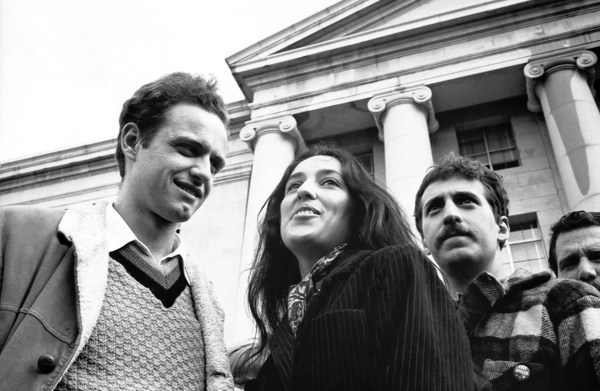
In less than a week, we’ll see the official fiftieth anniversary of the Berkeley Free Speech Movement. And some conservatives worry that college campuses will celebrate that milestone by cracking down particularly on the free speech of conservative students.

What Free Speech looked like fifty years ago...

What Free Speech looked like fifty years ago…

Some found it ironic that Berkeley Chancellor Nicholas Dirks began the commemoration season with an equivocal email. Dirks encouraged the Berkeley community to remember to temper its yen for free speech with an esteem for the value of civility.

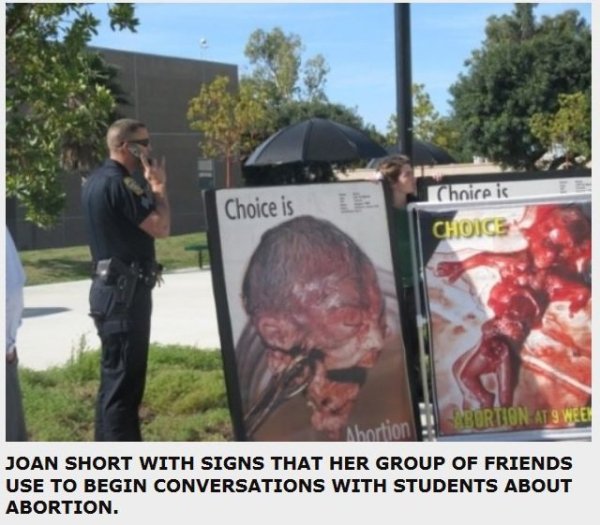
Over the past year, too, campuses nationwide have wrestled with their policies of establishing limited “free-speech zones.” In some cases, conservative students have come under special pressure, either for preaching conservative evangelical religion or for protesting against abortion.

This week in the Wall Street Journal, education scholar and historian Sol Stern lambastes the current climate of campus free speech. As he recalls, as a twenty-seven-year-old graduate student, he stood up for free-speech rights at Berkeley fifty years ago. But nowadays, he laments the trajectory of campus politics. “Though the movement promised greater intellectual and political freedom on campus,” Stern argues,

the result has been the opposite. The great irony is that while Berkeley now honors the memory of the Free Speech Movement, it exercises more thought control over students than the hated institution that we rose up against half a century ago.

Why do today’s campus activists face a more restrictive environment? Stern blames the new dominance of academia by closed-minded leftist autocrats. “Unlike our old liberal professors,” Stern writes,

who dealt respectfully with the ideas advanced by my generation of New Left students, today’s radical professors insist on ideological conformity and don’t take kindly to dissent by conservative students. Visits by speakers who might not toe the liberal line—recently including former Secretary of State Condoleezza Rice and Islamism critic Aayan Hirsi Ali —spark protests and letter-writing campaigns by students in tandem with their professors until the speaker withdraws or the invitation is canceled.

There seem to be two questions on the table. First, do campuses need to restrict student speech in order to maintain order? And, second, as Stern and other conservative commentators argue, do conservative students sustain the brunt of these anti-free-speech attacks?

Is this what free-speech looks like today?

Is this what free-speech looks like today?

Time to Pray at School!

It’s that time of year again. Time for students to gather together in their public schools and pray. You heard that right: School prayer is alive and well. In this case, it’s almost the fourth Wednesday of September, which has been set aside as a day for evangelical students to meet at their schools’ flagpoles to pray. This tradition started in 1990, and a San-Diego-based group has promoted the practice nationwide. Is this sort of school prayer constitutional? Even more tricky, are conservative evangelicals consciously pushing the limits of constitutionality with this kind of prayer event?

Let’s take those questions one at a time. Is this sort of student-led prayer constitutional in public schools? Short answer: yes. In spite of a great deal of nervousness among evangelical Protestants and other religious groups, the US Supreme Court’s 1962 Engel decision and its 1963 Schempp decision never outlawed prayer in public schools. The first decision ruled that states could not impose a prayer on students, the second that schools and teachers could not lead students in devotional Bible-reading or prayers. But students still may pray all they want in public schools.

The issues get more complicated these days over the question of school sponsorship. Most recently, SCOTUS ruled against student-led prayer in Santa Fe v. John Doe (2000). In that case, though, the Court did not rule that students couldn’t pray. They only said that the type of student-led prayer at issue implied school sponsorship. Students in Santa Fe public schools would use the school’s PA system to lead prayers before football games. Those prayers were always of an evangelical Protestant faith. The court ruled that such prayers implied school sponsorship of one specific sectarian vision of religion.

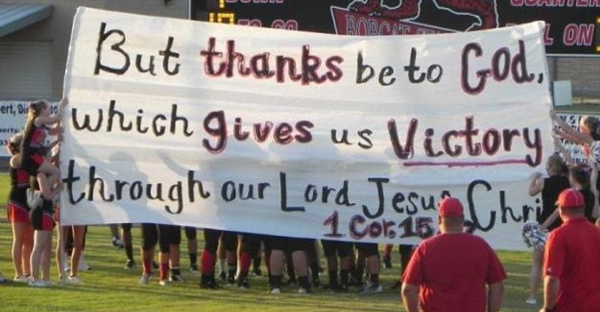
As ILYBYGTH readers may recall, the issue of school sponsorship has also been at the center of recent cheerleader debates from Kountze, Texas. It can seem a little perplexing. Down in Kountze, the Christian cheerleaders insisted that they were a private, student-led club. But objectors insist that their presence at the school games implies school support for their religious banners.

Student-led?  Or school-sponsored?

Student-led? Or school-sponsored?

What about See You at the Pole? Does it pass the Santa Fe test? Most observers agree that it does. Watchdog groups such as Americans United for Separation of Church and State have noted that students are free to pray all they want, as long as teachers and school officials don’t encourage or discourage student participation.

To this observer, though, it looks as if the organizers of See You at the Pole are intentionally pushing the boundaries of constitutionality. This year’s theme, for example, is Ephesians 6:18a: “Never stop praying, especially for others.” And promotional materials this year show students vowing, “We’ll never stop.”

It might just be my yen for pluralism and inclusion in public schools, but it seems to me as if this language is consciously tweaking the nose of our school-prayer tradition. As I argued a few years back (behind a paywall, sorry), many conservative evangelicals interpreted the 1963 Schempp decision as a constitutional cataclysm. They viewed the decision as evidence that our society had turned its back on God.

When an evangelical group promises, then, that they’ll “never stop,” we can’t help hearing a sort of promise that they will never accept the notion of pluralist schools. When students insist that they will be praying for others, we can’t help hearing a sort of promise that they will turn their public schools into revival meetings.

After all, among some conservatives, there has long been a drive to re-assert evangelicalism as the implicit theology of public education. For example, evangelists Brad and Susanne Dacus published a handy-dandy guidebook to “Reclaim Your School.” Writing from the Pacific Justice Institute, the Dacuses promised to help readers “evangelizing in the public schools.”

It seems to me as if the SYATP project wants students to do more than simply pray at their schools. The implicit promise is that these students will commit to preaching to other students in their schools. As national organizer Doug Clark told the Christian Post, the event helps students “represent [God] to their schools.”

To my ears, that sounds like more than just protection for the religious rights of students. It sounds to me like a plan to insert evangelical pressure into public schools. It sounds to me as if students are being encouraged to foster an environment in their public schools that might make non-evangelical or non-religious students feel decidedly unwelcome.

Is that my secular paranoia? Or do these SYATP events really encompass a sort of covert promise to reclaim public schools for public Christianity?

From the Archives: Campus Rape in the 1930s

Do fundamentalist colleges encourage sexual assault?  It’s a terrible and difficult thing to talk about.  As we’ve seen in these pages, some alumni insist that fundamentalist schools force victims of sexual assault to blame themselves.  But we’ve also seen that sexual assault is not at all unique to religious schools.  As I continue the research for my new book about the history of evangelical colleges and universities, I’ve stumbled across a story that might shed light on these tricky questions.

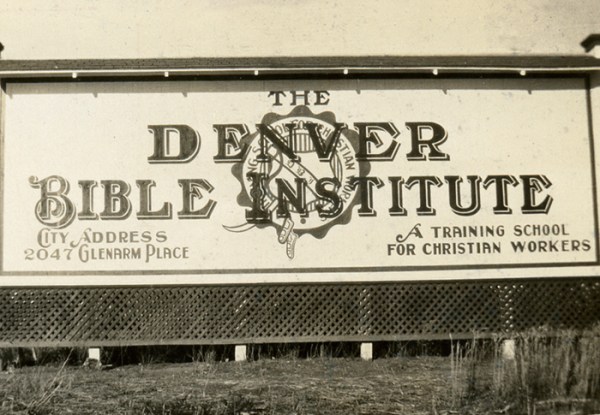
Despot in Denver

Despot in Denver

The way we word the questions themselves is controversial: Are fundamentalist schools cults that pander to the lusts of authoritarian leaders?  Or do the strict sexual ethics of conservative evangelicalism help protect young women and men from predatory teachers and authority figures?

Critics of conservative evangelical colleges warn that that the pervasive “purity culture” of these schools leads directly to rape.  Bloggers such as Samantha Fields have accused fundamentalist colleges of blaming victims of sexual assault.  Journalists have blasted schools such as Patrick Henry College for fostering a rape-friendly environment.  Prominent evangelicals have suggested that the problem is not one of theology, but of an authoritarian institutional culture.  For example, Boz Tchividjian famously suggested that abuse can happen “in any culture, elevating leaders beyond accountability, leaving victims’ rights to their whim, and sidelining critics who challenge their rule.”

I’ve stumbled across a story from the 1930s that might illuminate the longer history here.  In 1936, a high-powered panel of fundamentalist leaders convened to investigate Denver Bible Institute (now part of Colorado Christian University).  At the time, DBI was led by charismatic founder Clifton L. Fowler.  Fowler wanted to join the Evangelical Teacher Training Association, and to do so ETTA demanded that rumors be cleared up.

Unfortunately for Fowler, an extremely disturbing picture emerged.  Fowler, the investigators concluded, ran DBI like a sex-crazed despot.  Students and faculty were pressured to declare lifelong commitments to the schools.  Married faculty members were pushed into pledging “continence.”  (I’m not sure what was meant by “continence” in this context.  Any suggestions?)  Students were encouraged to separate from parents and home churches.  Community members felt pressure to offer Fowler detailed confessions of their sexual sins.  And, yes, Fowler apparently routinely engaged in sexual activities with male students.

From one perspective, this historical episode might seem to confirm the dangers of authoritarian fundamentalist schools.  For as long as there have been fundamentalist schools, we might conclude, leaders have felt free to engage in predatory sexual practices.  Community members felt constrained by their own admitted sexual sinfulness from criticizing the dictatorial leadership.

On the other hand, as Michael Hamilton argued in his excellent 1994 dissertation, Fowler did not have a free hand to do as he pleased.  The accusations against Fowler forced DBI out of decent fundamentalist company.  Local fundamentalist churches cut off DBI.  The Evangelical Teacher Training Association would not let DBI join.  Fowler, in other words, was restrained in his behavior because of the network of fundamentalist schools and churches in which he worked.

As usual, history does not offer any pat solutions.  But this episode does demonstrate the long lifespan of these questions at fundamentalist schools.  It shows that school founders have always been accused of sexual predation.  But it also shows that fundamentalist leaders and communities worked hard to police their own ranks.

In this case, at least, both national leaders and local community members refused to look the other way.