I Love You but You Didn’t Do the Reading

Happy Monday: Time for another weekly round-up of top ILYBYGTH-themed stories from around the interwebs…

A Jewish scheme to wreck civilization: An interview with the author of A Specter Haunting Europe at RWN.

Sex, marriage, and the creation of an evangelical market, by Daniel Silliman.

LA gets ready for its looming teacher strike, at LATimes.

la teachers strikeA(nother) call for a conservative secular higher-ed alternative, at NA.

Can a serious conservative-evangelical scholar still work at Liberty U? The New Yorker profiles Karen Swallow Prior. H/T: AT

Sometimes, when her students become disheartened by Liberty’s conservative political bent, they ask her why she stays. “And I tell them, honestly, I went to a liberal university. I know what it’s like. I mean, it’s not perfect here, but it’s better.”

Teachers with guns? This Florida teacher says no, at SFSS.

prior nyorker

I wuvs you, but I don’t wuvs Trump…

Historians on Trump’s wall speech at HNN.

Zoiks: Fan of localism and democracy? Then get ready for rich white men to control your schools, at T74.

Things get ugly at a classics convention, at IHE.

Williams turned and addressed Peralta directly, declaring that she was “not a socialist” and that Peralta only got his job because he is “black,” those present said.

Winter got you down? At least it’s not as bad as the “Great Die-Off” storm of 1887, at Smithsonian.

Evangelicals and Trump—a commentary collection at Righting America.

Is Evolution Education Doomed?

I could see how Bill Nye might be bummed. An example from my local paper this week shows that creationism might be a nearly universal American trait. If we speak clearly enough, though, we can see that this isn’t really a problem for evolution education.

First, a little background. Evolution wonks like me tend to feel flustered when pundits and scholars use the term “creationism” when they really mean only radical young-earth creationism. Gallup, for example, has long called young-humanity beliefs “creationist,” and other creation-ish beliefs not creationist. That doesn’t make any sense.

gallup creationism poll may 2017

It’s not sensible to call only the #3s “creationists.”

In practice, most Americans have vague, heterodox ideas about both evolutionary theory and creationism. (Don’t believe it? You’ll have to wait for my new book for my long demonstration of this counter-intuitive point.) If we use a sensible definition of “creationism”—like the idea that life must have had some sort of active creator at some point in the past—then the label could work for almost everybody.

https://gfycat.com/formaltighthellbender

Exhibit A: In my local newspaper, a guy named Rick Marsi has a regular column about nature and outdoor living (for some reason, it was not posted online. I have no idea why not.) In a recent essay, Marsi advocated heading out on a kayak instead of sitting around complaining. When you do, he says, and you catch a beautiful fish, you’ll have no choice but to

Drink in that raspberry stripe [and] . . . marvel at perfect design.

Well, of course we DO have a choice. We can recognize that—speaking scientifically—there was no “design” involved at all, perfect or not. The “raspberry stripe” wasn’t put there to wow kayakers. According to evolutionary theory, it wasn’t put there at all.

So what are the Bill Nyes and the Josh Rosenaus of the world supposed to do? Wail and gnash their ties at the widespread dunderheadness of American culture?

Not at all!

If we have a sensible attitude toward evolution education, then the “intuitive theism” we see so often shouldn’t bother us at all. As Harvey and I argued in Teaching Evolution in a Creation Nation and I’m fleshing out more fully in my new book, there is absolutely no reason for evolution educators to fret if their students retain a quasi-theistic idea about the origins of life.

Our goal in public-school classrooms should never be to encourage or disparage specific religious ideas. If students want to agree that trout stripes are a “perfect design,” so be it. We can and should cultivate a beneficent indifference when it comes to students’ religious thinking. All we want to do is help people know and understand what evolutionary theory really says. What they choose to believe about it is absolutely up to them.

Bad News for Lefties?

I’ll plead guilty. As a teacher, I have a deep faith that I can help students be better citizens. I can help them understand how power works in society. Ultimately, their engagement can transform society, can make things fairer and more just. But is my faith in local democracy just another of my lefty biases? As recent studies show, are the scales so tipped in local elections that richer, whiter, GOP-er people have extra power?

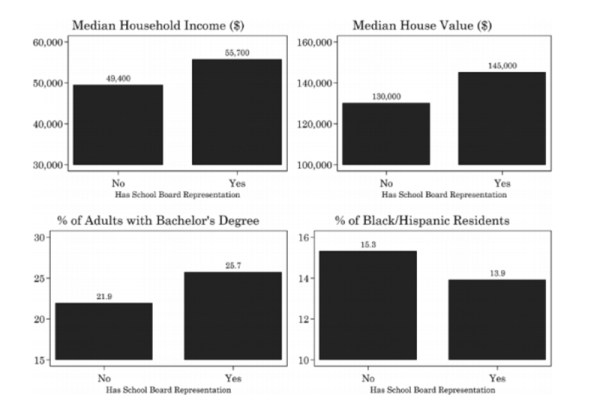
Here’s what we know: The74 looked at new research about local school boards. It’s not really much of a surprise, but the authors concluded that school board elections tend to favor people with more money. Those people tend to be richer, whiter, and more often members of the Republican Party.

74 school board elections

More money, more representation…

The researchers looked at 610 school districts in Ohio for two election cycles. They looked closely at the winners of school-board election. Where did they live? How much money did they make? How did they tend to vote? Their conclusions weren’t too shocking:

We find that more citizens from affluent areas run for school board, and because a large proportion of school board elections feature minimal competition, these higher propensities to run explain disparities in representation.

What are the implications for school politics? And here’s the dilemma for my fellow lefties: Is there any way to address this election trend without trashing the basic function of local democracy?

The O Word Punctures this Dream of a Conservative University

Why can’t they have their own anti-progressive university? That’s the question Rick Hess and Brendan Bell of the conservative American Enterprise Institute asked recently. The problem runs deeper than they want to acknowledge. It’s not only about funding or hiring; it is rooted in the O word, a central but unexamined assumption of conservative higher-ed thinking over the past hundred years.
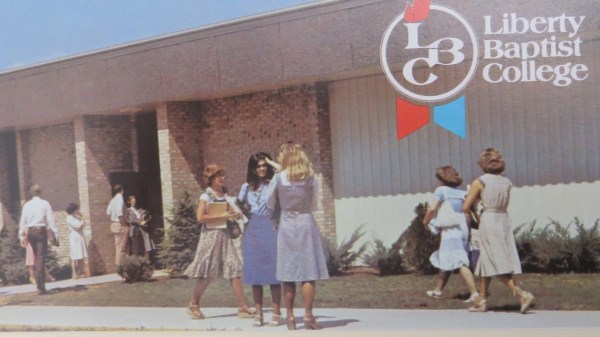
early-1980s-promo.jpg

It wasn’t ORTHODOXY that make Falwell successful…

In short, Hess and Bell propose a new $3-billion-dollar elite university, free from the oppressive “academic monoculture” of today’s top schools. They hope to reform American and global culture by creating an incubator for ideas that challenge progressive assumptions, an academic launching pad for scholars

inclined to critique feminist tropes, study the benefits of traditional marriage, or pursue other lines of inquiry that don’t comport with regnant mores.

As sharp-eyed critics such as Sarah Jones have pointed out, Hess and Bell don’t adequately acknowledge the fact that there is already plenty of conservative money flooding academia. And, as Jones notes, in the end

Hess and Bell sound markedly like the campus liberals they seek to escape – an ivory tower of their own is nothing if not a plea for a safe space.

Jones doesn’t mention it, but there is a bigger nuts-and-bolts problem with Hess and Bell’s plan, too. Founding a university might be easy, given enough money. But starting an elite institution from scratch is not, no matter how deep one’s pockets. Hess and Bell list examples of success, from Stanford and Johns Hopkins in the past to my alma mater Wash U recently. But they don’t note the many failures, such as Clark University a century ago. Nor do they seem aware of unsuccessful plans from the twentieth century, such as Hudson Armerding’s detailed scheme to establish an elite multi-campus evangelical university, as I describe in Fundamentalist U.

Even those challenges might be overcome, though, if Hess and Bell’s plan weren’t doomed by a deeper structural flaw. Like many conservative higher-ed dreamers before them, Hess and Bell do not adequately grapple with the O-word. That is, they do not understand the deeper implications of the concept of orthodoxy in the world of higher education.

As have other conservative intellectuals, Hess and Bell use the O-word a lot. They identify their primary bugbear, for instance, as

the progressive orthodoxy at today’s most prestigious institutions of higher learning.

They also explain that their new elite institute will be one that “challenges the prevailing orthodoxies of the campus monoculture.”

And there’s the rub. As I argue in Fundamentalist U, in spite of generations of talk about orthodoxy in conservative institutions, real orthodoxies are few and far between.

Why does it matter? If Hess and Bell, like their conservative forebears, truly hope to open a new school “oriented by a clear mission,” they need to define clearly their guiding ideas. It is not enough to target “progressive orthodoxy,” precisely because there is no such thing.

We might agree with Hess and Bell that elite American institutions are guided by “regnant mores” and “regnant conventions” that conservatives don’t like. But there is a world of difference between mores, conventions, and real orthodoxies. An orthodoxy is precisely something that even Hess and Bell admit doesn’t exist in this case, “a concerted, organized effort” to define truth and falsehood.

An orthodoxy is relatively easy to both attack and defend. If there really were a progressive orthodoxy in American elite higher education, Hess and Bell’s plan might stand a chance of success. And because so many higher-ed pundits tend to throw around the O-word so loosely, it is not surprising that Hess and Bell don’t notice the problem.

Maybe the case of conservative evangelical higher education will help clarify the O-word dilemma. As I recount in Fundamentalist U, starting in the 1920s most conservative-evangelical colleges promised that they were founded on evangelical orthodoxy. The problem is, they weren’t. They were founded to be conservative safe spaces for religious students and faculty. They also had to remain broadly conservative and broadly evangelical in order to remain attractive to a wide range of fundamentalist families. As a result, they never were able to establish a true orthodoxy. That is, they never established a clear list of religious tenets by which every challenge and crisis could be decided.

There were exceptions of course. Especially at denominational schools, leaders were able to clear some of the fog of American conservatism by following the path of specific orthodoxies. In the 1920s, for example, Princeton’s J. Gresham Machen opened a rare school that actually adhered to Machen’s vision of Presbyterian orthodoxy. As a result, Machen earned the scorn of other evangelical school leaders by allowing his students to drink alcohol. Booze wasn’t forbidden by any actual theological rule, Machen reasoned, but rather only by the “regnant mores” of American evangelicals.

The results of the absence of true orthodoxy in conservative-evangelical higher education may seem odd to readers who don’t grasp the implications of the O-word. Historically, we saw cases such as that of Clifton Fowler in Denver in the 1930s, when a school leader charged with sexual and theological peccadillos was allowed to continue his depredations by a blue-ribbon panel of evangelical college leaders.

We see it today as well, with the befuddling statements of Liberty University’s Jerry Falwell Jr. If, as we might tend to think, Liberty were a school guided by evangelical orthodoxy, Falwell himself might be less inclined to make outlandish statements in support of Trump. As it is, Christine Emba argued recently, the best word for Falwell’s Trumpism is not “orthodoxy.” As Emba wrote in the Washington Post, Falwell’s

statements are in total contradiction to Christian truth. This isn’t just benign confusion: This is heresy.

Yet Falwell continues to attract adherents and funding for his conservative-evangelical institution. It is not because he is redefining evangelical orthodoxy. It is not because evangelical orthodoxy has room for Trumpism. He isn’t and it doesn’t. Rather, Falwell is able to veer so far from traditional evangelical doctrine because interdenominational American evangelicalism has not been guided by true orthodoxy. Rather, it has felt its way in the cultural dark guided only by “regnant mores” and “regnant conventions.”

In the case of Hess and Bell’s dreams, making policy about those mores and conventions is far more difficult than challenging real orthodoxies. Mores and conventions are plastic, fluid, flexible, and nearly infinitely defensible. Orthodoxies are rigid, clearly defined, and easily subject to dispute.

The false assumption of orthodoxy has punctured the dreams of generations of conservative higher-ed thinkers. Hess and Bell shouldn’t be blamed for not recognizing the problem, because writers from both left and right tend to see orthodoxy when there isn’t any.

Fundamentalists in the early twentieth century falsely assumed an evangelical orthodoxy that couldn’t exist. Hess and Bell flail against a progressive orthodoxy that doesn’t.

I Love You but You Didn’t Do the Reading

Hello 2019! We’re starting strong with a full week of culture-war contention. Here are some of the stories that caught our eye this week:

How evangelicals can embrace evolution, at CT.

Jim Carrey I Dont Care GIF - Find & Share on GIPHY

You probably heard Jerry Falwell Jr.’s odd Trumpist speech. What does it mean? One analysis at WaPo:

Like many heretics, Falwell and his fellow evangelical Trump apologists are on their way to founding a new religion, one in direct conflict with the old.

It’s not easy to be an anti-racist evangelical these days. A portrait of non-white activists in The New Yorker.

What are educational conservatives saying these days? A new speaker series hopes to restore the conservative glory days of the 1990s.

Do young-earth creationists have any answer to geocentric critics? RA says…still no.

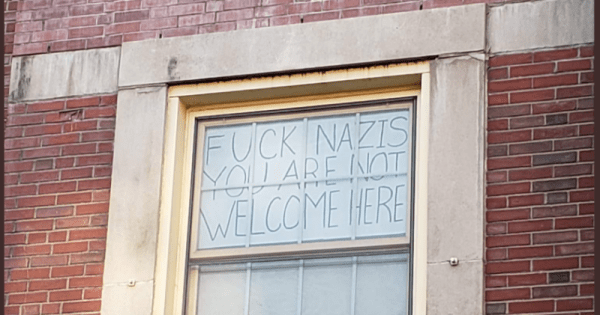
Inclusive campuses for everyone—even Nazis. At IHE.

fuck nazis

Do Nazis deserve manners?

Stalker or romantic? At KCStar.

Will the USA extradite Fethullah Gulen? At RNS.

Update: anti-porn students find allies, at IHE.

Bad news for Trumpists: China’s Great Wall didn’t keep out invaders, at NG.

Michael Petrilli: School discipline needs to make sense, not just culture-war nonsense. At Flypaper.

Crime and Punishment

I don’t often agree with free-marketeer Michael Petrilli, but this time he’s exactly right. When pragmatic issues such as school discipline become culture-war footballs, students are always the losers. What we need instead are policies that put students first. Alas, the history of educational culture wars makes me pessimistic that we can replace polemics with pragmatics.

Petrilli recently lamented the unhelpful back-and-forth over the issue of school discipline. The Obama administration supported the idea that racial disparities in punishments could be cause for federal intervention. Trump’s administration, in chest-thumping contrast, rejected the notion.


As Petrilli rightly noted, schools need something different. They need policies that recognize the cruel injustices of racially loaded punishments while still creating safe schools. Petrilli hoped even

In this age of base politics . . . communities nationwide can reject such cynical approaches and craft school discipline policies that can bring us together rather than drive us apart.

That would be nice, but as I found in my research into the history of educational conservatism, school discipline has always been about more than pragmatic problem solving. Planting a flag for harsher school punishments has always been a hallmark of American conservatism.

Consider the flood of pro-discipline conservative outrage that confronted Pasadena’s superintendent in the late 1940s and early 1950s. The new superintendent, Willard Goslin, became the whipping-boy for a host of perceived problems with “progressive” education. As one furious conservative critic wrote in the local paper in 1949,

But pity the poor teacher!  After all, it is his job to pamper the pupils (in progressive schools), and it is worth his job if he tried any old-fashioned discipline.  Problem children are not only tolerated but pushed right along ‘to get rid of them’—out into society, for others to worry about.

Better-known conservative pundits have also always taken pot-shots at non-traditional ideas of school discipline. Max Rafferty, a nationally syndicated columnist and one-time state superintendent of public education in California, had nothing but scorn and contumely for new-fangled ideas about punishment.

OLYMPUS DIGITAL CAMERA

…he didn’t win.

In one 1964 column, Rafferty lambasted new ideas of school discipline in his typically colorful language. As he put it,

a child usually has neither the maturity nor the judgment to understand the need for self-discipline. Too many instructors, fresh from college and still pretty Dewey-eyed about things, compromise themselves and their careers in a hopeless attempt to convince some freckled-faced [sic] urchin with devilment coming out visibly all over him that he must discipline himself when all he really needs is a session after school with the ruler.

In every decade, in every educational situation, school discipline has always been an us-or-them culture-war issue. Progressives have always lamented the racially loaded and ineffective traditions of whipping and my-way-or-the-highway teaching. Conservatives have always been sure that new-fangled ideas about child-rearing tragically misunderstood real human nature. As Rafferty explained in 1964,

The psychologists had been right in one respect.  Junior certainly had no repressions.  He could have used a few.

What If 2020 Teachers Copied 1980 Preachers?

They are two of the strongest traditions of American life. 1.) Teachers will refrain from indoctrinating students in partisan politics, and 2.) Preachers will stay out of elections. As states consider bills to legislate teacher non-politics, we have to wonder: What if teachers these days copied the (in)famous “New Christian Right” strategies of the 1970s? What if they abandoned their traditions of political neutrality in the classroom and starting pushing specific partisan politics on their students?

First, the usual caveats. Yes, some teachers are already very politically active. The Badass Teachers Association, for example, “reject profit-driven education reform” and offer a list of political demands. And back in the 1980s, the much-ballyhooed entrance of conservative evangelicals into politics was not really the revolution it was purported to be. Conservative evangelical preachers had ALWAYS been involved in politics. And, finally, conservative activists have always assumed that most teachers are already preaching left-wing doctrines in the classroom, even though we are not.

In spite of all that, it makes for an intriguing question. Consider the traditional story of the so-called New Christian Right. (And if you have time, read the longer, more accurate versions written by historians such as Daniel K. Williams, Matthew Avery Sutton, and yours truly.) Although it didn’t really match the historical facts, in the late 1970s conservative evangelical preachers such as Jerry Falwell claimed to be abandoning their previous political neutrality to encourage Americans to vote for “God’s Own Party,” the Republicans. It wasn’t really a leap into politics, but it was a dramatic leap into the arms of one political party.

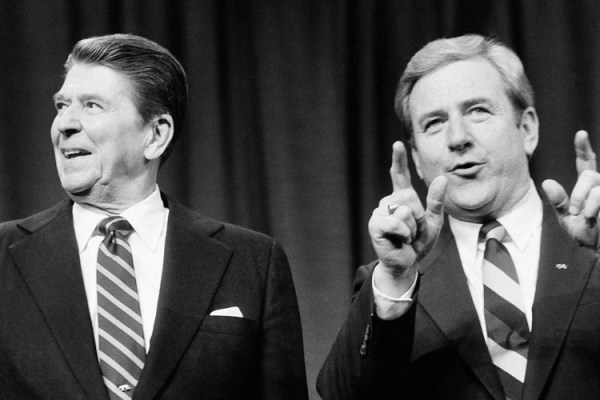
President Ronald Reagan and Rev. Jerry Falwell

I love you, you love me, let’s all vote the GOP…

And it leads us to ask: What if large numbers of classroom teachers began openly to teach their students that the Democratic Party was correct? That only Joe Biden, or Anthony Brindisi, or Elizabeth Warren was on the right side of history?

It won’t happen. Though some progressive scholars, activists, and organizations have always yearned for a more partisan teaching force, teachers themselves have always—by and large—respected the tradition of their profession. Teach children about politics? Absolutely. But teach that only one political party is acceptable? Never. It’s just not part of how most teachers think about their proper jobs.

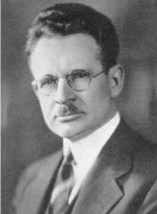
george counts

…time for teachers to wake up and smell the ballot box, c. 1936.

Consider the lament of George Counts, a leftist education profession who captured the imagination of progressive folks in the 1930s with his call for schools to “Build a New Social Order.”

Professor Counts wanted teachers to do more than teach. He hoped teachers would

be prepared to deal much more fundamentally, realistically, and positively with the American social situation.

In specific, Counts wanted teachers to tell their students more directly that one sort of politics was correct. But as even Counts realized, not many teachers would listen. As he put it,

when the word indoctrination is coupled with education there is scarcely one among us possessing the hardihood to refuse to be horrified.

The tradition of non-partisan teachers runs deep, despite the carping of paranoid conservative pundits. Most teachers, just like most evangelical preachers, would never stoop to pushing one partisan idea on their students. As Counts noticed, we are “horrified” at the idea that we should indoctrinate our students.

Even if teachers wanted to, classrooms aren’t like evangelical churches. Like-minded congregants don’t decide to attend one class or another, the way they do with their churches. Students in most public schools are a captured and constrained crowd and teachers could never build a politically like-minded following out of their come-one-come-all public schools.

This morning, though, we can’t help but wonder: What if they did? What would happen if a large group of teachers tried to impose partisan political beliefs on their students?

What Today’s Educational Conservatives Need to Say Instead

I don’t see any good reason why they would listen to me. But if today’s conservative pundits and intellectuals are really serious about identifying the “future direction of American education,” they need to come to terms with the elephant in the conservatives’ room. At the Fordham Institute and Hoover Institution at least, they seem to be doing the opposite.

This isn’t only a conservative problem. Progressives like me need to be more willing to remind ourselves of the unpopular truths of the progressive tradition, too. We need to be willing to acknowledge the fact that excesses of campus left-wing Puritanism do not come out of nowhere. When smart students feel the need to exhibit their devotion and purity to radical egalitarian ideals, they are simply speaking the logical conclusions of the progressive tradition. At least, it’s ONE logical conclusion.


And when conservative intellectuals opine about American education, they need to do more to acknowledge their own history. As I argued in my book about the history of American educational conservatism, one idea has been awkwardly ignored and muffled by American conservatives. That hasn’t made it go away. Rather, it has only made it more pressing for conservatives to address it more forthrightly and explicitly.

I’m not surprised to see that they aren’t.

In a series they call “Education 20/20,” the Fordham Institute and Hoover Institution have brought a series of conservative speakers, thinkers, and policy-makers to Washington DC to tell one another what they want to hear.

For example, according to Chester Finn, the kick-off lecture by Heather Mac Donald warned that the real solution to school discipline problems had to come from addressing students’ “lack of self-control.” Speakers such as Ian Rowe told the conservative crowd that the main problem was not race, not class, but rather dysfunctional family structures, “particularly the presence or absence of two married parents.” Other speakers hoped schools could do more to teach traditional values, including

character, emotional well-being, and personal behavior, as well as help in making choices and following up on them.

What’s wrong with all that? Honestly, nothing at all. I think we can all agree that students in school should learn to control their own behavior. We all probably agree that healthy families are absolutely required for healthy schools. And all of us—even progressive history teachers like me that conservatives have always loathed—want to teach children to love America, “warts and all, yes, but also replete with heroes, principles, and triumphs.”

So where’s the beef? Why can’t we all agree on these goals and ideals?

There’s one obvious problem with events like this one. And it is a big one; one that conservatives need to address openly and bravely if they ever want to gain real traction in designing school reform that works. Namely, conservatives need to come to terms with the fact that their ideas have always been used as cover for racist policies.

I’m not accusing any of the speakers here of racism. Unlike some of my allies and colleagues, I don’t believe that conservatives are scheming to cover up their own racism. As I think we all should, I give my conservative friends the benefit of the doubt when they say they really want to heal racism’s ugly legacies, not promote it.


As the folks at Fordham Institute and Hoover Institution lament, when conservatives were able to get broad support for their policies, they have scored big successes. In their words,

Twenty years ago, conservative ideas were gaining traction in K–12 education. Charter schools were opening all over the place, vouchers were finally being tried, academic standards were rising, results-based accountability had become the watchword in policy circles, and reformers were taking the idea of “character education” seriously.

Why did charters and vouchers score so big in the 1990s? Because conservative activists were able to make common cause with center-left reformers to pitch them as a real solution for low-income, non-white families.

These days, lambasting non-white students for lacking self-control and non-white families for lacking proper structure is not likely to gain any sympathy outside of conservative circles. Talking about focusing on teaching American “ideals” is likely to be ignored by non-conservatives as mere cover for “Making America Great Again.”

If conservatives really want to get another taste of reform influence, they need to take the brave step and acknowledge the legacy of their own campaigns. Instead of saying “We’re not racist, but…” they need to say “These ideas WERE used by racists, but here’s why they are good anyway.”

The Year in ILYBYGTH

I wasn’t going to do it. I was going to try awkwardly to maintain my dignity and refrain from any sort of year-end top-ten list. But then a couple of enforcers from the WordPress goon squad showed up and made me an offer I couldn’t refuse.

So here it is: The eleven most popular posts of 2018:

  1. What is Life Like at Evangelical Colleges? Reflections from alumni of “Fundamentalist U.” What was it like to attend different schools in different decades? How did evangelical higher ed shape these students’ lives?
  2. Billy Graham and Bob Jones From the archives, a look at the tempestuous and angry relationship between teacher and former student.

    Billy Graham

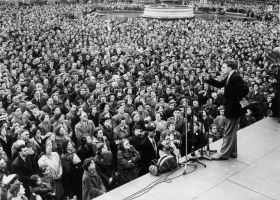
    RIP Billy Graham, here preaching to the multitudes in London, 1954.

  3. Crisis at Moody Bible Institute From way back in January 2018, a look at the ways the history of fundamentalist higher ed in the early 1900s set the pattern for the recent leadership shake-up at Chicago’s storied Bible school.
  4. The Dilemma of the Fundamentalist Intellectual An ugly story of resume inflation is par for the course in the world of fundamentalist academic life. Why?
  5. The Myth of Evangelical Political History Just Won’t Die: It doesn’t seem to matter that historians have punctured this story completely. Journalists still love it, probably because a lot of evangelicals love it.
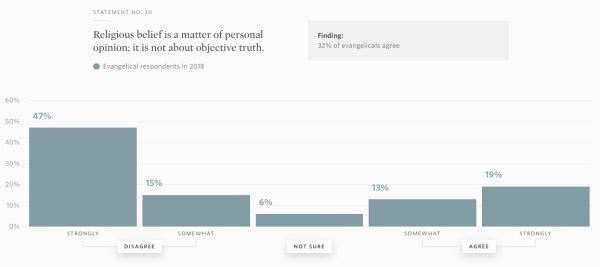
  6. Christians Don’t Know Christianity: Are Christians supposed to actually believe Christian doctrine? Or only hold it as a personal preference? religion as personal belief
  7. Where Were You Radicalized? A simple question on Tweeter gets people thinking, but there’s one place no one seemed to be talking about.
  8. Evangelical Colleges Aren’t Teaching Christianity A professor complains that her students don’t know Christian orthodoxy. I lay out the historical case that this is nothing new in evangelical higher education.
  9. Bad News for Creationists Science just makes young-earth creationism harder and harder to believe. What will YECs do? I have a guess…

    20171228_090906

    Because…Darwin?

  10. How Did Christian Colleges Become Racist? I made the case for an under-suspected culprit behind the racism of white evangelicals: mainstream higher education.
  11. Is Creationism Hate Speech? Can–SHOULD–mainstream universities ban radical young-earth creationism because it is hateful to non-heterosexuals?

Meet the New Boss:

Okay, SAGLRROILYBYGTH–I’m happy to introduce our new Ed-itor in Chief:

Eddie Ten Weeks

Ten weeks old and already a better writer than I am…

His name is, of course, Ed. He is a fur-ocious critic of florid prose and run-on sentences. (Sorry.)

He is a ten-week-old labradoodle. He already weighs fifteen pounds and he’s likely to be as big as his dad, Thor. I’m trying to ingratiate myself with him while I can still beat him at tug-of-war.