Take TIME for ILYBYGTH

Didja hear that?  It is the sound of ILYBYGTH being enjoyed by the readers of Time Magazine!

Thanks to the reach of History News Network, my recent HNN commentary has been picked up by TimeTime screenshot

More proof that Americans want to hear the F-Word more often!

Are Schools Conservative?

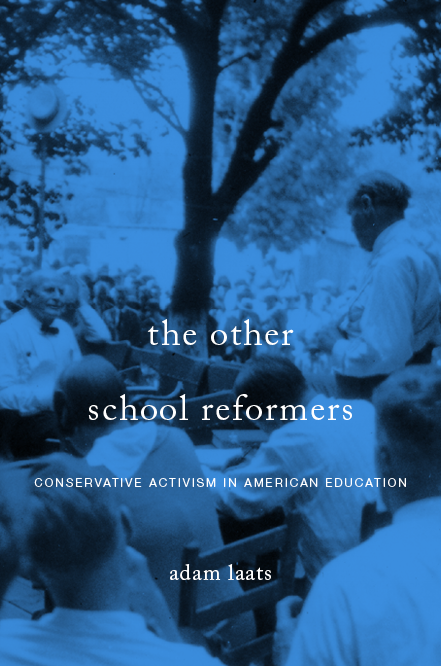
Binghamtonians!  Come on down to RiverRead Books on April 21 at 6:30 PM.  Five Court Street in scenic downtown Binghamton.  I’ll be sharing some thoughts from my new book about schooling and conservatism.  Free and open to all.  I’m planning to bring brownies, but we’ll see if I actually get it done.

The place to be...

The place to be…

The book works through several questions:

  • ARE most of America’s public schools conservative places?
  • What has it meant to be “conservative” about education in the USA?
  • How have ideas of “conservatism” and “progressivism” in schools changed over time?
  • What kind of brownies should I make?

As the sophisticated and good-looking regular readers of I Love You but You’re Going to Hell (SAGLRROILYBYGTH) are aware, in my new book I examine four of the most famous educational controversies of the twentieth century: the Scopes Trial of 1925; the Rugg textbook controversy of 1939/40; the Pasadena superintendent ouster of 1950; and the Kanawha County textbook battle of 1974/75.   In each case, conservative activists articulated their ideas about proper education.  In each case, conservative leaders and thinkers viewed education as the best way to improve society.  If schools could be reformed, the thinking has always gone, then society could be saved.

What did they fight for?  How did they envision good schools?  How successful were they?

I’ll try to make the case that these “other school reformers” have played a leading role in determining the course of schooling in this country.  Whether we like it or not (and generally, I don’t), conservative thinking and political clout have played decisive roles in shaping America’s educational system.

So come on down to RiverRead to take place in the conversation.

GOP Politics and the Educational F-Word

What are the education words conservatives can’t say without spitting and gnashing their teeth?

“FEDERAL CONTROL OF EDUCATION”

History News Network has been kind enough to include an essay of mine about the presidential politics of education among conservatives.

Won't say it...

Won’t say it…

Among the leading presidential candidates in the Republican Party, only Jeb Bush will admit that he likes the Common Core.  And even he denies ferociously that he supports more federal “overreach” in local schools.

Why do conservatives so loathe the federal government’s role in education?  It wasn’t always this way, as I argue in the HNN article.  And there are some signs that thoughtful conservatives are returning to their roots as the party of centralized power.

Do You APPRECIATE Evolution?

HT: MM

I don’t often wish I went to Yale. To my provincial mind, Yale = The Bad Guy from Back to School. Me, I’m more of a Thornton Melon type. But Professor Dan Kahan’s class on the science of science communication at Yale has me wishing I was there.

Indubitably...

Indubitably…

Happily, Professor Kahan is sharing his current syllabus and reading list on his Cultural Cognition blog. This week, he asks probing questions about the relationship between “knowing,” “understanding,” “accepting,” and “believing” evolution. I’m starting to wonder if we need to add a new word to this list: “appreciating” evolution.

As the sophisticated and good-looking regular readers of I Love You but You’re Going to Hell (SAGLRROILYBYGTH) are painfully aware, I’ve got a new book on the subject coming out soon. In Teaching Evolution in a Creation Nation, my co-author Harvey Siegel and I argue that science teachers need to be aware of Professor Kahan’s questions. Specifically, teachers need to be aware that there can be an important difference between “knowing/understanding” evolution and “believing” evolution.

Come and see me some time when you have no class…

Come and see me some time when you have no class…

In a nutshell, we argue that teachers must insist on student knowledge and understanding, but remain intentionally and explicitly neutral on the question of student belief. As sharp critics have pointed out, this might be an impossibly delicate task for classroom teachers who have their hands full with more prosaic questions. As a colleague of mine put it, the most common question most real-world teachers ask is not “Am I crossing a line into ‘belief’ when I should be more concerned with ‘understanding’?” Rather, most real-world teachers are asking questions like, “Is Bob sleeping back there?” and “How can I make this more accessible to students?”

Professor Kahan’s blog reminds us of another difficulty with these distinctions. The belief/understanding split has one meaning among mainstream scientists, but it has a very different meaning among the regular joes in K-12 science classes.

Time and again, smart science types have pointed out that NO ONE ought to “believe” in evolution. That’s not how science works. As FrankL commented on Professor Kahan’s recent post (scroll down to the first comment):

I think it’s entirely possible to understand evolution without believing in it. Asking me “do you believe in evolution?” is, in my mind, like asking me “do you believe in your hammer?” or “do you believe in your computer?”. The answer is no, they are just tools. If they work, I keep them, if they do not, I try to fix them, if they are unfixable, I throw them out. The theory of evolution is just a tool, it should not be deified or demonized or “believed in” or not. Part of understanding evolution is understanding its domain of usefulness. I don’t use my computer to hammer nails, and I don’t ask my hammer for my email. That doesn’t mean they are broke, it means that my tools have limited domains of usefulness. Using the theory of evolution to establish or deny the existence of God, or to determine who is “smarter” is so absurdly far from its domain of usefulness that it would be laughable if it were not so sad, because that’s the approach that the partisans take.

FrankL is not alone in pointing out the central undesirability of “belief” in evolution, even among evolution’s most fervent supporters. A few months back, Keith Blanchard offered a similarly smart argument in the pages of The Week:

So if someone asks, “Do you believe in evolution,” they are framing it wrong. That’s like asking, “Do you believe in blue?”

Evolution is nothing more than a fairly simple way of understanding what is unquestionably happening. You don’t believe in it — you either understand it or you don’t.

To my mind, Blanchard and FrankL have offered wonderfully clear articulations of the difficulties of “belief” from the perspective of mainstream scientists. But that is not the perspective in which we are really interested. What we really care about are the resistant students who fill America’s K-12 public-school science classrooms.

What do we want from those students? We agree with Blanchard and FrankL that no one wants to push “belief” in evolution. But we mean it in a different sense. We are concerned about students for whom the central ideas of modern evolutionary theory have an intensely religious meaning. For those students, to “understand” evolution in the Blanchard/FrankL sense would roughly equate to “believing” it. That is, if creationist students “accept” that evolution is simply the truth about what is unquestionably happening, they must wrestle with a theological crisis.

We hope instead to allow students for whom evolution presents a religious problem to sidestep questions of belief.  Or, to be more precise, we want to move those questions of belief out of public schools and into homes and churches. We want students to “understand” what FrankL and Blanchard are saying. We want them to “know” why evolution has become the intellectual coin of the realm in modern science. But we also want to protect their right in public schools to dissent, to say to themselves, “But it’s not really the truth of existence.”

And perhaps for that we need a different word. A recent lecture by a colleague about the history of literary appreciation got me thinking. Maybe we want to push for student “appreciation” of evolutionary theory. The word “appreciation” might be closer to our educational goal for K-12.

After all, we want something more than for students to just parrot back, “Scientists say that species evolved from a common ancestor. [But only because scientists are deluded.]” We want them to “know” why scientists embrace evolution. We want them to be able to “understand” the idea of evolution well enough to see why it has come to dominate modern thinking in biology.

Do you "understand" this?  Do you "appreciate" it?

Do you “understand” this? Do you “appreciate” it?

When my co-author Harvey Siegel uses the term “understand,” it includes these meanings. Professor Siegel does not argue that students should be encouraged to skate by with a surface knowledge of evolution—one that is enough to pass any state test, but does not properly engage with the idea. Rather, for Professor Siegel, “understanding” evolution must mean grasping the deeper implications of evolution as well.

Perhaps “appreciation” would be a better match for the way most people think of these things. After all, we can all “appreciate” a painting, even if we don’t like it. We can understand where it’s coming from, understand why it has become a famous work of art. We can do all those things—get a profound understanding of the painting—and then say equally truthfully, “I don’t think it’s good.”

Isn’t that what we mean when we say we want students to “know” and “understand” evolution, but not (necessarily) to “believe” it?

Hoosiers, Hate, and Homosexuality

When Charles Barclay, Miley Cyrus, Hillary Clinton, and Apple all attack Indiana, you know something big is going down. Many liberals have condemned Indiana’s new religious liberty law as a thinly veiled attack on LGBT rights. Not so fast, says Boston University’s Stephen Prothero. He raises a key question for all of us interested in culture-war issues. Who gets to define what is and what isn’t a religious act?

Defending liberty?  Or spreading hate?

Defending liberty? Or spreading hate?

Indiana’s new Religious Freedom Restoration Act has been reviled as a sneaky way to impose a kind of cultural segregation on gay couples. If a baker does not want to bake a cake for a gay wedding, for example, or if a photographer refuses to shoot the pictures, this law gives them some legal protection to do so.

With these intentions, it certainly seems like an intolerant stab at the rights and dignity of LGBT people.

Yet liberal scholar Stephen Prothero defends the law. He is a supporter of full equality and rights for LGBT citizens, but he thinks conservative religious types have every right to refuse service to religious ceremonies of which they disapprove.  Not to refuse service in secular affairs, but to refuse service to religious ceremonies.  As he puts it,

There is no excuse for refusing to serve a lesbian couple at a restaurant and to my knowledge no state RFRA has ever been used to justify such discrimination. But if we favor liberty for all Americans (and not just for those who agree with us), we should be wary of using the coercive powers of government to compel our fellow citizens to participate in rites that violate their religious beliefs. We would not force a Jewish baker to make sacramental bread for a Catholic Mass. Why would we force a fundamentalist baker to make a cake for a gay wedding?

Full disclosure: I’m a big fan of Professor Prothero’s work. I’m looking forward to his upcoming book, Why Liberals Win. In this op-ed, Prothero raises a key question that ranges far beyond the narrow issue of Indiana’s RFRA and discrimination against LGBT couples.

Namely, who decides when and if something is a religious act? If a lesbian couple gets married in a secular ceremony, is that a religious act? Or, to be specific, is it fair for a religious person to define such a ceremony as a religious act, even if the people involved don’t see it as one?

Here’s another real-world example: Is the teaching of evolution a religious act, even if the teacher does not see it as such? That is, if such teaching has religious meaning to a religious student, does that make it a religious act?  Obviously, public-school teachers have no business committing religious acts in their classrooms.  But what if they don’t think it is a religious act?  Who decides?

These cumbersome distinctions matter. As Professor Prothero points out, no one wants to force a Jewish baker to do anything to affirm a Catholic ceremony. But traditionally, legally, and historically, it has been acceptable to force a Jewish baker to do things that are perceived as non-religious, such as following health codes or serving customers of all races.

Defining the boundaries of religious activity thus takes on enormous political heft. If your actions are religious to me, even if they do not feel religious to you, who gets to decide?

In the checkered history of America’s public schools, time and again these disputes have been resolved against the claims of religious minorities. As I argue in my upcoming evolution book with philosopher Harvey Siegel, in the nineteenth century Catholic activists were told by Protestant school leaders that their complaints lacked merit, since the Protestant Bible could never be objectionable. Similarly, in the early twentieth century, Native American students had their religions suppressed in government boarding schools, since their religious objections were not seen by school founders as legitimate. In light of this history, shouldn’t religious minority groups, including creationists, be allowed to define for themselves if certain topics count as religious?

So far, conservative religious folks have not had too much luck in arguing in favor of their rights to discriminate. Perhaps most famously, Bob Jones University lost its Supreme Court case against the Internal Revenue Service. BJU had had its racial segregation challenged. BJU insisted its stance was religious. BJU lost.

If Indiana’s law is intended to protect conservatives’ right to discriminate, will it go the way of racial segregation? Do conservatives have the right to define the nature of religion, even if other people disagree? Is it fair for conservatives (or anyone) to insist that something is a religious act, even if the people engaged in that act don’t think so?

Enablers of Doubt: This Afternoon!

For those of us lucky enough to live in scenic Binghamton, New York, don’t forget that tonight Binghamton University hosts Professor Michael Berkman from Penn State. Tonight’s talk is part of the regular Monday seminar series at the Evolutionary Studies Program.

Professor Berkman will be sharing his new research into the ways pre-teachers learn to avoid and water down evolution education.  These “enablers of doubt,” Professor Berkman argues, do everything they can to avoid ruffling feathers.  Most new teachers, Berkman has found, are more interested in learning ways to control classrooms than in learning the details of scientific theories.

The sophisticated and good-looking regular readers of ILYBYGTH (SAGLRROILYBYGTH) will remember Professor Berkman’s earlier ground-breaking research into the goings-on in science classrooms nationwide.  Along with his colleague Eric Plutzer, Prof. Berkman studied the ways science teachers do and don’t teach evolution.

Required reading for anyone interested in evolution/creation issues

Required reading for anyone interested in evolution/creation issues

For those in the area, come on over to campus.  The talk will take place in Academic Building A, basement room G-008.  It will begin at 5:05 and will include time for a Q&A session afterward.  Admission is free and no registration is required.  The event is open to all.

Briefing from the Evolution Mission Field

HT: BM

There is apparently more going on at the University of Kentucky than basketball.* Professor James J. Krupa has offered a description of his trials and travails as he tries to cram evolution down the throats of creationist students on that historic culture-war battlefield.

Teaching or preaching evolution?

Teaching or preaching evolution?

I’m all for evolution education. But Professor Krupa’s missive shows some of the dangers of an old-school attitude among some mainstream scientists, what I’ve called the “missionary supposition.”

First, though, let me acknowledge that I don’t have any street cred when it comes to science education. I’m a mild-mannered historian. My only experience teaching science came during one short year in which I taught middle-school science, along with reading, history, math, swimming, and camping. So when I critique Prof. Krupa’s approach, I have to do it with the full knowledge that I don’t really know what I’m talking about.

Professor Krupa shares what he calls his “relentless efforts” to teach introductory biology classes to non-majors at the University of Kentucky. As he notes, the university has had a long history as a front-line institution in the fight over evolution education. Back in the 1920s, Kentucky’s state legislature barely defeated an anti-evolution law. Prof. Krupa explains that the leaders of his school led the fight for evolution. He doesn’t seem aware of how much they gave away in that fight. The only reason Kentucky’s anti-evolution lawmakers agreed to let their bill die, as I related in my 1920s book, was because they received a solemn promise that evolution would not be taught in the state’s schools, even without the anti-evolution law.

That tradition lingers in Kentucky’s K-12 schools. Professor Krupa is quite right in his assertion that few of his students these days have had much evolution education. He shares his experiences with hostile students. Across the course of a semester, the door of his lecture hall often bangs shut as protesting students storm out.

Though I imagine he’d deny it, Krupa seems to derive some satisfaction from these creationist protests. He writes off the large section of his students whose

minds are already sealed shut to the possibility that evolution exists, but need to take my class to fulfill a college requirement.

More interesting to Krupa are students on the fence, students who are “open-minded” about evolution. If he can just explain evolution in all its power and beauty, Krupa implies, he can win those students for real science.

Krupa carefully avoids describing his mission as one to get students to “believe” evolution. Among many scientists, such language is frowned upon. After all, we don’t try to get people to “believe” in gravity or germs. Rather, since these things are inarguably true, the attitude goes, we only want students to “accept” and “understand” them.

This is just as it should be, sort of. As philosopher Harvey Siegel and I argue in our upcoming book, teachers too often seek to change students’ beliefs about life and divinity. It seems to make sense, at first, that if students understand evolution, they will come to believe that it is the best way to understand the origins of diverse species. But students’ beliefs should be beyond the purview of science teachers. The goal for evolution education should be for students to know and understand evolution. What they believe about it is their own business.

Professor Krupa nods to this distinction. At the end of his semester, he writes, he discusses the notion that evolution need not conflict with religious belief. Many Christians accept evolution. There is no need to assume that evolution somehow implies atheism, or leads to atheism.

So far, so good. But Prof. Krupa suffers in two ways from the missionary supposition among mainstream scientists. First, he takes it as his mission to preach the truths of evolution. As he puts it,

I’m occasionally told my life would be easier if I backed off from my relentless efforts to advance evolution education. Maybe so. But to shy away from emphasizing evolutionary biology is to fail as a biology teacher. I continue to teach biology as I do, because biology makes sense only in the light of evolution.

Krupa took the job, he explains, inspired by the mission laid out by biologist EO Wilson. These introductory classes, Krupa believes, might be “the last chance to convey to [students] an appreciation for biology and science.” And in spite of setbacks, Krupa maintains the clear-eyed self-assurance of every missionary. As have all sorts of missionaries, Krupa assumes that the truth of his message is so powerful that simply hearing it will blast away all resistance, at least among the “open-minded.” As he explains,

After a semester filled with evidence of evolution, one might expect that every last student would understand it and accept it as fact. Sadly, this is not the case.

Such a result should not be surprising to anyone who knows the history of missionary work. Too often, old-school Bible-toting missionaries plopped down among local populations and set to work enlightening them. The truth of the Bible, many felt, was so compelling that non-Christians only needed to have it explained clearly in order to convert.

Like these old-school missionaries, Prof. Krupa is well-intentioned but surprisingly naïve. He repeatedly notes his hostility toward creationism, yet he complains that creationist students and community members seem hostile back. He describes creationists as having their “minds sealed shut.” He notes that they “take offense very easily.” The explanations creationist students offer are mind-blowingly ignorant and laughably simplistic.

What does Professor Krupa want? In spite of his careful insistence that he is not trying to change students’ beliefs, he clearly hopes to do more than simply help students to know and understand what evolutionary theory says. He wants his students to get “an appreciation” for evolution, not just an understanding.  In some cases, he relates, his evolutionary lectures are “a message that . . . gets through.” One evangelical student came back to visit after taking Krupa’s class. Though this Christian student had resisted, he eventually thanked Krupa for “turning his world upside down.”

To Krupa, such moments savored of sweet success. Missionaries, after all, have the ambitious goal of changing worlds, of “opening . . . eyes,” and of blowing minds.

With those goals, it is no wonder that Professor Krupa has had a difficult time of it. He has suffered from more than just inadequate K-12 teaching. He has suffered, it seems, from his own missionary supposition.

Don’t get me wrong: I’m not saying we shouldn’t teach evolution to creationists. We should. But it does not help if we assume that creationists are idiots. Instead, we should endeavor to learn all we can about the creationists in our classes. As with all students, we should treat them respectfully and even lovingly.

Many of the sophisticated and good-looking regular readers of I Love You but You’re Going to Hell (SAGLRROILYBYGTH) have real experience teaching science at the college level. Am I off base here? To get students to understand science and evolution, do teachers need to share Krupa’s missionary supposition?

________________________________________________________________________________

*For you nerdwads out there, that is a humorous reference to a popular sporting event going on right now, the NCAA men’s basketball championship. Kentucky has a historic winning streak going on.


Getting Stoned at Bob Jones University

Is it now okay to be gay at fundamentalist Bob Jones University? Last week, former president and current chancellor Bob Jones III apologized for vicious anti-gay rhetoric from 1980. But this does not mean that homosexuality is now an accepted thing at BJU.

Time to celebrate?

Time to celebrate?

For those like me outside the orbit of fundamentalist colleges, the cultural politics of BJU can come as a shock. BJU has a long history of holding out against progressive social trends. Until the twenty-first century, for example, the South Carolina university proudly opposed interracial marriage.

As I’m finding as I research Bob Jones and other fundamentalist colleges, BJU has always been an outlier. The family leadership has a long tradition, when challenged, of doubling down on its own opinions as God’s Truth. Any criticism from within or without merely strengthened the leaders’ resolve. Again and again, this has led to purges of dissenting faculty, students, and administrators.

For those in the know, then, the recent apology for anti-homosexual rhetoric seems like another welcome change. In a press release, BJIII responded to a petition from a gay-rights group at BJU. In 1980, at a White House press conference, then-president BJIII suggested that the appropriate punishment for homosexuality was stoning. Here’s what he said back then:

I’m sure this will be greatly misquoted. But it would not be a bad idea to bring the swift justice today that was brought in Israel’s day against murder and rape and homosexuality. I guarantee it would solve the problem post-haste if homosexuals were stoned, if murderers were immediately killed as the Bible commands.

In his recent apology, BJIII distanced himself from such shocking language. As he put it,

I take personal ownership of this inflammatory rhetoric. This reckless statement was made in the heat of a political controversy 35 years ago. It is antithetical to my theology and my 50 years of preaching a redeeming Christ Who came into the world not to condemn the world, but that the world through Him might be saved. Upon now reading these long-forgotten words, they seem to me as words belonging to a total stranger—were my name not attached.

So can gay people at BJU now come out of their fundamentalist closets? Apparently not. As anti-fundamentalist Jonny Scaramanga noted, BJIII’s apology still condemned homosexuality. The statement apologized for the threat of stoning, not for labeling homosexuality a sin. BJIII carefully noted that he did not believe stoning was the appropriate punishment for “sinners.” He never apologized for considering homosexuality itself a sin.

Nevertheless, as the response from the gay-rights group BJU Unity makes clear, homosexuals are part of the BJU community. As I’m finding in my current research, they always have been. BJIII’s apology is not nothing, but it does not welcome homosexuals openly into BJU’s fundamentalist family.

Creationism in the Land of the Bible

Quick: When I say “creationist,” whom do you picture? Ken Ham, the Australian-American creationist impresario of Kentucky? Or Arye Dary of Israel’s Shas Party?

Is THIS the face of creationism?

Is THIS the face of creationism?

As Josh Rosenau of the National Center for Science Education pointed out recently, the question of Palestinian statehood received the lion’s share of attention after the last round of elections in Israel. But those elections could also have significant impact on the teaching of evolution in Israel’s schools.

In a nutshell, the new government will likely be dominated by conservative parties. In Israel, that means a significant political presence for the more conservative religious factions. Many of those groups oppose the teaching of evolution.

...or is THIS?

…or is THIS?

As Rosenau relates, the topic of evolution only recently became a required part of the middle-school curriculum in secular Israeli public schools. Arye Dary of the Shas Party, a likely government partner, made no bones about his opposition to evolution education. “As an ultra-orthodox party,” Dary explained,

that believes that our forefathers were Adam and Eve, Abraham, Isaac and Jacob, and that our holy matriarchs were Sarah, Rebecca, Rachel and Leah, we refuse to teach our children that they originated from apes.

For those few who continue to believe that creationism is uniquely American, or peculiar to conservative Protestantism, this serves as a healthy reminder of the truth.  Creationism as a political and educational impulse is strong worldwide.  Conservatives of many backgrounds in many countries insist that there is more to “truth” than can be divined by human scrabblings.

Required Reading: Rich Parents Are Better

You remember the old joke:

Q: What’s the best way to have a million dollars by the time you’re thirty?

A: Inherit ten million dollars when you’re twenty.

A new book by sociologist Robert Putnam underlines the traditional wisdom: The best way to succeed in life is to pick the right parents. According to reviews in The Economist and New York Times, Putnam amasses solid evidence to demonstrate that the class gap between rich and poor parents is huge and increasing.

Graphic inequality

Graphic inequality

The relationship between parenting and poverty has been a culture-war flashpoint for fifty years. As historian Andrew Hartman relates in his new book, back in the 1960s sociologist and sometime-senator Daniel Patrick Moynihan raised hackles with his study of the causes of African-American poverty.

The problem with too many “Negro Families,” Moynihan argued, was that a destructive anti-family culture had set in. Kids were no longer being raised in stable two-parent households. Fathers were absent or abusive. Mothers were overworked and under stress. The result, Moynihan concluded, was that poor families—especially African American poor families—could not raise successful children.

Critics charged that Moynihan attacked poor people, not poverty. He was accused of a new crime: “blaming the victim.”

The numbers in Putnam’s new book offer some sobering suggestions that Moynihan’s warnings were correct, but not just for African American families. The real divide, Putnam says, is not between black and white parents, but between well-to-do college-educated parents and not-well-to-do parents with less education.

Some of these statistics are truly mind-blowing. Consider, for example, that a poor eighth-grade student who does very well in school still has a worse chance of completing college than a rich eighth-grade student who does very badly in school. The numbers of children living with two well-educated parents has stayed relatively stable. The number of children in single-parent households has shot up among parents with no more than a high-school education.

Traditionalists and conservatives, no doubt, will point to Putnam’s work as more evidence in favor of traditional families. The best way to fight poverty, they might say, will be to encourage stable two-parent households.

Progressives and liberals, meanwhile, will point to these numbers as proof of America’s un-level playing field. Children of parents with fewer educational advantages need extra assistance from government in order to stand any sort of chance.

The long-standing dream of American education has been that education can lead to success. Since the days of Horace Mann, education has been offered as the key to the American dream. Putnam’s study offers more evidence that education is part of the structure of inequality, not the sledgehammer to demolish that structure.