Protests: Part of Life at Fundamentalist U

Shut em down! That’s what radical college students are saying these days. As Molly Wicker writes in the New York Times, even conservative students at conservative colleges are getting in on the action. We shouldn’t be surprised. As I describe in my new book, student protest has always been part of life at conservative evangelical schools.

Wicker is a junior at Grove City College in Pennsylvania. As she writes, her school and her fellow students are firmly conservative. The school is dedicated to a conservative, free-market sort of philosophy, one that bundles interdenominational evangelicalism with small-government enthusiasm.

pence trump clown car

Not conservative enough for GCC?

The school’s commencement speaker this year will be Vice President Mike Pence. We might think it a perfect fit. Pence, after all, is the White House’s living symbol of conservative evangelical values.

As Wicker relates, however, many of her fellow students are protesting Pence’s presence. Not because Pence is so conservative, but because Trump is not. As a representative of the Trump administration, Wicker writes, Pence represents Trump’s brand of “toxic, fear-inflating rhetoric.”

Like their fellows at Berkeley and other leftist havens, Grove City’s protesters are planning to demonstrate their displeasure at their school’s choice of commencement speaker. Wicker and the NYT editors suggest we should be surprised at this decision by conservative students at a conservative school.

We shouldn’t.

Student protest—sometimes polite, sometimes not—has always been a part of life at fundamentalist and conservative-evangelical colleges.

During the campus protests of the 1960s and 1970s, evangelical and fundamentalist schools witnessed their own wave of student activism. Many of those protests took on the tones of the continuing family feud between new-evangelicals and fundamentalists.

At Wheaton College, for example, students published a searing criticism of fundamentalist rules. The Wheaton administration tried to get them to cool it. The school, President V. Raymone Edman warned students, needed to protect the faith of all students, even fundamentalists.

Student protesters weren’t convinced. As one leader put it,

We must note that the ‘protective’ approach proscribes the natural freedom of man to seek truth where he will. . . . Christian education must exist in the free atmosphere of such a perspective or we will have no choice but to reject Christian education.

Student protests at conservative schools happened long before the Sixties, too. As long as there have been fundamentalist colleges, there have been fundamentalist student protests.

In the late 1930s, for example, Wheaton College President J. Oliver Buswell was on the ropes. Trustees wanted him out. Buswell was accused of many things, including a too-ferocious opposition to mainline denominations.

Students dived into the controversy with enthusiasm. One student of Buswell’s wrote an open letter to the Wheaton community. Buswell had to go, she wrote, because he was not doing a good job of training young fundamentalists. She had taken Buswell’s capstone ethics class. She didn’t want to complain; she prayed hard that God would “take away entirely my murmuring.” However, she felt compelled to voice her protest.

Buswell’s class, she protested, did not do what fundamentalist college classes were supposed to do. “It is most necessary,” she wrote,

for an educated young person, and especially a Christian, to know the struggle men have had through the ages to come to satisfactory conclusions about the First Cause, the final culmination, and the reason behind life. We cannot meet people of our day on an intelligent basis if we have no idea of their philosophy of life.

Unfortunately, though this student worked hard at every task Buswell assigned, she did not learn what she needed to know. Why did Buswell need to go? As this conservative student protested, Buswell had failed to perform the most important task of conservative evangelical higher education.

These protests were part of life at fundamentalist schools all over the country. Students felt obligated to speak up—as conservatives—to defend the true conservative ideals of their conservative schools.

At Bob Jones College in the 1930s, for example, this sort of more-conservative-than-thou student protest was institutionalized in the Pioneer Club. In this student club, members gathered every day to pray and organize school activities. They also pledged to root out “any atheistic or modernistic teacher” who might have somehow infiltrated the fundamentalist perimeter. And, most tellingly, they promised to shut down the school itself if they ever suspected a slide into liberalism and modernism.

Like the students at Grove City today, student protests at conservative evangelical colleges have often fought for a more consistent conservatism. Protests have sometimes succeeded when students have articulated their goals as the true goals of the schools themselves.

However, students like Molly Wicker and her conservative friends might take note: They might find themselves unpopular among their school’s administrators. The fervent evangelical student editor at Wheaton, after all, was kicked out for a full year. Any student—even members of the Pioneer Club—who questioned Bob Jones Sr.’s decisions was similarly shown the door.

Even when students insist that they are only protesting in favor of their school’s true values, administrators tend to expel first and ask questions later.
I Love You but You Didn’t Do the Reading

Whatta week! The stories were flyin fast ‘n’ furious. SAGLRROILYBYGTH can’t be blamed if we missed some of the action. Your humble editor has collected a few of the biggies:

What did Trump’s religious-freedom order do?

Do we now have a Protestant on the Supreme Court? Sorta, as Richard Mouw points out. Why aren’t there more evangelical jurists?

READING

Words, words, words…

Catholics and science: A long love affair.

More than a culture-war battle: Elesha Coffman reviews Treloar’s Disruption of Evangelicalism at Christianity Today. Instead of the same old story of fundamentalists fighting modernists, Treloar argues for a wide middle in evangelical churches.

Was Susan B. Anthony really the great-godmother of pro-life feminists? Historian Daniel K. Williams sets the record straight at First Things.

They do not like her. Students at Bethune-Cookman University booed mercilessly as Ed Secretary Betsy DeVos tried to deliver a commencement speech. Many stood and turned their backs to her.

Trump seemed to pick his commencement audience better. The Liberty crowd didn’t even seem to mind the fact that he obviously didn’t know nuthin about the Bible. HT: LC

Does Bob Jones University really regret its racist past? As John Fea notes, the school has made moves to put its new anti-racist rhetoric into action.

What is life like for conservative students on liberal college campuses? The New York Times profiled a few of Berkeley’s conservative dissenters.

Thanks to all who sent tips and stories.

Protecting Kids from Knowledge: Transvestite Edition

P-ding!  There it is again—our ILYBYGTH alert when schools insist on blocking knowledge.

If you’re just joining us, you might be under the impression that the point of school is to teach kids stuff.   That’s partly true, but it’s not the only thing schools do.  As SAGLRROILYBYGTH are painfully aware, schools have also always worked just as hard to keep kids from knowing stuff.

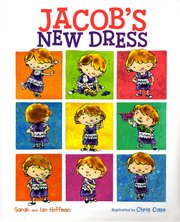
Don’t believe me?  Check out the news from the Charlotte-Mecklenburg school district.  According to a report in the New York Times, conservatives grumbled about a new book offered for first graders, Jacob’s New Dress.  Their beef: No youngster should know that some boys like to wear dresses.  Before you assume, though, that those pesky conservatives are the only ones who want to stop kids from acquiring knowledge, read on.  In these sorts of culture-war confrontations, everyone agrees that kids should remain ignorant.  They only disagree on the details.

jacobs new dress

Knowledge-spreader? Or knowledge-blocker?

In this incarnation, the story follows the same culture-war script I described in my recent book about educational conservatism.  A teacher called a conservative group to warn them about the book selection.  The conservative activists issued press releases.  The district instantly caved at the merest whiff of controversy.

If we were feeling persnickety, we could point out a few details that individualize this case.  The conservative group in this case, the North Carolina Values Coalition, doesn’t really seem to have a clear understanding of the issues involved.  According to the NYT report, at least, the group’s spokesperson doesn’t recognize the differences between cross-dressing and transgender.  “The book,” she warned, “is meant as a tool of indoctrination to normalize transgender behavior. I think a lot of parents would object to that.”

Even if we don’t agree with her, we should note—except for the goof about equating cross-dressing with transgender—the conservative activist was correct.  The school and the book really DID want to normalize the idea that a boy might like to dress up in traditionally feminine clothing.  According to the NYT, the authors hoped to help people see that there’s nothing weird about a boy choosing to wear a dress.

For new readers, let me be clear: If anyone were to ask me my personal opinion, I wouldn’t hesitate.  I strongly agree with the goals and approach of the progressive authors.  I think kids should read their book.  But that’s not the main point here.  Instead, we want to look at the ways the progressive activists agreed with their conservative foes without even realizing it.

Just as the conservative activists read from their traditional script, so too did the progressive authors.  In the future, the authors assumed, no one would find their book objectionable or even remarkable.  As one author put it, “Our hope, when we wrote this book, was that some day it would be considered quaint. We imagined future generations saying, ‘What was the fuss about?’ Clearly, there’s more work to do.”  Just as conservatives have always hoped to lock out any hint of progressive ideas, so too have progressive activists always assumed without much evidence that their ideas would win in the end.

It might seem as if the two sides are miles apart.  When it comes to blocking knowledge, though, both sides agree.  The book’s authors share the conservative activists’ desire to block kids from certain forms of knowledge.  They disagree, of course, about what to block.  Conservatives in this case—and in (almost) every case—hope that kids won’t find out yet that some people like to dress up in non-traditional clothes.  And progressives don’t want their young people to know that some people find non-traditional gender dressing weird or objectionable.

Both sides want to keep kids safe from certain forms of knowledge.  Both sides assume that they have common sense on their side.  But neither side would admit to blocking knowledge.

Yet that sort of knowledge-blocking has always been at the heart of our educational system.  It has also always been at the heart of our educational culture wars.  People disagree about what ideas should be kept from kids.  They also disagree about how old kids should be before they are introduced to certain forms of knowledge.

But everyone agrees—without even talking about it—that schools MUST block some information from kids.  At least as important as delivering knowledge to children, our schools exist to keep knowledge away from them.

Life Sucks. College Should, Too.

Want to get a conservative intellectual hoppin mad? Tell them (yes, I can use the plural to refer to just one person now) that college students have a right to complain.

back to school thornton melon

College protesters get no respect…

A recent comment about the harshness of real life by a new Haverford student has a few conservative commenters cheering. As SAGLRROILYBYGTH know, I’m no conservative myself. But I wonder if erudite pundits such as R.R. Reno and Rod Dreher really want to start down the anti-intellectual path they seem to be taking.

In the pages of the social platform Odyssey, Haverford student Olivia Legaspi explains that working at McDonald’s taught her more about life than did her elite college sensitivity seminars. As she put it,

I have PTSD — because of this, the environment at work was anxiety-producing much of the time. Yet there was no “trigger warning” for when a customer was about to start yelling, when the restaurant would get so busy that I had no time to breathe between orders and the noise would make me feel faint, when a group of men in the drive-thru would whistle and catcall me as they pulled away. The sexual harassment I experienced there is another story entirely — the point is, at work, my mental illness and I were irrelevant. And from that, I grew; I learned to take care of myself in ways that didn’t inconvenience anyone, draw unnecessary attention to myself, or interfere with the structures in place and the work which had to be done. McDonald’s was not a “safe space” for me, and that was how it should be; I was a small part of a big picture, and my feelings had no business influencing said big picture.

At First Things and The American Conservative, respectively, R.R. Reno and Rod Dreher cheer Legaspi’s real-world education. McDonald’s, Dreher cheers, taught her the value of “hard work and humility.” Her essay, Reno notes, shows that excessive college “luxury isn’t helpful.”

I can’t believe they really mean it. And, to be fair, Reno explicitly points out that the goal of college should be to create “communities of care that uplift rather than run down.” However, to say that college students should not be complaining about unsafe spaces because the real world is not safe misses the point entirely.

This is the same tired anti-intellectual argument that we’ve seen for generations. Why study Plato, or postmodernism, or piano, when such things are not valued in the real world?  I don’t believe thoughtful commentators really hope to diminish the value of non-real-world higher education.

What should we do instead? All of us—progressive, conservative, and either/or—should be celebrating the fact that a few college students are a little over-eager in their moral activism. We don’t want to castigate schools for helping create a safe space. Rather, we should be encouraging students to take their campus activism out to the streets and the fast-food counters.

Legaspi points out that her McDonald’s manager would have simply fired her if she tried to complain about working conditions. To her mind—and to Reno’s and Dreher’s—that real-world lesson was worth more than any sensitivity-raising workshop at Haverford. But they seem to come to the morally opposite conclusion. Instead of pushing Haverford to loosen up and get more like McDonald’s, we should all be figuring out ways to make McDonald’s more like Haverford.

Tough Crowd…

The reviews keep comin in!  I’m delighted to report another review of The Other School Reformers.  This one is by Princeton’s Kevin Kruse, in the pages of the Journal of American History (sorry, subscription required).

Non-academic readers might not know Professor Kruse, but every nerd knows that he has done as much as anyone to help us understand what it has meant to be “conservative” in American history.  Naturally, I was anxious to see what this uber-expert would think about my book.  Did he think my argument about the development of “educational conservatism” was worthwhile?

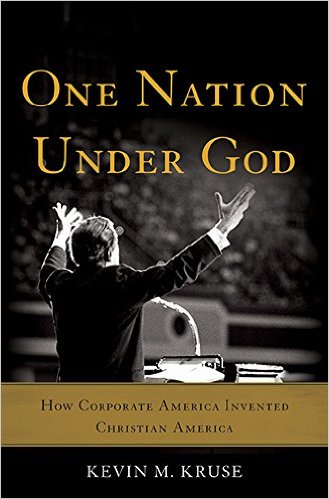
kruse one nation under god

Required reading…

Kruse’s first book, White Flight, examined racial politics and their implications in Atlanta.  His more recent book, One Nation Under God, has stormed the best-seller lists.

So when it comes to expert opinion about the history of American conservatism, it would be hard to find a more qualified reviewer than Professor Kruse.  It was with some trepidation that I first opened his review of The Other School Reformers.

What did he think?  If you have a library membership, check out the whole review, but the good news is that he liked it.  As he concluded,

Each of these case studies is carefully drawn, built upon a deep foundation of original research and a strong engagement with the secondary literature. Together they demonstrate quite ably that “educational conservatism”—and, indeed, conservatism writ large—was constantly evolving, site to site, moment to moment, across the twentieth century. Taking aim at the historian George Nash’s 1976 claim in The Conservative Intellectual Movement in America since 1945 that modern conservatism resulted from a deliberate campaign to bring together Burkean traditionalism, libertarianism, and Cold War anticommunism, Laats argues convincingly that “conservatism, for most educational activists, was not a deliberate fusion of disparate strands of ideology but rather variegated fruit from the same tangled vine” (p. 12). Over the years, conservative thinking on the key issues of race, religion, and science changed dramatically, as did conservatives’ belief in the proper role of educational experts and the federal government.

Well researched, well written, and well argued, The Other School Reformers offers a clear, evenhanded account of conservative activism in public education. It also makes a persuasive case for studying the lessons of their struggle seriously, as insight into the larger workings of modern conservatism and the traditions it sought to define and defend beyond the classroom.

Almost makes me want to read it myself!

Shoot ‘em Up at Fundamentalist U

Christians, get yr guns. That’s the message this week from Liberty University President Jerry Falwell Jr. The message for us fundamentalism-watchers is that we’ll never get the whole picture about conservative evangelical religion if we limit ourselves to theology alone.

In response to shootings in San Bernardino and elsewhere, Falwell told students at his booming megaversity that they could “end those Muslims.” He told students about the concealed .25 in his own back pocket, joking that he didn’t know if it was illegal or not.

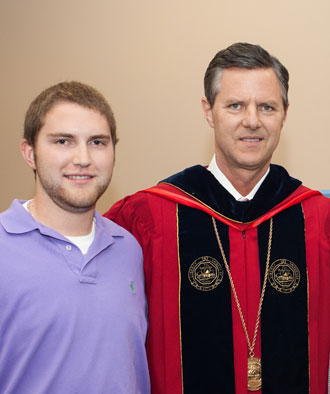
Cole-Withrow-Jerry-Falwell-Commencement-Liberty-University-20130517

Jerry, Get Your Gun

For Liberty watchers like me, this is not the first time the school has taken an aggressive pro-gun position. And for fundamentalism watchers like me, it is more proof that a fundamentalist is never only a fundamentalist.

To put it in nerdy terms, some historians have suggested a theological definition of fundamentalism. Fundamentalist Protestantism has been explained as the tradition of millennialism. It is best understood, others say, as “radical apocalyptic evangelicalism.” These definitions are helpful for distinguishing fundamentalism from close cousins such as Pentecostalism, Holiness Wesleyanism, and conservative Anabaptism.

Such definitions fail to explain, however, outbursts like the one from President Falwell. There’s nothing about the apocalypse in his yen for guns. Rather, it is a product of the simple fact that fundamentalists—like all people—are amalgams of multiple identities. Falwell is a fundamentalist, true, but he’s also an American. He’s also a Southerner. He’s also a conservative. And, of course, he’s also a gun-lover.

It is not only Liberty U that has struggled with this conundrum of fundamentalist identity. As SAGLRROILYBYGTH may recall, a popular administrator at Mid-America Nazarene University took considerable heat for reminding students that Christian religion did not always come wrapped in the American flag. From a theological position, what Dean Beckum said was utterly unremarkable. But conservative evangelical religion in America is more than just religion. It is also conservative. It is also American.

President Falwell and Liberty University, as I’m arguing in my current book, are emblematic of the complicated nature of conservative evangelical higher education. As institutions, they are driven by humdrum factors such as tuition, enrollment, athletics, and accreditation. As evangelical institutions, they’re driven by a desire to maintain a religiously pure, “safe space” for their students. As conservative institutions, they’re driven by a wide variety of political impulses, including the overpowering urge to shoot em up.

I’m Convinced: We Need More Conservatives on Campus

[Update: For new readers, this conversation has evolved since the post below.  In short, I’m not convinced anymore.  I now think there are better, more practical solutions to this dilemma.  Check out the developments here.]

My eyes were opened a few years back. I was offering a senior seminar in the history of American conservatism. Several students—some of whom eventually took the class and some of whom did not—came to my office and said something along the lines of “Thank God we finally have a conservative professor!” When I explained to them—sympathetically but clearly, I hope—that I was not actually conservative myself, students had a variety of reactions. Some were deflated. But another common response convinced me that Jon Shields and Jon Zimmerman are right.

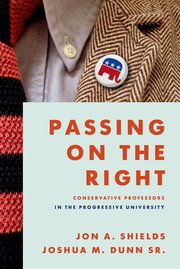
Shields Passing on the Right

Time for more affirmative action?

Shields has made the case again recently that college campuses need to recruit more professors who come from conservative backgrounds. He reviews the available research and concludes that conservatives are victims of explicit, intentional bias. As a result, there are far fewer conservative professors than we need if we want to have truly diverse campuses.

Years ago, Zimmerman made a similar argument. Like me, he’s no conservative himself. But he thinks universities need to be more inclusive places, more representative of our society’s true diversity. The best way to do that, he argued, was to reverse the trend toward intellectual homogeneity among college faculty. As he wrote back in 2012,

Race-based affirmative action has made our universities much more interesting and truly educational places, adding a range of voices and experiences that hadn’t been heard before. Hiring more conservative faculty would do the same thing.

I’m convinced, and not just because Jon Zimmerman is the smartest guy I know. The things I heard from my wonderful students told me that something was indeed wrong with our current set up.

When I told students that I wasn’t conservative myself, many of them told me something along these lines: You may not be conservative personally, but at least you don’t make fun of me or belittle me for being a conservative.   At least I can be “out” with my conservative ideas in your class. In most of my classes, I feel like I have to keep my ideas to myself or I will be attacked by students and teachers alike.

Yikes!

Please correct me if I’m off base, but isn’t that EXACTLY the problem that our campaigns for campus inclusivity have been meant to address? I know some folks think this notion of affirmative action for conservatives is a travesty, an insult to underrepresented groups that have faced historic persecution and discrimination. I understand that position and I agree that conservatives as a group cannot claim the same history as other groups.

But is there anyone out there who would want a campus climate in which students were belittled and attacked for their ideas?

Even if we want to do something about it, however, it is not at all clear how. As Neil Gross has argued, there is not really a liberal conspiracy when it comes to hiring professors. Rather, there has been a more prosaic tendency for people to go into fields in which they think they will be comfortable.

Maybe we could look to Colorado as a guide. They have had a conservative affirmative-action plan going for a while now at their flagship Boulder campus. How has it worked?

In any case, I’m looking forward to Professor Shields’s new book, scheduled for release next year. It promises to share the data gathered from 153 interviews and other sources. Maybe it will help us break out of this logjam.

Which Neighbor Should Evangelicals Love?

Evangelical Protestants are on fire to help Syrian refugees. Except, they’re not. As Chris Gehrz points out, journalists who jump too quickly to define the “evangelical” position on refugees usually miss the boat.

Franklin Graham

What Would Billy Do?

There’s no doubt that leading evangelical organizations have taken the lead on welcoming refugees. The National Association of Evangelicals, for example, has warned policy-makers not to let fear of terrorists get in the way of Christian charity. As President Leith Anderson put it,

We are horrified and heartbroken by the terrorist atrocities in Paris, but must not forget that there are thousands more victims of these same terrorists who are fleeing Syria with their families and desperately need someplace to go.

At flagship evangelical magazine Christianity Today, too, editor Mark Galli has recently reminded Americans of their moral requirement to welcome and assist refugees.

As usual, though, Professor Chris Gehrz asks a more complicated and insightful question: Do such official and quasi-official statements really represent the thinking of most evangelicals? Gehrz worries it does not. He cites recent poll data that show large majorities of white evangelicals opposing a pro-refugee policy.

Gehrz wonders if other prominent evangelical voices might have more pull than do Galli or Anderson.  For instance, what about Franklin Graham’s warning that Islam is a clear and present danger? In a Facebook post, Graham wrote,

We cannot allow Muslim immigrants to come across our borders unchecked while we are fighting this war of terror. If we continue to allow Muslim immigration, we’ll see much more of what happened in Paris – it’s on our doorstep.

Similarly, at evangelical WORLD Magazine, Cal Thomas has called a pro-refugee policy “wishful thinking.” Even US passport-holders, Thomas writes, should not be allowed back into the country if they have visited countries that host ISIS training camps.

At The Gospel Coalition, Kevin DeYoung has suggested that the entire question is not cut-and-dried for compassionate Christians. As he wrote,

Christian charity means loving the safety of the neighbor next door at least as much as loving the safe passage of the neighbor far away. It’s not unreasonable or unfeeling to think that in some cases supplying refugee camps with humanitarian aid or protecting safe havens elsewhere could be a responsible approach that avoids the risks of immediate resettlement in the United States.

Those of us who aren’t evangelical Christians should learn a couple of important lessons from this back-and-forth. First, as I’m arguing in my current book about evangelical higher education, there is no simple way to define “evangelical” in strictly religious terms. Throughout the twentieth century, at the very least, to be an evangelical has meant an irreducible blend of religious, cultural, political, and social identities. It may be tempting to try for a clean-and-clear religious definition of “evangelical,” but the term has always been and will always be a mix of things.

Second, as Professor Gehrz points out, we need to be wary when people tell us about the “evangelical” position on any question, political or even theological.

What do “evangelicals” think about refugees? All sorts of things.

The GOP and the God of Hate

Maybe I was wrong all along. My inbox has been filling up with links to a startling article in yesterday’s New York Times. Is the GOP really under the thrall of violently anti-gay extremists?

https://vimeo.com/129707480

I’ve argued in the past that my fellow secular progressives need to relax. The chance, I’ve said, of a fractious bunch of fundamentalists uniting to do anything more complicated than hosting an end-times bake sale were slim to none. Pre-tribulationists can’t get along with post-tribulationists. Lutherans can’t stand Seventh-day Adventists. Catholics look nervously at all of them.

More important, each side in our continuing culture-war debates tends to exaggerate the clear and present danger presented by the other side. Leftists point to abortion-clinic bombers. Conservatives warn of government jackbooted thugs. In general, I think we all need to remember that these boogiemen are distortions, fantastic bugbears trotted out to demonize the opposition.

But the news from Des Moines has me scratching my head. Kevin Swanson, an Orthodox Presbyterian pastor, hosted leading GOP hopefuls Ted Cruz, Bobby Jindal, and Mike Huckabee at a National Religious Liberties Conference. Swanson has become infamous lately for his repeated calls for homosexuals to be put to death.

Put to death!

According to the New York Times, Governor Huckabee claimed not to know of Swanson’s scary positions. Ted Cruz seemed unruffled. After all, his own father was a featured speaker of the conference.

Is this a simple case of primary extremism? In every election, the far fringes of each party wield outsize influence. We might say that such extremism will expend itself before the primary campaign gets rolling.

Similar claims, after all, have been made of President Obama’s connections with atheist terrorist Bill Ayers. Ayers was a real terrorist. His radical group really did try to bomb people. But he has long since—kinda sorta—denounced violence as a political tactic.

I’m flummoxed. I find it hard to believe that any serious presidential contender would consent to be associated with such a violent extremist.

Culture Wars Update: Who’s Winning?

Is the sky falling for progressives like me? In The Atlantic, journalist Molly Ball argues that liberals are losing the culture wars. The same topic just came up in our recent panel of educational historians. Is Ball right?

Four horsemen?

Four horsemen?

She looked at the results of the recent mid-term elections. In Ohio, voters rejected recreational marijuana. In Houston, they voted against gender-neutral bathrooms. In San Francisco, they booted an immigration-friendly sheriff. In Virginia, gun control struggled. In Kentucky, Kim Davis’s brand of in-your-face culture-war bluster helped win the governor’s office.

Ball’s conclusion?

taken together these results ought to inspire caution among liberals who believe their cultural views are widely shared and a recipe for electoral victory.

Fair enough. But not surprisingly, our all-star panel of historians came to different conclusions. To historians, these electoral losses don’t seem so cataclysmic. After all, consider the historical context: people are voting about making pot legal. Can you really deny Andrew Hartman’s argument that the echoes of the 1960s are dominated by the accents of hippies?

And yes, Houston lost its push for bathrooms that recognize the fluidity of gender. But look again: Who lost? The city in Texas with the openly gay mayor, that’s who.

We can make the same case for the other elections as well. Yes, conservatives here and there will have some successes in blocking the progressive changes that continue to roll through our society. Such blocking maneuvers, however, are a rearguard action.

Voting against gender-neutral bathrooms does not change the fact that we are now considering gender-neutral bathrooms. Thirty years ago—heck, even five years ago—that would not have been up for debate.

I think we need a more nuanced answer to the question of winning and losing when it comes to our culture wars. In my recent book, I looked at the educational activism of conservatives during the twentieth century. A lot of the time, they won. But just as with these recent cases, conservatives tended to succeed only in blocking or delaying certain limited sections of progressive change. Progressives still set the cultural agenda.

Here’s my two cents: first of all, I agree with our dean of educational historians, Jon Zimmerman. Jon argued this week that it is mostly meaningless to talk about winning or losing in this context. As does this Atlantic article, talk about winning or losing is usually a tactic to rally the faithful of each side, not a clear-headed analysis of shifting cultural trends.

Having said that, I think we can discern a century-long trend with these sorts of fights. In every case, conservatives might win or lose the specific battle. They do not win the war. What they do win, time after time, is the right to be listened to, the right to be considered part of the conversation about these issues.

For progressives like me and most of my friends, progressive change seems like an obviously good idea. Of course people should be able to smoke pot if they want. Of course transgender people should be able to use appropriate bathrooms. Of course guns should be controlled, immigrants welcomed, and same-sex marriage rights should be honored.

When we see election results like this one, though, we are reminded that not everyone agrees with us. When we see how strongly people disagree, we should not tear our hair and gnash our teeth. We should not lament the narrow-mindedness of our fellow citizens.

Rather, we should recognize the vast differences between Americans when it comes to these issues. As we do here at ILYBYGTH, we should do our best to understand and even sympathize with those voters who disagree with us.

After all, the only real victory in our bitter culture wars will come when we can respect those with whom we disagree.