Evangelicals and Homosexuality on the College Campus

Maybe President Lindsay feels better knowing that only high pressure can create diamonds. Because the leader of evangelical Gordon College is feeling intense pressure from two sides right now. On one hand, the school’s accrediting agency has threatened to take away its accreditation if Gordon does not revise its policy on homosexuality. On the other, the school’s conservative supporters insist the policy must stay in place. If history is any guide, it appears one group might make the crucial difference in this case.
Are all welcome?  MUST all be welcome?

Are all welcome? MUST all be welcome?

This Gordon-ian knot is one that all conservative evangelical colleges have tried to pick apart. Schools such as these are in a pickle: they need to remain intellectually respectable and financially viable, yet a decision either way threatens both intellectual consistency and the bottom line.

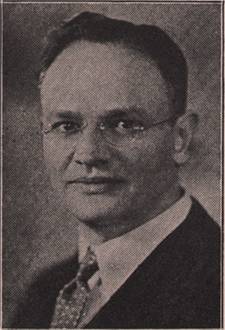
As I’m finding as I research my new book, similar schools have had a difficult time walking this line. In the 1930s, for example, Wheaton College leaders moved fast to bring Wheaton up to accreditors’ standards. As historian Michael Hamilton argued, the president at the time, Oliver Buswell, viewed accreditation as more than just a piece of paper. To Buswell, accreditation was the “one of the best ways to earn intellectual respect for fundamentalist Christianity.”

But college leaders such as Buswell were also under intense pressure to maintain both the appearance and the reality of theological steadfastness. Leaders needed to maintain the confidence of the evangelical community that their schools were not slipping into secularism. In 1929, for instance, Buswell withdrew from publication a controversial book he had written. Why? As he explained to a colleague, above all Buswell felt the need to keep “the confidence of fundamentalist leaders . . . in the administration of Wheaton College.”

Losing either accreditation or the respect of the “fundamentalist” community could mean a wasting death for an evangelical college. And the two have often pushed in opposite directions.
WWBD?

WWBD?

Much has changed since then, but President Lindsay at Gordon College finds himself coming under similar pressure from both sides. [Full disclosure: I worked with Michael Lindsay in the Spencer Foundation/National Academy of Education Postdoctoral Fellows program. I consider him a friend and colleague.]

For those who are just joining us, this story began back in July, when President Lindsay signed an open letter to President Obama about religious exemptions to an anti-discrimination law. Now, the question has become whether Gordon’s Statement on Life and Conduct violates the rules of its accrediting agency.

At issue is the Gordon ban on “homosexual practice.” The New England Association of Schools and Colleges has collaborated with Gordon in setting up a “discernment” group to examine the policy.  (As an aside, we could ask why only this part of the policy has come under investigation. After all, the Gordon policy also bans “blasphemy” and “profanity,” not to mention heterosexual sex outside of marriage. Doesn’t this impinge upon the free speech rights of potential students?)

For a host of reasons, the accrediting agency doesn’t care about blasphemy. But it is threatening to withdraw accreditation over the ban on “homosexual practice.” For Gordon College, loss of accreditation would have serious consequences. Its graduates would not necessarily be considered qualified for graduate school. Nor could they receive student loans backed by the federal government. Perhaps most important, though, loss of accreditation would be a symbolic slap in the face. Gordon would face the challenge of proving its continued intellectual respectability.

But that is not the only pressure facing Gordon right now. Just as President Buswell at Wheaton worried about both mainstream intellectual respectability and credibility within the world of conservative evangelicalism, so President Lindsay faces a double-sided threat.

Beyond accreditation pressure, Lindsay must consider the opinions of the far-flung community of conservative evangelicals. As one conservative pundit wrote recently in the pages of the Christian Post,

To Michael Lindsay, the gifted president of Gordon, and to the board of trustees, I remind you: Many eyes are watching you, knowing that the decisions you make could either strengthen or dishearten many other schools that will soon be put under similar pressure.

As this conservative writer worried, Gordon might be willing to “sell its soul” to maintain accreditation.  If it did, conservative students and parents might take their tuition dollars elsewhere.  But if it doesn’t it might lose accreditation.  Without that sort of mainstream credibility, students and parents might take their tuition dollars elsewhere.

So what is a conservative school leader to do? How can President Lindsay balance the pressure to reform with the pressure to hold fast to the faith once delivered to the saints?

In this case, there is a new wrinkle. Traditionally, alumni are one of the groups most likely to push school leaders to maintain conservative positions. Today, though, some Gordon alumni are hoping to convince Gordon to change its ways. A group of two dozen alums have published a letter encouraging Lindsay to remove any hint of anti-gay discrimination from Gordon’s policies.

In the past alumni have been one of the most vocal groups fighting any change at evangelical colleges. Conservative evangelical colleges have long been keenly aware of the pressures to modernize and secularize. Traditionally, alumni of these schools have been staunch foes of any perceived change, since any change could lead to an utter loss of the school’s steadfast character. Historian Michael Hamilton described this alumni attitude this way:

colleges, more than any other type of institution, are highly susceptible to change, and that change can only move in one direction—from orthodoxy toward apostasy. . . . The very process of change, no matter how slow and benign it may seem at first, will always move the college in a secular direction, inevitably gathering momentum and becoming unstoppable, ending only when secularization is complete.

In Gordon’s case, however, alumni—at least some of them—are pushing in the other direction. It is impossible to predict what will happen at Gordon. The board of trustees may decide this policy needs updating. Or they may not. And President Lindsay might decide that this language is a central part of the school’s evangelical character. Or he may not.

This case highlights the double pressure faced by conservative evangelical colleges. In a sense, they must serve two masters: the pressure to maintain a vague and shifting “respectability” with mainstream institutions; and the pressure to remain bastions of orthodoxy in a world hurtling headlong into secular mayhem.

Fundamentalist Parents Can’t Relax

Rich parents can relax.  At least according to an article in this week’s Economist.  But fundamentalist parents never can.  They have to worry about more than their kids’ careers.  They have to fret about eternal damnation.  And they have to worry that Satan lurks in every textbook, every TV show, and every mainstream school.

The Economist article is worth reading in its entirety.  As it explains,

Well-to-do parents fear two things: that their children will die in a freak accident, and that they will not get into Harvard.

Getting into Harvard might be harder than getting into heaven...

Getting into Harvard might be harder than getting into heaven…

Both fears lead to exaggerated and ultimately counterproductive lifestyles.  In terms of safety, the article notes, an American child under five years of age in 1950 was five times as likely to die of disease or accident as that same kid would be today.  And though it is difficult to get into Harvard, most kids of affluent families will have fine careers without an Ivy-League transcript.

But fundamentalist parents have more to worry about.  Since the birth of American fundamentalism in the 1920s, conservative evangelicals have fretted about the influence of mainstream culture on their offspring.  Even if their kids don’t get polio, and even if their kids do get into Harvard, fundamentalist parents have to worry that success in life will lead to terrible punishment after death.  For fundamentalists, even Harvard itself can be more of a threat than an achievement.

As historian Randall Balmer put it in his blockbuster book Mine Eyes Have Seen the Glory,

the greatest fear that haunts evangelical parents is that their children will not follow in their footsteps, that they will not sustain the same level of piety as their parents—stated baldly, that they are headed for hell rather than heaven.

As I argued in my 1920s book, historically this fear for the children has fueled fundamentalism’s public campaigns.  Fundamentalist leaders and parents worried that no level of affluence and economic privilege could protect their children from a culture sliding nonchalantly straight to hell.

As conservative leader William Jennings Bryan explained in 1922, even the rich and powerful had lost the ability to protect the faith of their children.  As a former Secretary of State, Bryan knew many of these families personally.  He wrote about one acquaintance, a US Congressman, whose daughter came home from college only to tell the family that “nobody believed in the Bible stories now.”

It was not only conservative Congressmen who worried.  Fundamentalist evangelist Bob Jones Sr. liked to tell the story of a less powerful family who had a similar experience.  This family, Jones explained in one of his most popular 1920s sermons, scrimped and saved to send their precious daughter to

a certain college.  At the end of nine months she came home with her faith shattered.  She laughed at God and the old time religion.  She broke the hearts of her mother and father.  They wept over her.  They prayed over her. It availed nothing.  At last they chided her.  She rushed upstairs, stood in front of a mirror, took a gun and blew out her brains.

Even when fundamentalist families did not experience that sort of cataclysm, we must keep their anxiety in mind when we try to understand fundamentalism from the outside.  Why do conservative evangelicals fight against evolution?  Why do they insist on school prayer?  Why do they worry about rights for homosexuals?

In all these cases, conservative evangelicals’ public activism is made more desperate by their intense worry about their children.  In this, there is no difference between conservative evangelicals and mainstream Americans of any background.  As the Economist article points out, almost all parents love their children and make sacrifices for them.  In the case of mainstream affluent parents, it might even help if they relaxed a little bit.  As Bryan Caplan of George Mason University argues,

Middle-class parents should relax a bit, cancel a violin class or two and let their kids play outside.

Easy enough.  But fundamentalists face a very different situation.  If we want to understand the mind of fundamentalists, we can try a mental experiment.  Non-fundamentalist parents have a hard enough time relaxing about their kids, even though they feel at home in mainstream culture.  Non-fundamentalist parents fret too much about their kids’ futures, even if they don’t feel alienated by their local public schools and elite universities.

Let’s try to translate the anxiety experienced by fundamentalist parents into mainstream terms.  Imagine, for example, the sorts of public outcry there would be if public schools began promoting ideas or practices that affluent secular parents found dangerous.  For instance, what do you think would happen if a public school somewhere began promoting smoking as a fun and healthy activity?


Are Christians Too Bigoted to Work With?

You may have seen the headline by now: Christian College Discriminates Against Homosexuals.  And the follow-up: City Cuts Off Christian College.  But isn’t it weirdly ironic that non-religious governments now seem to be repeating the separatist struggles of fundamentalists?  Doesn’t it seem odd that the drive for tolerance pushes pluralists to act like the more extreme religious separatists?

In this case, it was the public decision of Gordon College President D. Michael Lindsay to sign a letter to President Obama that sparked the furor.  [Full disclosure: Lindsay and I worked together as 2009 Spencer/National Academy of Education postdoctoral fellows, and I admire Lindsay personally and consider him a friend and colleague.]  Along with a host of other prominent evangelical leaders and intellectuals, Lindsay asked President Obama for a religious exemption to a planned executive order banning workplace discrimination against homosexuals.

Lindsay’s participation caused a furious reaction.  Gordon alumni and students petitioned Lindsay to retract.  Gordon College’s accrediting agency promised to investigate.  And most notably, the nearby city of Salem, Massachusetts canceled its partnering contract with Gordon to operate an historic city building.

Let me be clear about a couple of points.  First, I personally agree that institutions should not discriminate against homosexuals.  Public governments, especially, have a duty to include all members of society, not only passively, but actively.  IHMO.  Also, I do not wish to argue whether Lindsay’s position is or is not “anti-gay,” since he has publicly insisted that Gordon College does not discriminate against homosexuals.  And though I find it curious, I don’t want to ask why President Lindsay has become the center of this controversy, even though the letter was signed by many other evangelical leaders as well.  Even on my humble little blog, for example, I’ve experienced a surge of search terms such as “D. Michael Lindsay bigot” and “Gordon College Anti Gay.”  Why has Lindsay become the focus in this case?  Why not all the other signatories?

Though interesting, we have to leave such questions aside for now.  From an historical point of view, there is a more interesting aspect to this case.  It seems that those who support tolerance and diversity have, in some ways, adopted the position of the traditionally conservative fundamentalists.

Here’s what I mean: In the twentieth century, conservative Christian colleges carried on a furious and often angry internecine debate about the propriety of partnering with non-Christian institutions.  Schools such as Gordon and Wheaton College earned the vicious denunciation of more conservative schools such as Bob Jones University.  Among the many accusations, more conservative, “fundamentalist” schools often insisted that the more open, “evangelical” schools had tainted themselves by their open association with non-Christian ideas.  Separatist fundamentalists often cited the Bible passage 2 Corinthians, chapter 6, verse 14:

Be ye not unequally yoked together with unbelievers: for what fellowship hath righteousness with unrighteousness? and what communion hath light with darkness?

In order to be truly Christian, separatists argued, believers could not allow themselves to be joined with those who did not share their belief.  So, for instance, when fundamentalist megastar Jerry Falwell worked with conservative Catholics and Jews in the Moral Majority, fundamentalist leaders at Bob Jones University denounced Falwell as the “most dangerous man in America.”

This rigid separatism, indeed, has been one of the hallmarks of American fundamentalism.  Some fundamentalists have insisted that they must practice even a “secondary separation,” not sharing Christian fellowship with other Christians if those other Christians share fellowship with questionable folks.

Now, it seems the city of Salem feels it must practice a strangely similar form of separatism.  As Salem Mayor Kimberly Driscoll informed Gordon College in a recent letter, the city must separate itself from the college.  Why?  Because, Driscoll wrote, Lindsay’s position implied open discrimination against the LGBT community.  The college had every right to do so, Driscoll believed, but the city could no longer be affiliated with such things.  The city’s non-discrimination law, Driscoll informed Lindsay, “prohibits our municipality from contracting with entities that maintain discriminatory practices.”

This is not the only time when the beliefs of liberals and fundamentalists have neatly swapped sides.  In the creation-evolution debates, for example, creationists took over evolutionists’ positions.  As historian Ronald Numbers has pointed out, by the 1990s creationists began appropriating the language of 1920s liberals.  In the 1920s, evolution supporters insisted that teaching only one theory was bigotry.  By the 1990s, creationists started saying the same thing.

In this case, we see a weird and clearly unintentional echo.  Mayor Driscoll feels compelled to separate her government from any entity that practices discrimination against homosexuals.  It is not enough, morally, for her government itself to avoid such discrimination.  The principle of separation seems to have migrated from fundamentalists to their supposedly tolerant opponents.


The Kids Are Alright

Want to see a progressive society? Just wait. Each new generation gets less uptight about gay marriage, evolution, abortion rights, and gender equality. Right? Maybe not. Controversy-loving sociologist Mark Regnerus has produced another study sure to provoke more outrage. In this case, Regnerus claims to find that young conservative evangelicals are not swinging toward a glowing progressive future.

Regnerus first came to culture-war attention with his 2012 study of gay-marriage parenting. Unlike most other sociological studies, Regnerus found that children raised by same-sex parents did not fare as well as children raised by their biological parents.

In his new study of attitudes towards sex in America, Regnerus concluded that young conservative evangelicals are bucking the trend toward youthful progressivism. While young Americans in general might be more welcoming toward gay marriage, abortion rights, and gender equality, young conservatives are not, Regnerus claims.

Conservative Baptists Russell Moore and Andrew Walker take great solace from Regnerus’ findings. Moore and Walker, leaders of the Southern Baptist Convention’s Ethics & Religious Liberty Commission, celebrate the “sexual counter-revolution” heralded by Regnerus’ study. Conservative Christians, Moore and Walker noted recently in the pages of National Review Online, can trust that the new generation will cling to tradition. As they put it,

Regnerus’s research suggests that younger Evangelicals aren’t hewing to the culture’s expectation that they conform to its values. That’s a welcome reality, especially given the significant cultural pressures that young Christians face in today’s culture. This lines up with what we, as conservative Evangelicals, see happening in our own congregations across America.

As American culture secularizes, the most basic Christian tenets seem ever more detached from mainstream American culture. Those who identify with Christianity, and who gather with the people of God, have already decided to walk out of step with the culture. Beliefs aren’t assumed but are articulated over and against a culture that finds them implausible. Evangelical views on sexuality seem strange, but young Evangelicals in post-Christianizing America have already embraced strangeness by spending Sunday morning at church rather than at brunch.

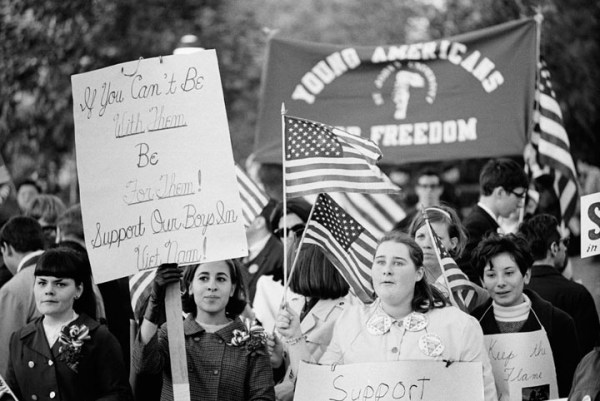
Certainly, ever since the birth of conservative evangelicalism as a dissenting identity in the 1920s, young evangelicals have stayed true to conservative ideas. In the 1920s, as I argue in my 1920s book, young members of the new “fundamentalist” coalition defied new stereotypes of “flaming youth” to assert a proudly traditional, religiously orthodox youthful conservatism. And as I’m exploring in my current research, in the 1960s conservative evangelical college campuses were hotbeds of a different sort of student activism, the “sexual counter-revolution” noted by Moore and Walker.

An Earlier Generation of Youthful Counter-Revolutionaries: YAF, 1967

An Earlier Generation of Youthful Counter-Revolutionaries: YAF, 1967

But just as Regnerus’ gay-marriage research seemed too pat, too comforting to conservative activists, so this finding does not seem to deserve the celebration lavished upon by Moore and Walker. Young conservatives may be more traditional than their young contemporaries. But those young conservatives might also be more progressive than their elder evangelicals. The times might not be a-changin’ as fast as some progressives have often assumed, but it seems a little weird for conservative evangelical leaders to conclude that young evangelicals are not moving toward the new mainstream on sexual issues.


Christians CAN Think

Just because someone is a Christian, he or she is not therefore incapable of reasonable thought. That’s the argument recently from Provost Stanton Jones of Wheaton College. But is this true everywhere? Or only in the hallowed halls of Wheaton itself?

Jones was responding to a hatchet job from University of Pennsylvania English Professor Peter Conn. As we noted at the time, Conn accused Wheaton and other evangelical colleges of scamming their way into intellectual respectability. No school that demanded a faculty statement of faith, Conn argued, should be eligible for federal student aid. It was an intellectual and constitutional outrage.

In the discussion in these pages, commenters mostly took Conn to task for closedmindedness. Provost Jones takes a different approach. Not only are Wheaton faculty free to think and research, Jones writes, but they are actually freer than most faculty at non-religious schools. And their work will ultimately be more productive than that of their unfortunate colleagues at those schools.

Those researchers who fit in with the “contemporary intellectual tides,” Jones argues, might feel very free indeed at non-religious colleges. But for those who dissent, the “free” academic environment feels deadeningly constricting. A Bible-believing Christian professor, for example, might not feel entirely comfortable in a rigorously pluralist university like mine. “When we hire colleagues away from nonreligious institutions,” Jones asserts,

we often hear they feel intellectually and academically free here for the first time in their professional careers, because they are finally in a place where they can teach from and explore the connections between their intellectual disciplines and their religious convictions.

That’s not all. Jones uses the tools of postmodern academic life to undermine Conn’s attack. If “truth” is something we can only put in ironic quotation marks, we will be severely limited in our search for it. As Jones puts it,

Purely skeptical and unfettered inquiry is likely to simply chase itself in circles. Disciplined, rigorous, and self-critical inquiry grounded in a thoughtful understanding of one’s particularities can contribute to a vigorous and diverse intellectual marketplace.

Christian academics at schools such as Wheaton, Jones writes, are freer and more productive than their fettered colleagues at secular schools.

We should note, Jones only defends the rigor of academic work at his own school, Wheaton College. Conn’s attack was a broad-brushed condemnation of conservative Protestant colleges in general. Jones does not insist that other evangelical colleges offer conducive research homes for top-notch academics. I can’t help but wonder if this is mere oversight, or an unwillingness to vouch for the academic chops of evangelical higher education in general. Seems like Provost Jones is confident of the high-caliber intellectual firepower at Wheaton, but maybe not so sure of the strength of other evangelical schools.


Kicking Christians Out of College

Does being an evangelical Christian automatically make one an anti-gay bigot? If so, can tolerant universities still allow such groups among their students? Those are the tricky questions highlighted in a recent New York Times article about evangelical culture and higher education. As the NYT story noted, this clash between pluralist campuses and “exclusivist” religious groups seems like a tough nut to crack.

But is it fair to assume that all evangelical students are bigots? That opposition to gay marriage pushes students beyond the bounds of polite society? To put it in the most provocative terms: Are evangelical student clubs being ousted because they are seen—sometimes unfairly—as being anti-gay?

The story opens with an update from Bowdoin College in Maine. At that elite liberal-arts school, the tiny evangelical student club has been cut off from official university support. Why? Because, like many evangelical student groups, the Bowdoin group insisted that leaders must be Christians themselves. This led to what the NYT article called a “collision between religious freedom and antidiscrimination policies.” At Bowdoin, as at many other schools, leadership at university-sponsored clubs must be open to all students, regardless of race, religion, or sexual identity.

The official question in the Bowdoin case is not about homosexuality or same-sex marriage. But it would be easy for a casual reader to miss that. The article mentions other schools in which evangelical students have gotten into trouble for anti-gay activity. At Vanderbilt, for instance, one Christian fraternity kicked out a gay member. Indeed, it was precisely that anti-gay activism that led Vanderbilt to force student groups to sign antidiscrimination pledges.

But Bowdoin’s student group does not seem particularly fervent about issues of homosexuality or same-sex marriage. At least according the article, the evangelical club at Bowdoin does not have a single party line about the morality of gay marriage. It’s hard to see a group as anti-same-sex marriage if some of its members support same-sex marriage.

Some studies have suggested that the faculty leaders at universities tilt decidedly against evangelical students. One 2007 study of university faculty concluded that evangelicals were “the only religious group about which a majority of non-Evangelical faculty have negative feelings.” And, as Rice sociologist Elaine Howard Ecklund found, faculty at elite schools often have a very skewed notion of evangelical belief. It does not seem like a stretch to think that these faculty prejudices might tip university policy.

For their part, evangelical intellectuals have struggled long and hard to prove that their opposition to gay marriage and, in some cases, to homosexual sex does not make them bigots. Perhaps the most vocal pundit on the issue, Ryan T. Anderson, insisted that conservatives had legitimate reasons for opposing gay marriage. But too often the other side wouldn’t listen. “Marriage re-definers,” Anderson complained in 2013,

don’t tend to say what many opponents have said, that this is a difficult question on which reasonable people of goodwill can disagree. No, they’ve said anyone who disagrees with them is the equivalent of a racist. They’ve sent a clear message: If you stand up for marriage, we will, with the help of our friends in the media, demonize and marginalize you.

Don’t get me wrong: I am personally fervently in support of same sex marriage rights. I’m opposed to locking anyone out of access to influence because of their sexual identity, religion, race, or other causes. But it seems as if universities would do well to uncouple these issues of club leadership, religious belief, and homosexual rights.

Could a student club demand religious beliefs of its leaders, while still welcoming gay and lesbian students to become leaders? Is it fair for universities to assume that evangelical belief automatically implies anti-homosexual attitudes?


Evangelicals and Evolution: A Closer Look

We all know large numbers of evangelical Protestants disbelieve in evolution, right? But among evangelicals, who does and who doesn’t? Thanks to Professor Thomas Jay Oord and the Nazarenes Exploring Evolution project, we can see a breakdown of evolutionary disbelief in one large evangelical denomination. In the Church of the Nazarene, at least, most academics allow for God-guided evolution and an ancient earth, while among the laity there is a more pronounced split.

For those outside of the kaleidoscopic world of American evangelicalism, the Church of the Nazarene is part of the Holiness tradition. That means, in a very crude nutshell, they are part of a tradition that emphasizes an experience of sanctification and sanctified work. In the analogy of one early holiness evangelist, sinful human nature is like a weight, but that weight can be lifted up by the hot-air balloon of the Holy Spirit. The sin is still there, but earnest Christians can be buoyed up to perform missionary work if they open themselves to the Holy Spirit.

In more mundane terms, according to its Wikipedia page, the Church of the Nazarene claims 2,263,249 members in 29,007 churches around the world. That’s a lotta Nazarenes. And while we can’t make any claims that Nazarenes somehow represent the totality of evangelicals, we can learn something about evangelicalism and evolution by looking in close detail at what Nazarenes say on the subject.

In general, American evangelicals are one of the most skeptical groups about evolution. As a recent Pew survey found, sixty-four percent of white evangelical Protestants believe that humans “have existed in their present form since the beginning of time.” Only a small minority (15%) of white mainline Protestants hold that view. And while it is notable that so many self-identified “evangelicals” don’t believe in human evolution, we can see that a significant minority of evangelicals DO believe.

Oord’s more nuanced look at one evangelical denomination allows us to get a better inside scoop on this breakdown.

In brief, Oord and his colleagues found that most Nazarene academics believed that evangelicalism and evolution could co-exist without traumatizing Nazarene theology. Your regular Nazarene-in-the-street, however, is much more likely to insist on a young earth and on hostility to evolutionary theory.

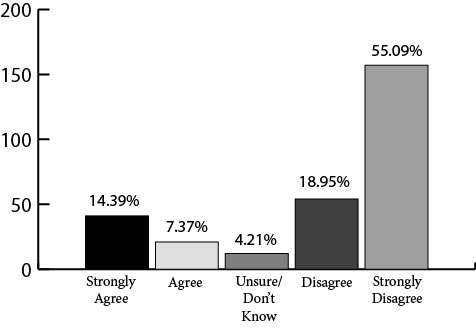
For example, among Nazarenes as a whole, 14.39% strongly agree, and 7.37% agree, that the Bible requires “Christians to believe the earth was created less than 15 thousand years ago.” Among lay Nazarenes, 18.95% disagree with that statement, and 55.09% strongly disagree. We see that this evangelical denomination does not, by and large, go in for “young-earth” creationism, though clearly a significant minority of its members does.

Lay Nazarenes and a young earth

Lay Nazarenes and a young earth

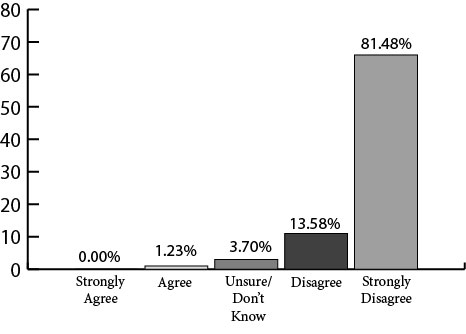
But look at the results when Nazarene academics answer that same question. Absolutely ZERO strongly agreed that biblical beliefs require belief in a young earth, and only 1.23% agreed. In contrast, a whopping 81.48% strongly disagreed with the notion that Christianity requires belief in a young earth.

Academic Nazarenes and a Young Earth

Academic Nazarenes and a Young Earth

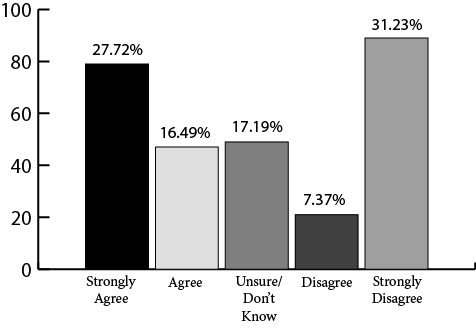
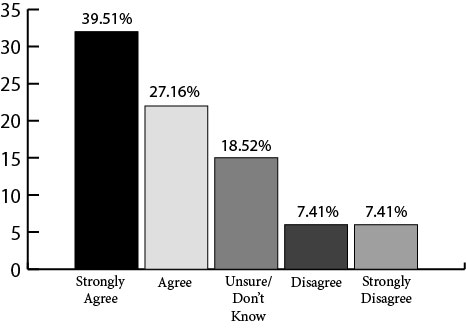
Check out Professor Oord’s essay in the BioLogos Forum for more details. You will see, for example, that among lay Nazarenes there is much more hostility to the notion that “Humans likely became a species as God worked with the evolutionary process.” Academic Nazarenes feel much more comfortable and confident with that idea.

Lay Nazarenes on God-guided Human Evolution

Lay Nazarenes on God-guided Human Evolution

Academic Nazarenes on God-guided Human Evolution

Academic Nazarenes on God-guided Human Evolution

What Mormons Want Evangelicals to Learn in College

College is about fulfilling God’s mission.

That’s what Glenn Beck told the crowd at Liberty University the other day.  As Jonathan Merritt notes in Religious News Service, it is remarkable historically that Beck, a member of the Church of Jesus Christ of Latter-Day Saints—the Mormons—was invited to preach to the evangelical community of Liberty University.  Traditionally, as we saw in the presidential candidacy of LDS member Mitt Romney, evangelicals have looked askance at Mormonism.

As Merritt reports, Beck did not hide his LDS beliefs.  Rather, he flouted them, displaying Mormon relics such as Joseph Smith’s watch.

But that was not the only remarkable part of Beck’s talk.  Beck offered Liberty students a vision of the purpose of higher education.  You may have come here to help you get a job, Beck told the college crowd, but that’s not really what your education is for.  “You are at this university for a reason,” Beck reported.  What is God’s reason for higher education?  God did not say, Beck insisted, “I’m gonna send you down because you need to be . . . an accountant.”  [26:56]

The purpose of a university education, Beck told the audience, was not merely professional.  “You came to this university thinking, maybe,

I have to have an education to get a job.  You need this education from Liberty University because of your only true job.  The purpose that you were sent here for.  To magnify Him.  To bring Him to others.  To do what it is that you’re supposed to do.  To preserve liberty, the liberty of all mankind.

According to Beck, that sort of education is the true aim of education, whether students are LDS, Baptists, Mennonites, or whatever.  Life is a mission from God.  Higher education is simply further training for that mission.

Of course, Liberty University itself has a more ecumenical attitude toward the true purpose of education.  On Liberty’s website this morning, for instance, the casual reader is quickly reassured that Liberty certainly wants to train “Champions for Christ.”  But another of the four circulating mottos declares that Liberty “helps students and alumni find the right job or internship.”

Glenn Beck may be confident about the real purpose of Christian higher education.  But evangelical college students seem to want their college to walk both sides of the line.


Abortion and Social Justice at Yale

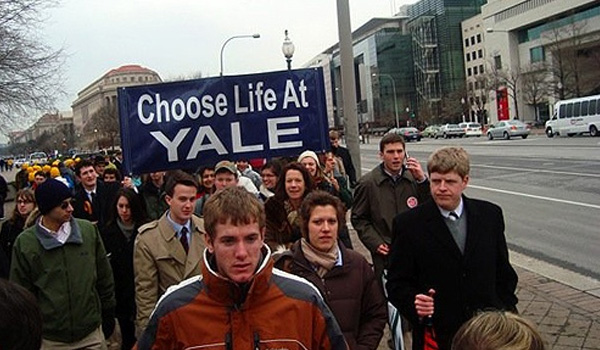
A pro-life student group at Yale University has been refused membership in a “social justice” organization.  Why?  Because, in the words of one student leader, “The pro-life, anti-choice agenda stands in the way of gender equity, and thus in the way of social justice.”

The controversy raises difficult questions: Is conservative religion still seen as a legitimate force for good?  For “social justice?”  Or has conservatism become irredeemably trapped by accusations of bigotry?  At least in the effete environs of Yale, it seems pro-life thinking has been stripped of its moral legitimacy.

Well-dressed Activists

Well-dressed Activists

The student group, Choose Life at Yale (CLAY), had been a provisional member of Dwight Hall, an umbrella group of student social-justice clubs.  Membership in Dwight Hall would have given CLAY access to meeting rooms and a sense of campus legitimacy.

Is pro-life a “social justice” cause?  Former CLAY president Michael Gerken thinks it is.  As he explained in the pages of First Things, CLAY members

realized that abortion has never been solely a matter of a baby’s life and liberty. It’s about the desperation and hopelessness of the mother that walked into the clinic. It’s about the grandfather who will never put that little girl in his lap. It’s about the classmates who will never sit next to her, and the boy who will never work up the courage to write her that awkward poem. It’s even about that friend who she would drift away from over the years, the successful sister who would make her insecure, and the God she’d curse when she lost her job and then her mortgage. The biggest lie in all this is that the choice to end (or to save) a life is a solitary one.

Of course, Yale will always have a special place in the history of conservatism and education.  It was William F. Buckley’s precocious expose of the godless atmosphere on campus that launched his career, and in many ways signaled the start of the modern conservative movement.

And college campuses have become leading forums to debate whether or not conservative religious ideas are legitimate traditions or vestiges of bigotry.  ILYBYGTH readers may remember a case at Tufts University a while back.  In that case, the evangelical student group Intervarsity was stripped of its official student-group status.  Other student groups complained that the prominent evangelical group represented an inherently bigoted worldview, one that did not recognize the full equality of homosexual students.

The current controversy at Yale represents a similar conundrum.  Do conservative religious groups automatically lose the right to participate in campus life?  Is it inherently bigoted to fight against abortion or gay marriage?  Perhaps most important, who gets to define “social justice?”


Cruz at Liberty: Freedom under Attack

Senator Ted Cruz told the commencement crowd at Liberty University that they were in danger. Unless they remained willing to sacrifice for their faith, unless the Liberty community remained willing to get active in politics, the religious liberties of the United States could be crushed under the heel of a metastasizing federal government.  Unlike some typical graduation speakers, he hoped the career path of his audience would include some time in prison.

In some ways, Cruz’s commencement address sounded very similar to such addresses at colleges all across the nation and all across the political and religious spectrum. In spite of the fact that Senator Cruz has earned a reputation of one of the staunchest and most outspoken religious conservatives in national office, his speech often seemed mere boilerplate graduation fare: he told the crowd they were all inspirational; he told a few mildly humorous anecdotes; he allowed himself to notice how very famous he was; and he exhorted the crowd to get on out there and change the world.

But in the context of Liberty University, founded in 1970 by fundamentalist leader Jerry Falwell, Cruz also included more ideologically charged material. He reviewed the conservative vision of the nature of the United States. Throughout United States history, Cruz insisted, we see nothing more starkly evident than the fact that “Faith and freedom are intertwined.”

The United States had weathered storms, Cruz said, but he warned ominously, “religious liberty . . . has never been more imperiled than it is right now.”

Cases such as the Hobby Lobby suit or that of the Little Sisters of the Poor, Cruz told the Liberty audience, demonstrate the dangers to religious freedom. These cases are not about contraception, Cruz warned. If religious people can be forced to go against their beliefs to satisfy the demands of big government, Cruz warned, then the generations of sacrifice by Godly Americans will have been for naught.

The folks at Liberty had a chance to change things, Cruz concluded. If they were brave enough to remember that they were “called to action as believers,” Liberty grads could “change the world.” But they had to be willing to suffer for it, to sacrifice for it. Like The Reverend Dr. Martin Luther King Jr., Cruz told his Liberty audience, Christians need to be willing to go to jail to promote their beliefs.

“How many of us,” Cruz asked, “have been to prison for Christ?”