Are You a Camel Denier?

The authenticity of the Bible has received a new challenge, a new camel’s nose under the tent.  You’ve probably seen the headline: Two archaeologists have published their findings that camels did not likely live in Biblical lands at the time of Abraham, yet the Bible says they did.

One obvious conclusion is that the early books of the Bible were written long after the events they describe.  Conservative Protestants quickly disputed this implication.  Dr. Andrew Steinmann, a professor of Hebrew and theology at Concordia University-Chicago, insisted that this evidence merely proved the accuracy of the Old Testament.  Camels, Steinmann argued (according to an article in the Christian Post), were not described in the OT as widespread, but rather only owned by recent emigres from other areas.

As Gordon Govier aptly put it in the pages of Christianity Today, this archaeological dispute is only the “latest challenge to the Bible’s accuracy.”

Indeed, as historians of evangelicalism will tell you, the roots of what we think of as fundamentalism and its neo-evangelical offshoots came directly from an earlier generation of scholarly criticisms of the Bible’s accuracy.

In all the ruckus, nothing I’ve seen has been more poignant than the recent accusation by Julie Borg in World Magazine that the archaeologists amount to nothing more than cynical “Camel Deniers.”  She argues that plenty of secular research disproves their bitter and ill-conceived anti-Biblical argument.

So how about it?  Is this a new “denier” category to add to our culture-war lists?


Conservatives: Keep Religion Out of Public Schools

Do American religious conservatives want more Jesus in public schools?  That’s usually the assumption, from Kountze, Texas to San Diego, California.

Recently in the pages of The American Conservative, Leah Libresco argued the conservative case against more religion in public schools.  When religion is used by the state, she points out, it puts religion in the service of the state, not vice versa.

One commenter pointed out the paucity of this sort of sentiment among religious conservatives in the past thirty years.  Fair enough.  But let’s not forget how common such notions were among religious conservatives, especially for those from the Baptist tradition, throughout American history.

For example, as historian Jon Zimmerman argued in his 2002 book Whose America, the battle over weekday religious education in public schools pitted conservative Christians against liberal Christians.  Both sides wanted more good religion in public schools, but they disagreed bitterly over the content of that religious education.  Conservatives and self-identified “fundamentalists” often made the case that no religion was better than false religion for public school students.

Similarly, we need to remember the response among conservative evangelicals to the Supreme Court’s anti-prayer ruling in Engel v. Vitale.  In that important 1962 decision, SCOTUS ruled that public schools could not lead students in even the blandest, most ecumenical prayer.  As I argued in a recent article in the Journal of Religious History, many conservative evangelical intellectuals were well pleased.

The National Association of Evangelicals approved of Engel.  So did Presbyterian fundamentalist Carl McIntire.  As William Culbertson of the Moody Bible Institute put it, “The public as a whole and Christians who sense the necessity for safeguarding freedom of worship in the future are always indebted to the Court for protection in this important area.”

For Culbertson as for the other conservative Protestants who agreed with him, it would be better for public-school students not to pray at all in school rather than for them to chant the pablum imposed by the New York Regents.  That Regents prayer, after all, offered only the thinnest gruel of religion; it crushed any orthodoxy in its well-meaning goal of ecumenicalism.  “Almighty God,” students prayed, “we acknowledge our dependence upon Thee, and beg Thy blessings upon us, our teachers, and our country.”

As Leah Libresco argues in her recent conservative indictment of public-school prayer, that sort of religiosity does not teach young people the religion of their families.  It only teaches them a confusing lesson about the vague existence of a higher power.  For religious conservatives, the words of a prayer matter.  Better by far to ban meaningless prayers from public schools than to embrace a state-directed vision of the Almighty.


Required Reading: Molly Worthen on the Intellectual Civil War among American Evangelicals

What does it mean to be an “evangelical” in America?

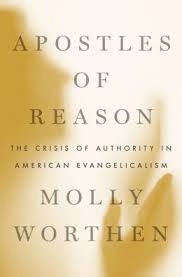
Molly Worthen of the University of North Carolina—Chapel Hill discussed her latest book recently with Tiffany Stanley of Religion & Politics.  The interview is sprinkled with gems that make me look forward to reading Worthen’s new book, Apostles of Reason: The Crisis of Authority in American Evangelicalism.

apostles of reason

Of course, for those of us interested in the intersection of conservative politics and American education, the meanings of “evangelical” are always of intense interest.  Controversies over sex education, prayer in schools, and creationism often feature conservative Protestant evangelicals as main players.

What does it mean to be “evangelical?”  In this interview, Worthen suggests three central questions that define the boundaries of the evangelical experience.  As she explains them,

First, how do you reconcile faith and reason? How do you maintain one coherent way of knowing? Second, how do you become sure of your salvation? How do you meet Jesus and develop a relationship with him, to use the language that some evangelicals prefer. And third, how do you reconcile your personal faith with an increasingly pluralistic, secular public sphere?

Worthen also suggests some useful insights into the complex interaction between evangelicalism and education.  For example, how does the historically defined divide between white and black evangelicals play out in schools?  As Worthen puts it,

If you really grilled black or Latino Protestants on this question [of creationism], many of them would say, “I prefer the Genesis narrative to Darwin’s account, but do I get worked up about it? No. I’m more concerned about educational opportunities for my kids and more concerned about structural injustice.”

And of creationists in general, Worthen hits on the deeper intellectual divide at the heart of the evolution/creation trenches.  “I think it’s a mistake,” Worthen told Religion & Politics’ Stanley,

to understand creationists as “anti-science,” at least if we want to understand how they see themselves. The reality is that the creationist movement comes out of a tradition of Biblical interpretation that understands itself as deeply rationalist, deeply scientific, that rests on the premise that God’s revelation is all one, that God is perfect and unchanging, and therefore his revelation must be perfect and unchanging too. Our two modes of encountering his revelation, in scripture and in the created world, cannot contradict each other. . . . To understand reality accurately, they say, you must take as your founding assumption the truth of God’s revelation. I think that is crucial for understanding the frame of mind of creationists and how they view their project.

Of course, as Dr. Worthen knows, it meant very different things to assert this “creationist” way of knowing in 1877 than it did in 1977.  As she points out, one of the main features of the American evangelical experience has been a profound and continuing tension between the claimed authority of religious leaders and that of the wider secularizing society.

In schools, this evangelical “crisis of authority” has often played out as a continuing tension between a lingering desire to assert Protestant authority over “our” schools and a lamentation that “God has been kicked out” of American education.

One of the continuing dilemmas of religious historians has been to reconcile the mixed bag of evangelical intellectual life.  On one hand, American evangelicalism has included many of the great thinkers of the American tradition.  On the other hand, it has included in its big revival tent some of America’s most fervently anti-intellectual personalities.  I’ll look forward to reading in more detail about the ways Worthen wrestles with these perennial questions.

Booze and Bibles

Have a cocktail with your Leviticus?

That’s the new option for faculty and hangers-on at Chicago’s storied Moody Bible Institute.

Image Source: Renew Chicago

Image Source: Renew Chicago

It represents only the newest iteration of an age-old story for conservative evangelical institutions: How much to embrace and how much to eschew contemporary cultural norms.

According to a story in Religion News Service, the downtown Bible institute will now allow faculty and staff to drink.  This is new.

The question asked by Sarah Pulliam Bailey is whether this represents a trend among leading evangelical institutions.  As Bailey points out, evangelical organizations such as Focus on the Family and Wheaton College have made similar changes to their lifestyle policies.

Bailey might also have mentioned recent changes at the more conservative Liberty University.

Such questions of cultural relevance and theological fidelity are nothing new at Moody Bible Institute.  As I argued in my 1920s book, President James M. Gray wondered at that time whether the new fundamentalist movement was a boon or a threat to the MBI’s evangelical mission.

In the end, President Gray and the 1920s MBI generation took a skittery position on fundamentalism.  Insofar as fundamentalism supported a firm insistence on the inerrancy and primacy of Scripture, it was all to the good.  But if the new fundamentalist movement took attention away from the primary goals of Bible knowledge and evangelical effectiveness, it was a threat.

Nor is the weightiness of the MBI’s internal debates about this issue unique among conservative educational institutions.  Many evangelical schools have a long history of struggle with questions of change and cultural consonance.  At Wheaton College, for example, President Charles Blanchard fretted throughout the 1920s about the meanings of modernism.  At that time, “modernism” among evangelical Protestants referred, first and foremost, to a theological movement.  Modernists in the 1920s hoped to bring church doctrine more in line with changing cultural norms.  Fundamentalists and their conservative allies, on the other hand, insisted on keeping true to traditional theological norms.

Blanchard, as did other evangelical educational leaders in the 1920s and since, experienced a good deal of anguish as he worked to guide his school through this cultural Scylla and Charybdis.  On the one hand, Blanchard, like Gray, did not want to truckle to fads.  On the other hand, neither leader wanted to insist on tradition merely for the sake of fuddy-duddy-ness.

The recent decision to allow drinking among MBI faculty represents a similar wrangling with contemporary cultural issues.  How much does a trenchant cultural Amishness contribute to true Biblical understanding?  And how much does it distract from MBI’s central goals of Biblical missiology?


Yoga in School? Yes, No, Maybe So

Is yoga a religious practice?  Can it be taught in public schools?

Here at ILYBYGTH, we’ve been following the story in Encinitas, thanks to contributions from Natalia Mehlman Petrzela.  In that case, the judge said yoga was okay, in spite of the powerful argument made by religious studies scholar Candy Gunther Brown.

Today three evangelical writers weigh in at Christianity Today.  Can yoga be part of public education?

Laurette Willis says no way.  Yoga, she warns, turns children’s minds towards the “idols” of Hinduism and Buddhism.  Even if the practice is taught in a secular, physical way, it instills in young children “warm fuzzies” about Hindu imagery and theology.

Matthew Lee Anderson says, “It depends.”  If it is taught as physical exercise only, then it should be fine.  If it is used to proselytize for Hinduism, then no.

Amy Julia Becker says bring it on.  Yoga as physical exercise should be encouraged in public school.  What’s more, yoga as spiritual exercise should also be encouraged in public schools.  It is important for people of all religious faiths, Becker argues, to insist on the rights of children to engage in spiritual practice in public schools, as long as that practice is student-initiated and student-led.  Just as evangelical Christian students insist on their right to form public-school prayer groups, so evangelical Christian groups should insist on the rights of students of other religions to form their own spiritual groups.


Required Reading: Learning to Hear Why Evangelical Christians Hear God

Guest Post by David Long
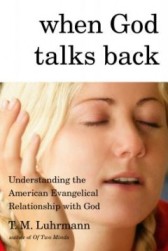
Tanya Luhrmann, When God Talks Back

Tanya M. Luhrmann, When God Talks Back: Understanding the American Evangelical Relationship with God (New York: Vintage, 2012).

Adam Laats’s testimonial for his creation of I love you but you’re going to hell was one of the most refreshing perspectives I’ve read in a long time.  Laats’ roots in Boston—having, what those of us living in the “fly-over” states might skeptically be inclined to see as the judgment of a  limited, Northeastern Liberal metropolitan view—make for interesting reading given his apparent surprise at thoughts and tendencies of ‘Red State’ America. In short, the general tone sounds something like—”these creatures really still exist?!”  In fact, as I suppose Laats has encountered through reader feedback, such creatures not only exist but make up a good bit of the Union.Countering Laats, those of us raised where ‘olde-timey’ religion has never faded, and where it remains an assumed keystone of responsible civic participation, raise an eyebrow to what we see as shortsighted judgment of those disinclined to ever value living in the interior.  Calming our nervous eye, Laats is on the right track.  His earnestness rings true.  Try to figure these curious people out.  Know where people are coming from.  But then what?  Historians are great at drawing on the past to inform the present.  Often, due to the normal purview of their back-looking view, they’re not as good at analyzing the dynamics of here and now.

The American relationship to God has not been static as historians show well.  Unabashed liberal  theologians such as Marcus Borg and sociologists such as Robert Putnam and David Campbell show that the American response to the sacred has been changing.  As Putnam and Campbell show most clearly, the old “Mainline” Christianity of Laats’ and many other’s childhood has eroded.  Congregations reduced by half in many cases over the past half century, the “Mainline” is Main no longer.  American Protestantism has changed dramatically in recent decades, ever more and more defined by the new Evangelicalism featured in T.M. Luhrmann’s When God Talks Back.

As Luhrmann sees it, “this is an important story because the rift between the believers and non-believers has grown so wide that it can be difficult for one side to respect the other.  Since evangelical Christianity emerged as a force in American culture, and especially since the younger George Bush rode a Christian wave into office, non-evangelical observers transfixed by the change in the American religious landscape.  Many have been horrified by what they take to be naïve and unthinking false beliefs, and alarmed by the nature of this modern God” (p. xv).

When God Talks Back follows the emergence of the rapidly growing neo charismatic evangelical movement in the U.S. through the lives, thoughts, and hopes of dozens of fellow church goers.  Luhrmann, a psychological anthropologist, presents a salient answer to those ILYBYGTH readers who wonder not only how such people exist, but how such views are cultivated.  Luhrmann’s work is ethnographic—she became a congregant of the Vineyard Church in a number of U.S. cities over a few years.  Countering some of Laats’ personal narrative, and further deflating modernist hopes that science and theories of progress would dissolve American religious commitment in time, Luhrmann shows that neo charismatic Evangelicalism is spreading throughout the U.S.—including major urban areas.  “There are pockets of liberal Christianity left in America and Europe,  but Christianity around the world has exploded in its seemingly least liberal and most magical form—in charismatic Christianities that take Biblical miracles at face value and treat the Holy Spirit as if it had a voltage” (p. 302).

Underscoring Luhrmann’s work, and worth what is a sometimes lengthy and ranging ethnographic treatment of Vineyard Church members, is the strongly theorized, yet easily digestible insight about science, faith, and the near American future.  The neo-Evangelicalism explored in Luhrmann’s work points strongly to a theory of religious practice—of knowing from doing religion—rather than the usually scientistic efforts of explaining Evangelicalism through evaluation of epistemological pathways of coming to know.

As Luhrmann explains, “…what I saw was that coming to a committed belief in God was more like learning to do something than to think something.  I would describe what I saw as a theory of attentional learning—that the way you learn to pay attention determines your experience of God.  More precisely, … people learn specific ways of attending to their minds and their emotions to find evidence of God, and that both what they attend to and how they attend changes their experience of their minds, ad that as a result, they begin to experience a real, external, interacting living presence” (p. xxi).

What unfolds chapter by chapter is a unique and deeply insightful look into the social practice of being an Evangelical Christian in early 21st century America.  As Luhrmann sees it, and given my own experience working and talking with creationists, such views are much more saliently explainable once you come to acknowledge the social support evangelicals get from their churches, appended by the reality of time allocation.  As Luhrmann makes a convincing case, being an Evangelical in today’s charismatic style—through the many, emotionally exuberant hours of praise and worship—changes one’s style of thinking.  Like Aristotelian phronesis, one can become quite good—a master—at the virtues of evangelical worship regardless of whether liberal America thinks it’s silly, backward, or indicative of sloppy thinking.

“They seemed to think about sensing God more or less the way we think about sophisticated expertise in any field: that repeated exposure and attention, coupled with specific training, helps the expert see things that are really present but that the raw observer cannot, and that some experts are more expert than others.  A sonogram technician looks at the wavy grey blur on the screen and sees a healthy boy.  This is not a matter of taste or aesthetic judgment: there is, or is not, a boy in the woman’s womb, and the technician can see evidence for the fact in a picture that leaves the expectant mother bewildered.  And a very good technician sees details that a merely competent one cannot” (p. 60).

In fact Luhrmann’s work offers another compelling insight into the durability of evangelical christianity in the early 21st century American milieu.  Countering the shrillness of some “New Atheists” such as Richard Dawkins, etc., Luhrmann repeatedly follows evangelicals through life trials for which their church homes offer not only a sense of purpose, but a foil to those who might critique religious practice as being an inadequate explanatory matrix to respond to the world.  As Luhrmann makes clear, “in some quite fundamental way, modern believers don’t need religion to explain anything at all.  They have plenty of scientific accounts for why the world is as it is and why some bodies rather than others fall ill.  What they want from faith is to feel better than they did without faith.  They want a sense of purpose; they want to know that what they do is not meaningless” (p. 295).

Luhrmann’s book then is an invitation to those willing to suspend their critique of Christian America’s current form in favor of a an exploration of how and why it currently comes to be.


DAVID LONG is an anthropologist who studies the American relationship towards science, particularly as it unfolds in schools and universities.  His work examines the role of religious faith, social class, ethnicity, and gender in people’s lives as they relate to science.   He is the author of Evolution and religion in American education: an ethnography (Springer 2011), where he followed a cohort of college students, many of whom were Creationists, documenting the rationales and anxieties they encountered while thinking and talking about evolution.  He is currently conducting longitudinal research on the administrative decision making in K-12 schools which does or does not support science teaching.  Dr. Long currently directs implementation research for the Virginia Initiative for Science Teaching and Achievement at George Mason University.  He can be reached at dlong9@gmu.edu