God is still alive and kicking (and throwing, and running, and maybe even tackling) on American school football fields, a lively Christian faith born on the gridiron and ministered to by coaches, not pastors.
evangelical Christians should acknowledge the profound damage that’s being done to their movement by its braided political relationship—its love affair, to bring us back to the words of Ralph Reed—with a president who is an ethical and moral wreck.
the era seems to be passing when reasonable people will believe that just because someone made a bunch of money helping commercialize a revolutionary information-searching algorithm that they have a chance in hell of reforming education—or some other unrelated field.
Not getting it: Pundits keep missing the point on charter schools and the 2020 race.
“The stereotypes of the sector — there’s a reality behind them,” Mr. Buery said, referring to criticism of how charters handle discipline, race and politics. “It’s up to us to demonstrate, visibly, that we are better than the stereotype and striving to be better than what we are.”
I’ve been trying to think of one for a long time and I think I’ve finally found an analogy that fits. Let me know: Does this comparison help you understand the difficult pickle in which politically liberal white evangelicals find themselves? Or did you have to grow up watching hockey for it to make sense?
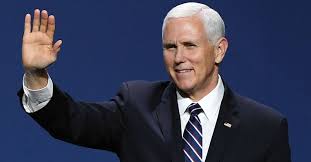
At Taylor University, too, liberal students and faculty have protested against the school’s welcome of VP Mike Pence. Several dozen students walked out when Pence took the podium at their commencement ceremony. At least one student (at the 1:27 mark in the video above) refused to shake Pence’s hand.
As SAGLRROILYBYGTH may recall, I don’t share the optimism of some liberal white evangelicals that we are at the start of a new age in America’s culture wars, one with a vibrant “evangelical left,” one in which evangelical religion frees itself from its pact with conservative politics.
Rather, I think these recent higher-ed dilemmas highlight the ultimate weakness of politically liberal white evangelicalism.
Before I lay out my analogy, I should repeat that I don’t have any skin in this game. I’m no evangelical myself, liberal or otherwise. My personal politics certainly tip toward the progressive, so I’m more in tune with liberal evangelicals than conservative ones, but I myself can’t claim to share in the travails of liberal evangelical friends, though I admire them.
From the bleachers, then, I’ve been wondering why politics has been so difficult for politically liberal evangelicals for the past fifty years. As David Swartz has explored so well, the “evangelical left” has always struggled to gain electoral traction. From Mark Hatfield to Pete Buttigieg, from Jim Wallis to John Alexander, liberal evangelicals have often attracted enthusiastic support, but not huge numbers.
Why?
I think I have finally found an analogy that makes sense. The evangelical left is in a similar position to hockey purists who want to ban fighting.
Think about it: In many ways, the anti-fighting faction has a strong case. They argue that the sport is being hurt by the constant fighting, that brutish “enforcers” are kept on team rosters just to intimidate the opposition. The anti-fight faction can point to decades of expert opinion on their side, including a strong 1988 anti-fight statement from the Canadian Academy of Sport and Exercise Medicine. The constant fights, experts agree, are killing the game of hockey. At the college and youth levels, fighting has significantly decreased.
Yet fighting retains its revered unofficial status in the NHL. Why?
For one thing, fans love it. For many hockey lovers, fights are the big attraction, not an unfortunate exception. Indeed, I would wager than many hockey fans have no idea that one could separate fighting from hockey. And it’s not only the fans who love it. Players, coaches, advertisers, team owners…all of them consider fights to be a central part of the appeal of professional hockey.
And here’s the kicker: People who love the fights support them with their dollars. People who don’t like the fights have an easy option; they can just stop watching. Why would the governing body of the National Hockey League listen to the anti-fight faction—the group that is likely to leave the sport—instead of the pro-fight faction—the group that is invested for the long haul?
So forgive me if I’m stretching this analogy too far, but I think it helps me understand the ticklish dilemma of politically liberal white evangelicalism. Like the anti-fight hockey faction, liberal evangelicals have a very easy door out, but a very difficult, slippery, obstacle-filled uphill climb to change things.
I sympathize. I’m no evangelical myself, but I truly sympathize with all the caring, thoughtful, engaged evangelicals out there who have a hard time seeing the ugly truth. But all the sympathy in the world doesn’t make the truth less true, or any less ugly.
Love him or hate him, Pence really does represent American evangelical values.
We saw it again this week in the news from Indiana. Writing in the Washington Post, Amy Peterson lamented the choice of Vice President Mike Pence to give the commencement speech at evangelical Taylor University.
Peterson was absolutely right that the choice of Pence serves as a signal to evangelicals of the kind of institution Taylor wants to be. She was definitely correct in suggesting that Pence sides with Taylor’s underground conservatives, evangelicals who want their institution to enforce traditional sexual norms and starchy moral codes.
But Peterson makes a common mistake in her conclusion. She reports that many faculty members and students at Taylor shared her dismay at the choice of Pence. She ends on this hopeful note,
If the uproar at Taylor this week is any indication, white evangelicals may not be such a monolithic voting bloc the next time around.
But that’s just it. The uproar at Taylor is NOT a fair indication of the way white evangelicals think. Or vote.
As Slacktivist Fred Clark calls it, “faculty lounge” evangelicalism is not a fair measure of evangelicalism as a whole. In other words, evangelical intellectuals are, by definition, not average. Their ideas about “real” evangelicalism do not match real American “evangelicalism.” As Clark put it,
the evangelicals of the faculty lounge cannot speak for most white evangelicals.
We’ve seen it over and over again. Not just in the twentieth century, as I examined in Fundamentalist U, but in the past five years. And not just at the more politically conservative schools such as Liberty—though it has been dominant there—but at “faculty-lounge” strongholds such as Wheaton. Just ask Larycia Hawkins.
This is not only a problem for evangelical academics, of course. I remember a hastily-assembled conference at my (very secular) home institution in November, 2016. A group of historians scrambled to put Trump’s election victory in context. We just couldn’t find any way to make good sense of it. Our vision of American values and American voting just didn’t match reality. But our confusion couldn’t change the fact that large numbers of Americans seemed to prefer Trump’s brand of toxic Americanism.
Evangelical academics are in the same boat. When they encourage their fellow white evangelicals not to put their nationalism before their religion, like Randy Beckum did, they are shocked to find such notions controversial. Or, as Methodists found out recently, when they assume their ideas about sexuality are the world-wide norm, they get harshly disabused of such notions.
The Taylor/Pence story hits the same ugly notes. I sympathize entirely with Amy Peterson and her friends and allies at Taylor University. I wish evangelical institutions would embrace the best traditions of evangelical religion. I hope—though I don’t pray—that large numbers of white evangelicals reject Trump’s toxic Americanism at the polls in 2020.
In the end, however, we all need to face realities. The faculty and some students at Taylor might reel in dismay at the university’s decision to honor Mike Pence. But in the end, as Peterson recounts, lots of Taylor students and faculty loved it. And the school’s administrators, as always desperate to reassure students and families that they represent “real” evangelical values, decided that Pence embodied those values. When pollsters explore beyond the faculty lounge, they find that white evangelicals prefer Pence to Peterson.
every time that the white community—especially Christians—failed to confront racism in its everyday, mundane forms, they created a context of compromise that allowed for an extreme act of racial terror like planting dynamite at a church. That’s the idea of complicity. It’s not that every Christian was a foaming-at-the-mouth racist hurling racial slurs and burning crosses on peoples’ lawns.
a warning sign for those concerned about the possible waning of evangelicalism in the United States. While current survey data says that white evangelicals have not experienced statistically significant population declines in the last decade, this will likely not continue into the future.
Christianity as merely a family tradition only requires maintaining the tradition. . . . Sadly, many people in the Bible Belt are haunted by the idea of Christ, while not understanding His love for them.
while city dogs enjoy ever more doggy parks, doggy play dates and dog-friendly shops and stores, their elevated status burdens them with human-dominated constraints.
Many [conservatives] are repulsed by [Trump’s] crudity, thin-skinned nature, and vitriolic personal attacks. . . . But—and this is crucial—conservatives and many independents recognize Trump’s biggest achievement, beyond strengthening the economy and rebuilding the military, is his persistent effort to roll back the administrative state, with its endless regulations and executive orders.
What I think is much more disturbing is this enthusiastic embrace of Trump. That I think is inexcusable. Because Christians, above all, ought to be people who understand that they’re citizens of a different city. There ought to be some distance from politics and the ability to speak truth to power. It’s fine for Christians to praise particular court appointments and particular policies, but when Trump engages in an effort to annihilate truth, when he engages in dehumanizing tactics, when he is cruel, when he unleashes his cascade of lies, they ought to speak to that too and unfortunately a lot of prominent white evangelical Christians don’t.
In 2018 the Foundation for Individual Rights in Education (FIRE), an effective champion of free speech on campuses, recorded just nine attempts at disinviting or shutting down speakers. In the same year, 20 — if you’re keeping score, that’s 11 more than nine — colleges and universities adopted versions of the University of Chicago’s model principles of free expression. . . . None of that would seem to warrant sending in the feds to manage speech at our colleges and universities. Granted, our standards for declaring a national emergency have grown lax, but this is ridiculous.
They want to take your pickup truck! They want to rebuild your home! They want to take away your hamburgers! This is what Stalin dreamt about but never achieved!
Another big week. Rough weather outside and culture-war storms on the interwebs. Here are a few of the biggest stories that caught our ILYBYGTH attention:
Friends, please hear me, we Africans are not afraid of our sisters and brothers who identify as lesbian, gay, bi-sexual, transgendered, questioning, or queer. We love them and we hope the best for them. But we know of no compelling arguments for forsaking our church’s understanding of Scripture and the teachings of the church universal.
And then please hear me when I say as graciously as I can: we Africans are not children in need of western enlightenment when it comes to the church’s sexual ethics. We do not need to hear a progressive U.S. bishop lecture us about our need to “grow up.”
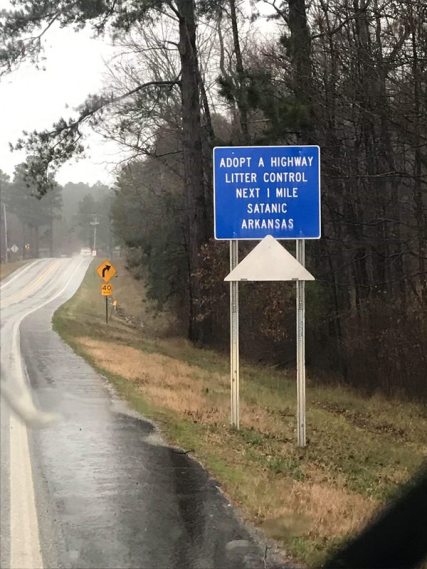
Are colleges addicted to the internet? Are charter schools “public?” Do Satanists pick up litter? We read with interest the answers to all these questions and more, in our weekly round-up of news ‘n’ views:
White evangelical women . . . rally behind Melania Trump and Ivanka Trump and equate their conservative version of traditional femininity with grace and elegance. . . . The seeming paradox of white evangelical women backing Trump really isn’t a paradox at all. In fact, their support says more about the state of white evangelical Christianity in the US than it does about anything else.
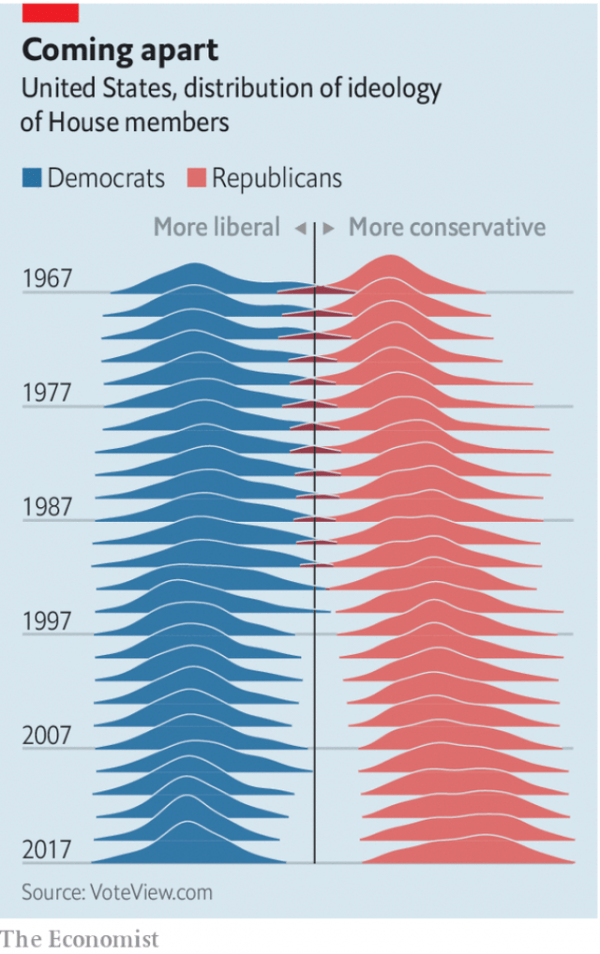
a significant minority of Americans seldom or never meet people of another race. They dislike interacting with people who don’t share their political beliefs. And when they imagine the life they want for their children, they prize sameness, not difference. . . . When asked how they would feel about their child marrying someone from the opposite political party, 45 percent of Democrats said they would be unhappy, compared with 35 percent of Republicans.
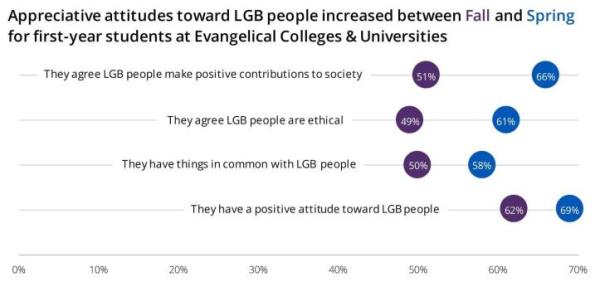
a whopping 85% of incoming students to evangelical colleges and universities find it at least moderately important that their campuses are welcoming toward LGBT people, with 44% finding it very important.
Like many heretics, Falwell and his fellow evangelical Trump apologists are on their way to founding a new religion, one in direct conflict with the old.


 SOCIALISM 2020
 Country dog? City dog? An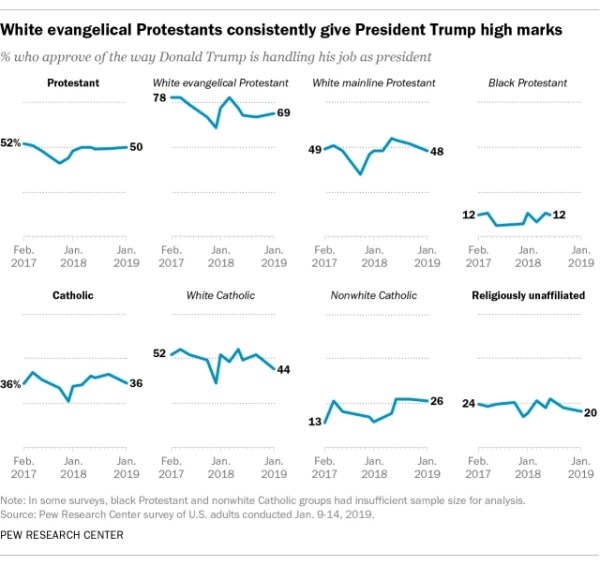








 I Love You but You're Going to Hell