Homeschooling: A Scheme to Take Over America

What do Sarah Palin, Gordon College, and Christian homeschoolers have in common? According to evangelical-turned-atheist Frank Schaeffer, they are all “still fighting a religious war against their own country.” I’m no homeschooler or Palin fan, but Schaeffer’s accusations just don’t hold up to historical scrutiny.

Schaeffer’s most recent broadside appeared in Salon. In his article, Schaeffer blasted a wide range of “far-right” institutions. When parents choose to pull their kids out of public schools to indoctrinate them at home, Schaeffer charged, it amounts to nothing less than “virtual civil war carried on by other means.” As Schaeffer put it,

the evangelical schools and home school movement were, by design, founded to undermine a secular and free vision of America and replace it by stealth with a form of theocracy.

According to Schaeffer, this nefarious plot spreads beyond the anti-democratic practice of homeschooling. The “far-right,” Schaeffer insists, turns women into submissive breeding mares. The Right has opened its own colleges and universities as part of its plan to take over civil society. Jerry Falwell himself, Schaeffer relates, explained his reasons for opening Liberty Law School. “Frank,” Falwell confided, “we’re going to train a new generation of judges to change America!”

Is the sky really falling?

Is the sky really falling?

Inspired by the apocalyptic rhetoric of wild-eyed prophets such as Rousas Rushdoony, and marshalled by irresponsible self-aggrandizers such as Sarah Palin, the Christian Right will not stop until it has taken over. Conservative religious folks, Schaeffer insists, want nothing less than to impose a rigid theocracy on the United States. They will not be content until they have dictated the morals and mores of their neighbors as well as those of their children.

Are Schaeffer’s charges fair?

Certainly, he has the right to boast of his insider connections. His father, the late Francis Schaeffer, really did inspire a fair bit of the social philosophy of today’s conservative evangelicals. Schaeffer Senior articulated in the 1970s and 1980s the notion that US culture had been infiltrated by a sneaky “secular humanist” worldview. In order to properly live as Christians, then, Schaeffer Senior advocated a wide-ranging rejection of modern social mores. Perhaps most important for day-to-day culture-war politics, Schaeffer Senior along with C. Everett Koop denounced abortion rights as equivalent to murder.

At times, Frank Schaeffer seems blinded by his own imagined influence. In this Salon article, for example, he shamelessly name-drops his connections to writers such as Rousas Rushdoony and Mary Pride. He claims to have been “instrumental” in bringing together the New Christian Right in the 1970s and 1980s.

Such unpleasantness aside, however, do Schaeffer’s charges stick? Are Christian homeschooling and evangelical higher education part of a long-ranging plot to undermine American traditions of pluralism and tolerance?

Short answer: No.

Before I offer a few examples of the ways Schaeffer’s breathless expose doesn’t match reality, let me explain my background for those who are new to ILYBYGTH. I am no apologist for fundamentalist Christianity. I’m no fundamentalist, not even a former fundamentalist. When it comes down to it, I will fight hard against fundamentalist-friendly school rules about prayer or sex ed. I don’t homeschool my kid. I don’t attend or teach at an evangelical college. I’m only a mild-mannered historian, with the sole goal of deflating hysterical culture-war accusations.

With that in mind, let’s take a closer look at some of Schaeffer’s claims.

First, is Christian homeschooling really as sinister as he claims? Schaeffer suggests that homeschoolers have been inspired by the work of leaders such as Mary Pride and Nancy Leigh DeMoss. The point of homeschooling, Schaeffer charges, is to train girls and women to submit to fathers and husbands, to glory in their second-class role as child-bearers and house-keepers.

There are indeed homeschoolers who adopt these notions. But anyone who follows the work of historian Milton Gaither can tell you that the world of homeschooling—even the more limited world of conservative evangelical homeschooling—is a kaleidoscope of missions, strategies, and techniques. I don’t doubt that some Christian parents hope to impose a rigid patriarchal vision on their children. What falls apart, though, when looked at carefully, is the notion that these folks are somehow the “real” reason behind Christian homeschooling. What falls apart are accusations that Christian homeschoolers are some sort of monolithic force scheming to take over the rest of our society. In reality, Christian homeschoolers are a remarkably fractious bunch.

Second, what about Rousas Rushdoony? As Schaeffer correctly points out, Rushdoony was the intellectual force behind “Reconstructionist” theology. In short, Rushdoony believed that Christians should impose true Christian morality on all of society, including Old-Testament-inspired laws about sex and conduct. In reality, though, the direct influence of Rushdoony’s social ideas has been rather limited. As scholars such as Michael J. McVicar have argued, Rushdoony has had far more influence on liberal pundits than on the conservative rank-and-file.

Next, are evangelical colleges really training a generation of conservative culture warriors? As I conduct the research for my next book, I’m struck by the ways evangelical colleges have been battlegrounds more than training centers. In other words, evangelical colleges and universities have had a hard time figuring out what they are doing. They are hardly in the business of cranking out thousands of mindless drones to push right-wing culture-war agendas.

For one thing, evangelical colleges have usually insisted on maintaining intellectual respectability in the eyes of non-evangelical scholars. Even such anti-accreditation schools as Bob Jones University have used outside measures such as the Graduate Record Examination to prove their academic bona fides. As historian Michael S. Hamilton noted in his brilliant study of Wheaton College, this desire prompted Wheaton in the 1930s to invite outside evaluators such as John Dale Russell of the University of Chicago to suggest changes at the “Fundamentalist Harvard.” This need for intellectual legitimacy in the eyes of mainstream intellectuals has continually pulled fundamentalist schools closer to the mainstream. Such colleges—even staunchly “unusual” ones like Bob Jones—have been much more similar to mainstream colleges than folks like Schaeffer admit.

Schaeffer uses Gordon College in Massachusetts as an example of the ways Christian colleges train new generations of young people to see the US government as evil. But as I found in my recent trip to the Gordon College archives, the community at Gordon has always been divided about the purposes of higher education. Back in the 1960s, Gordon College students held protests, sit-ins, and “sleep-ins” to change Gordon’s policies and attitudes. As one student put it during a 1968 protest, “we want to be treated like real college students.” How did the evangelical administration respond? By commending the students’ commitment to “activism over apathy.” To my ears, that does not sound like a brutal and all-encompassing mind-control approach.

The world of conservative evangelicalism, of “fundamentalism,” is one of continuous divisive tension. There is no fundamentalist conspiracy of the sort Schaeffer describes. Or, to be more specific, there are such conspiracies, but there are so many of them, and they disagree with one another so ferociously, that the threat Schaeffer warns us about is more fiction than fact.

Does Christian homeschooling really serve as a first step in a long-ranging scheme to take over America? Only in the fevered imaginings of former fundamentalists such as Frank Schaeffer.


From the Archives: Fashion & Calvin

As an outsider to evangelicalism, one of the biggest surprises I’ve found is the new hipness of Calvin. No, not THAT fashionable Calvin. Not that one, either. For the past decade or so, Christian intellectuals have been thrilled or horrified by the very old theology of Ur-Protestant John Calvin. As I continue my research into the twentieth-century history of evangelical higher education, I see that the trendiness of Calvinism has longer twentieth-century roots.

Not THAT fashionable Calvin...

Not THAT fashionable Calvin…

Of course, we all know Calvinism as such has a much longer American history. In the early British colonies of Massachusetts and Connecticut, Calvinism served as the de facto governing theology. As time went on, dissenters blasted the rigid dictates of predestination. Most famously, in the early 1800s, febrile anti-Calvinist Lorenzo Dow famously warned, with Calvinism

You can and you can’t

You shall and you shan’t-

You will and you won’t-

And you will be damned if you do-

And you will be damned if you don’t.

As the Second Great Awakening unfolded in Dow’s era, some might think that Calvinism’s days would be numbered. The notion that God has predestined all things and all souls can sound a little intimidating to go-getting Americans. It might be a tough sell, one might think, to convince twenty-first century Americans to embrace such a 16th-century idea. Americans, we might think, prefer the anti-Calvinist Arminian idea that people can choose to embrace the grace that God freely offers.

Not that one either.

Not that one either.

But as Collin Hansen noticed in an attention-grabbing article several years ago in Christianity Today, Calvinism has been making a steady comeback among earnest American evangelicals. The “Young, Restless, and Reformed,” as Hansen called them, had become the most exciting scholars at several leading evangelical seminaries. Writers such as John Piper had fired the hearts of young intellectuals with his “New Calvinism.”

To folks like me—secular types heedless about the internecine theological disputes among evangelicals—such storms raged utterly unnoticed. We were not aware of earnest groups of scholars debating TULIPs and other blooms in the garden of predestination.

In my new research, I’m finding that the “New” Calvinism has always played a role in evangelical intellectual life. Just as secular young folks might continually rediscover the works of Frantz Fanon or Antonio Gramsci, so each new generation of evangelical intellectual seems to feel it has found something radically new and exciting in Calvinism.

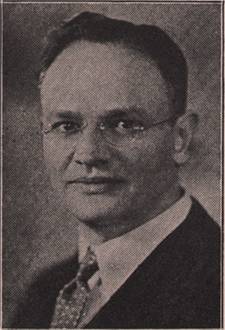
In my archive work today, I came across an echo of this sort of intellectual excitement from the 1930s. I’m at storied Gordon College this week, in scenic Wenham, Massachusetts. After I happily survived the drive through storms of Boston drivers, I dug into the papers of second President Nathan R. Wood.

In 1934, Wood wrote to Loraine Boettner, author of The Reformed Doctrine of Predestination. Wow, Wood wrote (in essence). Wood’s actual words were these:

The thinking of the Christian world has in general drifted a long way to the left, and such thinking as yours will be a tonic and should help to bring back the swing of the pendulum from that extreme. I am a great admirer of Calvin. I do not promise to follow him at certain points, but if anyone could make me do it, it would be you yourself in your candid, devout and virile statement of that great system.

At Gordon College in the 1930s, just as at seminaries today, Calvinism has always been a lurking fashion among evangelical intellectuals. It might have experienced an upsurge in the past few years, as Hansen argues, but that upsurge itself is nothing more, it seems, than a perpetually reoccurring enthusiasm over the stern doctrine.

MOOCing Jesus

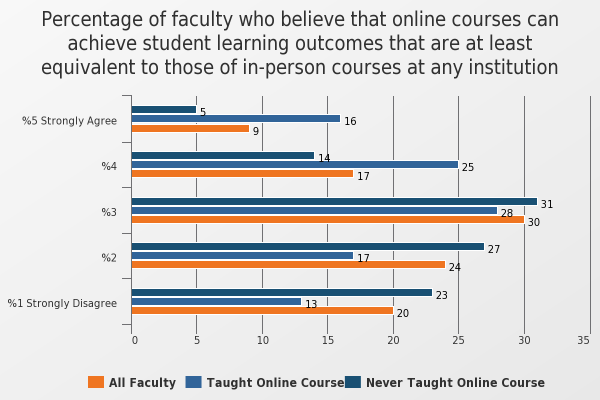
Does online education work? A new survey of college faculty by Gallup for Inside Higher Education offers an unstartling new answer: It depends. Here at ILYBYGTH, we have a different question: Does online education work for conservative religious colleges?

After all, as I’m exploring in my new book, conservative religious colleges have always had a different goal from secular schools. Instead of just hoping to prepare students for careers and intelligent life, conservative schools have also intended to bolster the faith of their students. They have worried that any change might lead them into a slow slide into secularism. As a corollary, most conservative schools have maintained stricter lifestyle rules over students than secular colleges have. Conservative schools have insisted that classes be led faithfully, not just competently. But can they do this in online classes?

The survey of faculty for Inside Higher Ed includes some interesting points. [You can click to get the entire report, but you have to register.] In brief, faculty remain unconvinced that online education can deliver equal results to old-fashioned in-person classes. Online classes might do a good job—in some cases—at delivering content. But most faculty agree: there is something important lost when face-to-face interaction isn’t a leading part of university classes.

IHE CHART

Source: Carl Straumsheim, “Online Ed Skepticism and Self-Sufficiency: Survey of Faculty Views on Technology,” Inside Higher Education, October 29, 2014.

The survey specifically excluded some of the schools we’re interested in, what it calls “Bible colleges and seminaries.” And none of the questions included anything about student faith.

But no one interested in online higher education these days can ignore the fundamentalist elephant in the room. Liberty University, a school founded by Jerry Falwell in 1971, now claims almost 100,000 online students. In addition to standard online coursework, Liberty offers online spiritual help, too. Students can join online prayer groups and Bible blogs.

But this menu of religious fare does not seem to match the traditional goals of conservative religious colleges. At most schools, the faith of students has been the primary concern, not merely an additional click on a webpage. And most college administrators have been keenly worried about sliding into heterodoxy and secularism. In his brilliant 1994 dissertation about Wheaton College, historian Michael Hamilton explained this sentiment like this:

The paradigm that has dominated Wheaton through the [twentieth] century holds that colleges, more than any other type of institution, are highly susceptible to change, and that change can only move in one direction—from orthodoxy toward apostasy. . . . The very process of change, no matter how slow and benign it may seem at first, will always move the college in a secular direction, inevitably gathering momentum and becoming unstoppable, ending only when secularization is complete.

This mindset, I believe, is common among conservative evangelical schools. From Wheaton, to Biola, to Gordon, to more conservative schools such as Bob Jones and Liberty…all have worried that change will equal declension. All have been concerned, first and foremost, that novelty will lead faculty and students to abandon their faiths.

So here’s the question we wished Inside Higher Ed had asked professors at conservative schools: How can online education remain orthodox? How can the faith of students be preserved if student/teacher interaction is weakened?

And perhaps this is the toughest question for the folks at Liberty University: Has their wildly successful pursuit of online education changed their goal? Has Liberty abandoned its religious mission? Or, rather, could this massive online presence be compared to the televangelism of an earlier generation? Could the thousands of online students be seen as an enormous “mission field” for Liberty’s evangelical message?

Bryan College: Creationism Déjà vu All Over Again

It’s all over but the shouting.  That’s the news from Bryan College.  Thanks to the ever-watchful Sensuous Curmudgeon, we see that Bryan College has settled its legal dispute with two of its professors.  The creationist courtroom drama may have been avoided, but we are left with one question: If this is part of a predictable pattern at conservative evangelical colleges, can we learn a better way to handle each new episode?

Why can't we all just get along...?

Why can’t we all just get along…?

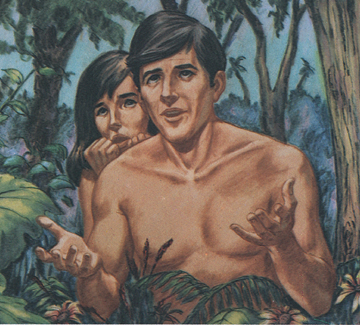
Two Bryan College professors, Stephen Barnett and Steven DeGeorge, have settled their lawsuit with the school, according to the local newspaper.  Readers may remember that the school abruptly changed its statement of faith to insist that Adam and Eve did not descend from another species.  Faculty members had to make a tough decision: Could they agree to the newly explicit language about humanity’s origins?  Barnett and DeGeorge argued that it was not fair—nor even legal—for the school to impose such a decision on faculty.  It appears they have decided to drop the lawsuit, though the terms of this settlement have not been made public.

Why did Bryan’s leadership feel a need to make such a change?  They were in a tight spot.  As I’ve argued before, leading young-earth creationists such as Ken Ham are able to wield outsized influence on evangelical colleges.  Even the whiff of suspicion that a school has abandoned the true faith is enough to drive away students and their precious tuition dollars.  At Bryan—and I’m claiming no inside knowledge here, just a historian’s best guess—the leadership felt obliged to shore up its orthodox creationist bona fides.

This tension is nothing new at evangelical colleges.  Perhaps the most startling example of the deja-vu nature of the Bryan situation is an eerily similar case from Wheaton College in 1961.  In that case, faculty such as Russell Mixter hosted a conference on origins.  Whatever actually occurred at that meeting, rumors flew that Wheaton had opened itself to the teaching of evolution.  As a result, anxious trustees rammed through a change to the obligatory faculty creed.  From then on, faculty had to attest to their belief in “an historical Adam and an historical Eve, the parents of the human race, who were created by God and not descended from lower forms of life.”

Back then, Mixter signed.  He was more interested in the broad outlines of what he called “progressive creationism” than the details of the Garden of Eden.  But the nervousness of the leadership at Wheaton was palpable.  In addition to the change in creed, the school took out big advertisements in evangelical magazines such as Christian Life that trumpeted Wheaton’s continuing creationism.

The stories are so similar that it is hard to believe they are separated by over fifty years.  And they lead us to obvious questions: Why do evangelical colleges have such anxiety about their reputations as creationist colleges?  Why do leaders feel such a compelling need to publicize their continuing orthodoxy?  And perhaps most important, if these controversies are so predictable, why is there no better way to handle them?

As historian Michael Hamilton has argued about Wheaton, “Anxiety about constituent response hangs over virtually every decision the college has made since 1925.”  The same could be said for Bryan and every other school that relies on conservative evangelical families for its student bodies.

Each of these schools’ identities, after all, relied on the notion that they have been “safe” alternatives to mainstream schools.  At the more conservative Bob Jones University, for example, founder Bob Jones promised a different sort of college experience.  In 1928, just a few years after the school was founded, Jones promised,

fathers and mothers who place their sons and daughters in our institution can go to sleep at night with no haunting fear that some skeptical teacher will steal the faith of their precious children.

And even though Wheaton College was a very different sort of evangelical school, this central notion was the same.  In the 1930s, Wheaton advertised itself as a “safe college for young people.”

This pledge means more than just institutional window-dressing.  For conservative evangelical schools, the issue of orthodoxy looms large.  This stretches beyond the issue of creationism.  As we see in cases such as the recent controversy at Gordon College, ideas about sexuality also prove intensely controversial.  If schools want to change their policies, or sometimes even to clarify existing policies, they risk sparking a no-holds-barred fight that might threaten the continuing existence of their college.

No wonder school leaders are nervous.

The most recent episode at Bryan seems to have limped its way off the public stage.  But not without resentment, bitterness, and feelings of betrayal all around.  So we are left with a few questions for the leaders of conservative colleges: If this is such a central organizing principle of conservative orthodox colleges, why do they seem never to learn?  Why does today’s controversy at Bryan copy the pattern of Wheaton’s in 1961 so exactly?  Is there no better way to handle this predictable tension?

Evangelicals and Homosexuality on the College Campus

Maybe President Lindsay feels better knowing that only high pressure can create diamonds. Because the leader of evangelical Gordon College is feeling intense pressure from two sides right now. On one hand, the school’s accrediting agency has threatened to take away its accreditation if Gordon does not revise its policy on homosexuality. On the other, the school’s conservative supporters insist the policy must stay in place. If history is any guide, it appears one group might make the crucial difference in this case.

Are all welcome?  MUST all be welcome?

Are all welcome? MUST all be welcome?

This Gordon-ian knot is one that all conservative evangelical colleges have tried to pick apart. Schools such as these are in a pickle: they need to remain intellectually respectable and financially viable, yet a decision either way threatens both intellectual consistency and the bottom line.

As I’m finding as I research my new book, similar schools have had a difficult time walking this line. In the 1930s, for example, Wheaton College leaders moved fast to bring Wheaton up to accreditors’ standards. As historian Michael Hamilton argued, the president at the time, Oliver Buswell, viewed accreditation as more than just a piece of paper. To Buswell, accreditation was the “one of the best ways to earn intellectual respect for fundamentalist Christianity.”

But college leaders such as Buswell were also under intense pressure to maintain both the appearance and the reality of theological steadfastness. Leaders needed to maintain the confidence of the evangelical community that their schools were not slipping into secularism. In 1929, for instance, Buswell withdrew from publication a controversial book he had written. Why? As he explained to a colleague, above all Buswell felt the need to keep “the confidence of fundamentalist leaders . . . in the administration of Wheaton College.”

Losing either accreditation or the respect of the “fundamentalist” community could mean a wasting death for an evangelical college. And the two have often pushed in opposite directions.

WWBD?

WWBD?

Much has changed since then, but President Lindsay at Gordon College finds himself coming under similar pressure from both sides. [Full disclosure: I worked with Michael Lindsay in the Spencer Foundation/National Academy of Education Postdoctoral Fellows program. I consider him a friend and colleague.]

For those who are just joining us, this story began back in July, when President Lindsay signed an open letter to President Obama about religious exemptions to an anti-discrimination law. Now, the question has become whether Gordon’s Statement on Life and Conduct violates the rules of its accrediting agency.

At issue is the Gordon ban on “homosexual practice.” The New England Association of Schools and Colleges has collaborated with Gordon in setting up a “discernment” group to examine the policy.  (As an aside, we could ask why only this part of the policy has come under investigation. After all, the Gordon policy also bans “blasphemy” and “profanity,” not to mention heterosexual sex outside of marriage. Doesn’t this impinge upon the free speech rights of potential students?)

For a host of reasons, the accrediting agency doesn’t care about blasphemy. But it is threatening to withdraw accreditation over the ban on “homosexual practice.” For Gordon College, loss of accreditation would have serious consequences. Its graduates would not necessarily be considered qualified for graduate school. Nor could they receive student loans backed by the federal government. Perhaps most important, though, loss of accreditation would be a symbolic slap in the face. Gordon would face the challenge of proving its continued intellectual respectability.

But that is not the only pressure facing Gordon right now. Just as President Buswell at Wheaton worried about both mainstream intellectual respectability and credibility within the world of conservative evangelicalism, so President Lindsay faces a double-sided threat.

Beyond accreditation pressure, Lindsay must consider the opinions of the far-flung community of conservative evangelicals. As one conservative pundit wrote recently in the pages of the Christian Post,

To Michael Lindsay, the gifted president of Gordon, and to the board of trustees, I remind you: Many eyes are watching you, knowing that the decisions you make could either strengthen or dishearten many other schools that will soon be put under similar pressure.

As this conservative writer worried, Gordon might be willing to “sell its soul” to maintain accreditation.  If it did, conservative students and parents might take their tuition dollars elsewhere.  But if it doesn’t it might lose accreditation.  Without that sort of mainstream credibility, students and parents might take their tuition dollars elsewhere.

So what is a conservative school leader to do? How can President Lindsay balance the pressure to reform with the pressure to hold fast to the faith once delivered to the saints?

In this case, there is a new wrinkle. Traditionally, alumni are one of the groups most likely to push school leaders to maintain conservative positions. Today, though, some Gordon alumni are hoping to convince Gordon to change its ways. A group of two dozen alums have published a letter encouraging Lindsay to remove any hint of anti-gay discrimination from Gordon’s policies.

In the past alumni have been one of the most vocal groups fighting any change at evangelical colleges. Conservative evangelical colleges have long been keenly aware of the pressures to modernize and secularize. Traditionally, alumni of these schools have been staunch foes of any perceived change, since any change could lead to an utter loss of the school’s steadfast character. Historian Michael Hamilton described this alumni attitude this way:

colleges, more than any other type of institution, are highly susceptible to change, and that change can only move in one direction—from orthodoxy toward apostasy. . . . The very process of change, no matter how slow and benign it may seem at first, will always move the college in a secular direction, inevitably gathering momentum and becoming unstoppable, ending only when secularization is complete.

In Gordon’s case, however, alumni—at least some of them—are pushing in the other direction. It is impossible to predict what will happen at Gordon. The board of trustees may decide this policy needs updating. Or they may not. And President Lindsay might decide that this language is a central part of the school’s evangelical character. Or he may not.

This case highlights the double pressure faced by conservative evangelical colleges. In a sense, they must serve two masters: the pressure to maintain a vague and shifting “respectability” with mainstream institutions; and the pressure to remain bastions of orthodoxy in a world hurtling headlong into secular mayhem.

Obama Persecutes Christian Schools

Does President Obama have it out for conservative evangelical Christians?  Does he plan to crush them by hitting them where it hurts?  In the pages of today’s Christian Post, Michael Zigarelli worries that Obama’s anti-discrimination policy will do just that.  By putting the squeeze on religious colleges, Zigarelli writes, Obama plans to squeeze the life out of conservative evangelicalism.  This sort of conspiracy-theorizing may sound far-out to non-conservatives like me.  But for those who know the history of evangelical education, it might not seem so wacky.

Zigarelli is commenting on the recent controversy at Gordon College in Massachusetts.  As we’ve noted in these pages, President D. Michael Lindsay of Gordon College attracted attention for signing an open letter to President Obama.  In case you missed the story, Lindsay signed the letter requesting an exemption from a planned executive order.  The order would ban discrimination against LGBTQ persons.

For those like me outside of the world of conservative evangelicalism, Lindsay’s attitude sounds an awful lot like a license to discriminate.  If, as Lindsay wrote, Gordon College does not discriminate against gay students and does not plan to start, why would they need such an exemption?

I don’t want to put words in anyone’s mouth, but as I understand it, the evangelicals did not ask to be able to discriminate against anyone, but rather to be able to continue their policy that requires all students and faculty to agree to a goal of chastity outside of marriage.  As we discussed here at ILYBYGTH, to many non-evangelicals and former evangelicals, that seems like a distinction without a difference.

But if we put those sorts of questions to one side for a moment, we can see that Zigarelli’s attitude demonstrates key elements of evangelical thinking.  His op-ed articulates some of the fears of conservative evangelicals.  For many conservatives, Obama’s order means more than just the end to discrimination.  It means the end of conservative evangelicalism in general.  Once conservatives are no longer able to operate their schools and colleges as they see fit, they will no longer be able to educate their children properly.  As Zigarelli concludes ominously,

Empty desks will follow empty pews, at least if this capricious; destabilizing theology is foisted upon our Christian schools. It’s time to take a stand.

To historians, this sort of rhetoric sounds familiar. As I’ve argued in the pages of the Journal of Religious History, conservative evangelicals made very similar sorts of statements after the Supreme Court’s anti-prayer decision in 1963. That school decision prompted conservative evangelicals to shift their thinking about their relationship to the broader American culture. As the editors of the flagship evangelical magazine Christianity Today expressed it, before that decision, they were confident of their roles as leaders of America’s “devout masses.” After the decision, though, they worried that conservative evangelicals had become nothing but a “believing remnant” in a sinful American culture.

For evangelicals, like all other Americans, any loss of control over schooling can signal a loss of control over public life itself. Some of us may scratch our heads and wonder why evangelicals worry so much about President Obama’s planned non-discrimination order. If, as President Lindsay insists, conservative schools don’t discriminate against homosexuals, what do they have to worry about?

Throughout the twentieth century and into today, though, conservative evangelicals have maintained a tense relationship with the wider American culture. Many conservatives believe themselves to be the representatives of the real American mainstream, the “moral majority.” At the same time, however, conservatives see themselves as persecuted outsiders in a twerking culture besotted with sin, sexuality, and secularism. When big public-policy decisions seem to hurt Christian education, evangelicals react vigorously.

Does Obama plan to crush conservative opposition? As Zigarelli admits, such statements may sound “absurd” and “alarmist.” But given the past fifty years of evangelicals’ relationship with public education, the notion that the federal government might take drastic steps that hurt Christian education does not seem absurd or alarmist at all.


Are Christians Too Bigoted to Work With?

You may have seen the headline by now: Christian College Discriminates Against Homosexuals.  And the follow-up: City Cuts Off Christian College.  But isn’t it weirdly ironic that non-religious governments now seem to be repeating the separatist struggles of fundamentalists?  Doesn’t it seem odd that the drive for tolerance pushes pluralists to act like the more extreme religious separatists?

In this case, it was the public decision of Gordon College President D. Michael Lindsay to sign a letter to President Obama that sparked the furor.  [Full disclosure: Lindsay and I worked together as 2009 Spencer/National Academy of Education postdoctoral fellows, and I admire Lindsay personally and consider him a friend and colleague.]  Along with a host of other prominent evangelical leaders and intellectuals, Lindsay asked President Obama for a religious exemption to a planned executive order banning workplace discrimination against homosexuals.

Lindsay’s participation caused a furious reaction.  Gordon alumni and students petitioned Lindsay to retract.  Gordon College’s accrediting agency promised to investigate.  And most notably, the nearby city of Salem, Massachusetts canceled its partnering contract with Gordon to operate an historic city building.

Let me be clear about a couple of points.  First, I personally agree that institutions should not discriminate against homosexuals.  Public governments, especially, have a duty to include all members of society, not only passively, but actively.  IHMO.  Also, I do not wish to argue whether Lindsay’s position is or is not “anti-gay,” since he has publicly insisted that Gordon College does not discriminate against homosexuals.  And though I find it curious, I don’t want to ask why President Lindsay has become the center of this controversy, even though the letter was signed by many other evangelical leaders as well.  Even on my humble little blog, for example, I’ve experienced a surge of search terms such as “D. Michael Lindsay bigot” and “Gordon College Anti Gay.”  Why has Lindsay become the focus in this case?  Why not all the other signatories?

Though interesting, we have to leave such questions aside for now.  From an historical point of view, there is a more interesting aspect to this case.  It seems that those who support tolerance and diversity have, in some ways, adopted the position of the traditionally conservative fundamentalists.

Here’s what I mean: In the twentieth century, conservative Christian colleges carried on a furious and often angry internecine debate about the propriety of partnering with non-Christian institutions.  Schools such as Gordon and Wheaton College earned the vicious denunciation of more conservative schools such as Bob Jones University.  Among the many accusations, more conservative, “fundamentalist” schools often insisted that the more open, “evangelical” schools had tainted themselves by their open association with non-Christian ideas.  Separatist fundamentalists often cited the Bible passage 2 Corinthians, chapter 6, verse 14:

Be ye not unequally yoked together with unbelievers: for what fellowship hath righteousness with unrighteousness? and what communion hath light with darkness?

In order to be truly Christian, separatists argued, believers could not allow themselves to be joined with those who did not share their belief.  So, for instance, when fundamentalist megastar Jerry Falwell worked with conservative Catholics and Jews in the Moral Majority, fundamentalist leaders at Bob Jones University denounced Falwell as the “most dangerous man in America.”

This rigid separatism, indeed, has been one of the hallmarks of American fundamentalism.  Some fundamentalists have insisted that they must practice even a “secondary separation,” not sharing Christian fellowship with other Christians if those other Christians share fellowship with questionable folks.

Now, it seems the city of Salem feels it must practice a strangely similar form of separatism.  As Salem Mayor Kimberly Driscoll informed Gordon College in a recent letter, the city must separate itself from the college.  Why?  Because, Driscoll wrote, Lindsay’s position implied open discrimination against the LGBT community.  The college had every right to do so, Driscoll believed, but the city could no longer be affiliated with such things.  The city’s non-discrimination law, Driscoll informed Lindsay, “prohibits our municipality from contracting with entities that maintain discriminatory practices.”

This is not the only time when the beliefs of liberals and fundamentalists have neatly swapped sides.  In the creation-evolution debates, for example, creationists took over evolutionists’ positions.  As historian Ronald Numbers has pointed out, by the 1990s creationists began appropriating the language of 1920s liberals.  In the 1920s, evolution supporters insisted that teaching only one theory was bigotry.  By the 1990s, creationists started saying the same thing.

In this case, we see a weird and clearly unintentional echo.  Mayor Driscoll feels compelled to separate her government from any entity that practices discrimination against homosexuals.  It is not enough, morally, for her government itself to avoid such discrimination.  The principle of separation seems to have migrated from fundamentalists to their supposedly tolerant opponents.