Hot & Bothered in Binghamton, New York

Clear your calendars! Next Friday Jonathan Zimmerman will be coming to scenic Binghamton to give a talk about his new book.

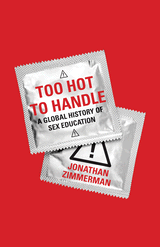
Zimmerman is a prolific historian and public intellectual. You may have read his blockbuster books such as Whose America? Culture Wars in the Public Schools. Now you can get your hands on his latest, Too Hot to Handle: A Global History of Sex Education. You may also have seen him in the pages of the New York Times or on The Daily Show.

Who's for it?

Who’s for it?

Next Friday, May 1st, at 4:15 in the Admissions Center, Binghamton University will host Professor Zimmerman for our 23rd annual Couper Lecture. In the past, this lecture series has brought to our campus such luminaries as Bill Reese, Michael Apple, Maris Vinovskis, and many more.

As the sophisticated and good-looking regular readers of I Love You but You’re Going to Hell (SAGLRROILYBYGTH) are well aware, sex ed is one of the touchiest topics in America’s continuing culture wars. What should schools tell students about sex? How much is too much?

In his new book, Professor Zimmerman explodes the boundaries of these debates. The culture war over sex ed, Zimmerman argues, is not merely between conservatives and liberals in the USA. Rather, worries about the right relationship between sex and children spread from the US to cover the globe during the twentieth century.

So slip on your smarty-pants and come on over to our scenic campus. All are welcome, but registration is requested.

Historians Rule the School

Why do educational historians have so much influence, relative to other kinds of educational scholars? This year’s Edu-Scholar influence rankings are in, and historians seem to be represented far beyond their numbers.

Like any ranking system, this one is imperfect. (It must be, since it didn’t include your humble editor.) Overall, the Edu-Scholar scale tries to couple academic influence with policy influence. As Rick Hess explains in the pages of EdWeek,

The rubric reflects both a scholar’s body of academic work—encompassing the breadth and influence of their scholarship—and their footprint on the public discourse last year. . . . I’m not sure that I’ve got the measures right or even how much these results can or should tell us. That said, I think the same can be said about U.S. News college rankings, NFL quarterback ratings, or international scorecards of human rights. For all their imperfections, I think such efforts convey real information—and help spark useful discussion.

Fair enough. Given those caveats, by this scale, at least, historians seem to punch far above their weight. Why?

Just in the top ten, for example, are historians Diane Ravitch (#1) and Larry Cuban (#8). At number four we find Gary Orfield, a sociologist whose work on desegregation is heavily historical.

We don’t have to go very far down the list (#26) to find Jon Zimmerman, ILYBYGTH’s house favorite. Penn’s Marybeth Gasman shows up at 18. Also included are David Labaree, Charles Payne (another sociologist who writes a lot about civil-rights history), and Sherman Dorn. Sam Wineburg is also on the list, and though he’s not officially an historian he writes about history and historical thinking.

That might not seem like a lot of historians, out of a total of 200 scholars. But when it comes to public policy, the surprise is that there are any academic historians at all. And doubly surprising to find more than one in the top ten! In general, academic historians get nervous when it comes to making pronouncements about current-day policy.

Many of the scholars here are full-time policy wonks. It would seem their work would do more to influence thinking about education than would the work of so many historians.

So why do all these wonderful historians exert so much influence on public discourse?

Binghamton: The Place to Be

If you care about our educational culture wars—and you know you do—there’ll be no better place to be in 2015 that Binghamton University in sunny Binghamton, New York. We’ll have two of the world’s best scholars coming to campus to talk about their work. They will share their research into some of the most confounding culture-war questions: Who decides how and what to teach about evolution? How has sex education spread worldwide?

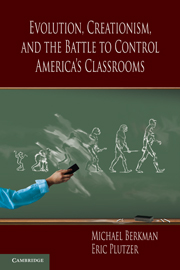
In late March, Professor Michael Berkman will be coming. Along with his colleague Eric Plutzer, Prof. Berkman published a bombshell book a couple years ago about the teaching of evolution in public high schools. Berkman and Plutzer are political scientists at Penn State. They got funding from the National Science Foundation to survey high-school science teachers about their teaching. Their results attracted a good deal of attention.

Required reading for anyone interested in evolution/creation issues

Required reading for anyone interested in evolution/creation issues

In the January, 2011 issue of Science (sorry, subscription required), for example, Berkman & Plutzer described the results of their survey. They found that about 13% of teachers taught creationism in public schools as science. Another roughly 28% taught recognizable evolution. The rest, roughly 60%, are the most interesting. This large majority of teachers reported that they taught a mish-mash of watered down evolution, religious- or religion-friendly ideas about creation, or a menu of evolution and creationism.

But the book was bigger than just this survey. As political scientists, Berkman & Plutzer argued that the important question was the way these decisions were made. Who decides what gets taught? State standards don’t do it. In states with good evolutionary science standards, teachers still teach non-evolution. Textbooks don’t do it. Glittering new science books with all the evolution bells and whistles can’t teach by themselves.

For Berkman & Plutzer, the answer was simple: Teachers. Teachers function as “street-level bureaucrats,” making daily decisions about what to teach and how to teach it. In most cases, teachers fit in with their local communities. If their communities want evolution to be taught, teachers teach it. But if communities want it watered down or kicked out, teachers do that, too.

Professor Berkman will be visiting our scenic campus as part of the Evolution Studies Program. We’re not sure yet what the focus of his talk will be, but he tells us he’s got some new data he’ll be sharing. Can’t wait to see what it is.

Our second campus visit will be from Professor Jonathan Zimmerman of New York University. Over a decade ago, Prof. Zimmerman defined the historical vision of America’s educational culture wars with his book, Whose America? In that volume, Zimmerman argued that two main tensions had divided Americans’ vision of proper education. Since the 1920s, conservatives and progressives had squared off on fights over patriotism and religion. Does loving our country mean teaching students to question it? Or to support it unhesitatingly? And should schools incorporate prayer and Bible-reading? Who gets included in history textbooks, and how?

Professor Zimmerman’s new book looks at sex education as a global phenomenon. Though the United States was an early exporter of sex ed, by the end of the twentieth century the US government joined some uncomfortable allies to battle sex education. As Zimmerman has argued, sex ed has created a new and sometimes surprising worldwide network of conservative alliances. For example, at a 2002 United Nations special session on children, US delegates joined Iran, Iraq, Sudan, Libya, and Syria in condemning a sex-ed proposal.

Who's for it?

Who’s for it?

When it comes to culture-war topics, national boundaries aren’t as important as we tend to think. It’s difficult for historians to look beyond them, though, due to language barriers and the high cost of research travel. In his new book, Prof. Zimmerman hopes to overcome those prosaic difficulties and tell the story of sex ed in its full global context.

And when he journeys north to our campus in early May, Zimmerman promises to share some of his insights from this book.

So whether you care about evolution, creationism, sex ed, history, school politics, school prayer, or any other culture-war issue, there will be nowhere more exciting than Binghamton University in 2015.

Be here or be square.

Leading Historian Would Vote for Hitler

He just flew in from New York...

He just flew in from New York…

HT: MM

Would you vote for Philip Hitler? Jonathan Zimmerman would. At least, that’s what he told the funny man on The Daily Show the other day.

It’s a pretty funny bit. But more important, it’s great to see our leading educational historian getting to yuk it up with Jon Stewart’s minions.

If you’re not up on the world of educational history, you may not know Jon Zimmerman’s work. But for historians, Zimmerman’s the king. Kind of like the Derek Jeter of educational historians, except Zimmerman shows no signs of quitting.

When I started my graduate work, Zimmerman’s book Whose America pointed me toward the study of culture-war issues in educational history. And now, as part of Zimmerman’s book series on the history and philosophy of education, I’m working with philosopher Harvey Siegel on a volume about the ups and downs of evolution education. So Zimmerman has been hugely influential in my career, and I’m sure every other ed historian out there could say something similar.

And now it looks as if he’s moving into the comedy business. Fantastic.


Required Reading: Wal-Mart and Fundamentalist U

A recent exposé in the New York Times attacked Wal-Mart’s funding of charter schools. Conservative pundits defended Wal-Mart. But neither side took notice of a more profound tradition of educational activism by the leaders of the mega-retailer.

Historian Bethany Moreton, in her not-so-recent-anymore book To Serve God and Wal-Mart, describes a different sort of educational work by the founders and leaders of Wal-Mart. In addition to funding charter schools, the Waltons and Wal-Mart developed a network of fundamentalist colleges and universities that may have had far more long-term impact on American society and culture than any charter school.
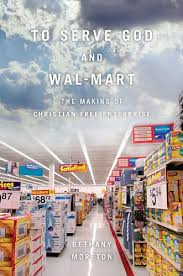
How did capitalism, Christianity, and college combine?

How did capitalism, Christianity, and college combine?

The 2009 book garnered plenty of rave reviews from academic historians. I won’t try to offer a full review here, but if you’re interested, you can check out this one in Church History, or this one in the American Historical Review. Instead, I’ll sketch a few of Moreton’s points about the links between the Wal-Mart fortune and a network of evangelical colleges in the Ozark region. As I move into the research for my next academic book, a twentieth-century history of conservative evangelical colleges and universities, it seems clearer and clearer to me that these colleges have played a huge role in determining some of the basic culture-war landscape of recent United States history.

As Moreton describes, Wal-Mart and Walton money helped support some schools that desperately needed financial help. Especially close to Wal-Mart were the University of the Ozarks, John Brown University, and Harding University. Each of these schools embraced a Wal-Mart friendly combination of evangelical Protestantism and free-marketeering. And each benefited from substantial financial support from the Wal-Mart empire. Indeed, as Moreton relates, University of the Ozarks students joked that they should just change the name of their school to “Wal-Mart U” (pg. 144).

In the mid-1980s, as Moreton tells the story, with help from the Waltons, the faculty of the University of Ozarks spelled out the connections between traditional evangelical higher education and an intellectual embrace of the values of capitalism. In 1983, Mrs. Walton launched a series of “Free Enterprise Symposia” to trumpet the achievements—both moral and economic—of capitalism (pg. 154). A few years later, the faculty agreed that a new student concentration in entrepreneurship would include traditional courses in Old and New Testament, government, and liberal-arts electives. But the focus would be on business and the moral triumph of capitalism over “socialism/marxism” (pg. 155).

Students at these capitalist/Christian colleges embodied a very different sort of student identity from those of the hippies and leftists dominating headlines at other schools. For instance, Moreton describes one example of student activism at the University of the Ozarks in the late 1970s. Students joined with downtown merchants to encourage Christmas shopping. Students combined patriotic displays of red, white, and blue with traditional Santas to connect Jesus, America, and consumerism (pg. 143).

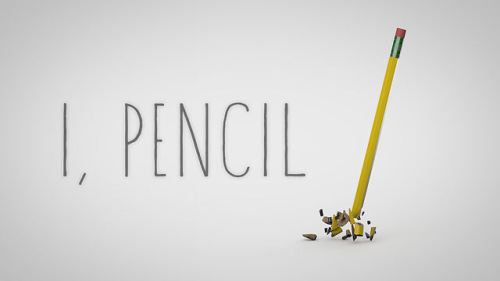
Wal-Mart also supported student organizations such as Students In Free Enterprise (SIFE). These pro-Christian, pro-capitalism student groups claimed to enroll 40,000 college students at 150 campuses nationwide. Together, SIFE bragged that it reached 100,000,000 people with its message of Christian free enterprise. Moreton described one example of that sort of student outreach by the SIFE chapter at Harding. Harding students tromped about the region with a student in a giant pencil costume. They spoke at schools, club meetings, and any other venue that would have them. Their message? Following the work of pundit Leonard Read, the students explained that worldwide capitalism managed to produce goods and services for all without central guidance. The humble pencil, for example, took materials and know-how from all around the world, bringing profit and uplift to all involved. Yet the invisible hand of the market accomplished this incredibly complex task without oversight from bumbling and greedy governments (pp. 193-197).
Leonard Read's Free-Enterprise Tale

Leonard Read’s Free-Enterprise Tale

As Moreton tells it, Wal-Mart’s college activism did not limit itself to the borders of the United States. In the late 1980s, the Waltons funded scholarships for students from Central America to study at colleges such as Harding, John Brown, and the University of the Ozarks. The goal was to train managers and workers in the pro-business, pro-Christian approach to big-block retailing and worldwide supply chains (pp. 222-247).

Moreton rightly emphasizes the centrality of higher-educational activism by conservatives such as the Waltons. Throughout the twentieth century, as I argue in both my 1920s book and my upcoming book on educational conservatism more broadly, the nature and purpose of higher education remained a central focus of American conservatism. As Moreton’s study reveals, the brains behind the Wal-Mart phenomenon took an active part in sponsoring the sorts of college and university “experience” that they thought would promote proper, traditional Americanism.

If I were to quibble with this book, I’d note that Moreton sometimes seems unaware of the longer, broader connections between pro-business groups and educational institutions. She describes what she calls the “national context of business colonization of education generally” (pg. 151) in the 1970s, but she doesn’t adequately note that the roots of that colonization go back into the 1930s, at least. Groups such as the National Association of Manufacturers, for example, actively conducted the same sorts of pro-business educational outreach that Moreton describes. A quick consult with Jon Zimmerman’s Whose America? would have helped Moreton flesh out the longer history.

But this sort of historian’s quibble does not detract from the importance of Moreton’s book. As the recent New York Times attack makes clear, conservative activism in K-12 education will always get plenty of attention. But the more profound cultural work of changing higher education may have much bigger impact on the nature of America’s culture wars. Who teaches the many conservative teachers in K-12 schools, for instance? Where do Christian executives learn to combine Jesus with Milton Friedman? Moreton’s look at the connections between Wal-Mart and higher education help illuminate the core intellectual premises of Christian capitalism.

 

Will Creationists Take Half a Loaf?

Okay, so here’s a deal: If science educators in public schools agree to remain neutral about creationists’ beliefs, will creationists allow teachers to teach their kids evolution?

I don’t rule the world, but if I did, that would be my cure for our creation/evolution battles.  Let me try to spell it out in a little more detail:

I’m working on a short book with philosopher Harvey Siegel, tentatively titled Teaching Evolution in a Creation Nation: Historical and Philosophical Perspectives.  Why would we attempt such a thing?  It wasn’t our idea.  Our little book will be part of a series cooked up by historian Jon Zimmerman and philosopher Randy Curren.  What if, they asked, what if we could get philosophers and historians talking to one another about educational issues?

This past weekend, the authors of these books gathered for a workshop at New York University.  Harvey and I made our case.  The high-caliber intellectual firepower gathered around the table asked lots of difficult questions.  Hardest of all, IMHO, was the one above: Will Creationists Take Half a Loaf?

In essence, given the long history of cultural battles over the teaching of evolution and creationism, Harvey and I make the following argument:

  • Creationism may or may not be science, but it’s not the best science out there.  Students in public schools must be taught the best science available.  At this point in history, that means the modern Darwinian synthesis.  (Bear with me for a minute here.  I know we can argue about what we mean by this, or whether or not that is the best name for mainstream evolutionary theory.  But for the moment, for the sake of argument, let’s proceed.)
  • Too many scientists and science teachers take this to mean that creationism must be purged from students’ minds.  If we consider creationism to be a form of religious dissent, that sort of attitude among mainstream scientists seems both cruel and pedagogically ineffective.
  • Teachers in public schools, therefore, must teach evolution.  Real evolution, not watered down with bogus religiously inspired alternatives.
  • But teachers must not make any claims on the religious beliefs of their students.  If students acquire a reasonable knowledge of evolutionary theory, their teachers will have succeeded.  Full Stop.  Public schools should tell students nothing about what religious beliefs they should hold.
  • In short, the goal of evolution education should be for students to understand or know evolutionary theory, but not (necessarily) to believe it.

One of the big issues that came up in our weekend workshop was whether or not students and teachers could really walk this line between understanding and belief.  How practical is it to ask students to “know” something they don’t “believe?”  But let’s leave that aside for a moment.  The question I’d like to ask this morning is different.

Assuming teachers could embrace this goal of “understanding-not-belief,” do you think young-earth creationists would go for it?  That is, would creationists who hold ideas that differ radically from the mainstream scientific consensus agree to allow their kids to learn evolution, IF the public schools agreed not to meddle with their children’s religious beliefs about evolution?

Smart people are skeptical.  With good reason.  At the recent blockbuster debate between young-earth creationist Ken Ham and science popularizer Bill Nye, for example, Ham did not take the role of a religious dissident, but rather insisted that creationism meant superior science.  Creationists have always insisted that their beliefs are better science, not just a religious dissent from good science.

So I ask again: Will creationists accept public education that teaches real evolution—and only real evolution—in science classes, IF that education remains stubbornly neutral about related religious beliefs?

“The Long Game” Is Coming to Binghamton

What do schools teach?  What SHOULD schools teach?  The problem is not that we don’t have an answer to this question.  The problem is that can’t agree on which answer is the right one.

Tomorrow night award-winning documentarian Trey Kay is bringing his latest radio documentary to the scenic campus of Binghamton University in sunny Binghamton, New York.  This work, “The Long Game: Texas’ Ongoing Battle for the Direction of the Classroom,” explores school politics in the Lone Star State.  As ILYBYGTH readers know well, those Texas politics tend to be more exciting versions of the sorts of school fights we hear all over the country: Can cheerleaders use the Bible at public-school football games?  Can textbooks preach a neo-Confederate vision of US History?  Can creationism and evolution jostle along side-by-side in public-school science classes?

long gameThe battles in Texas schools reflect our cultural disagreements over the proper form of public schooling.

Tomorrow evening, Trey will share an excerpt from his earlier documentary, “The Great Textbook War.”  Then we’ll listen to “The Long Game.”  Afterwards, we’ll benefit from Trey’s commentary, as well as that of world-renowned historian Jonathan Zimmerman of New York University.  Binghamton’s own Matt McConn, a recent émigré from Houston public schools, will also join the panel.

Unfortunately, we won’t be web-streaming the event.  But for all those who can make it to the Binghamton area, you are most welcome to attend.  The fun will begin at 6 PM, Thursday, February 27, in University Union room 120, on the campus of Binghamton University.  The event is free and open to the public.  Pre-registration has closed, but everyone is still welcome to come by without registration.

Registration Is Open!

You are invited.

In a few weeks, Binghamton University’s Graduate School of Education will be hosting a terrific event.  Documentarian Trey Kay will be sharing his new radio documentary, “The Long Game: Texas’ Ongoing Battle for the Direction of the Classroom.”  You probably remember Trey from his award-winning documentary about the textbook battle in West Virginia, 1974-1975.  In his new work, Trey explores the themes so close to the hearts of ILYBYGTH.  Should schools teach creationism?  Should they teach sex?  If so, how?  And what sorts of history should public-school students learn?  Should students be taught that America is awesome?  Or that the United States has some skeletons in its closet?  There has been no place more interesting than Texas to see these politics in action.

long game

After the listening session, Trey will offer a few comments.  He’ll be joined by the world-famous historian Jonathan Zimmerman of NYU.  ILYBYGTH readers will likely know about Zimmerman’s books, including especially his seminal work Whose America.  In addition, BU faculty member Matt McConn will say a few words.  McConn is new to New York, fresh from a long career as a teacher and school administrator in Houston.

There will even be cookies.

So please come on down if you’re in the Upstate area.  It will take place on Thursday, February 27, at 6 PM, in room G-008 in Academic Building A, on the beautiful main campus of Binghamton University.

We’d love to have you.  The event is free and open to all, but registration is required.  To register, please go to the BU registration site.

Save the Date!

Keep your evening free on Thursday, February 27th.  Here on the beautiful campus of Binghamton University in sunny Binghamton, New York, we’ll be hosting a listening session and panel discussion about Trey Kay’s new radio documentary, “The Long Game: Texas’ Ongoing Battle for the Direction of the Classroom.”

Readers may remember Trey Kay’s earlier award-winning radio documentary, “The Great Textbook War.”  In that piece, Trey explored the 1974-1975 battle over schooling and textbooks in Kanawha County, West Virginia.  In that fight–a fight that is also the subject of a chapter in my upcoming book–conservatives worried that a new textbook series presented students with perverted values and distorted grammar.

In his new documentary, Trey looks at ongoing ideological battles in Texas.  As filmmakers such as Scott Thurman and activists such as Zack Kopplin have demonstrated recently, there has been no better field for exploring cultural conflicts in education than the great state of Texas.

The details of our upcoming February 27 event are not yet finalized, but the general plan is clear.  We’ll be listening to “The Long Game,” then Trey and NYU’s electrifying historian Jon Zimmerman will offer a few comments, followed by a general discussion and Q & A.  I’ll post more details as they come available.

The Ink Is Dry!

I’m tickled pink to announce I’ve signed a deal with Harvard University Press to publish my next book.  The subject?  No surprise to ILYBYGTH readers: the book takes a historical look at educational conservatism in America’s twentieth century.  What did conservatives want out of schools?  How did they work to make that happen?

I’m extremely pleased to have the book join HUP’s top roster of educational histories.  All my favorite books are on that list: David Tyack & Larry Cuban’s Tinkering Toward Utopia, Jon Zimmerman’s Whose America?, Jeffrey Moran’s Teaching Sex, and now Bill Reese’s Testing Wars.

I’m honored to join this all-star lineup.  My book—which at this point I’m calling The Other School Reformers: The Conservative Tradition in American Education—takes a look at the four most explosive school controversies of the twentieth century.  My approach has been to examine these four culture-war fights to see what sorts of educational reform conservatives wanted in each case.  At first, I thought I’d pile up histories of leading conservative organizations and individuals: the American Legion, Max Rafferty, the Gablers, etc.  But I couldn’t find a way to decide whom to include and whom to leave out.  Did the White Citizens’ Councils count as educational conservatives?  Did the Institute for Creation Research?  Did Arthur Bestor?

Instead of imposing my own definitions on the outlines of educational conservatism, I took more of a naturalist’s approach.  I set up my blind, so to speak, at the four most tumultuous fights over the content of American schools and watched to see what kinds of conservative activists showed up.

The school controversies were all very different.  First I examine the Scopes Trial of 1925.  Then the Rugg textbook controversy of 1939-1940.  After that, the firing of Pasadena’s progressive superintendent in 1950.  Finally, the literally explosive fight over schools and textbooks in Kanawha County, West Virginia, in 1974 and 1975.

What did I dig up?  In short, I argue that there is a coherent tradition linking conservative school reform across the twentieth century.  Not that these different activists had any sort of conscious organization or program.  Conservatives differed—often differed widely—about key issues such as public religion, race, and the role of government and experts.  More than that, the consensus among conservatives changed over time, as American culture and society changed.  For example, racial attitudes among white conservatives changed enormously between 1925 and 1975.  But in spite of all this change and difference, a recognizable tradition of educational conservatism linked these disparate school reformers.  Conservatives usually agreed with progressive school reformers that good schools were the key to a good society.  But unlike progressives, conservatives wanted schools to emphasize traditional knowledge and beliefs: patriotism, religion, and the benefits of capitalism, for example.

In addition, my book makes the case for the importance of understanding these conservative activists as school reformers in their own right.  Too often, the history of American education is told as the heroic tale of progressive activists fighting bravely against a powerful but vague traditionalism.  My book argues instead that educational conservatism is more than just a vague cultural impulse; conservatism has always been a raft of specific policy ideas for specific historical contexts, fought for by specific individuals and organizations.

So be sure to save some space in your holiday gift list for next year.  The book is slated to appear just in time for Christmas/Hannukah/Kwanzaa/Festivus 2014.