Creationist Mom Reaches Out to Evolution

Sometimes stereotypes have some truth to them.  Then there’s “D.”

D first got in touch with me a couple of months ago.  As she described herself, she is a Christian young-earth creationist homeschooling mom.  She had read about my blog on Ken Ham’s Answers in Genesis page.  I’ll include our brief correspondence to let D speak for herself:

From: D
Sent: Monday, January 21, 2013 8:36 PM
To: alaats@binghamton.edu
Subject: thank you

Hi Dr. Laats,
I have to say that it is very refreshing that you don’t think creationists like myself are complete idiots.  Really, I appreciate that. 
As a young earth creationist that homeschools, I wouldn’t give any Richard Dawkins books the time of day.  If someone is THAT hostile towards me, then I have no interest in what they have to say.  But I look forward to reading your blog when I have a chance because you try to understand where I am coming from, and you don’t think we are completely unable to do any science. 
Thank you,
“D”

I suggested that D might give Dawkins a shot.

From: D
Sent: Monday, January 22, 2013 9:48 PM
To: alaats@binghamton.edu
Subject: Re: thank you

Dear Dr. Laats,
I also agree that we should be looking at the other side, and I do plan to do that.  As a Christian homeschool Mom I am not trying to protect my sons from learning evolution.  The public school is not a place we feel comfortable putting our children because their thoughts and beliefs are not welcome in the classroom.  They would have to follow the advice my father in law got from his father before he joined the Navy, “keep your eyes and ears open and your mouth shut”.  Learning can not take place, in my opinion, in that kind of environment.
I am going to teach my kids about evolution, somehow.  There is a lot of material out there.  I would read Dawkins if I had to, but the amount of information out there that he has published alone is way too much to look at, sort through, and figure out what to teach.  For the sake of time, I’m looking for something comprehensive and succinct, and what a child in high school should know about the subject.  I am familiar with the NCSE website and that is what I plan to use as of now, though it will be guess work to know what all to cover.  
Thanks for your time,
D

I was surprised and happy to hear that D was using materials from the National Center for Science Education to teach her kids.  I think the folks at NCSE would be happy to hear it, too.  The NCSE is a leading voice for evolution education and a staunch opponent of creationism in public schools.  And too often, people like me tend to suggest a stark division between two sides: either Answers in Genesis OR the National Center for Science Education.  D has reminded me that smart people make all kinds of decisions about what to read and what to do with that material.  People choose public schools, private schools, or homeschools for all sorts of different reasons.  D’s work reminded me how quickly and easily we can oversimplify the many approaches people make to these snarled questions of evolution, religion, and education.

Yesterday, I heard back from D:

From: D
Sent: Monday, March 18, 2013 5:09 PM
To: alaats@binghamton.edu
Subject: Hi

Hi Dr Laats,
Well, I wanted to let you know that I checked out the [Dawkins] book The Greatest Show on Earth.  I never would have considered it except for your response.  Dawkins says on page 155 ” it would be so nice if those that oppose Evolution would take a tiny bit of trouble to learn the merest rudiments of what it is that they are opposing.”  I couldn’t believe that I totally agreed with Dawkins about something!  I am happy to listen, minus the hostility.  I don’t sense hostility in this book, which makes it readable.  This has made me realize that I can not get my head wrapped around what evolution IS.  He says we did not descend from monkeys, but we have a common ancestor.  I do understand that we would find no missing links because of the extreme gradual process, that is what I understand from the book, hopefully that is correct.  So I looked on Internet, and I guess I don’t understand phylogenies.  So we did not descend from monkey, but have a common ancestor, and then branched off to chimpanzees and humans etc.  So, it seems to me that we descended from something “monkey like”.  I guess I don’t understand how he can say that we did not evolve from monkeys, whether it was monkeys or monkey like, it seems similar.  Can you shed any light on this please?  As you can see, I am making an honest attempt to understand this so I don’t teach it incorrectly.  Thanks for the help,
D

First of all, my hat’s off to D for engaging with Richard Dawkins’ writings.  It is far too easy for all of us to read only those materials that confirm our own beliefs.  I am optimistic that there may be far more “Ds” out there than we might think: people who have strong beliefs, yet hope to find out as much as they can about the other side.  How many of us can say–like D–that we have taken the time to puzzle through books and websites of people with whom we totally disagree?

As for D’s question about phylogenies, I suggested she check out Dennis Venema’s series about evolution theory on recent pages of the BioLogos Forum.

Any other suggestions for someone like D?


Conservatives and the Common Core

What do conservatives think about the emerging Common Core State Standards?

As with any question, ask a hundred conservatives and you’ll likely get a hundred different answers.
However, some distinct themes have emerged in recent months.

First, many conservative politicians and activists object to the Common Core’s implications for the creeping expansion of government.  Some insist that the standards add another layer of inaccessible, distant, controlling, expensive central control.

Second, conservatives object that the new national standards chip away at parental control of children’s education.  With greater central control, parents and responsive local governments will lose that much more ability to control directly what goes in their local public schools.

Both of these are storied conservative protests against the trends in public education.

Before we examine these themes and their histories, let’s look at the CCSS themselves.  So far, forty-five states, plus the District of Columbia and Department of Defense schools have adopted these standards.  Supporters of the CCSS insist these are not imposed by the federal government, but rather created jointly by state education officials.  The reasons for such standards are many, according to supporters.  In the words of the CCSS Initiative,

“High standards that are consistent across states provide teachers, parents, and students with a set of clear expectations that are aligned to the expectations in college and careers. The standards promote equity by ensuring all students, no matter where they live, are well prepared with the skills and knowledge necessary to collaborate and compete with their peers in the United States and abroad. Unlike previous state standards, which were unique to every state in the country, the Common Core State Standards enable collaboration between states on a range of tools and policies.”    

Conservatives are not the only ones to dispute these claims.  Progressive critics (see one example here) often lament the new standards’ failure to consider adequately individual student situations.  Some progressives call the standards a greedy corporate power grab.  Others lament the goal of squeezing all young minds into a procrustean bed of regurgitative multiple-choice testing instead of pursuing the more difficult goal of authentic learning for real students.  Alfie Kohn, for instance, insisted that national standards would “squeeze the life out of classrooms” by mandating one-size-fits-all education, dictated by self-seeking corporate interests.

When conservative activists and pundits critique the CCSS, it is usually on different grounds.  Writing for the Heritage Foundation, for example, Lindsey Burke warned, “The push for centralized control over what every child should learn has never had more momentum.”  CCSS, which Burke called “national standards,” represented a “challenge to educational freedom in America.”  Implementation of the standards would be expensive, Burke pointed out.  Even worse, these standards reversed the proper structure of education.  Instead of more and more central control, Burke argued, “Education reform should give control over education to those closest to students.”

The Heritage Foundation’s Rachel Sheffield praised state lawmakers who pushed to exit the CCSS.  In Indiana, for instance, conservative state lawmakers have proposed a bill to put the CCSS on hold.  One of the requirements of Indiana’s Senate Bill 193, for instance, will be to include parent members on the standards committee.  Another will be to allow any parent to challenge their children’s standard-based high-stakes test results.

These themes—federal overreach and parental control—have long been central to conservative educational activism.

As we’ve noted, agitation against federal intrusion into the local politics of education has been an important element of conservative educational activism since at least the 1940s.  Though it might come as a surprise to some, before the 1940s many conservatives endorsed increased centralization of education policy, as Douglas Slawson has noted in his excellent book The Department of Education Battle, 1918-1932.

The second conservative worry about CCSS also has a long history.  Conservative pundits have argued for decades that parents need more control over their children’s education.  Back in the 1960s, conservative educational leader Max Rafferty insisted, “Children do not belong to the state. They do not belong to us educators, either. They belong to their parents and to nobody else.  And don’t you forget it.”  (Source: Rafferty, On Education, pg. 9)

Note one protester's button: "Parent Power"

Note one protester’s button: “Parent Power”

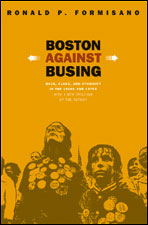
These conservative concerns spanned the country and the decades.  As historian Ron Formisano noted in his landmark 1991 history of Boston disputes over forced busing, parents insisted on their fundamental rights to determine their own children’s educational careers.  As anti-busing leader Louise Hicks fumed, “If under a court order a child can be forcibly taken from his parents into unfamiliar, often hostile neighborhoods, then we shall have opened a pandora’s box of new, unlimited government powers” (pg. 192).

Similarly, President Reagan insisted in 1983, “I believe that parents, not Government, have the primary responsibility for the education of their children.  Parental authority is not a right conveyed by the state; rather, parents delegate to their elected school board representatives and State legislators the responsibility for their children’s schooling.”  (Source: Catherine Lugg, For God and Country, pg. 136).

Across the spectrum of conservative belief and activism, we hear similar echoes.  In 1989, for instance, creationist leader Ken Ham warned that “Most parents have left the training of their children to the church, school or college.”  No wonder, Ham argued, that children embraced anti-God theologies.

So when conservatives in 2013 warn that CCSS will undermine parental control, they draw on a rich tradition of conservative thought and activism.  Schools must remain on a tight leash, many conservatives have insisted over the years.  If allowed too much power, centralizing educational authorities will take over.


Creationists Love The Bible

The young-earth creationists of Ken Ham’s Answers in Genesis endorse The Bible.  Not just the Good Book, but now also the Good Movie.

Dr. Elizabeth Mitchell (MD) reviewed the new ten-hour History Channel film on the AiG website today.

I believe the folks at AiG will agree with me when I say this: they have a tendency to be extremely particular about the company they keep.  They only endorse those who agree on the importance of a young earth and a six-day creation.  Even other conservative Christians will come into AiG disfavor if they dispute those ideas.  Recently, for instance, founder Ken Ham took the 700 Club’s Pat Robertson to task for making nice with evolutionary science.

So when an AiG reviewer praises the new Bible film as something that “allows the plain truths of biblical history from the time of our origins to speak and connects those truths to the relevant issues of life,” it says a great deal about the content of the film.

Mitchell notes that the film depicts a literal world wide flood.  “Even in its opening scene,” Mitchell writes,

“a believable Noah recounts the six days of creation for his seasick family in a massive, storm-tossed Ark in a Flood that is clearly global. The worldwide scope of the Flood is portrayed by the graphic of a flooded planet and the narrator’s confirmation that the floodwaters had ‘engulfed the world.'”

Mitchell notes the necessary shortcuts that a ten-hour film must make in condensing such a massive set of books.  In the end, however, Mitchell believes that the film is true to the original.  The best proof of the film’s merit will be, in Mitchell’s words, that

“The Bible will likely lead many to Christ. Why? Because it presents the Bible’s history as real history—instead of eroding trust in God’s Word from the very first verse. Because it demonstrates the relevance of the Fall of mankind soon after creation to all the evil that has ever cursed our world. Because it depicts the Old Testament sacrifices that God intended to prefigure the ultimate sacrifice of Christ, the Lamb of God who takes away the sin of the world (John 1:29). And because it presents the Bible’s history as a continuous narrative of God’s plans for us from creation through the covenant people of Abraham and Moses to Christ and the early church, thus showing how Jesus Christ is indeed God’s answer for the sin-guilt of the entire world.”

As long as important doctrine is respected, it seems, including the truths of a young earth and a six-day creation, Answers in Genesis is happy to endorse any work that will lead to more conversions.

As we’ve been discussing lately, the Hollywood Christian power couple behind this film have advocated for more Bibles (books, that is, not films) in public schools.  If ardent young-earth creationists can endorse the film, what does that tell us about the sectarian intentions of the filmmakers?

Ken Ham Is Right!

No, not about a young earth.  But Ken Ham, the obstreperous mastermind of Answers in Genesis, is right to complain about the language directed at him and his campaign.

I’ll say it again: I don’t agree with Ken Ham’s theology.  I don’t agree with his notion that a young earth is a central idea of Christian faith.  More important, I think Ham’s angry, combative tone drowns out much of the productive and respectful conversation that could go on about the issues of faith, science, creation, and evolution.

But Ham is right to complain recently about the ways his ministry has been attacked.  In his AiG blog, Ham pointed out the rhetorical excesses of some of his foes.  In a post on an Australian atheist blog, one Simon Doonar attacked Ham intemperately.  Here’s Doonar’s post in full:

“I hope that sometime in the future this kind of deliberate misleading of people and especially kids can be treated as a criminal breach of the law, and those who commit such breaches are excluded from society permanently.

“What these type of people are doing is damaging our species by inhibiting our ability to free our minds from superstition and the dream like notions of how we came to be and where we are going.

“And to think that this idiot believes that all the research and evidence which proves evolution can be simply brushed away by the simple answer of ‘where you there’. How can you possibly deal with this type of person, they are psychologically ill and like all dangers nut casers should be put somewhere to reduce the risk of them harming others.”

Doonar also included an angry frowny-face emoticon, but I’m not sure how to reproduce that here.

Now, I understand that such blog posts lend themselves to extravagant emotion.  But still, Doonar’s assertion that creationists should be rounded up and locked up terrifies me.  The notion that we need to criminalize ideas with which we disagree inches frighteningly close to lynch law.

If it were only one kooky Australian who had had a few too many Foster’s and allowed himself to do some angry blogging, we should perhaps pay no attention.  But Ham correctly points out that these sentiments, though usually expressed more calmly, haunt the edges of the creation/evolution debates.

For instance, Bill Nye “The Science Guy” recently implied that creationists should not be allowed to pass their ideas on to their children.  Less famous thinkers ask, apparently sincerely, if creationism equals “child abuse.”  Other hotheads call creationism “terrorism” and “child abuse.”

Again, I understand the Wild-West rules of the blogosphere.  People will say all kinds of stuff to get attention.  The more extreme, the more attention.  And I understand that Ken Ham loves this kind of extremism, since it allows him to play the misunderstood victim.

But as a historian, I get nervous when any group is talked about in these dehumanizing ways.  We don’t need to go all the way back to Quakers executed in colonial Boston to find examples of religious groups targeted for military-style attack due to allegations of “child abuse.”

Just a few years ago, the government raided the Yearning for Zion ranch of the Fundamentalist Church of Jesus Christ of Latter-day Saints.  The raid was utterly illegal, utterly unconstitutional.  Yet it was approved and carried out due to accusations of child abuse, along with deeper cultural suspicions about the breakaway LDS sect.

Talking about creationists as child abusers and criminals does not help defang thinkers such as Ken Ham.  Ham thrives on such attack.  But it does reduce the possibility of constructive, respectful dialogue about creationism.

Required Reading: Assemblies of God on Faith/Science

Can Pentecostals embrace science?  Can they find a way to love both God and Gould?

For those of us trying to understand the conservative vision of education from the outside, the newest edition of the Assemblies of God’s Enrichment Journal is a treasure trove.  This edition offers a series of articles for the denomination’s readers about the proper relationship between faith and science.  As General Superintendent George O. Wood explains, the dangers for young people in the church are stark.  He quotes “Mike,” who declared, “I knew from church that I couldn’t believe in both science and God, so that was it.  I didn’t believe in God anymore.”  Wood hopes that this volume will help Assemblies of God members negotiate a more profound and religious relationship between science and faith.

For those unaware of the distinctions among conservative Bible-based Protestant groups, the Assemblies of God, very briefly, is the largest denomination of Pentecostal believers, claiming 65 million members worldwide.  Pentecostalism, also very briefly, is a form of conservative evangelical Protestant belief that came into existence in the early 20th century.  It combines conservative Bible-based theology with an emphasis on baptism by the Holy Spirit.  Pentecostal services are typically vibrant, dramatic events that can include speaking in tongues and divine healing.  As historian Grant Wacker argued in Heaven Below (2001), the attraction of early Pentecostal churches derived from their combination of a powerful “primitivist” theology with a comfortable cultural “pragmatism.”

In an opening piece, Amos Yong of Regent University encourages Pentecostal readers to “work to overcome the history and culture of anti-intellectualism that persists in some segments of the Pentecostal church.”

Perhaps the most interesting section of this issue for those of us outside the conservative tradition is its forum on the variety of evangelical positions for the age of the earth.  Kurt P. Wise makes the case for a young earth, Hugh Ross for six long ages, and Davis A. Young for an old earth.

With each article, we see the very different intellectual playing field for evangelical intellectuals.  Among mainstream scientists, the first question is usually whether any new approach offers better insight into the natural world.  Among evangelical thinkers, the first question is whether any scientific approach offers better insight into the natural world while allowing Christians to maintain an authentic faith.

As Kurt Wise argues in his pitch for a young earth, “believers” enjoy a more promising guide to the natural world.  Wise insists, “We should look at the eyewitness account from God before we begin inferring the meaning of circumstantial evidence.”

Everyone interested in the creation/evolution debate will be well served by reading through these articles.  Some of the most fervent young-earth creationists such as Answers in Genesis’ Ken Ham have condemned such forums.  Any consideration of an old earth, Ham blasted in a blog post, results in a “dogmatic, intolerant stand against those who take the position we do at AiG.”

But for those of us outside of evangelical circles, an understanding of both the different evangelical views of science and the ways evangelicals construct their scientific arguments will go a long way to decoding the stubborn controversy over evolution and creationism.


In the News: Dinosaur Billboards and the Creation Museum

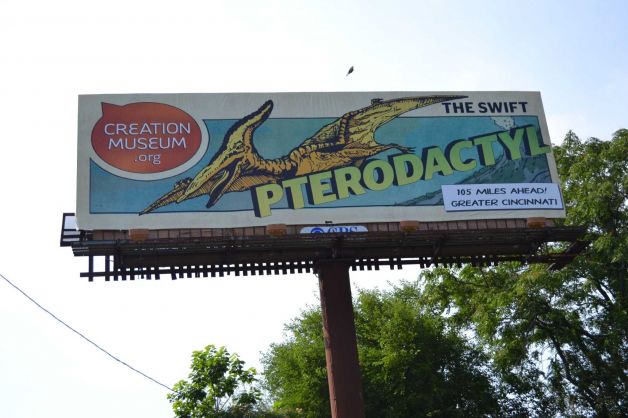
ABC News reported recently that Answers in Genesis’ Creation Museum has launched a new nationwide billboard advertising campaign.

The billboards feature retro-style dinosaurs, and appeared recently in cities such as Chicago, San Francisco, and Houston.  Some critics have wondered why the ads focus on dinosaurs instead of God, or whether this equates to a ‘Flintstones’ theology, but Ken Ham of Answers in Genesis pooh-poohed such folks.  Ham pointed out on his AIG blog that atheists have long used billboards to promote their point of view.

Required Reading: Fundamentalist America Defends Its Borders

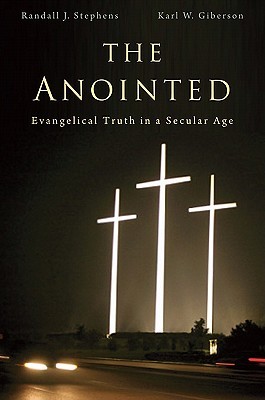
The knives are sharp!  At the Religion in American History blog, Randall Stephens has published a collection of snippets of angry reviews of his recent book and New York Times op-ed.

For all those who are trying to make sense of Fundamentalist America, the book, the op-ed, and the hostile reviews are all worth reading.

Stephens and his co-author Karl Giberson took to task the culture of conservative evangelical Protestantism–maybe the most powerful single faction of what we call Fundamentalist America–for supporting a raft of puffed-up self-declared experts.  Stephens and Giberson themselves are evangelical Christians and teach at a Christian college.  But the false experts, they insist, do not represent the totality of evangelical Protestant intellectual life.  A fundamentalist “Rejection of Reason” is only one possible style of evangelical belief.

The angry denunciations of their work demonstrate the defensive stance of some twenty-first century conservative Christians.  As Stephens points out in his blog post, the “haters” were notable for the “red-faced, veins bulging-out-of-the neck, barking jeremiad passion” of their reviews.

Anti-Evolution III: Science

ANTI EVOLUTION III: SCIENCE

Anti-evolutionists often assert scientific arguments against evolution.  This trend grew especially
strong in the later part of the twentieth century.  At that time, anti-evolutionists associated with the Institute for Creation Research in San Diego realized that their ideas would never be allowed into public school classrooms as religion.  But they could be allowed if they were used as alternative scientific explanations.  The science of creation science was born.

I personally am not convinced by these arguments.  There is plenty of evidence that those who know this stuff best—biologists, geologists, etc.—find these arguments baseless.  Nevertheless, I will attempt to summarize some of their arguments here.  As with the rest of these posts, I will not attempt to convince those already dedicated to an evolutionary worldview.  Rather, I only hope to show that there are reasons why anti-evolutionists hold their beliefs.  They do not have to be ignorant or crazy to do so.  Just as an undergraduate college student in a secular university learns about the geologic ages of the earth and the process by which one form of life evolved from another, so a college student at some religious colleges will learn that the earth was formed in the past 10,000 years and all life forms on it were created by divine fiat.  Those forms, the student will learn, developed according to kind.  Just as the student at the secular school does not have to be ignorant or crazy in order to accept the idea of an ancient earth and a long, directionless process of
evolution, so a student at a religious school does not have to be ignorant or crazy to learn an alternative science.
It is only the exceptional student at either school—usually one with a previous intellectual commitment to a different understanding of the origins of life—that will really question the big story she or he is being taught.

Another reason to cut these anti-evolution scientific arguments plenty of intellectual slack is because they are forced to argue in terms that do not fit their basic underlying ideas.  Imagine that the current mainstream scientific understanding of the origins of life had to justify itself in
Biblical terms.  It would be difficult.  So those who believe in a young earth are forced to make their scientific cases in language that has developed to explain an ancient earth.

One of the oldest scientific arguments against the notion of evolution through natural selection has been that of the development of complex organs.  This case was made long before the notion of evolution became the dominant scientific paradigm and it continued among anti-evolutionists throughout the twentieth century.  And it has been attacked by evolutionary scientists as unsatisfactory.  But for those of us who are not trained in evolutionary science, the argument makes intuitive sense.  I, for one, can’t see what’s wrong with it, and that makes me think that sensible, intelligent, rational people trained in this sort of argument have some grounds for opposing the notion of evolution.

If we understand the mechanism of natural selection to be one in which large-scale evolutionary change happens as an accumulation of tiny random beneficial mutations, then the evolution of complex organs is hard to account for.  Consider Darwin’s tentative explanation of the evolution of the eye, for instance.  He suggested that some part of an early animal’s skin would develop light sensitivity.  Then that sensitive spot would develop the parts of an eye that allowed it to see things.

How could that work?
With any complex organ, there would not be much of a selection advantage until the entire organ developed.  That is, it would not help a blind frog to mutate just a retina, without the rest of the eye.  It would not pass on its genes for retina-having at a greater rate than those blind frogs who had no such genes.  The Darwinian story of a long slow growth of beneficial mutations, even if there was only the tiniest chance of such mutations, falls apart with organs that would need several distinct parts to develop at the same time in order to offer any evolutionary benefit.

So, in order for our blind frog to be able to pass along his genes at a higher rate, there would need to be an impossibly complex mutation.  This would be a comic-book mutation, one beyond what even evolutionists posit as possible.  Our frog would need to mutate an entire, functioning eye that allowed it to see.  All at once.  The chances against even the tiniest advantageous mutation are so small it requires millions of years of accumulating mutations for evolution to make sense.  How can we believe that a complex organ would simply spring into existence?  It strains credulity.

More modern evolution doubters have offered more subtle versions of this complex-organ  argument.  Biochemist Michael Behe has examined the process of blood clotting and suggested that such processes represent what he calls an “irreducible complexity.”  A mutation might be
possible that gave an animal one part of this clotting mechanism.  But having only one part of this package would not offer any evolutionary benefit.  And the notion that all of the many interlocking biological parts necessary to produce such an effect could have simply happened by chance all at
the same time are simply too far beyond the range  of the possible to convince any rational observer.

Consider another example.  Evolutionists will tell you that one of the strongest pieces of evidence
for organic evolution is that once you start looking at evidence, it all confirms the hypothesis.  But if you start with a different hypothesis, you can also find all sorts of confirming evidence.  For example, instead of assuming that evolution created life on earth, assume instead a young earth,
less than 10,000 years old.  If you begin with this idea, it requires a very different understanding of the development of life forms.  There is no time for dinosaurs to have had their millennia, then died out.  If such creatures existed, they would have to have lived at the same time as humans.
We would predict some record of the sightings of such creatures by humans.

That prediction, one could say, has been repeatedly borne out.  By people from different cultures
in different centuries.  The evidence has been right in front of our faces, but because scientists have assumed an ancient earth, they have been blinded to it.  The obvious evidence is all the reports of giant lizards.  In Europe and Asia, the so-called ‘dragons’ have been reported by credible witnesses for centuries.  The fact that such dinosaurs died out, apparently, before the modern era does not mean that they did not coexist with humanity for a long time.

The bar of proof does not need to be very high.  The point is that the idea of a young earth can find confirming evidence from history and nature.  It can support itself with arguments about complex organs and blood-clotting mechanisms.  It does not require, as some evolutionists assert, a willful ignorance or dementia.  Just because those trained in an evolutionary worldview do not understand or agree with the scientific arguments in favor of a creationist worldview doesn’t mean that creationists are ignorant or crazy.   It only means that they are committed to a different understanding of nature and of the nature of humanity.


ANTI-EVOLUTION III: FURTHER READING:

Michael Behe, Darwin’s Black Box: The Biochemical Challenge to Evolution, 2nd ed. (New York: Free Press, 2006); Henry M. Morris, Scientific Creationism (Green Forest, Arkansas: Master Books, 2006); Duane T. Gish, Evolution: The Fossils Still Say No! (El Cajon, California: Institute for Creation Research), 2006); John C. Whitcomb Jr. and Henry M. Morris, The Genesis
Flood: The Biblical Record and Its Scientific Implications
(Philadelphia: Presbyterian and Reformed Publishing Company, 1966); Ken Ham, The Great Dinosaur Mystery Solved! A Biblical View of These Amazing Creatures (Green Forest, Arkansas: Master Books, 2008).