We Need More Wax in America’s Ears

Jonathan Zimmerman says let her talk. When we defend academic speech we disagree with, we defend ALL academic speech. Jonathan Haidt says let her talk, because she’s right. Stable marriages and “bourgeois culture,” Haidt agrees, really do help people improve their economic conditions. We here at ILYBYGTH want Professor Wax to have her say for different reasons. In short, we think we won’t be able to truly reform public education until we do. We’ll make our case this morning and we’re going for bonus points by working in both creationism and the Green Bay Packers.
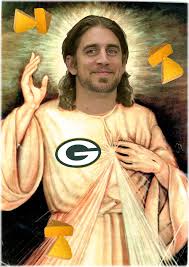
aaron rodgers jesus

I don’t think St. Aaron attended Penn Law…

If you haven’t been following the frouforole emanating out of Philadelphia, here it is in a nutshell: Professor Amy Wax of Penn Law and Professor Larry Alexander of UCLA penned a provocative piece at Philly.com. If we really want to ease the burdens of poverty, they reasoned, we should encourage more people to embrace “bourgeois culture.” Such ideas have gotten a bum rap, Wax and Alexander said, but the notions of deferred gratification, stable two-parent households, and patriotic clean living are of enormous economic value.

The outcry was loud and predictable. Penn students rallied to shut down such “white supremacist” notions. Wax’s colleagues denounced her ideas in more nuanced form.

Any progressive historians in the room surely share Professor Zimmerman’s concern. After all, when academic speech has been banned and persecuted in this country, it has been progressive and leftist scholars who have borne the brunt of such punishment.

There is a more important reason to allow and encourage a frank and open airing of Professor Wax’s arguments. As recent polls have reminded us, Americans in general are profoundly divided about the meaning of poverty. For argument’s sake, we might say there are two general sides. Lots of us think that the most important cause of poverty is a social system that defends its own built-in hierarchies. Rich people stay rich and poor people stay poor. Lots of other people disagree. Many Americans tend to blame individuals for their poverty, to assume that personal characteristics such as grit and gumption are enough to solve the problem of poverty.

Professor Wax’s argument tends to support the latter view. And if you disagree with her, you might be tempted to try to shut her down.

That’s a mistake.

Why? Because her arguments just don’t hold water. And because the more often we can get discussions of poverty on the front pages, the more chances we’ll have to make better arguments, to explain that America’s anxiously held Horatio-Alger notions don’t match reality.

In other words, when it comes to tackling the problem of poverty in America, the biggest challenge is that people simply don’t want to talk about it. They want to rest in their comfortable assumptions that the system is fundamentally fair even if some people don’t have what it takes to get ahead.

I’m convinced that the truth is different. Personal characteristics matter, of course. Far more important, however, is the whole picture—the social system that puts some kids on a smooth escalator to riches and others in a deep economic pit with a broken ladder.

Because I’m convinced that the best social-science evidence supports my position, I want to hear more from people like Professor Wax. I want to encourage people who disagree to make their cases in the front pages of every newspaper in the country.

Sound nutty? Consider a couple of examples from near and far.

Radical creationists like Ken Ham want to protect children from the idea of evolution. They fear, in short, that students who hear the evidence for evolution will find it convincing. With a few prominent exceptions, radical creationists want to cut evolution from textbooks and inoculate students against evolution’s powerful intellectual allure.

Those of us who want to help children learn more and better science should welcome every chance to put the evidence for mainstream evolutionary theory up against the evidence for radical young-earth creationism. Mainstream science should never try to shut down dissident creationist science. That’s counter-productive. Rather, mainstream science should encourage frank and open discussions, knowing that exposure to the arguments on both sides will convince more and more people of the power of mainstream thinking.

Or, for my Wisconsin friends, consider another example.

If a Bears fan wants to clamber up on the bar and insist that her team is better than the Packers, it would be the height of folly to try to stop her from speaking her piece. Those of us who know the true saving grace of St. Aaron will instead happily let her slur through her argument, smiling and waiting for Thursday night. The more games we play, the more often the Packers will win.

When the evidence is on our side, it is always better to encourage all the debate we can get.

The Real Intelligent Designer

Does it matter? Who cares if a gold-medal-winning engineering breakthrough came from a young-earth creationist? When it comes to understanding our creation/evolution debates, I think it matters a lot, especially for those of us who want more and better evolution education in our public schools.

Here’s what we know: Recently, young-earth impresario Ken Ham has crowed about the accomplishments of Professor Stuart Burgess. According to Ham, Prof. Burgess helped design a bike chain that was used by a gold-medal-winning UK cycling team. And, guess what: Professor Burgess is a committed young-earth creationist.

team-great-britian-olympic-bicycle-display

Reducible Complexity

SAGLRROILYBYGTH and others who share my obsession with all things creationist may wonder why we have to bring up this old chestnut yet again. We all know the script here. Young-earthers will trumpet the few engineers and doctors who hold young-earth beliefs. Mainstream scientists will point to the National Center for Science Education’s Project Steve. If there are a few science-y creationists, there are bajillions more science-y non-creationists.

We’ve all been around and around this debate before, but I think it’s worth bringing up again. As I’m arguing in my current book, if we really want to understand American (and UK) creationism, we have to abandon the satisfying but false notion that creationism is a product of mere ignorance.

Or, to be more precise, we need to wrap our heads around the fact that there are vastly different forms of ignorance. In some cases, people simply don’t know things. In other cases, though, some types of knowledge are blocked by competing types of knowledge.

Creationists can certainly display both sorts of ignorance. Some of them might just have never heard the arguments of mainstream evolutionary science. But the fact that there are any young-earth creationists who have scored big successes in science-y fields helps prove that the real difficulty results from the second type of ignorance. Creationists can be very successful in society, even in science-related fields, even if they “know” that mainstream evolutionary theory is bogus. Even if we don’t want to admit it, Ken Ham is correct in boasting that “Professor Burgess is definitely both a real scientist and a creationist!”

We don’t need to tangle with the endless debate about whether creationism is real science, dead science, or zombie science. We don’t need to gnash our teeth and exclaim that Burgess’s scientific accomplishments happened in spite of, not because of, his creationist beliefs. The point here is different. The fact that engineers like Dr. Burgess are both successful mainstream practitioners and convinced young-earth creationists matters for different reasons.

Why does it matter? Because it reminds us that creationism is not simply the product of isolation from modern knowledge. Creationists aren’t people who simply haven’t heard about evolutionary theory or modern science. Since that’s the case, we won’t spread knowledge of evolutionary beliefs merely by making it available. We won’t successfully teach evolutionary theory to Americans unless and until we recognize the fact that creationism is more than a deficit hoping to be fixed, an emptiness waiting to be filled, a naïve lack of knowledge seeking the best modern knowledge.

As I’ve argued in my recent book (co-written with philosopher Harvey Siegel), if we really want to teach evolution in this creation nation, we need to start by understanding this central fact about American creationism.

The fact that creationist engineers like Dr. Burgess can have outstandingly successful technical careers serves as more proof that creationism is something other than a lack of knowledge about evolution. When we’re designing bike chains, it doesn’t really matter how old the earth is. It doesn’t matter that mainstream evolutionary theory offers by far the best current explanation of the ways species came to be different from one another.

What does matter—at least for those of us who are trying to understand creationism as it really is—is that creationism is not a leftover from hillbilly isolationism. Creationism isn’t the result of a lack of exposure to modern ideas. Creationism, rather, is a different way of being modern.

What’s Missing from this Creationist School?

Is young-earth creationism an inward-looking fortress? …or a missionary outpost? News from Kentucky is pushing your humble editor in a new direction.

Here’s the latest: Ken Ham’s Answers In Genesis (AIG) organization is partnering with Renewanation (it’s easier to read when you cut it into three: Renew-A-Nation) to open a new creationist school near the Creation Museum. Students will get free family passes to the museums. Teachers will be able to use the museum as a teaching aid.

So far, so obvious. But the announcement adds new fuel to an old debate about young-earth creationism. Is it meant to be a form of evangelical outreach? Or is it rather just a way to circle fundamentalist wagons?

Some scholars have made strong cases for the latter. In his wonderful book God’s Own Scientists, anthropologist Chris Toumey argues that young-earth creationism is not about outreach. Rather, young earth science

preaches mostly to those who are already converted, and its effect is more to sustain the beliefs of the converted than to change other peoples’ convictions.

AIG watchers Bill and Susan Trollinger, too, argue that young-earth creationism is more about protecting than witnessing. As they put it in a recent blog post,

In the end, it is all about protecting the children.

On the other hand, the language of young-earth creationism is full of missionary talk. The reason dinosaurs are such a powerful creationist weapon, Ken Ham likes to say, is because they are “missionary lizards.” The goal of his ministry, Ham insists, is to reach as many benighted people as possible with the saving gospel of Genesis.

As I wrestle with this question for my new book about American creationism, I’ve tended to think that we need to take Ham’s missionary talk at face value.

The announcement of a new AIG-partnered school, however, leaves a few things conspicuously absent. The goal of the new school, according to AIG, will be to help creationist students remain creationists. When they are confronted with mainstream ideas about science and religion, they will have convincing ways to rebut. As AIG puts it,

[Our new school] wants to help curb the trend of young people walking away from the church by equipping them—from kindergarten through their senior year—with apologetics, using logic and critical-thinking skills.

AIG’s partner, Renewanation, promises to inculcate a biblical worldview that will give students everything they need to resist the intellectual and spiritual trends of modern America.

twelve-stones-academy-logo

Safe Spaces

What are the most prevalent “myths” the school wants to disprove? You might think they’d be things such as “natural selection is our current best understanding of the ways species came to differentiate from one another.” Or something such as “the Bible is a powerful spiritual tool, but it was cobbled together over generations by fallible human editors.”

Nope.

The “myths” blasted by the Renewanation folks are much more closely focused on the insular community of young-earth creationists. They don’t seem interested in reaching non-creationists with their message. Rather, they mostly want to convince the converted that their school is the only way to keep their children safe.

What are the most prevalent “myths” the Renewanators want to debunk?

  • Christian schools are too expensive.
  • They don’t have good sports programs.
  • They aren’t really necessary, just optional.

In every case, Renewanation clearly targeted the already converted. Their argument is not about missionary fervor; it is about safety and protection for the already convinced. Most remarkably, the notion of young-earth creationism itself was not a huge part of the appeal. Rather, the goal of this new school—and of the Renewation school network as a whole—is to provide an insular educational setting in which young-earth creationist students can learn to remain young-earth creationists, no matter what.

The goal is not (only) to teach young-earth creationism. Rather, it is to teach young-earth creationists.

And, of course, there is no reason why YEC can’t be both an insular fortress and a missionary outpost. The fortress protects the missionaries as they do their work. This school announcement, though, certainly seems to be more about the “protecting” part than the “outreach” part.

Desperate Times at Bryan College

They might seem like two totally separate things. First, Bryan College awards an honorary doctorate to a young-earth creationist pundit. Second, Bryan’s president conducts some financial hocus-pocus to keep the school officially in the black. They might seem separate, but they are both symptoms of the same deep malaise that plagues Bryan. Moreover, they are irruptions of the perennial life-or-death tension that has always dictated policy at all conservative evangelical schools.

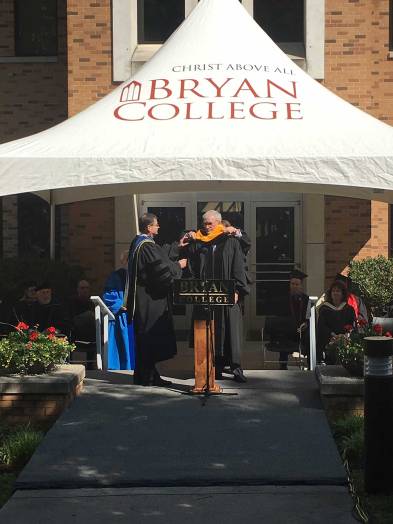
Here’s what we know: Last week, Bryan College awarded an honorary doctorate to young-earth impresario Ken Ham. Bryan President Stephen Livesay praised Ham, saying,

In a day when most of the culture and, sadly, many Christians proclaim a naturalistic worldview, Ken Ham boldly and persuasively argues for a biblical understanding of “In the beginning God.”

At the same time, yet another trustee resigned from Bryan’s board. Wayne Cropp, one of the few trustees who remained after the Night of the Long Knives in 2014, finally had enough. He claimed that President Livesay had sneakily made some real estate transfers to make it look as if Bryan College were in better financial shape than it really is.

Ken Ham hooded at Bryan

I love you but you’re going to boost enrollments…

Now, your humble editor has absolutely no insider knowledge about these goings-on. But based on the research for my current book about the history of evangelical higher education, I can say with confidence that these two events are likely part of the same desperate survival strategy.

In a nutshell, President Livesay is doing whatever it takes to keep Bryan College alive. Like many small colleges in the United States, Bryan is always teetering on the brink of financial collapse. At Sweet Briar, remember, wealthy alumni had to pony up extra just to keep the lights on. Unlike many small colleges, however, Livesay has an extra trump card he can play. And he’s been playing it for years.

In order to attract students with their life-sustaining tuition dollars, Livesay—like leaders at all evangelical colleges—can plant a flag for fundamentalism and young-earth creationism. In Bryan’s case, the school has taken drastic steps to purge any whiff of creationism that doesn’t meet the strict young-earth standards of Ken Ham.

As I discovered in my recent research, the pattern is as old as fundamentalist higher education itself. For example, Wheaton College in Illinois experienced a drastic rise in enrollments when it joined the fundamentalist crusade in the 1920s. Before it became the “Fundamentalist Harvard,” a majority of Wheaton’s students came from Illinois. After it planted a flag for fundamentalist higher education, a full three-quarters of its students came from outside the state. And attendance boomed. Between 1916 and 1928, the college grew by over four hundred percent in terms of student attendance.

It can be a risky game, though. Relying on a reputation as a staunchly fundamentalist or young-earth creationist school can bite schools in the behind. In the 1960s, when Wheaton’s leaders wanted to shake off some of the intellectual baggage of the fundamentalist movement, their enrollment numbers took a huge hit.

In 1964, a total of 8,528 potential Wheaton students had asked for admissions information. Only three years later, that number plunged to only 6,403. Why? Admissions Director Charles Schoenherr had an idea. In a memo to President Hudson Armerding, Schoenherr asked plaintively, “To what extent have rumors about Wheaton going ‘liberal’ hurt?”

Like Bryan, Wheaton relies on reputation to keep tuition dollars coming in. And like Bryan, Wheaton has long relied on honorary doctorates to shore up that reputation. Between 1920 and 1965, Wheaton gave out 180 honorary doctorates.

And the top leadership at Wheaton, just like at Bryan, did not hesitate to use those doctorates to reassure anxious fundamentalist parents. In 1962, then-President V. Raymond Edman wrote to one distressed parent. The parent had heard rumors that Wheaton no longer respected its fundamentalist roots. She had heard that the school had embraced evolution. Was it true? As she put it, “What grieves me most is that our daughter may lose her faith at Wheaton. Is this possible?”

Not in the slightest, President Edman assured her. How could she know for sure? Because prominent creationist Harry Rimmer held an honorary doctorate. Furthermore, Edman told her, the entire faculty at Wheaton were “convinced fundamentalists.”

If you didn’t have a calendar handy, you could simply swap out some names and the story could be from Dayton, Tennessee. Bryan President Stephen Livesay is desperate for dollars. So he gives Ken Ham a hug and a doctorate. At the same time, he rams through an iffy land deal that balances the books, sort of.

The names have changed, but the game is the same. Bryan College is desperate. Like a lot of small colleges, it is running on a financial knife edge. Unlike many schools, though, Bryan has a chance to appeal to a cultural niche market. If Livesay can convince young-earthers that his school is true to their ideas about science and faith, he might just attract enough tuition-paying students to keep Bryan alive. Until then, he’ll have to cook some real-estate books to pump a few more breaths into his campus.

HT: KT

Give Creationists Government Rocks!

If you listened only to his press releases, you’d think creationist impresario Ken Ham was the most persecuted man in America, standing boldly in the path of “brainwashed” government leaders set on ruthless atheist indoctrination of America’s creationist kids. Mostly, his puffed-up rhetoric is silly and overblown. In one recent case, though, Ham and his colleagues are exactly right. There is no reason why they should not be allowed to engage in their peculiar science. More specifically, there is no reason why the government should not give them equal access to research materials.

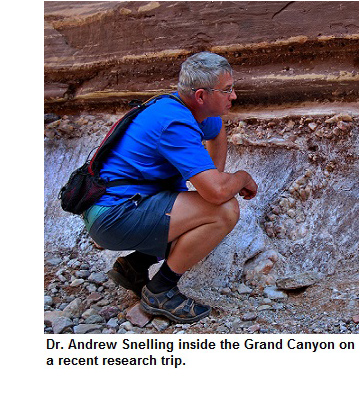
Here’s what we know: Andrew Snelling, a young-earth creationist researcher affiliated with Ham’s Answers in Genesis organization, has been denied permission to remove rocks from the Grand Canyon. Yesterday, the conservative activist organization Alliance Defending Freedom has filed suit on Snelling’s behalf in federal court.andrew snelling grand canyon

The suit alleges that the Department of the Interior unfairly discriminated against Snelling for his creationist religious beliefs. Snelling had hoped to remove about thirty pounds of rocks from the Grand Canyon. He wanted to ship them back to his lab in Kentucky for research purposes.

According to news accounts, Dept. of Interior officials sent his application to mainstream scientists for review. One called Snelling’s creationist research “outlandish.” Another rejected the application due to its “dead-end creationist material.”

Let me be clear: I agree that the science pursued by Snelling is outlandish. It might not be “dead-end,” but it is “zombie science.”

But that does not mean that Dr. Snelling does not have every right to engage in his scientific pursuits. The reviewers in this case seem to have a woefully skewed idea of the proper role of government. According to one report, at least, one of the academic reviewers told the Department of Interior this case was

not a question of fairness to all points of view, but rather adherence to your narrowly defined institution mandate predicated in part on the fact that ours is a secular society as per our constitution.

Of course, that’s not what our First Amendment demands at all. Its two clauses—the establishment clause and the free exercise clause—never demand or even suggest a government role in creating a secular society. Rather, the federal government may not establish a religion. Nor may it inhibit free exercise of religion.

In this case, the government has no mandate to decide if Snelling’s work is secular enough to qualify. Neither the government nor anyone else can say with a straight face that Snelling is not engaged in scientific research. It might be kooky. It might be zombie. But “science” is not subject to a simple demarcation. It’s not a simple matter for anyone to rule something out of the realm of science. It is certainly more than government regulators can hope to do.

What should the Department of Interior do? Let Snelling sample the rocks! Give him equal access to publicly available research materials!

None of this means that the Department of the Interior can never limit the use of Grand Canyon rocks. Obviously, if some scheming entrepreneur wanted to take rocks out of the canyon to sell, he should be denied. Or, if the rocks were extremely rare and fragile—if removing them would harm the canyon—permission should be denied.

Plus, at times the federal government needs to make hard decisions about good science. When there’s federal money on the table, for instance, the government has a duty to choose the best, most promising proposals to fund. So, in this case, if Dr. Snelling was applying for a National Science Foundation grant to pay for his research, it would make perfect sense for reviewers to weigh in on the likely “dead-end” nature of his proposed research.

Similarly, if kids and public education are involved, the government has a similar duty to discern. As Harvey Siegel and I argue in our recent book Teaching Evolution in a Creation Nation, just because we can’t clearly define away creation science as non-science, we can still conclude that it is worse science. We don’t need to include every scientific idea in public-school science classes, only the good ones. And by any reasonable measure Dr. Snelling’s young-earth science is not as good as mainstream evolutionary science.

In this particular case, however, there is no government money on the table. There is no implied endorsement of religious ideas. There are no public schools involved.

So we say: Let Snelling work! Let him study rocks!

Of course, the folks at Answers In Genesis might not like some of the results. If they call for scientific resources to be open for all, they should also open up their one-of-a-kind fossil resources to outside researchers.

Could This Happen at an Evangelical College?

As John Leo reports at Minding the Campus, Professor Anthony Esolen is under pressure. He’s accused of being “racist, xenophobic, sexist, homophobic, and religiously chauvinistic.” He says he’s just being truly Catholic and accuses his Catholic college of straying. As I finish up my book on the history of evangelical and fundamentalist higher education, the story brings a question to mind: Would this—could this—DOES this happen at evangelical colleges?

For those who are outside the orbit of Catholic higher education, let’s start with an inadequate primer: The Catholic Church and its schools include several different orders. Many Catholic colleges, including famous ones such as Georgetown, Boston College, and Marquette, are run by the Jesuits. Other big names, such as Catholic University and Notre Dame, are run directly by the Church. Esolen’s Providence College is Dominican. All of them are Catholic, but they have different bureaucracies and different ways of doing things.

Anthony-Esolen

Plus Catholique que L’Administration?

Why does it matter? Each order has its own history and its own theological, cultural, and educational traditions. Some tend to be more conservative; some more liberal. As a very loose and general rule, American Jesuits and Franciscans tend to be more liberal when it comes to some things. Dominicans, in my very limited experience, tend to be more conservative. But it varies enormously.

At his Dominican school, Anthony Esolen thinks that the Dominicans are not being nearly conservative enough. As he has complained,

The dirty not-so-secret is that the same people who for many years have loathed our Development of Western Civilization program — the focus of curricular hostility — also despise the Catholic Church and wish to render the Catholic identity of the college merely nominal.

In a lot of ways, it sounds like the perennial tensions at evangelical colleges. Since the early 1960s, market pressure among evangelical and fundamentalist colleges has been so great that any rumor of faculty heterodoxy at evangelical schools has been ferociously squelched by school administrators. In other words, in their life-or-death struggle to attract as many students as possible, administrators at evangelical colleges have worked hard to shut down any whiff of liberalism among their faculty. They have been terrified of alienating conservative parents and losing their tuition dollars.

And school-watchers know it. Conservative and fundamentalist critics—including trustees and celebrities—have scrutinized the goings-on at evangelical schools with a gimlet eye. In many cases, they have threatened to publicize the liberalism of evangelical schools, hoping to cow administrators into cracking down. Time and time again, evangelical administrators have taken drastic action to head off any accusation that they are no longer trustworthy.

It sounds as if Professor Esolen is working from a similar playbook. As he said on Facebook recently, “It is no longer clear to me that Providence College would qualify as ‘worth attending’.”

In the world of fundamentalist and evangelical higher education, these sorts of enrollment threats carry a great deal of weight. Young-earth creationist Ken Ham, for example, has been able to push schools to shore up their creationist credentials by wondering, in effect, if some evangelical schools are still worth attending.

But here’s where I’m puzzled. Have evangelical schools had to wrestle with professors who are too conservative? Too creationist? Too fundamentalist?

I can think of a few cases, but nothing seems perfectly analogous.

For example, take the story of Gordon Clark at Wheaton. Back in the 1930s, Clark had a sterling resume, with an Ivy League PhD. Wheaton College was happy to have him, for a while. Clark’s ferocious Calvinism, however, sat roughly with Wheaton’s interdenominational, big-tent-evangelical tradition. Clark pooh-poohed the emotional revivalism so popular among Wheaton’s students. In 1943, for instance, he dismissed a campus revival as mere “mass psychology,” not true salvation. And he disdained a popular evangelical method of Bible reading, the dispensational approach. So Clark didn’t last at Wheaton.

It’s sort of similar to Esolen’s case, but not exactly. Professor Clark never accused Wheaton of abandoning its evangelical tradition. Rather, Clark wanted evangelical students to be more rigorously conservative, more systematically Calvinist. But Clark never thought Wheaton had abandoned its Calvinist roots, because it hadn’t. Professor Clark understood that Wheaton shared the perennial problem of interdenominational evangelical schools everywhere: They wanted an impossibly generic orthodoxy.

On the campuses of evangelical colleges and universities, we mostly hear about professors who get in hot water for being too liberal, not too conservative. Most recently, for example, the case of Larycia Hawkins comes to mind. She was booted (yes, she was booted, no matter that she officially agreed to depart on her own) for wearing a hijab, bragging about it, and proclaiming that Muslims, Jews, and Christians all worshipped the same God.

For all you SAGLRROILYBYGTH out there who know the world of evangelical higher education better than I do….am I missing something? Are there other conservative professors who get in trouble for being more fundamentalist than their evangelical schools? Could Professor Esolen’s dilemma be repeated on an evangelical campus? HAS it been?

I Love You but You Didn’t Do the Reading

Your humble editor has been distracted lately by all the excitement of our New York National History Day competition in scenic Cooperstown, New York. The rest of the world, though, kept on rollin. Here are some of the stories we might have missed…

What does Steve Bannon think of God? Hugh Urban describes Bannon’s theology at Religion & Politics.

Baylor picks its first woman president. Is this a new normal for evangelical higher education?

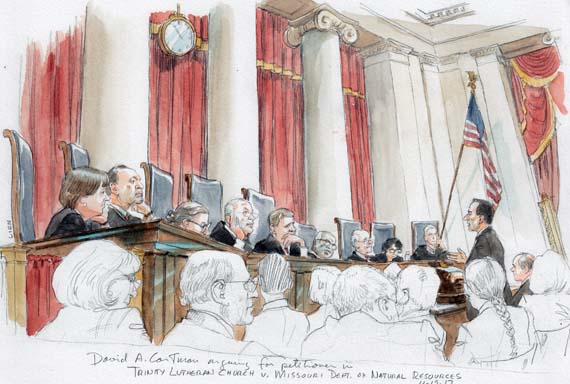
The latest from the Lutherans: Check out coverage of the Missouri church/school case currently before SCOTUS.

Trinity Lutheran v. Missouri, No.15-577

Can religious schools get ANY public money? How much? …for what?

Can arch-creationist Ken Ham support the March for Science? The answer won’t surprise you.

Will school lunches get fat again? Trump’s pick for the USDA might roll back nutrition guidelines for school meals, from Politico. (Scroll down).

Just When You Thought It Was Safe to Be a Creationist on Campus…

Who’s the racist? In creation/evolution debates these days, you’re likely to hear creationists tar evolution as a racist idea. Recently, however, young-earth creationist impresario Ken Ham complains that creationist anti-racism has now been labeled a racial “microaggression.”

It has long been a favorite claim of creationist activists. At the end of the twentieth century, for example, veteran creationist campaigner Jerry Bergman argued that Darwin’s evolutionary ideas led in a direct line to the Nazi Holocaust. From the Institute for Creation Research, too, Henry Morris insisted that creationists were the true anti-racists, since they believed all humans came from the same original two ancestors.

Small wonder, then, that creationists today are flummoxed by their renewed role as racists. Ken Ham took umbrage at a new list of microaggressions published by the University of California. As have many campus commentators, the UC list warns that some statements intended to be innocent or race-neutral may actually carry undertones of white privilege. For instance, to say that race doesn’t matter, or that one does not believe in race, can be seen by some as a fair-minded anti-racist statement. For others, however, such “color-blind” statements de-legitimize the unique difficulties experienced by racial minorities.

Ken Ham does not seem interested in those sorts of distinctions. Rather, he tackles the UC accusation head-on, insisting that his creationist anti-racism is the only truly scientific position. As he puts it,

Really, “races” is just an “evolutionized” term we shouldn’t use anymore because the idea is simply not true. So for the University of California to say that we shouldn’t say there’s only one race flies in the face of what observational science has clearly shown to be true! And of course, the Bible makes it obvious there is only one race because all humans are descended from Adam! The University of California (and many other campuses) is trying to suppress certain ideas and promote only one worldview—even contrary to observational science. Our starting point really does matter!

To this reporter, Ham’s umbrage seems to miss the point. By the time California students had time to be offended by his creationist anti-racist microaggression, wouldn’t they already be even more put out by his macro-aggressive creationist evangelism?

Creation, Christians, and the Deadlock Myth

Whoops! There it is again—another commentator implying that we have been trapped in an endless deadlock over evolution and creation. It’s just not true, as we argue in our new book. That doesn’t stop it from being a very popular thing to say.

groundhog-day-spring

Six more decades of creationist debate…

To be fair, Pastor Ryan Gear is more interested in Christian attitudes than in educational policy. He laments the fact that so many conservative Christians continue to doubt evolution and climate change. He points out that such skepticism is not necessary, from a religious viewpoint.

Fair enough. Gear goes off the rails, however, when he implies that things have not changed for Christians when it comes to evolution and creation. As he puts it, if Darwin were alive today, “he would observe that Christians have not evolved much in relation to his theory.”

Hold the phone. In terms of both education policy and religious belief, such statements woefully misrepresent the history of the evolution/creation debate.

First, as I argue in my upcoming book, co-authored with philosopher extraordinaire Harvey Siegel, evolution education has experienced radical changes across the decades. Over long decades, evolution education has made enormous advances. In the 1920s, several states banned the teaching of evolution in public schools entirely.

As I argued in my first book, the fight over evolution in the 1920s was a fight—successful in many ways—to make explicit and legally binding the traditional evangelical Protestant domination of American public life.

These days, the goals of creationists are much tamer. Even the most vociferous young-earth advocates insist they don’t want creationism taught in public schools. Intelligent-designers have scrubbed the explicit religious references out of their arguments.

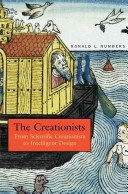
The_Creationists_by_Ronald_Numbers

Have you read it yet?

Also, the very meanings of creationism itself have changed dramatically. As our leading historian of creationism (and my grad-school mentor) Ronald Numbers has demonstrated, today’s popular young-earth creationism was itself a novelty of the mid-twentieth century. In early evolution battles, very few anti-evolutionists insisted on a young earth.

In 1927, for example, fundamentalist activist William Bell Riley insisted, there is not

an intelligent fundamentalist who claims that the earth was made six thousand years ago; and the Bible never taught any such thing.

Back then, Riley was the hard edge of creationist activism. He was the founder and leader of the World [or World’s] Christian Fundamentals Association. He founded a thriving school in his adopted home city of Minneapolis. He represented, to many contemporaries, the extreme, uncompromising wing of 1920s anti-evolutionism.

And he did not believe in a young earth. He did not think it mattered.

Today, of course, the religious landscape of American creationism is much different. Not only do many Christians in big conglomerations such as the Southern Baptist Convention insist on belief in creationism, but they also believe that real creationism means belief in a young earth and a literal six-day creation.

That is new.

We have not been deadlocked for generations in the same ol’ evolution/creation battles. In terms of public policy and private belief, everything has changed. Utterly.

Why does any of this matter to us? Deadlock suggests a need for drastic action. It suggests a stalemate, one that can only be broken by decisive, radical action. The truth, however, is not quite so exciting.

In the past hundred years, the evolution/creation debates have not been stymied in a go-nowhere morass. Rather, people like me who want more and better evolution education have consistently scored important victories. People like Pastor Gear, on the other hand, have been forced to argue against growing percentages of evangelical Christians who insist on a scientifically outlandish young-earth creationism.

From the perspective of public policy, the prescription is clear. We should keep going with our efforts to improve real evolution education in public schools. Evolution, and only evolution, should be taught as our best current scientific understanding of the way species came to be.

At the same time, we should adopt a determinedly neutral stance toward the creationist debates among evangelical Christians. If young-earth advocates want to square off against evolutionary creationists, so be it. Such religious debates are outside the realm of public-school policy.

This kind of nuanced, non-alarmist policy argument does not make for good headlines. That’s why we will likely continue to see every creation/evolution article and op-ed opened with a lament that things have not changed.

If we really want to move forward, however, on questions of evolution, creationism, and education, we need to get beyond the headlines. We need to get beyond the ahistorical assertion that we are trapped in a never-ending evolution/creation Groundhog Day.

Creation College Scorecard

How can you do it? How can outsiders push colleges to do more of what they want? The rage these days is to issue rankings. Since colleges are ferociously competitive and many of them are teetering on the brink of insolvency, college leaders are willing to do what it takes to move their colleges up any ranked list. Everyone from President Obama to young-earth impresario Ken Ham is issuing their own unique college scorecards.

Whom can a creationist trust?

Whom can a creationist trust?

In each case, influential outsiders promise that their scorecards offer students and parents a helping hand. President Obama, for example, insisted that his new scorecard was “meant to help students and parents identify which schools provide the biggest bang for your buck.” Ken Ham, too, promises that his Answers In Genesis ministry now has

resources to help young people (and their parents) with the upcoming college years. In addition to our annual College Expo weekend for students thinking about attending a Christian college (which will be here at the Creation Museum this November 6 and 7), we have just updated our special CreationColleges.org web site. It helps young people (and parents) narrow the overwhelming process of choosing a college even more.

These scorecards, though, do more than just provide information. They pressure schools to move in a certain direction. If college presidents want to move their schools up the list of rankings, they will make changes based on the scorecard’s values.

And college presidents DO want to move their schools up the rankings. Any rankings. Colleges and universities these days are locked in a death-struggle for students and tuition dollars. If they can’t attract ever-increasing numbers of applicants, they won’t survive.

President Obama wants schools to pay more attention to student finances. His recent scorecard compares schools based on their financial performance: How much do average graduates earn? How much debt to students accumulate?

Ken Ham is playing the same game. His recently updated Creation College guide offers families information about the ways colleges measure up to Ham’s definition of creationist orthodoxy. Students can see if a school teaches young-earth creationism. They can also see if the president has agreed, and if other key leaders in the Bible and Science Departments have signed on.

Clearly, some conservative evangelical colleges will be tempted to do whatever it takes to get Mr. Ham’s stamp of approval. Some, like Bryan College, have already tightened their statements of faith and pushed out controversial teachers. Others will consider making similar moves.

Don’t like it?  Then why not try putting together a college scorecard of your own?  You could rank colleges based on whatever criteria you choose.  What are the most Benedict-Option-friendly colleges?  What are the most progressive colleges?  What colleges are the best for teaching evolutionary science?  Etc.!