Why The Donald?

There’s not much that conservative and progressive intellectuals can agree on. But one thing unites thinkers across the culture-war divide these days: Why do so many people like Donald Trump? Fred Barnes at the conservative Weekly Standard visited a focus group of Trump fans to find out. Maybe the answer lies deep in the heart of American culture and history.

What's to like?

What’s to like?

For those of you who are just emerging from under your summer rocks, Trump has grabbed everyone’s attention with his successes in recent presidential polls. He has uttered outlandish statements, calling Mexicans rapists, implying that women reporters can’t handle the job, and ridiculing John McCain’s war record.

Conservative pundits have scrambled to distance themselves—and conservatism itself—from Trump’s brand of schlock.  Erick Erickson disinvited The Donald from a GOP debate.  George Will has denounced “[e]very sulfurous belch from the molten interior of the volcanic Trump phenomenon.”  Crunchy conservative Rod Dreher has scratched his head in bemusement as he’s watched the emergence of “Trumpenstein Monster.”  As Barnes asks, what is it about Trump that attracts people?

The twenty-nine assembled fans like more than Trump’s policies. They like Trump. As Barnes puts it,

Their tie to him is almost mystical. He’s a kind of political savior, someone who says what they think.

Will such Trumpies stick with the Donald all the way? Of the assembled group, most said they’d stick with Trump if he ran for president as head of a third party. They viewed Trump as a non-politician, someone who tells it like it is regardless of the consequences.

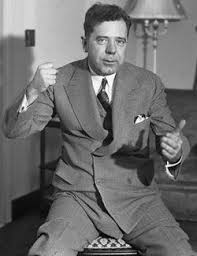
Maybe it isn’t so difficult to understand Trump’s attraction. People on both sides of the political spectrum have always rooted for brash, in-your-face candidates. Those who know their history can’t help but think of Huey Long, the governor, senator, and sometime presidential candidate from Louisiana. Long’s antics put The Donald’s to shame. Has Trump ever gotten beat-up in the bathroom of a bar for attempting to urinate between the legs of another gentleman? Has Trump ever greeted a foreign ambassador wearing nothing but silk pajamas?

Trumping Trump

Trumping Trump

The more outlandish the behavior, the more people like it. The more offensive the ideas, the more people respect them.

Does Trump stand a chance at becoming president? I’ll say it: No. This sort of behavior plays well in primaries, but in the end, Americans still prefer boring presidents.

Does Your School Smell of BO?

Conservative intellectuals these days are talking a lot about the “Benedict Option.” The idea is to create intentional communities that preserve traditional values as mainstream culture hurtles ever-faster toward anti-Christian values. In the wake of Supreme Court rulings in favor of same-sex marriage, will such ideas catch on?

Short answer: No. If history is any guide, conservative evangelicals, at least, will continue to feel quite at home in their local mainstream communities. A quick burst of community-founding might happen, but it will likely ebb once conservatives realize how un-alienated they are from the mainstream.

Blogger Rod Dreher seems to have sparked the recent discussion of a “Benedict Option.” Dreher profiled intentional lay communities in Clear Creek, Oklahoma and Eagle River, Alaska. He asked if more conservative Christians would follow suit:

Should they take what might be called the “Benedict Option”: communal withdrawal from the mainstream, for the sake of sheltering one’s faith and family from corrosive modernity and cultivating a more traditional way of life?

As Dreher has developed the idea, it has naturally come to focus on educational goals. Even in staunchly Christian communities, Dreher has argued, the public schools lack any sense of guiding values. Kids in fifth grade share porn; they have no beef with same-sex marriage. Even in such apparent Christian havens as small-town Louisiana, Dreher believes, kids and their parents have embraced a bland, therapeutic religiosity. The Benedict Option, Dreher thinks, offers conservatives their only hope. As he put it,

There are no safe places to raise Christian kids in America other than the countercultural places we make for ourselves, together. If we do not form our consciences and the consciences of our children to be distinctly Christian and distinctly countercultural, even if that means some degree of intentional separation from the mainstream, we are not going to survive.

Dreher has taken some heat from fellow conservatives for culture-war pessimism. Not every conservative wants to turn inward. But as Dreher recently noted, many prominent evangelical thinkers such as Russell Moore seem to be adopting a BO approach to mainstream culture.

Similarly, Thomas Kidd of Baylor University has recently endorsed a BO attitude. Earlier this week, Kidd wrote,

for “paleo” evangelicals the Benedict Option is unquestionably the route we’ll need to take in the coming days. It is the way of fidelity for Christians, as the world around us sloughs off what remains of our quasi-Christian culture.

As Dreher and other BO-friendly conservatives repeat, BO does not mean Amish. It does not mean turning away entirely from mainstream culture. In some BO communities, for instance, families make their money from internet telecommuting. They insist on remaining engaged in mainstream politics and local affairs, even as they insist on retaining more control over their children’s upbringing.

Will the Benedict Option attract more and more support from conservative Christians? If history is any guide, the likely answer is no. As Dreher, Kidd, and Moore all realize, the tension among conservative Christians between engagement and withdrawal is as old as Christianity itself. In recent American history, as I’ve argued in academic articles about Christian schools and school prayer, evangelical Protestants have tended to wax and wane in their enthusiasm for BO approaches to schooling.

In 1963, SCOTUS decided that the Lord’s Prayer could not be recited in public schools, nor could the Bible be read devotionally. This decision caused some conservative evangelicals to conclude that they had been kicked out of public school and American society.

In the pages of leading evangelical magazine Christianity Today, for example, the editors intoned that the decision reduced Christian America to only a tiny “believing remnant.” No longer did the United States respect its traditional evangelical forms, they worried. Rather, only a tiny fraction of Americans remained true to the faith, and they had better get used to being persecuted.

Similarly, fundamentalist leader Carl McIntire insisted that the 1963 school-prayer decision meant the death of Christian America. In the pages of his popular magazine Christian Beacon, one writer warned that the Supreme Court decision meant a wave of “repression, restriction, harassment, and then outright persecution . . . in secular opposition to Christian witness.”

From the West Coast, Samuel Sutherland of Biola University agreed. The 1963 decision, Sutherland wrote, proved that the United States had become an “atheistic nation, no whit better than God-denying, God-defying Russia herself.”

These attitudes helped fuel a burst of new Christian schools in the 1970s. But as Christian-school leaders are painfully aware, many of those new schools couldn’t survive. Why? At least in part, because not enough conservatives feel alienated from their local mainstream communities. Why should they?

As I argue in my new book, public schools are far more conservative places than most pundits acknowledge. There is a lot of talk among both progressives and conservatives about the progressive takeover of public education, but for most Americans, their local schools remain fairly conservative places.

At the very top, leaders such as Arne Duncan embrace free-market approaches to education reform. In places such as Texas, creationist homeschoolers—folks who might fairly call themselves BO activists—have risen to the top of the state public educational hierarchy.

Why would conservatives think that they no longer had any pull in public schools? As Dreher is fully aware, many conservatives do not object to mainstream culture; they feel no yearning to give their children a radically different upbringing. If that’s the case, talk of BO in schools will not be a more than a minority sentiment.

Just as relatively few progressives abandon public schools for purer options, so too only a handful of conservatives will make the sacrifices necessary to give their children a BO education.


A School Plan to Cure Racism

It can be depressing. Just over fifty years ago, Thurgood Marshall announced the civil-rights victory of Brown v. Board of Education. In no more than five years, Marshall predicted, the nation’s schools would be racially integrated. Looking at America’s schools today, scholars see more and more racial segregation in schools, not less. One fancy school in New York City has embarked on a more aggressive plan to cure racism. Both liberal and conservative commentators are aghast. But can it work?

In New York Magazine, Lisa Miller reports on the new anti-racism plan of Fieldston School. At this private progressive school, the administration planned to separate kids out into racial groups. The goal was to allow kids to talk about race and ask potentially “impolite” questions without feeling subtle pressure.

As the head of the school told Miller,

We don’t want to replicate what has happened traditionally. The education that many of us have received about race has not been adequate. Hence, where are we as a nation? We are trying to pioneer, to be at the vanguard of this opportunity, to see if we can get it right.

How do the kids feel? One student in the “black” group told Miller that he liked it:

I get to be with people I can share my race with, and I don’t feel uncomfortable about it. . . . We talk about how it’s important to know what your race is. We talk about the difference between being prejudiced and being racist. So I can know when someone’s being racist to me, and I can help other people know that, too. I can say I’m proud of being black. I remember my friend saying that the affinity groups are racist, but they’re not. They put you in a group of what race you are — I don’t think that’s racist at all. We get to make jokes and stuff, and comments. When we’re talking, we get to draw, we get to laugh.

Other students weren’t so sure. A student in the “Asian” group reported, “It’s so fricking boring.”

The idea, in general, is to help students of all races talk about race and racism. Too many white liberals, the thinking goes, are trapped by their own progressive prejudices. They see themselves as enlightened and post-racial, yet they are unable to recognize the ways race and racism function. Programs like this will help make visible the ways white privilege works.

Some parents objected. How is segregating kids by race a good way to fight racial segregation? And what categories would the school use? A Jewish parent objected that his family had been persecuted by the Ku Klux Klan. Did that make him something other than “white?”

One group of progressive parents started a protest petition. The school’s plan, they insisted, would cause “irreparable harm” to their kids.

Conservatives, too, balk at such racial programs. Rod Dreher, for example, called the program a “grievance-building fun house.”

But is it the best way to teach kids about race? To help kids understand from a young age that racism is a real thing? Or does this sort of thing only promulgate racial stereotypes?

University Apocalypse

Are conservative religious academics forced these days to live “deeply closeted” lives? Have elite universities become so hostile to conservative religious thought that openly acknowledging their religion would be career suicide for academics? In the aftermath of the recent debate over gay rights and religious freedom in Indiana, one elite academic shares his worries in the pages of The American Conservative.

We have to ask: Are things really so dire for conservative academics?

Private?  or Closeted?

Private? or Closeted?

First, though, some context. Readers may remember Jonathan Zimmerman’s (liberal) plea to include more conservatives on campus. And leading schools such as Colorado University have adopted programs to bring conservative thinking to liberal colleges. Both conservatives and non-conservatives agree: Good universities need to recruit actively among a wide diversity of intellectual types.

New voices say it’s not happening.

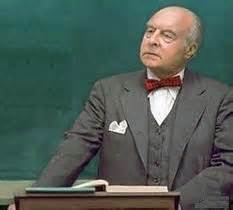
Crunchy conservative Rod Dreher recently shared his conversation on these issues with an anonymous professor at an elite law school. This professor worried that the “overculture” had reacted with frightening intellectual totalitarianism to the recent Indiana case. At leading colleges, “Prof. Kingsfield” warned, religious conservatives are no longer welcome.

“A college professor who is already tenured is probably safe,” Dreher tells us, summing up “Kingsfield’s” story.

Those who aren’t tenured, are in danger. Those who are believed to be religious, or at least religious in ways the legal overculture believes constitutes bigotry, will likely never be hired. For example, the professor said, he was privy to the debate within a faculty hiring meeting in which the candidacy of a liberal Christian was discussed. Though the candidate appeared in every sense to be quite liberal in her views, the fact that she was an open Christian prompted discussion as to whether or not the university would be hiring a “fundamentalist.”

“Kingsfield” also argues that conservative schools will likely face increasing pressure from accrediting bodies. He cites the recent experience of Gordon College. In that case, a re-articulation of a long-standing school policy against sexual activity among students—including homosexual students—created a firestorm of controversy.

Rod Dreher included as a follow-up several emails from academics claiming to have been discriminated against in higher ed.

Do you buy it?

There are a few caveats we need to keep in mind. First, Professor “Kingsfield” seems to be talking about trends at elite colleges. I’ve been told many times by the sophisticated and good-looking regular readers of I Love You but You’re Going to Hell (SAGLRROILYBYGTH) that their experiences in non-elite colleges have been very different. One correspondent, for instance, told me that his colleagues in a large second-tier state school explicitly taught their students to teach in a conservative religious way.

Also, we need to remember that we’re only talking about one conservative tradition here. Generally, non-religious conservatives have had a very easy time fitting into the culture at elite universities. Folks such as the late Milton Friedman, surely, have not faced any sort of career danger for their conservative ideas.

In my experience, my fellow progressive academic folks really do often combine a shocking ignorance of conservative religious culture with a casual contempt for conservative religious ideas. One of the reasons I started this blog, in fact, was due to the fact that so many of my fellow progressives seemed utterly hostile to and uninformed about American conservatism.

On the other hand, my beloved medium-sized public university seems fairly welcoming to religious conservatives. Perhaps because I talk too much about conservatism and fundamentalism, more than one of my faculty colleagues have shared their religious beliefs and background. They don’t trumpet their beliefs, but they don’t hide them either.

My colleagues keep their beliefs private. That’s not the same thing as keeping them “deeply closeted,” though. Are things really so bad for conservative religious academics?

Alert: Public Schools Teach Nihilism!

In the pages of the New York Times, philosopher Justin P. McBrayer repeated an age-old conservative fallacy: Our Public Schools Are Turning Our Children into Moral Monsters. Conservative intellectuals have seized upon McBrayer’s essay as more proof that they need their own conservative school refuges. But here’s the kicker: It’s just not true.

First, let’s clarify. Professor McBrayer is not writing as a conservative activist, it seems, but as a concerned citizen, parent, and philosopher. He notes that many of the college students he deals with seem to have little concept of moral facts. Why? Because, he concludes, “our public schools [are] teaching children that it is not true that it’s wrong to kill people for fun or cheat on tests.”

Scary! But not true. Let’s take a closer look at McBrayer’s argument. He admits that there is not any real evidence that college students these days are moral relativists. However, he asserts, “philosophy professors with whom I have spoken” have assured him it’s true. How does he know what’s going on in America’s public school classrooms? He took one (1) trip to his second-grade son’s classroom. He also looked at the Common Core standards.

From this scanty evidence, McBrayer makes sweeping claims about what’s going on in classrooms nationwide. He also uses this dog’s breakfast to insist that the moral attitudes of college students can be traced directly to this K-12 curricular problem. Why aren’t Americans more moral? Because The Public Schools Have Abandoned Moral Education.

Clearly, Professor McBrayer isn’t the first to make this sort of strained claim. As I argue in my new book, conservative educational activists have said similar things for nearly a century. The pattern is always the same. Texas textbook gadflies Mel and Norma Gabler, for example, claimed to have been minding their own business in 1961, when their son asked them to look at his textbooks. What they read, the Gablers later recalled, “set Mel on fire.” The textbooks, the Gablers concluded, were proof of “progressive education’s grand scheme to change America.”

In Pasadena in 1951, conservative activists became alarmed when one parent found a pamphlet under her daughter’s pillow: “How to Re-Educate your Parents.” Where did she get it? At school!

In 1938, American Legion activist Augustin Rudd found “to his utter astonishment” that his daughters’ textbooks mocked American values.

The problem with each of these claims, as with McBrayer’s, is that the goings-on in any school are not limited to readings and standards. What actually goes on in most classrooms is far more humdrum and traditional. Instead of making alarmist claims based on scanty evidence, it is important to dig deeper into the real practices of schooling.

That’s not easy to do, but scholars have been doing a lot of it for a long time. Perhaps the most relevant recent study might be Michael Berkman’s and Eric Plutzer’s look at teacher education in Pennsylvania. Berkman and Plutzer are well-known political scientists who have devoted a lot of attention to the ways evolution and creationism are taught in real schools. In their recent study, they found that most teachers-in-training are not activists; they are not classroom scientists. Rather, they are job-seekers who hope mostly to avoid controversy and prove their classroom competence.

In short, most public schools tend to reflect local values. They tend not to embrace bold challenges to the status quo. If people in any given school district seem to like evangelical Christianity, as we’ve seen recently, public schools will teach it, regardless of the Supreme Court or the opinions of academics.

Regardless of what standards say, teachers will tend to engage in what they see as common sense. Is it wrong to cheat on a test? Yes! Are there such things as right and wrong? Definitely.

Nevertheless, smart people like Professor McBrayer will likely continue to attribute America’s moral mayhem to K-12 classrooms, based on slim evidence. And conservatives will embrace those charges. In this case, conservative intellectual Rod Dreher has seized upon McBrayer’s charges. McBrayer’s indictment of public education, Dreher insists, proves the necessity of private schools. Only at conservative schools can real education take place.

Of course, I think there are plenty of problems with much of today’s public education, moral and otherwise. And I’m also mad because the New York Times won’t return my calls, even as it publishes flawed commentaries like this one. But in spite of all that, it is important to remember that schools are complicated places. It is not fair to blame our society’s moral morass on today’s curricular choices. Schools reflect our society’s values, they do not simply impose them on hapless children.

Christian College Leader Admits Wrongdoing

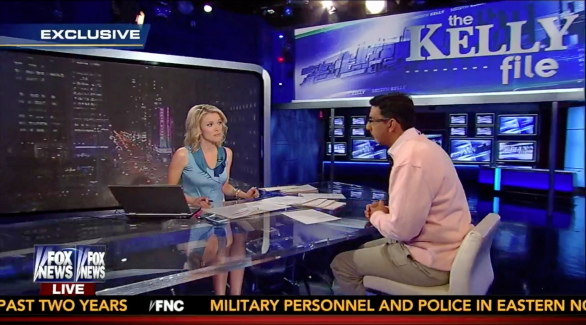
Dinesh D’Souza broke the law.  He recently admitted it.  Some conservative pundits insist that his prosecution is politically motivated.  Is this the end for a spectacular conservative career?

Wunderkind Admits It

Wunderkind Admits It

The conservative Christian writer and celebrity has always had something of a tin ear when it comes to conservative evangelical culture.  A couple of years ago, for instance, he was ousted from his post as president of The King’s College when he appeared in public with a woman who was not his wife.

Nevertheless, D’Souza’s brand of high-sounding punditry has made him hugely popular among American conservatives.  His books and films, such as What’s So Great About Christianity and 2016: Obama’s America, have secured D’Souza’s place as a top name among conservative activists.

This week, D’Souza pleaded guilty to illegal campaign contributions.  In order to help the ailing fortunes of Republican Senate candidate Wendy Long, D’Souza set up “straw donors” in order to exceed legal limits on campaign donations.  In his plea, D’Souza agreed that this action was “wrong” and “stupid.”  He admitted that he knew his actions were illegal.  But he also complained that he was the victim of selective prosecution.

Other conservative pundits agree.  An editorial in the Washington Times lamented,

Whether guilty or not, the fact that Mr. D’Souza has been singled out for prosecution while others skate past freely reveals President Obama’s thumb on the famous lady’s scale.

Some conservative writers take a different line.  Writing in The American Conservative, Rod Dreher insisted that D’Souza must take his lumps.  As Dreher argued,

I have no trouble believing that D’Souza may have been selectively prosecuted. But even if he was, that does not justify his knowingly breaking the law. Does this really have to be explained to conservatives, of all people?  We can’t call for law and order, but carve out special exemptions for our political allies.

Does this spell the end for D’Souza’s career?  As a non-conservative, I would be surprised if any conservative institution were to clamor to be associated with D’Souza after this.  But I’ve been surprised before.


Evolution Is Racist

Evolution is racist, says thinking-man’s conservative Rod Dreher.

But before we anti-creationists pull out our handy refutations of the Darwin-Hitler smear, take another look at Dreher’s real argument.

Dreher is no knee-jerk creationist.  He wants public schools to teach evolutionary science.  For that matter, he wants ALL schools to teach evolutionary science.  He explicitly rejects the simplistic equation of “Darwin” with “racism.”

But Dreher yet objects to the ways liberals hasten to conflate creationism with anti-scientism.  Too many liberals, Dreher argues, pick and choose from their scientific principles.  Just as do creationists, liberals begin with the notion of “forbidden knowledge,” of facts that may or may not be true, but in any case are too dangerous to be widely shared.

For Dreher, the implications of Darwinian natural selection are just such ideas.  Too often, the facts of genetic variation among humans have led all-too-fallible humans to a sinister conclusion.  As Dreher explains,

I flat-out don’t trust our species to handle the knowledge of human biodiversity without turning it into an ideology of dehumanization, racism, and at worst, genocide. Put another way, I am hostile to this kind of thing not because I believe it’s probably false, but because I believe a lot of it is probably true — and we have shown that we, by our natures, can’t handle this kind of truth.

The point, for Dreher, is not the crude creationist mantra that evolutionism leads directly to Hitler.  The point, rather, is that capital-s “Science” has and will be misused to justify humanity’s darkest impulses, just as Religion can be so misused.  Dreher’s point, as I understand it, is that those anti-creationists who smugly wave the flag of Science to discredit religious opposition unwittingly expose themselves as shamefully ignorant of the real issue.  As Dreher concludes,

liberals who love to put the Darwin fish on their cars and rail against fundagelicals who want to teach Creationism in public schools should be honest with themselves and admit that they don’t really want to teach Science and nothing but either. Their enthusiasm for just-the-facts science typically stops the moment science tramples upon one of their sacred principles.

Evolutionary theory may not be racist, in a simple sense.  But Dreher gives us an important reminder that any idea can be misused as a smear to discredit one’s opposition.


Fundamentalist Ducks

Okay, okay, I admit it.  I’ve been itching to write something about the recent Duck Dynasty culture-war imbroglio.  But until now there didn’t seem to be much worth saying.  One sentence said it all: Famous redneck shows ugly blind spot in racial issues and homosexual identities.  Didn’t seem like much more needed talking about.

For those of you who live in caves, bearded patriarch Phil Robertson ruffled feathers with recent ignorant and hateful comments about homosexuals and racial history.  In all his Louisiana life, he told a GQ reporter, he never saw an African American who seemed upset about lacking basic civil rights.  And homosexuals, he opined, should learn to prefer vaginas to men’s anuses.  After all, as Robertson concluded with invincible logic, “I mean, come on, dudes!  You know what I’m saying?”

Until today, everything I’d read about the scandal either defended Robertson’s right to his theology or attacked him for his hate.  But this morning I came across the comments of the brainy conservative Rod Dreher in the pages of Time.com.  For those not familiar with Dreher’s story, he moved back to his small-town Louisiana roots from a go-go New York media career after a family tragedy.

Dreher hit the nail on the head.  While Dreher doesn’t agree with Robertson’s positions, he remarked on the ridiculously excessive shock expressed by many media mavens.  Too many of those “culture-makers,” Dreher lamented,

are often every bit as parochial as those they condemn, but flatter themselves that they are the tolerant, cosmopolitan ones. I have lived in Manhattan, and I live once again in my tiny south Louisiana hometown. To paraphrase Solzhenitsyn, the border between narrow-minded and tolerant runs not between city and country, North and South, degreed and uneducated, but down the middle of every human community and every human heart.

. . .

The Duck Dynasty mess revealed that not all fundamentalists live in the Bible Belt, and that some of the biggest hicks live in Hollywood. The Duckman’s win is a score for authentic diversity and pluralism in the public square, and a victory for the right to be wrong without being ruined.

Hear hear.

When I began my current job as a university professor, I gave a talk about my dissertation research.  That work—which became my first book—concerned the first generation of American fundamentalists.  I soon realized that my tolerant, cosmopolitan university audience contained more than its share of Dreher’s hip hicks.  Not the entire audience, by any means, but certainly an influential group.  These culture-makers did not hope to understand fundamentalists; they did not seem interested in puzzling out the intellectual world I had tried to portray.  Instead, they only rushed to demonstrate their shock and horror at the ideas of people very different from themselves.

At the end of the talk, one member of my academic audience raised her hand and asked in a frustrated tone, “What is WRONG with these people?”  Heads nodded throughout the room.  The person who asked the question was not dumb, was not ignorant.  She was a prolific researcher and dedicated teacher.  In fact, she had worked throughout her career to make schools more inclusive for all sorts of students.  Yet she saw no contradiction in dismissing the thinking of a large percentage of Americans as “these people” out of hand.

Like Dreher, I don’t think Robertson’s comments are worth talking about, much less defending.  But the reaction to his comments can tell us a good deal about the current state of America’s intellectual myopia.   It serves as a sobering reminder of the widespread and unacknowledged ignorance among many Americans about what America is really like.


MOOCs and Mardi Gras

What is college for?  Can MOOCs transform a sclerotic system of higher education?

Conservative commentators have been split as to whether MOOCs are a blessing or a curse.  As we’ve noted here on ILYBYGTH, some conservative intellectuals have bemoaned the implications of free online education.  Others have celebrated MOOCs as the ultimate free-market corrective to ossified funding structures.

This morning Rod Dreher, the thinking man’s conservative, connected readers to an emotional description of college that squeezes MOOC-ery far out to the sidelines.

In an online dialogue about the many reasons to go to Louisiana State University, one writer gave a nostalgic endorsement.  Why go to LSU?  The writer describes a close personal mentorship with a philosophy professor, the rich history and tradition of campus life, friendships made for a lifetime.  And booze.

There are many aspects to “college” that are simply not contained in an online course.  For many people, college is not defined by academic achievement alone, nor by mastery of vocational skills.  College, as it was for our LSU fan, represents a jumble of intellectual growth, personal identity formation, social ferment, and human bonding.

Those things don’t seem challenged by any sort of MOOC revolution.


Private Schools Are Only for Bad People

Send your kids to your local public school.  Even if the school sucks.  Even if it won’t teach your child anything but how to get drunk.  Even if you have better options.

That is the provocative manifesto offered recently by Slate editor Allison Benedikt.

If you follow the latest, you’ve probably seen it by now.  Since I can’t keep up, I didn’t hear about it until this morning, and then only from the heated reaction it sparked among conservative commentators such as Ross Douthat, Erick Erickson, and Rod Dreher.

Benedikt’s diatribe was meant to poke the conservative bear.  She opens with the bear-poking line, “You are a bad person if you send your children to private school.”

Her argument, in a nutshell, is this: only if all parents send their kids to their local public schools will those schools improve.  If you send your kid to a private school, you are hurting everyone for the sake of your own perceived benefit.  Ipso facto, you are a bad person.

She proudly proclaims that she went to crappy schools and turned out okay.  She didn’t learn anything about history, literature, science, or math, but she did get drunk behind the bleachers with kids from different social backgrounds.

In fact, she promises that your children will do fine in bad public schools, if you are the sort of person who cares enough to pull your kids out of public schools.

Predictably, conservatives couldn’t resist such low-hanging ideological fruit.

Rod Dreher proclaimed, “This is one of those things that only a left-wing ideologue can possibly believe.”

Ross Douthat tweeted, “Everything for the state, nothing outside the state, nothing against the state.”

Erick Erickson twisted the knife, declaring that Benedikt only holds this outlandish position because her husband told her to.

But Benedikt’s position, minus the blogosphere-riling rhetoric, is nothing new or strange.  Indeed, for anyone who has studied the history of American education, even at a public school, Benedikt’s call for full enrollment in public education sounds traditional, even boring.

It was Horace Mann, after all, in the years before the Civil War, who midwived our system of public education.  In those years, our notions of “public” and “private” had not yet taken hold.  Parents or sponsors paid out of pocket for most formal education.  Those schools that required no tuition were commonly known as “charity” schools, fit only for the lowest class.

Mann realized that tax-funded education could only work if it received the endorsement, and the children, of the emerging affluent business classes.  This is why he made a powerful two-pronged appeal.  First, Mann argued that tax funds must be used to pay for tuition-free education, an education available to all.  Second, he argued that everyone should send their children to these schools.  These would not be “charity” schools, Mann argued.  They would not be “church” schools, or “dame” schools.  In today’s lingo, he would have insisted that these would not be “government” schools.  Rather, the name Mann promoted was the name Benedikt and other commentators would use for generations, even centuries: Public Schools.

Benedikt’s essay is intentionally provocative.  But its central idea is as old as American public education itself.  Our public schools can only function if they have the full-throated support of the public.  That support, as Mann argued and as Benedikt repeats, will come most easily if everyone sends their children.