Jesus Loves Teaching Evolution

Is there a way to talk about creation and evolution without anger?  Without getting defensive?  Can evangelical Christians teach evolution without alienating their staunchly creationist fellow Christians?

To cut this Gordian knot, Christian biologist Kerry Fulcher offers what he calls his “Pedagogy of Hospitality.”

Fulcher laments the anger and hostility that are so often generated by these questions.  How does he approach teaching evolution in a Christian, creationist environment?

By remembering that love comes first.

Fulcher offers a six-point guide for teaching evolution in a Christian way:

  1. Begin by disarming/diffusing, which creates an openness to listen and discuss vs. feeding the flame that threatens others and causes them to be closed to real dialogue.

  2. Create a reason for the audience to be engaged or care about the topic by helping them understand why open discussion or dialogue about the issue might be helpful to them.

  3. Recognize the complexity of the issue and how an individual’s faith can rightly or wrongly interact with it in foundational ways.

  4. Set the tone of discussion as one of mutual respect for individuals that honors right relationships above right answers.

  5. Set goals of education that promote greater understanding vs. advocacy that promotes winning the argument. This puts us in the uncomfortable position of being OK with others understanding our position without necessarily accepting or believing it.

  6. Honor the individual and their journey by remembering our own – It has taken years and a lot of study and thought to get where I am on this issue, so don’t expect others to make huge leaps in their own positions…be gradual.

Of course, for some pundits on various sides of the creation/evolution debates, Fulcher’s person-first approach raises hackles.  Some creationists might worry that the Bible must always come first, even if some people find it off-putting.  Some evolution advocates might lament this sort of truckling to religious superstition.  The legitimacy of science, they might say, must not be abandoned, even if it hurts the feelings of some religious listeners.

How can someone really understand evolutionary theory, critics might say, without somehow believing it?  Can belief really be separated from understanding?

Though I don’t share Fulcher’s religious faith, I do share his opinion that effective education of any sort must begin by understanding and even loving one’s students.  In the narrow question of evolution education, that means not attacking students’ faiths.  It means beginning and ending with the positive relationships between teacher and student that are at the heart of any good teaching.

Do You See Christian Students Acting Strange Today?

Are some students at your local public school lingering around outside?  Holding hands?  Circling the flagpole?

More to the point: If they are, should we be alarmed?

That depends, of course, on your feelings about the thorny issue of religion in public education.

If you see students gathering around the flagpole today, they might be taking part in “See You at the Pole” Day.  According to the Christian Post, this tradition started in Texas in 1990.  Christian students met in prayer around their school flagpole.  The point, according to Doug Clark, director of field ministries for the National Network of Youth Ministries, is to encourage Christian students to come together to ask for God’s blessing on their role as missionaries in their schools.

Clark hopes to see somewhere between 1-2 million public-school students participating in the USA and around the world.  So don’t be surprised if you see some at your local school.

If you do, what does it mean?  For those of us who work for pluralist, inclusive public schools, do we need to be alarmed?  Is this an abrogation of a Constitutional separation of church and state?

I don’t think so.  Though twentieth-century SCOTUS decisions made clear that teachers and schools must not force prayer or Bible-reading on public-school students, they also made it very clear that the religious rights of students themselves must not be violated.  It can get tricky when students lead prayers that seem to have the support of the school administration, as in the recent flap in Kountze, Texas.  Students have every right to wave Bible signs, but they don’t have the right to imply that such mottos are the official dogma of a public school.

In this case, however, students are demonstrating the private nature of their prayer by meeting at the flagpole.  They are leaving the school building, not using any of the school’s bureaucracy to encourage the prayer.  Students’ rights must be protected as they engage in religious activity of any sort.

But what about the “missionary” aspect of this activity?  Students here are not just praying, they are specifically praying for inspiration, praying for the power to convert their fellow students to their faith.  Or at least that is the hope of adult leaders such as Doug Clark.  What about the rights of their fellow students, students of different religious faiths—or of no religious faiths—who might be targeted for missionary work?

Even here, too, we must not fear.  It may be unpleasant for a student to be approached for aggressive evangelical efforts.  But such unpleasantness is not a matter for outside interference.  If a student wants to talk to other students about faith, he or she has that right.  As long as it does not disrupt school activities, the right to make one’s self unpleasant must be protected.  As long as it does not imply that the school itself supports that evangelical effort, student missionary work in public school must be protected.

It certainly makes me personally uncomfortable to think that religious students might target my daughter for outreach efforts as part of her public-school experience.  But I recognize that such outreach efforts are part of other students’ rights.  As long as there is no bullying, no coercion, no disruption, and no implied or explicit support of such missionary work by the school administration, my daughter cannot be protected from other students’ free speech rights.

So, for those like me who want to be sure public schools are inclusive public spaces for students of all backgrounds, if you see groups of students gathering in prayerful huddles around your public-school flagpole, don’t be alarmed.  Students in public schools do not abandon their rights to publicize their religion when they walk through the schoolhouse door.


Jon Stewart and Richard Dawkins

What happens to us when we die?

Does religion make society better?

Doesn’t science rely on faith?

Can’t intelligent people be both scientific and religious?

These are some of the questions leveled at leading science-atheist Richard Dawkins by Jon Stewart on the Daily Show recently.

For all of us interested in issues of science and religion, the short interview is well worth watching.

Stewart asks Dawkins some zingers, such as whether the world will be destroyed by human destruction or through more natural causes.  He challenges Dawkins to explain why faith is a negative force for society, even though it often seems so benign.

“It’s very easy to look at the dark side of fundamentalism,” Stewart said. “ … Sometimes I think we have to challenge ourselves and look at the dark side of achievement.”

Is science a threat?

Dawkins said he felt a little more optimistic about it.

As always, Dawkins expresses himself well.  Stewart gave him plenty of friendly opportunity to defend his argument that faith is inherently dangerous.


Booze and Bibles

Have a cocktail with your Leviticus?

That’s the new option for faculty and hangers-on at Chicago’s storied Moody Bible Institute.

Image Source: Renew Chicago

Image Source: Renew Chicago

It represents only the newest iteration of an age-old story for conservative evangelical institutions: How much to embrace and how much to eschew contemporary cultural norms.

According to a story in Religion News Service, the downtown Bible institute will now allow faculty and staff to drink.  This is new.

The question asked by Sarah Pulliam Bailey is whether this represents a trend among leading evangelical institutions.  As Bailey points out, evangelical organizations such as Focus on the Family and Wheaton College have made similar changes to their lifestyle policies.

Bailey might also have mentioned recent changes at the more conservative Liberty University.

Such questions of cultural relevance and theological fidelity are nothing new at Moody Bible Institute.  As I argued in my 1920s book, President James M. Gray wondered at that time whether the new fundamentalist movement was a boon or a threat to the MBI’s evangelical mission.

In the end, President Gray and the 1920s MBI generation took a skittery position on fundamentalism.  Insofar as fundamentalism supported a firm insistence on the inerrancy and primacy of Scripture, it was all to the good.  But if the new fundamentalist movement took attention away from the primary goals of Bible knowledge and evangelical effectiveness, it was a threat.

Nor is the weightiness of the MBI’s internal debates about this issue unique among conservative educational institutions.  Many evangelical schools have a long history of struggle with questions of change and cultural consonance.  At Wheaton College, for example, President Charles Blanchard fretted throughout the 1920s about the meanings of modernism.  At that time, “modernism” among evangelical Protestants referred, first and foremost, to a theological movement.  Modernists in the 1920s hoped to bring church doctrine more in line with changing cultural norms.  Fundamentalists and their conservative allies, on the other hand, insisted on keeping true to traditional theological norms.

Blanchard, as did other evangelical educational leaders in the 1920s and since, experienced a good deal of anguish as he worked to guide his school through this cultural Scylla and Charybdis.  On the one hand, Blanchard, like Gray, did not want to truckle to fads.  On the other hand, neither leader wanted to insist on tradition merely for the sake of fuddy-duddy-ness.

The recent decision to allow drinking among MBI faculty represents a similar wrangling with contemporary cultural issues.  How much does a trenchant cultural Amishness contribute to true Biblical understanding?  And how much does it distract from MBI’s central goals of Biblical missiology?


A Conservative Takedown of Testing and Charters

Progressive education folks foam at the mouth when they talk about the new power of testing and charter schools.  Will conservatives join them?

We see recently a furious conservative condemnation of the current education “reform” mania. [The essay originally appeared last July in Crisis.]

Veteran history teacher Steven Jonathan Rummelsburg offered a conservative rationale for opposition to the Michelle Rhee/Waiting for Superman school reform crowd.

Those folks want to make public schooling more responsive.  They argue that schools should have more wiggle room to fire weak teachers; charter schools should be able to slash red tape to provide effective education for any child left behind.  Such reformers often also promise to hold teachers and schools “accountable” by mandating rigorous testing of students.  Such tests, the argument goes, will force teachers and schools to pay attention to the academic performance of all their students.

Progressive critics have teed off on this reform ideology for a while now.  Some have warned that charter schools are nothing but a capitalist scheme to siphon money away from public education.  And the mania for testing, progressives warn, represents a perversion of the promise of American public education.

Rummelsburg gives a different rationale for this same suspicion.  Placing hope in the panacea of charter schools, Rummelsburg argues, is a mistake.  Waiting for any kind of public-funded superman, Rummelsburg insists, misses the point.  The real responsibility for education must remain with the family, not with the government.  And standardized testing reduces the true goal of education to a series of bubbles filled in.

Rummelsburg doesn’t pull any rhetorical punches.  As he puts it,

Waiting for “Superman” illustrates how severely broken public education is and brings up the real issues of school reform and the voucher system. However, the “magic bullet” of charter schools is not the answer. A transfer of money and power from the dreadful public classrooms to charter schools is a bit like transferring the administrative duties of running Nazi death camps from the Germans to the Belgians, yet still the need for reform is beyond dire. However, reform is futile if the goal remains a high standardized test scores.

Ouch.  Will more conservatives join Rummelsburg’s condemnation of the current reform agenda?


We’re All a Bunch of Losers

Both sides in our continuing culture wars assume they are losing.  Why?

We can see some recent examples from smart people on either side of the creation/evolution controversy right here on ILYBYGTH.

Recently, I argued that evolution was winning.  Winning big.

Some of the responses to that argument show that both sides are reluctant to admit they might not be losers in this fight.

For example, Tim, a self-identified homeschooling creationist, agreed that evolution was winning.  As he put it,

Creationists do not want creationism in public schools because it would taught incorrectly. Most pastors do not know how to accurately teach creationism, how in the world would we expect the average person to be able to? Does this in some sense prove evolution is winning? Sure, I could give you that. But we already know it will.

On the other hand, Bunto Skiffler took me to task for dangerously naïve optimism.  As he argued,

I believe General Westmoreland said something similar about our involvement in Vietnam before the start of 1968.

sincerely,
a person who lives in the fiefdom of Texas right now

Why doesn’t anyone want to admit they might be on the winning side?

I think the answer may lie with our very different definitions of winning and losing.

For evolution-promoters like me, creationists seem to be winning when they can impose any sort of non-evolutionary science in public-school classrooms.  Or even in private-school classrooms.  The fact that nearly half of American adults seem to agree with a strongly creationist idea about the origins of humanity makes it seem to folks like me that creationism is winning.

On the other hand, creationists might hearken back to a time when America’s public schools evinced a recognizably Protestant religiosity.  Back when kids in public schools read the Bible—the Protestant Bible, that is—prayed with their teachers, and generally learned that God wanted them to be better students.  Seen from that perspective, today’s public schools with their goals of pluralism and secularism might make it look as if evolution has won the field.

We must also consider the fact that pundits on both sides emphasize their own victimhood.  Reading the produce of Americans United or the Freedom from Religion Foundation makes American public schools seem under siege by powerful religious zealots.  On the other side, browsers of literature from the Alliance Defending Freedom or the Family Research Council might be forgiven for concluding that fire-breathing secularists crush any attempt at including healthy religion in public schools.

In other words, being a loser is attractive.

Each side emphasizes their own loser status in order to mobilize followers.  Evolution activists won’t be motivated to get off the couch if they are told that evolution is winning.  Creationist activists, similarly, might relax if they are told they need only be patient.

We’re all a bunch of losers in this fight.  Except, of course, we’re not.

I’ll say it again: Seen from an historical perspective, evolution education is winning.  If you don’t believe it, read my book.  Creation/evolution struggles have only deadlocked in the past thirty years or so.  In the 1920s, evolution barely made a dent.  Now evolution promoters feel put out if creationists have any influence at all.

Evolution is winning.  I’m not afraid to say it: I’m a winner.


Vouchers: The Path to the White House

How can a conservative candidate get elected in 2016?

According to a recent story in the Weekly Standard, the conservative path to 1600 Pennsylvania Ave. may be paved with school reform.

Image Source: Governor Jindal's webpage

Image Source: Governor Jindal’s webpage

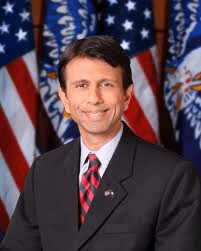
Louisiana Governor Bobby Jindal and former Florida Governor Jeb Bush stood side by side at a Washington press conference to denounce federal interference in conservative school reform efforts.

In Louisiana, that has meant a Department of Justice crackdown on the state’s aggressive voucher program.  The federal government has warned that Louisiana’s voucher system may violate racial desegregation laws.  For a while now, left-leaning pundits have warned that the voucher scheme swipes public school funding and gives it to conservative religious schools.  Diane Ravitch has concluded that Louisiana’s privatization program will drive a stake through the heart of quality public education.

Such criticisms don’t deter Governor Jindal.  He has insisted that the program represents the best educational hope for low-income students in his state.

Michael Warren of The Weekly Standard suggests vouchers may also represent Governor Jindal’s best hope for higher office.  As Warren notes,

the Obama administration’s attempt to thwart the voucher program has also been a gift for Jindal, who may run for president in 2016. Since the DOJ filed its lawsuit on August 18, Jindal has been campaigning loudly and publicly against the suit and, more broadly, for conservative education reform.


Creationism’s Galileo Moment?

Creationist activist Dr. Don McLeroy said it: Give creationist kids evolution.

Why?

Because the evidence for evolution is so weak, creationist kids will be all the more convinced of the Bible’s truths.

McLeroy’s plea for evolution-heavy textbooks has left us controversy-watchers scratching our heads.  Did he really say that?

McLeroy leapt to national prominence a few years back in his role as chairman of the Texas State Board of Education.  As documented in the indispensable film The Revisionaries, McLeroy used his influence to promote a profoundly conservative vision of proper educational content for Texas schoolchildren.

Image Source: DonMcLeroy.com

Image Source: DonMcLeroy.com

As that film demonstrated, Dr. McLeroy had a knack for confounding the easy stereotypes of “right-wing” educational politicians.  For outsiders like me, it was odd to hear such a friendly, avuncular fellow insist that Texas schoolbooks needed more creationism and less “hip-hop.”

Earlier this week, Dr. McLeroy returned to testify in front of his former colleagues on the Texas school board.  This time, McLeroy surprised everyone by insisting that the board should adopt a new set of science textbooks, books that evolutionary scientists have praised for their evolutionary content.

The Texas Freedom Network has covered these hearings thoroughly.  In general, creationists have been opposing the new science books.

Not McLeroy.

Let the children read the books, McLeroy told the board.  The evidence for evolution is so weak, he insisted, that open-minded children will be convinced of evolution’s ridiculousness.

McLeroy’s testimony was so baffling to board members that a couple of them asked for clarification.  Mrs. Mavis Knight asked him if he was being facetious.  No, McLeroy explained (around minute seven of this ten-minute clip).  He really wanted students to read these evolutionary textbooks.

“Let the students,” McLeroy explained,

the inquisitive students, the ones that are not blind, look at the evidence in these books.  They don’t even give a hint to explain the complexity….Let’s get these books to the kids; let the little young student in the classroom ask, ‘Is this all the evidence that they can give?’ That’s why I think it’ll strike a major blow to the teaching of evolution.

Board member Thomas Ratliff also struggled to understand McLeroy’s position.  Did he really want kids to read evolutionary science?

Absolutely, McLeroy explained.  “I’m hoping a young creationist . . . will sit there and say, ‘Look, is this all the evidence they have? Well maybe God didn’t use evolution to do it.’”

As a stirring conclusion, McLeroy and Ratliff had this back-and-forth:

Ratliff: “So your position is that these books prove that evolution doesn’t happen and you want us to adopt them?”

McLeroy: “No.  I did not say ‘prove.’ I just say the evidence is weak.  I don’t prove anything.  I may be wrong.”

How are we to understand this strange phenomenon?  An arch-creationist plugging for excellent, evolution-rich science textbooks?  And even concluding that he may be wrong?

One commenter on the Texas Freedom Network Insider called McLeroy simply “delusional.”

But isn’t his testimony actually fairly logical?  Consistent?  Even admirable?

After all, creationists have long insisted that evolution falls apart on its own terms.  If they really believe that, doesn’t it make sense to expose people to its ridiculous claims?  After all, if evolutionary science really depends only on prejudice and closedmindedness, as creationists often assert (I’ve tracked this argument here and here, for example) , shouldn’t creationists simply give evolution writers enough rope to hang themselves?

Could McLeroy’s testimony be modern young-earth creationism’s Galileo moment?  When Galileo accepted his punishment for his argument that the earth went around the sun, he is said to have noted, “E pur si muove,”… “It still moves.”  Whatever bad scientists said, the truth was the truth.

McLeroy’s plea to expose children to good evolutionary textbooks can be taken in a similar way.  Supremely confident in the logical weakness of evolutionary theory, McLeroy can push for more and more of it.  Knowing, like Galileo, that whatever bad scientists said, the truth was the truth.

Creationists: We Don’t Want Creationism in Public Schools

We don’t push creationism on America’s public schools.  That’s the word from two very different ends of America’s creationist spectrum.

An intelligent observer might be forgiven for feeling a little confused.  If creationists don’t want creationism in America’s schools, what do they want?

Seen from this outsider’s perspective, this creationist plea demonstrates the important fact that America has not hit a wall with evolution/creation controversies; we are not trapped in a timeless deadlock; evolution and creation are not grappling in an endless, changeless battle.

Evolution is winning.

Don’t believe me?  Consider the recent statements of two leading creationists, two creationists with very different anti-evolution ideas.

Our first creationist voice for keeping creationism out of public schools comes from the leading proponent of intelligent design, Seattle’s Discovery Institute.

According to the conservative Christian World Magazine, the Discovery Institute’s Stephen Meyer has called recently for intelligent design advocates to stop pushing ID on public schools.  In a New York talk about his new book, Darwin’s Doubt, Meyer insisted it would be “imprudent for our side to be pushing intelligent design into textbooks.”

There was no need for such forceful public advocacy, Meyer argued.  Instead, growing doubt among mainstream scientists should be allowed to bubble over into public-school science curriculum.  According to Meyer, “There are too many scientists doing science from this perspective to keep it out of schools.  I’d prefer for it to happen organically.”

At the other end of the creationism spectrum, Ken Ham has called for a similar hands-off policy concerning public schools.  Ham, the founder of the leading young-earth creationist ministry Answers In Genesis, has insisted recently that his group does not push young-earth creationism into public schools.  Why not?  Because mandated creationism, Ham argued, would “likely be taught poorly (and possibly mockingly) by a teacher who does not understand what the Bible teaches. . .”

On the other hand, Ham does hope that public schools will teach a greater variety of ideas about evolution, including young-earth creationism.

For those of us non-creationists hoping to understand American creationism, what lessons can we take out of these statements?

At first glance, such arguments seem merely strategic.  My hunch is that both Meyer and Ham would prefer to see more intelligent design or young-earth creationism in America’s public schools, respectively.  Insisting that they do not push such notions seems nothing more than an attempt to play the role of innocent bystander in creation/evolution fights.

But we can take other lessons from these creationist statements as well.  First of all, both statements demonstrate a recognition that ID or YEC are not currently dominant in America’s public schools.  Dr. Meyer says he does not want to push ID, since that will leave the decisions in the hand of a judge, as happened in the Dover trial.  Mr. Ham worries that mandatory creationism would lead to withering critiques of the creation curriculum by the vast numbers of anti-creationist teachers.

As I’ve argued in my 1920s book, such creationist attitudes represent a wholesale revolution in anti-evolution politics.  In the 1920s, anti-evolution campaigns wanted more than to have creationism included in public schools.  Back then, anti-evolution politicians hoped to ban evolution wholesale.  Not only that, in the 1920s politicians and activists insisted on banning all sorts of ideas that might have challenged traditional Protestant culture.  Consider the “anti-evolution” law that passed the US Congress in 1924.  That law specified that no teachers could engage in “disrespect of the Holy Bible.”  But the law also insisted that DC teachers could not teach that the USA had an inferior form of government.

The sort of “us-too” strategy engaged in by Ham and Meyer demonstrates a very different goal.  Even if they are being duplicitous in their insistence that they do not want to push creationism on public schools, the very fact that they choose to disavow such insistence speaks volumes.

In the 1920s, anti-evolutionists wanted evolution out.  All the way out.  With all its attendant theories of atheism, socialism, sloppiness, and bad manners.  Anti-evolutionists went out of their way to show their vehement condemnation of all things evolutionary.

In the 21st century, in contrast, anti-evolutionists claim only to want a place at the public-school table.

This revolution in anti-evolution strategy demonstrates that there is no long-term deadlock in the evolution/creation struggle.

I’ll say it again: Evolution is winning.

It only appears to be a deadlock if we restrict ourselves to a short historical perspective.  Yet, for understandable reasons, many of the smartest voices in the evolution/creation debates have implied that we are in fact stuck.

Randy Moore, for example, has long been the smartest guy in the room when it comes to the struggle over creationism and biology education.  Yet even he allows himself to imply that evolution/creation has bogged down.  In a recent essay in the BioLogos Forum, for example, Moore opens with the following assertion: “the evolution-creationism controversy has been one of the most abiding controversies in America during the past several decades, public attitudes about evolution and creationism have changed relatively little during that time.”

True enough, but he restricts himself to a relatively short timeline.  Opinions since the 1980s may have congealed, but that does not imply a longterm freeze.

Michael Berkman and Eric Plutzer, too, open their wonderful study of evolution and creationism battles with the assumption that these battles have changed little.  They do not ask IF creation/evolution fights have deadlocked.  They only ask WHY such fights have been so durable.

Today’s statements from Stephen Meyer and Ken Ham demonstrate the dangers of these assumptions.  From an historian’s perspective, attitudes that have stayed the same since the 1980s are not proof of deadlock.  Rather, they appear only to be recent trends.

The fact that leading creationists insist that they do not want to push their theories into public schools tells us a lot.

It doesn’t tell us, of course, exactly how sincere such protestations might be.

But it does tell us that the evolution/creation controversy has changed dramatically over the past century.  Whereas the first rounds of this battle saw anti-evolutionists pound evolution education into the ropes, more recent decades have seen that trend reversed.

It is now creationists who insist they don’t want to push their ideas into public schools.

“Why can’t creationism be included?” is a vastly different question than “Why should schools include evolution?”

Creationism on the Ropes

Is creationism taking over American education?  Nope.

Not at the Blue Ridge Christian School, anyway.

Readers may remember Blue Ridge for its fifteen minutes of fame last May, when a dinosaur quiz from the school attracted attention.


Image Source: Answers in Genesis

Image Source: Answers in Genesis


According to the Christian Post, the school is closing down.  After all the attention, school founders hoped to raise enough funds to stay afloat.  However, in spite of international attention, the school only raised $15,000 of the $200,000 it needed.

So is creationism taking over?  In this case, at least, it’s not even staying alive.