Getting It Wrong at The Atlantic

Watch out!  A couple of recent articles in The Atlantic dish out some misleading histories of Fundamentalist America.  It would be easy for those of us trying to understand FA to be confused.

First, let me say that I get it: Fundamentalist America is not easy to understand.  As Kevin White has noted recently on Mere Orthodoxy, this is true even for those who consider themselves FA citizens.  Even among only conservative evangelical Protestantism, we can be dazzled and confused by what historian Timothy L. Smith called the “kaleidoscope” of American evangelicalism.  Once we add conservative Catholics, cultural traditionalists, Burkean conservatives, free-market ideologues, etc. etc. etc…., mapping out a sensible understanding of Fundamentalist America can seem like an overwhelming task.  For those raised in the traditions of Tradition, this kaleidoscope can be bewildering.  And it can be even more so for those of us trying to understand Fundamentalist America from the outside.

I understand this difficulty.  I sympathize.  In the case of the recent articles in The Atlantic, neither author set out to mislead.  Unfortunately, each of them got it wrong.

First, Jonathan Merritt reflects on the thirty-third anniversary of the Christian Right.  Merritt pegs the founding of the “modern” religious Right in America to Jerry Falwell’s founding of the Moral Majority in June, 1979.  As Merritt argues,

“Previously, Evangelical Christians had been reticent to engage in partisan politics. But the cultural revolution of the 1960s brought on a blitzkrieg of social changes that left many religious conservatives feeling as if their way of life was being threatened. In response, the faithful flooded the public square — millions of them under the Moral Majority’s banner — to influence national elections and legislation. Standing tall at the helm of the movement was the silver-haired Falwell, a man whose presence could silence a room and whose rhetoric would often rouse it to raucousness.”

There is some truth to this, but only if we understand it in a very limited way.  Only if we put the emphasis of this entire paragraph on the word “partisan” does this give an accurate impression of the history of activism by religious conservatives.  A sensible reader might read this paragraph and conclude that it was not until 1979 that religious and cultural conservatives “flooded the public square.”  A reader might think that only the “blitzkrieg of social changes” from the late 1960s and 1970s spurred religious conservatives to public action.

This is a woefully misleading impression of the nature of conservative religious activism in America.  Even if we leave out the enormously important “long history” of Great Awakenings, abolitionism, and temperance, we have a twentieth century chock-full of religious activists working to maintain a traditional Godly public square.

And this activism did not differ in essence from that of later, post-1979 religious conservatives.  In the 1920s, for instance, the threat of evolution in public schools and the weakening of Biblical morality in public life spurred conservatives to action.  In the 1940s and 1950s, conservatives’ perceptions of a rapidly changing social order gave rise to new organizations such as the National Association of Evangelicals, and culture-changing revival campaigns like those of Billy Graham.

It is true that these cultural campaigns did not seize on partisan politics with vigor until the late 1970s.  Most conservative Christian activists did not see themselves as working within the confines of the Republican Party until that time.  But the implication that conservative religious folks had been somehow quiescent in earlier decades gives a very misleading impression of the history of Fundamentalist America.

Atlantic Editor Robert Wright offers up the next flawed history.  Wright suggests that the recent aggressive atheism of prominent evolutionists has led conservative religious people to turn away from science altogether.  He argues,

“I do think that in recent years disagreement over evolution has become more politically charged, more acrimonious, and that the rancor may be affecting other science-related policy areas, such as climate change.

“My theory is highly conjectural, but here goes:

“A few decades ago, Darwinians and creationists had a de facto nonaggression pact: Creationists would let Darwinians reign in biology class, and otherwise Darwinians would leave creationists alone. The deal worked. I went to a public high school in a pretty religious part of the country–south-central Texas–and I don’t remember anyone complaining about sophomores being taught natural selection. It just wasn’t an issue.

“A few years ago, such biologists as Richard Dawkins and PZ Myers started violating the nonaggression pact. I don’t just mean they professed atheism–many Darwinians had long done that; I mean they started proselytizing, ridiculing the faithful, and talking as if religion was an inherently pernicious thing. They not only highlighted the previously subdued tension between Darwinism and creationism but depicted Darwinism as the enemy of religion more broadly.”

I take Wright’s point to be less about the history of creationism and more about evolutionists’ strategy.  I agree that it will continue to be counterproductive for evolutionists to insist that evolution and religion must be eternally at odds.  As Wright concludes, “if somebody wants to convince a fundamentalist Christian that climate scientists aren’t to be trusted, the Christian’s prior association of scientists like Dawkins with evil makes that job easier.”  Fair enough.

But his admittedly conjectural assertions about a “non-aggression pact” between creationists and evolutionists suggests a dangerously false understanding of history.  As I’m sure he would readily admit, the evidence from his own high-school career does not adequately sum up the American experience.  The notion that Dawkins and Myers represent a new element in the creation/evolution debates underestimates the importance of the long history of activism by the likes of Robert Ingersoll and Thomas Henry Huxley.  Both promoted “freethought,” what a later age would call atheism or agnosticism.  And both were associated firmly in the public mind with Darwinian evolution.  Indeed, Huxley relished his nickname, “Darwin’s Bulldog.”  As Huxley wrote to Darwin,

“And as to the curs which will bark and yelp — you must recollect that some of your friends at any rate are endowed with an amount of combativeness which (though you have often & justly rebuked it) may stand you in good stead — I am sharpening up my claws and beak in readiness.”

Such aggressive evolutionism has been associated in the public mind with a combative anti-theism for as long as the public has wondered about creationism and evolutionism.  In addition, Wright’s suggestion that creationists had tacitly agreed to “let Darwinians reign in biology class” until recently woefully misses the historical boat.  Since the 1920s, conservative activists have worked energetically and consistently to make sure Darwin did not so reign.  Most famously, the 1920s saw the issue come to a public head with the Scopes “Monkey” trial in Tennessee.  But unlike the persistent Inherit-the-Wind myth suggests, creationists did not crawl back to their isolated hollers after that 1925 trial.

It is notoriously difficult to know what goes on behind closed classroom doors, but the available evidence suggests that anti-evolution sentiment remained both powerful and polticially active in every decade of the twentieth century.  One large-scale study in 1942, for example, asked thousands of high-school biology teachers about their teaching.  The survey authors concluded that evolution was taught in “notably less than half of the high schools of the United States.”  And of those schools in which evolution was taught, the study authors concluded that it was “frequently diluted beyond recognition,” either by pairing it with the teaching of special creation, or by the separation of human origins from the idea of organic evolution.  Other studies found similar results.

More recently, Michael B. Berkman and Eric Plutzer confirmed the continuing tendency of American teachers to avoid teaching evolution.  Their study of 926 US public high school biology teachers found a sizeable minority (28%) who reported to teach evolution.  It also found a smaller but still significant group (13%) who reported teaching creation.  The large middle, what Berkman and Plutzer call the “Cautious 60%,” teach a mish-mash of creationism and evolution.  One important reason teachers gave for skipping evolution is an understandable desire to avoid controversy.  In other words, in twenty-first century America as in 1920s, 1940s, 1950s, 1960s, and 1970s America, anti-evolution sentiment dictated large percentages of education policy.

Unlike the picture Wright paints, however, this is not a recent development but a generations-old cultural trend.  The suggestion that recent Gallup poll data mark any significant change in America’s enduring trench lines in this culture-war front is misleading.

My hunch is that neither of these authors hoped to use their misunderstandings of the history of Fundamentalist America as a weapon.  My hunch is that both of them sincerely believe in the historical narratives they deliver.  However, this understanding of the history of conservative religious activism in public life is not merely neutral.  It promotes a myth that religious Americans in the past did not participate in politics; it suggests that recent conservative cultural activism represents a break from American traditions.

Let me be clear: I do not object to this misuse of history because I disagree with the politics.  I do not hope to promote the values or agendas of Fundamentalist America; I don’t want to offer my own slanted history in rebuttal.  But I do object as an historian.  If we hope to understand Fundamentalist America, we need to be honest and fair about its history.  Suggesting that an activist conservative Christianity, or a defensive creationist community, are somehow recent developments distorts that history in pernicious ways.

Further reading: Oscar Riddle, F.L. Fitzpatrick, H.B. Glass, B.C. Gruenberg, D.F. Miller, E.W. Sinnott, eds., The Teaching of Biology in Secondary Schools of the United States: A Report of Results from a Questionnaire (Washington, DC: Union of American Biological Sciences, 1942); Estelle R. Laba and Eugene W. Gross, “Evolution Slighted in High-School Biology,” Clearing House 24 (March 1950); Michael B. Berkman and Eric Pluzter, Evolution, Creationism, and the Battle to Control America’s Classrooms (Cambridge University Press, 2010); George M. Marsden, Fundamentalism and American Culture: The Shaping of Twentieth-Century Evangelicalism, 1870-1925 (New York: Oxford University Press, 2006); Joel A. Carpenter, Revive Us Again: The Reawakening of American Fundamentalism (New York: Oxford University Press, 1997); Ronald L. Numbers, The Creationists: From Scientific Creationism to Intelligent Design, Exp. Ed. (Cambridge: Harvard University Press, 2006).


In the News: Here She Is….Miss Fundamentalist America…

After six months on the job, Miss America 2012 has planted a flag for Fundamentalist America.  Announcing her outreach program to serve children of incarcerated parents, Miss America Laura Kaeppeler explained,

“I believe my life was pre-written and predestined by a higher power before I was born. … What happened in my past is part of that, and (being) Miss America is part of that.”

Kaeppeler was raised Roman Catholic, but has since become a member and leader of the Northside Bible Church in Kenosha, Wisconsin.  As the Religion News Service reports, one woman who has long mentored students with incarcerated parents responded, “My first reaction when I heard Miss America would be speaking was, ‘Really? They’re still doing that?'”

Apparently so.

And conservative Christian women seem to have an edge.  Teresa Scanlan, Miss America 2011, also seems to have been a committed evangelical.  As she wrote in her blog at the start of the 2011 MA competition,

During Miss Nebraska week in North Platte, I began a journal in which I recorded not only the events of each day, but also a passage of Scripture and my thoughts and prayers. At the end of the week, on June 5th, 2010, just hours before the final competition, I was reading 2 Timothy and chose chapter 2, verse 15 as particularly applicable to me. It reads: “Be diligent to present yourself approved to God as a workman who does not need to be ashamed, accurately handling the word of truth.” As I thought about that verse and how it applied to me, I wrote the following prayer:
Dear God, please help me to be a diligent servant not only today but from here on out. Give me the strength and wisdom to accurately handle your word of truth and the diligence and perseverance necessary to be a worker who is not ashamed. I wish to be a shining light for you, a glowing example of who you are, and a grain of salt in a tasteless world. Whether or not this is achieved through a position, crown, title, or job, please place me exactly where you need me to be an effective ambassador for you. I am clay in your hands, your humble servant, willing to do whatever you wish for me in your perfect plan. I love you so much and thank you for blessing me so tremendously and bestowing such outstanding opportunity on me. My greatest wish is to exemplify your love through my words and actions in order to bring others to you.
Your Loving Daughter, Teresa
 That night I won the title of Miss Nebraska. From that, I know that this is exactly where God wants me to be, and He has a plan for each and every day of my life, not only this year, but every year. That was my prayer then; it has been my prayer these six months; it will be my prayer these next weeks at Miss America; and it will continue to be my prayer for the rest of my life. If I win the title of Miss America, I will know it is His will. If I do not win, and continue the next six months as Miss Nebraska, I will know it is His will. How incredibly calming it is to know that my life is in His hands!

No matter what happens, my prayer continues to be simply that I will fulfill His purpose in everything that I do. If you had not previously known my reasons and purpose behind why I do what I do, I hope you now understand what I believe my calling to be. Why am I competing in the Miss America competition over the next ten days? Because God has placed me in this position to show His love. Please pray that I might be able to accomplish this, and as always, please feel free to share your thoughts and comments as to how I might better achieve these things.

Well, I will not be posting until I return from Vegas, but stay tuned for all the details when I get back! Once again, thank you for your incredible support and encouragement; I wouldn’t be here without you!
To God Be The Glory,
Teresa
 
I don’t know much about the world of high-stakes beauty pageants.  Perhaps this embrace of biblical religion is simply another expected part of the princess package.  Or, perhaps, there is simply considerable overlap between those folks who place a high value on this traditionalist form of uber-femininity and traditionalist Christianity.  
After a little digging, we find that the tradition of Miss America and conservative Protestantism has even deeper roots.  Long-time host of Pat Robertson’s 700 Club Terry Meeuwsen won the crown in 1973.   Fox News’ Culture Warrior Gretchen Carlson took the crown in 1989.  I’m guessing there have been more winners from the world of Fundamentalist America who did not go on to such high-profile public careers.  Maybe it is time to change the name.  It might be a better fit to call it Miss Fundamentalist America. 

In the News: Jesus Shirts and ‘Hate Speech’

When does freedom of speech become offensive?  This week Elmer Thiessen at First Things offered some thoughtful commentary on a recent school squabble in Nova Scotia. 

In short, a high-school student, William Swinimer, wore a t-shirt for several days to his Nova Scotia high school.  The shirt proclaimed “Life is Wasted Without Jesus.”  School officials asked Swinimer to desist, since his shirt offended some of his classmates.  Swinimer refused.  The school suspended him. 

This is an issue that has been aired repeatedly south of the border as well, most famously with the US Supreme Court’s 1969 decision Tinker v. Des Moines.

As Thiessen notes, school officials agreed that students have a right to free speech.  But in this case, district administrators concluded that Swinimer’s shirt “unreasonably criticized” the beliefs of non-Christian students.  In other words, it was not the proclamation of Jesus’ awesomeness that was offensive, but rather the implication that anyone who doesn’t find Him awesome is wasting his or her life. 

Most interesting, Thiessen considers the commentary of Canadian journalist Emma Teitel.  Teitel came to this conclusion about the t-shirt controversy: “There is a great difference between cherishing a belief and wielding it like a weapon.”   

This case highlights one of the trickiest themes of life in Fundamentalist America.  Conservatives, like William Swinimer, often frame their public activism in the language of civil rights.  In this case, Swinimer insisted on his freedom of speech.  He claimed to be standing up against an anti-Christian, anti-Canadian regime.  Non-Fundamentalists and anti-Fundamentalists, however, usually feel that these claims are made in bad faith, no pun intended.  It is seen as something akin to the creepy National Association for the Advancement of White People.  In this understanding, claiming equal rights for a group that has been historically dominant is only a ruse, meant to squelch the long-stolen rights of authentic minority groups.  This seems to have been the conclusion of the school administrators.  Swinimer’s shirt, in their opinion, did more than express his religious beliefs.  It denigrated all other beliefs, including ones that had a distressing history of persecution in Canadian public life.

IN THE NEWS: Faith and Race

What does it mean to be a citizen of Fundamentalist America?  For some, it means making hard choices.

For instance, the Reverend Keith Ratliff of Des Moines, Iowa recently resigned his leadership post in the NAACP.  He did so after the NAACP officially endorsed same-sex marriage.  Ratliff was forced to choose between his religious beliefs and his leadership post, and he chose religion.

Ratliff’s story highlights the changing nature of Fundamentalist America.  For most of American history, conservatives, like progressives, have been starkly divided by the color line.  The recent decisions of prominent African American conservatives, like Ratliff, to emphasize their conservative ideology and theology demonstrates this change.  Even before resigning his leadership post in the NAACP, for instance, Ratliff publicly endorsed conservative Republican Bob VanDer Plaats for governor in 2010.

As reported by Catholic Online, Ratliff defended his decision as part of his Biblical faith:

During a Statehouse rally in March 2011, Ratliff said his support for traditional marriage was biblically based, adding, “This isn’t a private interpretation, a Burger King religion, and by that I mean a ‘have it your way’ religion.”

The Bible in America: Proof-Texting and the Cultural Divide

Quick: What does the Bible have to say about vegetarianism?  …about the war in Iraq?  …about Catholicism?

I don’t know the answers to these questions.  And, without meaning any disrespect, I can honestly say I don’t care.  I don’t think my ignorance on these issues makes me “ignorant.”  I don’t think it makes me uneducated.  I just don’t think the Bible’s opinions on these issues are important.  Don’t get me wrong: I’m not anti-Bible.  In fact, I’m confident I’d be better off if I had spent my youth memorizing the Psalms instead of the lyrics to the Gilligan’s Island theme song.  But I didn’t.  And I don’t feel the loss.

Just sit right back and you’ll hear a tale…

However, many citizens of Fundamentalist America would consider my ignorance deeply embarrassing.  For many conservative religious folks, especially among the Protestant denominations, the ability to cite Scriptural chapter and verse is one sign of an adequate spiritual education. 

This divide fuels America’s culture wars.  Many non- or anti-fundamentalists doubt that fundamentalists are even capable of rational, logical intellectualism.  (Consider a few examples: here, here, here, here, and here.)  The more ardently conservatives dig into their Bibles to prove their points, the more confident anti-fundamentalists become that conservatives have lost all claim to intellectual coherence.    

And many fundamentalists don’t seem to understand that their compilations of Biblical proof-texts carry very little weight outside the borders of Fundamentalist America.  They build arguments against homosexuality  or same-sex marriage based on collections of chapter and verse.  But such arguments are only compelling—or even comprehensible—if we accept the premise of the Bible proof-text in the first place.  As a result, different sides do not speak to one another.  They speak—or yell—past one another, scoring points that only the people on their own side can recognize.    

If we outsiders are to understand Fundamentalist America, we need to understand the proof-text tradition.  Why do religious conservatives care so much what Leviticus has to say about whether or not people should have sex with animals?   Why is it so important that evidence for a young earth can be found not only in Genesis, but also in Mark 10:6, 1 Corinthians 15:26, and Matthew 19:4,5? 

It is not a stretch to say that this style of proof-text argument had been, until the late 1800s or early 1900s, the standard style of theological disputation among Protestants.  In the nineteenth century, European scholars began to look at the Bible in a new way.  By the turn of the twentieth century, leading American Protestant theologians disputed the intellectual usefulness of the Scriptural proof-text.  In 1907, for instance, William Newton Clarke lambasted his more conservative colleagues for their continued reliance on this method.  “Even if,” Clarke argued, “a proof-text method were a good method in itself, it could not be successfully employed now, since the texts of the Bible have suffered such serious though unintended distortion.”  Since liberal theologians had come to disagree with the notion of an inerrant Bible, the method of proving an argument by assembling an overwhelming dose of chapter and verse no longer seemed compelling.

During the twentieth century, however, among Bible-centered Protestants—including self-styled fundamentalists, neo-evangelicals, Pentecostal groups, conservative Lutherans, and others—the proof-text tradition continued.  For those groups who maintained a faith in the Bible as inerrant, it remained convincing to prove every point with an assembly of relevant texts. 

Consider the following doctrinal statement from David Cloud’s Way of Life Ministries.  Each point is proven with an array of relevant texts. 

STATEMENT OF FAITH

Way of Life Literature
P.O. Box 610368, Port Huron, MI 48061
866-295-4143 (toll free), fbns@wayoflife.org
http://www.wayoflife.org


THE SCRIPTURES

The Bible, with its 66 books, is the very Word of God. The Bible is verbally and plenarily inspired as originally given and it is divinely preserved in the Hebrew Masoretic Text and the Greek Received Text. The Bible is our sole authority in all matters of faith and practice. The King James Version in English is an example of an accurate translation of the preserved Hebrew and Greek texts; we believe it can be used with confidence. We reject modern textual criticism and the modern versions that this pseudo-science has produced, such as the American Standard Version, the New American Standard Version, the Revised Standard Version, and the New International Version). We also reject the dynamic equivalency method of Bible translation which results in a careless version that only contains the general ideas rather than the very words of God. Examples of dynamic equivalency versions are the Today’s English Version, the Living Bible, and The Message.

2 Samuel 23:2; Psalm 12:6-7; Proverbs 30:5-6; Matthew 5:18; 24:35; John 17:17; Acts 1:16; 3:21; 1 Corinthians 2:7-16; 2 Timothy 3:15- 17; 2 Peter 1:19-21; Revelation 22:18-19

THE CREATION

We believe in the Genesis account of Creation and that it is to be accepted literally and not figuratively; that the world was made in six 24-hour days; that man was created directly in God’s own image and did not evolve from any lower form of life; that all animal and vegetable life was made directly and made subject to God’s law that they bring forth only “after their kind.”

Genesis 1; Nehemiah 9:6; Job 38:4-41; Ps. 104:24-30; Jn. 1:1-3; Acts 14:15; 17:24-26; Rom. 1:18-21; Col. 1:15-17; Hebrews 1:1-3; 11:3

THE WAY OF SALVATION (THE GOSPEL)

Salvation is by the grace of God alone, which means that it is a free gift that is neither merited nor secured in whole or in part by any virtue or work of man or by any religious duty or sacrament. The gift of God’s grace was purchased by Jesus Christ alone, by His blood and death on Calvary. The sinner receives God’s salvation by repentance toward God and faith in the Lord Jesus Christ. Though salvation is by God’s grace alone through faith, it results in a changed life; salvation is not by works but it is unto works. The faith for salvation comes by hearing God’s Word. Men must hear the gospel in order to be saved. The Gospel is defined in 1 Corinthians 15:1-4.

John 1:11-13; 3:16-18, 36; 5:24; 14:6; Acts 4:12; 15:11; 20:21; Romans 10:9-10,13, 17; Ephesians 1:7; 1:12-14; 2:8-10; Titus 3:3-8; Hebrews 1:3; 1 Peter 1:18-19; 1 John 4:10

CIVIL GOVERNMENT AND RELIGIOUS LIBERTY

We believe that civil government is of divine appointment for the interests and good order of human society; that magistrates are to be prayed for (1 Tim. 2:1-4), conscientiously honored and obeyed (Mat. 22:21; Rom. 13:1-7; Titus 3:1; 1 Pet. 2:13-14), except only in the things opposed to the will of God (Acts 4:18-20; 5:29); that church and state should be separate, as we see in Scripture; the state owing the church protection and full freedom, no ecclesiastical group or denomination being preferred above another. A free church in a free state is the Christian ideal.

We can see the proof-text tradition in David Cloud’s sermons as well. 

The way Cloud and Way of Life use proof-texts is just one example from a galaxy of possible examples out there.  Especially among Bible-based conservative evangelical Protestant groups, the proof-text is the method by which truth is established.  The Bible is the inerrant authority.  In order to make any point, about any subject, the name of the game is proof-texting.  Of course, among many conservative Protestants, the term “proof-text” has taken on negative connotations.  It should not mean that one simply has to slap a bunch of Bible citations together to prove a point.  In this continuing intellectual tradition, the cogency of the argument is based on the proper selection of texts.  How well do the selected texts establish the point at hand?  Does the author use each text in a way that respects the context and original meaning of the selected passage?  Does the author consider relevant passages that might disagree with this interpretation?  Or does a poorly educated pastor merely assume an air of false erudition by throwing Scriptural citations around willy-nilly

To be sure, it is an intellectual tradition that no longer carries weight in mainstream religion and culture.  Though large majorities of Americans might believe that the Bible contains the answers to all of life’s questions, those same majorities do not necessarily agree that the Bible should be the main intellectual authority in all matters.  Indeed, especially galling to many non- and anti-fundamentalists is proof-texters’ assumption that their particular religious tradition should be considered binding in matters of public policy.  In other words, it may be fine for Way of Life to demonstrate the validity of its creed through proof-texts.  But that does not mean that proof-texts can be used to demonstrate the need to teach religious doctrine in science classes. 

These are important arguments.  Proof-texters need to understand that their intellectual tradition does not carry weight outside the borders of Fundamentalist America.  But that is a much different thing than admitting to being non-intellectual or anti-intellectual.  If we outsiders can better understand the tradition of proof-texting, we will be better able to speak intelligently, reasonably, calmly, and even productively with Fundamentalist America.     

FURTHER READING: William Newton Clarke, The Use of the Scriptures in Theology (Edinburgh: T. & T. Clark, 1907); Timothy P. Weber, “The Two-Edged Sword: The Fundamentalist Use of the Bible,” Nathan O. Hatch and Mark A. Noll, eds., The Bible in America: Essays in Cultural History (New York: Oxford University Press, 1982), 101-120.

Required Reading: Shields and the Civility of the New Right

Another reason to spend time at Mere Orthodoxy: Matthew Lee Anderson today shares his interview with Jon Shields.  Shields is the author of The Democratic Virtues of the Christian Right.  Even if you don’t have time to spend with the whole book, it is worth taking a few minutes to read this interview. 

Shields elaborates on the thesis of his book, viz., that the incivility of the Christian Right has been overplayed by journalists looking for a good story.  Using interviews and a participant-observer method, Shields found that such headline-grabbing fury did not fairly represent the movement.  As Shields notes in this interview,

If one looks at Christian radio personalities or at direct mailings or at fringe organizations, belligerency is quite common. The media picks up on these latter examples partly because they are somewhat more visible, partly because they make for more interesting stories, and partly because of the sociology of the newsroom itself. So the media has identified real incivility in the Christian Right.

Of course, such distortion takes place all over the political and theological spectrum.  In my research into the history of conservative educational activism, I find that conservative writers and pundits also relied on the tactic of the hyperbolic example.  For example, the early Soviet-friendly statements of John Dewey or George Counts are often used by conservatives to demonstrate that all of progressive education is nothing but a communist plot. 

It seems to return us to the central dilemma of America’s ballyhooed culture wars.  Even though most people–even people politically, culturally, and theologically committed on issues such as abortion or gay rights–prefer to act in civil, “small-d” democratic ways, the fevered punditry of voices on each side dominate the headlines.  One religion-bashing quip by Richard Dawkins, or one minority-bashing pronouncement by Glenn Beck, does more to define the two sides than thousands of people working quietly and politely to promote their vision of America.


In the News: “Gay” Is not Slander in NY

In a story from my new hometown, a New York appellate court ruled recently that it no longer counted as slander to falsely accuse someone of being homosexual.  In this case, a woman spread a rumor that Mark Yonaty was gay in order to get his girlfriend to break up with him.  Yonaty sued and lost.  As the New York Times reported, the appeals court threw out earlier rulings in Yonaty’s favor, saying they were “based on a false premise that it is shameful and disgraceful to be described as lesbian, gay or bisexual.”

What does this mean for Fundamentalist America?  On one hand, it could mean that FA will find itself more marginalized if it maintains its opposition to homosexual sex and relationships.  Some conservative groups, for instance James Dobson’s Focus on the Family, emphasize love and care for those engaging in homosexual behavior or identifying as homosexuals, even while condemning all sex outside of marriage, especially including gay sex. 

Other FA voices keep up harder-edged language against homosexuality.  A recent article by Bryan Fischer, for instance, on Rightly Concerned, affiliated with the American Family Association, notes that America must discriminate against homosexuals not out of hate but out of love.  However, Fischer also compares healthy anti-homosexual discrimination to other healthy forms of discrimination:

We discriminate against adults, even priests, who have sex with children. We discriminate against teachers who have affairs with students. We discriminate against teachers who moonlight in the porn industry. We discriminate against students who engage in sexting. We discriminate against rapists. We discriminate against those who expose sexual partners unknowingly to the AIDS virus. We discriminate against those adults who commit statutory rape against minors.

If the recent ruling from Albany is a bellwether for the direction of mainstream American culture–and that’s a big if–then Fischer’s type of argument is swimming upstream.  If it is no longer an insult to call someone ‘gay,’ then it will make no sense legally, politically, or culturally to discriminate against homosexuality. 

There’s another lesson we can draw from this article.  At least one gay-rights activist has warned that this decision must not be taken as the end of discrimination against homosexuality.  As the UK’s Daily Mail reported, New York activist Jay Blotcher insisted that being identified as gay could still summon up “something akin to a lynching mob” in parts of the country.  “It’s still a thorny issue,” Blotcher said. “Bottom line, just because you have gay characters on television that make everybody laugh doesn’t mean that the entire country embraces gay people as equal citizens yet.”

Blotcher’s comments illuminate one of the most puzzling aspects of these kinds of “culture-war” debates.  Instead of celebrating the achievement of mainstream acceptability for homosexuality, Blotcher emphasizes the continuing persecution of homosexuals.  Like Blotcher, many voices from FA insist on their own status as beleaguered cultural minorities.  This tradition among American Protestantism has long roots, back to the seventeenth-century persecution of “Pilgrims” and “Puritans” that led in part to the founding of New England.  In the twentieth century, fundamentalist activists have often used Blotcher’s language of continuing discrimination to defend the borders of Fundamentalist America.     

To cite just one example, in 1965 in the wake of the US Supreme Court rulings against school-sponsored religious devotions in public schools, fundamentalist editor and publisher John R. Rice insisted that “White Minorities Have Rights, Too.”  In the pages of his Sword of the Lord magazine (volume 31, September 3, 1965, page 1), Rice asked,

“If Christian people do not have a right to have the Bible taught in the schools, then infidels have no right to teach infidelity in the schools . . . . Why not have freedom in America as much for one minority as another?  Why not observe the rights of white people as well as the rights of Negroes?  Why not observe the rights of nonunion workers as much as the rights of union workers?  Why not observe the rights of Bible believers as well as the rights of the infidels in the churches and infidels in courts or schools?” 

Just as Jay Blotcher warned not to remove homosexuality from the category of defended minorities, so fundamentalists such as Rice insisted that they be allowed to claim minority status.  One of the quirks of America’s culture wars is that both sides often claim the rights and privileges of both majority AND minority status.  If we hope to understand Fundamentalist America, we need to understand the continuing propensity of fundamentalists to do both at the same time.    


It’s Hard to Get the Right Right!

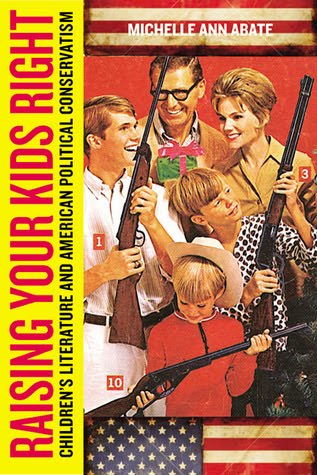
Fellow nerds: Have you ever had this kind of deflating experience?  You see a new book title that promises to answer a bunch of questions that have been rattling around in your head unorganized and unarticulated.  You finally get your hands on the book and eagerly start reading, only to find that the author does not seem very interested in the very interesting questions that you wanted her to answer.  That was my experience with Michelle Abate’s Raising Your Kids Right.

Now Cam Scribner has published a review on the US Intellectual History Blog of Abate’s book that manages to put my geekmotional response into coherent prose.  Scribner is working on an important study of conservative educational activism.  He is someone who works hard to understand what it meant to be “conservative” in America.  And, as Scribner notes, Abate fails to get the Right right.  In Scribner’s words:

First, despite providing a pretty cogent history of right-wing politics since the 1960s, Abate uses the word “conservative” far too broadly. For her, in fact, it seems interchangeable with the words “histrionic,” “retrograde,” and “racist” (pgs. 35, 37, 180-181).

I know it’s not fair to criticize someone for the book they didn’t write.  But in this case, I agree with Scribner.  If one is to dig into the rich field of conservative children’s literature, there are a few things that one must consider.  Quoth Scribner:

Rather than capturing conservative writing at its smallest, Abate could have written a much more meaningful book about what conservatives actually think will interest or ennoble their children. Prefacing her discussion of The Book of Virtues, for example, with selections from C.S. Lewis, Pilgrim’s Progress, McGuffey’s Readers, or other conservative favorites would accrue more historical weight to her argument and preclude the sort of caricature and dismissal that seems to underlie much of her analysis.

The good news for historians, I suppose, is that there is still plenty of room for studies of conservatism and children’s issues, including children’s books.

Required Reading: Matthew Lee Anderson on Non-Culture War Conservatism

“Why do the angry people get all the attention?” 

That was one of those audience questions that has stuck with me.  It was at a talk about the history of American creationism I gave a while ago to an audience of (mostly) committed students of biological evolution.  I had included one of my go-to bits from the aggressive atheist Richard Dawkins.  I often explain my purpose in studying conservative religion in American public life as a quest to deflate Dawkins’ 1986 warning: Anyone who does not believe in evolution, Dawkins insisted, must be “ignorant, stupid or insane (or wicked, but I’d rather not consider that).”  Though I don’t believe in creationism, I think many people who are not ignorant, stupid, or insane do believe it.  Our talk turned after that to the prominence of mean-spirited, angry culture warriors.  Why do such voices get all the attention, when most of us, whatever our beliefs, would prefer a respectful dialogue?  

Yesterday at Mere Orthodoxy, Matthew Lee Anderson posted another in his series on what it would take for conservative religious Americans to create a post-culture war persona.    

Anderson suggests “four moves” that would move the public engagement of conservative religious Americans in healthier directions:

1) Recover a robust doctrine of creation that is isn’t afraid to be doctrinal.

2) Emphasize the moral imagination and attempt to construct arguments that both appeal to and buttress it.

3) Remember that the church does not simply engage the culture, including politics, but is a culture and so has her own political order.

4) Reframe American exceptionalism around America’s responsibilities rather rather than its virtues. 

As Anderson admits, some of these moves might just be restatements of the goals of the last two generations of culturally engaged evangelicalism.  Carl Henry’s call in 1947 for a “progressive Fundamentalism with a social message” comes to mind.  But for those of us from the outside, those of us trying to understand conservative religion in American public life in order to take away some of the power of all the “angry voices,” understanding Anderson’s moves (and his supporting reading lists) might be a good place to start.

Required Viewing: In God We Teach

As we’ve noted recently, the controversy over religion in public schools did not go away in 1963 when the Supreme Court ruled that school-sponsored devotions violated the First Amendment. 

A new documentary probes a recent case from New Jersey.  As reviewed by Rob Boston on Wall of Separation, the film In God We Teach examines what can happen when an activist teacher meets an activist student.  In this 2006 case, teacher David Paszkiewicz was accused of preaching conservative evangelical Protestantism in class. 

As Boston describes,

David Paszkiewicz told students, “If you reject [Jesus’] gift of salvation, then you know where you belong” and “[Jesus] did everything in his power to make sure that you could go to heaven, so much so that he took your sins on his own body, suffered your pains for you, and he’s saying, ‘Please, accept me, believe.’ If you reject that, you belong in hell.”

Paszkiewicz had also promoted creationism in class, telling students that there were dinosaurs on Noah’s Ark.

A student in the classroom, Matthew LaClair, knew this was inappropriate. He also suspected that school officials would not believe him without evidence, so LaClair began recording portions of the classes. Soon he had solid evidence of Paszkiewicz’s in-class proselytizing.

For ILYBYGTH readers, the most interesting part of the film sounds like the parts in which Paskiewicz is allowed to explain his rationale.  Boston excoriates the teacher.  In Boston’s words,

I was struck by the teacher’s complete and utter inability to engage in any serious form of self-reflection. [Filmmaker Vic] Losick’s technique is to simply let the characters in this drama tell their stories. He doesn’t take a side. But only a theological ally of Paszkiewicz could see him as anything other than a typical smug and arrogant fundamentalist who believes that he has all of the answers – and that this gives him the right to spread his views in public school classrooms.

Paszkiewicz also comes off as disingenuous. At first, he tried to deny having made the “you belong in hell” statement. But LaClair had it on tape, so that failed. Paszkiewicz then fell back on blaming the students. They asked him about religion, you see, so had to talk to them about it. In the documentary, AU’s Lynn handily explains why this is nonsense.

I’m planning to take an hour and four minutes to see for myself.  Losick’s film is available online.  I’ll be interested to see if ILYBYGTH readers agree with Boston’s indictment of Paszkiewicz.