Should Christians Be Afraid?

SAGLRROILYBYGTH have heard it all before. For the past century, conservative evangelicals have warned that their religious beliefs have made them the target of anti-Christian religious discrimination and persecution. Today we hear the same warning from radical young-earth creationist Ken Ham. So should Christians be afraid?
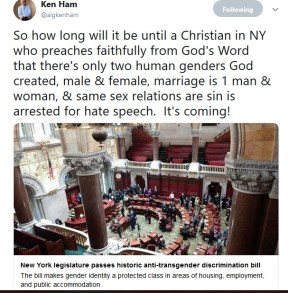
ken ham ny lawFirst, the history: In spite of today’s rosy nostalgia, evangelical Protestants have always felt themselves the targets of creeping secular attack. To pick just one example, when SCOTUS ruled against devotional Bible-reading in public schools in 1963, evangelicals responded with apocalyptic alarm.

In the pages of leading evangelical magazine Christianity Today, for example, the editors intoned that the decision reduced Christian America to only a tiny “believing remnant.”  No longer did the United States respect its traditional evangelical forms, they worried.  Rather, only a tiny fraction of Americans remained true to the faith, and they had better get used to being persecuted.

Similarly, fundamentalist leader Carl McIntire insisted that the 1963 school-prayer decision meant the death of Christian America.  In the pages of his popular magazine Christian Beacon, one writer warned that the Supreme Court decision meant a wave of “repression, restriction, harassment, and then outright persecution . . . in secular opposition to Christian witness.”

From the West Coast, Samuel Sutherland of Biola University agreed.  The 1963 decision, Sutherland wrote, proved that the United States had become an “atheistic nation, no whit better than God-denying, God-defying Russia herself.”

But! We might say that those conservatives were wrong, but today’s might be right. As Ken Ham warned his Twitter followers this morning, perhaps “It’s coming!” Maybe New York’s new gender law really will put conservative evangelical pastors in a legal bind.

After all, it is not only radical young-earthers who are concerned. Conservative pundits such as Rod Dreher have similarly warned of the creeping overreach of today’s secular gender ideology.

And in some ways, as higher-ed watchers like me have noticed, changes really are afoot. Institutions such as universities that rely on federal student-loan dollars to stay afloat might face intense pressure to comply with anti-discrimination guidelines.

But will a preacher ever be pulled out of his pulpit for “preach[ing] faithfully from God’s Word that there’s only two human genders God created”? No. That’s not how religious discrimination works in the USA. Just ask any historically persecuted minority.

For example, the federal government has long shelled out huge subsidies to farmers, including hog farmers. Does that mean that religious preachers who tell their audiences that eating pork is sinful are “arrested for hate speech”? No.

Similarly, the federal government has funded school textbooks that teach basic chemistry. They teach that the core of a substance is determined by its molecular makeup. Does that mean that Roman Catholic priests who tell parishes that wine has been transubstantiated into blood are “arrested for hate speech”? No.

Or, to take the most painful 20th-century example from the world of evangelical Protestantism, when the federal government passed legislation prohibiting discrimination on the basis of race, were white evangelical preachers ever stopped from including racist content in their Sunday sermons? No.

In spite of what alarmist preachers might say, the problem for conservatives won’t be about their pulpits. When they want to refuse service to same-sex couples or refuse admission to transgender students they might have to deal with a new legal reality.

But the idea that the amped-up gender police will storm into churches to arrest pastors is more Thief in the Night than Queer Nation.
Who’s Afraid of Teachers?

It’s not only in the pages of dusty history books nobody reads. As Curmudgucrat Peter Greene wrote recently, the effort to stifle teachers’ political opinions is alive and well. But here’s the question every real teacher keeps wondering: Why are people so worried about teachers?

Here’s what we know: Greene describes a recent bill in Arizona to limit teachers’ ability to talk politics in the classroom. The bill would combat teachers’ alleged aggressive political posturing. What would it do?

Teachers may not endorse, support or oppose any candidate or elected or appointed official. Teachers may not bring up any “controversial issues” not related to the course. . . . Teachers may not advocate for one side of a controversial issue; they must always present both sides.

Greene argues that this bill is not just an Arizona quirk but rather part of a vision to restrain teachers from voicing progressive opinions.

And it won’t come as any surprise to SAGLRROILYBYGTH that the fear of progressive teachers has a long history in the US of A.

Back in the 1930s and 1940s, for example, Harold Rugg of Teachers College Columbia earned the ire of many conservative activists with his progressive textbooks. It wasn’t only Rugg that conservatives worried about. As I noted in my book about conservative educational activism, people like Alfred Falk of the Advertising Federation of America and Homer Chaillaux of the American Legion warned one another that the problem was bigger than any single teacher or textbook. Rather, as Falk told Chaillaux privately in 1939, it was all part of a vast left-wing teacher conspiracy,

a deliberate plan worked up by a well-defined group of left-wingers and educators, collaborating for a number of years on this huge project of reconstructing our society.

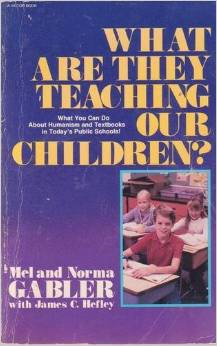
In the 1960s, too, conservative activists assumed that teachers were part of a progressive plan to use their classroom authority to push left-wing ideas on unsuspecting youth. The Gablers asked their fellow conservatives some pointed questions about the proper role of teachers. As they put it,

Do educators have the right to use our children as guinea pigs in behavior modification experiments?  Should our children be under the direction of ideologues hostile to Judeo-Christian values and American constitutional liberty?

SH Gablers

Look out kids, it’s a…teacher!

For many conservatives, the notion that teachers are “ideologues” cramming Leninist doctrine down the throats of America’s schoolchildren is a hallowed truth. But why? Why do so many conservatives worry so unnecessarily about teachers’ political activism?

After all, ask any teacher, and they’ll tell you: We worry about far more prosaic issues in our classrooms. We worry if students are learning the material, and if there’s a better way we could present it. We worry that students aren’t understanding things, and if there’s something we could be doing to help.

We worry mostly about our students as people, not as partisans.

Moreover, as every study has shown, teachers do not swoop in from outside to cram politics down students’ throats. For example, as political scientists Michael Berkman and Eric Plutzer found, when it comes to teaching evolution and creationism, most teachers reflect the majority values of their communities, because most teachers are products of that same community.

So why the worry?

Evolution Proves Creationism

It’s difficult for people like me to understand. How is it possible in this day and age that so many of my fellow Americans deny a basic fact of modern science? How is it possible that a significant proportion of American adults—even college-educated adults—think that our species was created de novo about 6,000 years ago in an Iraqi garden? A recent review of the psychology of denialism offers one challenging suggestion: Human brains evolved to remain creationist.

Denialism better

I may disagree with what you say, but I’ll defend to the death my ability not to hear it…

As I’m arguing in my new book, the usual explanations just don’t hold water. The Richard Dawkinses of the world tend to think of creationism—at least the radical young-earth kind—as a kind of simple deficit. As Dawkins famously opined in 1989, creationists would have to be

ignorant, stupid or insane (or wicked, but I’d rather not consider that).

For those of us who understand the history and nature of America’s radical young-earth creationists, Dawkins’ dismissal doesn’t fit the evidence. Even if we are staunchly anti-creationist, if we’re paying attention we can’t help but notice that plenty of creationists know a lot about evolutionary theory. They are clearly intelligent and in possession of their mental faculties. And they might be wicked, that doesn’t seem to be a primary factor in their creationism.

A recent review article in The Economist points in a more promising direction. Studies show that people will usually accept a financial penalty rather than listening to arguments from the other side. They often compare the experience of listening to opposing viewpoints to “having a tooth pulled.”

enigma of reason

The evolution of creationism…

Why? Hugo Mercier and Dan Sperber argue that human reason is not the engine of pure enlightenment it is often considered. Instead, reasoning evolved as a way to encourage group cooperation. In their words,

What reason does . . . is help us justify our beliefs and actions to others . . . and evaluate the justifications and arguments that others address to us.

What does this have to do with the durability of radical young-earth creationism? In spite of the accusations of angry Oxonians like Richard Dawkins, creationists have not abandoned their ability to reason and weigh evidence. Rather, if these cognitive psychologists are correct, human reasoning ability will tend to lead to greater in-group cohesion.

The brains of radical creationists tend to favor evidence that supports the dominant views of their group. They tend to dismiss evidence and arguments that go against them. This isn’t something unique to creationists. All our brains work in similar fashion. We don’t weigh facts evenly or dispassionately. We don’t even hear them that way. Rather, our brains seem hard-wired to accept facts that help us fit in with our groups.

In short, why are so many Americans creationists? Because they evolved that way.

School Dictatorship by Facebook

What do conservatives want out of schools? In Brazil as in the USA, it’s a familiar checklist: communist subversion out, LGBTQ+ stuff out, union power out. In Brazil’s case, the new right-wing president has given conservatives new hope. But unlike in the past, Brazil’s conservatives have a new weapon at their disposal: Facebook.

bolsonaro

Hear no evil…

As reported in The Economist, President Jair Bolsonaro has energized right-wing school dreams in Brazil. We shouldn’t be surprised. Bolsonaro won the election in spite of—or because of—his inflammatory anti-gay statements and nostalgia for the old dictatorship.

When a presidential candidate promises to bring back torture, makes rape jokes, and brags that he would rather see his son dead than gay, it’s not a shocker that his policies move schools in right-wing directions.

In Brazil’s case, that means fighting the influence of Brazil’s most famous educational thinker, Paolo Freire. It also means an attempt to ban what Brazilian conservatives call “gender ideology.” Brazilian conservatives consider the left-wing ideas of Freire to be a blight on Brazil. As one right-wing group put it, Freire’s teachings turned

Innocent illiterate people into illiterate communists.

The plan? Bolsonaro has promised to

Take a flame-thrower to the ministry of education and get Paolo Freire out of there.

As SAGLRROILYBYGTH are well aware, those things are similar to what USA conservatives have wanted in schools for a long time. Conservatives here, too, have fretted about communist subversion, tried to get rid of the “homosexual agenda” in public schools, and threatened to eliminate the Department of Education.

What might be new, though, is the Brazilian strategy to enforce their right-wing changes. As The Economist reports, conservative activists have taken to Facebook to enforce their vision of proper public education. As one conservative teacher told students on Facebook,

“Attention students! . . . many doctrinaire teachers will be disconcerted or revolted” by Bolsonaro’s victory. “Film or record all partisan manifestations that . . . offend your freedom of thought or conscience.”

Bolsonaro’s Facebook page apparently includes video clips of left-wing teachers in action, including one in which a teacher shouts at a student,

I fought for democracy and you’re here talking about that piece of crap Bolsonaro.

Or another in which a teacher warned students not to listen to

idiotic police officers or your lowlife pastor.

The plan, clearly, is to shine a right-wing social-media spotlight on teachers. If they endorse rights for LGBTQ people, they can be “outed” for it. If they teach a sympathetic vision of socialism, everyone will know about it. If they teach anti-Bolsonaro ideas–the thinking goes–then right-wingers can target them. In Bolsonaro’s Brazil, at least, conservatives hope that Facebook can offer a new way to pressure teachers and schools to conform to their vision of proper public education.

Will it work? So far, some teachers have reported being threatened and disciplined for their anti-Bolsonaro or pro-LGBTQ classroom comments. Back in the twentieth century, USA conservatives tended to fight against textbooks instead of individual teachers, because they usually couldn’t find out much about what classroom teachers were actually doing on a day-to-day basis.

I wonder if Facebook will allow conservatives to take their fight right to the teachers themselves.

Sorry, I Didn’t Catch Your Name

What do we call them? When we want to talk about white, American, conservative evangelicals, is there a better, shorter, catchier term? Otherwise we either have to keep saying “evangelicals” when we don’t really mean ALL evangelicals, or keep repeating the whole too-long description.

hello-my-name-is.jpg

CAWEP? WACE? ???

I’ll plead guilty. In Fundamentalist U I often talked about “evangelicals,” when I really usually meant white, American, conservative evangelicals from the 20th-century interdenominational fundamentalist tradition. In a book, I feel like I can get away with using “evangelicals” as a short version of that long mouthful, because in context (I hope) it was clear what kind of evangelical I was talking about.

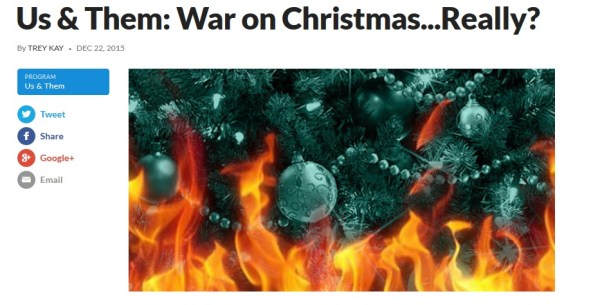
In other formats, though, I would like a better term. For example, in talking with journalist Trey Kay today of Us & Them fame, I kept wanting a better, clearer term. We kept talking about what “evangelicals” thought about the supposed War on Christmas. And I kept having to pause and specify that it wasn’t really evangelicals as a whole we were talking about. We were only talking about that specific subgroup: white American conservative evangelicals.

It is not a nitpick or a quibble. It is a vital and important distinction.

us and them war on christmas

Why are the evangelicals so mad? …they aren’t.

But to my knowledge, there is not a convenient, catchy, everyday term out there to capture what we mean. Is there one out there already? Or can we invent one?

Some of the options out there are no good. I’m not okay with “Christian Right” as a label. It can be useful in some cases, but if we’re talking specifically about conservative evangelicals, then it doesn’t fit. Sure, many evangelicals WANT to claim the right to speak for all Christians, but it doesn’t really do justice to the diversity of conservative Christianity.

Or, how about John Fea’s term “court evangelical?” Since 2016, it has been a great term to understand the kind of evangelical who has jumped on the Trump train. For these purposes, however, “court evangelical” is too specific to our current time and place.

We need a term that captures what we really want to talk about, without having to say “white American conservative evangelical” every time. And without having awkwardly to correct everyone who says “evangelical” when they really mean “white American conservative evangelical.”

It has to be pronounceable. And short enough to use regularly.

How about CAWE? Or WACE? CWAEP? (pronounced see-wape, with the “P” from Protestant) CAWEP? I don’t like any of those, but I prefer them to our current muddled practice. Any better ideas out there?

The Hidden Tribes of Creationism

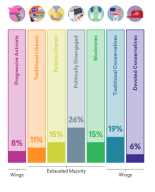
Care a lot about the age of the earth? The origin of humanity? The actual historical existence (or not) of Adam & Eve? If so, you’re an oddball. According to a new report, however, you’re an oddball who probably gets a lot more attention than you deserve.hidden tribes chart 1

In their study of culture-war polarization, the folks at More In Common didn’t ask directly about creationism. In their survey of 8,000 adult Americans, though, they came up with a bunch of categories into which Americans divide themselves. Instead of using the usual demographic categories of race, class, gender, age, religion, and so on, they split respondents into seven major groups:

  • Progressive Activists
  • Traditional Liberals
  • Passive Liberals
  • Politically Disengaged
  • Moderates
  • Traditional Conservatives
  • Devoted Conservatives

Time and time again, they found, the loudest voices on the margins dominated public debates, in spite of the fact that a large “Exhausted Majority” hoped for more compromise. As the report puts it,

Public debates are often dominated by voices that come from the furthest ends of the spectrum and who are the least interested in finding common ground. This makes it much harder to make progress on these issues, deepening the frustration felt by many in the middle.

On most issues, the people on the edges have diametrically opposed views and hold them very strongly. That is not the case for most people on most issues.

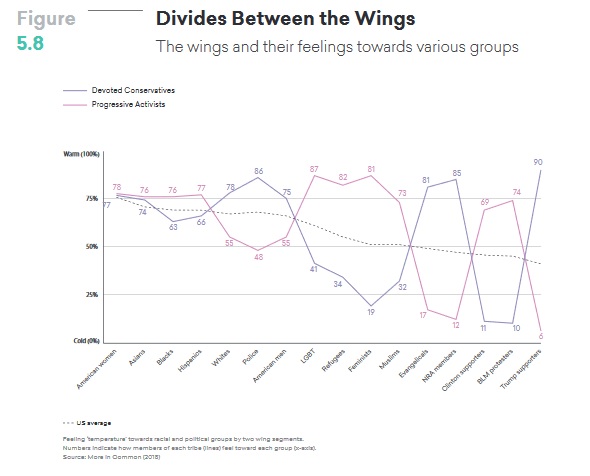
hidden tribes chart 2They didn’t ask specifically about creationism, but their findings translate well. As I’m arguing in my new book about creationism, Americans don’t really disagree as much about creationism and evolution as we’d think if we only read the headlines.
For example, when most people think about “creationism” these days—IF they think about creationism—they tend to think of the extreme young-earth creationists who make the most noise. Pundits such as Ken Ham dominate the headlines about “creationism,” even though their beliefs represent only a tiny fraction of the real landscape of American creationism.

Think about it: if we define “creationism” as a basic belief that some sort of higher power had something to do with the way life has come to be, then almost ALL Americans would fit into that category. Even leading “evolutionists” such as Ken Miller would fit. Professor Miller is one of America’s leading explainers and promoters of evolutionary theory, yet he is also a believing Christian. When it comes down to it, Miller wrote in his 1999 book Finding Darwin’s God,

God is every bit as creative in the present as He was in the past.

Is Prof. Miller a “creationist?” By any reasonable definition, of course he is. But when Americans fight about “creationism” vs. “evolution,” we don’t make room for the vast middle ground that includes religious scientists like Miller.

As the Hidden Tribes report states, most Americans

are going about their lives with absurdly inaccurate perceptions of each other.

Radical creationists think they are the only ones who care about God and creation. Radical atheists warn that creationist armies are scheming to turn public schools into madrassahs. In the vast middle ground, people think “creationism”  must include a radical belief in a literal world-wide flood or a literal special creation in the Garden of Eden.

It doesn’t. There are plenty of ways to be a “creationist” while still accepting the explanatory power of mainstream evolutionary theory. In reality, there isn’t a flat-out culture war between creationists and the rest of us. There can’t be, because in reality almost all Americans are creationists of one sort or another. And almost all Americans want their children to learn evolutionary science.

You can be excused for not believing it, though, because the loudmouths on the outer edges distort all of our discussions.

Fundamentalism’s Retreating American Horizon

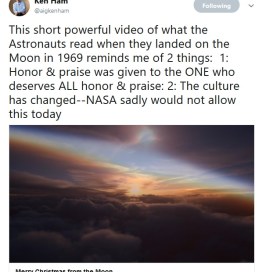
It’s not about Darwin. It’s not even about Jesus. We see again this morning that radical young-earth creationism—at least Ken Ham’s Answers In Genesis brand—is built on a vision of American history in which fundamentalists are always under more and more attack.ken ham on the moon

Here’s what we know: This morning Ham tweeted a nostalgic video about Apollo 8. On that mission, astronauts circled the moon for the first time on Christmas Eve, 1968. In a live broadcast, astronauts read the opening verses from Genesis.

We can ignore the obvious stuff, like the fact that Ken Ham misdescribed this 1968 moon circling as the 1969 moon landing. We’re more interested this morning in Ham’s take-away from the video itself. What lesson did Ham draw?

2: The culture has changed–NASA sadly would not allow this today

Of course, as historians and SAGLRROILYBYGTH are well aware, back in the 1960s, Ham’s predecessors were articulating very similar laments about the dangerous trends in American culture. In early 1963, for example, Samuel Sutherland of the Bible Institute of Los Angeles (BIOLA) warned of the dangerous effects of the recent SCOTUS ruling against Bible-reading and teacher-led prayer in public schools.

What would happen now? Sutherland warned the SCOTUS decision might

Make our country an atheistic nation, no whit better than God-denying, God-defying Russia herself. . . . in prohibiting the name of God to be used in any form of prayer, [SCOTUS] are in effect advocating that the children be taught atheism.

Sutherland wasn’t alone in warning that 1960s America had gone to the atheist dogs. In 1965, for example, in the pages of Carl McIntire’s Christian Beacon magazine, one writer warned that the banishment of teacher-led Christian devotions from public schools

will mean the division even more sharply of this nation into communities of the secular and the Church, which will inevitably lead to more expression of the secular and more repression of the Christian. When this happens, repression, restriction, harassment, and then outright persecution will be the natural course to follow in secular opposition to Christian witness.

In the glorious 1960s, then, Ken Ham’s predecessors were making the same kinds of warnings that Ham is making today: Things used to be better for conservative evangelical Protestants. Public schools and public policy used to speak in the tones of evangelicalism.

Over and over again, across the decades, fundamentalist Cassandras have articulated a similar historical vision. The past was always better. The present–no matter what year–is characterized by a bitter sense of loss, by a grief for a glorious Christian past stripped away by scheming secularists and soft-minded false Christians.

It doesn’t have much to do with actual creationism, of course, or with evolutionary science. But this relentless alarmist nostalgia does a lot to help us understand why some evangelicals yearn to Make America Great Again.

The Myth of Evangelical Political History Just Won’t Die

It happens sometimes. Academic historians think they have consigned a myth safely to long-deserved oblivion, only to see it pop up again and again. This time, New York Times journalist Clyde Haberman repeats the tired old falsehood that conservative evangelicals only got into politics in the 1970s. What do we have to do to get rid of this misleading but popular timeline?

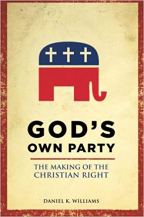
Gods own party

Read a book…

Here’s the story the way it is often told: White evangelicals had always steered clear of politics, but when Jimmy Carter was elected president in 1976, conservative white evangelicals rallied against him. Jerry Falwell Sr. led them out of their churches and into polling booths to elect Ronald Reagan and become a political force.

It’s a compelling timeline, but it’s just not true.

So why do intelligent journalists keep taking the myth at face value? As Haberman puts it incorrectly,

American evangelicals had long steered clear of politics, but with the advent of Moral Majority that was no longer so.

It just didn’t happen that way. Even the celebrity historians Haberman talks to could have told him that. For example, in the long video, Dartmouth’s Randall Balmer gives the real story. In the late 1970s, Balmer explained,

For really the first time in any significant way, evangelicalism becomes interlocked with the Republican Party.

Getting into bed with the GOP is not at all the same thing as getting into politics. I thought historians such as Daniel K. Williams had long made this point clear to everyone. As Williams put it in God’s Own Party,

evangelicals gained prominence during Ronald Reagan’s campaign not because they were speaking out on political issues—they had been doing this for decades—but because they were taking over the Republican Party. It was an event more than fifty years in the making.

Similarly, Matthew Sutton underlined the point that white evangelicals had never really been out of politics. As Professor Sutton put it in American Apocalypse, the “rise-fall-rebirth” story of evangelical involvement in politics was beloved by fundamentalist leaders such as Jerry Falwell Sr., but it doesn’t match the historical record. As Sutton explained, fundamentalists’

Sutton

…for Christ’s sake!

agenda was always about more than correct theology; it was also about reclaiming and then occupying American culture.

I told a similar story in Fundamentalist U. Especially at Bible Institutes, the long-held and cherished myth that evangelicals were above politics is just not true. Even at the other-worldliest of schools, Moody Bible Institute, leaders in the 1920s such as James M. Gray always considered themselves ardent political operatives. Sorry to quote myself, but as I wrote in Fundamentalist U, in 1928,

When MBI’s radio station came under political pressure . . . Gray came out swinging. “The time for fighting has begun,” Gray intoned ominously. If MBI’s lawyer was not powerful enough to protect the school’s rights, Gray insisted, then the school should enlist the political support of allies such as Missouri senator James M. Reed. There was no doubt in Gray’s mind that his institution must engage with mainstream politics. Retreat and withdrawal, Gray reasoned, would compromise his school’s missionary testimony.

As the savvy historians quoted in the NYT piece are very well aware—leaders in the field such as Randall Balmer and John Fea—there has never been a time when white evangelicals were really out of politics. Rather, unique among American religious groups, America’s white evangelicals have always considered themselves both outside the world and, in America at least, the proper people to be in charge of it.

It has been white evangelical leaders who have promoted this myth that they were once outside of politics, and only reluctantly got involved in the scary secular seventies. If we really want to understand American history and politics—let alone the enormous support for Trump among white evangelicals—we need to stop re-telling this convenient evangelical myth as if it were true.

Finally! The Right Strategy to End Creation/Evolution Wars

What can we do to promote better public policy about climate-change science and evolution? As one group has done, we can notice the blindingly obvious fact that religion supports good science.

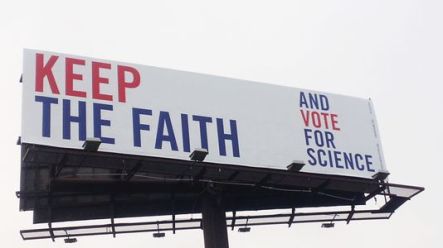
keep the faith vote for science

Hoosiers can love Jesus AND Bill Nye…

Here’s what we know: In Indiana, a group called Class Action has posted billboards in the run-up to the midterm elections. The billboards link religious faith with mainstream science.

By and large, the goal is to encourage religious voters to vote in favor of savvy climate-change science, to support politicians who want to take action to mitigate the negative effects of climate change.

Too often, radicals on both sides have harped on the old myth that religion and science are enemies. Radical young-earth creationists like Ken Ham have warned, for example, that real religion needs to be skeptical of the fake science being peddled by today’s mainstream experts.

To counter this sort of unnecessary antagonism, it just makes sense to remind voters that mainstream science is entirely compatible with even the most conservative strains of evangelical Protestantism.

As one supporter enthused,

A vote for science is a vote for creation, for the most vulnerable of the Earth and for future generations.

As another agreed,

It is smart political tactics to try to build coalitions between religious and environmental voters. . . . If we are to truly tackle the climate crisis, these efforts will be critical.

Hear, hear!

Want to end the utterly unnecessary century-long antagonism between mainstream science and conservative evangelical religion? Don’t tell religious people they are dumb. Don’t accuse them of “child abuse.” Instead, reach across the trench to notice that we all want the same things.

Want to Teach Evolution? Ditch THIS Baggage!

It was never going to be easy. But if we want to do a better job of teaching evolutionary theory in America’s public schools, there is a simple, easy, and obvious step that we should start with. For a long time now, evolution mavens and science pundits have blithely adopted a missionary zeal. It’s not at all necessary and it makes teaching evolutionary theory much more difficult. This week, we notice another example of this awkward tradition.

4928

Do students see God at work? Or not? We don’t need to care!

The recent whoopsie comes from Michael Dixon, director of the London’s National History Museum. As SAGLRROILYBYGTH are aware, Dr. Dixon and I are generally in agreement about the nature of science and of science’s role in a healthy democratic society. We agree that public schools ought to teach evolutionary theory and only evolutionary theory in science classes.

In a recent editorial, though, Dr. Dixon repeated the old mistake, the missionary supposition that has hindered evolution education for no good reason.

In his article, Dr. Dixon wisely pointed out the creeping dangers of anti-evolution teaching. In Israel, Turkey, and India, Dixon notes, the political power of religious extremists has led to woeful watering-downs of evolutionary theory in schools. Dixon asks,

So how should we respond to overt or insidious attempts to undermine this vital scientific concept?

He offers three good answers and one bad one. As he puts it,

We must – of course – teach it in schools as the core part of any science curriculum. And we must speak up to defend scientific evidence and rational debate. But more than these things, we must inspire children with the sheer wonder and variety of nature, and ignite their curiosity in the world around them.

Teach evolution in schools? Yes!

Speak up to defend scientific evidence and rational debate? Yes!

Ignite children’s curiosity in the world around them? Yes, yes, yes!

But should those of us who want to teach more and better evolutionary theory “inspire children with the sheer wonder and variety of nature”? Sorry, but no.

Of course, it is not a bad thing to inspire children, but these days, phrases like this are packed with unnecessary and unhelpful religious importance. If we want to teach evolution in creationist nations, we need to get over our tendency to over-reach our true educational goals.

There is nothing religious about evolutionary theory. In spite of what so many radical young-earth creationists say, evolutionary theory does not function as a kind of crypto-religion for secular people like me. Children can earn a thorough knowledge about evolutionary theory and a deep understanding of its premises whatever their religious beliefs.

Phrases like Dixon’s, however, echo an old religious zeal among some exponents of evolutionary theory. There has long been an unhelpful tendency among science pundits to pooh-pooh religious thinking, to assume that people need to pick between their religious beliefs and their knowledge of mainstream evolutionary theory.

For example, in the first edition of Darwin’s Origin of Species, Darwin exulted in the religious implications of his theory of natural selection. Did it make for a bleak and loveless universe, as critics charged? No, Darwin argued. Once we really understood it,

There is grandeur in this view of life, with its several powers, having been originally breathed into a few forms or into one.

In later editions, Darwin made that statement more creationism-friendly, but Darwin’s followers did not. Fast-forward a hundred years, and we see the same sort of irrelevant speculation by science pundits. In the 1960s, for instance, one of America’s leading evolution propagators was George Gaylord Simpson. In his book This View of Life (1964), Professor Simpson went out of his way to bash religious belief. Instead of understanding the universe with “reality and reason,” Simpson lamented, instead “higher superstitions [were] celebrated weekly in every hamlet of the United States.”

These days, the unnecessary and unhelpful tie between atheism and evolutionary theory has been preached most famously by Richard Dawkins. As Professor Dawkins wrote in his book The God Delusion (2006), the goal of evolution educators is to free people from the travails of religious belief. As Dawkins wrote,

a proper understanding of the magnificence of the real world, while never becoming a religion, can fill the inspirational role that religion has historically—and inadequately—usurped.

Like Dr. Dixon’s, the assumption here is that evolutionary theory can perform the vital task of inspiring us, of making us grasp the infinitude of reality and our own humble place within it. I don’t get invited to their parties, but I would guess that people like Dr. Dixon, Dr. Dawkins, Dr. Simpson, and Dr. Darwin himself believe that young people need to be inspired by evolutionary theory in this sense.

They don’t, and the sooner we can separate out the good goal of promoting real science from the bad goal of interfering with private religious belief, the better off we’ll be.