Is the Creationist Purge Coming?

You’ve heard the hype: Mainstream colleges are fanatically biased against dissenting academics, especially conservative religious ones. The reality seems to be a little more complicated. News from a few mainstream schools seems to show that many institutions really do protect the academic freedom of conservative dissenters, but there seem to be fuzzy and inexact lines professors aren’t allowed to cross. Is creationism one of them?

If you asked George Yancey or Mary Poplin, you’d hear that mainstream higher education is blinded by “Christianophobia” or “secular privilege.” You’d think that conservative academics, especially religious ones, are common targets of institutional purges.

EPSON DSC picture

First they came for the communists…

Recent reporting from Inside Higher Ed, however, shows a more complicated picture. Virginia Tech is under pressure to fire a teaching assistant who has been accused of harboring white-supremacist feelings. Northwestern, meanwhile (my Evanston alma mater, that is, not the Minnesota fundamentalist redoubt), refuses to fire a professor for denying the Holocaust. In both cases, from what I can tell, the politically abhorrent ideas seem to have nothing to do with the accused academic’s teaching. In other words, neither of the teachers taught anyone white supremacy or Holocaust denial.

If they did, I bet the situation would be different. Consider, for example, the case of Crystal Dixon at the University of Toledo. Dixon argued publicly that discrimination against homosexuals might be acceptable. Toledo said such notions weren’t in line with Dixon’s job as a human-resources administrator. She was out.

As far as your humble editor can discern, the awkward and unclear rule of thumb seems to be that the right of professors, administrators, and students to harbor extremely unpopular ideas will be defended. Unless those ideas interfere with the written job description of the person involved. Or unless the person doesn’t have tenure protection. Or unless the idea is really really unpopular.

Where does that leave academic creationists?

I can see how the average non-creationist might think it would be a no-brainer. It might seem that protecting professors who disagree with central tenets of their own discipline would be absurd. How could a young-earth creationist teach a mainstream geology class? How could someone who disbelieves in “macroevolution” teach a mainstream biology class?

Yet in case after case, dissenting creationist scientists keep their jobs. Consider Eric Hedin at Ball State. He was granted tenure even after being accused of pushing creationism in the classroom. And what about Michael Behe at Lehigh? The prominent intelligent-design proponent has kept his job, even though his colleagues posted a disclaimer against Behe’s work on their website.

For what it’s worth, I think those strategies are correct. Purging professors for their opinions sets a terrible precedent. But I won’t be surprised if the alleged white-supremacist at Virginia Tech loses his job. For one thing, he doesn’t have tenure. For another, white supremacy is such a despised idea that I’d be hard pressed to imagine any administrators fighting too hard to defend it.

So here’s the ILYBYGTH prediction: The Virginia Tech TA will lose his job, in spite of the fact that he should seemingly enjoy the protection of academic freedom. And creationists will continue to wonder if their institutions are scheming to replace them. I don’t blame them. Ask Scott Nearing—all too often, academic freedom is only granted to those with whom we already agree.

Want to Understand the Culture Wars? Start Here…

Even if you don’t share ILYBYGTH’s obsessive fascination with America’s culture wars, you probably noticed a few of its recent battles. Can a baker refuse to make a cake for a same-sex wedding? Can cheerleaders at a public school cheer for Jesus? As a recent article reminds us, if we really want to understand these fights, we need to look beyond Bibles and bakeshops. The behind-the-scenes power of legal activist groups has always fueled these culture-war battles.

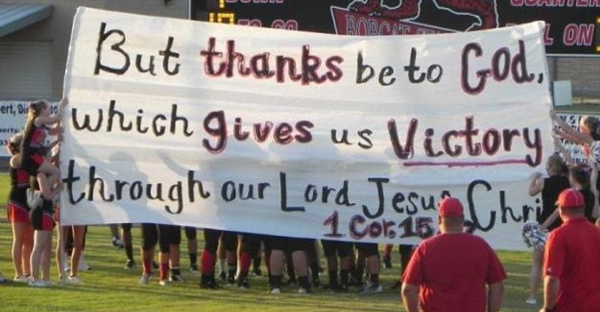
kountze-cheerleaders

The culture-war trenches. But not the culture-war Pentagon.

It has been this way from the very beginning. Back in 1925, the furious creation/evolution fight in Tennessee would never have happened if it weren’t for the influence of the American Civil Liberties Union. Sure, proto-creationists had passed a sweeping anti-evolution law. And, yes, plenty of people had noticed the goings-on in state legislatures. (I flesh out the full context in my book about educational conservatism.) But only when the ACLU offered to sponsor a legal challenge did the Scopes Trial actually gain momentum.

In our century it has been the same. SAGLRROILYBYGTH remember the case from Kountze, Texas. Starting in 2012, cheerleaders at the high school began displaying huge banners with Christian Biblical messages. It’s easy to see how such outright religious preaching at a public school might ruffle feathers. But it was only when the Wisconsin-based Freedom From Religion Foundation intervened that the case became a national sensation.

This sort of legal activism has not been limited to the liberal side. As Daniel Bennett describes at Religion & Politics, the conservative religious Alliance Defending Freedom has scored impressive legal victories over the past decade. As Professor Bennett notes, ADF has repeatedly made its case at the US Supreme Court, in favor of the right of bakers to discriminate against homosexual weddings or in favor of the right of religious schools to receive tax money.

adf logo

A culture-war army of well-dressed lawyers…

These days, as Bennett describes, ADF employs forty full-time attorneys, sniffing out ways to project the power of conservative religious values in the public square. ADF takes in tens of millions of dollars per year to stake out the legal rights of conservative Christians in a secularizing society.

Headlines talk about creationism, public prayer, and transgender issues. Time and time again, it has been the Alliance Defending Freedom who has pushed these cases into the limelight, defending the rights of radical creationist scientists, anti-transgender pastors, or Christian prayer leaders at public town meetings.

Cheerleaders and bakers matter, of course. In order to understand how these cases move from local controversies to national symbols, though, we need to recognize the influence of legal activist groups.

Felony Football Assault at Fundamentalist U

The world of evangelical higher education is reeling at the revelations from Wheaton College in Illinois. Five football players have been charged with felony assault in a brutal hazing incident. The incident reminds us of the long tensions between aggressive, win-at-any-cost college athletics and the behavioral rules of evangelical colleges.

1940s MBI banner and patch
Rah rah.


It’s easy enough to forget nowadays, when big evangelical schools like Liberty are making their mark in the competitive world of college athletics. Since the beginning, however, as I detail in my new book, thoughtful evangelicals wondered if the pressures that inevitably accompanied sports success threatened the mission of their religious institutions.

The story from Wheaton is gruesome. A freshman football player was attacked in his dorm room by senior teammates. His wrists were duct-taped together and he was thrown into the back of a car. His teammates piled in on top of him, threatening him with sexual assault. As Chris Gehrz has pointed out, the language they used—crudely blaring that Muslims commonly engaged in bestiality and sexual aggression—points out the deep structural flaws that can cocoon students at evangelical schools. Even worse, Wheaton seemed to be willing to sweep this assault under the rug, letting the players keep playing after they performed some community service and wrote apologetic essays.

The victim ended up abandoned half-naked in a field with torn muscles in both shoulders. He immediately left the school.

Sadly, there’s nothing unique about this sort of brutal collegiate assault, done under the banner of team-building “hazing.”

Schools like Wheaton, however, have built their reputation as different sorts of schools, schools that hold their students to a higher standard of conduct. As long as there have been evangelical colleges and universities of this sort, however, there have been deep tensions about athletic programs. For many schools, hosting winning sports programs are an intrinsic part of being a “real” college.

Back in 1944, for example, one Wheaton student wrote home in excitement that the new sports program (it only started in 1939 at Wheaton) gave her school a tradition to embrace. As she prepared to head to the weekly football game, she told her mother that the game against rival North Central College was a big deal on campus. “You see,” she explained to her mother,

Wheaton is to N.C. what Army is to Navy, or Harvard is to Yale.

Even in the sequestered world of the Moody Bible Institute, students glowered at their relative lack of athletic success. In 1945, one student complained that MBI teams should earn more wins. In spite of their large student body and their good athletic facilities, this student wrote in the student paper, the MBI “A” team still lost at basketball to the Wheaton “Bs.”

There had always been anxiety about the behavioral implications of athletics. In its first years, for example, Bob Jones College (it became Bob Jones University only in 1946) fielded teams under the name the “Swamp Angels.” The school’s leaders soon canceled the athletic program, however. As Bob Jones Jr. later remembered,

We found the people were betting on our games, littering our campus with whiskey bottles.

Even in that first generation of evangelical higher education back in the 1920s, critics charged that school leaders cared more about sports success than soul-saving. The short-lived and ill-fated fundamentalist experiment at Des Moines University demonstrated this conundrum better than any other school. When Toronto’s fundamentalist firebrand T. T. Shields stormed into town and took over the school, he fired all the faculty and forced them to reapply. Every potential faculty member went through an intrusive personal interview regime to get their jobs back. The entire faculties of the science and math departments quit in disgust. But not the football coach. Observers quickly noted that the coach was welcomed back in spite of his open cynicism about evangelical religion. When asked if he had been converted, for example–“born again”—the coach reputedly sneered, “Yeah, lots of times.”bju banner

Even elite Wheaton can’t claim innocence about questions of athletic influence. As soon as it started its athletics programs in the 1930s, critics on and off campus charged that football coach Fred Walker was not an appropriate evangelical role model. Walker was accused of a non-Christian tough-guy approach to coaching, cussing at players and using foul language to belittle them. In spite of all the charges, Wheaton kept Walker on.

Even back then, the college wanted to be seen as a real college. It wanted students to think of Wheaton as more than just a dumpy second-rate church school. Part of the package, since the very beginning, was a game-winning athletics program.

The behavior of students and administrators in this recent assault are nothing new. They only remind us of the ever-present tension at evangelical colleges like Wheaton. Like every school, Wheaton gives its athletes too much leeway. The results are often criminal and catastrophic.

The Real Face of Radical Creationism

Smart people keep saying it, but it’s just not true. And for people like me who want more and better evolution education, the news gets even worse.

You’ve heard it before and you’ll hear it again. Even the best-informed science pundits think radical creationism is somehow uniquely American.

If we needed any more evidence that radical creationism is not at all “unique to the United States,” as Bill Nye asserts, we see news this morning from the besieged nation of South Korea. United Press International reports on the confirmation hearing of Park Seong-jin. Like many of his compatriots, Mister Park believes that this planet was created by divine fiat at some point about 6,000 years ago. Park is an engineering professor and nominee for the ministry of small businesses.

Moon-Jae-in-nominee-sparks-uproar-over-creationist-views

Park’s creationism is a complicated post-modern affair.

Park is not alone in his beliefs. As SAGLRROILYBYGTH are well aware, Turkey’s government has passed some radical anti-evolution laws in the recent past. Even here in the US of A, our leading radical creationist is an Australian import.

So don’t listen next time someone tries to tell you there is something uniquely American about radical creationism. It’s just not true.

And the news for secular people like me gets worse.

You’ll also hear people tell you that radical creationism is a vestige of ancient hypocrisies, destined to wither in the face of modernity and the march of science.

Turkish education minister cuts evolution

Durmus’s is a little more straightforward.

Alas, also not true. Radical creationism is profoundly modern, only really emerging into its own in the 1960s. And, though we might gnash our teeth and pull our hair about it, radical creationism is actually a very reasonable response to the changes in church and society that went on in the 1960s.

Let me be clear here: I don’t think radical creationism is true, or based on good evidence, or anything like that. But I am convinced that radical creationists often (not always) have decent reasons for their beliefs, at least as reasonable as most non-creationists’ belief in the truth of evolutionary theory.

Ken Ham

Only Ken Ham’s includes ziplines…

As I argue in my upcoming books (you’ll be able to get Fundamentalist U sometime soon. Why Is Jesus on a Dinosaur is still simmering), conservative evangelicals faced a tough choice in the late 1950s, and even if you don’t agree with it—I certainly don’t—the choice of radical young-earth creationism makes perfect sense.

That’s why it is not confined to hillbilly hollers and Kentucky amusement parks. Radical creationism is a global phenomenon, unintimidated by its lack of mainstream scientific credibility. It is not an ancient truth clinging on in pockets of know-nothingism, but a reasonable (if false and unnecessary) way to make sense of life in our modern world.

A Trump Victory We Didn’t Expect

Maybe not out of left field, specifically, but out of a field somewhere: Trump’s shocking electoral victory and surprising pockets of continuing popularity have left wonks of all sorts scratching their heads. Here at ILYBYGTH, we’re agog to see some odd recent poll results that show yet another surprising result of Trumpism.

trump supporters

Take my tuition dollars!

The poll we’re talking about would seem to be worlds removed from Trumpism and its unpredictable path. But the Inside Higher Education/Gallup survey of college admissions officials has come up with some intriguing political results.

Some are predictable. Many schools these days are struggling to attract students. Only 34% of the schools surveyed met their enrollment goals this year, down from the last two years. That hits schools hard, right in the pocketbook. Without tuition dollars, most schools would have to pull a Sweet Briar, and few institutions have the wealthy alumni base to hope for a last-minute SB rescue.

One of the most attractive type of student, from a financial perspective, has long been international students. They often pay full tuition. At public state schools, they often pay even more than out-of-state students.

Trump’s anti-immigrant bluster has made it harder for American schools to attract these types of students. Eighty-six percent of admissions officers thought “the statements and policies of President Trump make it more difficult to recruit international students.”

That’s not surprising.

What is a Trump shocker, to us at least, is a different consensus among the admissions bureaucrats. Trump’s victory, many agreed, served as proof that they have been looking in the wrong directions for students. As the IHE report put it,

In the months following the election and the inauguration of President Trump, many educators have been discussing whether the results suggest that higher education is out of touch with the public, and how the image of higher education (fair or not) impacts colleges and their admissions strategies. At a gathering of private college counselors in June, many said that they were seeing an increase in parents vetoing their children’s college choices over the perceived political orientation of institutions, with one counselor saying, “Brown is completely off the table.”

As a result, many schools have begun a new sort of recruitment. In addition to their traditions of recruiting athletes, high-flying nerds, and underrepresented racial and ethnic groups, many schools want to start reaching out to rural, white, and—get this—conservative students.

Admissions Directors Agreeing With Statements on Higher Education, Postelection

Statement Public Private Nonprofit
Higher education needs to redouble its efforts to recruit and retain underrepresented minority groups. 86% 66%
The election outcome suggests Americans are less committed than they were in the past to increasing the number of racial and ethnic minority students who attend college. 44% 35%
The election outcome indicates that colleges — especially elite colleges — should recruit more students from rural areas. 42% 32%
The election outcome indicates that colleges — especially elite colleges — should recruit more low-income white students. 32% 24%
Colleges with overwhelmingly liberal student bodies should increase recruiting efforts, including affirmative action, for conservative students. 16% 12%

In other words, Trump’s victory has convinced some admissions officials—like some ILYBYGTH editors—that they just don’t “get” America. They want to include more students who might be likely to support Trump. They want to expand their notion of “diversity” to include conservative, rural, white students.

Colleges That Are Stepping Up Recruitment of Certain Groups in Wake of Election

  Public Private
Rural students 52% 28%
Low-income white students 41% 22%
Conservative students 9% 8%


We can’t say we haven’t wondered about this sort of thing. For a while now, we at ILYBYGTH have been worried about higher-education’s lack of knowledge and interest in conservative students. But we CAN say it is something we didn’t predict, one more example of the ways the Trump earthquake has changed the political landscape.

The Pornographer’s Preschool and the Perils of Public Funding

The feel-good story of the superstorm: Super-rich guy allows a bunch of adorable orphans to shelter in his swanky mansion after Irma knocked out power to their group home. From Lil Orphan Annie to The Simpsons to Fresh Prince of Bel Air, we Americans love it when a spunky kid is plucked from poverty and given a brief taste of the good life. And I hate to be “that guy,” but I can’t help but remind us about the underlying social malfunction that underlies this storyline: Instead of hoping for a well-intentioned generous savior, we should be making sure that all kids are getting the kinds of shelter and support they deserve.

lil orphan annie

I’ll help this one because it amuses me…

In case you missed the story, here it is in a nutshell: After Irma blew through Florida, about seventy kids of all ages at the SOS Children’s Village Florida were left homeless. Marc Bell, former owner of Penthouse magazine and board member of the group home, offered to let them stay at his mansion. They ended up staying for a couple of days. Bell hired clowns and bought pizza.

Cute story, right? If you watched only the Inside Edition version, you’d think so.

I know Inside Edition isn’t about hard-hitting journalism, but it’s hard not to cringe at the way the story is being told. Yes, it was kind of Bell to spend some of his hard-won pornography dollars on helping these children. And yes, it was an emergency situation that strained all public services far past the breaking point.

The real headline here isn’t a happy one, however. The real headline is that our institutional structure to provide basic services for the most vulnerable members of our society is fragile and battered in the best of circumstances. When emergency strikes—as we know it will even if we don’t know the details—people in these institutions are left hopeless and helpless.

Without the lucky and accidental intervention of the Bell family in this case, these seventy children would have been forced to endure more days without food, water, or shelter.

And that’s the real headline, the depressing headline, the headline no one wants to see and no one would click on: Children from Low-Income Homes Get Worse Treatment.

Decent funding for schools, housing, and other basic needs shouldn’t be a special plea that sometimes is met when generous individuals decide to step in. Schools should not need to plead for special treatment in order to have adequate supplies. Shelters shouldn’t need to beg for one-time favors in order to keep the lights on.

We Need More Wax in America’s Ears

Jonathan Zimmerman says let her talk. When we defend academic speech we disagree with, we defend ALL academic speech. Jonathan Haidt says let her talk, because she’s right. Stable marriages and “bourgeois culture,” Haidt agrees, really do help people improve their economic conditions. We here at ILYBYGTH want Professor Wax to have her say for different reasons. In short, we think we won’t be able to truly reform public education until we do. We’ll make our case this morning and we’re going for bonus points by working in both creationism and the Green Bay Packers.

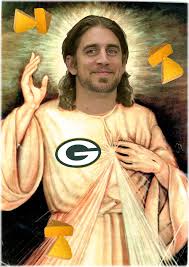
aaron rodgers jesus

I don’t think St. Aaron attended Penn Law…

If you haven’t been following the frouforole emanating out of Philadelphia, here it is in a nutshell: Professor Amy Wax of Penn Law and Professor Larry Alexander of UCLA penned a provocative piece at Philly.com. If we really want to ease the burdens of poverty, they reasoned, we should encourage more people to embrace “bourgeois culture.” Such ideas have gotten a bum rap, Wax and Alexander said, but the notions of deferred gratification, stable two-parent households, and patriotic clean living are of enormous economic value.

The outcry was loud and predictable. Penn students rallied to shut down such “white supremacist” notions. Wax’s colleagues denounced her ideas in more nuanced form.

Any progressive historians in the room surely share Professor Zimmerman’s concern. After all, when academic speech has been banned and persecuted in this country, it has been progressive and leftist scholars who have borne the brunt of such punishment.

There is a more important reason to allow and encourage a frank and open airing of Professor Wax’s arguments. As recent polls have reminded us, Americans in general are profoundly divided about the meaning of poverty. For argument’s sake, we might say there are two general sides. Lots of us think that the most important cause of poverty is a social system that defends its own built-in hierarchies. Rich people stay rich and poor people stay poor. Lots of other people disagree. Many Americans tend to blame individuals for their poverty, to assume that personal characteristics such as grit and gumption are enough to solve the problem of poverty.

Professor Wax’s argument tends to support the latter view. And if you disagree with her, you might be tempted to try to shut her down.

That’s a mistake.

Why? Because her arguments just don’t hold water. And because the more often we can get discussions of poverty on the front pages, the more chances we’ll have to make better arguments, to explain that America’s anxiously held Horatio-Alger notions don’t match reality.

In other words, when it comes to tackling the problem of poverty in America, the biggest challenge is that people simply don’t want to talk about it. They want to rest in their comfortable assumptions that the system is fundamentally fair even if some people don’t have what it takes to get ahead.

I’m convinced that the truth is different. Personal characteristics matter, of course. Far more important, however, is the whole picture—the social system that puts some kids on a smooth escalator to riches and others in a deep economic pit with a broken ladder.

Because I’m convinced that the best social-science evidence supports my position, I want to hear more from people like Professor Wax. I want to encourage people who disagree to make their cases in the front pages of every newspaper in the country.

Sound nutty? Consider a couple of examples from near and far.

Radical creationists like Ken Ham want to protect children from the idea of evolution. They fear, in short, that students who hear the evidence for evolution will find it convincing. With a few prominent exceptions, radical creationists want to cut evolution from textbooks and inoculate students against evolution’s powerful intellectual allure.

Those of us who want to help children learn more and better science should welcome every chance to put the evidence for mainstream evolutionary theory up against the evidence for radical young-earth creationism. Mainstream science should never try to shut down dissident creationist science. That’s counter-productive. Rather, mainstream science should encourage frank and open discussions, knowing that exposure to the arguments on both sides will convince more and more people of the power of mainstream thinking.

Or, for my Wisconsin friends, consider another example.

If a Bears fan wants to clamber up on the bar and insist that her team is better than the Packers, it would be the height of folly to try to stop her from speaking her piece. Those of us who know the true saving grace of St. Aaron will instead happily let her slur through her argument, smiling and waiting for Thursday night. The more games we play, the more often the Packers will win.

When the evidence is on our side, it is always better to encourage all the debate we can get.

Why Campus Free Speech Laws Won’t Free Campus Speech

We’ve been down this road before. When conservative lawmakers hope to protect the right of conservative speakers on college campuses these days, they rehash a tactic from the 1920s evolution/creation battles.

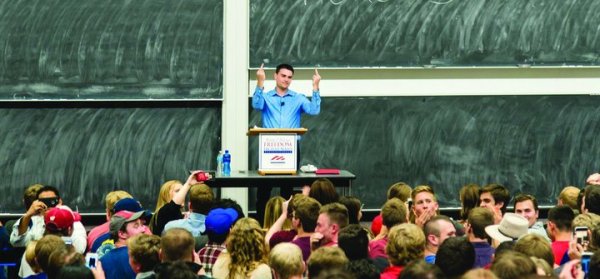
shapiro-by_katie_cooney_720

Conservative pundit Ben Shapiro speaks freely at the University of Wisconsin.

Will it work this time? Not a chance. Why not? I lay out my argument this morning at History News Network. Click on over and check it out.

The Real Reason We Can’t Fix Our Schools

We all know public schools are not all equal. Rich kids get meticulous college-prep educations. Poor kids are often stuck in crumbling schools with shoddy expectations. Why haven’t we been able to fix this problem? We get a clue this week from an unlikely source. It underlines an unpopular argument I’ve been making for a while now: in spite of decades of “progressive” reform, our public education system is dominated by deeply conservative assumptions.

public school crappy

Do your local public schools look like this…

This week, our already-fractured academic world was thrown another culture-war bone to chew on by law professors Amy Wax (Penn) and Larry Alexander (UCLA). Writing at Philly.com, the two scholars articulated the unpopular idea that some cultures were better suited for modern American life than others. To help people in poverty, society should encourage them to live more stable personal lives, more in line with “bourgeois” culture.

Penn students and alumni condemned the essay as part of the culture of white supremacism. Some of Wax’s colleagues “categorically reject[ed] her claims.”

What does any of this have to do with school reform? A lot.

We don’t need to support or condemn Wax and Alexander in order to understand this. (Although, full disclosure, I personally put their argument in the same unfortunate category as James Damore’s Google goof. They twist social-science research to suit their own already-convinced positions. They play the provocateur merely to gain attention and they don’t mind articulating atrocious ideas in order to do so.)

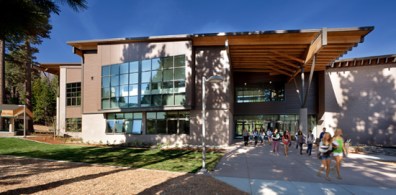
public school fancy

….or more like this?

The point here is not whether or not Wax and Alexander are bold speakers of truth—as Jonathan Haidt has argued—or self-inflated stalking-horses for white supremacy.

The point, rather, is that this dust-up among elite academics shows the real reason why school reform is so difficult. It is not because we Americans are unwilling to invest in public education. As recent headlines from New York City have shown, we often have put bajillions of dollars into efforts to improve schools for students from low-income families.

As the case of the Wax/Alexander letter shows, the real reason we can’t fix public education is because we find it impossible to talk reasonably about poverty. Americans in general can’t even agree on the meaning of poverty. Some people think poverty is mainly due to personal failings. Others see the reason as structural inequality.

As a result, we talk instead about fixing schools so that poverty will be magically eliminated. Instead of talking about reforming society so that fewer students in public schools come from low-income families, we reverse the discussion. We talk about fixing schools so that more students from low-income families will get ahead in life.

In effect, our centuries-long strategy to avoid discussions of social reform by investing instead in school reform shows how deeply conservative our fundamental assumptions about schooling have always been. Instead of fixing society to eliminate poverty, we try to fix schools so that individual people might get a chance to escape poverty. Instead of directly addressing the third-rail topic of poverty in America, we sidestep the issue by making a few schools a little better.

The assumption is so deeply embedded in American culture that it is rarely noticed, let alone addressed. As long as kids from low-income families have access to a decent public school—the assumption goes—it is their own darn fault if they don’t improve their economic future. So money goes into shiny programs to make schools for low-income students a little better here and there, instead of going into programs that would change the fundamentally inequal structure of society itself.

SAGLRROILYBYGTH are sick of hearing it, but I have to say it again. At the root of our endless failure to reform public schools is our endless failure to address the real problem. Schools can’t fix society, schools ARE society.

The 582-Million-Dollar Question

You’ve seen the headlines: One lucky person from Chicopee, Massachusetts won three-quarters of a billion dollars in this week’s powerball lottery. What can she do with her money? She could buy all the seats—ALL THE SEATS—at the next two Superbowls. She could buy an archipelago of private islands. But, apparently, even with all that money she couldn’t buy better schools for New York City students from low-income homes. Why not? We all know the answer, but we just don’t like to talk about it.

The New York Times reported today that New York’s 582-million dollar investment in its public schools has shown only meh results. Students at a couple of schools showed improvement on test scores, but overall the improvements don’t seem to match the size of the investment.

Why not?

The article concludes that the answer is mysterious. As the authors put it, “nobody knows precisely what works.”

That’s a cop out.

We all know what works: Schools that are part of enthusiastic, involved communities of families, teachers, administrators, and politicians. The problem comes when even the best-intentioned school reformers make the same error we’ve been making for centuries. If we want to improve educational outcomes, we can’t simply invest in academic interventions. And, to be fair, the program in NYC went beyond academics to provide health services for students.

Nevertheless, with apologies to SAGLRROILYBYGTH who are sick of hearing it, we need to repeat the mantra: Schools can’t fix society, schools ARE society. As long as students are living at the bottom of the economic ladder, they—as a whole, not as individuals—will continue to fare far worse on measures of educational achievement.

Why? Not because they lack talent or “grit,” but because they are carrying far heavier life burdens than students from more affluent families. Schools alone can’t level that playing field. No matter how much money we invest, we won’t be able to use academic interventions to solve the problems of poverty. Instead, we need to invest in schools as part of a broader investment in economic equality.

It’s not a mystery, but the sheer political impossibility of doing such a wide-ranging social and economic reform plan leads us always back to the same conundrum. We put the money into schools because we don’t want to confront the depressing truth that our problems are bigger than we like to think.