Can YOU Pick the Right Decade?

I guess I should see a doctor. Reading the news from Highland Park, Texas, I had a dizzying sensation of whirling around in time, not sure if it was 2014 or 1974. The Dallas-area controversy over school readings sounded so similar to one that happened forty years ago, I’ve come up with a reader challenge: Can you put the quotations below in the right decade?

Here’s some background: As I describe in my upcoming book, in 1974 Kanawha County, West Virginia was roiled by a ferocious controversy over a new set of language-arts textbooks. Conservative protesters worried that the books had an anti-American tone. They worried that the books promoted a vicious sexuality, an angry rebelliousness, and an unhealthy sense of anti-authoritarianism. Until the books were removed, parents boycotted the region’s public schools. It got ugly. Buildings were firebombed, cars and school buses were attacked, and two people were shot.

From Trey Kay, "The Great Textbook War."

From Trey Kay, “The Great Textbook War.”

This year, as the New York Times reports, an eerily similar protest took off in Highland Park, Texas. In that fancy Dallas suburb, a short list of books were pulled from school shelves. Parents had complained that the books promoted a precocious deviant sexuality. After counter-protests, the district’s superintendent put the books back in schools.

So here’s the challenge: Can you guess the right decade for the quotations below?  Each quotation comes from a conservative challenge to school textbooks.  And the bigger challenge: Can you figure out if this means we are trapped in a never-ending cycle of educational culture wars?

QUOTATION 1: The books include “seduction, rape, child pedophilia, whether oral sex is sex, premarital sex as normative, reincarnation, or that those in authority over them approve of foul language.”[1]

QUOTATION 2: “I found this book to be crass, vulgar, and indecent for students.”[2]

QUOTATION 3: Offensive textbooks are “negative, racist, impulsive, and in some cases right-down vulgar.”[3]

QUOTATION 3: “The book introduces ideas . . . such as beastiality [sic], and sexual penetration by an object, among others.”[4]

QUOTATION 4: “In all of these books . . . I’ve seen many references to God and to Christianity . . . and every time it’s been derogatory.” These books “ridicule Christianity again and again.”[5]

QUOTATION 5: “A child’s formal education should expose him to a broad spectrum of views, but explicit and vulgar writings are not warranted.”[6]

QUOTATION 6: One objectionable book “seeks to frighten children of authority figures, asks children to criticize their parents and invasion of privacy is almost commonplace throughout.”[7]

QUOTATION 7: The offensive books “dwell at length on the sexual aspects of human relationships in such an explicit way as to encourage promiscuity.”[8]

How did you do?  Could you place the conservative protests in the right decade?  Without cheating?

More important, what does it say about our continuing battles over proper education that these parent protests sound so similar?

**********************************************************************************************************

[1] From the NYT article, 2014

[2] From conservative committee member minority report, 2014

[3] June 13, 1974: conservative protester speaking at school board meeting in Kanawha County.

[4] From conservative committee member minority report, 2014

[5] Conservative leader Alice Moore, speaking at school board meeting, June 27, 1974.

[6] From conservative parent protest website in Highland Park, 2014

[7] Judith Casto, “3 basic Kanawha book objections evident,” [sic no caps] The Herald Advertiser [Huntington, WV], November 24, 1974, 41, 44.

[8] Elmer Fike, “Textbook Controversy in Perspective,” Elmer’s Tune, n.d. [fall 1974].


Are Teach-Bots “Conservative?”

When Arnold Schwartzenegger played a robot, it was the mean, human-killing kind (at first). But when he played a teacher, it was the cute, love-them-kids kind. But in the real world, we will soon have machines performing crucial teaching tasks. Will this be embraced by conservatives?

Hasta la Vista, Human Teachers...

Hasta la Vista, Human Teachers…

According to Politico, the company that is in charge of producing Common-Core-related standardized tests has promised to introduce computer grading. The company, Pearson, wants computers to grade student essays in order to cut down on the costs of test processing. In fact, those algorithm-guided grading programs were an essential part of Pearson’s original contract with the Partnership for Assessment of Readiness for College and Careers (PARCC), the folks behind the Common Core tests.

Caitlin Emma of Politico reports that those robo-graders have been delayed without explanation. Pearson’s original plan was to phase in computer grading. This year, all Common-Core tests would be graded by humans. Next year, two thirds would be done by computer. After that, computers would “read” and evaluate all student essays.

For us here at ILYBYGTH, this raises a tricky question: Is this plan “conservative?” As we’ve seen, conservatives have been bitterly divided over the plans to introduce Common Core curricula. Some conservatives have insisted that the CCSS are the best, most conservative way to reform education. Others have called the new standards a “progressive beer bong,” or a socialist plan fomented by “Obama administration left-wing bureaucrats.”

So what will conservatives say about robo-grading? I can imagine some free-market types will embrace the new technology. If computers can grade tests quickly, efficiently, and accurately . . . why not? This will represent, after all, the triumph of business principles in the hopelessly sclerotic world of public education, some might say.

On the other hand, conservatives might be aghast at the dehumanization of the process. It is one thing to use machines to grade multiple-choice answer sheets, but another thing entirely to have them grade essays. For one thing, conservatives might agree that computer grading is simply inaccurate. Conservative critics might side with progressive pundits who insist that computers can’t possibly evaluate the complex meanings of student writing.

My hunch is that this issue will divide the traditional “conservative” constituency. I’ve argued that the Common Core has forced a re-shuffling of what it has meant to be “conservative” on educational issues. This question of computer grading will only deepen that divide among conservatives.

Were the Fundamentalists Right All Along?

Is it time for atheists to celebrate? ThinkProgress calls a recent federal court decision a “major win” for them. In that decision, Oregon’s Judge Ancer Haggerty declared that Secular Humanism deserved to be counted as a religion.

But isn’t that what fundamentalists have been saying for decades? Is this decision really a long-term win for conservative religious folks, who have long argued that secular humanism is a religion? If SH is a religion, it can’t be promoted in public schools. Will fundamentalists be able to use this court decision to demand SH-free textbooks and state standards?

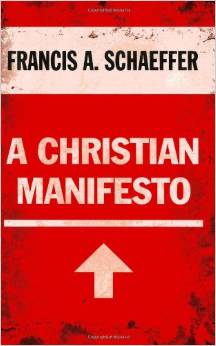
SH SchaefferI take a detailed look at this anti-SH school campaign in my upcoming book. The notion that SH functioned as a religion was popularized among fundamentalists by evangelical intellectual Francis Schaeffer. In his 1982 book A Christian Manifesto, Schaeffer defined SH as a religion that made the terrible error of denying God and making humanity the “measure of all things.”

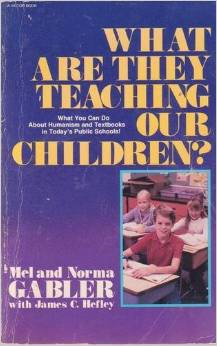
Mel and Norma Gabler, the school watchdogs who pushed Texas’ schools in profoundly conservative directions during the 1970s and 1980s, denounced SH as a “religion with an anti-biblical, anti-God bent.” Beginning with John Dewey in the 1930s, the Gablers believed, humanists had taken over schools and pushed leftist, amoral ideas on generations of schoolchildren. SH was not a neutral arbiter between religions, the Gablers argued, but rather a pernicious religion of its own. As such, it should not be allowed to do its damning work in public schools.SH Gablers

Tim LaHaye agreed. The blockbuster fundamentalist author argued in his Battle for the Public Schools (1983) that SH taught kids in public schools to be “anti-God, antimoral, antifamily, anti-free enterprise and anti-American.” By 1980, LaHaye wrote, humanism had achieved a “stranglehold” on the US government. As LaHaye put it,

Public education today is a self-serving institution controlled by elitists of an atheistic, humanist viewpoint; they are more interested in indoctrinating their charges against the recognition of God, absolute moral values, and a belief in the American dream than they are in teaching them to read, write, and do arithmetic. I call these people humanist educrats.

SH LaHayeThis claim among fundamentalists has become ubiquitous over the years. Conservatives insist that public schools are only interested in freezing out real religion. False religions, especially SH, receive special treatment. Kids in public schools, fundamentalists insist, are not actually in a neutral environment. They are, instead, effectively in an SH madrasah.

So here’s the $64,000 question: will last week’s federal court ruling fuel this fundamentalist fire? In coming years, will fundamentalist activist groups be able to prove their claims about SH and schools by citing Judge Haggerty’s argument?

It will help to look at the specifics of the case. In this case, an SH prisoner complained that he was being treated unfairly. He had demanded similar privileges for his SH group to those given to a list of religious groups. If Catholics, Shias, Sikhs and Druids could have special meeting times, Secular Humanists should too.

The judge agreed. In Haggerty’s words, “Secular Humanism is a religion for Establishment Clause purposes.” That is, as far as the Constitution is concerned, the government cannot favor any one religion over another. Judge Haggerty pointedly noted that his decision was in line with earlier court decisions that differentiated between Secular Humanism in general and organized groups of Secular Humanists who demanded equal treatment. It does not matter if SH in general is a religion. Those who claim equal privileges to religious groups deserve them.

So, in short, the judge did not decide that SH was or was not a religion. His decision was based on the notion that any religion or non-religion deserves equal treatment by the government. But here’s my hunch: For the coming few decades, fundamentalist pundits will refer to this case as proof that SH is a religion. They will ignore the niceties of Judge Haggerty’s decision. We might even see a re-do of the Mozert v. Hawkins County case from the 1980s. In that case, fundamentalist parents insisted that school textbooks pushed the religion of SH on their trusting children.

A new generation of fundamentalist activists might take heart from this decision. It is proof, fundamentalists might conclude, that they’ve been right all along.

Rubio’s College Fix: Make Students Profitable

Vouchers. Charters. Conservatives these days like to offer “market” solutions to school problems. In the pre-run-up to the 2016 presidential contest, Florida Senator Marco Rubio is offering a market fix for college students: Sell shares in yourself.

Of course, not every conservative is a free-marketeer. “Traditionalist” conservatives (for good examples, check out the Imaginative Conservative or the American Conservative) decry the dehumanizing effect of ruthless commodification. But there has been a long tradition in these United States of tying traditional values to an apotheosis of the free market.

In education, the most influential voice for marketization has been the late Milton Friedman. As he remembered in the 1980s, when he started advocating vouchers, it was “far out of the mainstream.” But by the twenty-first century, such market ideas had become dominant. Parents should all have the right to choose the right school for their children, Friedman insisted. The only reason they could not, he wrote, was because self-interested teachers’ unions had seized control of education and forced an “excess of conformity.”

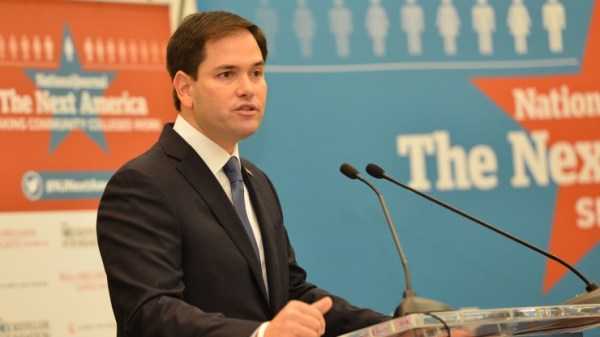
Rubio’s plan expands on this principle. In a recent talk organized by the National Journal, Rubio worried that the “American dream” of college education has become unaffordable for many. The danger, Rubio warns, is an increasing opportunity gap between those who have advanced education and those who do not. His plan will help narrow that gap by making it possible for everyone to go to college. Our “new economy,” he says, is still working with a higher-ed system built for the “old economy.”

Sell yourselves, students...

Sell yourselves, students…

Tuition costs have shot up far faster than the rest of the economy. Students from less-affluent backgrounds have been forced out of college, or saddled with impossibly huge debt burdens. Colleges are getting fat on these hefty tuition bills, largely financed by federal student loans. And, according to Senator Rubio, many “high-skilled, high-paying industries suffer from a shortage of labor.”

His solution? Among other ideas, Rubio wants students to sell shares in themselves. Instead of borrowing a fixed amount, students could promise investors, say, four percent of their earnings for ten years after graduation. Students might end up paying far more than they borrowed. Or they might pay less. But that is all part of the promise and peril of the market.

As Rubio notes, this will pusher higher education in “practical” directions. It will push students to pursue “the right degree, geared toward the right industry.” Not a lot of investors will jump at the chance to invest in a philosophy major. But students in “engineering, health services and education,” Rubio thinks, will be a good bet.

There are plenty of conservatives, I think, who would be aghast at this marketization plan. The purpose of education, many conservatives insist, is to humanize.

Rubio’s brand of conservatism is different. He wants to let the market work its magic.

War of the World Histories: Or, Is Bill Gates Smarter than H.G. Wells?

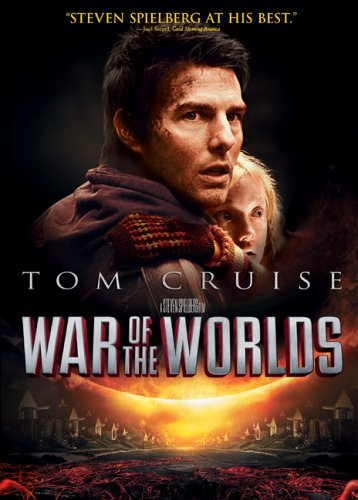
Tom Cruise might remember him best for his science fiction, including War of the Worlds and The Time Machine. But in the 1920s and 1930s, author H. G. Wells tried to save the world by saving the history classroom. Wells’ plan sounds eerily similar to a new revolutionary plan by gagillionaire Bill Gates. Why didn’t Wells’ scheme work, and what does that tell us about Gates’ chances?

Can Tom save this child from Bad History?

Can Tom save this child from Bad History?

Alert ILYBYGTH readers may remember our snarky critique of Bill Gates’ ingenuous entry into the evolution/creation controversies. Gates wants to revolutionize the teaching of history by replacing today’s tired curriculum with a breathless new “Big History.” Students would learn about everything ever, from the Big Bang to today’s Big Game.

As scholar Ken Osborne describes in the latest issue of the journal Historical Studies in Education, Gates is unknowingly following in the footsteps of H. G. Wells. As Osborne describes, Wells dedicated the latter half of his career to an ambitious but ultimately fruitless mission to reform history education. As Wells put it in 1921, “Upon this matter of the teaching of history, I am a fanatic.”

Just as Bill Gates did, Wells noticed that most school histories were dry and lifeless. As Wells argued in 1931,

If so many of us had not experienced it, few would believe it possible. . . . It is partly like heavy stale gossip about incredible individuals, partly like trying to get interested in the litigation of an unknown people in a remote country, and partly like watching a university don playing soldiers on his study floor.

To Wells, this was more than just a matter of wasted time. History as taught, Wells believed, had led directly to the cataclysm of World War I. Young people in each country had been drilled to believe in patriotic pablum instead of understanding themselves as part of the great unfolding of humanity. Wells was not alone in this belief. As British Prime Minister Lloyd George argued in the last year of the Great War,

The most formidable institutions we had to fight in Germany were not the arsenals of Krupp, or the yards in which they turned out submarines, but the schools of Germany. They were our most formidable competitors in business and our most terrible opponents in war.

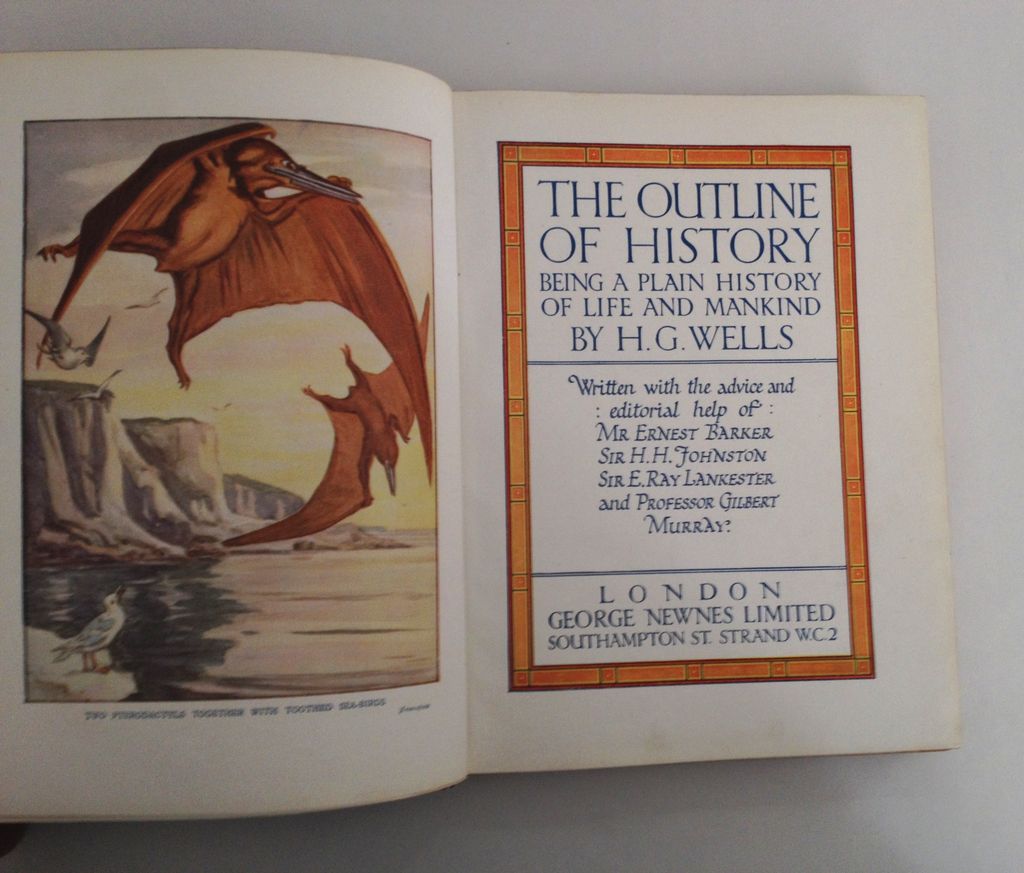
In the years following the war, Wells published his sweeping Outline of History. As he described it,

Its background is unfathomable mystery, the riddle of the stars, the measurelessness of space and time. There appears life struggling toward consciousness . . . through millions of years . . . until it reaches the tragic confusions and perplexities of the world of to-day, so full of fear and yet so full of promise and opportunity.

Like Bill Gates, Wells wanted students to see themselves in cosmological time. Not only as citizens of a particular country, but as denizens of a universe of abiding mystery. And just as Gates wants to do with his Big History project, Wells hoped to do an end run around a hopelessly hidebound educational system. In Wells’ opinion, schools remained “a conservative force in the community . . . controlled by authority and bound officially as well as practically to respect current fears and prejudices.”

From dinosaurs to diplomacy...

From dinosaurs to diplomacy…

To overcome these prejudices, Wells devised a painstaking hour-by-hour plan to fix education. Just as Bill Gates is hoping to do, Wells hoped his ideas would take off with teachers first. Then, bit by bit, those teachers would use Wells’ grand healthy history to supplant the old musty stories.

It didn’t work. As Ken Osborne concluded, “when [Wells’ plans] were not simply ignored, dismissed as impractically utopian, or condemned as rigidly doctrinaire, they were domesticated and de-radicalized.”

It seems Bill Gates is traveling down this same road in all innocence. It seems ironic that Gates wants to revolutionize the teaching of history, but does not seem to have spent any time actually studying history. If he had, he might have learned from the doomed efforts of predecessors such as H. G. Wells. Or, even more simply, he might have learned from historians such as David Tyack and Larry Cuban. Twenty years ago, Tyack and Cuban offered a compelling argument about why the reform efforts of folks such as Gates and Wells end up so often in the dustbin of educational history.

The best-intended plans—and even the best-funded ones—never have much effect if they do not adapt themselves to the ubiquitous “grammar of schooling,” Tyack and Cuban argued. When a new reform helps teachers do what they already want to do, it is adopted with alacrity. Blackboards, for example, and now smartboards, offer good teachers a way to do a better job. On the other hand, when reforms ask teachers to change everything, those reforms end up collecting dust in a back closet in a school-district warehouse somewhere.

It’s always tricky to use the past to predict the future, but in this case the parallels between Bill Gates and H. G. Wells seem too blatant to ignore. Both men hoped to ride to the rescue of schools. Both men hoped to sidestep the people who could actually make their “Big Histories” happen.

As a result, both plans will end up the same way.

One Colorado, Two Systems

There has been plenty of news coverage. Everyone from Fox News to Bloomberg to ILYBYGTH has written about the history protests in Jefferson County, Colorado. But what I haven’t seen anywhere is any notice of the startling international connections here: teenagers in Colorado and China are protesting against the same things. What does that tell us about the nature of educational conservatism and the teaching of patriotic history?

The Colorado story can be told in a few words: Conservative school-board members suggested changes to the way Advanced Placement United States History was taught. They worried that the new framework distorted America’s past. As have many conservative thinkers, they worried that the new guidelines skewed the story toward genocide, racism, and oppression.

In response, students and teachers took to the streets. They demanded freedom to learn about America’s tradition of protest, about America’s traditions of civil disobedience.

Here's what it looks like in Colorado...

Here’s what it looks like in Colorado…

And journalists have offered great continuing coverage of the Jefferson County kerfuffle. For example, there are great stories here, here, and here. Conservative scholar Stanley Kurtz—an early and influential critic of the new AP history framework—has agreed that “The issue is spreading nationally.”

But it is doing more than that. This is an international story, and I’m flummoxed by the lack of coverage of those international connections.

At the same time as the Colorado protests, much bigger protests have roiled the enclave of Hong Kong. Again, there has been no lack of coverage of the “Umbrella Revolution.” We don’t need to re-hash the whole story in these pages—you can check out the unfolding protests here, here, or here.

On some levels, the international connections of the Hong Kong protests are hard to miss. After all, the movement has modeled itself on the international “Occupy” protests. But I can’t find anywhere the international connections between Hong Kong and Colorado that seem so central to this story.

In Hong Kong, after all, the protests emerged, in part, from a movement called “Scholarism.” One leader of this movement, seventeen-year-old Joshua Wong, has protested for years against the imposition of a “patriotic” history curriculum in Hong Kong. That curriculum has been ferociously controversial in Hong Kong, since it glorifies the “China Model” and erases distinctions between Hong Kong and mainland China.

And here’s what it looks like in Hong Kong (Joshua Wong in center)…

And here’s what it looks like in Hong Kong (Joshua Wong in center)…

The parallels are hard to miss. Conservatives in China and Colorado want to see history taught a certain way. Of course, the heroes are different, but the central ideas are the same: Any mention of anti-government protest is suspect. The exceptional nature of the country is emphasized. Students should be taught that their country is the best on earth.

I can’t help but think that Colorado’s conservatives wouldn’t like the comparison. But it’s staring us in the face. Students in Colorado, just like students in Hong Kong, protest against any heavy-handed effort to swing history in conservative directions. What does it mean that teenagers from Colorado to China are protesting against “patriotic” changes to their history curriculum? Is there some thread linking conservative ideas about the proper teaching of the past?

And the big question remains: If this parallel is so noticeable, why don’t we see it in news coverage of these student protests?

Who “Gets” Left Behind

I remember reading the novels.  I read them in the gym of the high school I taught in.  Sometimes students would ask me about them, and I’d say they were about the end of the world.  But I also sometimes wondered if people would think I was a fundamentalist, an end-of-the-worlder, a kook.  Now that the new movie is out, friend of ILYBYGTH Daniel Silliman has offered a thoughtful essay about what it means to be a fan of Left Behind.

For those of you who haven’t heard, the Left Behind series blew a lot of minds when it came out in the 1990s.  Fundamentalist writer Tim LaHaye and his colleague Jerry Jenkins set out to present another gripping fictional story of the end of the world.  But not just any end of the world.  Left Behind told the story of the way many American fundamentalists have come to interpret the Bible’s eschatology.

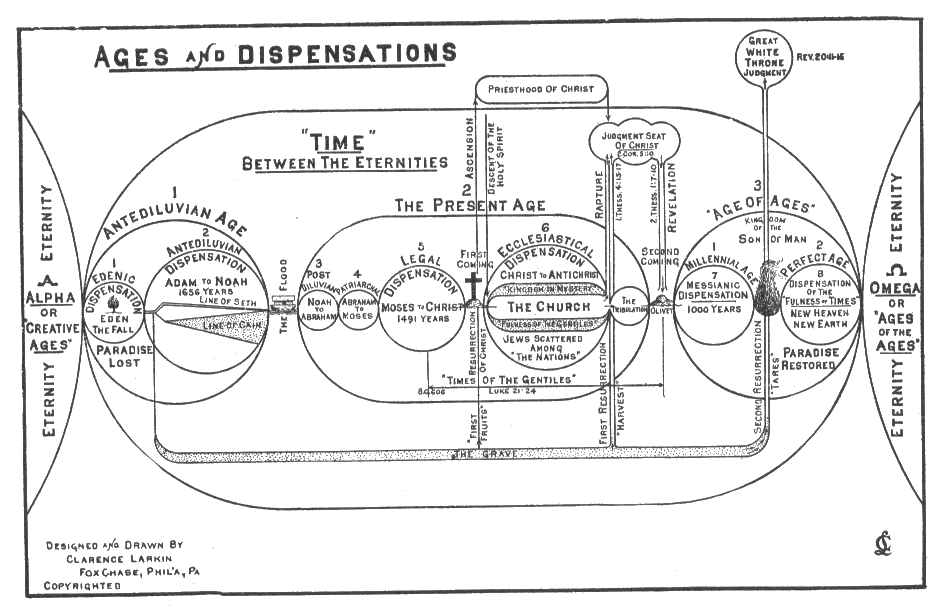
Clarence Larkin's theological charts were very popular among the first generation of fundamentalists in the 1920s.

Clarence Larkin’s theological charts were very popular among the first generation of fundamentalists in the 1920s.

Since around the beginning of the twentieth century, many (but by no means all!) fundamentalists and conservative evangelicals have embraced the theology of dispensational premillennialism.  This interpretation of the Bible sets out a series of ages, or “dispensations.”  Our current Age is set to expire sometime soon.  When it does, this theology predicts, Jesus will lift all true believers to meet him “in the air.”  This event will be known as the “rapture.”  After the rapture, those who have been left behind will suffer through seven years of tribulation before Jesus returns in glory.  Once Jesus and his angelic hosts have defeated the Antichrist on the field of Armageddon, a thousand years of peace and love will follow on earth, the millennium.

That’s a quick and dirty summary, but for our purposes, it will do.  Tim LaHaye was not the first prophecy writer to fictionalize this story.  As many evangelicals of a certain age will remember, an older generation of films such as A Thief in the Night told a similar story, in a similarly dramatic fashion.

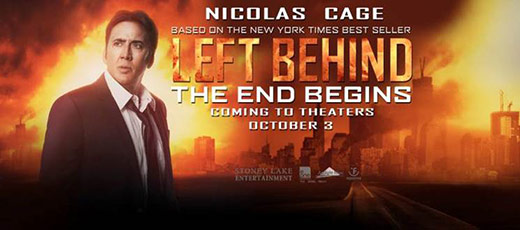
But LaHaye’s Left Behind series took this Bible apocalypse into the mainstream.  Millions of people read the books.  And evangelical sorta-star Kirk Cameron made a series of movies to bring the message to even more fans.  And now, for some reason, there’s a new movie version, this time starring Nicholas Cage.

For nerds like me, the interesting question is not whether the new film is good or bad.  (Although I couldn’t find a single review that said it was good.  Just bad, really bad, and “God-awful.”)  Instead, I want to know what it can tell us about American religion.  Specifically, I want to know why so many people gobble up these fundamentalist bedtime stories.  Is America really that sympathetic to fundamentalism?  Does some part of our national psyche still yearn for this sort of stern hellfire morality play?

Daniel Silliman tackles this question of audience.  Take a few minutes to read his whole essay.  In short, he demonstrates that we can’t really assume much about America based on its seeming never-ending appetite for Biblical apocalypses.  Just because millions of people read these books, we can’t assume we know if those readers bought into the fundamentalist end-of-the-world story.

Left Behind

Some people, Silliman notes, will watch this movie ironically.  That is, they will rush out to see the movie to see just how silly those Christians will get this time around.  Like the infamous Snakes on a Plane, many movies become popular because of their badness.

But Silliman also gives some examples of people who seem to embrace the film precisely because they embrace the theological message.  Just because the story seems outrageous to me doesn’t mean that other viewers are not watching it with very different attitudes.

In other words, we must be careful about assuming too much from this film.  If it flops, we will not be able to say that America has turned its back on fundamentalist theology.  And if it’s a huge box-office success, we won’t be able to say that America is still a fundamentalist fief.

Salon Article Wrong on the Right

Do conservatives hate the Common Core?  Like anything in cultural politics, it all depends on what we mean by “conservatives,” “hate,” and “the Common Core.”  In other words, I understand that this is a tricky subject. But it is still painful to read writers like Gabriel Arana get the Right so Wrong.

As we’ve discussed in these pages, conservatives are anything but united about the new common standards.  Some old-schoolers such as Phyllis Schlafly blast the new standards as “control by Obama administration left-wing bureaucrats.”  And Catholic conservatives have worried that the new standards will rob students of the “the virtues necessary to know, love, and serve the Lord.”  Libertarians have bashed the core as the death knell of educational independence.  More colorfully, one conservative politician described the standards as the ultimate progressive “beer bong for American education.”  We could go on and on.  Conservative pundits and politicians have offered a vast treasure-trove of reasons to oppose the newish standards.

On the other side, thinkers have also offered plenty of conservative arguments in support of the core.  Karen Swallow Prior of Liberty University, for example, has suggested that “no one more than evangelicals” should understand the reason for effective literacy instruction.  Kevin T. Brady and Stephen M. Klugewicz argue that the new standards will serve to weaken the power of the political Left.  The new standards, these conservatives assert, will force left-leaning teachers and educational bureaucracies to embrace the rich cultural tradition of Jesus, St. Paul, Martin Luther, and GK Chesterton.  Nuts-and-bolts free-market conservatives also like the standards.  Chester Finn and Michael Petrilli, for example, think that these standards are the least-bad way to insure that America “knows how all its kids and schools are doing . . . [with] a rigorous set of shared expectations for the three R’s.”

It’s complicated.  I get it.  But that complexity only makes me lament all the more the simplistic description offered by Arana’s recent Common-Core article in Salon.  A few days ago, Arana offered this glib and breezy drive-by of conservative attitudes:

Education policy wonks on the right oppose the standards because they view it as a step toward nationalizing education — as a general rule, they prefer to keep control local. Tea Party types, on the other hand, fear they will eventually be used to teach kids about dangerous stuff like evolution. But since George W. Bush signed No Child Left Behind into law — the largest federal education initiative to date — Republicans have in principle been less opposed to federal involvement in education. A lot of the pushback from Republicans . . .  is about the Obama administration, which has enthusiastically supported Common Core.

Let’s take a look at the claims here:

First, “Education policy wonks” don’t like the standards?  It’s hard to think of any more wonk-y conservatives than Michael Petrilli.  And Petrilli, the author of Wonk-tastic articles such as “How School Districts Can Stretch the School Dollar” and “America’s Private Public Schools” is the Right’s most vocal advocate of the new standards.

Next, it is true that some conservatives worry that the Next Generation Science Standards will push more evolution into schools.  It’s also true that some conservatives have bundled their opposition to the Common Core with their opposition to evolution.  But what leads Arana to call this “Tea Party” opposition?  Some polls suggest that conservatives who identify as Tea Party members tend to deny evolution at higher rates than other members of the Republican Party.  But as Dan Kahan has pointed out, any statements about a shift in Republican attitudes about creationism overall must be tempered.  And behind it all, how often do “Tea Party” types talk about creationism, compared to their central interests in smaller government?

Last but not least, Arana is smart to point out that things might be changing.  But is he aware of the difficulties conservative politicians face when it comes to supporting the Common Core?  Jeb Bush, for example, supports the new standards but is always very careful to differentiate the standards from federal control.  In contrast to Arana’s claim, Republicans are not less opposed to “federal involvement in education.”  They MAY be less opposed to shared standards, but “federal control” still remains the third rail of conservative education policy.

So, again, I don’t bash Arana—or anyone—for not following every curve and wrinkle of conservative debates over the Common Core standards.  But if you open your mouth to deliver pearls of wisdom, it always makes sense to at least get the general outline right.

School Protests and Negative Nellies

Suburban Jefferson County is in an uproar. Teachers and students have taken to the streets. They’re protesting a move by conservative school-board members to modify the new Advanced Placement US History framework. Predictably, conservatives nationwide have rallied behind those school-board members. In ways today’s protesters might not recognize, conservative rhetoric in this case dredges up a long conservative tradition—the fight against excessive negativity toward America. In surprising ways for “The Party of No,” when it comes to educational attitudes, conservatives have often been the party of “Yes, Please.”

This Denver-area protest is not the first to result from the changing framework for the Advanced Placement US History class. Conservative pundits have attacked the changes as pernicious and short-sighted. As we’ve noted here at ILYBYGTH, those conservative concerns have a legacy all their own. Conservative intellectuals and activists have protested that the new framework depicts the main themes of US History as oppression and racism. Some conservatives have called for US History to be taught in more traditional ways, more patriotic ways.

In this case, conservative school-board members proposed a new look at the framework. The five-member board has a solid three-member conservative majority, and those three called for a reform that would emphasize “positive aspects” of US History, an emphasis on ideas that “promote citizenship, patriotism, essentials and benefits of the free enterprise system, respect for authority and respect for individual right.” In addition, conservative leaders want less emphasis on materials that “encourage or condone civil disorder, social strife or disregard of the law.”

In protest, district teachers called for an orderly sick-out. Teachers planned to call in sick to draw attention to both this change in curriculum and a proposed change to teacher pay. As word spread, students joined in. Soon, teachers and students alike took to the streets to protest any change in the history curriculum.

Predictably, conservative commentators huffed and puffed at the student protest. Gretchen Carlson of Fox News called the protesters “punks.” “How can being patriotic or learning about patriotism be a negative?” Carlson asked. “And what does it say about our young people and the teachers joining the protests that patriotism is now a negative?”

Writing in the pages of National Review Online, Ian Tuttle had a similarly dismissive attitude toward these “sign-waving baby barbarians.” Not only did the students expose their own ignorance with their hopelessly ironic protest signs, but their movement could not even count as legitimate social protest. Real protest, Tuttle fumed, was a vital patriotic legacy. This sort of display, in contrast, was only “self-indulgent grievance-mongering.”
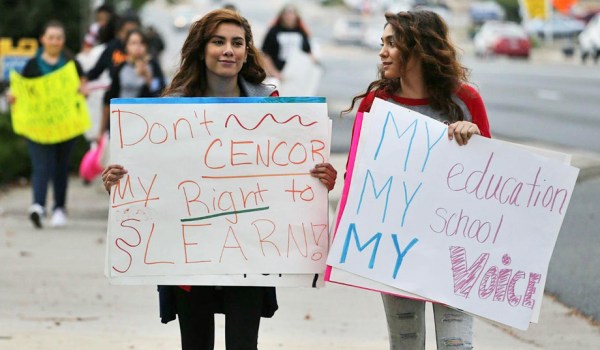
Maybe a little cencoring would be okay...?

Maybe a little cencoring would be okay…?

Back in Colorado, one of the conservative board members opined that the student protesters were being used as hapless “political pawns.” The real issue, he said, was the question of teacher pay. The teachers’ unions cynically exploited the naïve enthusiasm of students in order to line the pockets of union members.

There’s more going on here than just 1960s hangover culture wars. Beneath these specific worries about student orderliness and patriotism, there is a decided theme about the proper attitude schools and students should have toward American society in general. As I researched my upcoming book about conservative educational activism in the twentieth century, I came across this theme time and again. In addition to worries about political leftism and secularism in schools, conservatives have worried vaguely about a pervading sense of negativity in progressive school curricula. Sometimes this has had to do with the portrayal of America’s past, as in the current Colorado student protests. But sometimes it has been a broader complaint about a general negative attitude in school books.

In what follows, I’ll share three long examples from 1923, 1939, and 1970. In each case, leading conservative activists attacked the negativity of progressive educators. Just as in Jefferson County, conservatives in each case worried that students were being taught that America stunk, that life in general stunk.

First, a speech from April 16, 1923. In this speech, the leader of the National Society of the Daughters of the American Revolution warned of the creeping negativity and anti-patriotism of America’s teachers. Too many teachers, President General Anne Minor insisted, poured that negativity down the throats of trusting young schoolchildren.

Character and patriotism and obedience to law—there are the essentials of training in the schools. Do we find them everywhere? There are many who feel that there is a weakness of moral fibre [sic] in the teaching in many of our schools. And it is well known that there is an organized movement of many years’ standing among radicals to insinuate their doctrines into the schools and colleges all over the land….We want no teachers who say there are two sides to every question, including even our system of government; who care more for their ‘academic freedom of speech’ and opinion (so called) than for their country. Academic freedom of speech has no place in school, where the youth of our country are taught and their unformed minds are developed. There are no two sides to loyalty to this country and its flag. There is nothing debatable about allegiance to that flag and the Republic for which it stands. Freedom of speech does not give the right to teach disloyalty to our children and college youth. The teacher who does not wish to teach loyalty toward the land that employs him, has one good remedy. He or she may resign and go where disloyal opinions can find expression without harm to anyone. Guard well your schools, lest the life of the nation be poisoned at its source.

Years later, in 1939, a school-board member in Englewood, New Jersey lambasted the leftism and negativity of a popular set of textbooks. In this case, that conservative school board member was B.C. “Bertie” Forbes, the founder of Forbes Magazine. The textbooks at issue were a set of social-studies books by progressive scholar Harold Rugg. In this snippet, Forbes tells a story he repeated over and over again in his crusade against the Rugg books:

One of [a local teacher’s] pupils came to me, very much upset. In effect, he said that he had always regarded America and the American form of government as wonderful. But, he proceeded to relate that when the class had been asked to record their opinion as to whether ‘The people of the United States have a better government than have the people of any other county in the world,’ their teacher expressed disagreement with those young Americans who had replied, ‘Yes.’ According to this pupil she disabused their minds of any such idea. According to him, she told her young charges that the answer was ‘No’, that ‘there are several countries in Europe which have as good, if not better, forms of government than ours.’

At this critical time, when we are preparing to conscript our youths to become American soldiers, I cannot but question the wisdom of impregnating young minds with any such notion that our system of government is open to question.

If teachers of the Rugg books are seeking ‘subtly’, to use Professor Rugg’s own word, to convey such ideas to the coming generation, ideas which cannot possibly inspire them with veneration for their flag—which they are asked to salute every day—surely the parents of Englewood are entitled to learn the facts.

A generation later, in 1970, conservative activists Mel and Norma Gabler told the Texas State Board of Education that too many textbooks focused only on the negative. The Gablers went through the list of approved books, one by one. In each case, the Gablers noted the relentless negativity of the texts. In what follows, I’ll include a full long book-by-book quotation from the Gablers’ testimony:

This book contains some of the chilling, horror-type stories that seem to appeal to the morbid imagination of this age’s youth; but so much time spent thinking upon strangeness can make it almost seem normal. The characters in ‘The Jam’ are dope addicts. ‘The Hitchhiker,’ which follows, has an identical climax, both written to horrify. ‘The Birds’ was made into a Hitchcock movie, so is well-known, but in reading it there is so much more blood and gruesome detail that the reader feels the need to escape and cleanse himself from such horror. ‘Zero’ leaves the impression that it is normal for children to hate parents and for parents to be indifferent to the needs of children. Everything in the book is conducive to causing emotional instability in the impressionable mind.

This [Rebels and Regulars] is another very depressing book. As far as the language used, it is in keeping with the characters and plots of the stories, but not the sort of language the thoughtful parent would approve of in his children. There is throughout the book the undercurrent of ‘a cause,’ which gives a prejudiced viewpoint, always picturing the white man as the villain against different minority groups or individuals. Typical of the stories is ‘The Cyclists’ Raid,’ which is militant, lawless, defiant, and completely without consideration for the individual. . . . A whole semester of concentrating upon rebellion as pictured in these stories will have a negative effect upon an impressionable young person. It becomes more honorable to rebel than to obey laws or consider the rights of others. . . .

This book [Ways of Justice] indicates that justice is whatever an individual decides it should be. ‘Junkie Joe Had Some Money’ shows bullies getting away with murder because the only witness is intimidated. In ‘Manuel,’ a kindly act is rewarded with utmost cruelty, written in vivid detail. ‘Mateo [86] Falcone’ tells of a young boy who is bribed to reveal the hiding place of another, then his father kills him. Nothing here to indicate love or understanding is possible between parents and child. ‘Marijuana and a Pistol’ gives all the sordid details of a maladjusted youth who smokes ‘weeds,’ including the uncontrolled giggling and vomiting. ‘They Grind Exceedingly Small’ is a story about the person who has money, taking advantage of the poor, hard-working, underprivileged—indicating that all money and power are in the hands of the cruel, wicked, dishonest, and undeserving. . . .

Couldn’t half of the stories in this series tell about people living together in harmony, love, understanding, and helpfulness?

Is reality only negative? Does not reality also include the many acts of kindness between races that is evident across our nation? It must be remembered that qualities such as morality must be taught. They do not come naturally. Education without morality will result in a depraved society.

Our conclusion is that if these books do not contribute to rebellion, lack of respect for authority, sadism, violence, and disillusionment, they will most certainly defeat the whole purpose for studying literature in our schools; for there is absolutely nothing presented here that would open the wonderful world of the printed page to our youth and cause them to want to pursue reading for the pure joy of doing so!

In all these conservative protests, the notion that school materials must somehow be positive and patriotic takes center place. Whether it was in 1923, 1939, 1970, or today, conservatives have insisted that school materials do more than present the negative side of life. In today’s protest, the issue is the teaching of US History. And that has certainly been a central subject in these battles. But it was not only history that became controversial. As the Gablers pointed out, the negativity of the cultural left showed up in literature selections as well. As they asked so plaintively, “Is reality only negative?”  And, and President General Minor protested way back when, a pervasive, destructive negativity also showed up in teachers’ attitudes.

Again and again, conservatives have wanted students to learn positive messages. Conservatives have worried that too much negativity might produce a generation of cynics. In a sense, we might say that conservatives in schools have sometimes been the party of positivity.

Shout at the Devil

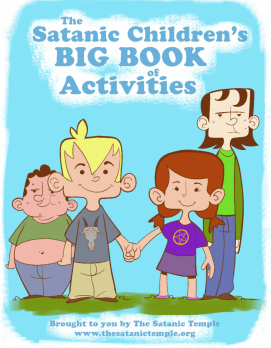
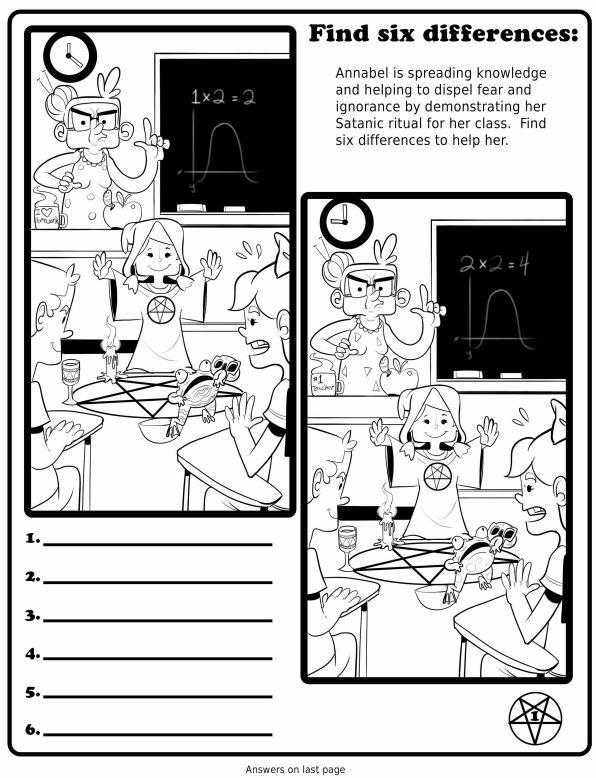
Can religious groups pass out religious literature in public schools? How about if the religion is Satanism, and the literature is The Satanic Children’s Big Book of Activities?

What's good for the goose...

What’s good for the goose…

Apologies: This news came out about ten days ago, but I’ve been wrapped up in book research and somehow missed it. Better late than never, right?

So here’s the story in a nutshell: In Orange County, Florida, the Satanic Temple has announced plans to distribute its children’s book in public schools. Why? Because evangelical Protestant groups plan to pass out Bibles and Christian literature.

According to the Satanic group’s announcement, the plan hopes to attract attention to the need for secularism. As in other high-profile cases—such as plans for a Black Mass at Harvard—the group insists it does not really worship Satan, but rather wants Americans to shake off their religious blinders.

As the temple’s spokesperson, Lucien Greaves, explained,

if a public school board is going to allow religious pamphlets and full Bibles to be distributed to students — as is the case in Orange County, Florida — we think the responsible thing to do is to ensure that these students are given access to a variety of differing religious opinions, as opposed to standing idly by while one religious voice dominates the discourse and delivers propaganda to youth.

Indeed, the book uses Satanic imagery to promote notions of pluralism and anti-bullying. The Satanic children are represented as the only ones able to use “patience and open-mindedness” to understand kids who are different. The smiling Satanic children in the book use “inclusive language” and “[spread] knowledge … to dispel fear and ignorance.”

All sounds pretty innocent, right? And, indeed, for secular folks, this publicity stunt might indeed seem to be what one journalist called “a hilarious response to a pro-religion court ruling.”

Spreading knowledge?  Or fueling fundamentalist fears?

Spreading knowledge? Or fueling fundamentalist fears?

Personally, I agree. This effort seems to make a powerful statement about the true possibilities of religious freedom in public schools. In other cases, we’ve seen parents protest against evangelical outreach to public schools. And we’ve wondered if Jesus-loving cheerleaders would really accept similar sorts of religious free speech from other religions. If public schools are really going to work, they don’t need to ban religion. But they can’t support just one sort of religion, either.

In the end, though, I can’t help but wonder if this sort of exposure does more harm than good to the very cause the Satanists claim to espouse. They came to Orange County in an effort to support the Wisconsin-based Freedom From Religion Foundation. The Satanists want to make the point that no religious literature should be permitted in public schools; no religious evangelists should be allowed to target public-school students.

As regular ILYBYGTH readers know, I’m an outsider to the world of conservative evangelical religion. But after having spent some time with conservative evangelicals and “fundamentalists,” I’m now wondering if the Satanists’ tongue-in-cheek deviltry might backfire. With this Florida campaign, the Satanic Temple is literally putting the devil on the side of the atheists. Conservative pundits can and will point to the Satanists’ efforts as evidence of the evil tilt of atheists.

So here’s the question: Is this Satanic Temple effort genius? Or self-destructive?

Does it make the point that “religious freedom” must really mean religious freedom for ALL religions? Or does it simply fuel conservative warnings that secularism is just a front for Satan?