Nazis and Sex Crimes

What history should we teach to children? In the United States, conservatives tend to insist that history should be heroic, or at least not vicious and mean-spirited.  But for the losers of World War II, these questions have played out in different ways.

A couple of intriguing recent stories in the New York Times describe the culture-wars over history in Germany and Japan.  In each case, the ways schools and textbooks portray war history have raised hackles.

In Japan, one village refused to use the new triumphalist textbooks distributed by the central education ministry.  The new books, village leaders protested, presented a distorted story of the post-war Constitution.  New books whitewashed Japan’s violent and aggressive record, downplaying the number of people murdered in the rape of Nanking and disputing Japan’s policy of kidnapping women for use as military sex slaves.

In Germany, in contrast, young people have learned a great deal about the Holocaust and Germany’s collective culpability for its epochal crimes.  Camp survivors such as Laszlo Schwartz have become a central part of high-school education.

What about in the US of A?  History has been distorted by both right and left.  Politically motivated histories by conservatives such as David Barton or by the late lefty Howard Zinn have presented distorted visions of the nature of American history.

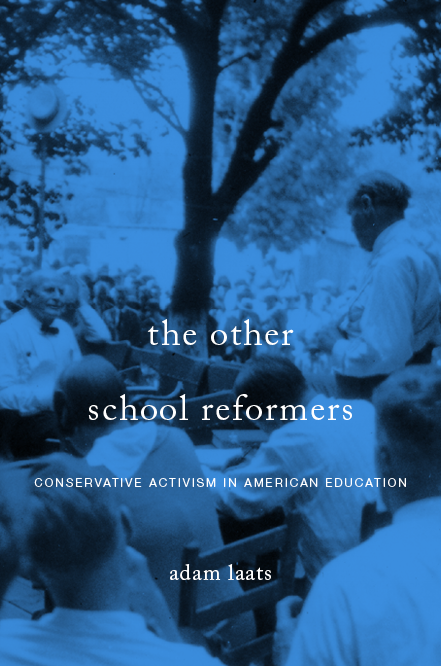
These debates have gone on for a long time.  As I argue in my upcoming book, conservatives have long offered alternative school histories.  In the 1920s, for example, the American Legion commissioned a patriotic textbook that promised to teach children a prouder story.

How are these American history disputes different from those in Germany or Japan?  In each case, it seems that national history itself has dictated the ways history has been taught.  In Germany, for example, de-Nazification proceeded fairly thoroughly and rapidly after the war.  No such purge took place in Japan, politically or culturally.  As a wartime winner, the United States never had any reckoning.  The closest parallel has been the long fight over Civil-War history, with southern partisans insisting on a heroic Confederacy.

Also different is the structure of schooling.  Japan and Germany both have central education ministries.  Issues of history in Japan, for example, are part and parcel of national politics.  One of the leading reasons for the new distorted history textbooks in that country, according to the New York Times, has been the ambitions of Prime Minister Shinzo Abe.  As one researcher told the Times, “Classrooms are one place where [Abe] can appease ultraconservatives by taking a more firmly nationalist stance.”

In the USA, in contrast, there has not been a central educational decision-making body.  As a result, perhaps, history fights have taken place at all sorts of political levels.  In the 1990s, the US Senate flexed its culture-war muscles by decisively rejecting a set of national history standards.  Conservatives in that battle protested that left-wing academic historians neglected traditional knowledge and morals in favor of fashionable but vapid trends.  More often, local or state textbook commissions air out the bitter battles over the nature of America’s past.

What did you learn in your school textbooks?  Do America’s children learn a distorted past?

 

Fundamentalist Ducks

Okay, okay, I admit it.  I’ve been itching to write something about the recent Duck Dynasty culture-war imbroglio.  But until now there didn’t seem to be much worth saying.  One sentence said it all: Famous redneck shows ugly blind spot in racial issues and homosexual identities.  Didn’t seem like much more needed talking about.

For those of you who live in caves, bearded patriarch Phil Robertson ruffled feathers with recent ignorant and hateful comments about homosexuals and racial history.  In all his Louisiana life, he told a GQ reporter, he never saw an African American who seemed upset about lacking basic civil rights.  And homosexuals, he opined, should learn to prefer vaginas to men’s anuses.  After all, as Robertson concluded with invincible logic, “I mean, come on, dudes!  You know what I’m saying?”

Until today, everything I’d read about the scandal either defended Robertson’s right to his theology or attacked him for his hate.  But this morning I came across the comments of the brainy conservative Rod Dreher in the pages of Time.com.  For those not familiar with Dreher’s story, he moved back to his small-town Louisiana roots from a go-go New York media career after a family tragedy.

Dreher hit the nail on the head.  While Dreher doesn’t agree with Robertson’s positions, he remarked on the ridiculously excessive shock expressed by many media mavens.  Too many of those “culture-makers,” Dreher lamented,

are often every bit as parochial as those they condemn, but flatter themselves that they are the tolerant, cosmopolitan ones. I have lived in Manhattan, and I live once again in my tiny south Louisiana hometown. To paraphrase Solzhenitsyn, the border between narrow-minded and tolerant runs not between city and country, North and South, degreed and uneducated, but down the middle of every human community and every human heart.

. . .

The Duck Dynasty mess revealed that not all fundamentalists live in the Bible Belt, and that some of the biggest hicks live in Hollywood. The Duckman’s win is a score for authentic diversity and pluralism in the public square, and a victory for the right to be wrong without being ruined.

Hear hear.

When I began my current job as a university professor, I gave a talk about my dissertation research.  That work—which became my first book—concerned the first generation of American fundamentalists.  I soon realized that my tolerant, cosmopolitan university audience contained more than its share of Dreher’s hip hicks.  Not the entire audience, by any means, but certainly an influential group.  These culture-makers did not hope to understand fundamentalists; they did not seem interested in puzzling out the intellectual world I had tried to portray.  Instead, they only rushed to demonstrate their shock and horror at the ideas of people very different from themselves.

At the end of the talk, one member of my academic audience raised her hand and asked in a frustrated tone, “What is WRONG with these people?”  Heads nodded throughout the room.  The person who asked the question was not dumb, was not ignorant.  She was a prolific researcher and dedicated teacher.  In fact, she had worked throughout her career to make schools more inclusive for all sorts of students.  Yet she saw no contradiction in dismissing the thinking of a large percentage of Americans as “these people” out of hand.

Like Dreher, I don’t think Robertson’s comments are worth talking about, much less defending.  But the reaction to his comments can tell us a good deal about the current state of America’s intellectual myopia.   It serves as a sobering reminder of the widespread and unacknowledged ignorance among many Americans about what America is really like.


God, Darwin, Creationism, and UFOs

What do Americans believe?

A new Harris poll suggests that Americans believe all sorts of things.  Folks who think religion is a bad thing might be heartened by recent increases in the numbers of people who claim not to believe in God.  But the same anti-religion types might be depressed by the high numbers of believers and by their descriptions of their belief.

Consider some highlights: the number of respondents (out of 2,250 overall) who claimed not be “not at all religious” was 23%, up from 12% in 2007.  And the numbers of respondents who said they thought the Bible was the “word of God” was down 6% since 2008.

But before the American Humanist Association breaks out the bubbly, consider some countervailing numbers: even though the number of Bible-believers may have declined slightly, it still represents just under half of respondents. That is, almost half of Americans—if we can extrapolate from these responses—will tell you that the Bible is the Word of God.

And though the number of respondents who said they “believe in Darwin’s theory of evolution” is up five percent, the new total is still under half, far fewer than the number (58%) who say they believe in the Devil.

How about creationism?  Here are a few numbers to chew on: 29% of respondents say they don’t believe in “Darwin’s theory of evolution,” but 36% of them claim to believe in creationism.

Here’s my hunch: science pundits might fixate on the lead sentence that “36% each believe in creationism and UFOs.”  Some folks who don’t like creationism but don’t know much about it might conclude that belief in these things is somehow similar.  Those who don’t know enough real science, these pundits might assume, are prone to believe in all sorts of kooky non-science.

Such mistaken assumptions misunderstand the nature of creationism.  Belief in UFOs might come from all sorts of backgrounds, from eccentric FBI agents to rural isolation.

But in the USA, creationism represents something more than the lack of knowledge about evolution.  Instead, creationism comes from its own intellectual tradition, one that does more than simply ignore evolution.  You would be hard pressed, for example, to find a network of colleges and universities dedicated to teaching a worldview centered on the existence of UFOs.  But there is indeed a strong network of religious schools that teach creationism.

Certainly, belief that humanity resulted from God’s special creation can have lots of intellectual sources.  But it is a fundamental mistake of outsiders like me to assume that such creationist belief is a lack of something, a deficit of knowledge about evolution.

There are pundits out there who assume that these poll numbers represent a victory for anti-religious activism.  I’m not so sure.  Americans seem to believe all kinds of things.  The wobble in numbers represented by these results may point toward an anti-religious trend.  That is, if the number of respondents who said they did not believe in God increased ten percent in the last ten years, we might conclude that pretty soon large majorities of Americans will join them.

I doubt it.  My hunch is that these increases in atheism and skepticism will not represent a continuing trend.  Large numbers of people believe that the Bible is the Word of God.  Large numbers of people believe in things that mainstream science would pooh-pooh.  And they will continue to do so for a long time to come.


Affluenza and the Crisis of “Modern” Youth

How old was your grandmother in 1924?  If she was in her teens or early twenties, did she kill someone and get away with it?  Probably not.  But if you were reading headlines back then, you might reasonably conclude that young people in that decade had lost their moral bearings.  You might think that young people ran around doing crimes just for fun.  And if you’ve been reading headlines recently, you might think the same were true now.

Unless you’ve been living under a rock, you’ve heard some outraged comments about a recent case from Texas.  In this “affluenza” case, sixteen-year-old Ethan Couch killed four people after drinking, drugging, and getting behind the wheel of his car.  Most shockingly, his defense lawyer argued that the teen should not serve jail time since he suffered from too much indulgence from his rich but negligent parents.  His affluent parents never taught him that there could be consequences for bad behavior.  Instead of a twenty-year sentence, the judge gave Couch ten years of probation.  He will spend some time drying out in a $450,000-per-year rehab facility in order to learn some morals, his lawyer promised.

The case stirs all sorts of passions.  Can a rich kid get away with murder?  Are youth today spinning out of control?  Have we raised a generation of moral monsters, looped on prescription drugs and void of any restraining conscience?

But the history nerds out there can’t help but notice the parallels to a similar case from the 1920s.  In 1924, Nathan Leopold and Richard Loeb, aged 20 and 19 respectively, kidnapped and murdered fourteen-year-old Bobby Franks.   Why?  To see if they could get away with it.

Obviously, theirs was a very different case from Couch’s.  They did not accidentally kill anyone.  They planned it ruthlessly.  But the outrage at the judges’ decisions sounds the same.  In the case of Leopold and Loeb, superstar attorney Clarence Darrow managed to get life sentences for Leopold and Loeb, not executions.  The defense?  In a nutshell, Darrow claimed that these young men could not be held morally accountable for their crime, since they had never been taught proper morality.  Their affluent background had taught them that morality was fungible, that life was negotiable.

Just as in today’s reaction to the affluenza verdict, Americans in the 1920s were shocked and outraged by this defense.  The prosecutor denounced Darrow’s argument as “anarchistic.”  As one letter to the editor published in the New York Times declared, this verdict

demonstrates that nobody in this world is responsible for any of his actions.  Since I am the helpless victim of a mechanistic universe. . . . the blame falls not on me but on my ancestors and society.

The point here is not that these judges’ decisions are correct.  Nor that Couch, Leopold, and Loeb aren’t moral monsters.  Rather, the point is that every generation since at least the 1920s has seen dire warnings in high-profile cases of moral monstrosity among young people.  Every generation has lamented the possible meanings for this brand of modern youth.  Every generation has proclaimed the end of moral America.  Yet every generation—ours included—must remind itself that almost no one does these things.  Almost no one kills people while hopped up on fancy prescription drugs.  Almost no one kills a kid just to see if they can get away with it.

Most people are much more like my late Iowa grandmother, who would have been sixteen in 1924.  She did not do any of the things “modern” youth did, if we define that by the example of monsters like Leopold and Loeb.  Rather, though she’s no longer around to ask, it’s safe to guess she was outraged by them, just as she would be outraged by the recent affluenza case.

If the suburbs are eating our children, they are digesting them extremely slowly.  There may be plenty of crises for young people today: a sour economy, structural racism, cheap drugs, etc.  But here’s the important point to remember: these crises are not unique to today.  For almost a century, “modern” conditions have been blamed for a sickening youth culture.  It is not “modernity” that is to blame, whether that was the modernity of 1924 or of 2013.  Rather, every generation has seen morally monstrous young people benefit from outrageous legal defenses from overpaid celebrity defense attorneys.

,

Creationism in Texas: A Foreshortened History

Read it.  It’s good.  But be warned: this story has a fatal flaw.

Brentley Hargrove’s history of the Texas textbook wrangles is a helpful introduction to the recent round of textbook fights in the Lone Star State.

In the pages of the Dallas Observer, Hargrove introduces readers to the recent history of creationist influence in the selection of Texas science textbooks.  He offers the backstory of review-board members such as intelligent-design proponent Raymond Bohlin.

Hargrove takes the story of the Texas Textbook Two-Step back to the 1970s, when self-appointed watchdogs Mel and Norma Gabler wielded outsize influence on the adoption of books.

He describes the rise to educational power of creationist dentist Don McLeroy and the board membership of theologue Cynthia Dunbar.

This story is a must-read for everyone interested in today’s culture wars over education, not just in Texas but around the nation.  It joins films such as The Revisionaries and documentaries such as the Long Game in pointing out both the peculiarities of educational politics in Texas and the broader meanings Texas school politics has for all of us.

But as a historian of these school battles, I must protest against the foreshortened history Hargrove describes.  He gives a nod to the long history of cultural battles over education.  He mentions the nineteenth-century Bible wars that rocked America’s cities.  But then he skips from 1844 to 1961.  He leaves out the formative period of today’s educational culture wars.

As he puts it, since the nineteenth century,

the fear of secularism and modernity remains as potent as ever. Yet it wasn’t until the Gablers came along that this fear took shape in Texas and assumed power.

Now, that’s just not true.  I understand Hargrove is interested in the way these battles have developed over the past fifty years.  But the way they did so was decisively influenced by earlier generations of Texas activists.

To be fair, Hargrove’s historical myopia is widely shared.  In his Observer article, he quotes prominent sociologist William Martin.  “The Gablers,” Martin told Hargrove, “were the first people to have taken this on in such as systematic way.”

Even if we make allowances for the contemporary interests of journalists and sociologists, this sort of misrepresentation of the history of Texas’ school battles can’t be given a pass.

The tradition of conservative activism in which the Gablers, McLeroy, Bohlin, and Dunbar take part has direct roots in the 1920s battles in Texas and elsewhere.

As I argue in my 1920s book, anyone with even a passing familiarity with Texas history will recognize the historical importance of J. Frank Norris, for example.  In the 1920s, Norris established the activist precedent that later conservatives followed.  Norris fulminated against the directions of 1920s public schools in ways that McLeroy, Dunbar, and the Gablers would have appreciated.

And he had even more political pull.  In the 1920s, though a state-wide law banning the teaching of evolution failed in the Texas legislature, the governor ordered textbook publishers to remove any mention of evolutionary science from the state’s textbooks.

All well and good, you might say.  But does that pre-history have anything to do with today’s textbook fights?  If we want to understand the current moment, do we really have to go so far back?  Isn’t it enough to look to the Gablers and start there?

The school fights of the 1920s are of interest to more than just nitpicky academic historians like me.  Even if we want to start with the Gablers, we need to understand the formative school battles of the 1920s.  Mel Gabler was ten years old in 1925.  The content and structure of the schools he attended was decided by the activism of pundits such as J. Frank Norris and the pusillanimity of politicians such as the Governors Ferguson.

It was in the 1920s that America first battled over schooling in the terms that have remained so familiar ever since.  The issues and positions laid down in the 1920s have become the durable trench lines in American education.

As Gabler biographer James Hefley described, by the 1960s the Gablers had become

the cream of self-reliant Middle America.  They lived by the old landmarks, took child-rearing seriously, supported community institutions, sang ‘God Bless America’ with a lump in their throats, and believed that the American system of limited and divided governmental power was the best under the sun.

How did they get to be that way?  How did they become so confident that their vision of proper schooling and society must be fought for?  The Texas the Gablers loved had been defined by the activism of the 1920s and succeeding generations.  The vision of proper education that fueled the self-confident activism of the Gablers had been established as such in the controversies of the 1920s.

If we really want to understand what’s going on today, we need at the very least to acknowledge the longer history of these issues.  We need to understand that today’s fights grew out of earlier generations, and those earlier generations did not just spring up full-grown from the Texas soil.


Hamas, Textbooks, and a Real Educational Culture War

What does a real educational culture war look like?  A recent story in the New York Times describes the way the Hamas government in Palestine’s Gaza Strip has pushed its all-out war against Israel into its textbooks.

The militant Hamas government has produced new histories that glorify the role of Hamas, that denigrate Israeli land claims, and that teach a self-consciously heroic history to youngsters in the Gaza Strip.

Will these textbooks change the way the next generation understands the Palestinian/Israeli conflict?

The director of the research study about the Hamas textbooks thinks so.

As quoted in the NYT story, Daniel Bar-Tal, a professor at Tel Aviv University, explained,

When a leader says something, not everyone is listening. But when we talk about textbooks, all the children, all of a particular peer group, will be exposed to a particular material. . . . This is the strongest card.

Fair enough.  Textbooks matter.  As Professor Bar-Tal carefully put it, textbooks “expose” children to a certain perspective.   As we’ve seen in the American context, every conservative group from the American Legion to Accelerated Christian Education has attempted to introduce patriotic or religious textbooks that will transform schooling and culture.

But “exposing” children to a certain worldview is not the same as imposing that worldview on them.  Textbooks make up only one part of education.  As we’ve seen with evolution/creation battles in the USA, the way teachers use textbooks is significantly more important.  As political scientists Eric Plutzer and Michael Berkman argued, teachers function as “street-level bureaucrats,” making important decisions about what to teach and how to teach it (pg. 149, see also pps. 160-169, 219).

As the NYT article argues, Hamas certainly seems to understand this.  The education policies of Hamas have ranged far beyond altering textbooks.  Hamas sends morality police to patrol school campuses for proper behavior between boys and girls.  They have also made important structural changes in schools in the Gaza Strip.

Most of all, we see in this case the central importance of schooling and education in culture-war battles far beyond the shores of the United States.  It seems whenever two groups come into drawn-out conflict, schools become an important battleground.


Can Jesus Stop Kids from Trick-or-Treating in Public Schools?

Halloween time again!  Time for costumes and candy.  Time for Charlie Brown getting rocks in his sack.

Rock Candy

Rock Candy

Can public schools participate?  Does this holiday endorse some sort of religion?  And, most intriguing, are conservative Christians going to become the leading group fighting AGAINST religion in public schools?

In a recent article in Time Magazine, Nick Gillespie decries school administrators who cancel Halloween activities.  Gillespie cites the case of Inglewood Elementary, outside of Philadelphia.  The principal explained to parents that the school had canceled Halloween activities due to religious sensitivity.  “Some holidays,” the principal wrote,

like Halloween, that some see as secular, are viewed by others as having religious overtones. The district must always be mindful of the sensitivity of all the members of the community with regard to holidays and celebrations of a religious, cultural or secular nature. The United States Supreme Court has ruled that school districts may not endorse, prefer, favor, promote or advance any religious beliefs

Nertz, Gillespie responded.  “Unless there’s a particularly active group of druids in the district,” Gillespie argued, “or the parade ends with a ritual sacrifice, it seems unlikely that there’s much to worry about.”

But Gillespie’s missing the point.  The pressure to avoid Halloween comes not from druids but from conservative Christians.  Some such Christians have long viewed Halloween as a dangerously “pagan” holiday.  Why shouldn’t they pressure school administrators to ban such celebrations in public schools?  After all, conservative Christians often complain that their religion is the only religion to be banned from public schools.

Anyone familiar with the culture of conservative American Protestantism will recognize this theme.

To cite just one example, Linda Harvey of Mission: America complained that Halloween empowered demons and false gods.  “Everyone thinks Halloween is harmless fun,” Harvey warned on her radio show,

but just for a second, let’s look at from God’s perspective, at least from what He’s told us in His word. We’ve been taught not to worship or bow down to or in any way acknowledge any other gods. But Halloween is built around just exactly that. Behind the costumes and candy is a rebellious flirtation with fallen angels and deceptive spirits, and this definitely does not honor God. Where are these other spirits and gods you ask? Well, Halloween is all about fortune telling, magic, Ouija board, witches, it’s really hard to get away from all this. It’s definitely spiritual and that spirituality is not from our Lord.

This anti-Halloween sentiment is so strong among some conservative Protestants, it can be spoofed by any evangelical with a sense of humor.  Last year, for instance, the Southern Baptist Convention’s Russell Moore offered a quick field guide to anti-Halloween sentiment among evangelicals:

An evangelical is a fundamentalist whose kids dress up for Halloween.

A conservative evangelical is a fundamentalist whose kids dress up for the church’s “Fall Festival.”

A confessional evangelical is a fundamentalist whose kids dress up as Zwingli and Bucer for “Reformation Day.”

A revivalist evangelical is a fundamentalist whose kids dress up as demons and angels for the church’s Judgment House community evangelism outreach.

An Emerging Church evangelical is a fundamentalist who has no kids, but who dresses up for Halloween anyway.

A fundamentalist is a fundamentalist whose kids hand out gospel tracts to all those mentioned above.

Though Moore wrote with his tongue firmly in his cheek, the humor relies on a real sentiment among some conservative Christians.  School officials like the ones Gillespie writes about are responding to real concerns.  This time, it is conservative Protestants who are fighting to keep religion out of public schools.  As they have in other cases, such as the yoga curriculum in Encinitas, California, many conservative Christians want to keep public schools as free of what they consider false religion.


Texas Charter School Promotes Religion

Doesn’t seem like news that publicly funded schools in Texas promote religion.  But this story from the New York Times has a twist you might not have expected.

Anyone who pays attention to this stuff might expect Texas public schools to be woefully (or wonderfully, depending on your POV) entangled with religion.  Whether it is preaching in the form of Bible classes, cheerleaders with Bible verse banners, creationism in the science textbooks, or just a general Long-Game style fight for more Jesus and less Devil, Texas schools have long seemed friendly to Jesus.  Texas’ conservative “Revisionaries” have worked long and hard to make public schools friendly for faith.

A recent story in the New York Times features a different sort of religious entanglement.  In this case, it is not a question of teachers leading Protestant prayers, or students protesting against learning evolution.

In this case, a charter school has been accused of using public money to promote the Jewish religion.

The San Antonio school, Eleanor Kolitz Hebrew Language Academy, teaches in Hebrew and has classes about Israeli culture.  Doesn’t seem to be a problem there.  Lots of publicly funded charter schools focus on a specific non-English language and culture.

But according to journalist Edgar Walters, the school has drawn attention as a potential church/state problem since the new charter school seems to be nothing more than a cynical reincarnation of an existing religious school.  Critics worry that religious schools are simply conducting a name change on paper in order to win public money.

School leaders insist they don’t teach religion.  But one board member admitted they have the same head of school and most of the same staff as they did when they were an explicitly religious school.  As a private Jewish day school, the Eleanor Kolitz Academy used no public money.  But now as a charter school in the same building with the same staff, they receive public funding.

Can religious schools reinvent themselves this way?  It does not seem paranoid to assume that things will go on largely as before at the Kolitz Academy.  It seems a little iffy for religious schools to simply make a name change to start raking in public moolah.


A Conservative Runs on Charter Schools

How can a Republican get votes in the Big Apple?  Mayoral candidate Joe Lhota thinks promises of charter schools will help.

In a recent advertisement analyzed in the New York Times, Lhota critiques Democratic candidate Bill de Blasio for threatening to charge rent to charter schools.  Lhota, in contrast, promises to double the number of such schools.

Why?  According to the ad, charter schools promise the best educational hope for “inner city” kids.

Charter schools also represent the first best hope for many conservative educational activists.  The free-market conservatives at the Heritage Foundation, for example, insist that expanding the number of charter schools will expand educational opportunity for all.

Lhota does not seem to support charters in order to prove his conservative credentials, however.  Just the opposite.  Charter schools, Lhota claimed, were the real “progressive education approach.”  Lhota insisted that his support for charters proved that he was the real educational progressive in this race.  “If you oppose charter schools,” Lhota told the Association for a Better New York, “and the programs and the other choices that are available for minorities and inner city children, and children of immigrants, you cannot call yourself a progressive.”

That’s educational politics for you: the more conservative mayoral candidate endorsing a school program beloved by conservatives and calling it the progressive choice.


War for the Core: Conservatives vs. Conservatives

Do conservatives like the new Common Core State Standards?

Yes and no.

And that tension has caused some consternation among conservative educational thinkers recently.

Writing in the Christian Post, Napp Nazworth has taken “several large international corporations” and “many Republican governors” to task for supporting the new educational standards.  At a panel discussion hosted by the Family Research Council, religious conservatives blasted GOP stalwarts such as Governors Chris Christie (NJ), Bill Haslam (TN), Rick Scott (FL), and others for “aligning their interests with those of international corporations.”

The article describes the lament of another faction of conservatives.  The Common Core Standards, conservative Glenn Jacobs worries, focus too much on “churn[ing] out young people who will be educated enough to work, consume, and pay taxes, but who are not encouraged to be creative, or to use critical thinking, or to develop anything remotely characteristic of those who possess superior minds and the ability to achieve great things.”

So what is a conservative to do?  Big-business types might embrace the promise of the new standards.  Traditionalists and religious conservatives, on the other hand, might lead the opposition.

Could inter-conservative squabbling lead to a real division in the decades-old conservative alliance?