Creationists: Sass Your Teachers?!?!

Apparently, that is the new strategy promoted by Indiana State Senator Dennis Kruse.

Sometimes, studying cultural battles over America’s schools seems like Yogi Berra’s déjà vu all over again.  But this one sounds new to me.

Thanks to the Sensuous Curmudgeon, we learn of Kruse’s new strategy.  Apparently, having failed to promote a two-models creation/evolution bill in the last legislative session, Kruse plans to offer a bill that will encourage students in Indiana’s schools to ask teachers to back up ideas with facts.

According to the Indianapolis Star, Kruse defended his plan as a “truth-in-education” measure:  “. . . if a student thinks something isn’t true, then they can question the teacher and the teacher would have to come up with some kind of research to support that what they are teaching is true or not true.”

Kruse’s new strategy comes on the heels of new rules in New Hampshire and Missouri that will allow every public school student to recuse himself or herself from curricular materials he or she finds objectionable.  As I’ve argued elsewhere, these laws just won’t work.  Ideology and theology and biology aside, the classroom implementation of such regulations seems utterly impossible.

As the Indianapolis Star reports, critics have pointed out similar flaws with Kruse’s plan.  Nate Schnellenberger, president of the Indiana State Teachers Association, argued that teachers could be asked to supply proof of everything, from evolution to the moon landing.  “It’s not workable,” Schnellenberger concluded.

The intention of such bills is clear: conservatives hope to protect students from indoctrination in ideas they find loathsome.  In Kruse’s case, he takes a weatherbeaten play from the old progressive playbook to make it happen.  If students can direct their own educations—challenging the classroom authority of their teachers on every point—then the chances of swallowing objectionable ideas decreases dramatically.

As in Missouri and New Hampshire, conservatives find themselves fighting for the old progressive dream: an individualized education for every child in public schools.  Will it work in Indiana?


Revisionaries Screening Tonight

For all those in the Upstate New York region: a reminder that we will be screening Scott Thurman’s documentary The Revisionaries tonight on the campus of Binghamton University in Vestal, NY.

The film will be shown (with brief informal discussion led by yours truly) in Academic Building A, basement room G-008.  We will begin at 5:00.

All are welcome.  There is no cost and no need to register.

Progressive Teaching for Christian Schools? The Classical Christian Approach

–Thanks to P.H.

We’ve been learning a lot lately at ILYBYGTH about the Classical Christian Education movement. Recently on First Things we read a thoughtful analysis of the state of the movement today.  Brian Douglas warns of some growing pains for the movement.  He highlights the need for schools in this tradition to keep their eyes focused on the big educational picture.

But first, a few words on the background of the movement: The recent Classical Christian Education movement can date its origin to a 1991 book by Douglas Wilson, Recovering the Lost Tools of Learning.  Wilson, a Reformed pastor, Christian educator and school founder from Moscow, Idaho, popularized the classical education formula of Christian and crime writer Dorothy Sayers.

The Association of Classical & Christian Schools now claims 229 schools.  The movement is affiliated with two colleges, New Saint Andrews and New College Franklin.

Such a booming educational movement quickly runs into some definitional problems, as Douglas notes in his essay.  Douglas warns of “five temptations” for the growing movement: mistaking the trappings of success for true success; focusing on uniforms, discipline, and Latin instead of the broader Christian mission; assuming that success relies on the schools rather than on God; failing to integrate the Bible into a classical curriculum; and assuming that school will be the most decisive influence on every student.

For those of us outside the movement, the most intriguing parts of Douglas’ essay concern the growing middle ground between “progressive” and “traditional” education.

As we have noted here before, some leading “progressive” educational thinkers have long advocated a more traditional, authoritarian classroom style.

Similarly, conservative Christian educators affiliated with Walter Fremont’s School of Education at Bob Jones University have long argued for a more “progressive” pedagogy.

Douglas articulates a vision for this energetic new educational movement that seems to combine the “progressive” emphasis on child-centered education with the “traditional” emphasis on evangelical Christian theology, student discipline, and a Trivium-based, great-books curriculum.

Indeed, if words such as “Christian” and “Bible” were replaced, Douglas’ nostrums could certainly find a home in many ferociously “progressive” education schools.

For instance, Douglas wants an education that “tends to develop thinkers defined by who they are instead of workers defined by what they do.”  Similarly, Douglas warns of an over-emphasis on classroom discipline: “focusing on order becomes hazardous when it overtakes the joy of experiencing God’s grace.  When this happens, students may learn to jump through the hoops, obey the rules, do the right things, but they do not learn to love God and others. . . . Creating a truly gracious classroom is much harder than creating an orderly classroom.”  To pick just one more well-turned phrase of Douglas’ that could just as easily have come from the progressive camp: “Education cannot be reduced to a formula, even if the formula is a good one.”

Douglas’ essay, and the development of the Classical Christian movement as a whole, suggest a broad middle ground in education.  Make no mistake: Douglas is ferociously Christian.  He does not suggest any watering down of the uniquely Biblical elements of good education.  However, when advocates of Christian education can agree with advocates of “progressive,” “multicultural” education about the most important factors of good schooling, it seems we might have some room with which to work.


Authority and Education

When is a school not a school?

According to Anthony Esolen, a school forfeits its rights to that name when it tries to abandon its authority over its students.

Esolen’s essay in Public Discourse is roughly a year old, but I came across it recently.  Esolen reviews Philippe Beneton’s Equality by Default and insists, among other things, that true education requires a submission of student to the authority of the teacher and the school.

For those of us struggling to understand the conservative tradition in American education, Esolen’s article is worth reading in its entirety.  Esolen articulates a position that has long been at the root of American protest against the excesses of progressive education.

True teachers must take on the burden of authority, Esolen believes.  This is not autocracy, but rather a humble assumption of responsibility for the formation of the young students in teachers’ care.  Such authentic, authoritarian teachers, Esolen argues,

“would no doubt have furrowed their brows to try to make the least sense of the educational patois of our day, which insists that school be ‘child-centered.’ It would be like asking a hymn to be ‘choir-centered,’ when the very purpose of a hymn is to bring the singers out of themselves, in devotion. So too the ‘child-centered’ classroom, if indeed it focuses on the tastes and habits of the children who happen to be there, mistakes both the nature of the child and the purpose of education. It ignores what the child, as a human person, most needs, and that is to give himself in love to what transcends his personality or his class or his age.”

Esolen articulates in this essay the philosophic core of traditionalist education.  Before we seek to reform our schools, Esolen argues, we need to clarify the true purpose of education.  “If the object is to produce an elite cadre of technicians,” Esolen argues, “. . . then I fail to see why people should support schools at all.”  True education, Esolen insists, consists of “the handing on of culture, against which the mass phenomena of our time, and the facile reductions of scientistic academe, array themselves in enmity.”

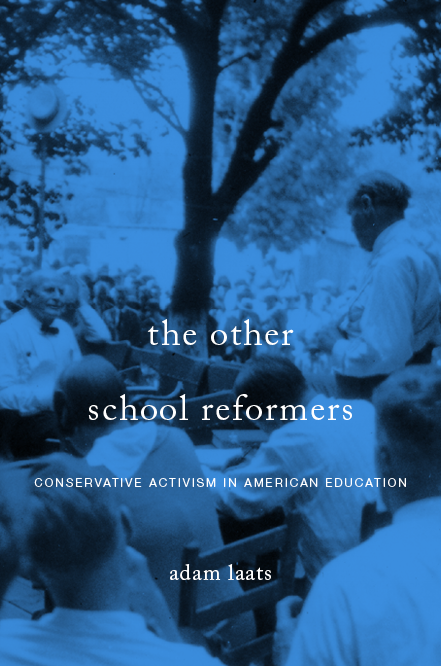
As I argue in the book I’m currently working on, tentatively titled The Other School Reformers, this notion has lodged squarely at the heart of conservative reform movements in American education throughout the twentieth century.  Though many activists and politicians could not express the idea as elegantly and coherently as Esolen does in this essay, conservative activists fighting against evolutionism, socialism, “sexualityism,” secular humanism, progressivism, and other perceived cultural problems in America’s schools usually based their protest on the notion that such doctrines fundamentally subvert the true purpose of education.

To cite just one example from the textbook controversy in Kanawha County, West Virginia, in 1974, conservative businessman and activist Elmer Fike defined the two sides in any education controvery as follows:

“The traditionalists perceive education as a process of teaching the child the basic knowledge and skills.  Since some indoctrination is inevitable, it should promote the accepted social attitudes and morals of the society in which the child lives.  The job of the schools is considered to be the transmission of the tradition of the parents to the children in order to preserve society. . . .The progressives claim to object to any indoctrination because it gives too much power to the agency that determines the thrust of the indoctrination and because it does not teach the child how to examine ideas critically.  They would prefer that the child be allowed to examine all philosophies with a minimum of guidance.  Thus, the child develops the ability to choose what is best and will not, as a mature adult, be easily misled or indoctrinated by demagogues who offer simple solutions.  The philosophy is most easily summed up by the statement, ‘Teach the child how to think, not what to think.’  The progressives also prefer a minimum of discipline and greater freedom for the student to decide what or how he will study.”

For Fike, as for Esolen and generation of conservative educational activists, the first goal of school reform must be a thorough examination of the true purpose of education.  At their core, battles over sex ed, prayer in schools, and evolution education often boil down to competing visions.  Are schools first meant to pass along the cultural inheritance of our civilization?  Or are they mean to train children to challenge all inherited notions?

In the News: The Chicago Teachers’ Strike and the “Educrats”

As several commentators have pointed out, the Chicago teachers’ strike puts Chicago Mayor Rahm Emanuel in an awkward position politically. He has been gleefully endorsed by conservative Republicans such as VP nominee Paul Ryan.  Emanuel’s fight with the teachers’ union puts him on the side of union-busting GOP governors such as Chris Christie of New Jersey and Scott Walker of Wisconsin. 

In cultural politics, too, fighting with a teachers’ union puts Mayor Emmanuel in the company of decades, even generations, of conservative educational activists and intellectuals. As I discussed in an article in Teachers College Record a few months back, teachers’ unions have often been the primary villain in conservative versions of American educational history.

Free-market pioneer Milton Friedman, for example, blamed America’s educational woes on the increasing power of teachers’ unions. In Free to Choose (1990) the Friedmans explained that even well-meaning teachers and school administrators always want “greater centralization and bureaucratization” at the cost of worse schooling (pg. 157). Since the 1950s, Milton Friedman had argued that teachers’ unions invariably degraded education, since most teachers are “dull and mediocre and uninspiring” (Capitalism and Freedom, 2002 edition, pg. 96). Union control of school, Friedman believed, protected less talented teachers and led to less efficient, less effective schooling.

California State Superintendent of Public Instruction Max Rafferty argued that the choking tendrils of unions and educational bureaucracy had almost killed real education. “Education evolved,” Rafferty argued in 1964, “from a sparkling, beckoning opportunity into a more humdrum, sober-sided obligation. It became hedged about with legal requirements and equalization formulas, credentialing criteria and personnel-pupil ratios.” (What Are They Doing to Your Children, 1964, pg. 109).

In the 1980s, conservative educational thinker Sam Blumenfeld called the National Education Association “the Trojan Horse in American Education.” Educational experts, Blumenfeld noted—what he called “remote educational commissions in far-off universities” (Is Public Education Necessary, 1981, pg. 4), had long planned to discredit traditional values in the eyes of American schoolchildren.

For these conservative educational thinkers, teachers’ organizations epitomized all that was wrongheaded about American public education. For free-marketeers like Friedman, unions selfishly choked out all alternate ideas about schooling. For traditionalists like Rafferty, union bureaucracy forced a pernicious pablum down the intellectual gullet of America’s schoolchildren. For more extreme conspiratorial thinkers such as Blumenfeld, teachers’ unions carried out a long-standing plot to rob Americans of their patriotic and spiritual heritage.

And now Rahm Emanuel stands on their side. Emanuel will be gleefully supported not only by contemporary conservative politicians like Paul Ryan, but by generations of conservative educational activists and intellectuals.

The Real Wall of Separation

At ILYBYGTH, we’ve been following stories in Missouri and New Hampshire about religion, authority, and public schools.

Today in a guest post on Valerie Strauss’ Washington Post Education blog, I argue that these kinds of laws just won’t work.  In this post, I allow myself to get a little more strident than I usually do on these pages.  I argue that rules allowing parents and families to opt out of school rules a la carte just won’t work.  Nor are they new.  In the 1920s, anger at and fear of a steamrolling anti-religious curriculum drove the first anti-evolution campaign.  In the 1970s and 1980s, in places such as Kanawha County, West Virginia, and Hawkins County, Tennessee, battles over school curriculum led to a new generation of conservative school activists.

The maturation of that generation can be seen in laws and amendments such as those in Missouri and Tennessee.  I am deeply sympathetic to parents who don’t want schools to dictate hostile ideas to their children.  But putting up a wall of separation around each individual student just won’t work.

ILYBYGTH at RiverRead Books

…and you’re invited!  Everyone in the Binghamton area is welcome at a book talk I’ll be

giving at RiverRead Books in downtown Bingo.  Mark your calendars: September 20 at 6:30 PM.

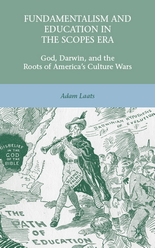
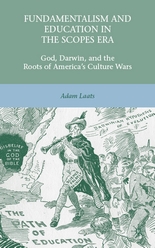
I’ll be talking about the subject of my first book, Fundamentalism and Education in the Scopes Era: God, Darwin, and the Roots of America’s Culture Wars.  I’ll start by making my case for why we need to understand the 1920s if we hope to get a handle on today’s culture wars.  Then we’ll open up a discussion on any and all topics of interest to ILYBYGTH readers: the meanings of fundamentalism, the nature of the creation/evolution stalemate, the proper role for religion in public life, and so on.

So come on down!  Even if you can’t make this event, be sure to stop by RiverRead.  It’s a great place to buy books.


What Do Missourians REALLY Want?

Everyone interested in what we’re calling Fundamentalist America should be following Missouri’s Amendment 2.  The debate about the nature of religion in public schools and institutions gets right to the heart of many culture-war controversies.  But it appears that the amendment might pack a much heavier culture-war punch than it seems to.

There are plenty of places to go to catch up on the story.  ILYBYGTH has introduced the upcoming vote, discussed the results, and noted Catholic Bishops’ support for Amendment 2.  The St. Louis Post-Dispatch offered a very helpful introduction in late July.  For anyone interested in the viewpoint of amendment supporters, a Baptist congregation in Odessa published an hour-long video of Representative Mike McGhee explaining his vision for the amendment, frankly and openly.

For those who don’t like clicking on stuff, here’s the story in a nutshell:  On August 7, 2012, Missouri voters overwhelmingly (83%) approved an amendment to their state constitution.  The amendment was promoted as a school-prayer amendment.  Supporters such as legislative sponsor Mike McGhee called it a clarification of the rights of religious people to pray in public, so long as their prayers did not disturb others.  McGhee claimed that such rights are often disrespected.   Opponents such as Americans United for Separation of Church and State insisted it was at best unnecessary, since such rights are already protected in the US Constitution.  At worst, opponents insist, this amendment threatens to undermine the barrier between church and state.

Given a closer look, however, this amendment does much more than clarify students’ rights to pray in public schools.  It does that, but the amended Constitution now includes two other rights for students.  These new rights go far, far beyond protecting the rights of public schoolchildren to pray quietly.  The new rights satisfy the long-standing desires of important constituencies in Fundamentalist America.  For all parents who have worried that their children might be taught unwholesome moral, sexual, or religious lessons in public schools, the Missouri Constitution now offers an easy escape route.

The first added phrase, “students may express their beliefs about religion in written and oral assignments free from discrimination based on the religious content of their work,” opens the door for conservative families to include their beliefs in all parts of the school curriculum.  For example, creationist parents and students could now use their beliefs to answer questions about evolution.  This has long been a sticking point for creationists.  Consider the words of Avis Hill, a pastor from Kanawha County, West Virginia.  Hill rose to national prominence in 1974 when assumed a leadership role in a controversy over adopted textbooks.
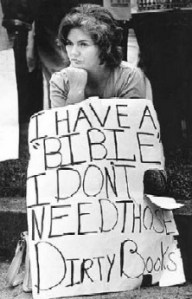
From Trey Kay, “The Great Textbook War”

Hill told interviewers that his daughter was given a failing grade for her report on evolution.  According to the Reverend Hill, the young Miss Hill, fifth grader, told her teacher, “‘Mrs. So-and-So’—whose name I’ll not use—‘I’ll not give that report, and I’ll not read that book in class.’  She said, ‘I have a book I will read,’ and she opened her Bible—and I did not coach her because it didn’t bother me that much at that time—she opened her Bible, and she began in Genesis 1, ‘In the beginning God—‘ and the teacher failed her.” [Interviewed by James Moffett, included in Moffett’s Storm in the Mountains (Southern Illinois University Press, 1988), pg. 90].

This sentiment echoes throughout Fundamentalist America.  Fear that students will be forced to learn evolution, or about the use of condoms, or about the moral ambiguities of modern life have long dominated conservative rhetoric about public education.  Missouri’s new Constitution fixes that perceived problem.

The second telling phrase in the new Constitution underlines the point.  “No student,” the amendment reads, “shall be compelled to perform or participate in academic assignments or educational presentations that violate his or her religious beliefs.”  The implications are clear.  Sex ed, evolution ed, “situation ethics,” all have loomed large in the imagination of Fundamentalist America for generations.  This amendment guarantees that no student shall be forced to learn about such things.

Missouri’s amendment is not the only place to find this sentiment in political action.  New Hampshire’s state legislature recently passed a very similar law.  As I argue in my 1920s book,  conservatives have struggled to protect conservative religious students from public-school curricula since the 1920s.  In the last generation, the fight in Hawkins County, Tennessee, might have generated the most attention.   In that case, conservative religious parents ultimately lost their lawsuit against the school board.  Parents had claimed that anti-religious messages in school textbooks forced their children to learn messages inimical to their religious beliefs.  In 1987, the US Court of Appeals for the Sixth Circuit disagreed.

Lawmakers in New Hampshire and now voters in Missouri found a way around this legal precedent.  However, it is not clear that Missouri voters knew just what they were voting for.  Consider the wording of the ballot measure:

“Shall the Missouri Constitution be amended to ensure:

“That the right of Missouri citizens to express their religious beliefs shall not be infringed;

“That school children have the right to pray and acknowledge God voluntarily in their schools; and

“That all public schools shall display the Bill of Rights of the United States Constitution.

“It is estimated this proposal will result in little or no costs or savings for state and local governmental entities.

“Fair Ballot Language:

“A “yes” vote will amend the Missouri Constitution to provide that neither the state nor political subdivisions shall establish any official religion. The amendment further provides that a citizen’s right to express their religious beliefs regardless of their religion shall not be infringed and that the right to worship includes prayer in private or public settings, on government premises, on public property, and in all public schools. The amendment also requires public schools to display the Bill of Rights of the United States Constitution.

“A “no” vote will not change the current constitutional provisions protecting freedom of religion.

“If passed, this measure will have no impact on taxes.”

No mention of creationism, sex ed, condoms in schools, or other implications.  Nothing about guaranteeing students the right to opt out of any instruction they deem pernicious.  The ballot measure emphasized the amendment as a clarification of students’ rights to pray.  Yet the amendment itself makes the other meanings crystal clear.

Missouri voters approved the amendment by overwhelming margins.  But it appears that the implications of that ‘yes’ vote might not have been entirely apparent.  So what DO Missouri voters want?

Now in Paperback!

At long last, we have an affordable paperback edition of my 1920s book.  Buy it!!!!  My kid really does need a new pair of shoes.

Palgrave Macmillan is offering a 25% discount on its website.  Enter promo code “Conf2012” to get this edition for the low low price of $24.00.  Of course, you can also get a copy on Amazon for $26.40.

A warning, though: this book was a revision of my PhD dissertation at the University of Wisconsin.  It is targeted at a thoroughly nerdy audience.  I’m proud of it, but it represents academic writing with all of its hazards.  Even members of my immediate family have told me they enjoyed the first sentence very much.  After that it got a little dry.

But if you are interested in the long history of battles over religion, culture, and education in America’s public square, I can recommend the book without blushing.  There is not another book out there that explores all of the meanings of “fundamentalism” in the public school battles of the 1920s as well as this one.

In the News: Missouri Voters Pass School Prayer Amendment

This just in: Missouri voters overwhelmingly approved Amendment 2.  OzarksFirst reports that the Constitutional Amendment received over 80% support yesterday at the polls.

Those who’ve been following this story know that the amendment is largely symbolic.  It guarantees people in Missouri the right to pray in public–especially including public schools–as long as their prayers do not bother anyone else.  This right has already been established by the US Supreme Court.  The kinds of school prayer deemed unconstitutional by SCOTUS in the 1960s were those imposed by the state and led by a teacher or school official.  The right of students to pray on their own has never been constitutionally threatened.

However, politicians and activists have long insisted that SCOTUS kicked God out of public schools.  This amendment is meant as a sort of line in the sand.  Fundamentalist Missouri wants to make it clear that students may pray in public schools.  Some voters have surely been traumatized by horror stories of students being suspended for Christian statements.  Teachers such as Bradley Johnson in California have claimed persecution when they have not been allowed to display religious messages in their public-school classrooms.

These sorts of highly publicized skirmishes inspired Missouri’s move.  As the sponsor of the amendment Mike McGhee explained in a National Public Radio story ,

“We are a religious country, and we want to take our country back, and we want to pray to God, and we can gather around the flagpole and say something to Jesus in our minds and in our hearts and it’s going to be okay.”

As everyone knows, in culture-war battles, symbolism matters.  Political moves like Missouri’s Amendment 2 help marshal the sides, force people to declare for one or the other.  In Missouri, this has meant, for instance, the public support of Catholic bishops for the amendment.  As McGhee argued, Fundamentalist America feels a powerful need to “take our country back.”

Can students now pray in Missouri’s public schools?  Yes.  Could they have before this constitutional amendment?  Yes.  But that doesn’t mean the amendment isn’t important.  To observers like those at ILYBYGTH, votes like the one yesterday in Missouri demonstrate the continuing power of Fundamentalist America.