Are Teachers the “Bottom?”

I can’t say he’s got my vote, but I like Bernie. This morning, though, he has me stumped and he’s given me a question for all you SAGLRROILYBYGTH: when did teachers become “the bottom?”

As of right now, neither of the two big teachers’ unions have endorsed Bernie. However, according to his campaign office, teaching is the single biggest occupation among Bernie’s financial supporters, with more than 80,000 teacher donations to his campaign.

And now his campaign has released this video about West Virginia’s striking teachers. As one striker put it (:50),

Real change comes from the bottom up.

Another teacher agreed (1:51),

What Bernie Sanders represented to me and to many teachers is hope that working people can collectively come together and fight back.

To be clear, I fully support the striking teachers in West Virginia and elsewhere. I’m a union member and generally a teachers-union supporter and fan. That’s not the issue this morning.

Instead, I’m curious why Bernie and his fans seem to agree that teachers represent something besides white-collar professionals. After all, teachers usually have college degrees, sometimes even advanced degrees. Historically, too, teaching has been a traditional path into the middle class from people of working-class backgrounds.

So why do we hear this talk about bottoms and working classes?

  • Is it maybe because teachers feel like they are speaking for their working-class students?
  • Or maybe that teachers feel de-professionalized, smushed down into the working class?
  • Or are there other reasons for calling teachers “the bottom?”

Time for Conservatives to Panic?

Beware! The nation’s schools have become cesspools of [select one] batty progressivism/subversive socialism/right-wing indoctrination/etc. etc. etc. For a hundred years now, activists have seized on stories from unusual schools and pretended that they represent the “new trend in education.” In the latest go-round of this culture-war tradition, conservatives have gleefully assumed that one odd Brooklyn school has proved them right.
gallup local schools

People LIKE the schools they know.

Here’s the latest: You probably saw George Packer’s piece in the Atlantic about the dizzying dance of progressivism gone wild at his kid’s school. Packer is a well-to-do New Yorker describing his adventures in securing the best education for his kids. He frets about the loss of a meritocratic idea in schools—to Packer, rich people like himself seem too safe behind the expensive walls of their educational castles.

Worse than that, Packer concludes, a venomous “new progressivism” has warped America’s public schools. At his kid’s school, for example, rigid left-wing identity politics has perverted the entire purpose of education. State tests were to be skipped. Bathrooms were to be gender-neutral. Students were to learn the glories of every other civilization besides American. Child-centered classroom methods had become totalitarian fear-mongering. In the end, Packer concludes,

At times the new progressivism, for all its up-to-the-minuteness, carries a whiff of the 17th century, with heresy hunts and denunciations of sin and displays of self-mortification. The atmosphere of mental constriction in progressive milieus, the self-censorship and fear of public shaming, the intolerance of dissent—these are qualities of an illiberal politics.

Almost before the ink was dry—and it was a lot of ink—conservative pundits seized on Packer’s piece as proof of the deadly realities of modern public education. Peggy Noonan called it an “important piece.” Niall Ferguson called it a “brilliant essay” that “gets right to the heart of the degeneration of American education.” Rod Dreher told his readers that they “have to read this” description of the “progressive dystopia of NYC schools.”

noonan on packer tweet

I’m sure there are conservative intellectuals out there who didn’t fall for this obvious fallacy, but plenty of them did. What’s the problem? As Chalkbeat noted, Packer’s conclusions based on one school might or might not be fair, but they don’t represent anything beyond one person’s unique experience. As CB put it,

close observers of the city’s schools have struggled to recognize the school system Packer is describing. . . . the school is by no means typical in New York City.

It has ever been thus. Throughout the twentieth century, as I noted in my book about the history of educational conservatism, activists have seized on unusual, possibly fake examples and assumed that they represent a horrifying new reality of American public education. Over and over again, conservative activists took apocryphal stories from alleged schools and used them to warn one another of the terrible trends that had taken over American education.

In the 1930s, for example, Forbes Magazine founder Bertie Forbes heard from local middle-schoolers that their teacher had denied that America was the most awesome nation on earth. Forbes’s response? He launched a national crusade to purge schools of this terrible subversive rot.

In the 1960s, Texas activists Mel and Norma Gabler were shocked by the contents of their son’s textbook. Their conclusion? According to a sympathetic biographer,

The Gablers . . . began to grasp progressive education’s grand scheme to change America.  They understood why the new history, economics, and social study texts trumpeted Big Brother government, welfarism, and a new socialistic global order, while putting down patriotism, traditional morality, and free enterprise.  Simply stated, Mel and Norma realized that the Humanists in education were seeking to bring about the ‘social realism’ which John Dewey and other ideologues had planned for America.

That’s a lot to learn from one student’s homework assignment one night in 1961!

Or, to consider one last example, what about the experience of Alice Moore in Kanawha County, West Virginia? Ms. Moore ran for school board in the 1970s, and her first move was to visit a local progressive middle school. The school had been conceived as a different sort of school, with one big open learning space, student freedom to pursue independent projects, and teachers who consulted with students instead of dictating to them.
SH Gablers

They’re teaching our children what we ask them to teach…

As Ms. Moore told me many years later, the school became a nightmare. Students weren’t learning. Well, they weren’t learning in class. They were learning how to be rude to adults, how to smoke, and how have sex in nearby barns. What was Ms. Moore’s conclusion? That the school was typical of the problems of American education at the time. It was representative of progressive schools all over the country.

Except, of course, it wasn’t. Yes, there have long been experiments with progressive pedagogy and progressive politics in American public education. But they have never really represented the “new” force that conservatives in every generation keep warning about.

In fact, once we venture outside the world of clickbait, we see a much different picture of American public education. Public schools—taken as a group—are remarkably diverse institutions. It’s difficult to say much about public education in general, but there is one thing we know to be true. By and large, public schools in America reflect the communities in which they are located.

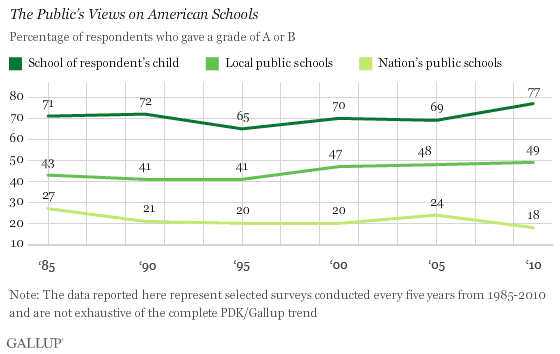
Unlike what activists have warned about for generations, there is no scheming outside force taking over public schools. Distant experts are only heard distantly. Instead, public schools tend to reflect the values and the desires of their local communities. And that’s why parents tend to be happy with the schools their kids go to, even if they have learned to be nervous about American public education as a whole.

The poll numbers are clear. In 2010, for example, 77% of parents gave their children’s schools an “A” or a “B,” but only 18% of parents said that about the nation’s schools as a whole. Why? Because unlike George Packer, most parents are in general agreement with the goings-on at their kids’ schools. And unlike the chicken-little hysteria of some conservative commentators, most Americans know that real schools are different from the ones that commentators imagine.

I Love You but You Didn’t Do the Reading

Everyone’s talking about Jerry Falwell and his scam factory, but there was some other stuff going on this week, too. Joe Biden’s record player, Germany’s Nazi memorials, where those online essays come from, and more:

What’s been going on at Liberty U? At Politico.

“We’re not a school; we’re a real estate hedge fund,” said a senior university official with inside knowledge of Liberty’s finances. “We’re not educating; we’re buying real estate every year and taking students’ money to do it.”

KB twitter falwellOkay, the “record player” bit proved that Biden was the right candidate for 1988. But it’s not just a matter of out-of-date technology. At WaPo.

Biden was voicing a deeply flawed theory that arose during the 1960s and that blamed parents, especially mothers, for the struggles of poor children and children of color. These parents, the theory argued, doomed their children to fail in classrooms by not offering them enough mental stimulation, such as books, colors on the wall or educational experiences. . . . To actually address America’s troubled racial legacy politicians must reject theories that blame African Americans rather than a system that has and continues to systemically disenfranchise and disadvantage minorities. By continuing to focus on a purportedly broken culture, politicians like Biden are destined to perpetuate the racism and racial inequality they aim to solve.

Think about this: Germany has a total of zero Nazi memorials, but not because lots of Germans didn’t want them. At the Atlantic.

We have learned that unexamined pasts fester, and become open wounds. Like most white Americans, I was taught a history that was both comforting and triumphant. I wasn’t, of course, entirely ignorant of the ways in which the country failed to live up to the ideals on which it was founded, but those failures remained peripheral, and part of a narrative that sloped upward toward progress. Slavery was a crime, but we’d fought a war to outlaw it; segregation was unjust, but the civil-rights movement had overcome it. . . . In Germany, too, the right has always attacked its country’s exercises in self-examination as exercises in self-hatred—in dirtying one’s own nest. In fact, Germany’s willingness to own its criminal past has been an act of cleaning out the nest after years of sweeping all the dirt under the carpet.

Where do those online essays come from? A look inside a Kenyan cheating factory at DM.

After a few years, for technical writing at PhD level, an experienced writer could earn $2,000 per job – still a small amount of the total but very good money for Kenya.

‘At that level, writers subcontract the work, paying peanuts and keeping the lion’s share. But on average, most writers just earn about a dollar an hour.’

What did historians tweet about the Democratic primary debates? A collection at HNN.

From PS: Seven questions any evangelical college should ask a possible president.

Any Christian institution needs to serve something larger than institutional survival. So any Christian college president needs to have a clear sense of the point at which remaining open would require them to compromise the core mission and values of the institution. There are dozens of CCCU schools, and it’s very likely that a significant number of them will close in the next 10-30 years. So those presidents need to accept that, at some point in their tenure, the most faithful act would be to accept the death of a college — with its assets distributed for the good of other ministries that will do as much to extend the kingdom of God.

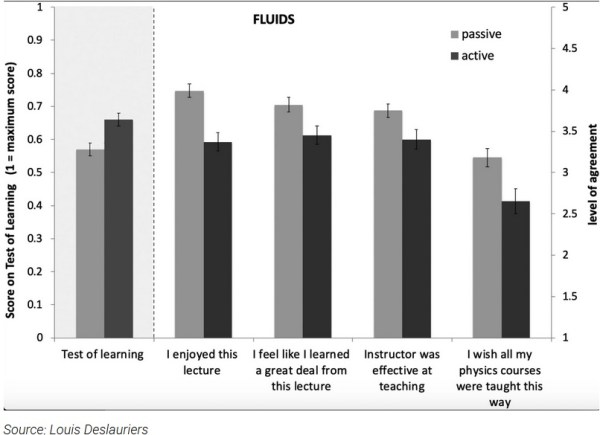
College students seem to like fun lectures, but that’s not how they learn the most. At IHE.

active or passive ihe

Talk with a Teacher at Chalkbeat.

The best advice I ever received about teaching is that I will never know everything. Students change from year to year, curriculum advances, new techniques are learned and I will keep evolving. This idea made me realize that I don’t need to be the “perfect” teacher, I simply need to grow each year and develop my skills, which is how I have been working throughout my career.


“Opportunity” Has Never Been Enough

There it is again! The sound of well-meaning reformers missing the point. This time, it came in a NYT article about college admissions at elite colleges. As I’m finding in my current research about America’s first nation-wide attempt at urban school reform, reformers tend to shoot for the wrong goal. It’s not enough only to provide an educational “opportunity” for a few extraordinary youths. By definition, that kind of thinking will only make a tiny, symbolic dent in deep-seated social inequalities.

SYSTEM Reading circle

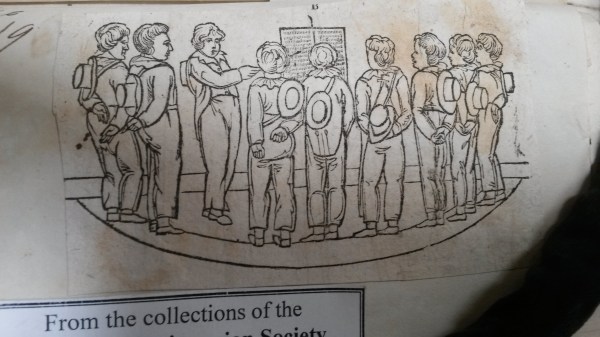
Hmmm…why didn’t more low-income students seize the ‘opportunity’ to toe the line? From Joseph Lancaster’s notebook, c. 1803.

It wasn’t the main point of the NYT article, but Paul Tough reported that elite universities like Harvard and Stanford have recently begun aggressively recruiting students with top-notch academic credentials from non-white, non-affluent backgrounds. As Tough reported, a few years ago elite schools began doing more than dropping tuition costs for low-income students. They began sending out

semipersonalized information packets, including application-fee waivers, to thousands of high-achieving low-income students, and the packets seemed to be changing the application behaviors of the students who received them, making them more likely to apply to and attend selective colleges.

Good news, right? A good example of the ways reformers can make society more equal by improving access to educational resources, right? Well, no.

Not that there’s anything wrong with trying to recruit more students from low-income homes into fancy colleges—though according to Tough the plan didn’t really work—but these sorts of efforts repeat the same old mistake that reformers have been making about educational equality for centuries.

As I’m finding in my current research, the reformers of the early 1800s often had their hearts in the right place. They worked hard to improve the chances that more poor kids would get a chance at school. Following the ideas of Joseph Lancaster, they built schools that cities could afford. Too often, however, students didn’t thrive in the new schools’ harsh conditions.

What did students do? A few extraordinary students took advantage of the opportunity to learn to read, write, and cipher. But most students simply stayed away. As a group of Philadelphia school reformers complained in 1823,

many parents seem to be utterly regardless of the advantages which would be conferred upon their offspring, if they duly appreciated the importance, and embraced the opportunity for improving their minds by literary and religious instruction. The children of such, instead of being placed in the public schools, are wandering about the streets and wharves, becoming adepts in the arts of begging, skillful in petty thefts, and familiar with obscene and profane language.

In the minds of the reformers, creating an opportunity was enough. Never mind the fact that their schools felt like prisons to the students, or that the students felt like they weren’t really learning anything. To the reformers, simply offering poor kids a chance to endure a hostile education was enough. If the students didn’t take advantage of the opportunity, it was their own fault.

This blind spot about the nature of education reform was not limited to white reformers. African-American leaders, too, tended to think creating an opportunity was enough—even a slim and unattractive opportunity. For example, on June 2, 1823, Bishop Richard Allen from Philadelphia talked to a group of New York’s African-American students at one of the few public schools open for African Americans. Too many of them, the Bishop warned, were inexplicably unwilling to seize

the opportunity now afforded them of acquiring a sufficient education.

Why not? Because the children knew what the Bishop didn’t. They knew that the “African Free School” didn’t really provide what most of them needed. For a few of them—an extraordinary few—the limited schooling was sufficient for them to learn academic skills. For most, however, the “opportunity” was not a real opportunity at all, but rather a holding pen where they were mocked for not mastering basic academic skills on their own.

What does any of that tell us about admission to Harvard? Too often reformers think the main challenge of education reform lies in increasing opportunity for a few extraordinary individuals from low-income families. There’s nothing wrong with doing that, but it misses the real goal and it can in fact divert and distract attention from the real goal.

What is that real goal? Not making sure that a few low-income kids can go to Harvard, but rather making sure ALL low-income kids have the same chances at great educations as ALL high-income kids.

Access to high-quality schools should not be the result of a happy accident of birth or good fortune in a charter lottery. Low-income students deserve not just a chance at a good education, but the same chance as high-income kids.

Scotsmen, Falwell, and Why Historians Can’t Define ‘Evangelicalism’

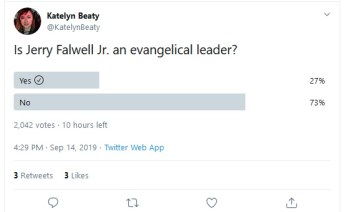
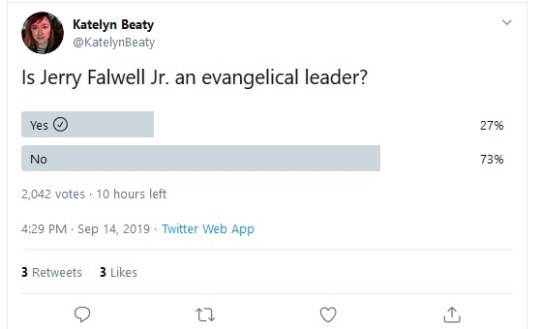
How is this possible? Have you seen the poll numbers? As I write this, when Katelyn Beaty asked on Twitter if the abominable evangelical Jerry Falwell Jr. was “an evangelical leader,” about three-quarters of respondents said no.KB twitter falwell

What? How could so many people think that the leader of a ‘UGE evangelical university doesn’t count as an evangelical leader? The obvious conclusion is that people are disgusted by Falwell’s alleged behavior as a shady alcohol-fueled real-estate scammer and Lynchburg bully. Anyone who behaves like that, people might be thinking, doesn’t count as a real evangelical.

As usual, historian Tim Gloege has offered a clear-sighted explanation of this evangelical conundrum. There has always been an evangelical tendency, Gloege explained, to explain away the parts of the evangelical tradition that people don’t like. “It’s not us,” evangelicals have always said about members of the evangelical family that they would rather not acknowledge. As Dr. Gloege put it,

Because being evangelical means never having to say you’re sorry.

Being evangelical means “it’s not us.”

In the case of Falwell, it seems like this tradition is alive and well. By behaving badly, many people seem to think, Falwell Jr. has defined himself out of the evangelical family. If being an evangelical means having a personal, saving relationship with Jesus Christ, the reasoning goes, then Falwell can’t be an evangelical. No one with a real evangelical religious commitment could behave the way Falwell does.

This disagreement about the definition of “real” evangelicalism has always been tricky for historians of evangelicalism. A while back, historian John Fea and I had a polite disagreement about the nature of “real” evangelicalism in colleges and universities. In the wake of Trump’s election, I argued that evangelical higher education had ALWAYS supported Trumpish values. As I wrote back then at History News Network:

White evangelicals are a religious group, true, but they have also always been energized by a vague yet powerful patriotic traditionalism.  Like other enthusiastic Trump supporters, white evangelicals have been fueled by a combative culture-war patriotism.  They have always defined themselves by their proprietary attitude about “our” America, the one they hope President Trump will make great again.

Historian John Fea took issue with my argument. As he responded,

For every Liberty University or Mid-America Nazarene there are dozens and dozens of evangelical colleges who reject this kind of Christian nationalism and Trumpism.

I would venture to guess that the overwhelming majority of the faculty and administrators at evangelical colleges and universities in the United States DID NOT vote for Donald Trump.

If students at evangelical colleges voted for Trump–and there were many who did–it was not because they were fed pro-Trump rhetoric from their faculty.  In fact, I know several faculty and graduates from the ultra-conservative Bob Jones University who strongly opposed the Trump presidency.

Just as with current disagreements about whether or not Falwell is “an evangelical leader,” Professor Fea and I were both right, in our ways. After all, the evangelical family is so broad and diverse that any statement anyone makes about “real” evangelicalism is subject to a million counter-examples.

When it comes to whether or not Falwell is “an evangelical leader,” I bet both the “yeses” and the “nos” can agree: There have always been prominent evangelical leaders, in charge of prominent institutions, who have embraced political positions that are immoral and untenable, racial segregation being the most prominent example. There have always been prominent evangelicals who have behaved in personally immoral ways; leaders who have engaged in sexual and financial crimes while publicly mouthing evangelical platitudes.

Where do we disagree? The “yeses” might think something like the following: But those have all been mistakes, wanderings from the evangelical path. No true evangelical—meaning someone who shares the profound personal love of Jesus Christ—should have embraced those values.

The “nos” might think: When there is a pattern of this kind of thing, that pattern must be considered part of the definition, not whisked away by the No True Scotsman fallacy. Consider the Catholic abuse story. Would a true follower of Christ abuse children? Of course not. But that doesn’t mean that the second a Catholic priest does so, he is therefore no longer representative of the structural flaws within the Catholic hierarchy itself, a hierarchy that is both committed to preaching the saving love of Jesus Christ AND guilty of covering up abuse to protect its own interests.

So is Jerry Falwell Jr. an “evangelical leader?” Beaty’s question exposes a long tension at the heart of the evangelical experience in the USA. As a prominent leader of a prominent evangelical institution, of course he is. But as a scumbag, of course he isn’t.

The answer you choose depends on how you think about evangelicalism. If you think of it primarily as a way of being a true Christian, then you can define away anyone you don’t like. But if you think of “evangelical” as a box to check on a census, a way to explain your social background, then of course we have to include all the members of the group, even the ones we don’t like.

The Mess at Liberty U: Historians’ Perspectives

Even given everyone’s low expectations, the recent expose of Liberty University’s flim-flamming seems shocking. Alumnus Brandon Ambrosino accused Liberty of being a straight-up scam, not just a well-meaning Christian college with a few fundamentalist foibles. What have historians had to say about it?

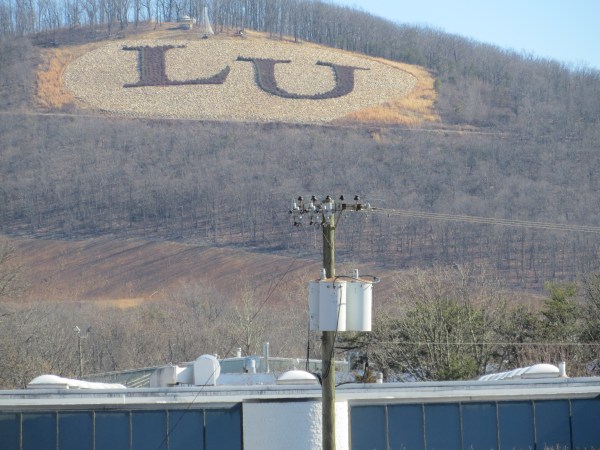
LU sign on mountain

Go tell it on the mountain…

In case you’re the one person who hasn’t yet read Ambrosino’s piece, it includes “insider” rips like the following:

“We’re not a school; we’re a real estate hedge fund,” said a senior university official with inside knowledge of Liberty’s finances. “We’re not educating; we’re buying real estate every year and taking students’ money to do it.”

What have historians of evangelicalism had to say?

Over at The Way of Improvement Leads Home, John Fea of Messiah College warns that these scandals are nothing new in the world of fundamentalist empire-building. Nor do they tend to tarnish the power and influence of leaders like Jerry Falwell Jr. As Dr. Fea concludes,

I imagine that many students and alumni at Liberty will see Falwell Jr. and Liberty as victims of the liberal media and other forces trying to undermine evangelical Christianity, religious freedom, and Christian nationalism in America. Liberty will remain a safe place for these parents and students.

At Righting America, William Trollinger of the University of Dayton compares the Falwell of today with the founder of American fundamentalism, William Bell Riley. Dr. Trollinger points out that Falwell’s institution is not all that unusual. As Dr. Trollinger puts it,

it is important to keep in mind that Falwell is not an anomaly. In fact, for the past century it has been a feature of fundamentalist institutions – colleges, churches (particularly megachurches), apologetics organizations, and the like – to be run by a male autocrat who holds almost total sway over his fiefdom.

For William Bell Riley in the 1930s, like Jerry Falwell Jr. today,

there were no checks on the Great Fundamentalist Leader. He said what he wanted, did what he wanted, and there was no one there who could stop him, no one who would dare challenge him. There was, for example, no one to suggest that his behind-the-scenes scheming to take control of the Minnesota Baptist Convention was unseemly and unethical.

My research into evangelical higher education has led me to similar conclusions. In Fundamentalist U, I argued that the tendency toward autocracy and eventual corruption was not a bug, but a feature of a theologically vague interdenominational fundamentalist movement. It didn’t happen at all schools, but in places like Bob Jones University and Liberty University, the answer to the dilemma of fundamentalist authority was to invest all power in a single domineering leader.

As I argued recently in these pages, back in the 1930s Bob Jones Sr. pioneered Falwell’s brand of autocratic fundamentalist leadership. At Bob Jones College,

All faculty members were required to agree with every jot and tittle of Jones’s beliefs. . . . It might never have been crystal clear what “fundamentalism” meant, but at Bob Jones College (later Bob Jones University), it always meant whatever the leader said it meant. Any disagreement, any “griping,” meant a fast ticket out the door, with a furious gossip campaign among the fundamentalist community to discredit the fired faculty member.

Are the recent revelations about Liberty sad? Yes. Dismaying? Yes. Surprising? Not to anyone who is familiar with Liberty U and the history of American fundamentalism.

We All Love College

Remember those freaked-out nerds? The ones who told us that conservatives had turned against higher education? It didn’t feel true at the time and new survey results seem to prove it really isn’t. So the next time someone tells you that conservatives don’t like college, you tell em to read these poll results.

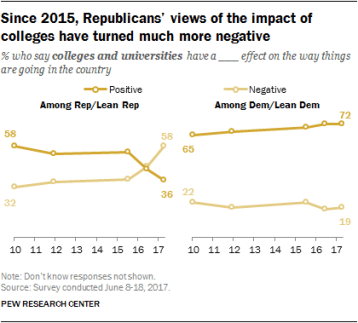
pew college gone to the dogs

Have conservatives turned against higher ed?

A couple years ago, SAGLRROILYBYGTH probably remember, the folks at Pew came out with a survey that made people nervous. Since 2015, the Pewsters found, more and more Republicans thought that colleges and universities had a “negative effect on the way things are going in this country.”

At the time, I was skeptical. After all, in my research about conservatism and conservative evangelicals in the twentieth century, I didn’t hear many voices raised against higher ed as a whole. Sure, conservatives have long been anxious about the types of people who control higher ed, especially at the elite schools. But that’s not the same thing. Back then, I proposed a simple follow-up question:

Here’s what I wish I could do: Have the Pewsters add some follow-up questions. When people say they don’t trust colleges, ask them if they want their kids to go to college anyway. And then ask them what would restore their trust in higher education.

Here’s what I think people would say: Even if they don’t trust college, they want their children to attend.

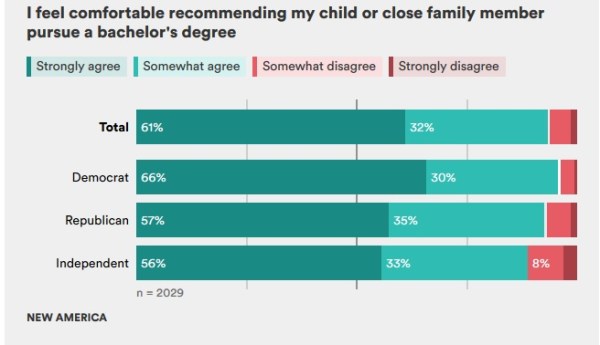
Lucky for us, the pollsters at New America had the same idea. In their new survey of just over 2000 American adults, they asked people if they would recommend college for their “child or close family member.” Guess what? Not much of a surprise to find that most Americans would. Overall, 93% of respondents said they agreed or strongly agreed. And Republicans were in full agreement: 92% of them said the same thing.

new america higher ed survey

We ALL love college.

So next time you hear that old chestnut that conservatives don’t like higher ed, show em this graph. Nobody doesn’t like higher ed. Conservatives just don’t trust the “effete corps of impudent snobs” that they think are running elite schools these days.

Great Enrollment Crash—Evangelical Edition

There are a lot of jobs I’m glad I don’t have. Being admissions director at a small or medium-sized evangelical liberal-arts college is just one of them. As a recent commentary in Chronicle of Higher Education (subscription only, sorry) makes crystal clear, these are dark times for some mainstream colleges. I can’t help but think they’ll be even darker for evangelical ones.

wheaton-website-proofs-102817-1

How much will families pay for fancy buildings and philosophy degrees? …for Christian ones?

Bill Conley, enrollment guru at Bucknell University in Ohio, describes a “perfect storm” of declining enrollments at private liberal-arts colleges like his. Yes, there have been panics before, but this time it is serious. Especially in “soft” non-professional majors, enrollment since the financial crash of 2008 has plummeted. As Conley grimly describes,

with each demographic blip, and with every crossing of a new are-you-kidding-me? threshold for cost of attendance, colleges still reported record selectivity, robust enrollments, and financial-aid programs that, for some, effectively reduced sticker shock. Indeed, reports of a higher-education bubble about to burst appeared to be greatly exaggerated. American higher education seemingly had an elasticity that could withstand periodic, short-term fluctuations in demand and cost.

Then came 2008. The Great Recession devastated university endowments, shattered the majority of family wealth and income, and confounded the predictive modeling of enrollment managers. The near-term chaos was very real. Somehow, at varying rates, most colleges managed to survive, but in order to do so they established a “new normal” that would allow them to claim renewed stability for the long haul. That brings us to the summer of 2019, when the cracks in this new normal really started to show.

What does the future hold for private colleges like Bucknell? Conley is not optimistic. As he concludes,

Higher education has fully entered a new structural reality. You’d be naïve to believe that most colleges will be able to ride out this unexpected wave as we have previous swells.

Not all universities are in the same boat. Public universities with lower tuition sticker prices are booming. Technical and professional programs are doing fine. But parents and students are increasingly unlikely to shell out big bucks for liberal-arts degrees. What will this mean for the world of evangelical higher ed?

As I found in the research for Fundamentalist U, when it came to admissions numbers, evangelical colleges and universities shared the historical patterns of mainstream institutions.

Before World War II, the few fundamentalist colleges that offered more than Bible-institute training had more students than they could manage. One survey in the late 1940s found that enrollment at a group of seventy evangelical colleges doubled between 1929 and 1940. In 1936 alone, the enrollment at Wheaton College in Illinois jumped by seventeen percent.

By the 1960s, however, due largely to an infusion of federal money from the GI Bill, the number of evangelical colleges had grown so rapidly that they struggled to fill their classrooms. Suddenly, liberal-arts colleges like Wheaton faced a new dilemma. Students just weren’t coming. In 1964, 8,528 high-school students requested information about Wheaton. By 1967 that number dropped to only 6,403, with only 1,101 actual applicants.

Clearly, Wheaton College survived that 1960s slump and one might be tempted to think Conley’s worries today are similarly exaggerated. I’m not so sure. What would convince parents and students to spend tens of thousands of extra tuition dollars to attend an evangelical college instead of an academically comparable (or superior) state college?

In the past, the answer has always been the uniquely evangelical environment of evangelical colleges. Where else can a family be sure that all the professors share their faith? That most of the students do? That the entire mission of the college is to teach students in a specifically evangelical manner?

The hard truth is that families will have to figure out how much those things are worth, in dollars and cents. Will they pay $100,000 extra? $50,000? $200,000? It doesn’t take much of a historical perspective to see that the magic number will likely shrink past the point colleges can stand. If they pay more to maintain their high-quality evangelical environment, can they compete with cheaper state schools?

These days, as schools like Bucknell see their traditional family loyalties dry up in the face of unmatchable price competition from state schools, evangelical colleges will face similar storms. For more and more families, college will be a chance to learn professional skills, not form Christian faith. If the price difference is steep enough, families will let their churches do the Christian part, and state schools do the higher-ed part.

I Love You but You Didn’t Do the Reading

Another humdinger of a week. We saw Harry Potter kicked out of school (again), teachers ready to  strike (again), Trump poking the wrong bear (again)…and much more. Here are a few of the headlines that caught our ILYBYGTH attention:

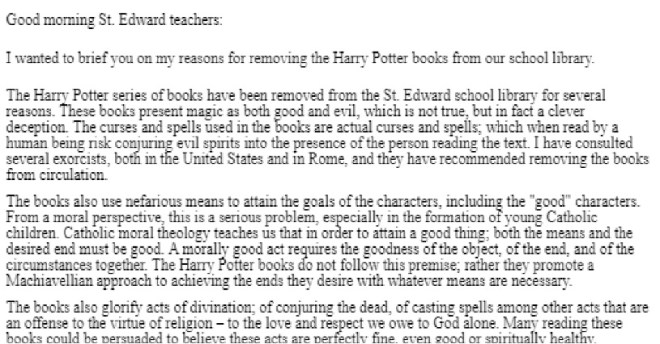
Ahem. Harry Potter books expelliarmused from a TN Catholic school. At WaPo. [Read all the way to the end for the Lady Gaga connection.]

“These books present magic as both good and evil, which is not true, but in fact a clever deception,” [the Rev. Dan Reehil] explained. “The curses and spells used in the books are actual curses and spells; which when read by a human being risk conjuring evil spirits into the presence of the person reading the text.”

reehil emailI don’t buy it. Do you? Have conservatives already won the culture wars? At WaPo.

The biggest danger for cultural conservatives, then, might not be demographic change, religious disaffiliation or increasingly progressive opponents. It might be misunderstanding their own hand. Conservatives could make real gains on their priorities by focusing on pro-family economic policies, finding candidates who appeal to nonwhite Christians and casting themselves as allies of — but not knee-jerk partisans for — the armed forces and law enforcement. They could win cultural victories while remaining fundamentally conservative.

But conservatives misunderstand their situation. . . . they overreach. They’re courting backlash by passing extremely restrictive abortion bans in states such as Alabama. They’ve defended the rights of Christians not to participate in gay couples’ weddings, and while doing so, they’ve allowed Democrats to become the trusted party on the increasingly popular issue of LGBTQ rights. They’re backing Trump — a man who is guaranteed to alienate some potentially sympathetic nonwhite voters with his often racist rhetoric. And rather than try to create a more family-centric economic platform, they passed a tax bill slanted toward the wealthiest Americans.

What would honest academic job postings look like? At McSweeney’s.

The Philosophy department is now hiring an assistant professor who can tolerate the toxic environment of our department. Special consideration given to candidates who will take Dr. Warren’s side in her 30-year-old dispute with Dr. Wyatt, that Foucauldian asshole. . . .

The Department of History invites applications for an assistant professor who will make enough leftist remarks to annoy conservative talk radio hosts but whose politics will ultimately support the neoliberal mission of the university.

Trump’s wall has finally reached school funding. Fort Campbell cancels a new middle school and sends the money to the border, at NYT.

The Pentagon’s decision to divert $62.6 million from the construction of Fort Campbell’s middle school means that 552 students in sixth, seventh and eighth grades will continue to cram themselves in, 30 to a classroom in some cases, at the base’s aging Mahaffey Middle School. Teachers at Mahaffey will continue to use mobile carts to store their books, lesson plans and homework assignments because there is not enough classroom space. Students stuffed into makeshift classrooms-within-classrooms will continue to strain to figure out which lesson to listen to and which one to filter out.

And since the cafeteria at Mahaffey is not big enough to seat everyone at lunchtime, some students will continue to eat in the school library.

A new portrait of Success Academy. The author brags that everyone will hate it. At T74.

If you are fan of Success Academy and its lightning-rod leader, Eva Moskowitz, you will likely appreciate the mostly warm portrait of teachers and administrators who are fiercely dedicated to their students. The facile caricature of joyless and militaristic classrooms, “rip and redo” teaching tactics and high-pressure test prep was simply not in evidence. . . . If you are among Moskowitz’s many critics, you will likely feel vindicated to see your suspicions about some of the network’s policies validated and laid bare, particularly its admissions practices. To be blunt, Success Academy functions as a self-selection engine.

What do teachers think about race and discipline? At RCE.

Fordham finds that 81% of teachers view restorative justice practices as somewhat effective alternatives, and PDK finds that two-thirds of all adults see mediation as more effective than detention or suspension. One of the drivers of this appeal for alternatives is pronounced distrust of disciplinary practices. PDK finds that only 59% of all parents trust their child’s school to administer discipline fairly—a number that falls to a mere 40% among black parents.

No, young white evangelicals will not ditch Trump. At WaPo.

white evangelicals who hold warmer feelings toward racial and ethnic minorities do not oppose Trump any more than white evangelicals with comparatively colder feelings. Support for Trump appears to have a life of its own. . . . it’s unlikely that young white evangelicals are about to turn blue. As long as Trump continues to advocate conservative positions on cultural issues, most evangelicals are likely to prefer him to the Democratic alternatives.

Conservative higher-ed website gives up on professor watchlist. Why? They couldn’t find enough professors pushing leftist ideas. At The Week.

CampusReform.org shuttered the rating system in 2012 after it failed to hit any critical mass of reviews. And the reason, I think, is pretty simple: Most professors are not trying to indoctrinate their students in a sort of vast left-wing conspiracy. . . . the egregious cases of professorial misconduct that make the news are unusual.

Yes: St. Paul (MN) high schools start later in the day. At MST.

What happens when a FL district goes all-charter? At WLRN.

This “experiment” in rural Jefferson County has been transformational for many students but disastrous for a few.

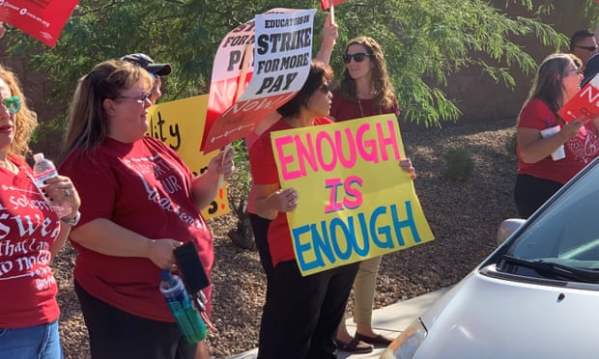
Prospects for teacher strikes this year: NV, Chicago, WV, KY. At the Guardian.

“Our governor constantly insults us, calls us names, says we’re selfish and short-sighted, ignorant, compared us to drowning victims who need to be knocked out to be saved, says we’re responsible for children being molested and using drugs and says he regrets none of what he has said about teachers. He’s a real gem,” said Jeni Bolander, a teacher in Fayette County, Kentucky and a member of the grassroots educator group Kentucky 120 United.

NV teacher protestOut of the frying pan: Detroit students who switch schools end up in bad schools, at Chalkbeat.

Researchers at Wayne State University who have been studying student mobility in Detroit say the suburban schools the students leave for are more likely to have higher discipline rates, more new teachers, and higher teacher turnover.

Teachers? Or “Learning Engineers?” At Curmudgucation.

“engineer” comes with its own freight, like the idea that it’s all about focusing on systems and processes, often involving inanimate materials and rarely focused on the needs of live humans. When it does focus on humans, it tends to treat them like meat widgets to be managed and shaped according to the desires of the system managers (see “social engineering”). Engineering is an action that you do to something, not with it.

Larry Cuban on why changing schools is so difficult.

conservatism is built into the purpose of schools and both teachers and students share that innate conservatism–at first.

school rules

Follow the rules, learn to obey…

Why are secular college students so nervous about faith? At the Atlantic.

If I ask them a factual theological question about the Protestant Reformation, they are ready with answers: predestination; “faith, not works”; and so on. But if I go on to ask students how one knows in one’s heart that one is saved, they turn back to their laptops. They look anywhere but at me—for fear that I might ask them about feeling the love of God or about having a heart filled with faith.

How one group of conservative evangelical schools teaches non-Christian classics, at CT.

If the country is preparing to enter a type of second Dark Ages devoid of classical thought, another unlikely group of people is arising to preserve the Great Books of the Western intellectual tradition: conservative evangelical Christians.

When the Saints Come Backtracking In

Bibles in schools, yes. Anti-LGBTQ sentiment, no. That was the combo pleaded last week by NFL quarterback Drew Brees. To this reporter, the most important question is not about Bibles in schools or Brees’s personal attitudes, but rather about the status of anti-LGBTQ organizations among other conservative evangelicals. Can anti-LGBTQ groups claim much support at all?

Here’s the story: Brees recently recorded a promo video for “Bring Your Bible to School Day.” In the short little clip, Brees tells kids what his favorite Bible verse is, then says,

I want to encourage you to live out your faith on Bring Your Bible to School Day and share God’s love with friends.

https://www.youtube.com/watch?v=qPFEyeug99g

So far, so good. But a few progressive New Orleanians tracked down the sponsor of Brees’s video and accused Brees of sharing the anti-LGBTQ animus of Focus on the Family. Reporters asked Brees if he really was as anti-LGBTQ as FoF and he backed up faster than a [insert football-related sports analogy here.]

As Brees put it,

[My school-Bible video] was not promoting any group, certainly not promoting any group that is associated with that type of [anti-LGBTQ]] behavior. I know that there are, unfortunately, Christian organizations out there that are involved in that kind of thing, and to me that is totally against what being Christian is all about. Being Christian is love. It’s forgiveness, it’s respecting all, it’s accepting all.

There are a lot of things we could talk about. First, is it cool for kids to bring their Bibles to their secular public schools, hoping to “share God’s love with friends”? Absolutely. Religious kids in public schools are totally free to be as religious as they want, as long as they aren’t disruptive of school procedures.

The only thing that is necessarily “secular” about public schools is the school’s administration itself. Teachers are no longer allowed to preach any religion, nor are they allowed to imply that some religions are better than others. Students, on the other hand, can do whatever they want—pray by the pole, preach during lunch, whatever. As long as the school doesn’t imply its support (like with the famous Kountze cheerleaders), religious kids can religion all they want in public schools. More power to em.

We could also wonder if Drew Brees were still as awesome as we thought. But then we’d remember the time on the Bear Grylls Show that Brees tackled an alligator.

Finally, we’d get down to the really important issue, from the ILYBYGTH point of view. Namely, this episode makes us wonder if Focus on the Family has really lost its base. If FoF no longer can claim the support even of conservative evangelical Christians like Drew Brees, whom can it appeal to? If evangelical celebrities like Brees won’t allow themselves to be associated with FoF, is there any hope for FoF?

If I were an anti-LGBTQ ministry like Focus or Answers In Genesis, I’d be doing some serious soul- (and Bible-) searching.