I Love You but You Didn’t Do the Reading

While you’re not out there burning your retinas on today’s eclipse, take a moment to check out some of the stories that came across our desk this week:

Trump’s Charlottesville blather puts the GOP in crisis, from NYT.

What can we all agree on? Lefty Peter Greene agrees with Righty Checker Finn on the weakness of Queen Betsy’s school-reform plans.

Was James Damore right? Editors at Heterodox University review the research on gender difference and diversity.

What should colleges do about their Confederate statues?

…and it’s not just CEOs: One evangelical leader resigned from Trump’s advisory board after Charlottesville, though most are holding firm.

Hiring at the “Fundamentalist Harvard:” Wheaton is looking for a senior evangelical humanities schBart reading bibleolar. Who will it be?

Build up, instead of tearing down? The Equal Justice Initiative plans to build a memorial to the victims of lynching in Alabama.

Fundamentalist Pensacola Christian College kicks out a neo-Confederate student for participating in the Charlottesville protests.

What Is the REAL Deal with Fundamentalists and the Big Eclipse?

As Bart Simpson put it best, “The ironing is delicious.” Secular folks like me blast kooky fundamentalists for their wacky ignorance of science, while we ourselves show a curiously stubborn ignorance about what fundamentalists really believe. Tomorrow’s big eclipse gives us another example of the way most outsiders don’t understand conservative evangelical culture.

What are fundamentalists thinking about tomorrow’s eclipse? It might be tempting to agree with the right-wing watchers at Americans United for Separation of Church and State. The AU folks stumbled across a blog post from Billy Graham’s daughter Anne Graham Lotz. Lotz worried that the eclipse is meant as a warning of God’s impending judgment on the USA. Foolish Americans, Lotz warned, are blithely

preparing to mark this significant event with viewing parties at exclusive prime sites. The celebratory nature regarding the eclipse brings to my mind the Babylonian King Belshazzar who threw a drunken feast the night the Medes and Persians crept under the city gate.  While Belshazzar and his friends partied, they were oblivious to the impending danger.  Belshazzar wound up dead the next day, and the Babylonian empire was destroyed.

At Americans United, Rob Boston warned that this sort of blather proved the sad truth about “fundamentalist Christians these days.” Folks like Lotz, Boston wrote, wallow in their

utter repudiation of science. It’s not that they can’t understand it – they choose not to try. Furthermore, they often heap disdain upon it.

Now, I’m no fundamentalist and I’m not worried that the eclipse is a fulfillment of Joel 2:31 or Ezekiel 33:1-6. In fact, I don’t really care what the Bible says about eclipses or anything else. But as I work on my new book about American creationism and my soon-to-be-released book about the history of evangelical higher ed, I can’t help but protest that Boston’s viewpoint is astoundingly ironic. Secular anti-fundamentalists like Boston (and me) need to do more to understand the real relationship between conservative evangelical religion and mainstream science. Too often, it’s not that we can’t understand it, it’s that we choose not to try. And then we often heap disdain upon it.

…oh, the ironing!

In fact, even the most conservative radical creationist institutions in these United States are acting remarkably similar to mainstream institutions in their embrace of tomorrow’s eclipse as a way to bring science to the masses. To be sure, it’s a very different sort of science, what ILYBYGTH calls “zombie science,” but it is nearly the opposite of an “utter repudiation” of science. Radical creationists LOVE science; they engage in endless missionary outreach to bring their vision of real Biblical science to the benighted secular and moderate-evangelical multitudes.

At Answers In Genesis, for example, radical creationist missionaries are falling all over themselves to help curious people view the eclipse and draw the correct scientific lessons from it.

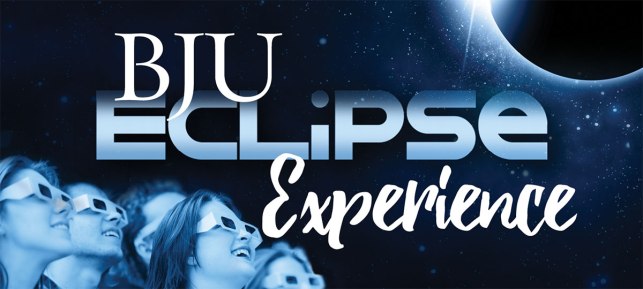
At fundamentalist Bob Jones University in Greenville, South Carolina, administrators are pulling out all the stops to use the eclipse to spread the word. Located right in the path of totality, BJU is hosting a huge party, with speakers explaining the proper way to understand the relationship between the Bible and science.

bju eclipse

Belshazzar at BJU?

Bryan College, too, another creationist stalwart, is throwing a viewing party on campus, with faculty experts offering lectures on the proper fundamentalist way to understand eclipses.

Are these radical-creationist institutions saying the same thing as secular institutions about the eclipse? Of course not. No secular scientific experts care much about the Bible’s explanation of eclipses. But just as secular scientific organizations are using eclipse mania to attract attention to their programs, so too are these creationist groups crowing about their scientific expertise and their many scientific resources.

So, even though some conservative evangelicals are warning people away from viewing parties and eclipse-related hubbubbery, many more are using the eclipse as a way to explain their vision of the proper relationship between God and science.

The OTHER Textbook Culture War

You know the script: Progressives face off against conservatives, fighting over history textbooks. Progressives want more focus on freedom struggles, conservatives on America’s exceptionalism. It’s the story we hear a lot, and one I focused on in my book about educational conservatism. My reading these days, though, points out the hidden importance of a very different sort of textbook battle.

As do a lot of academic types, I spend my summers catching up on reading. I often agree to write reviews of new books for a variety of academic journals. This summer, I’m reading historian Charles W. Eagles’ new book Civil Rights, Culture Wars: The Fight over a Mississippi Textbook.civil rights culture wars
It’s a terrific book. If you want to read my full review, you’ll have to wait til it comes out in the Journal of American History. In these pages, I’d like to talk about something else, something I don’t have room for in my official review, one of the most revealing and eye-opening parts of Eagles’ history.

Professor Eagles tells the story of a new state-history book for Mississippi, Mississippi: Conflict and Change. It was an effort by sociologist James Loewen and historian Charles Sallis in the early 1970s to bring a more balanced and more progressive history to Mississippi’s ninth graders.

Eagles tells the story of the controversial book in remarkable detail, and the usual players all show up. Progressives liked the book for finally including African Americans in the history, not only as loyal slaves or bumbling Reconstruction-era politicians, but as Mississippians. Conservatives blasted the book as unbalanced, obsessed with denigrating the history of the great state of Mississippi.

As I followed the predictable back-and-forth, I couldn’t help but hear an additional muted counter-melody running through all the deliberations. There was an additional voice struggling to be heard, a point of view beyond the usual culture-war progressivism and conservatism.mississippi conflict and change
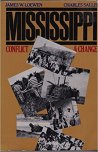
Over and over again, the experienced teachers who reviewed and rejected Loewen’s and Sallis’s textbook made a similar complaint. The book was no good, they argued, not because of any overarching ideological slant, but for a much more pragmatic reason. Any boasts about the academic excellence of the history or about its progressive ideology were simply beside the point.

Using this textbook, the teachers wrote, would make it impossible for Mississippi teachers to do their jobs.

Why?

Because the content of the textbook would unsettle classrooms. It would make it impossible for teachers to do any teaching at all, since teachers would instead be breaking up fights among students.

Consider, for example, the remarkable testimony of textbook-review board member John Turnipseed. The book was “unsuitable for classroom use,” Turnipseed concluded, because “in a racially mixed classroom, the discussion of the material would be improper. . . . [it] would cause harsh feelings in the classroom.”

The judge in the federal case could hardly believe his ears. Judge Orma Smith asked Turnipseed if Turnipseed really thought images and discussions of lynching could be left out of a Mississippi history book.

                Judge Smith: “You don’t see any historical value in that kind of situation?”

Turnipseed: “No sir, I don’t. I feel the contributions made by blacks as well as whites are more important and should not be degraded.”

Smith: “The racial situation that existed wouldn’t have had any historical significance at all? Where are students to learn the fact if they don’t learn them in school?

Turnipseed: “Again, I think in integrated classrooms it would cause resentment.”

Just as historian Jonathan Zimmerman argued in his landmark book Whose America, school leaders always prefer to add in bland praise, rather than to suggest any criticism. Every social group demands that their history be praised, and school leaders like Turnipseed usually acquiesce. To do anything different would unsettle classrooms in a dangerous way.

It was not only white conservative board members like John Turnipseed who focused on the goal of quiet classrooms. African American board member John Earl Wash also voted against the Loewen and Sallis book. Images of lynching, Wash argued, hurt African American students. “The 9th grade black student,” Wash wrote, “would probably resent hearing about the lynching topic.”

Even though Loewen, Sallis, and their fans envisioned their new textbook as a corrected, pro-civil-rights history, experienced teachers like Wash had different worries. Topics such as the Ku Klux Klan and lynching, Wash testified, were things Mississippi African Americans “want to forget.” Worst of all, the progressive textbook put African-American students in physical danger. In Wash’s words,

Blacks just resent anything that I would say would carry them back to times of slavery, anything. Then anything to do with the Klan or terrorizing blacks or something of this nature, right, it would definitely bring conflict.

In racially mixed classrooms, talk of lynching and Klan violence threatened to do more than simply educate young students. As experienced teachers knew, talk of violence could quickly become real violence, putting minority students in the crosshairs.

In 1970s Mississippi, at least, there were other reasons for opposing progressive textbooks than mere knee-jerk traditionalism. Teachers knew that the topic was explosive among students. If they hoped to control their classrooms, they didn’t dare expose students to controversial ideas, even if they agreed that those ideas were true and important.

I Love You but You Didn’t Do the Reading: Charlottesville Edition

We’re still reeling from the events in Charlottesville. Here are some related stories that caught our eye:

“Should We Be Freaking Out?”

All of a sudden, those videos from Charlottesville were everywhere: military-looking right-wing goons lunging at counterprotesters; hairspray flamethrowers squaring off against Confederate-flag spears. When we heard that a terrorist had plowed his car into a group of protesters, it seemed half shocking and half depressingly predictable. When I starting hearing the news this past weekend, I was relaxing in a late-summer reunion with some old friends, sitting around a fire, when one of them asked the question: “Should we be freaking out?”

Here’s the ILYBYGTH answer: Yes. But not because Americans will fight each other.

If you’ve been paying attention, it shouldn’t shock you that right-wing terrorists are willing to kill in the name of conservatism. It should astound all of us, though, that a leader of a mainstream political party is so blasé about it.

As I argued in my book about twentieth-century American conservatism, culture-war battles regularly and repeatedly heated up into physical conflict. In the 1930s, school board members in my new hometown promised to ignite bonfires of progressive textbooks and throttle any progressive protesters. In Kanawha County, West Virginia, a 1970s textbook battle degenerated into a slurry of Klan marches, dynamite bombs, and shootings.

It’s sadly predictable; shocking only to people who are too comfortable in their self-delusion. What really is outrageous, though, is the notion that President Trump has ignored and pooh-poohed the display of white terrorism. In his diffidence, Trump has given succor and encouragement to the radical reactionaries of the white nationalist movement. And THAT should freak us all out.

Let me be clear: I’m not saying this merely because I find Trump’s policies and presidency terrifyingly out of control, even though I do. I’m saying this rather as an historian of American conservatism. As I also argued in my recent book, since the 1970s the mainstream American right has gone to great lengths to distance itself from its white-supremacist past. Just as Democratic leaders such as President Obama and Secretary Clinton made a public display of their religiosity, hoping to prove to conservative critics that they weren’t left-wing Godhaters, so too have mainstream Republicans used the strongest language possible to distance themselves from the racist right-wing of their own party.

Trump’s pandering goes against all that. So here’s what should freak us out: Trump is making a bald play against mainstream conservatism and in favor of right-wing reaction.

Why?

I Love You but You Didn’t Do the Reading

There’s no more pretending, at least not way up here in upstate New York. The leaves are turning, the back-to-school sales are already over, and city folks are bringing their kids up here to start their semesters…the evidence is in: Fall is just around the corner. Here are some stories you might have missed as you scramble to store up acorns for winter:

Our ILYBYGTH story-of-the-week: Google fires an engineer for questioning diversity policy.

Other stories that floated by our raft this week:

Want to try Christian theocracy? Ari Feldman wonders if you can do it with a quick trip to Texas.

Trump’s “court evangelicals” ask the Vatican for a meet. Why can’t they all get along?

How did climate-change denialism become an evangelical belief? Check out Brendan O’Connor’s piece in Splinter. HT: DL

How did one evangelical purist hope to save the Religious Right from its deal with the GOP devil? Daniel Silliman explains the history at Religion & Politics.

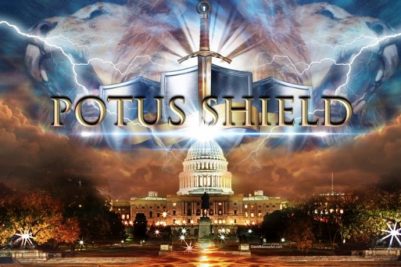
Captain America, meet POTUS Shield: Prophetic Order of the United States. Pentecostal leaders declare Trump “anointed by God,” an interview at Religion Dispatches with Peter Montgomery.

potusshield-690x460

Charismatics take action…

Parents win a big settlement from a Minnesota charter school. They had sued because the school did not do enough to protect their transgender six-year-old. The school promised to force all families to go along with its new inclusive policies, even if the parents have religious objections.

Forget evolution, religion, or any of that noise. The real problem wrecking public education is the forty-year old boondoggle of special education. At least, that’s Stephen Beale’s argument at American Conservative.

Worried about Florida’s new textbook opt-out law? Relax, says historian Jonathan Zimmerman—it’s a good thing.

We Have Failed You

Nostra culpa. I don’t know if I’ll ever really understand how it happened, but every once in a while we see new evidence of a depressing truth: We have failed you and failed America in two huge ways.

MASTERY-superJumbo

Mastery-based learning today…

Today’s reminder comes from the pages of the New York Times and the Hechinger Report. It sounds cheerful enough: some schools in New York and elsewhere are switching to a shiny new “mastery” system that abolishes grades and focuses on individual student learning goals.

The problem is that even well-informed journalists and educators talk about this as if it were something new, something novel, an exciting innovation made possible by twenty-first century technology. It’s not. Not even a little bit. The push for this sort of child-centered, goal-focused approach to education is as old as modernity itself.

And that’s how we’ve failed you.

Both educational historians and progressive educators have failed to convey the huge potential contributions of their work. Ed historians are all aware of the long history of goal-focused education. Progressive educators have fought for such things for centuries. Centuries!

And yet smart, informed people keep talking about these sorts of reform as “new,” as innovations, as solutions that ambitious reformers have finally figured out. It’s a big problem, since it robs reformers of any sense of the lessons of history. It sets up each new generation of progressive reformers to repeat the mistakes and the unnecessary conflicts of their parents, their grand-parents, and their great-great-great-great-etc.-grand-parents.

Why, oh why have we failed so miserably? I’m really stumped.

Every new teacher, for instance, has to take some sort of “foundations” class in which they are exposed to the historical outline of formal education. They all hear about the experiments and theories of Rousseau, Froebel, Pestalozzi, Montessori, Dewey, and Col. Parker. With some tweaks over time, those ideas are basically the same as the ones today’s reformers are embracing as a “new” solution.

progressive ed in pasadena

…and how it looked when it was “new” in 1929.

Why do educated educators, then, fall into the trap of overpromising and under-researching these tried-and-failed education reforms?

To be fair, the article notes the genealogy of this idea, but the author traces it back only to the work of Benjamin Bloom at Chicago in the 1960s. Neither the author nor anyone else apparently is aware of the much longer history of these reform plans. The article suggests that new computer technology will solve the problems of earlier efforts, but that’s exactly the sort of promise every new reform generation has made.

In my book The Other School Reformers, to cite just one example, I examine a similar case from Pasadena. In 1950, the new superintendent tried something almost identical. He promised that new communication technology allowed him to abolish deadly old report cards and Procrustean letter grades.

It didn’t work, and today’s reformers would surely benefit from understanding this historical context. It seems more than naïve for today’s reformers to stumble along unaware of the predictable reactions to their plans. Back then, for example, one critic excoriated the new superintendent in an open letter to the local newspaper. The idea of abolishing grades, this outraged parent noted, means

there is no incentive for the average student or the exceptionally bright student to do any better than the slower ones.  During the first six years there are no grades given out so there is no competitive spirit.  The report cards are marked only Satisfactory and Unsatisfactory, and the parent is unable to find out what the child is really capable of doing.  They acquire indolent habits, and when they arrive at Junior High School they are supposed to get down to work, but they don’t because they have been allowed to coast along for six years, doing as much or as little as they wished to.  They have not been made to feel that it is important to do the best they are capable of doing.  There were some who formerly flunked out of class and had to take the classes over, but at least they eventually learned what was given in that grade before they went on, and today they are passed, many of them without having learned it, to flounder in the next grade, when they are not ready.

Pasadena parents tended to agree with this curmudgeon. In the end, the superintendent was hounded out of town with his progressive plans thrown out after him.

There is no good reason—no good reason I can see—that school reformers like the ones described in the New York Times article shouldn’t be aware of their own checkered history. In every generation, from Rousseau’s day to our own, earnest progressive teachers have assumed that their powerful new child-centered approach would surely carry the day, sweeping outdated crusty methods before it.

It never has.

As progressive educators, we have failed to convince America as a whole how much better it will be to focus on individual learning instead of letter grades.

As educational historians, we have failed to share the story of America’s never-ending cycle of educational reform and reaction.

As a result, even the smartest and most well-meaning reformers go into every old experience as if it were new. School boards and parents are promised the world every time, only to react with predictable and preventable resentment when those laudable goals prove out of reach.

I don’t blame reformers and journalists for not doing their research. They shouldn’t have to. By this point, the long and gripping story of child-centered educational reform should be common knowledge.

So why isn’t it?

Do YOU Hate Science?

We all know the stereotypes: Conservatives love God and hate science, vice versa for progressives. But it’s utterly untrue, and every once in a while we see new evidence to prove it. These days, the frouforale over James Damore’s gender/diversity manifesto at Google has us asking the question again: Who hates science?

We’ll get to Damore’s story in a minute, but first, a necessary reminder. SAGLRROILYBYGTH are sick of hearing this, but I’m not interested in attacking or defending Damore. If I have to pick a side, I’ll generally stick with my progressive roots. Luckily, I don’t have to pick a side, so today I’ll bring up more interesting questions. I’m working these days on a new book about American creationism. One of the vital points to understanding creationism, especially the radical young-earth variant, is that creationists are not anti-science. Creationists LOVE science.

As anthropologist Chris Toumey puts it in his terrific and under-appreciated book God’s Own Scientists, radical creationists are just like the rest of America. They don’t dispute the authority of capital-s Science. In Toumey’s words, radical creationists have deep faith in the

plenary authority of science; that is, the idea that something is more valuable and more credible when it is believed that science endorses it.

For radical creationists, the problem isn’t science. The problem, rather, is that benighted false scientists have hijacked science and replaced it with ideologically driven materialism.

Of course, to the rest of us, creationists’ preference for their own bizarre “zombie science” makes their claims to love science hardly credible. To the rest of us, radical creationists seem to insist on their own outlandish scientific beliefs in the face of overwhelming evidence from real science.

Are Damore’s opponents guilty of the same thing?

If you haven’t followed the story, Damore was a Google engineer who was fired for a leaked ten-page memo. In the memo, Damore opined that Google’s diversity policy was deeply flawed. The goal of hiring equal numbers of male and female engineers, Damore wrote, didn’t match reality. In fact, Damore wrote, there are biological differences between men and women that make men—as a statistical group—more interested in engineering.

Like Larry Summers before him, Damore was fired and vilified for his words. And like ex-president Summers, Damore insisted he was only citing scientific data.

At least one scientist agrees with Damore. Writing in the Globe and Mail, Debra Soh argues that

the memo was fair and factually accurate. Scientific studies have confirmed sex differences in the brain that lead to differences in our interests and behaviour.

I’m no scientist, of gender or anything else. But conservative pundits have latched onto Soh’s comments to howl that progressives are just as blind to real science as are radical religious folks. As Benedictine pundit Rod Dreher frothed wordily,

Gender non-essentialists are the young earth creationists of the Left.

Maybe, maybe not. But in one thing, at least, Dreher is exactly right. Just like young-earth creationists, the anti-Damorists insist they have real science on their side. When it comes to culture-war issues—whether it’s the nature of gender or the origin of our species—everyone insists they are the side of true science.

What Gets Conservative Kids Excited?

So…what do conservative college students get excited about? Monarchism, apparently. That’s the word from conservative stalwart Patrick Henry College, at least. And, as I found in the research for my upcoming book about conservative evangelical higher education, today’s monarchist enthusiasts are joining a long tradition at conservative schools. I can’t help but wonder if today’s college presidents will respond the way presidents always have responded.

It might just be hopeful dreaming, but at National Review Jeff Cimmino argues that young students at conservative colleges are jumping on to the traditionalist bandwagon. Mostly, at schools such as Hillsdale, Patrick Henry, as well as at mainstream schools such as Notre Dame, smart young conservatives are discovering the work of Russell Kirk, Edmund Burke, and other traditionalists.

There are also kookier ideas floating around student lounges. Christian McGuire, the student editor of a conservative review at Patrick Henry College, reported loads of enthusiasm for conservative Catholic thinking and Russell Kirk. But that’s not all. According to Cimmino,

When asked whether monarchist sentiments could be found on campus, McGuire responded firmly: “Yes, absolutely.” Though still very much a minority view at Patrick Henry College, some traditionalist-minded students are open to the idea of a king.

A king! Zoiks. It sounds kooky, but as I discovered in my recent research in the archives of other conservative evangelical schools, such student intellectual enthusiasms are nothing new.

Cimmino doesn’t mention it, but monarchism and Burkeanism have not been the most potent intellectual traditions that have excited young evangelical intellectuals. Time and again, students at evangelical schools have discovered—as if it were new—the bracing intellectual rigor of Calvinism.

I include in my book, for example, the story of Calvinist dissent at Wheaton College in the 1930s and 1940s. Back then, high-flying scholar Gordon Clark accepted a job at Wheaton. Clark had an Ivy-League PhD and the kind of elite academic credentials evangelical colleges like Wheaton yearned for.

But Clark’s Calvinism rubbed along awkwardly in the interdenominational world of 1930s American fundamentalism. As soon as he arrived, Clark started a “Creed Club” on campus. His brainy Calvinism excited and attracted plenty of Wheaton students. But Clark’s unyielding intellect made him unpopular with the administration.

Callow Calvinist students began protesting, for example, that Wheaton placed far too much emphasis on missionary work. And they began adopting Clark’s dismissive attitude toward campus revivalism. Like their hero Professor Clark, students began deriding such things as mere “mass psychology.”

What did Wheaton do? In 1943, they showed Clark the door. They loved his resume, but they couldn’t accept the notion that their students were pooh-poohing ideas so near and dear to the heart of American fundamentalism. If such student enthusiasms got too much attention, Wheaton worried it would lose support from the fundamentalist community.

Could that pattern repeat itself?

At Patrick Henry, especially, administrators might get nervous if students veer to the right of their school’s goal of reclaiming America for Christ.

What would Patrick Henry leaders do, for example, if over-enthusiastic student monarchists began pooh-poohing American Constitutionalism? If they bruited about the idea that republicanism itself—Americanism itself—was nothing but a mistake to be corrected?

Maybe I’ve spent too much time in the archives of university presidents, but I can’t help but think that Patrick Henry’s leaders would have to put a stop to such things, worried about what it might do to their school’s reputation as an outpost of more-American-than-thou religious conservatism.

I Love You but You Didn’t Do the Reading

Bible studies in the Trump White House, cultural surrender at evangelical colleges, firing professors for threatening the President…it has been quite a week. Here are some of the stories you might have missed:

Watch out, conservatives. Carl Trueman predicts that their “cultural Waterloo” will take place on the campuses of conservative evangelical colleges.

Why don’t college presidents say they’re sorry? Rick Seltzer looks at the politics of higher-ed apologies at Inside Higher Ed.

You’re fired. Professor who said Trump should be shot loses his job at Montclair State.

New York Times: The Vatican condemns Trumpism and the right-wing Catholics who support it.Bart reading bible

More from NYT: The Trump Justice Department plans to attack affirmative-action programs in higher ed, policies “deemed to discriminate against white applicants.”

Is it really the “most evangelical cabinet in history”? Pastor claims plenty of Trump’s cabinet members attend weekly White House Bible study. And that VP Pence dresses nice.

(Why) Are there so few conservative university professors? According to Damon Linker at The Week, it’s not what you think.

The Big Ten: Professor Jenna Weissman Joselit offers a culture-war history of Ten Commandments monuments.

Arizona update: Still battling over Latinx-studies classes in public schools.